Tag: Bodhitree Multimedia

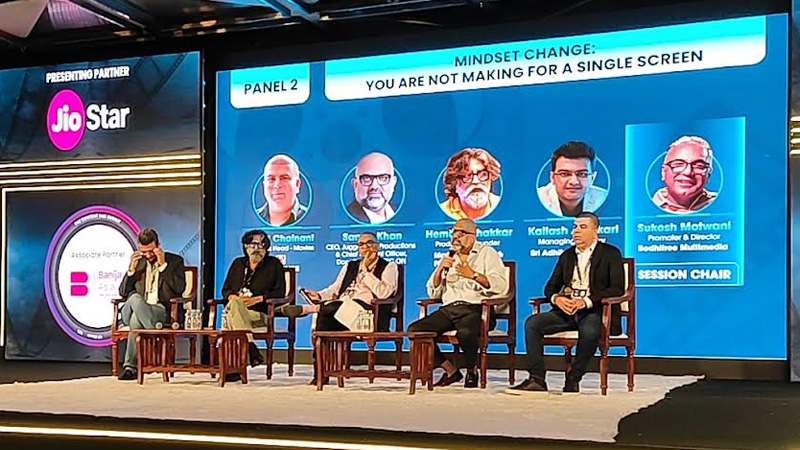
  • Mindset change: You are not making for a single screen

    Mindset change: You are not making for a single screen

    MUMBAI: The 9th edition of The Content Hub Summit 2025 may as well have been titled “Adapt or Fade,” as India’s media elite gathered to discuss the changing face and format of storytelling. The consensus? You’re no longer making content for a single screen. You’re building cross-platform universes.

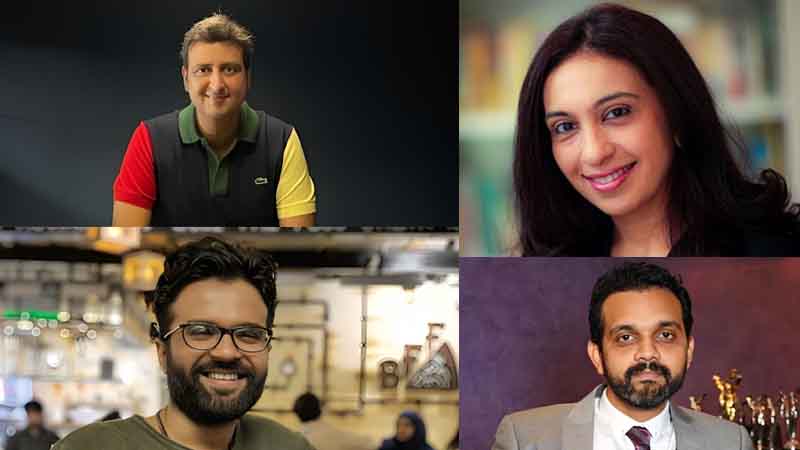
    Chaired by Sukesh Motwani, director at Bodhitree Multimedia, the session pulsed with the urgency of a business hurtling through change. It became clear: the future is platform-agnostic, monetisation-hungry, and format-fluid.

    Motwani set the tone early: “Fiction’s no longer just about arcs and actors. It’s about vertical shots for Reels, character intros for Shorts, and scenes that snap into memes.” Even directors are now briefed to film key plot points in portrait mode. The narrative may stretch to 90 minutes, but it better look good in 9 seconds too.

    Samar Khan, CEO at Juggernaut Productions and chief content officer at DocuBay and EPIC ON, summed it up: “We told a true story as a doc. Platforms bought it as fiction. Now we’re cutting Shorts from it too.” His teams are also repurposing old documentaries into audio formats ideal for the podcasting boom.

    Meanwhile, Sunil Chainani, business head of movies at Applause Entertainment, still sees value in a “theatrical first” approach for big releases, but admits the exploitation game has changed. “The music, the score, even classic dialogues, they’re all mini verticals in themselves.”

    Veteran producer Kailash Adhikari pointed out that three-decade-old shows from the family vault are still monetising now as memes, clips, and podcast fodder. “YouTube, Facebook, Shorts… legacy content’s like gold dust if you know how to pan for it,” he said. Even policy podcasts, once considered too niche, are finding new life as snackable content with high-value backers.

    Hemal A Thakkar of Mariegold Studio spoke about the gaming crossovers for shows like OMG2, predicting a future where Shiva might be both screen hero and playable avatar. “It’s not just shows. We’re building IPs—franchises that stretch into games, VR, and who knows, maybe AI-generated spin-offs.”

    Some were sceptical about the vertical video craze. “I’m just doing what everyone’s doing,” Khan admitted. “I don’t know if it’ll last.” But others believe it’s here to stay, especially in genres like horror, where the claustrophobic frame intensifies the scare factor.

    A Russian filmmaker’s war epic shot entirely in vertical format was cited as a radical experiment that could become a norm in bite-sized streaming. And songs? Already stylised like Instagram Stories.

    The phrase of the day was “multi-screen”, but not just in the literal sense. It’s about thinking across devices, genres, formats and audiences. Whether it’s a 3-hour film, a 30-second short, or a 3-minute podcast, content must be conceived from the start to travel.

    As creators wrangle with digital fatigue and the death of appointment viewing, one thing is certain: survival lies in flexibility. From AI-generated music videos to audio-only comedies, every content piece must now be a Swiss army knife.

    (If you are an Anime fan and love Anime like Demon Slayer, Spy X Family, Hunter X Hunter, Tokyo Revengers, Dan Da Dan and Slime, Buy your favourite Anime merchandise on AnimeOriginals.com.)
     

  • Mad science meets cinema as Madlab Alpha experiments with bold storytelling

    Mad science meets cinema as Madlab Alpha experiments with bold storytelling

    MUMBAI: If a hindi masala movie is the formula, Madlab Alpha wants to break it. In a move that could redefine the future of Indian storytelling, Bodhitree Multimedia, Madlab Films, and Universe of Ideas have joined creative forces to launch Madlab Alpha Private Limited, a first-of-its-kind content studio that promises to rip up the rulebook and write a new one, genre by genre.

    Touted as India’s first high-concept content lab, Madlab Alpha isn’t here to play safe. It’s here to play mad in the best possible way. With a pipeline full of cerebral thrillers, speculative dramas, dystopian epics, and even interactive narratives, the studio is aiming at audiences that are over masala and hungry for mind-benders.

    At the heart of the initiative is a bold attempt to merge art and algorithm using AI-assisted production workflows and immersive tech to create content that’s not just visually striking but narratively disruptive. Think less assembly line, more alchemy.

    But it’s not just about flashy tools. Madlab Alpha wants to be a creative ecosystem nurturing emerging voices, offering mentorship, and cultivating a diverse slate that’s as rooted in local nuance as it is ready for global resonance.

    Backing the venture is Bodhitree Multimedia, known for The Gone Game and Class, and Universe of Ideas, born out of D’Artist Talent Ventures. Together with Madlab Films, the trio brings a cocktail of IP experience, genre muscle, and next-gen storytelling ambition.

    Madlab Films producers Gaurav Shukla and Abhijeet Khuman added,“With the rise of OTT platforms and global content, audience taste, especially in India, has evolved rapidly. This shift is impacting conventional commercial cinema, as we’re seeing more viewers gravitate towards fresh, bold narratives. It’s high time we acknowledge this change and create stories that speak to this new sensibility. With Madlab Alpha Private Limited, we aim to tell the kind of stories others shy away from merging craft with technology to deliver content that truly resonates. Together, we’re committed to delivering bold, original, and scalable content that speaks to a new generation of viewers.”

    D’Artist Talent Ventures and Universe of Ideas founder & CEO Darshana Bhalla added, “At its core, Madlab Alpha Private Limited is about empowering new voices and building a collaborative creator ecosystem. We believe in nurturing and mentoring emerging talent, offering them mentorship, resources, and a platform that values originality, craft, voice, and diverse perspectives on the global stage, fostering a space where originality thrives.”

    Talking about the partnership Bodhitree Multimedia Ltd MD Mautik Tolia added, “Madlab Alpha Private Limited represents a bold leap into the future of storytelling. This partnership marks a pivotal evolution in our content strategy, reflecting our commitment to shaping the progress and success of the industry. Together with Gaurav, Darshana, and Abhijeet, we are investing in the future of storytelling one that is bold, disruptive, and unapologetically narrative-first. We’re building more than a studio, that’s agile, and one that is built to scale across formats and geographies.”

    With legacy productions already under their belt and a bold slate of future-forward content in the works, Madlab Alpha Private Limited is angling to be India’s cultural petri dish, a place where stories mutate, mutate again, and maybe, just maybe, evolve into something the world hasn’t seen before.

    So, if Indian entertainment has long been a well-trodden path, Madlab Alpha is here to carve a few new roads wild, winding, and wonderfully unpredictable.

  • Bodhitree ropes in Sudip Roy as group CRO, launches Bodhi Tree Ventures to cash in on digital IP

    Bodhitree ropes in Sudip Roy as group CRO, launches Bodhi Tree Ventures to cash in on digital IP

    MUMBAI: Bodhitree Multimedia, the name behind some of Indian TV’s biggest hits, has just turned the page—and the playbook.

    On 15 April 2025, the Mumbai-based content powerhouse announced two big moves: the appointment of media revenue veteran Sudip Roy as its group chief revenue officer and the birth of a new digital-age beast—Bodhi Tree Ventures, a division dedicated to turning IP into serious rupee rain.

    For a company known for scripted dramas, this move is straight out of the unscripted, unsparing world of digital dominance. Bodhi Tree Ventures has been set up to do more than just produce stories—it’s here to own, scale and monetise them across platforms like Youtube and beyond.

    The mission?

    To build a fortress of content-fuelled, revenue-generating intellectual property—because in 2025, eyeballs don’t pay the bills. Data does.

    And at the helm of this fresh offensive is Roy, a man who has spent over 25 years wrangling revenues at Star News, Zee, Neo Sports, Network18, and TCM.

    “I’m thrilled to join Bodhitree Multimedia at this exciting phase of growth. With the launch of Bodhi Tree Ventures, we are laying the foundation for a future-ready, digital-first business focused on scalable IPs, strategic partnerships, and innovative monetisation models. I look forward to collaborating with Mautik and the team to build sustainable revenue engines and shape the next chapter of value creation for the company,” said he, already sliding into the role with trademark flair.

    The move comes as Bodhitree seeks to pivot from being just content creators to full-blown content capitalists—using tech, data, and savvy content strategy to wring every last drop of value from its ideas. Think production house meets performance marketing—with a content lab cooking up originals while analytics wrings out ROI.

    “We are delighted to welcome Sudip Roy to Bodhitree as we are entering a decisive phase of growth. His strategic acumen and deep understanding of driving revenue strategies and scaling digital businesses make him the perfect fit to lead Bodhi Tree Ventures. This new division marks a pivotal shift in our journey — from being content creators to becoming owners and monetisers of scalable digital IPs. This is an evolution toward owning and building a future-focused revenue model. Together, we aim to shape a resilient and forward-looking content business,” said Bodhitree Multimedia Ltd MD Mautik Tolia.

    The new unit is already operational with multiple IPs and digital channels in the works, acting as a kind of agile, fast-response content-and-commerce squad. Expect an army of mini-documentaries, character-led shorts, and genre-bending series—all tailored to the algorithm’s mood swings and your binge cravings.

    With this ambitious move, Bodhitree is chasing not just ratings—but retention, revenue and relevance in the new digital jungle. Old-school production houses, take note: the age of passive syndication is out. IP-led monetisation is in.

  • Bodhitree announces rights issue even as Ashok Ma.Ma hits 100 episodes on Colors Marathi

    Bodhitree announces rights issue even as Ashok Ma.Ma hits 100 episodes on Colors Marathi

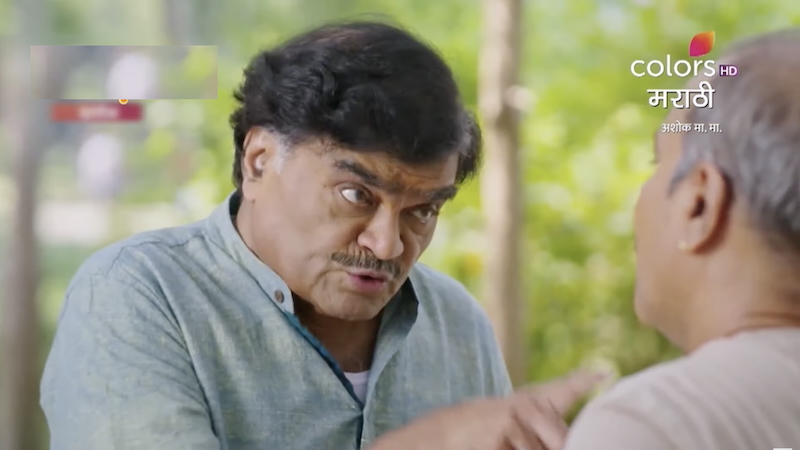
    MUMBAI: Even as its heartwarming family drama Ashok Ma.Ma. notches up 100 episodes on Colors Marathi, producer Bodhitree Multimedia has announced plans to fatten its coffers through a Rs 4,443 lakh rights issue opening next month.

    The popular Marathi show, which stars veteran actor Ashok Saraf as a disciplined retiree thrust into guardianship of his three grandchildren after a family tragedy, has captivated audiences with its emotional journey from strict grandfather to doting “Ma.Ma.” (grandpa).

    “At Bodhitree Multimedia, we have always believed in telling stories that create impact and build human emotions,” gushed Mautik Tolia, founder and managing director of the production house, seemingly oblivious to the fact that most stories do precisely that.

    While celebrating the milestone, Bodhitree is also looking to beef up its balance sheet. The company’s rights issue committee yesterday approved a record date of March 24 for its forthcoming cash call, which will see eligible shareholders offered four new shares for every nine currently held.

    The Rs 8 per share offer opens on April 15 and closes on April 28, with the company seeking to issue 55,537,777 fresh equity shares. The move follows board approval last May for a rights issue worth up to Rs 4,500 lakh.

    Back on screen, Ashok’s evolution from solitary disciplinarian to loving guardian has struck a chord with Marathi viewers. His initially frosty relationship with headstrong, wealthy Bhairavi (played by Rasika Wakharkar)—who starts as the children’s preferred guardian before unexpectedly becoming his daughter-in-law—provides the emotional heart of the show.

    “Ashok is a multifaceted character, with his own set of complexities, emotions and layers,” noted Saraf with the kind of actorly insight that suggests he’s been reading his own press releases. “I feel immense pride in portraying a character who has connected so well with the viewers.”

    Whether investors will feel similarly connected to Bodhitree’s forthcoming share offering remains to be seen. The company’s stock currently trades under the ticker BTML on the National Stock Exchange and 543767 on the Bombay Stock Exchange.

  • Bodhitree Multimedia reports strong Q3 growth with Rs 50.47 Crore revenue

    Bodhitree Multimedia reports strong Q3 growth with Rs 50.47 Crore revenue

    MUMBAI: Bodhitree Multimedia Ltd (BSE: BTML; NSE: BTML), a leading Indian content creation and media production company, has announced its unaudited financial results for the third quarter ending 31 December 2024.

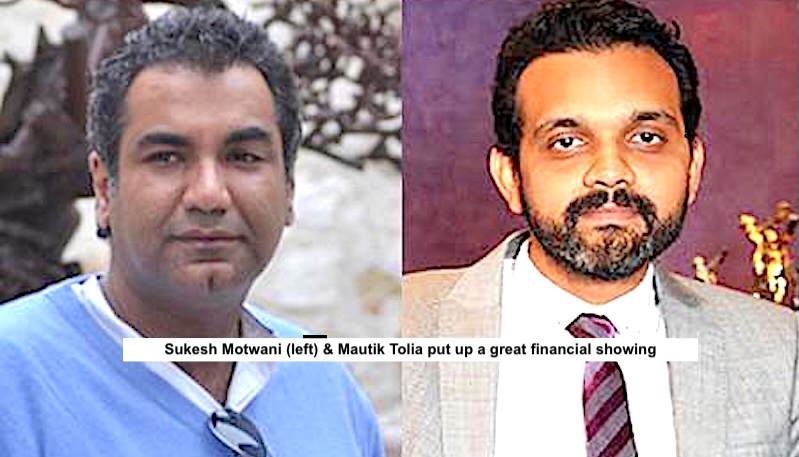
    The company posted a consolidated revenue of Rs 50.47 crore, marking a 19.6 per cent increase from Rs 42.17 crore in the corresponding quarter last year. The consolidated profit before tax (PBT) reached Rs 4.31 crore, up 9.9 per cent from Rs 3.92 crore in Q3 2023, whilst the profit after tax (PAT) grew by 22.2 per cent to Rs 3.03 crore, compared to Rs 2.48 crore in the same period.

    On a standalone basis, the company witnessed remarkable growth, with revenue surging 57.7 per cent to Rs 38.50 crore from Rs 24.42 crore in Q3 2023. The standalone PBT nearly doubled to Rs 2.85 crore, showing a 99.3 per cent increase from Rs 1.43 crore. The standalone PAT demonstrated exceptional growth of 139.8 per cent, reaching Rs 1.99 crore compared to Rs 0.83 crore in the previous year’s quarter.

    Bodhitree Multimedia chief executive Mautik Tolia, chief executive of Bodhitree Multimedia, attributed the strong performance to the company’s focus on premium content production and strategic partnerships. “Shows like Gunaah have been instrumental in driving our success,” he said, expressing confidence in the company’s growth trajectory.

    Founded by Tolia and Sukesh Motwani, Bodhitree Multimedia has produced over 3,000 hours of content across more than 50 shows for major broadcasters and OTT platforms. The company specialises in various genres including drama, thriller, horror, comedy and lifestyle programming, operating primarily on a business-to-business model.

    The company’s services span production, direction, writing, dubbing, mixing, subtitling, content editing and localisation for television, films and digital platforms.
     

  • Bodhitree Multimedia’s Gunaah season 2 to premier on Disney+Hotsstar  on 3 Jan

    Bodhitree Multimedia’s Gunaah season 2 to premier on Disney+Hotsstar on 3 Jan

    MUMBAI: Come 3 January and Bodhitree Multimedia’s second season of drama Gunaah is going to premier  on Disney+Hotstar.  This new season takes the intensity up a notch, delving deeper into a gripping tale of revenge, betrayal, and love. With more twists, emotional drama, and shocking revelations, it promises to keep viewers on the edge of their seats. It  stars  Abhimanyu (Gashmeer Mahajani), Tara (Surbhi Jyoti), Shiva (Zayn Iqbal Khan), JK (Darshan Pandya) and Michael (Shashank Ketkar) amongst others, 

    Director Anil Senior said, “I’m beyond excited to bring Gunaah Season 2 to our audience. After the overwhelming success of Season 1 on Disney+ Hotstar, we knew we had to raise the stakes even higher. This season isn’t just about revenge and betrayal; it’s about exploring the raw, unfiltered emotions of each character. Their journeys are more complex, and I believe viewers will truly connect with the depth of their struggles. It’s been a thrilling challenge to push the boundaries of storytelling and create an even more intense and immersive experience. I can’t wait for everyone to see what we’ve put together.” 

    Bodhitree Multimedia producer & managing drector Mautik Tolia added, “The return of Gunaah with its second season is a reflection of the incredible response and love the audience has given to this series. At Bodhitree Multimedia, we strive to create stories that resonate deeply and Gunaah is no exception. This season delves into the complexities of human relationships, blending intense drama with emotions that are both raw and real. It has been an awarding journey bringing this story to life and we are thrilled to take audiences on another unforgettable ride.” 

    Surbhi Jyoti, who plays Tara, expressed, “Season 1 introduced everyone to Tara’s world—her struggles, her relationships, and the weight of her choices. But Season 2 is on a whole new level. Tara is thrown into situations that challenge everything she stands for, pushing her strength and emotions to their very limits. The twists in her relationship with Abhimanyu are heart-wrenching and raw, and I think anyone who has ever wrestled with love, guilt, or redemption will deeply connect with her story. I’m so excited for audiences to see this side of her—it’s emotional, intense, and full of surprises!”   

     Gashmeer Mahajani, who plays Abhimanyu, shared, “Abhimanyu’s journey in Gunaah Season 2 is nothing short of extraordinary. This time, his choices are more difficult, his struggles are more profound, and his vulnerabilities are laid bare. It was both challenging and rewarding to portray his evolution, especially as he navigates the tumultuous relationships and high-stakes decisions that define this season. I’m confident that viewers will resonate with the complexities of his character and the emotional depth of his story.” 

  • TCH 2022: Experts discuss the secret sauce of OTT storytelling to keep the audience engaged

    TCH 2022: Experts discuss the secret sauce of OTT storytelling to keep the audience engaged

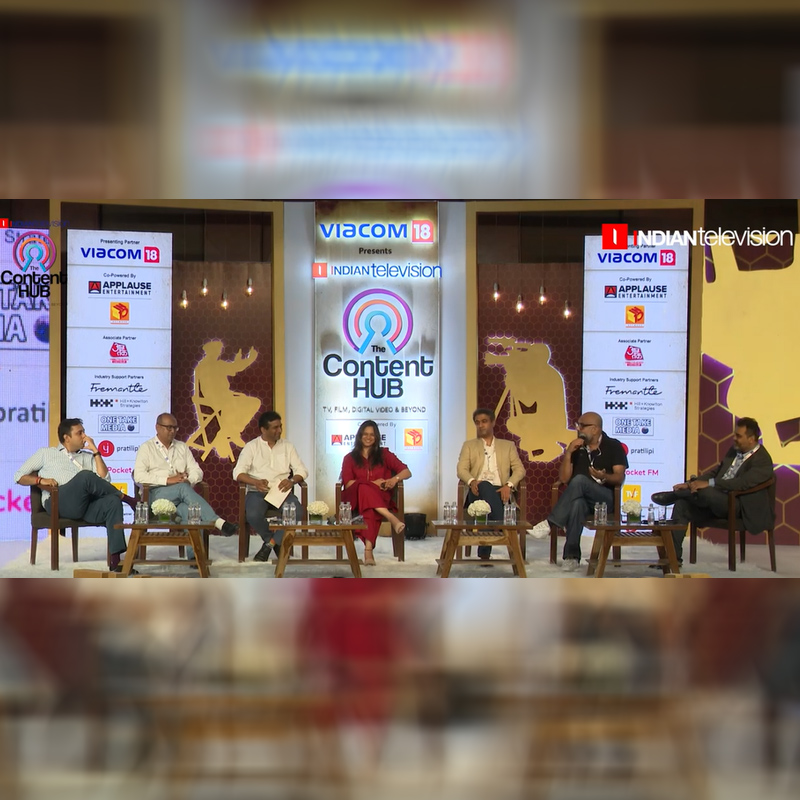
    Mumbai: The craft is constantly changing in OTT space. Every few months, the rules keep changing. The business players are still looking for the secret sauce. They are still trying to figure out and grapple with what kind of content works. How are the tastes of the audience changing? It’s highly dynamic, and to decipher this unique situation, on the sixth edition of Indiantelevision.com’s ‘The Content Hub Summit 2022,’ held in Mumbai, the media and entertainment industry experts shared their insights on the topic, “The legion of OTT content creators: Storytelling has never been on such an exciting journey.”

    The session had the presence of Pratilipi Studios business head Ambesh Tiwari, Sony Pictures Entertainment head – StudioNext Indranil Chakraborty, Roy Kapur Films head-originals Jinesh Shah, ZEE5 chief content officer, Hindi Originals Nimisha Pandey, Warner Bros Discovery head of original content – South Asia Sai Abishek and Juggernaut Productions (OTT) chief executive officer Samar Khan.

    The panel was moderated by Bodhitree Multimedia managing director Mautik Tolia.

    The summit was presented by Viacom18, and co-powered by Applause Entertainment & IN10 Media Network. Aaj Tak Connected Stream was the association partner. Industry partners were Fremantle India, Hill+Knowlton Strategies, One Take Media, Pratilipi, Pocket FM and The Viral Fever. The Indian Motion Pictures Producers’ Association (IMPPA) was our community partner.

    The discussion began with an awareness of these experts’ attempts to break into the mainstream content market. Is it through design that has been attempted to build a specialisation, or any secret sauce, or is it just an accident?

    Khan noted that it was by design; “There is no secret sauce. The sauce is essentially that you really have to work hard and you have to go out there and find new stories because everybody will agree to the fact that it’s becoming difficult to find new stories because so many shows are being made, so you have to go out there and find people and say, “Give me something that is going to be a little different from what is already there, so it’s just the search for new stories that keeps me going.”

    When asked for the insights and secrets of some interesting products coming out like the Swami Nithyananda Show (My Daughter Joined a Cult) and Secrets Of Sinauli, the experts said that we’re maturing in the non-fiction space. 

    Speaking in this context, Abishek commented that viewers are generally looking at consuming good content but also focusing on the storytelling to make it slightly more cinematic than people are used to generally consuming. “We’re attempting to marry entertainment, which has previously been considered niche, and documentary, which has, unfortunately, not been the most popular genre. Oh, it’s boring or it’s too niche or things like that!”

    Continuing the conversation, Pandey expressed her thoughts when asked if there are any unique elements in a show that she looks for as the secret sauce. What are the essential ingredients required to commission a show?

    She mentioned there is no secret sauce available but the four main recipes that must be followed in order to stand out from the crowd are, first and foremost, a realistic real-world setting. Second, a fascinating story without any shortcuts. Third, a real character with different shades, and finally, a strong passion to create the show.

    Discussing ahead with Shah, Tolia highlighted the different formats of story-telling and its dynamics. He asked Shah, What are the lessons learned and challenges encountered during the transition to the long-form format (web-series) from the movie format?

    The process started from an organic place, so the challenge was different from the television writers & film writers. As an OTT writer, we took some training sessions from experienced writers, show runners, and creators from across the world to help put a process together. It is the alignment of all the cooks (writers, show runners, and creators) that helped us in making this sauce, said Shah.

    Watch the complete session on the link below: 

  • Remote production and live sports

    Remote production and live sports

    MUMBAI: As sporting events came to a standstill due to Covid2019, technology came to the rescue for broadcasters. Ensuring social distancing, channels have adapted to remote production swiftly. Though it's not a new trend, the pandemic has given it a boost.

    In remote production, the PCR is located far from the actual location of the game, wherein a director, who is controlling it, decides which feed to take from the ones he is receiving from cameras positioned at the stadium. Besides stadium feed, the director also receives the commentators' feed who are being patched live from their home as well as the graphics team. The director assembles and mixes all the feed from different locations to get the final output.

    Bodhitree Multimedia co-founder and director Mautik Tolia, who had a 12-year stint at Neo Sports Broadcast, says: "On a theoretical level, remote production is easy to happen, but on a practical level, it would face some challenges with respect to bandwidth and connectivity. To execute the whole thing seamlessly is quite tricky but will have to start making these experiments amid the ongoing crisis.”

    He adds that it will cost 20-25 per cent of the traditional production of live sporting events.

    Many international companies such as TVU Networks and Dalet Digital Media Systems are providing highly equipped, low-latency, long-term and good broadcast quality solutions.

    TVU Networks VP – product management Matt McEwen says, “Even though sports are not back just yet, the production crews have already been using this technology to create live coverage from home with sports talk programmes. They are already becoming familiar with this technology and there is no doubt that this technology will continue to be used as live sports resume.”

    In India, Star Sports and Sony Sports have indulged in remote production for non-live chat shows.

    A source close to a leading sports broadcaster says, “Remote production for non-live chat shows is already going on. Our main concern right now is to keep viewers engaged and market whatever property we are able to create." However, he adds that the decision on remote production for live sports will only be taken when there is a clear idea from the various governments’ and sports federations' decision to open for the usual sporting calendar.

    “Broadcasters are looking for an easy way to access the content; something which is accessible through the internet that even if the bandwidth is bad they should be able to work on it,” says Dalet Digital Media Systems regional sales manager Rahul Goyal.

    McEwen explains that live remote production is already possible using commodity internet connections and cloud-based production tools.  This has not only significantly reduced the cost of production but has also made it more flexible with what can be achieved.

    He further adds, “For instance, IP connectivity has made it possible to have live coverage from virtually anywhere…even someone’s home! Crews working on production don’t even need to be in the same location. Lower costs and increased flexibility should result in more event coverage which will please audiences.”

    Echoing the same view, Goyal says, “Remote production had started before the Covid2019 crisis. When we talk about remote production, it’s mainly to use fresh video from different sources or acquiring various files from somewhere and working on editing and VPN platforms to get the final output.”

    Well-versed in live sports production, Tolia explains that remote production works with Artificial Intelligence and Machine Learning and has gained prominence in games like football. A technologically advanced camera tracks the ball and different players in the game. This is done when the computer is fed with the data of ball movement from the cameras placed at the stadium that sends the captured feed to PCR.

    TVU Networks’ McEwen believes that eventually all sports events will benefit from it. In particular, niche sports and other events that were previously not covered live will benefited.  

    Marquee events such as Olympics 2020 and Euro Cup have either been cancelled or suspended by a year or indefinitely. Even if some sporting events take place across the globe, they are going to be closed doors. In-stadia fans create drama and fuel the enthusiasm of TV viewers and of course boost players’ morale.

    McEwen says, “As we transition to IP and commodity internet connectivity, it is much easier to expand coverage to areas where it may have previously been too expensive to provide coverage. For instance, it may be possible to add live coverage of fans during a game even if they are not at the event itself. Low-cost, highly efficient, and robust encoders now exist that make this possible. It is also possible that fans themselves could utilise smart phones to contribute to a production as the camera and encoding technology on these devices have become so good, especially when combined with suitable transmission technology.”

  • More localised stories is the way forward to connect with larger regional audiences

    More localised stories is the way forward to connect with larger regional audiences

    MUMBAI: Regional GEC is the new focus area after Hindi GEC for broadcasters, OTT platforms and production houses as well. South market is the biggest market in the regional space; it has grown by 45 per cent with OTT platforms investing in regional content. So, what is the way forward to connect with larger audiences in the regional market for broadcasters and OTT players?

    A panel discussion on the power of regional storytelling at The Content Hub 2020 organised by Indiantelevision.com highlighted that more localised and relatable stories that connect the audiences in regional market is the way forward. The panel was moderated by Bodhitree Multimedia co-founder and director Mautik Tolia with panellists Endemol Shine India CEO Abhishek Rege, Vaishnave Mediaa Works managing director Kutty Padmini, Star Maa & Star Vijay creative consultant and Zee Network Programming Trainer Vivek Bahl, Fakt Marathi co-promoter Shirish Pattanshetty and Prime Focus Technologies SVP-global localisation Jyothi Nayak. 

    The panellists also elaborated on the need to explore regional stories, challenges faced by broadcasters and creators, dubbed content, remaking of regional content and the way forward.

    Padmini said, “Today, 45 per cent of south Indian content has grown and this year Netflix, Amazon, Hotstar, and Zee5 have invested huge money and created so much of work for people like us who are creative. The south content is very strong because it has talented technicians and writers. Hindi GEC is the largest space and the budget allotted to them is also high but South GEC has limited budget and in that limited budget we also create very good content.”

    Bahl lamented that although it is fantastic to see so many networks going into regional market he is a little disappointed that the content is similar and not unique. "We need to dive deep down and look more into local stories which are relevant in that particular market." He added the network owns all the IPR and replicate in whichever language they want without paying the writer or creator anything else and they are probably not even getting the credit. That also is holding back the talent.

    Rege said that there is a great acceptance of formats like Bigg Boss in the past few years. "More than acceptance it was always a demand to want high-quality stuff which wasn’t coming by. It helped the advertisers and broadcasters pushing it in. There is always going to be such demands again, so you put through all formats as long as you can make it viable and it's upto producers to come up with such stuff.”

    Pattanshetty said that some people from the fraternity claim that Maharashtra is bilingual so the requirement of Marathi which was classified as a P1 market a couple of years back is now going down because buyers feel that their requirement is covered by Hindi channels while that is not the case. "If we exclude Mumbai and Pune we find that Maharashtra has a lot of regional content requirement and it is growing fast. On the Marathi remake of Tarak Mehta… also we were little hesitant and we took a strong call on doing it. We saw that with that show we grew in the urban market as well.”

    Nayak said, “From 2019 to 2022, the OTT space probably is going to grow around 118 per cent. As a company, we have to ensure what is that your audience is looking at in order to scale up. If we talk about dubbing, it’s not just about translating the language, it’s about understanding that particular regional space. As a company we have to be the backbone and support and ensure that we are working hand-in-hand with content creators to ensure their expectations are met. At the same time our audiences are accepting what you are delivering. So we are in the middle of content creators and audiences and we have to satisfy both our people and that’s the challenge. Overall, the digital disruption in the media and entertainment industry has definitely impacted the market landscape and that has helped the industry while going to the next level when it comes to creating the content or serving the partners.”