Mumbai: The OTT business in India is buzzing with new streamers, niche, and language offerings. However, early players are struggling as heavy content spending isn’t matching revenues, and India-specific low pricing hasn’t spurred subscriptions. Growth has plateaued as consumers return to post-COVID normalcy, preferring to binge occasionally.
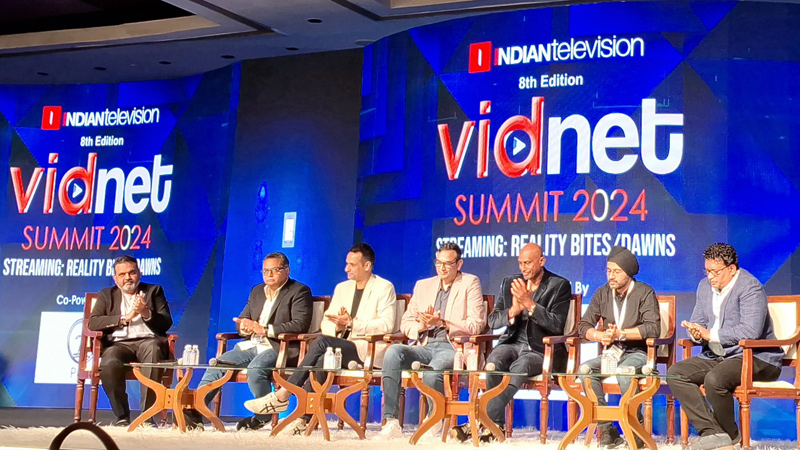
Adding to the churn is the shift towards AVOD by giants like JioCinema, offering premium events like cricket for free, with Disney+Hotstar following suit. This has strained streaming bottom lines. The rise of FAST channels is also causing industry jitters. Vidnet explores the future of the streaming ecosystem. The Vidnet 2024 is being held on 19 July 2024, at Hotel Sahara Star, Mumbai.
This panel explored creating affordable, binge-worthy content by blending creativity, strategy, and resourcefulness. The discussion focused on crafting engaging, addictive content on a shoestring budget to capture and retain audience attention, leading to binge-watching behavior. Cost-effective content creation strategies and emerging trends were highlighted as key tools for achieving this within budget constraints.
The session was chaired by Bodhitree CEO Mautik Tolia. It included the following panelists: Red Chillies Entertainment producer Aashish Singh, Locomotive Global Inc co-founder and managing partner Sunder Aaron, Friday Filmworks CEO Devendra Deshpande, Jio Studio head originals Tejkarran Singh Bajaj, and TVF president Vijay Koshy.
Industry leaders shared their perspectives on balancing budget constraints with the need for engaging and effective content.
Reflecting on the current challenges in cost management, Rishi Negi said, “The current challenge we face is how to rationalise costs and produce shows within a smaller budget. The key is to get the creators and production team on the same page to create a good show. We believe that the quality of a show is not determined by its budget. At Banijay, we’ve produced some of the most commercial hits from India, as well as niche projects, both with great results. No show is big or small to us. We approach every project with the same dedication, regardless of the budget. This challenge is interesting because, unlike film people who are used to a certain scale, our television background makes it easier for us to scale up or down as needed.”
Devendra Despande emphasized the importance of return on investment: “As long as a show delivers a return on investment in terms of business metrics, the budget is secondary. Whether it’s a high-budget production or a smaller project, if it delivers results, it works. Audiences will still eagerly await the next season of a show like Game of Thrones, despite its high costs, because it remains affordable and engaging.”
Highlighting the core principle of engaging content, Aashish Singh said, “Budget isn’t the key factor; the content must engage the audience and keep them invested, whether it’s a series or a film. The formula remains the same: if the content is compelling, it will attract viewers. Affordability is about aligning the budget with the project’s needs, not cutting corners. As long as the content is strong, budget concerns become secondary.”
Sunder Aaron discussed the flexibility of global studios and cost-effectiveness: “Global studios are now more flexible and responsive than they were a decade ago, which has been beneficial for our formats. While creative passion is crucial, we must also consider the cost of acquiring and retaining viewers. For instance, episodic shows can be more cost-effective for streaming platforms, as they lower the acquisition cost for new viewers and keep them engaged with standalone episodes. Our recent show, produced with Applause Studios and Sameer Nair, and created by Simon Mirren the former showrunner for ‘Criminal Minds,’ exemplifies this approach, highlighting the need for innovative storytelling forms.”
Addressing the subjective nature of affordability, Tejkarran Singh Bajaj said, “Regardless of whether a show is big or small, it must be effective. Affordability is subjective and depends on the show’s concept and delivery. For example, Geo Studios produced ‘Up 65’ with a lower budget by shooting two seasons together, while a show about 1947 had a higher budget. We focus on ‘right cost’ rather than just affordability, adjusting budgets according to the project’s needs. Innovative budgeting strategies, like combining seasons, help reduce costs while ensuring quality content.”
Vijay Koshi shared his insights on the importance of storytelling: “13 years ago, a group of engineers and storytellers started with a focus on strong writing and frugality, lacking big stars or international formats. They prioritized good storytelling over glamour and have maintained that ethos even as they gained recognition. Their success with shows like ‘Panchayat’ and others demonstrates that solid storytelling, practical solutions, and a focus on creating compelling content can drive success, regardless of initial resources.”