Tag: Bobby Bedi

  • TP Aggarwal re-elected as Film Federation of India president

    TP Aggarwal re-elected as Film Federation of India president

    NEW DELHI: Filmmaker and distributor TP Aggarwal has been unanimously elected as president of the apex body of Indian filmmakers, the Film Federation of India (FFI).

    Aggarwal, who has headed FFI earlier, succeeds JP Chowksey. The new post will be effective from 1 January. He was elected at the first meeting of the FFI executive committee held immediately after the 62nd Annual General Meeting.

    Aggarwal represents the Indian Motion Picture & Producers Association (IMPPA).

    Supran Sen will continue as the secretary general of the FFI.

    Other office bearers elected are as follows:

    Vice Presidents: J. P. Chowksey (Central); Bobby Bedi (West); N. Datar (West); C Kalyan (South); T Siva (South); Thomas D’Souza (South); Kaimal Nanda Kumar (South); Murali Mohan Rao (South); Krishna Daga (East); and G D Mehta (North).

    Honorary General Secretaries: Ravi Kottarakara (South) and Hirachand Dand (West).

    Honorary Treasurer: Sangram Shirke (West)

  • Govt working to provide seamless work environment to film industry: Rathore

    Govt working to provide seamless work environment to film industry: Rathore

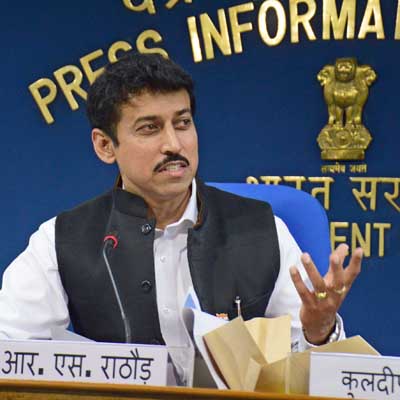
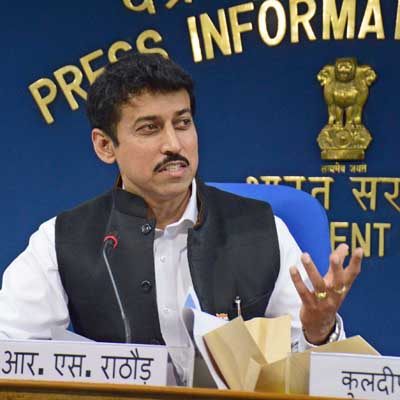
    NEW DELHI: Minister of State for Information and Broadcasting Rajyavardhan Rathore today said that the government was rigorously working towards providing a seamless work environment for the film industry by establishing a single window clearance mechanism.


    Inaugurating the India Pavilion at the Cannes International Film Festival in France today, he said a centre of excellence for gaming and visual effects had been announced. The government would do its best to be an infrastructure partner and would like to have faculty coming from the industry itself and looks forward to more faculty exchanges. 


    Rathore said, “India had already signed coproduction agreements with a slew of countries. In the last one year, five co-productions had been undertaken with France alone. We need to take these partnerships to the next level now.”


    He said the film industry is an important part of campaigns like ‘Make in India’ and ‘Skill India’ given its tremendous potential towards job creation. 


    The session also saw unveiling of the 46th IFFI 2015 regulations and ‘India Film Guide’ by the Minister.


    The India Film Guide is a comprehensive booklet with information on policy initiatives by the government pertaining to film sector, the listing of Indian companies at Cannes Film Market, Indian Films at Cannes and contacts of important people in the business of filmmaking. 


    The session was attended by Indian Ambassador to France Mohan Kumar, Bobby Bedi, Nandita Das, Karnataka Information and Public Relations Minister Roshan Baig, I&B ministry joint secretary (films) K Sanjay Murthy and Film Federation of India former president Ravi Kottarakara. 


    Bedi in his welcome address said, “India’s presence at Cannes had increased tremendously over the past decade and we have seen an increase in representation in terms of quantity and an improvement in the quality of content as well.”


    Kumar added that the aim should be to get Indian films in the most important category of films at Cannes. He added that over the next two to three years he would strive to work on that. The quality of films from India had been rich in content and quality. 


    Kottarakara felt that India has on offer some of the best shooting locations. “There has been a tremendous change in the Indian film landscape and the sector is definitely going to grow by leaps and bounds. We should try to experiment more to have a wider global acceptability. Also, India’s linguistic cinema which includes films in Tamil, Malayalam, Bengali, Marathi, Bhojpuri are as good as mainstream Bollywood films and should get an equal opportunity to be showcased,” he said.


    Talking about the much-debated issue of censorship in India, Das said, “As we mature, it is important to promote freedom of expression rather than curtailing voices.”


    On his behalf, Baig suggested that it will be great if the regional film industry is showcased as a part of the delegations to some of the major international film festivals.


    Murthy added that over the next few days,he hoped to learn from various film commissions and carry back new partnerships and learning experiences.

  • Rajyavardhan Singh Rathore to inaugurate India Pavilion at Cannes

    Rajyavardhan Singh Rathore to inaugurate India Pavilion at Cannes

    NEW DELHI: The India Pavilion at 111 Village International Riviera (Cannes, France) will be inaugurated by Minister of State for Information and Broadcasting Rajyavardhan Rathore on 14 May, 2015.


    Eminent people including Indian Ambassador to France Mohan Kumar, Marche Du Film Director Jerome Paillard, producers Rakeysh Om Prakash Mehra and Bobby Bedi will also be present at official opening of the Pavilion. Marche Du Film is one of the most important film markets in the industry.


    Two Indian films, Chauthi Koot by Gurvinder Singh and Masaan by Neeraj Ghaywan have been chosen under the Un Certain Regard category.


    A session on journey to Cannes of the film Chauthi Koot will take place on the first day. A post screening reception for the film has also been organized.


    FICCI is coordinating the India Pavilion at Cannes Film Festival with the Ministry for the second consecutive year.


    The India Pavilion will showcase Indian cinema’s linguistic, cultural and regional diversity by showcasing trailers, displaying literature and brochures on varied aspects. The primary focus would of course be boosting co-production opportunities with countries India has signed treaty with, attracting international studios to shoot in the country and exploring new international partnerships in the realms of distribution, production, filming in India, script development and technology, and promoting film sales and syndication.


    Also, the fourth edition of the ‘Indian Film Guide’ will be placed at the Pavilion for the delegates. The ‘Indian Film Guide’ is a comprehensive booklet with information on policy initiatives by the government pertaining to film sector, the listing of Indian companies at Cannes Film Market, Indian Films at Cannes and contacts of important people in the business of filmmaking.


    FICCI along with the Ministry will be holding sessions on the sidelines of the festival. The sessions would focus on important aspects like co production agreements, international distribution – challenges and way forward and how to make films reach out to worldwide audience amidst a wider range of issues faced by the sector.


    The sessions would have speakers with wide ranging experience in their fields and the likes of Film France COO Frank Priot, Telefilm Canada director international promotion Shiela de La Varende, Film London senior inward investment manager David Shepheard, CNC France director Pierre Emmanuel, ASAP Films producer Marc Baschet, Australia India Film Fund head Anupam Sharma, Special Treats CEO Colin Burrows, Indian filmmakers Nandita Das and Rishi Mehta, PVR Pictures president Kamal Gianchandani, Mongrel Media distributer Charlotte Mickie, Westend Films’ Eve Schoukroun, Dragongate CEO William Pfeiffer, Film London CEO Adrian Wooton and Cinestaan founder Rohit Khattar.


    The Government is proactively supporting the sector and has even listed it among the 25 focus sectors under the ‘Make in India’ campaign.


    Punjabi film ChauthiKoot (The Fourth Direction) is based on two short stories by Punjabi writer Waryam Singh Sandhu, titled Chauthi Koot and Hunn Main Theek Haan. The story is set in Punjab against the backdrop of the Sikh separatist movement in the ‘80s. It catches the mood of Punjab during the turbulent period.


    Masaanset in Varanasi revolves around four key characters, that of a young orphan, a low-caste teenage boy, a girl and her father as they attempt to fight against the morality and traditions typical of the small town they live in. Their lives intersect tangentially when the low-caste boy, played by Vicky Kaushal, falls in love with an upper-caste girl and Richa Chadha’s character finds herself in a sex scandal. Her father Sanjay Mishra finds himself fighting the taboo but in him, the young orphan, played by Nikhil Sahni, finds a father figure.

  • Delhi can be a gateway to north India for filmmaking: Dr Kiran Walia

    Delhi can be a gateway to north India for filmmaking: Dr Kiran Walia

    NEW DELHI: Delhi has the potential of becoming the film city for north and north-east India.

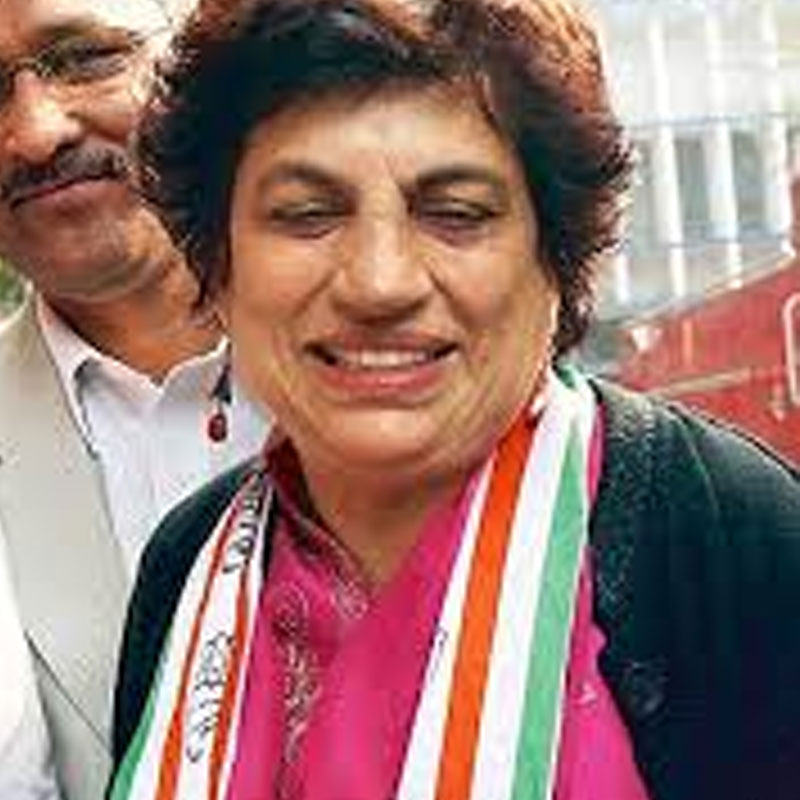
    Delhi Women and Child Development and Languages Minister Dr Kiran Walia said the Delhi government had already worked to make Delhi the cultural hub of the country and would be eager to help in turning the city into a film hub if concrete suggestions were made by anyone.

    Inaugurating a two-day meet on ‘Is India’s next film city?‘ as part of the 12th Osian’s Cinefan Festival for Asian and Arab Cinema, she said Delhi can become a film production centre as a gateway to north and north-east India.

    She said that things could be worked out if any party came forward for this purpose, adding that Chief Minister Sheila Dikshit had asked her to convey this sentiment.

    Delhi Tourism is also close to working out a policy whereby it will facilitate film shooting in the national capital territory region. Delhi Tourism and Transport Development Corporation Managing Director G G Saxena said a booklet would be issued soon about the facilities that can be offered to filmmakers.

    Earlier, Osian’s chairman Neville Tuli announced that his group was setting up a museum which will house material relating to the arts, Osianama, in Delhi as its contribution towards helping Delhi grow as a major hub of cultural activities. He said cinema can play a complimentary role in this endeavour.

    He said it was unfortunate that filmmakers never left the infrastructures they built for their films for others to use, otherwise Delhi would have had enough infrastructure by now.

    He was categorical that it was wrong to depend on the government for everything as it had no role in a private endeavour. Even monuments where filmmakers decide to shoot their films should be given on payment.

    Delhi can embrace cinema in a more systematic way, and there has to be a ‘jugalbandi’ (collaboration) between the government and the private sector.

    Bobby Bedi said it was unfortunate that cinema’s role had never been seen as culture. He said this country is held together by cricket and cinema, apart from language – English or Hindi. Thus cinema plays a major national role.

    There is, therefore, a strong case for establishing cinema in north India as a gateway to the north and the north-east.

    He said it was a cakewalk to shoot films in Delhi as compared to Mumbai, and so it was for the Information and Broadcasting Ministry to approve this. And there were ample places available in the NCR outside the main city for developing a film city.

    However, eminent filmmaker Shekhar Kapur did not feel that Delhi could be a film hub because all the decision makers were in Mumbai and all the talent moved out of Delhi to Mumbai. He said that there was need to open more institutions to train people in filmmaking if Delhi was to become a hub, adding that he regretted that the talent from the National School of Drama did not stay in the capital. He also said that most of the decision makers – the producers – were in Mumbai.

    Creative people needed creative environments and could not flourish in a bureaucratic city.

    Sudhir Tandon of Osian’s who is coordinating the two-day meet said the aim of Osian’s was to start a debate on the subject.

    Meanwhile, the Government is close to drawing up a plan for single-window clearance system for those wanting to shoot in the country.

    Eminent filmmaker Bobby Bedi said the Information and Broadcasting Ministry had been working on this for several months and was very close to finalising the details of the policy.

  • Berlinale opens with Farewell My Queen

    Berlinale opens with Farewell My Queen

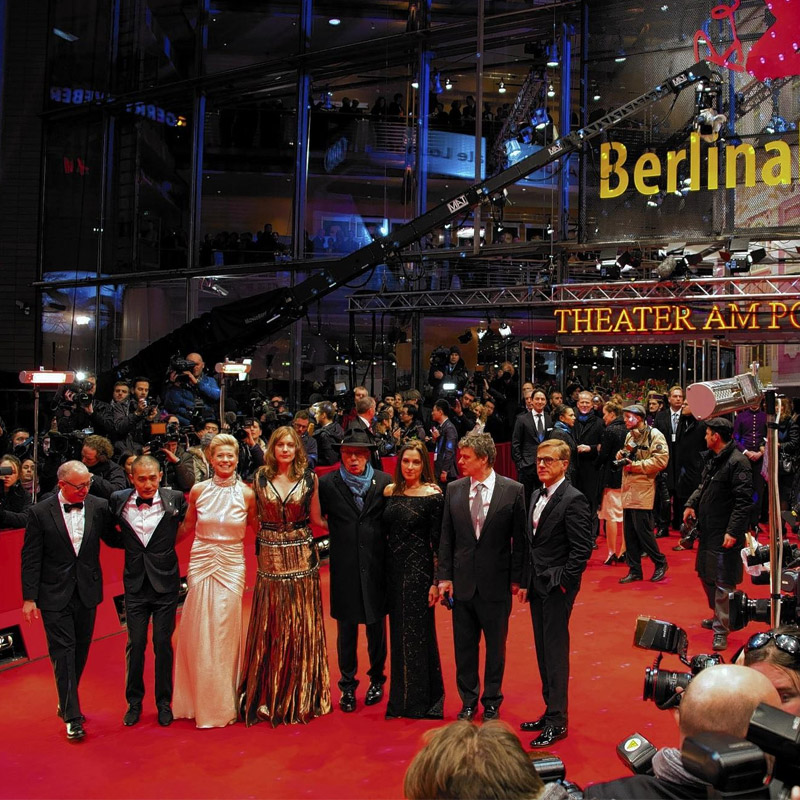
    MUMBAI: The 62nd Berlin International Film Festival opens today with the world premiere of Benoît Jacquot’s film Farewell My Queen (Les adieux ? la Reine)

    While Mohan Kumar Valasala’s Panchabhuta will compete in Berlinale Shorts at the festival, Gattu, directed by Rajan Khosa and produced by the Children’s Film Society of India (CFSI) will compete in Generation KPlus section of the festival.

    Kutch, a project to be directed by Bobby Bedi will be the first Indian project to participate in Berlinale co-production market.

    Farhan Akhtar’s Don 2 which is a co-production between India and Germany will have a special screening at the festival.

    Indian film curator and journalist Meenakshi Shedde is on the FIRPRESCI jury of the festival. All members of the International Jury- Anton Corbijn, Asghar Farhadi, Charlotte Gainsbourg, Jake Gyllenhaal, Mike Leigh, François Ozon, Boualem Sansal and Barbara Sukowa – will be present. The 62nd Berlin International Film Festival will close on February 19, 2012.

  • Ramesh Sippy re-elected as Film and TV Producers Guild president

    Ramesh Sippy re-elected as Film and TV Producers Guild president

    cThe first meeting of the newly elected Guild Council of Management, which was held immediately after the 57th Annual General Meeting on 29 September in Mumbai, also elected filmmakers Mukesh Bhatt, Vipul Shah and Ashutosh Gowariker and television producer Dheeraj Kumar as vice presidents.


    Manish Goswami and Ashim Samanta (son of Shakti Samanta) were elected
    treasurers.


    Some of the other members of the newly elected Council of Management of Guild are Yash Chopra, Manmohan Shetty, Kamal Kumar Barjatya, Amit Khanna, Rakesh Roshan, Bobby Bedi, Subhash Ghai, Karan Johar, Vishal Bharadwaj and Farhan Akhtar.
     

  • Bobby Bedi has epic plans for ‘Mahabharata’

    Bobby Bedi has epic plans for ‘Mahabharata’

    MUMBAI: Noted film producer and Kaleidoscope Entertainment promoter Bobby Bedi is on an epic project. His plan: to repurpose Mahabharata so that it can roam across various formats including a TV series, a film trilogy, an animation product, and a theme park.

    Bedi had first announced plans for the Mahabharat project around the time his big-budget film Mangal Pandey released in August of 2005.

    “For creating the entire chain of products, it would require an investment of around Rs 4 billion. The idea is to make it for the global market,” Bedi tells Indiantelevision.com.

    First would be the creation of reality TV through a talent hunt for the Mahabharata characters. This, he says, would take about a year.

    The talent hunt would next move to a Mahabharata TV series which could stretch to 150 episodes. Dr Chandraprakash Dwivedi would direct the series. “It will transform Indian television and travel across the world. We can make it in many languages,” Bedi says.

    Bedi intends to invest Rs 160-170 million in just the development stage. “For completing the entire chain, it would require over three years. Developing gaming would require around $2 million,” he says.

    The animation work will be assigned to a company which has US and Indian base. He, however, refused to divulge the name of the animation firm.

    Will he rope in joint ventures to fund the project? “No, the investment will be done by Kaleidoscope. We may have partners,” he says.

    Mahabharata will be made into a comic book series as well. A theme park based on the Mahabharata is also in the pipeline.

    Delivering the keynote address at “India – The Big Picture,” Bedi said the project would involve multiple location shoots and be in multi-languages. “This is the direction Indian entertainment should be taking,” he added.

  • Kaleidoscope to premiere ‘Johnny Johnny, Yes Papa!’ on Children’s Day

    Kaleidoscope to premiere ‘Johnny Johnny, Yes Papa!’ on Children’s Day

    MUMBAI: Celebrating Children’s Day, Kaleidoscope Entertainment, the Bobby Bedi promoted film production house is set to premiere a children’s movie Johnny Johnny, Yes Papa! (JJYP) on 14 November at Adlabs Cinemas, Mumbai.

    Johnny Johnny Yes Papa promises to be an emotional and funfilled story of a father-son bond and their journey through life sending the message of family bonding – in turbulent times.

    Starring child actor Anuj Pandit of Koi Mil Gaya plays Johnny and actor Yashpal Sharma (who also performed in Lagaan and Apaharan) plays the role of Mohan – the father, states a release.

  • Frames debates the merits of the studio versus the independent filmmaker

    MUMBAI: The relationship between studios and independent filmmakers was a subject discussed at an afternoon session of Frames, the convention for the business of entertainment. The speakers were Sahara One CEO Shantonu Aditya, filmmakers Mahesh Bhatt,Govind Nihalani and Bobby Bedi and Adlabs Films chairman Manmohan Shetty.

    Nihalani pointed out that studios and independent filmmakers have their strengths and both parties should look to work with each other. “Artistically released commercially successful films can be made.
    Corporates should realize that creativity is equity. The independents should realize that money is as important as creativity. Studios should know that sometimes small risks pay off big time. That is because audiences like to be surprised.

    “A studio basically operates on calculated budgets and big stars to secure an ROI. Scripts are chosen if a star is attached. This ensures a long run. An independent filmmaker, on the other hand, feels that an idea and a directors treatment of that idea is what creates value. Lavish sets, big stars add value. However, they do not create value. There is a way to bridge the two and both should realize that they need each other.”

    This point was echoed by Shetty who noted that in the West independent filmmakers go the studio route to release their films. In India, there are studios like Yash Raj Films. However, important directors like Karan Johar still call the shots and studios chase them for the rights to distribute their films. “Reliance buying Adlabs means that more films will be made. Fortunately we have not suffered any losses till now.”

    Bhatt spoke on the benefits and challenges of being an independent filmmaker. “Movies that do not have personal supervision of an idea are doomed to fail. One does not only make movies. You need passion and religious fervour. There is talk of delivery systems but you need to invest in ideas. Otherwise these systems will be parched of good content. It is important for a filmmaker to keep himself lean and thin. A studio executive unfortunately only understands a Shah Rukh Khan. He does not understand the value of an idea. I would argue that studios are victims of hype. An independent filmmaker, though, has to pay off any debts incurred. He cannot hide behind abstractions.”

    Bedi said that indepdents are better incubators of ideas. “In the West studios do not incubate ideas as it is too expensive. An independent filmmaker approaches a studio with an idea. The studio then works that idea to a maturity level where one is able to confidently approach exhibitors.”

    Aditya says that Sahara One has had success as it concentrates on its strengths of marketing and distribution. “We have made 14 films as projects. There have been start dates and finish dates. We have also spent quite a bit on marketing. We have worked in different genres. We picked up Page Three when nobody wanted to touch that film. At the same time, it is difficult to know which idea will work. We get 70 ideas a week. Of course, each presenter of the idea is confident in it. Once an idea is given the go ahead, we do not interfere with the creative process other than keeping a check on how the work is progressing. The writer is given freedom.”