Tag: Bob Geldof

  • BBC, Bob Geldof to map mankind

    MUMBAI: UK pubcaster The BBC, its commercial arm BBC Worldwide and Bob Geldof have announced an intention to collaborate on the Dictionary of Man, a unique and ambitious anthropology project that will record every human society on the planet.

    The Dictionary of Man website will be a limitless repository of content, an immense digital catalogue of all current human existence and an enormous resource for the exchange of ideas and information.

    The BBC will, in tandem, produce for television a series The Human Planet. The eight-part series will be produced in a unique collaboration between the BBC’s world-renowned Natural History Unit, BBC Bristol Features and Documentaries and BBC Wales.

    The project will use every available medium to create what it says will be the largest ever living record of films, photographs, anthropological histories, philosophies, theologies, economies, language, art, and documented and personal accounts from people of every society across the globe. It will serve as a definitive record of us – Mankind – at the beginning of the 21st century.

    20 years ago Geldof was sitting on a tree stump in Northern Niger with a regional governor, looking out at what Geldof described as “a moonscape”. The governor told of how 300 different languages that once existed had disappeared forever in just two years during the famine. Geldof has written, “Even though I never heard those languages, I already miss them. In these ways the lights of human genius wink out.” From then on he was determined to record “all those sounds, voices and jokes so they never disappear again”.

    Announcing the Dictionary of Man project at the MipTV conference in Cannes, Geldof, who is working in partnership with award-winning producer/director John Maguire, said, “This will be an A to Z of Mankind which will catalogue the world we live in now, the people who share this planet, the way we live and the way we adapt to face common and different challenges. Mankind is the world’s most extraordinary animal. In an age of globalisation and increasing connection, we face the growing homogenisation of cultures and the disappearance of extraordinary and diverse mechanisms that man has invented in order to survive in whichever environment he has found himself. Culture is a function of survival.”

    With the cooperation of the great institutions of the world all extant photographs, archives and records will be included. Anthropologists, social historians and experts in many other disciplines will be involved as, over the years, the degrees of human difference are gradually logged.

    The architecture of the site will use the very latest social networking technologies in order to allow individuals across the globe to track and trace their national, clan, tribal, family and individual dispersals and reconnect to far-flung and ancient versions of their family or group members. “Ultimately I suppose in some ways we’re also building the World’s Family Photo Album,” said Geldof.

    Simultaneous to this vast site, Dictionary of Man crews will travel the globe to capture on film 900 of the separate groups of people that anthropologists believe to be in existence. Experts suggest that there could be up to 27,000 variations alongside the core 900.

    All the collated material will be available through the Dictionary of Man website, an encyclopaedic volume of DVDs featuring hundreds of hours of programming, books, magazines, CDs, exhibitions, theatrical and all media platforms.

    Filmed in high definition, the TV series The Human Planet will be an epic record of how different peoples adapt to different surroundings. As they’ve done before with The Blue Planet and Planet Earth, the BBC now turns its attention to Man – the Miracle Animal. “Only the BBC with its scope, scale, ambition, professionalism and reputation could possibly achieve this massive project and I’m proud to be associated with the Natural History Unit, one of the most renowned and respected parts of the BBC,” said Geldof.

    This project goes to the heart of the modern BBC – only two months ago Director of BBC Vision, Jana Bennett, called for a response to the challenge of what she called 360 degree media, referring to the digital age and the dissemination of content. The Dictionary of Man and The Human Planet places the BBC at the very edge of modern media and its capability.

    Bennett said, “Coming from joint production teams with this pedigree, The Human Planet promises to be spectacular television. It will give us the chance to meet and understand the people who share our planet in a way we’ve never seen them before. In joining forces with Bob Geldof, we have one of the world’s foremost humanitarians as an ally as we create a legacy for both current and future generations. More importantly, this is not just about television, it’s about 360 degree media on a scale we’ve never seen before. Public service – why the BBC exists.”

    BBC Worldwide, will act as facilitator in seeking international partnerships for the initiative. BBC Worldwide director of content and production Wayne Garvie says, “BBC Worldwide has a vast amount of experience in working with global partners and we are looking forward to using our international relationships to pursue all the opportunities this huge and exciting project can bring.”

  • Bob Geldof plans global peace channel

    Bob Geldof plans global peace channel

    MUMBAI: Social activist and musician Bob Geldof will launch a global TV and net channel which will aim at promoting world peace.

    Geldof was the brain behind the global music fund raising eevnts Live Aid and Live 8. He has agreed to work on an idea under the title, Peace Channel, with internet firm Ten Alps Digital.

    Under the terms of the agreement the company will develop proposals for a worldwide broadband channel, complete with video clips and social networking functions.

    Among other things the channel will look to encourage the West to help the poorer nations in an entertaining way. It is scheduled to launch next year.

  • Rolls Royce and MTV to fight HIV and Aids

    Rolls Royce and MTV to fight HIV and Aids

    MUMBAI: Rolls-Royce has teamed up with the international music channel MTV to raise $25,000 for the Staying Alive Foundation, a global organisation dedicated to preventing the spread of HIV and Aids.

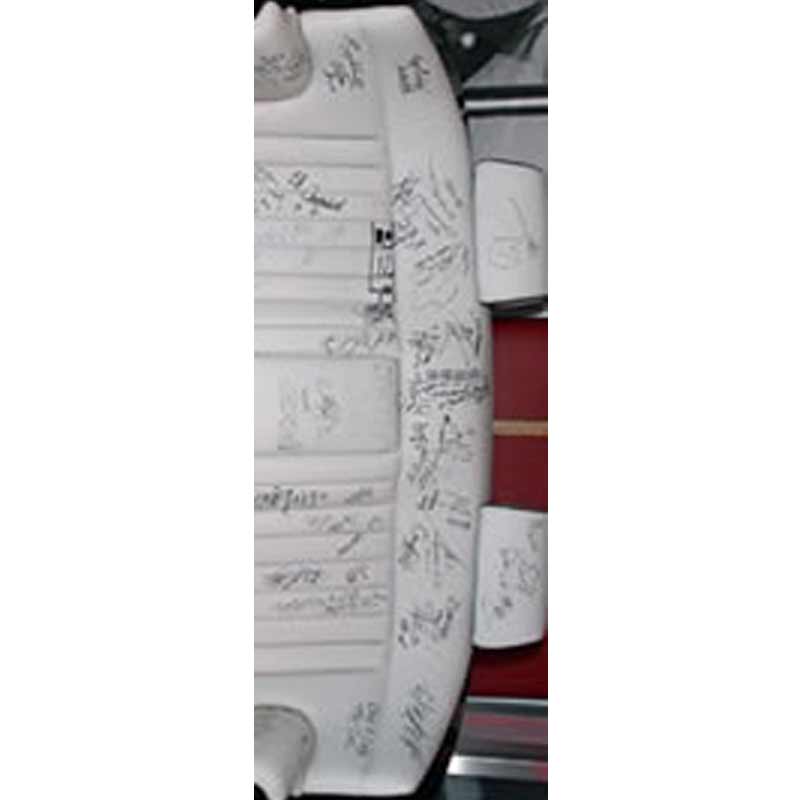
    At last year’s MTV European Music Awards in Lisbon, Rolls-Royce provided a new Phantom and invited artists to autograph the back seat. By the end of the event, more than 20 celebrities had signed, including Black Eyed Peas, Coldplay (Chris Martin pictured below), Nelly Furtado, Craig David, Bob Geldof, Shakira, Formula 1 driver Jenson Button, Foo Fighters and Borat, to name a few.

    Subsequently, the seat was removed from the car and turned into a sofa by up-and-coming furniture designer Nick Gutfreund. The seat was then bought by Hard Rock for $25,000 with Rolls-Royce donating the money to MTV’s Staying Alive Foundation.

    “We are delighted to have been involved with MTV and Hard Rock on such an innovative project,” said Rolls-Royce chairman Ian Robertson. “And one that has raised a considerable sum of money to assist Staying Alive in their continued efforts to prevent the spread of HIV and Aids.”

    MTV’s Staying Alive Foundation (www.staying-alive.org) promotes and supports young people everywhere who are protecting themselves and their communities against the multiple threats posed by the spread of HIV and Aids. The Foundation does this by presenting the Staying Alive Award annually, to young individuals and youth groups who are focused on stopping the spread of HIV and who have demonstrated the potential to become future leaders.