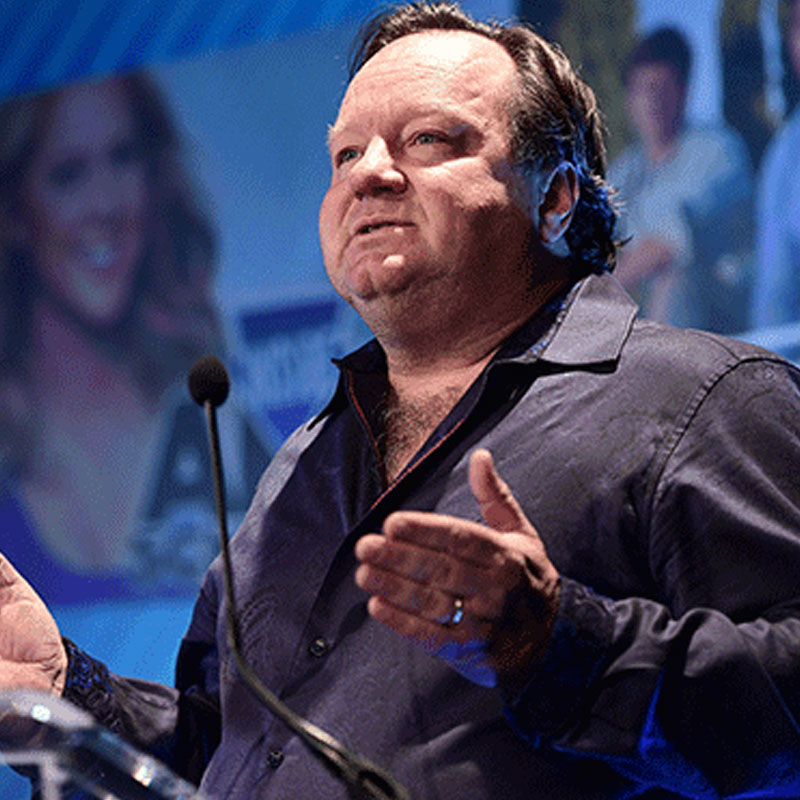
Tag: Bob Bakish

  • Streaming successfully, the ViacomCBS way

    Streaming successfully, the ViacomCBS way

    MUMBAI: A couple of weeks ago, ViacomCBS CEO Bob Bakish announced a new international streaming service – replacing CBS All Access –  which would be launched in the first phase  in Australia, Latin America and  the Nordics in 2021. It would be the second streaming service under the Viacom-CBS umbrella, the first being the free streamer Pluto TV, which it acquired in 2019 for $340 million.

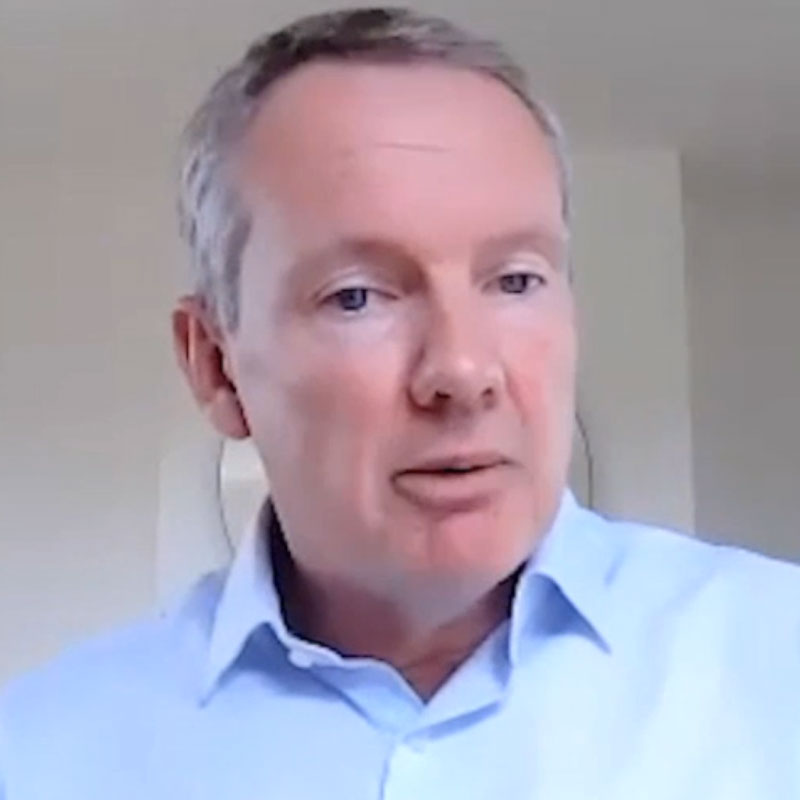
    Speaking at APOS yesterday ViacomCBS Networks International (VCNI) president & CEO David Lynn said that “Asia is a significant territory, the markets there are extremely advanced in OTT and streaming. However, we have not decided on the markets. What differentiates us is the free play we have through Pluto and the paid one through the super streamer we are planning. Having two products allows us the flexibility to decide what plays out where. Indonesia is an advertising- based market whereas Japan is subscriber-oriented. What we know is that the partnerships we have had with mobile in those regions are going to be important, particularly around 5G, and we can work with the operators to market that service.”

    He additionally sees opportunities in Asia for Noggin, the preschool kids services which have been launched internationally on Amazon and Apple channels.

    Lynn revealed that in India, ”Viacom-CBS has a very material successful business in Viacom18 that has been built out over more than a decade. That business-like several other businesses has had the impact of Covid2019, but we are beginning to move past that. We are seeing our production ramp-up again, we are seeing viewership follow the new production and we are seeing the ad markets recovering.”

    He further explained that the strategy for India is similar to the international streaming strategy.  “We have a very successful leading free streaming service in Voot. Then we have a premium paid premium service called Voot Select, which has got off to a significant start,” he said. “The core business is very strong, the move into streaming presents a huge opportunity and is off to a successful start, and not the least because of our partnership with Reliance and their ownership of Jio which is an incredible driver of streaming. “

    Clearly, even as different publications have been going to town writing for the past two years – and more aggressively recently – about the impending merger of Sony with Viacom18, Lynn did not once mention that any such talks were on.

    Lynn further expressed that the new global subscription OTT will have an output premiere deal with Showtime, CBS-All Access, content from Paramount Pictures, MTV, Nickelodeon and Comedy Central. “It is going to be a supersized streaming service,” he said. “With the massive content from Viacom-CBS. “

    Lynn revealed that the 30 countries that Viacom-CBS has operations in and the assets, and relationships, the local content will be leveraged to push the super- sized streaming service.  “We want to become a material player from the advertising, subscription and licensing perspectives and become a market leader in streaming internationally,” he stated.

  • ViacomCBS launches COVID-19 relief fund

    ViacomCBS launches COVID-19 relief fund

    MUMBAI: ViacomCBS has introduced a $100-million fund to support those who have been affected by the production shutdown on account of the COVID-19 pandemic, says a report by Variety. The fund – aimed at helping actors, filmmakers and crew members who have been bearing the brunt of the production shutdown – will also support grants by The Actors Fund and Motion Picture & Television Fund.

    Earlier, companies like WarnerMedia ($100 million), Comcast ($500 million) and Sony ($100 million) launched relief funds to help workers impacted by the pandemic.

    ViacomCBS president-CEO Bob Bakish said in a note to the staff that in these uncertain times, giving back and supporting “the well-being of our families, communities, and ourselves is more important than ever. And I couldn’t be prouder of how our company has come together to provide relief and support to those who need it.”

    The entertainment company has also launched an employee matching gifts programme.

  • ViacomCBS buys 49% of Miramax

    ViacomCBS buys 49% of Miramax

    MUMBAI: ViacomCBS will acquire a 49 per cent stake in Miramax, the Los Angeles-headquartered entertainment company which has been into production and distribution of films and TV shows. beIN Media Group-owned Miramax Films is a renowned global studio with some of the iconic films in its kitty, which include No Country for Old Men, Pulp Fiction, Good Will Hunting, and Kill Bill.

    Under the deal, ViacomCBS will make a cash payment of around $150 million. Also, it will invest $45 million per year over the next five years, totalling $225 million, as working capital for new film and TV productions.

    Both BeIN and ViacomCBS would seek more strategic partnership opportunities in content production and distribution. The deal gives the duo further opportunities for combined distribution of new and old library content.

    Miramax leadership will remain the same.

    ViacomCBS CEO Bob Bakish said: "This partnership with BeIN will be a unique opportunity to gain access to a valuable library, deepening our already substantial pool of IP at a time when demand for premium content is only accelerating. We look forward to working closely with the Miramax management team as we explore new ways to deliver its titles across a variety of platforms and create new, compelling projects."

    Said Nasser Al-Khelaifi, chairman of BeIN: "This represents a major investment in and endorsement of our thriving Miramax business, which has grown in value under BeIN Media Group’s ownership and has a fantastic future ahead with major new movies and unexploited premium dramas. We are thrilled to partner with ViacomCBS and Paramount to explore further opportunities around Miramax's iconic IP, and also at group level, while substantially increasing the scale of our entertainment business."

  • ViacomCBS reports $6.871 bn revenue in Q4

    ViacomCBS reports $6.871 bn revenue in Q4

    MUMBAI: ViacomCBS today reported financial results for the quarter and full year ended 31 December. The company’s full year revenue increased 2 per cent, driven by growth in advertising, affiliate and content licensing. Significantly, it reported the first quarterly earnings as a combined company.

    ViacomCBS reported $6.871 billion revenue compared to $7.092 billion in the same quarter of 2018, down by three per cent. The company also mentioned in a press release that transitional Q4 included merger-related expenses. For the full year, it reported revenue of $27.812 billion.

    “In less than three months since completing our merger, we have made significant progress integrating and transforming ViacomCBS. We see incredible opportunity to realise the full power of our position as one of the largest content producers and providers in the world. This is an exciting and valuable place to be at a time when demand for content has never been higher, and we will use our strength across genres, formats, demos and geographies to serve the largest addressable audience, on our own platforms and others,” ViacomCBS president and CEO Bob Bakish commented.

    ‘In 2020, our priorities are maximising the power of our content, unlocking more value from our biggest revenue lines and accelerating our momentum in streaming. With this as a backdrop, we’ve set clear targets for the year and are providing increased transparency around our business to demonstrate ViacomCBS’ ability to create shareholder value today, as we continue evolving and growing our business for tomorrow,” he added.

    In the quarter, affiliate revenue increased one per cent, as strong growth in reverse compensation, retransmission and subscription streaming revenue more than offset declines in the pay TV landscape. Domestic advertising revenue was affected by significant declines in political advertising compared with the prior-year quarter. Domestic Cable Networks’ advertising revenue grew  nine per cent while content licensing revenue declined 11 per cent due to the timing and mix of deliveries.

    On the full year basis, advertising revenue increased two per cent, driven by five per cent growth in domestic advertising sales, reflecting CBS’ broadcasts of Super Bowl LIII and the NCAA Division I Men’s Basketball Tournament’s national semifinals and championship games, as well as higher revenues from Advanced Marketing Solutions which includes Pluto TV, partially offset by lower political ad spend.

    Affiliate revenue grew three per cent, fueled by 20 per cent growth in reverse compensation and retransmission, as well as strong subscription streaming revenue, which more than offset declines in pay TV subscribers.

    Content licensing revenue rose five per cent, reflecting higher revenues from licensing library and original production to third parties. Domestic streaming and digital video business – which includes subscription revenue and digital video advertising – generated approximately $1.6 billion in revenue.

  • Viacom tops earning estimates in Q4; reports revenues of $3.43 billion

    Viacom tops earning estimates in Q4; reports revenues of $3.43 billion

    MUMBAI: Viacom Inc topped earnings estimates in its fourth quarter earnings reporting revenues of $3.43 billion. The company adjusted earnings of 79 cents per share in the quarter.

    Revenues of the company surpassed Zacks Consensus Estimate by 0.4 per cent and earnings per share beat the Zacks Consensus Estimate by 3.9 per cent. The company’s domestic advertising revenue rose 6 per cent for the quarter and 1 per cent for the full year.

    “Our strong performance in the fourth quarter capped off a pivotal year for Viacom and reflects the successful execution of our strategic priorities to evolve the company for the future. We achieved several important milestones. First, we grew domestic ad sales for the full year, driven by the continued acceleration of Advanced Marketing Solutions,” Viacom president and CEO Bob Bakish said.

    “We also grew full year domestic affiliate revenue, driven by the extended reach of Viacom's distribution across more viewing platforms. And, for the first time in four years, we returned Paramount to full year profitability – a testament to the strength of our strategy and content slate. As we look to the future of a combined ViacomCBS, we’re thrilled with the momentum we have to create one of the world’s preeminent content companies,” he added.

    Viacom Media Networks achieved full year growth in domestic advertising and affiliate revenue, driven by continued acceleration in Advanced Marketing Solutions and advancement in Viacom’s distribution strategy.

    At 30 September , Viacom’s gross debt outstanding was $8.74 billion, a 13 per cent reduction from 30 September, 2018 and adjusted gross debt was $8.09 billion.

  • CBS, Viacom merge to form ViacomCBS Inc

    CBS, Viacom merge to form ViacomCBS Inc

    MUMBAI: US-based media and broadcasting companies, CBS and Viacom, have announced the news of a merger into Viacom CBS Inc. While Viacom will hold approximately 39 per cent of the shares, CBS will own about 61 per cent on a fully diluted basis.

    The all-stock merger creates a combined company with more than $28 billion in revenue, as suggested by media reports.

    Erstwhile CEO of Viacom, Bob Bakish will lead the new entity as president and CEO.

    Media proprietor and chairman & CEO of CBS Joseph Ianniello will continue in his role.

    Other key employments include Christina Spade as executive VP and chief financial officer, and Christa D’Alimonte as executive VP, general counsel and secretary.

    The board of directors will consist of 13 members: six independent members from CBS, four independent members from Viacom, the president and CEO of ViacomCBS and two National Amusements designees. Shari Redstone will be appointed chair.

    Bakish said, “Today marks an important day for CBS and Viacom, as we unite our complementary assets and capabilities and become one of only a few companies with the breadth and depth of content and reach to shape the future of our industry. Our unique ability to produce premium and popular content for global audiences at scale—for our own platforms and for our partners around the world—will enable us to maximise our business for today, while positioning us to lead for years to come. As we look to the future, I couldn’t be more excited about the opportunities ahead for the combined company and all of our stakeholders—including consumers, the creative community, commercial partners, employees and, of course, our shareholders.”

    Ianniello said, “This merger brings an exciting new set of opportunities to both companies. At CBS, we have outstanding momentum right now—creatively and operationally—and Viacom’s portfolio will help accelerate that progress. I look forward to all we will do together as we build on our ongoing success. And personally, I am pleased to remain focused on CBS’s top priority—continuing our transformation into a global, multiplatform, premium content company.”

    Vice chair of the boards of directors for CBS and Viacom Shari Redstone said, “I am really excited to see these two great companies come together so that they can realise the incredible power of their combined assets. My father once said ‘content is king,’ and never has that been more true than today. Through CBS and Viacom’s shared passion for premium content and innovation, we will establish a world-class, multiplatform media organisation that is well-positioned for growth in a rapidly transforming industry. Led by a talented leadership team that is excited by the future, ViacomCBS’s success will be underpinned by a commitment to strong values and a culture that empowers our exceptional people at all levels of the organisation.”

    The combined entity will house a portfolio of consumer brands, including CBS, Showtime, Nickelodeon, MTV, BET, Comedy Central and Paramount Network, as well as one of the largest libraries of IP, spanning every key genre and addressing consumers of all ages and demographics. This library comprises 140,000-plus TV episodes and 3,600-plus film titles. The combined company will also have more than 750 series currently ordered to or in production.


  • Bob Bakish on turning around Viacom, tie up with CBS, company’s culture and future

    Bob Bakish on turning around Viacom, tie up with CBS, company’s culture and future

    MUMBAI: Viacom CEO Bob Bakish describes his tenure at the giant company using two words – turnaround and evolution. At the end of 2016, Paramount Pictures was coming off a year where it had lost half a billion dollars and consumed another billion in cash. There was friction with distributors with the company’s cable networks not performing as they should have. It highlighted a trend line that was moving in the wrong direction. Cut to 2019, Paramount has delivered an earnings improvement in seven straight quarters with earnings improvement. The studio produced films that matter and made money on them. The television business delivered 400 million dollars in revenue, putting out nine series. Bakish has scripted one of the most fascinating times in the media and entertainment world with his work as CEO of Viacom. At CES 2019, he sat down for a fireside chat to reveal how we made it happen. Here are the excerpts of that insightful conversation with Variety.

    You’ve been on record recently saying Viacom doesn’t require a transformational deal. In this environment there were companies even bigger than yours are consolidating. How is that position tenable?

    Look, we and I, continue to believe there’s a lot of value in the assets we already own. In 2016 people thought that MTV was dead and buried but today it is the fastest growing network in television. Its audience is up again, in the current quarter, in double digits and we are already beginning to benefit from that resurgence from a monetisation standpoint… there’s a lot of value to the assets we already own. We, unlike most media companies, are truly a global operating media company, we don’t just have sales forces outside the US, you know we own the number one broadcast network in Argentina, we are major broadcaster on Channel 5, we are making content all over the world. We own half of the leading Indian media company called Viacom18 which owns the Colors brand. There’s a lot of value there and if you think about the transition we are in from an industry standpoint. Back in February of ’17 we started talking about something we call a flagship brand which was partially about prioritisation but it was also about unlocking opportunities through multi-platform expression. If you look at MTV, it’s only not only a linear cable network with substantial programming slate, but it also has a piece of the Paramount film slate. We started a digital native division called the Viacom digital Studios which produces original content in short form for distribution both in front of the wall social and other places… that has dramatically taken us from number 22 in space into top 10. There’s a lot of opportunity and when we got to our fourth fiscal quarter of ’18 we saw our company to return to growth, something that hasn’t been the case since ’14. So, we think there’s a lot of growth ahead.

    And relative to some of our peers, we are further along in making this transition. Look at the ad business, it’s not all 30 seconds up. We got an advanced ad business with significant branded content assets, significant data-driven assets. We can insert dynamically in 90 per cent of the VoD homes in the US. Something nobody else we can do. We have been doing M&A, we have been doing what I call accelerant deals. We bought a company called Whosay, a branded content company, which clearly increased our capabilities in the lower-end of the branded content space from a price perspective which is important. We also bought a company called Vidcon which is ground zero for social influencers… it has really strengthened our legacy with young-adult audiences and associated talented and it is also an extension of our experiential business, we most recently bought a company called Awesomeness which people think of as a web company and it’s true that they are an expert in marketing content on web but it’s also true it’s a studio in its own right. And increasing our participation in creation of content including for third parties is a big push we are making as a company and that Awesomeness has produced among other things “To All the Boys I have Loved Before”, which was amongst the most watched shows on Netflix.

    But these are very small deals. Are you going to look at making bigger deals or are you looking at more of the same smaller deals?

    Scale is very much in vogue, vertical integration is very much in vogue. If you look at the history of the industry in certain media vertical integration doesn’t tend to work, bigger is not always better. I don’t think that is the necessary path. What is really important is that you have a plan and you know where you are going and you’re executing against and you are achieving growth and that’s exactly what we are doing.

    Let’s address the elephant in the room. There’s a plenty of speculation that Viacom and CBS can be combined this year. How do you manage for you know an uncertain future? Do you have a distinct vision that you are planning for Viacom with smaller acquisitions or are you trying to build for a bunch of different possible futures?

    I’m a huge believer in having a plan. Our plan is fundamentally based on the assets we have because that is the only thing I can bet on for sure. We got to focus, we got to play through, we got to execute, we got to grow because there’s only one thing I know for sure that at the end of the year you are going to be talking to me or you are going to be talking to somebody else. What you don’t want to have to say is that ‘well yeah we had this opportunity but we got distracted and we didn’t get it done’. So our mission continues to be focussed on the assets that we have, focus on execution, look broadly to capture value and opportunistically see what else happens, and that’s what we do day in and day out and that’s what we’ll keep doing.

    However, in this climate where the pay-TV business is challenged, you guys are dealing with your tensions with some of major distributors. That could end up dropping key channels. How do you manage the future?

    You have to make sure you’re adding values. Point one and two is that you have to recognise how the world is changing. To the first point, talking about what we are doing in distribution, we broadened our ability to add value for our mutual benefit, both our partner’s benefit and Viacom’s benefit and certainly our whole extension to advanced advertising, what we call AMS, is fundamental to that.

    The second thing I would say in terms of how the world is changing is the fundamental thing is going on is fragmentation in terms of how people access content. In the television space 85 per cent people had the same product and that was big basic and that was very nice structure. Today, that’s no longer true and it continues to fragment. So you have a vast majority of the people in the highest priced segment, but you got people at 45 dollars, that price is starting to creep up as people are trying to make economic businesses there. We have people in teens, people around 10 bucks in terms of the SVoD space, then you have some single digit numbers and then you have free, the AVoD mode. So, that world is not going to change, that’s the world we are going to live in, and what’s important is that we take these called flagship brands and we make sure that we participate in all those levels. The big basic levels, that’s fairly obvious… you know we are active in VMVPD in the OTT space, we are also active in the SVoD space through our third party production business.

    Are those deals in the future big enough?

    We are in the state of transformation of our industry. You can either view that as glass half full or half empty. I view it as half full. Global distribution really is the catalyst that will turn this whole decline of television argument on its head because you have 3G, soon 4G, never mind 5G as 5G is more about fixed broadband. It will eventually be handset. If you have 500 million pay TV homes outside the US at the high side, probably 300 million quality ones, if you take out India and China. These kinds of deals where you bring in product either products that look like exactly what you get on television so that’s Telefonica and aggregated product that combines a lot of different things under one brand.

    We are in Indonesia with a mobile carrier that has 160 million subscribers. We have Nick Play and Nick Junior Play apps which provide access to that product on an on-demand basis. Some of these are through a third party intermediary, you could think Amazon channel store, and some of these are called B2B2C deals with carriers. You could think about Telefonica or Telenor or Telecom Cell. Now in this kind of hybrid economy of distribution, unfortunately, everybody doesn’t get the same thing, people are getting different products bigger bundles or smaller bundles.

    So you look at the difference between Sling and Dish in the US. For us we are carried on both, but all the Sling ads are dynamic, we can insert a specific ad to a specific person based on specific data. On the Dish platform we can’t do that, for obvious reasons, it’s a DTH going down, we can’t do it because of some technical work but that is another big move forward in terms of our ability to create values and we are in the super early days of that.

    So your focus will be more and more on production now, and what’s interesting about that is if there is a double edged sword to the success there. Doesn’t it make it harder for you to get eyeballs because people are watching your content on Netflix or Facebook? Doesn’t it hurt your core business?

    No, it doesn’t. For two reasons, one is whether we make a show for Facebook or not it’s not going to influence whether they have shows on their platforms. Point two is the most important thing from a consumer perspective and that is to continue to have our flagship brand on top for consumers that think about entertainment. And that entertainment might be going to see a movie in a theatre, on your flat screen watching pay video bundle or access to product on an app. Out of the extended ecosystem of entertainment experience associated with these brands that cross this fragmented environment is what it’s all about. It provides great solutions for advertisers. It’s all about being able to get reach to say men 18-34, which is not easy to reach these days, it is harder than ever. Use a cross-section of platforms, leveraging our linear distribution, adding our app distribution, adding our over the top distribution, adding our Viacom Digital Studios product, in branded content, in a programme that synchronised to reach that 18-34 group.

    How did you energise thousands of employees especially at Viacom, because looking at their world, there is pessimism, there is negativity. How did you get people going?

    You have a plan and you have to make sure people understand what it is and how they fit in and both you and they can understand if you are making progress and if so it is the path you want to take. Or if you are not making progress in one year you can see if you want to take some different direction. If you talk to people at Viacom they fundamentally believe in our plan. That we are actively participating in places that we haven’t before including providing original content on a day-in-day-out basis to the AVOD digital stratosphere and that we are acting in advance. In total, we actually grew the earnings of the company and all of that is the culture of content. Whether you make short-form, long-form, feature-length or event, whether you are on the creative side, monetisation side, or sports side, they all are working in this culture of content and they see the progress we’re making. I know because I talk to them, at least quarterly, I talk to them on Facebook live and take questions and ask them do you see the progress. Because at the end of the day people are pretty simple, it comes down to what’s in it for them and that is the future.

    Here at Las Vegas with CES you are spending a lot of time. What are the kind of technologies that are catching your eye?

    If you think about the fundamentals of our business there are kind of two things we are working on. One is we get the consumers to spend more time, that’s important, and two is that you are getting paid for it. If you have those two things, everything else can sort itself out. And if you look at the arc of consumption, I remember because I’ve been in this business 30 odd years when second TV sets starting showing up in scale in kids’ bedrooms and other places and that drove more minutes. That was a good thing and then more reasons like computers with infrastructures started to show up in places like offices and that wasn’t really in the heavy video space but there were more impressions and of course much more recently you get into over the top and you get into mobile and that’s much more ton of a product. There are two things that are coming like a freight train. One is the continuing acceleration of broadband infrastructure both in the name of 5G which is definitely coming as you all know, maybe its fixed broadband first but that’s going to flood in and all the wireless carriers when you talk to them all they say we need use cases and certainly entertainment is a use case and the other thing that’s got less press at CES is 10G and that’s the cable industry talking about their next length. They are delivering 1G now and their next push is to deliver 10x that which will be five years or something. 5G autonomous cars that people don’t have to drive is also coming. So just like adding a TV set to a bedroom or adding mobile on the go, the last vestige of video free consumption is automobile.

  • Cyma Zarghami exits Nickelodeon; Sarah Levy named interim head

    Cyma Zarghami exits Nickelodeon; Sarah Levy named interim head

    MUMBAI: Nickelodeon Group president Cyma Zarghami has stepped down from her position after 30 years with the network.

    While Viacom conducts a comprehensive search for a successor to lead Nickelodeon, Sarah Levy, chief operating officer of Viacom Media Networks, will lead the brand on an interim basis.

    During the transition, Levy will work closely with Nickelodeon’s leadership team to manage the brand’s operations. Their focus will be to successfully launch Nickelodeon’s largest-ever content pipeline of more than 800 new episodes and accelerate the brand’s push into new and next-generation viewing platforms, film, live experiences and consumer products, international media reports stated.

    Zarghami joined Nickelodeon in 1985 and was named its president in 2006. Under her leadership, Nickelodeon has become a leading global brand for kids, spanning linear and multi-platform programming, film, live experiences and consumer products. Along the way, Zarghami recruited and cultivated high-performing, diverse talent that always reflected the next generation of kids, and the brand continues to attract the industry’s leading creatives and personalities. Today, Nickelodeon has the highest share of total viewing in kids’ television.

    Nickelodeon, now in its 39th year, includes television programming and production in the United States and around the world, plus consumer products, digital, recreation, books and feature films. Nickelodeon and all related titles, characters and logos are trademarks of Viacom Inc., which is a premier global media brand that creates entertainment content including television programs, motion pictures, short-form content, games, consumer products, podcasts, live events and social media experiences for audiences in 183 countries.

    Viacom president and CEO Bob Bakish was quoted in a report as saying, “Over the course of her career, Cyma has played an integral role in growing Nickelodeon into the dominant force in kids’ entertainment. Her instincts for creating content and experiences that kids love have been vital to the brand’s success around the world. Looking to the future, we are excited to build on this strong foundation as we continue to evolve the business and connect with young audiences in new and innovative ways. I want to extend my deepest gratitude to Cyma for her leadership and wish her every success.”

    Viacom’s media networks, including Nickelodeon, Nick Jr., MTV, BET, Comedy Central, Paramount Network, VH1, TV Land, CMT, Logo, Channel 5 (UK), Telefe (Argentina), Colors (India) and Paramount Channel, reach approximately 4.3 billion cumulative television subscribers worldwide.

  • Viacom reports lower revenue for Q1 2018

    Viacom reports lower revenue for Q1 2018

    BENGALURU: American multinational media conglomerate with interests primarily in cinema and cable television, Viacom Inc (Viacom) reported lower numbers for the quarter ended 31 December 2017 (Q1 2018, quarter under review) as compared to the corresponding year ago quarter Q1 2017 (y-o-y). The company reported 7.6 percent y-o-y decline in revenue for Q1 2018 at $3,073 million from $3,324 million. Two segments are revenue heads for the company – Media Networks; and Filmed Entertainment.

    The drop in revenue reflected declines in both segments says the company in its earnings release. Operating income increased 1.6 per cent y-o-y to $717 million from $706 million, primarily reflecting lower total expenses including the impact of a $42 million restructuring charge recognised in the prior year quarter. Net earnings from continuing operations attributable to Viacom grew 35 per cent, or $139 million, to $535 million, principally due to the enactment of tax reform. Diluted earnings per share for the quarter increased $0.33 to $1.33, and adjusted diluted earnings per share decreased $0.01 to $1.03.

    Media Networks

    Media Networks revenues decreased 1.1 per cent to $2,560 million in the quarter, as a 1 per cent increase in advertising revenues to $1,308 million was more than offset by a 4 per cent y-o-y decrease in affiliate revenues to $1,094 million. Domestic revenues declined 6 per cent to $1.93 billion while international revenues grew 18 per cent to $631 million. Excluding a 5-percentage point favourable impact from foreign exchange, international revenues increased 13 per cent in the quarter, primarily driven by a 6-percentage point favourable impact from the acquisition of Telefe, as well as growth in Europe.

    Domestic advertising revenues decreased 5 per cent to $937 million, reflecting lower linear impressions partially offset by higher pricing, as well as growth in digital advertising revenue. International advertising revenues increased 22 per cent to $371 million. Excluding a 5-percentage point favourable impact from foreign exchange, international advertising revenues increased 17 per cent, principally due to a 10-percentage point favourable impact from the acquisition of Telefe, as well as growth in Europe.

    Domestic affiliate revenues decreased 8 per cent to $907 million, primarily due to subscriber declines and lower SVOD revenues, partially offset by rate increases. International affiliate revenues grew 18 per cent to $187 million in the quarter.

    Excluding a 5-percentage point favourable impact from foreign exchange, international affiliate revenues grew 13 per cent driven by organic growth, as well as a 2-percentage point favourable impact from the acquisition of Telefe.

    Ancillary revenues grew 5 per cent to $158 million in the quarter, including a 2-percentage point favourable impact from foreign exchange. Domestic ancillary revenues increased 8 per cent to $85 million and international ancillary revenues increased 1 per cent to $73 million.

    Adjusted operating income for Media Networks decreased 7 per cent to $913 million in the quarter, principally due to an increase in segment expenses and lower revenues

    Filmed Entertainment

    Filmed Entertainment revenues decreased 28 per cent to $544 million in the quarter, with domestic revenues down 42 per cent to $270 million, and international revenues down 6 per cent to $274 million. Theatrical revenues declined 48 per cent to $100 million due to the number and mix of current quarter releases. Domestic and international theatrical revenues decreased 49 per cent and 46 per cent, respectively.

    Licencing revenues decreased 13 per cent to $213 million in the quarter. Domestic licensing revenues decreased 36 per cent while international licencing revenues grew 8 per cent, primarily driven by the mix of titles available in each market.

    Home entertainment revenues were down 25 per cent to $183 million, principally due to the comparison against the release of Star Trek Beyond in the prior year quarter. Domestic home entertainment revenues decreased 38 per cent while international revenues increased 1 per cent. Ancillary revenues decreased 38 per cent to $48 million, with domestic ancillary revenues down 49 per cent and international ancillary revenues up 27 per cent.

    Filmed Entertainment reported an adjusted operating loss of $130 million in the quarter compared to $180 million in the prior year quarter, an improvement of $50 million that primarily reflects lower operating expenses.

    Company speak

    Viacom President and CEO Bob Bakish said, “In the quarter, Viacom aggressively drove progress on our strategic plan, delivering improvements in our business and positioning the company for the future. Viacom’s most watched portfolio of domestic cable brands grew viewership share in the quarter, led by our powerful flagship networks, which now includes Paramount Network – the biggest and most ambitious network rebrand in our history. Internationally, we continue to deliver double-digit top-line and bottom-line Media Networks gains while launching innovative new partnerships in growth territories around the world.

    Adding further, Bakish said, “Viacom has also made considerable progress in its push to accelerate consumption and monetisation on next-generation platforms, achieving substantial growth in worldwide digital advertising revenues, expanding distribution on fast-growing virtual MVPD and mobile services, and ramping up resources and talent at Viacom Digital Studios. Additionally, since the end of the quarter, we continued to expand our digital capabilities with the acquisition of influence marketer WHOSAY and the world’s premier online video event, VidCon. In addition, our strategy to further diversify our core properties offscreen through live events, hospitality and consumer products continues to progress, with the much anticipated Broadway premiere of the SpongeBob SquarePants musical in the quarter, along with new initiatives across our portfolio.

    “We remain deeply committed to maintaining strong financial discipline and delivering returns for our shareholders. In the quarter, Viacom continued to improve its leverage profile and we are on track to achieve $100 million in new cost savings in the current fiscal year, and hundreds of millions more in 2019,” concluded Bakish.

    Also Read:

    TV18 to increase Viacom18 stake to 51%

    Sudhanshu Vats on Viacom18’s growth strategy and why data analytics is key

    Viacom Inc misses EPS forecast but revenue beats expectations

  • Viacom Inc misses EPS forecast but revenue beats expectations

    Viacom Inc misses EPS forecast but revenue beats expectations

    Even as its India business, Viacom18, celebrates its 10th anniversary, Viacom Inc’s stock on Nasdaq came under pressure after missing the earnings per share (EPS) forecast for the fourth quarter ended September 30, 2017. The company also reported financial results for the fiscal year ended September 30, 2017.

    The EPS for the quarter stood at 77 cents as against Wall Street’s estimate of 85 cents. For the corresponding period last year, the EPS were 69 cents.

    During the fourth quarter of 2017, Viacom reported operating income of $705 million as compared to $332 million during the quarter in 2016. Net income for the quarter under review was $674 million, a significant increase over last year ($252 million).

    Despite missing the EPS estimate for the quarter, the company did report revenue of $3.32 billion. This is better than its revenue of $3.23 billion from the same quarter of the previous year. It also beat out Wall Street’s revenue estimate of $3.24 billion for the fiscal fourth quarter of 2017.

    Viacom President and chief executive officer Bob Bakish said, “In the fourth quarter and full year, we made strong progress against our plan to fundamentally stabilise and revitalise Viacom, with top line gains in both Media Networks and Filmed Entertainment segments driven by continued execution on our strategic priorities. We saw significant ratings increases across the portfolio, which drove sequential improvement in domestic advertising; our international business continues to expand, delivering double-digit revenue increases; and Paramount is demonstrating growth across multiple revenue streams as it rebuilds the theatrical slate and continues to grow its TV production business.”

    He added that the company had completed several multi-year renewals of major distribution contracts, including the recent agreement with Charter, which secure broad, long-term carriage of Viacom’s networks for subscribers and expand its relationships with distributors through new advanced advertising and content production partnerships.

    The company established a stable base while reducing debt and improved free cash flow during the quarter.