Tag: Bluff Master

  • Besharam: Wasting Ranbir Kapoor… and family

    Besharam: Wasting Ranbir Kapoor… and family

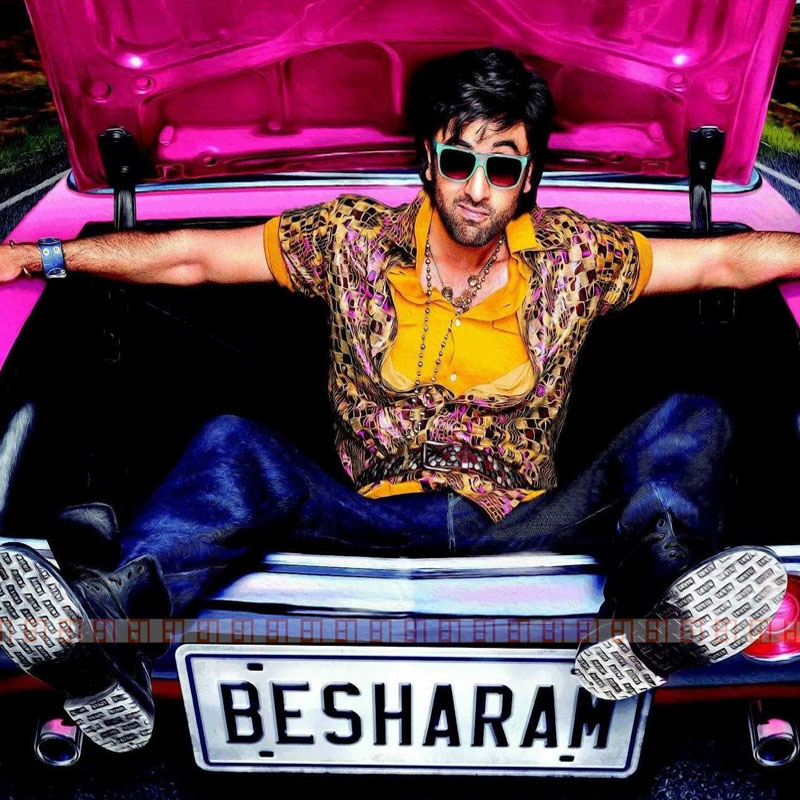
    MUMBAI: Totally bankrupt of imagination or ideas, Besharam takes refuge in past formulas. The film has a dream cast and all the resources necessary at the makers’ disposal except, of course, talent on the part of the writers as well as the director. The film takes one back to certain forgettable films Shammi Kapoor did during 1960 which had titles which promised mediocre fare to start with: Janwar, Laat Saheb, Bluff Master, Budtameez etc. The hero in such a film had no character, no family background to boast of, lived a totally wayward life and yet dreamt of romancing a rich and khaandani ‘iklauti waris’ belle. So the story, if one may call it that, is sourced from that era and with a hangover from the director’s recent film Dabangg, the hero, Ranbir Kapoor, is expected to deliver a Shammi Kapoor-like vehicle in Salman Khan style!

    Producer: Sanjeev Gupta, Himanshu Kishan Mehra.
    Director: Abhinav Singh Kashyap.
    Cast: Ranbir Kapoor, Rishi Kapoor, Neetu Singh, Pallavi Sharda, Javed Jaffrey, Himani Shivpuri.

    Ranbir Kapoor is a car thief and the justification is that he is an orphan brought up in an orphanage and such a lad (at least in the films) is never expected to grow into a normal, law abiding citizen. So he steals cars in Delhi and sells them to a Sikh wheeler dealer in Chandigarh who, in turn, has a ready buyer for all such cars in Javed Jaffrey. Jaffrey is a bad man who needs a new car every day because he is into the hawala business; he collects crores in India and delivers the same in Switzerland after duly deducting his cut. Now, the hawala business is much older than cars and all it needs is a telephone and resources on both side, but never mind!

    Ranbir may be the best in his business but the first car he is shown stealing is such a shoddy job he has half the police force, lead by Rishi Kapoor and Neetu Singh, chasing him. At least that provides the film with its one customary chase sequence (with a futile attempt to make it funny). And since it is a Delhi film, there has to be one colourful shaadi sequence which can also bring the hero and the girl in contact. So Ranbir meets Pallavi Sharda landing up at a wedding in her brand new red Mercedes and, since she does not fall for Ranbir trying to act fresh, he decides to join the wedding celebrations as well and dance into her heart. But as soon as the naach-ganaa is over she gives Ranbir the cold shoulder again. Dejected he decides to take a car instead since he failed to take the girl with him.

    Ranbir soon learns that the Mercedes he stole belongs to Pallavi, the very girl he is trying to woo, with a lot of encouragement from her mother, Himani Shivpuri. Now he embarks on a mission to get her car back, the fact that he has sold it to the maniacal killer Jaffrey notwithstanding. It is the least he can do for the girl he loves. Of course, Pallavi has to accompany him to Chandigarh so that she discovers the nobler side of him and the process of love can become a two-sided affair. It is time for action, this time of the jumping-from-rooftops kind. The car is recovered; the girl has fallen in love with the boy more than he ever loved her. And, just when they return to Delhi and think all is well, Jaffrey happens to miss a few crore hawala money stashed in the boot of the car. Jaffrey descends on Delhi with his army of goons armed with rocket launchers, machine guns and handguns.

    The climax has to be a crowded affair, so gathered on screen are all the kids from the orphanage (which has only male occupants, it seems), Rishi Kapoor and Neetu Singh, who were forgotten after the initial chase and bunch of policemen.

    While the lack of creativity is glaringly obvious in scripting and direction, even when it comes to being crude, it is poor in taste and unnecessary! Who needs a watchman in the background in a scene picking his nose very consciously till he is told ‘Cut, very good’ or Rishi Kapoor sitting on the toilet and passing loud farts? It is unnecessary. The making is very crude. Choreography is all crowds and no grace. Dialogue needed some sharp one-liners. Musically, only one song is hummable though on familiar lines and that is Dilka jo haal hai… Performance wise, Ranbir is good in patches; he tries to be too loud which is unlike him (and, isn’t that a wig he is sporting!?). Rishi Kapoor is good. Neetu Singh is okay. Pallavi Sharda does not quite charm the viewer.

    Besharam may have no worries commercially having recovered most of its investment even before its theatrical release backed by a national holiday (2nd October, Gandhi Jayanti) multiple screen release strategy, but the film does not do credit to its hero, Ranbir, or to Rishi and Neetu’s stature.

  • Besharam: Wasting Ranbir Kapoor… and family

    Besharam: Wasting Ranbir Kapoor… and family

    Totally bankrupt of imagination or ideas, Besharam takes refuge in past formulas. The film has a dream cast and all the resources necessary at the makers’ disposal except, of course, talent on the part of the writers as well as the director. The film takes one back to certain forgettable films Shammi Kapoor did during 1960 which had titles which promised mediocre fare to start with: Janwar, Laat Saheb, Bluff Master, Budtameez etc. The hero in such a film had no character, no family background to boast of, lived a totally wayward life and yet dreamt of romancing a rich and khaandani ‘iklauti waris’ belle. So the story, if one may call it that, is sourced from that era and with a hangover from the director’s recent film Dabangg, the hero, Ranbir Kapoor, is expected to deliver a Shammi Kapoor-like vehicle in Salman Khan style!

    Ranbir Kapoor is a car thief and the justification is that he is an orphan brought up in an orphanage and such a lad (at least in the films) is never expected to grow into a normal, law abiding citizen. So he steals cars in Delhi and sells them to a Sikh wheeler dealer in Chandigarh who, in turn, has a ready buyer for all such cars in Javed Jaffrey. Jaffrey is a bad man who needs a new car every day because he is into the hawala business; he collects crores in India and delivers the same in Switzerland after duly deducting his cut. Now, the hawala business is much older than cars and all it needs is a telephone and resources on both side, but never mind!

    Ranbir may be the best in his business but the first car he is shown stealing is such a shoddy job he has half the police force, lead by Rishi Kapoor and Neetu Singh, chasing him. At least that provides the film with its one customary chase sequence (with a futile attempt to make it funny). And since it is a Delhi film, there has to be one colourful shaadi sequence which can also bring the hero and the girl in contact. So Ranbir meets Pallavi Sharda landing up at a wedding in her brand new red Mercedes and, since she does not fall for Ranbir trying to act fresh, he decides to join the wedding celebrations as well and dance into her heart. But as soon as the naach-ganaa is over she gives Ranbir the cold shoulder again. Dejected he decides to take a car instead since he failed to take the girl with him.

    Ranbir soon learns that the Mercedes he stole belongs to Pallavi, the very girl he is trying to woo, with a lot of encouragement from her mother, Himani Shivpuri. Now he embarks on a mission to get her car back, the fact that he has sold it to the maniacal killer Jaffrey notwithstanding. It is the least he can do for the girl he loves. Of course, Pallavi has to accompany him to Chandigarh so that she discovers the nobler side of him and the process of love can become a two-sided affair. It is time for action, this time of the jumping-from-rooftops kind. The car is recovered; the girl has fallen in love with the boy more than he ever loved her. And, just when they return to Delhi and think all is well, Jaffrey happens to miss a few crore hawala money stashed in the boot of the car. Jaffrey descends on Delhi with his army of goons armed with rocket launchers, machine guns and handguns.


    Producer: Sanjeev Gupta, Himanshu Kishan Mehra.
    Director: Abhinav Singh Kashyap.
    Cast: Ranbir Kapoor, Rishi Kapoor, Neetu Singh, Pallavi Sharda, Javed Jaffrey, Himani Shivpuri.

    The climax has to be a crowded affair, so gathered on screen are all the kids from the orphanage (which has only male occupants, it seems), Rishi Kapoor and Neetu Singh, who were forgotten after the initial chase and bunch of policemen.

    While the lack of creativity is glaringly obvious in scripting and direction, even when it comes to being crude, it is poor in taste and unnecessary! Who needs a watchman in the background in a scene picking his nose very consciously till he is told ‘Cut, very good’ or Rishi Kapoor sitting on the toilet and passing loud farts? It is unnecessary. The making is very crude. Choreography is all crowds and no grace. Dialogue needed some sharp one-liners. Musically, only one song is hummable though on familiar lines and that is Dilka jo haal hai… Performance wise, Ranbir is good in patches; he tries to be too loud which is unlike him (and, isn’t that a wig he is sporting!?). Rishi Kapoor is good. Neetu Singh is okay. Pallavi Sharda does not quite charm the viewer.

    Besharam may have no worries commercially having recovered most of its investment even before its theatrical release backed by a national holiday (2nd October, Gandhi Jayanti) multiple screen release strategy, but the film does not do credit to its hero, Ranbir, or to Rishi and Neetu’s stature.
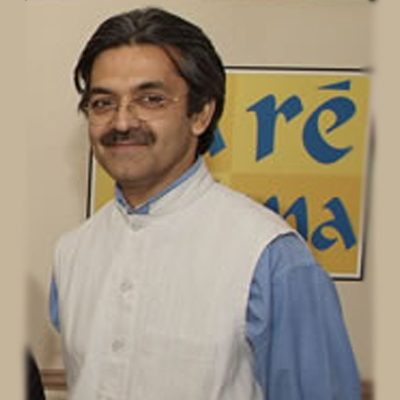
  • ‘Expanding home video relationships with the Hollywood studios into other areas will be a big ticket for us’ : Subroto Chattopadhyay – RPG Enterprises – Ent. Sector president and CEO

    ‘Expanding home video relationships with the Hollywood studios into other areas will be a big ticket for us’ : Subroto Chattopadhyay – RPG Enterprises – Ent. Sector president and CEO

    Saregama, India’s oldest music company, is in makeover mode. Having slipped into the red with a net loss of Rs 211 million in the nine-month period ended 31 March 2004, the RPG Group company has chalked out a five-year growth plan in music, movies, TV content, home video, events and digital formats.


    The man responsible for this new script: RPG Enterprises – Entertainment Sector president and CEO Subroto Chattopadhyay. The company has turned around and in FY06 posted a net profit of Rs 88.7 million on a turnover of Rs 1.19 billion.


    The focus so far has been to put in place the management bandwidth for running the businesses. Now it is all set to execute these plans and scale up operations as a content company available on all platforms.


    In an interview with Indiantelevision.com’s Sibabrata Das, Chattopadhyay talks of the efforts made to regain the grand old company’s status as a creative hothouse and of the challenges he faces in establishing Saregama as an entertainment powerhouse with stress on bottomline.


    Excerpts:

    How has Saregama managed to turn around after slipping into the red?

    We have put in place a five-year strategy. We have decided where to place our bets and where to withdraw. We, for instance, have taken a stance that we won’t get into owning radio stations. We have divided our businesses, are getting into adjacent areas and have identified touch points.

    What is the plan for the music business with T-series grabbing the lion’s share in acquiring rights to new Hindi movies?

    We have decided to be a content company in music and not a distributor of CDs and cassettes. We will create, acquire and make available to consumers music while remaining platform agnostic. We will be exploiting different delivery systems like mobile and radio. That is a positioning we have taken as part of our restructuring strategy. And we are buying music rights for new Hindi movies like Gangster, Bluff Master, Anwar, Kaliyug and Vivah.

    Have you tied up with the mobile and FM radio station operators?

    We are doing such deals through the Indian Performing Rights Society (IPRS) and the Phonographic Performance Ltd (PPL). That is a strategic decision which we took upfront. We have tied up with all the mobile operators. We also see upside in revenues from radio stations which would soon be springing up across the country. Out of our total revenues, 15 per cent comes from digital format. Our earnings from digital exploitation should go up. Digitisation is critical to our business model.

    What are your digital initiatives?

    We are launching an entertainment portal and it is likely to be called saregama.com. The aim is to make it the digital supermarket of entertainment. Consumers can download music and later on we will add movies. We are behind schedule by four months as we are adding many other features.

    How much of Saregama’s library is digitised?

    We have digitised 190,000 out of the 300,000 tracks we own. We will have the remaining content digitised and work on it will start by April-May. This process, in fact, has helped us discover our vast library. We, for instance, came to know that we have 30,000 tracks in Tamil. The challenge is for us to go out and make our products locally relevant.

    Valuations are too high at this stage for acquisitions. We are in the make rather than buy mode

    Saregama had stopped producing movies as it started losing money. Why is it making a re-entry?

    When we sat down and took stock of the company, we decided that we had to be on the content side of the business. We identified our second vertical should be films because it is adjacent to music. The ecosystem is changing and we believe technology will have an impact. The game will change dramatically and we won’t have to depend entirely on the current star-loaded model.

    What is the business model you are adopting?

    We have identified creative people to head the business. We have taken on board BR Sharan of Lalita-ji Surf ad fame and noted film actor-director Aparna Sen who will look after the Hindi and Bangla movies. We will be producing movies in these two languages initially. Bangla is a widely spoken language and the overseas population (including Bangladesis) is large. There is shortage of good content and we can create a business out of this market. Noted cinematographer Vijaylakshmi will also be involved.

    What will be the budget size and how many movies will Saregama be producing in a year?

    We may start with mid-budget movies and see how we can scale up along the way. We have just taken in the people and will be firming up the business plan within three months. We will try and build a financial logarithm to movie making. Our focus will be to make good movies with strong scripts.

    Saregama already produces TV content in the southern languages. Will you be expanding into Hindi as well?

    We produce 14 hours of programming per week for the Sun group of channels. We will be transferring that capability to the other languages. We have Sharan, Sen and Vijaylakshmi to take care of the TV content business.

    Saregama was in negotiations to buy controlling stake in K Balachandar’s TV content company Min Bimbangal, but the talks failed. Is there a conscious decision not to take the acquisition route?

    We are in the phase where we realise that capability build up is crucial to us. We were in the buy mode, but now have decided to be rather in the `make your own product’ mood. Valuations are too high at this stage and the overall company philosophy is that we make rather than buy. It is because of a mix of both these reasons that we are not acquiring.

    Do you have plans to ramp up your home video business?

    We are exclusive partners with some major Hollywood studios like Paramount, Warner Bros, Universal, Dreamworks and MGM for distribution of their home videos in India. We have access to 20,000 films and it contributes around Rs 250-300 million to our revenues. It is a nice business to be in. If we can expand our relationships with the studios into other areas, it will be a big ticket for us. We also distribute Hindi movies but our fundamental positioning in the home video segment is that we provide the best of international flavour.

    Moser Baer has entered the home video segment and drastically dropped down prices of VCDs and DVDs. How do you see that impacting the industry?

    We don’t believe in price drops as a competitive strategy if we can hold them firm. People, after all, buy content. They will pay more for better content.

    Will you be getting into event management as well?

    We will have a presence in this vertical as it brings consumers and entertainment together. Our broad plan is to be available for music, home video, theatrical, domestic and international consumers.

    Saregama was earlier thinking of merging its two overseas subsidiary companies RPG Global Music and Saregama Plc. Is that plan dead now?

    We are happy being in the state of status quo. Our focus is to first fix the business and create clean surpluses in each subsidiary company so that they become robust. We use them to deliver products to consumers in different areas of the world. While Saregama Plc focuses on the UK, US, Europe, Canada, Caribbeans and South Africa, RPG Global looks at Middle East, South East asia and New Zealand. And as India globalises, our subsidiaries will become good and strong.

    What is the status of HamaraCD.com?

    We are changing the positioning and it will become B2C. Consumers can place an order and we will get it delivered to them.

    How much will Saregama be investing for expanding its business?

    We will be firming up our fund requirement after we decide what we will make and what we will buy. We are evaluating our options and haven’t taken the decision yet. We have been busy cleaning up our operations and strategising to be in businesses where our performance not only becomes successful but also sustainable.

    Won’t Saregama forego a big opportunity by chalking out a slow process of growth while some media companies are taking an aggressive route?

    We have been funding our growth from internal operations and internal accruals. Our purpose is to keep tight control and make the businesses sustainable. Our ability to accelerate will be better two years later. We have not yet become a creative hothouse as we were earlier. We are preparing ourselves towards that. The entertainment industry needs management bandwidth to run the businesses. None of that was required in this industry earlier. But those days are gone.

    Will you not then be left with too little space in the marketplace?

    We will be moving fast in the areas of exploitation, music and cinema content. We have formed business units and are building competitive advantage and strategy for them. If those dots join up, then it will be very exciting for us.