Tag: blogs

  • RightNow Digital launches Rohit Sharma Cricket News App

    RightNow Digital launches Rohit Sharma Cricket News App

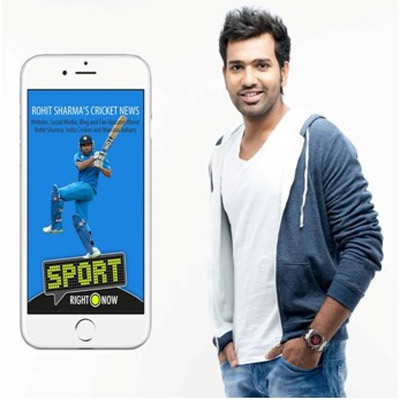
    MUMBAI :  One of UK’s leading sports app providers, Sport Right Now Digital has forayed into India with the launch of its first cricket news and  social media updates app called Rohit Sharma Cricket News. 

    The Rohit Sharma Cricket News app curates all the relevant, authoritative and trustworthy news and social media resources including articles from e-papers, social media posts, blogs, videos and vblogs from platforms such as YouTube, Facebook and Twitter. By including every social media account of every Indian cricket player, it also enables end users to interact with Indian players directly through the app. The user-friendly application thus enables fans to keep themselves up-to-date with all sorts of cricket related news and social media updates, just at the click of a button. It features an impressive list of media sources which consumers can customize and a comprehensive set of social media updates which do not require a separate log-in for viewing updates. The brand has a revenue sharing partnership with cricketer Rohit Sharma.


    Speaking about the launch, Right Now Digital CEO Simon Ryley explained, “ In India, cricket is big and in Rohit Sharma we found the right person to partner with: he is dynamic, and has an impressive track record with proven dependability on the field. These attributes also exemplify the functionality of this cricket app and we are delighted to have found a perfect match in Rohit Sharma.”

    “We are thrilled to launch our first app in India, through a first-of-its-kind partnership that we have with Rohit Sharma. Our focus is to make cricket news and social media content easily available to all Indian cricket fans who make up 40% of the world’s cricket fans. Rohit Sharma has a fantastic track record and an impressive number of followers on social media. We believe that this association will help us reach the right set of end consumers who will appreciate the seamless functionality and simple design of the application.” said, Right Now Digital, COO Seetha Chinnappa-Sarwal.

    A very enthusiastic Rohit Sharma exclaimed, “I am excited to be associated with such an innovative product which is at the cutting-edge of technology and promises to delight the Indian cricket fan like never before. I am happy to be an active contributor in bringing this app to India and look forward to its grand success.”

  • ‘Blogging’ on brand’s mind

    ‘Blogging’ on brand’s mind

    MUMBAI: If you are a blogger then you will definitely relate with Nora Ephron’s Julie and Julia.  As portrayed in the film, blogging which was once upon a time considered as just a hobby is today the most sought-after platform.


    The bloggers’ community has got its due recognition with social media becoming an integral part of our lives. What is interesting to note is that bloggers today are on priority list of many brand managers when it comes to drawing an online marketing strategy.


    “Brands today are engaging with bloggers because they want to talk about experiences and the brand with their readers. Bloggers are respected for the various topics they write about and no one questions their credibility as well. Most importantly, blog posts are permanent advertisements. With search being an important function on the internet today, blogs become extremely useful for a consumer. Consumers are always searching for information, products, brands and services. And, if bloggers are not writing about you; you won’t figure in the consumer selection subsets,” elaborates IndiBlogger spokesperson.


    Brands and blogging


    According to the Business World-IndiBlogger report on the Indian blogosphere, 56 per cent bloggers claim that they influence buying decisions of their readers.


    In the last few months, Indiablogger has hosted blogger events for brands across travel, consumer electronics, FMCG, education, finance, personal care and most recently entertainment sectors. SkyScanner, Nokia, Dove, Tata Capital, Asus, Kissan, Racold, Sunsilk, British Airways and British Council are a few popular brands that often associate with bloggers.


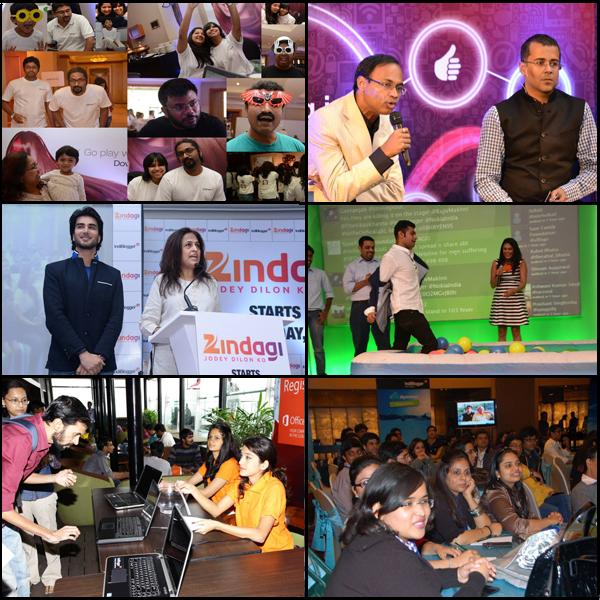
    Recently, ahead of the new entertainment channel Zindagi’s launch, Zeel invited almost 500 bloggers from Mumbai and Delhi. The reason behind the exercise was simple: though it gave bloggers an opportunity to interact with scriptwriters, directors and actors of the show, it also helped the channel create enough buzz on the digital world.


    Similarly, Imagica, the theme park from the house of Adlabs Entertainment, invited close to 30 blogging mothers to spend a day at the venue.


    When asked how the activity helped the brand, Adlabs Entertainment CMO Harjeet Chhabra says, “If we have to measure the response through the excitement amongst bloggers and their experience at Imagica, then we can surely say that we had 30 happy women bloggers and their families at the end of the day. Such initiatives are not carried out for immediate results. They are done from a long term viewpoint as opposed to being tactical or promotional. These activities help drive conversations on the digital platform and builds social content with a long term standpoint. We believe that one of the key parameters for measuring success of activities such as these is the scale of engagement and involvement. Being an experiential destination, it is imperative that the influencers are provided the right experience and engagement platform which Imagica provides.”


    The byproduct of these activities is the impact and reflection on social media. For example the number of tweets sent out by these influencers, the number of shares and eventually the number of people the message reaches out to. “We have also seen tremendous success in terms of the number of images being shared, including the trendy new fad of selfies. Such are the moments that actually define the success of any activity; however small or big. We are inspired to do more and more such events and are very soon going to be back with a food blogger’s event too,” adds Chhabra.


    One of the biggest trends in the blogger’s space is the increased usage of video content on YouTube in the form of tutorials and reviews. When Maybelline New York India launched the Colossal Kohl Turquoise, popular blogger Rati Tehri Singh created videos that showcased different styling technique using the product. These video tutorials were then shared on the brand’s social platforms.  


    The shifting trend


    While most brands have celebrities with a huge fan following as brand ambassadors, the rise of the influence of bloggers and their marketing strategies have helped brands in many ways.


    “Blogs reach out to a wide range of audience and have a diverse group of fans. A blog entry related to your brand will be seen by a larger fan base whom you may have not targeted earlier thereby expanding the reach of your brand. Bloggers and influencer marketing strategies have truly transformed the decision-making process of consumers while purchasing products and services,” says FoxyMoron co-founder Harshil Karia.  


    Over time, brands are also realising that it is important to cherry-pick the bloggers so that relevant content is created for your brand. “A large fan base is not enough to amplify the brand’s message. Content that is relevant to the target audience and in sync with the brand’s philosophy increases engagement.  In fact, bloggers are now entrenched in the larger community of fans and followers. Brands are not only reaching out to bloggers before a campaign begins but also establishing and maintaining long-term relationships with them irrespective of a campaign launch,” adds Karia.


    With the blogger community getting popular in the online marketing business, it will be interesting to see how brands go ahead and engage them uniquely in the coming days.

  • Creative Abby Awards expands  branded content & entertainment vertical

    Creative Abby Awards expands branded content & entertainment vertical

    MUMBAI: This year the Abby Award has added new verticals as well as sub-categories to become truly the complete Communications Award that it has always wanted to be.


    Last year Abby Awards added Branded Content and Entertainment as a new vertical with 8 sub-categories. This category attracts those projects which involve natural integration into original content by a brand. Typically here entrants can show how a brand has independently or in association with a content producer or broadcaster/publisher has created or co-created entertaining and engaging content for their audience. This can cover original content or programming for a brand by natural integration of a brand into existing formats by partnering with a publisher or media partner.


    Branded content integration goes beyond television and includes web, radio, print, music, user generated video, social, blogs, experiential events etc.


    This year more sub-categories have been added to bring this vertical on par with international festivals.


    Who can enter?


    Creative agencies who may have partnered with content producers or publishers, media agencies ,content producers who have produced the content, broadcasters who may have pioneered the concept, publishers who have worked closely with creative or media companies or even clients who may have led the initiative.


    What kind of work can be entered?


    The intelligent extension of a brand’s theme or position into the content, projects that enhance a brand’s position by integrating with content in different media or events, use of innovation in the integration.


    What is the material to be entered?


    A presentation board which is at the end of Entry Form and a 2 min audio visual that explains and gives excerpts of the entry has to be entered on DVD along with a presentation board for evaluation by the jury.

  • Popkorn Communications set to capture digital audiences

    Popkorn Communications set to capture digital audiences

    MUMBAI: Digital is the way forward and the media industry knows it well. There is a growing need to capture audiences that are internet savvy, and to cater to that need, PR agency Value 360 Communications has launched its online content marketing company, Popkorn Communications. The venture will focus on creating and marketing content for brands for the multiple digital platforms of the World Wide Web.  


    Popkorn Communications will establish a strong web presence, strategic brand promotion and responsive digital engagement. The company was spurred by the need to customise content that is unique as well as captivating for an audience that is constantly connected via the internet.


    “Today, there is a large amount of content floating online vying for the attention of internet users. We at Popkorn Communications seek to creatively place content that integrates your brand identity and message in such a way so as to be easily accessible, likeable as well as shareable. Our inherent expertise and seasoned experience of having dealt with clients across the board will help us comprehend and direct the right content for each brand we serve,” said Popkorn Communications founder Gaurav Patra.


    The company will help channelise and streamline content to drive brand forward as well as build a relationship with the target audience. Its bouquet of offerings include devising meaningful and relevant content marketing solutions in the form of article posting, e-newsletters, social media, blogs, video posting, case studies, infographics and mobile marketing.


    The company targets a range of verticals right from lifestyle, e-commerce, consumer technology, automobile, hospitality, entertainment, education, real estate and consumer durables.


    “The audience today is young, dynamic and increasingly mobile. Our challenge will be to grab their attention through content that could be a visually appealing comic strip, a hard hitting video or simply images that convey much more beyond words. The idea is to capture the essence of what a specific brand wishes to communicate to its audience and then do so using tools that are effective even if unconventional,” he added.

  • The ‘U’ factor

    “Who has that time and that energy and that passion [to make mashups, do blogs, make YouTube videos, etc.]?”

    “The answer is, you do. And for seizing the reins of the global media, for founding and framing the new digital democracy, for working for nothing and beating the pros at their own game, TIME’s Person of the Year for 2006 is YOU.” 
    Source:-Times Magazine, 13 December 2006


    That statement could well be the start of a whole new wave of media jostling for space with the big daddies of traditional media. It was really the success of YouTube that set the ball rolling for ‘user generated content’. Supported by the millions of video clips put up on the site daily and with mind boggling traffic, YouTube has gained a mythological community-driven status today.

    But skeptics still wonder if the YouTube model can be made into a profitable, viable business model. That Google bought out the site for $ 1.65 billion could put some of those questions to rest. But the litigation around YouTube for streaming copyrighted material may yet prove to be its undoing. Whether YouTube will go the Napster way is everybody’s favourite question but the Web 2.0 revolution almost begs to differ judging by the number of digital and even mainstream media adapting to ‘people generated content’.


    In fact the basic premise around the sustainability of YouTube is also the basic premise around the growth of ‘people generated content itself’. Is this medium limited to the online sphere alone?

    The contribution of user generated content to news, music videos and commercials is fast negating this idea. Is this medium prone to pitfalls given the debate of copyright infringement? Even as we speak Google and Viacom battle it out in the courts and outside. The results could well spell out the future course for UGC.

    The single most important question: is all the content out there purely put out by users for gratification, a shot of fame or to display talent or will we be able to generate revenue out of this content and distribute it equitably between you – the content generator – and the distributor. Monetization of UGC will be an important key in aiding both growth and quality of the content. (Would you pay to watch a cat play piano? Would the cat owner get a share of the money you pay? No! the cat gets nothing.)

    These questions surrounding UGC are as pertinent in the Indian context as they are internationally. Although in India both content providers and platform providers would have to deal with basic issues of broadband connectivity.

    In that sense, one cannot obviously deny the important role played by technology in aiding and abetting UGC. Cell phones with cameras, MMS and digital cameras have captured both moving and still images that have been played alongside traditional content.


    Consider this: Torrential rains and the city stops in its tracks. A bomb blast and a media that couldn’t get close enough. Visual images on television news channel that clearly spell out the story of these tragedies as they happened. Strike one for user generated news content packaged asCitizen Journalist.

    A bunch of bloggers, a Roger Waters concert and a camera. Channel [V] had the perfect recipe for a user generated content show. Strike 2 for user generated content on a music channel.

    Video clips, pictures and everyday emotions played to the tune of a rock song. VH1 incorporated them all into a Pentagram music video which will be played out on the music channels as well as made available for download on the mobile and net platforms. Strike 3 for user generated music video.

    There are UG photographs on Flickr, UG commercials and even UG movies and documentaries. Besides, you have automobile design companies running open design contests, Reuters carries blog postings alongside its regular news feed and television channels are looking at business models to create 24 hour UGC driven channels.

    It’s a genre which is seeping into all the nooks and crannies that mainstream content producers cannot penetrate. But going by industry speak ‘user generated content’ for now is a fancy word that is still a few years away from fruition. Where it has made its biggest impact is in the newspace.

    Crises like bomb blasts, terrorist attacks or accidents have brought to the fore people initiatives with still photographs and moving pictures. CNN IBN’s Citizen Journalist won awards even as other news networks jumped onto the bandwagon. While one may argue that this usually works in fits and spurts and only around big crisis events, CNN IBN is also looking at including stories from everyday walks of life and converting them into feature segments played out as part of their news bulletin.

    Internationally, BBC World relied heavily on user generated images during the 7 July and 21 July London bombings. In fact, the BBC website has a UGC dedicated segment on the site- www.yournews.com. Making a point on the effective use of people generated content on news channels. Cellcast and Sumo.TV CEO Pankaj Thakar says, “During the London bombings the content on news channels was skewed to almost 30 per cent broadcast news and 70 percent people generated content. That’s the kind of impact UGC can have within news. Unfortunately, we feel happy about small scale initiatives likeCitizen Journalism….why cant user generated content be more mainstream?”

    While the public broadcaster did use ‘people generated content’ within mainstream news, it is still early days for UGC to claim the same space as news programming. Would a BBC weekly show like ‘Your News’ be weaved into news programming? 

    UGC in Entertainment

    The Ficci Frames convention held in Mumbai had a very interesting session on User Generated Content. A lady in the audience very passionately debated that ‘once the material or content is out of the hands of the user, he has no more rights on what or how the buyer may use it so long as he has been paid his price’.

    This is exactly the question a lot of users are now asking themselves. Posted online videos are no more secure and how they are used may not necessarily be appreciated by the user. In the current scenario, the freedom to post his thoughts or videos and make it available to people he wants – is the real driver.

    This is the premise that music channels like Channel [V] and VH1 have used to create music programming and a music video respectively. Channel [V] had an enthusiastic bunch of bloggers who got together to shoot the Big [V] concert which was later telecast as a series. Says Channel [V] head Amar K Deb, “‘Made by you’, the blogumentary that spawned a series of music shows was a first of its kind experiment. But it fit in perfectly with Brand ‘V’. People want to participate in our shows, be a part of the process. By definition, television is perceived to be a passive medium but with UGC it takes on a more interactive format. Whether it’s our promos or music programming, our viewers want to contribute.”

    Deb also reveals that with the success of ‘Made by you’, Channel [V] will ‘look at the blogumentary way even with upcoming shows like Channel [V] Launchpad and Get Gorgeous 4 where the model aspirants will be asked to maintain their blogs.

    Close on the heels of Channel [V]’s initiative, VH1 the music and lifestyle channel also announced Shot by You. Pushing ‘user interactivity’ into the mainstream media, viewers were invited to listen to the latest track by Pentagram – ‘Voice’ posted online and use their camera phones or video recording devices to shoot footage that would best suit the feel of the music and send it to VH1.

    While the response to the Nokia and VH1 partnered Shot by Youinitiative was impressive, the quality of video clips or pictures sent weren’t always up to the mark bringing into question the quality of user generated content meant for traditional media.

    Talking about the challenges the team faced during the making of the video VH1 General Manager Keertan Adyanthya said, “Since the use of digital media in our country is still at a nascent stage, many of the entries did not meet television standards. Very often the resolution of the footage sent was not suitable for use. Some of the footage sent was copyrighted material and again could not be used at all.”

    But music channels are all gung ho about introducing UGC as part of their programming. Deb goes so far as to say that UGC based programming allows the channel a “one to one platform. It also gives the viewer a chance to engage with the medium.”

    So why are platforms like Sumo.TV taking so long to establish themselves in India? 

    The channel which was to launch early this year has pushed back its plans by a few months. Thakkar however believes that the ecosystem will evolve by the end of 2007, and there will be some good UGC shows on TV. At the end of the day it is television more than online media that is considered conducive to UGC. “TV is more accountable and requires moderation,” explains Thakkar. That kind of moderation is easier in the already structured television set up.


    So we’ve talked user, distributor, content and platforms. Now let’s talk shop. But this is exactly where the debate deepens. Are the big brands wary of associating themselves with user generated content due to issues of copyright infringement and quality checks?

    Yahoo Groups’ IM Swaminathan is of the opinion that availability of UGC has had a huge impact on advertising and PR with more opportunities for viral marketing. “Bloggers are invited along with traditional media to press conferences and product launches. Marketers are now using them as samplers before launching their product into the market.”

    But all talks of UGC being advertiser friendly are still premature? The biggest hurdle is the revenue model adopted by mainstream medium. In the case of news and music channels, there are no set remunerations for the content provided. While news content is packaged as ‘social responsibility of citizens’, music channels are still conducting contests or purely providing a platform for good talent.

    In this case, Thakkar tries to explain Sumo.TV’s revenue model. “In our case its the broadcaster who pays for content. The revenue received from the broadcaster is then shared by all parties involved. Revenue also comes from the mobile downloads, which is where the operator comes in. 
    What happens in the UK where we have a 24-hour channel is that people send photos and MMS’ to us, and we aggregate content and choose on the basis of relevance. We then process it – restore it to make it broadcast quality. In fact, we’re developing our own restoration tool. People then download this content via the mobile, so we need to have proper license in place and contact the user for his content. This way we make sure their IPR is protected.”

    The company is still looking at television to distribute this user generated content since television in India has a “long tell effect” he says. Thakkar also argues that traditional media like print and television are themselves not very encouraging when it comes to user generated content. “Consumers who have so far had only the option of professionally produced content are neither aware nor proactive about this new genre.”

    The next wave?

    Web 2.0 is a social experiment and like any other experiment it could fail. But it’s an experiment that has allowed scores of anonymous faces, voices and all kinds of talent to crop up and have their moment in the sun. By extension that also means that a lot of content out there is downright nonsensical. The pay per click or pay per download model would perhaps ensure that a lot of this material is either filtered or relegated to the ‘back pages’.

    Industry watchers however are more optimistic that in the long run there would be a shift from amateur content to professionally generated content. And this is when proper monetary systems would also be put into place.

    As this UGC juggernaut rolls on some of the issues that it will have to contend with are – copyright infringement, monetization and multiple platforms. But for now, I am completely immersed in reading up on every blog and site that talks about user generated content. I’ve also made up my mind to shoot my own short film. Any takers?