Tag: Blockchain

  • GUEST COLUMN: Film and TV revolution through NFTs and metaverse

    GUEST COLUMN: Film and TV revolution through NFTs and metaverse

    Mumbai: Technology and entertainment have historically gone hand in hand. For every new technology that came about, the world of entertainment has usually been at the forefront and adapted it to its advantage. Take the example of any technology in the past, starting from VCRs to DVDs to Blu Ray and now to 3D cameras, Imax cinemas; the entertainment industry has always made the best use of it.

    Today, as we see newer forms of technologies like NFT’s, blockchain and metaverse emerge, the entertainment space is already eyeing different ways how to make the optimum use of it. Ranging from sports collectibles to music collectibles, in-game purchases in video games and NFT sales rose to more than $17 billion globally in 2021.

    Bollywood and NFTs

    The Indian entertainment sector, too, has started to explore ways in which it can include these new, pathbreaking technologies. Given the connection that Indians share with Bollywood, it is no surprise that we have seen a lot of interest when it comes to collectibles featuring celebrities. Domestic marketplaces are turning over both physical and digital assets, and the collectors who are bidding for these assets are spending big.

    In terms of revolutionising the entertainment space, NFTs have allowed studios to find another avenue of monetisation. Big Budget films that are made for hundreds of crores, now have another way of recovering their costs by selling digital assets. Additionally, studios that have a ton of memorabilia from films that are a part of our social and cultural fabric, now have the option to convert these collectibles into NFTs and add another source of revenue to their existing models. Smaller films too have an additional avenue to recover costs through selling NFTs to fans. With NFTs, even smaller films that have a cult following can reap decent amounts of revenue.

    Bollywood enters metaverse

    There are many questions about the metaverse. Can things be worth anything in a virtual place that does not even exist in reality? While that can be said for social media as well, Bollywood has literally marked its territory in the metaverse. Producer VashuBhagnani’s Pooja Entertainment recently purchased virtual land on metaverse for $5,613. The production house is calling the space Poojaverse and it plans to provide users with a movie theatre-like experience. Another example is singer Daler Mehndi who bought land-titled ‘Balle Balle Land’ for an undisclosed amount. The singer plans to open an NFT store in the space where he plans to sell both digital art and merchandise as both virtual and digital products. Reportedly, the singer will have live concerts in the virtual space and even have interactive games.

    Another exercise of the entertainment industry’s tryst with metaverse is the ALTBalaji’s reality show titled “Lock Upp.” Even though it is using the metaverse as a way of marketing rather than being an actual metaverse based on a blockchain, it does have features where viewers can experience the unique world of the show, complete tasks, and win real money. With viewers always looking for a personal connection with celebrities, connecting with their favorite actors or artists in the metaverse becomes something very special for them.

    While NFTs are faring much better than the metaverse space, as technology evolves, the entertainment sector, like always, will not fail to take advantage of this unique opportunity and cash in on this revolution.

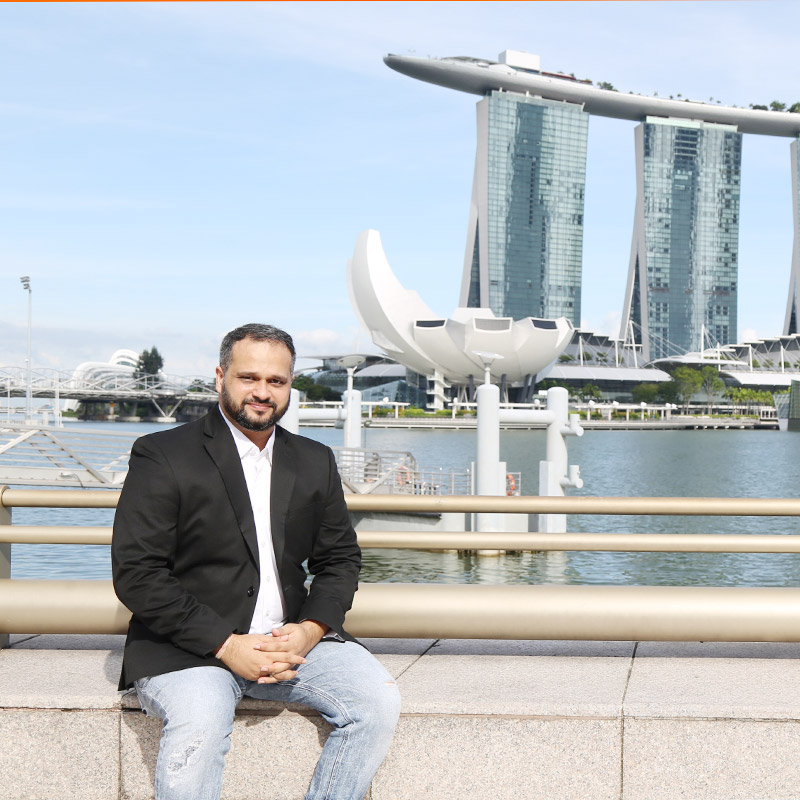
    (About Author: Abhayanand Singh is the Vistas Media Capital and Fantico group CEO and co-founder)
  • Blockchain companies investing in sports sponsorship projected to reach $5 bn by 2026: Report

    Blockchain companies investing in sports sponsorship projected to reach $5 bn by 2026: Report

    Mumbai: There were 2,254 publicly announced e-sports sponsorship deals globally in 2021 compared to 1,785 in 2020 making it one of the fastest growing segments of the global entertainment industry. The data was provided by Nielsen Sports’ 2022 global sports marketing report titled ‘Fans are changing the game.’ The female e-sports fan base grew by 19 per cent, while the male fan base grew by 12 per cent, it said.

    Interestingly, Blockchain companies investing in sports sponsorship is projected to reach $ five billion by 2026. This represents a projected 778 per cent increase in sports sponsorship from the crypto, blockchain and NFT brand category. 

    Nearly 40.7 per cent of global sports fans now stream live sports through digital platforms. This has led to the increase in over-the-top (OTT) media rights which includes a 19 per cent jump for the top European football leagues over the last two years at the local level, and a 31 per cent increase forecasted for the men’s tennis ATP Tour through 2023.

    Sports viewership has become a multi-screen experience with 47 per cent of people who watch sports simultaneously interacting with other live content (increase by five per cent over the last year). The demand for content overall remains high with non-event broadcasts, such as highlights, recap videos, and more, nearly as high as the event itself. Nielsen estimates that 39.4 per cent of global fans will watch non-live content related to a live sports event.

    Nielsen estimates there was a 146 per cent year-over-year rise in unbundled sponsorship investment in women’s sports (UEFA, FIFA, World Rugby) compared to a 27 per cent rise in 2020. With more women’s sports being televised, there are now increased sponsorship opportunities specific to women’s sport, which means that many brands are effectively reaching consumers that weren’t previously reached through sponsorships in men’s sport.

    Among other key findings of the 2022 Nielsen Sports Report, sports sponsorships were up 107 per cent in 2021, and through an analysis of 100 sponsorships in seven markets across 20 industries, Nielsen found that they drove an average 10 per cent lift in purchase intent among the fanbase.

    Overall, Nielsen’s 2021 Trust in Advertising Study showed that 81 per cent of global respondents either completely or somewhat trust brand sponsorships at sporting events. Athletes have shown a higher potential to establish connections with fans, with 26 per cent of avid sports fans who use social media for sports news saying that athletes are a great way to connect with brands and sponsors.

    The Nielsen report reveals the new behaviours that fans have adopted during the pandemic to connect with the sports and teams they follow, whether through increased social media activity, betting, co-watching, or more. By outlining how Nielsen predicts ‘Fandom’ in 2022 will impact sports sponsorship models, content distribution, the rise of crypto, esports and women’s sports, it will help contextualise the value of sports partnerships, helping brands and sports properties predict the future value of media assets and marketing investment ROI.

    “From our work as a data-driven company and by surveying thousands of fans, it is clear to see that sports fans demand new types of content driven by innovative delivery platforms.  In turn this impacts how rights holders and brands should approach audience engagement and sponsorship outcomes,” said Nielsen Sports MD international Marco Nazzari. “With sponsorship sophistication rising, measuring effectiveness at every step is now expected by brands. Predicting ROI and sales lift will be key for sports rights holders to remain relevant and secure marketing budgets from brands going forward.”

    “As traditional and digital worlds merge, the sponsorship life cycle is now broadening, creating additional and more well-rounded monetisation opportunities. It will become vital for brands to leverage new technology and utilise digital platforms to develop fan-engagement strategies that didn’t exist before in linear broadcasting. The fan is now the catalyst for huge change,” Nazzari further said.

    The full report can be accessed here

  • Transak launches full suite of services in India

    Transak launches full suite of services in India

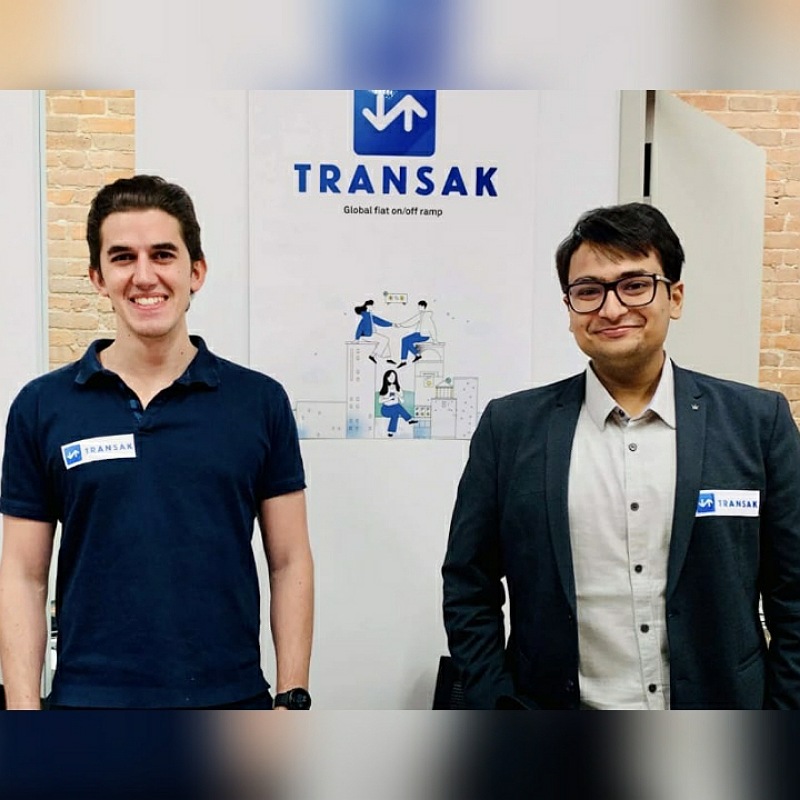
    Mumbai: Transak has announced that it is launching its full suite of services to India with the roll-out of UPI payment integration on platforms including Metamask, Ledger, Decentraland, WazirX NFT, Terra Station, Anchor, BitYard and Hiro.

    Transak provides a single integration for applications to accept fiat-to-crypto deposits and withdrawals from a global user base. It has enabled API-driven fiat payment methods across 100+ countries and with crypto assets on 30+ blockchains through partnerships with Web3 players including Polygon, MetaMask, Trust Wallet, WazirX NFT, Edge Wallet, Decentraland and 100+ applications.

    Founded by Sami Start and Yeshu Agarwal in 2019, Transak’s mission is to make web3 applications accessible. In January, Transak celebrated an all-time high $71 million in volume and hit a record $3.3 million in organic transaction volume in a day.

    “India has shown an incredible appetite for web3 applications and innovation alike. We are thrilled to extend our support towards taking this momentum to the next level by empowering Indian Web3 developers to create a smoother and seamless onboarding experience for their users. With Transak, Indian dApps can become apps making adoption easier than ever,” said Transak co-founder Sami Start.

    “India has always been a priority market for us and we have had the fortune to work with some of the biggest Web3 innovators in India including Polygon, MetaMask, WazirX and more,” said Transak co-founder Yeshu Agarwal. “We are looking to solidify our India presence tremendously by expanding both our partnerships and India team with 150+ open positions across different functions.”  

    “We at Polygon are committed to driving Web3 adoption across the world. Our approach to scaling Ethereum improves the network’s transaction processing speed and tremendously reduces gas fees, removing significant barriers for Web3 developers, leading to 7000+ dApps on Polygon today,” said Polygon VP of growth Arjun Kalsy. “However, Web3 developers still struggle with adoption as currently the onboarding requires existing crypto currency in users’ wallets and complicated fiat to crypto transactions. Transak’s on-ramp infrastructure effectively solves this. We are excited for their India launch and UPI integration.”

  • Zee Studios partners with NFTically to launch NFT drop

    Zee Studios partners with NFTically to launch NFT drop

    Mumbai: Zee Studios on Friday announced its first non-fungible token (NFT) drop on its own NFT store. The film studio has partnered with software-as-a-service (SaaS) platform NFTically who facilitated the creation and launch of the NFT. The token has been integrated with the blockchain Polygon.

    A non-fungible token is a digital collectible that shows that the holder has ownership of a unique virtual item such as online pictures and videos. Through this NFT, Zee Studios will share a plethora of exclusive assets with their fans across the world, said the statement.

    “It is a defining moment for us to become the first film studio in India to launch NFTs and this initiative ties in with our future-facing plans. Zee Studios will provide NFTs for cinema lovers and collectors through its repository of the strong lineup of film content,” said  Zee Studios, chief business officer, Shariq Patel.  

    “Our mission is to revolutionise the NFT space by making it accessible to everyone – celebrities, influencers, artists, and enterprises,” said NFTically, chief executive officer and founder, Toshendra Sharma. “With a clear focus on NFT awareness and the platform (UX), we aim to connect people with their favourite collectibles, artists, and objects. NFT market-related transactions are soaring to new heights every day and given our relationship with art, culture, and emotion, India can be the epicentre of the NFT uprising.”

    “World is thrilled about digitised art. We see major traction across the globe and India is ripening to this phenomenon,”  said EMC worldwide, chief executive officer and founder, Navin Shah. “We are at the right time to explore multiple opportunities with NFT. We are happy to bring in this first NFT with NFTically and look forward to bringing in many more in coming times.”

  • Now blockchain & NFTs come to TV

    Now blockchain & NFTs come to TV

    MUMBAI: For all those naysayers and fence-sitters, it is here and it is now. Blockchain and cryptocurrency are coming to the broadcast television business. US TV network Fox has announced the formation of a new non-fungible token (NFT) company called Blockchain Creative Labs. The new firm will create NFTs based on the intellectual properties it owns. Fox Entertainment CEO Charlie Collier announced this at the advertiser targeted Upfronts on Monday.

    NFTs, which exist on blockchain – a digital ledger similar to the networks that underpin bitcoin and other cryptocurrencies – notched up $1.5 billion in sales in just the first quarter of 2021. Each NFT is unique, cannot be duplicated, and is equivalent to an ownership deed to digital or physical artwork, music, or digital collectibles such as IPL 2021’s best video moments. Of course, someone else may have an image or copy of the piece, but that’s not the original which of course has a big-ticket price.

    They have become all the rage nowadays following the success of digital artist Mike Winkelmann aka Beeple, who sold an NFT for $69 million. They are not restricted to just art; they have extended to sports collectibles, highlight show reels, augmented reality sneakers, music, and even digital cats.

    Fox is getting into the NFT game in the hope of monetizing its properties beyond television (in the crypto world) where the major revenue sources are advertising, or pay-TV, or syndication.

    Blockchain Creative Labs’ first attempt at exploring the potential of TV show characters and properties is going to be with Krapopolis, an animated comedy series set in mythical ancient Greece, which is being directed by Ricky and Morty and Community creator Dan Harmon.

    Fox says that its marketplace “will curate and sell digital goods, ranging from NFTs of one-of-a-kind character and background art, and gifs, as well as tokens that provide exclusive social experiences to engage and reward super fans.”

    Addressing the advertiser-dominated audience during the upfronts, Collier said that as “an advertiser-focused, artist-first and animation-obsessed company, Fox is going to take advertisers into the world of blockchain-powered tokens, including NFTs…we will also help your brands connect directly with fans and enthusiasts through NFTs.”

    Will other broadcasters and networks also take the plunge? Will it inspire Indian media players to explore this space? These are cryptic questions.

  • India leads Mobile Ad Fraud across Asia with 62%: MMA’s Ad Fraud Benchmark Report

    India leads Mobile Ad Fraud across Asia with 62%: MMA’s Ad Fraud Benchmark Report

    MUMBAI: Mobile Marketing Association, a global non-profit organization, today released an Ad Fraud Benchmark Report on the state of mobile ad fraud in India. The report revealed interesting facts about the level of fraud, and its awareness in the country and aims to help marketers benchmark their exposure to various kinds of fraud.

    The report has been published in collaboration with a leading research firm Decision Lab, with the objective of understanding the current industry practices around ad fraud and the methods adopted by marketers. It also highlights the rising and prevalent issues such as adware traffic, ad stacking, domain spoofing, that will help marketers understand organizational challenges and combination of various measures to tackle the problems effectively.

    Speaking on the launch, Moneka Khurana, Country Head, MMA India said, ?In India, the awareness on ad fraud risks is very low with almost a fifth of the marketers being unclear of their ad fraud budget and majority of them believing that fraudulent activities will only increase. Brand safety on mobile is the biggest concern today and this benchmark report clearly demonstrates that this needs immediate addressal. Marketers will need to be extra cautious to attacks such as ad injections, data fraud, cookie stuffing, etc. Marketers must understand the potential of technologies such as Blockchain that can help solve issues related to fraud and create security and transparency in mobile marketing ecosystem.

    Key highlights from the report are:

    ·         With a rate of 62 per cent, mobile ad fraud remains as one of the biggest challenges in India

    ·         Indian marketers spend nearly 20 per cent of their advertising budget on ad fraud

    ·         9/10 marketers feel there is scope for improvement in ad fraud prevention methods

    ·         95 per cent respondents feel that lack of penalties and transparency in industry regulations give rise to ad fraud

    ·         95 per cent respondents agreed that lack of data sharing and large number of middlemen are also a cause to ad fraud risks

    ·         Major types of ad fraud ? Cookie Stuffing (74 per cent), Adware Traffic (65 per cent), Data Fraud (61 per cent), Ad Injection (54 per cent)

    ·         Only 37 per cent respondents are aware of Blockchain and its application to fraud prevention

  • Vidnet 2019 to trace major issues related to content protection

    Vidnet 2019 to trace major issues related to content protection

    MUMBAI: While the growing over-the-top (OTT) ecosystem in the country is providing a large number of opportunities to platforms and content creators, it is still riddled with a number of challenges. Streaming piracy along with other challenges of content protection continue to daunt the OTT platforms across the world. Not having proper content security in place not only create technological challenges but can lead to the platforms towards huge loss of revenue.

    In this context, Vident 2019 summit is hosting a very timely panel discussion on the challenge of content protection. The session will have discussions over all facets of content protection and tech challenges platforms face including avenues of mitigating stream piracy where technology leads of major OTT platforms are participating.

    However, the problem of piracy is not brand new as media and entertainment had to deal with it in the past also. A secure service now-a-days not only means that it is impenetrable but also about monitoring and identifying threats in real-time and timely action on the issue. Moreover, advanced data analytics can also help platforms. Several reports also indicated that blockchain adoption is expected to increase soon, enabling OTT platforms to introduce effective access policies and restriction.

    “The ability for operators to deliver content to any device is a must in today’s digital environment – and India is no exception. Operators need to evolve their services rapidly in order to remain competitive against traditional and new competitors and need to be able to offer content on different devices with changing business models. At the same time, they need to keep their content secure to counter the growing and varied number of piracy threats and to meet the requirements of their content providers. With this in mind, a new approach to content protection is required, one that combines technology, collaboration and innovation,” NAGRA GM India  Hitesh Lokhandwala said.

    Apart from technical measures, regulation from authority is also highly needed. More government initiatives based on the discussion among the stakeholders and legislator can also bring more security. The session at Vidnet 2019 on 3 October will dive deep into all the pertaining issues related to topic. 

  • ‘Genpact Cora’ artificial intelligence-based platform launched

    MUMBAI: Genpact, a global professional services firm focused on delivering digital transformation, has unveiled Genpact Cora, an artificial intelligence (AI)-based platform that accelerates digital transformation for enterprises. It is a modular, interconnected mesh of flexible digital technologies that hones in on specific operational business challenges and tackles them from beginning to end, helping large global companies reframe and solve their most pressing real world business issues.

    “In an environment being disrupted by new technologies and increasing competition, clients want to buy business outcomes, not just tools and products,” said Everest Group founder and CEO Peter Bendor-Samuel. “Genpact Cora is timely for an industry seeking digital transformation.”

    As part of its ongoing strategy to drive digital-led innovation and digitally-enabled intelligent operations for clients around the world, Genpact has created Genpact Cora to provide the fastest path to driving meaningful transformation at scale. Genpact believes it is the first in the industry to fully integrate automation, analytics, and AI engines – in a single, unified platform, embedded with and drawing insights from Genpact’s deep domain expertise that comes from running thousands of intelligent operations and processes for hundreds of Fortune 500 companies across numerous industries. Genpact Cora drives digital transformation in a planned and managed fashion, without sacrificing the governance security and investment protection that mature and established businesses need.

    “Achieving enterprise impact from digital transformation is challenging with so many disparate, disconnected technologies in the market,” said Genpact president and CEO NV ‘Tiger’ Tyagarajan. “Genpact Cora brings leading digital solutions together in one unified platform, combined with the process and deep domain expertise that comes from decades of experience running intelligent operations. The combined benefit creates connected intelligence for our clients at a previously unattainable level of agility and speed to predictive insight, that then drives outcomes.”

    Genpact Cora has a mature application program interface (API) design and open architecture that includes Genpact’s own intellectual property as well as leveraging best-in-class providers, integrating advanced technologies across three key areas:

    • Digital Core: cloud, software-as-a-service, blockchain, mobility and ambient computing, robotic process automation, and dynamic workflow;

    • Data Analytics: advanced visualization, data engineering, big data, and Internet of Things (IoT);

    • Artificial Intelligence: conversational AI, computational linguistics, computer vision, machine learning and data science AI.

    The Genpact Cora platform is the foundation for Genpact products and consulting services already in the market, with more than 1 million users processing over 1.1 billion transactions annually, providing unparalleled practical predictive insights and learnings on how to make transformation real and sustainable. It brings together Genpact’s original process and industry domain depth with new digital capabilities through its recent acquisitions of Rage Frameworks, PNMsoft, and others.

    The platform already delivers speed to value in the market today in many industries, including:

    • Deciphering data from equipment: A leading large equipment manufacturer leverages industrial IoT, machine learning, and advanced analytics from Genpact Cora to efficiently and intelligently process data, resulting in safer materials, less downtime, higher revenues, and lower maintenance costs.

    • Reframing drug safety: A top pharmaceutical company is testing Genpact’s Pharmacovigilance Artificial Intelligence (PVAI) product to redefine drug safety. PVAI uses Genpact Cora’s AI, analytics, predictive modeling, and other technologies to automatically collect and analyze data from numerous sources on drugs’ adverse effects, including quickly translating unstructured data into meaningful, actionable insights. PVAI transforms drug safety operations from simply tracking issues to predicting and solving potential problems, with less human error, higher drug quality, better patient outcomes, and 100 percent regulatory compliance.

    • Making customer service seamless: Genpact Cora’s AI and analytics powers Genpact’s LiveWealth product and allows a Fortune 500 financial services institution to speed customer response time, eliminate billing and asset reporting errors for institutional and high-net-worth individuals, and help shorten client cycle time from 45 days to on-demand. Customers now have a holistic view of their portfolio, and the company also cut costs 75 percent while facilitating effective regulatory compliance.

    • Driving faster, value-added financial reporting: Inefficient manual financial reporting processes took many employees at a global consumer packaged goods company weeks to interpret both structured and unstructured data from various internal and external systems. Genpact’s AI Reporting product using Genpact Cora’s robotic process automation now generates these reports in a few days, automating 70 percent of data collection. In addition, the AI learns over time, allowing the company to have much faster, more accurate, and more frequent projections that drive better informed business decisions.

    • Increasing new product speed to market: A global insurance provider uses Genpact Cora’s dynamic workflow to streamline new product rollouts by quickly capturing data on high-value customers, increasing processing speed and flexibility, and driving analytics real time for decision making – thereby increasing speed to market and driving revenue growth.

    “Genpact Cora allows our clients to deploy leading digital technologies using a modular and scalable platform built on an open architecture that drives flexibility, agility, and long-term investment protection,” said Genpact SVP and chief digital officer Sanjay Srivastava. “And Genpact Cora reduces risks around errant robots and misapplied AI spinning out of control, through an integrated command and control hub that delivers the much-needed governance that business processes require.”

  • Raman Kalra joins PwC India as entertainment & media sector advisory leader

    MUMBAI: Raman Kalra has been hired as partner, PwC India – Entertainment & Media Sector Advisory Leader (and Emerging Technologies Leader). He is responsible for strategy through execution as: Entertainment & Media Sector Advisory Leader & Emerging Technologies Leader responsible for transformation agenda across Industries leveraging digital & new emerging technologies.

    Based in Gurgaon (Haryana), Kalra is an entrepreneur at heart with 24 years of experience in industry and consulting, with a strong track record in conceptualising, growing and managing businesses.

    Mentor & advisor to various start-ups across Digital Media, Education & Advertisement areas, he turned entrepreneur during 2015/16. He worked as Partner/Executive Director with IBM Global Business Services, India/South Asia as Country Head – Media & Entertainment Industry & also Lead Transformation Partner for Bharti Airtel.

    With a strong understanding of the industry domain & technology, Kalra had been acting as the trusted advisor to CxOs at different levels & functions across the industry segments. During his consulting tenure, he has successfully directed & delivered engagements across areas of business growth strategy & transformation, business process consulting, shared services & outsourcing, ERP & other industry focused technologies. Raman also has significant international experience working with diverse global teams in different geographies.

    At PwC, he is also responsible for transformation agenda across Industries leveraging digital & new emerging technologies like IoT, Cognitive Computing/Machine Learning, Augmented Reality (AR)/Virtual Reality (VR), Blockchain and Robotics.

    Prior to this assignment, Kalra curated StoreSay, India’s first integrated location based B2B2C marketplace for electronics, gadgets & appliances connecting trusted nearby brick & mortar stores with customers on one hand and with the distributors/manufacturers on the other hand. StoreSay was awarded among the Top 5 finalist in IBM B2C Start-up Star challenge across India in May 2016.