Tag: BlackBerry

  • Ranbir Kapoor made first brand ambassador for BlackBerry

    NEW DELHI: Research In Motion (RIM) today announced that Bollywood superstar Ranbir Kapoor is its first brand ambassador in India and will endorse BlackBerry products across various platforms and also feature in upcoming multimedia ad campaigns in India.

    Known for his unconventional roles as a young and vibrant actor, Ranbir Kapoor is also widely known as a tech savvy star.

    Speaking on the occasion Ranbir Kapoor said, “I am ecstatic to be part of the BlackBerry boys’ family. As an actor I recognize the power of communication so naturally, and the need to stay connected with friends within and outside of our industry and loved ones. BlackBerry is known for its unique and powerful communication experience; an experience that I have relied on over years to stay informed and connected to things that matter so closely to me while on the move. BlackBerry is a brand that has a legacy of bringing innovative products keeping in mind the Indian market and I am keenly looking forward to this association.”

    RIM (India) MD Sunil Dutt said, “We are excited to announce Ranbir Kapoor as our first brand ambassador in India. Ranbir truly personifies all the attributes that we endeavor to offer to our customers –enthusiasm, exuberance, persistence, excellence, fun, youthfulness, innovation and connecting with people and we recognize this great synergy between us. Moreover, we admire the fact that he is not only the face of contemporary Indian Cinema but he is also someone who represents the ideal source of inspiration for the youth of the current generation.”

  • BBDO creates BlackBerry’s new ‘Action’ campaign

    MUMBAI: BlackBerry has launched a new advertising campaign in Asia Pacific focusing on the spirit that drives the Asian youth – action.

    Created by BBDO India, the campaign capitalises on the truth that BlackBerry has always been about making things happen, the company said.

    BBDO India chairman and chief creative officer Josy Paul said, “It all started when Sunil Dutt, the new head of India operations for RIM asked us the all important question ‘What does BlackBerry stand for?‘ We developed the idea that every BlackBerry is born for action. There‘s an inherent urgency for action built into it. Look at the red splat that appears every time you get a message. The sign refuses to go away until you take action. The first thing we do when we wake up in the morning is check for the red splat. That‘s how we created the launch ad ‘Action now has a symbol‘ and the brand line ‘Action starts here‘. That‘s what differentiates BlackBerry from other mobile phones.”

    Bringing the red splat to the forefront leverages one of the brand‘s properties that consumers connect to.

    “It‘s what we call a useful idea. We all have things we talk about doing. We hope the idea will inspire people to stop sitting on the things they‘ve been wanting to do,” BBDO India CEO Ajai Jhala added.

    The new red splat that resides in every Blackberry phone will now be the symbol of action. The symbol is an integral part of the ‘action‘ campaign that will run across all touch points including TV, print, OOH and digital.

  • Blackberry’s new ad campaign says ‘Action Begins Here’

    Blackberry’s new ad campaign says ‘Action Begins Here’

    MUMBAI: Blackberry has launched a new campaign around the concept ‘Action starts here‘.

    The regionally developed brand campaign has been in the making over the past six months and involves strategic and creative ideation by both RIM and its creative agency BBDO. The TVC is produced by Asylum Films.

    In today‘s fast paced society, individuals are looking to progress, take action and to be successful. No one wants to be left behind; neither do they want to be waiting as everything should be in real time.

    The campaign showcases BlackBerry as an enabler of action and its strengths as a brand that supports individuals to get things done. It sends out the message that BlackBerry is for those who want more than just a smartphone. It is for people of action who put more into life to get more out of it.

    This resonates strongly with the brand, as the use of the red icon or the “Splat” is a symbol of action which is unique to BlackBerry. It is the symbol of a new message incoming as an icon of action. The splat is used as a rallying symbol for those who seek to action and find opportunities in any situation.

    The campaign will be unveiled across India through thematic lifestyle imagery that depicts people of action and BlackBerry devices that deliver to that promise.

    From print advertisements to retail elements, digital campaign, social engagement and a unique TV commercial, the message is clear that BlackBerry is a brand for the person of action.

  • Seventynine launches analytics service for marketers

    MUMBAI: In order to expand its product offerings, the mobile ad network Seventynine has launched its Analytics service.

    Seventynine’s analytics is available on Android and HTML5. It will help track and analyse consumer behaviour.

    According to the company, the Analytics service provides “in-depth” engagement analysis that gives marketers detailed information on consumer engagement with their application. It features a real-time dashboard, device analytics with device database in AsiaPac, AJAX-powered widget zed user interface, multiple file export options and supplements support with redundancy and backup of customer data.

    Seventynine will soon be announcing Analytics for iPhone, iPad, Blackberry and Windows Phone.

    Seventynine head – products Abhijeet Kunder said, “Seventynine analytics will not only empower the app developers to track traffic, interest and consumption of their application across metrics such as geography, demographics, devices and brands but would also enable access to business insights such as M-commerce tracking, sales conversion tracking and predictive analytics. We are a data driven business, consistently striving to help businesses analyze data better to foster profitability.”

    The company will soon launch Predictive Analytics engine that will analyse data to identify trends, patterns and relationships that exist within data to preempt and foresee significant insights into mobile businesses.

    Seventynine app analytics service also houses Install-tracking instrument for Android Apps hosted on the Google Play Store. This feature allows campaign optimisers to measure performance from various publishers, affiliates and networks right from their dashboard, thereby driving organic growth, the company said.

    Seventynine head-technology Mustali Kachwala added, “In addition to analytics, Seventynine’s Ad Platform brings unrivaled optimisation features and engaging ad formats to power advertiser campaigns. It is a compelling tool for businesses to push for maximum yield. The aim has always been to provide formidable targeting constructs that furnish high flexibility, yet at the same time facilitate objective-driven campaign management functionality for campaign directors.”

  • Mogae Media launches mobile creative agency

    MUMBAI: Mogae Media has launched a single window mobile creative agency, Mobocracy, that will tap into the next wave of advertising.

    The agency will be headquartered at Mogae Media‘s Gurgaon office. The startup has a team of 12 professionals across design, creative, technology and mobile integration.

    Mogae Group executive director Tanya Goyal said, “The world is getting smaller, to the size of your palm. At Mobocracy we’ve invested in founding the right skills for optimising design for the small screen and strengthening communication strategies for this next wave of advertising. We are already working with our diverse portfolio of clients to integrate smart mobile thinking into new and existing campaigns.”

    With mobile as a platform growing, search on mobile web has grown four times since 2010 and by 2013 Mogae believes there will be more mobile web users than those on desktops and laptops.

    Mobocracy claims to set realistic RoI goals for the mobile, deliver a mobile strategy to cut through the clutter and provide solid technical back-end to power a functional visual front-end.

    “With massive rise in the number of mobile phone users accessing the web on their handhelds, it is very important for a brand to have mobile version and Mobocracy offers top-notch mobile web design services to help a brand reach its target audience that is scattered over many handsets and versions in a unified way,” the company said.

    The methodology for design of mobile websites is mobile browser compatibility so that the website works fine on all handsets such as the iPhone, Blackberry, Andorid and Nokia, from the smaller screens to the larger ones like 128 x 160 pixels, 176 x 220 pixels, 240 x 320 pixels and 320 x 480 pixels. Mobile Website architecture is designed to give the user a good browsing experience by taking care of color schemes used, minimum scrolls and less typing. Also, the website should optimise for quick downloading by using optimised graphics and should fetch information from existing web databases.

    “It’s hard to believe that as recently as a decade ago most businesses did not even have a website or, at best, maintained a meager online presence. Today it is as much a staple of our daily lives as is the personal computer, making it vital for businesses to not only maintain a comprehensive website, but to keep updated with advances in technology that will offer customers easy access to the information they desire. Further the advent of “smart phones” such as the iPhone, Android phone or Blackberry has prompted those in the business of building and hosting websites to explore new technological avenues, leading to the creation of ‘mobile web sites. Ultimately, mobile websites are a win-win both for clients and consumers — helping to deliver a brand’s message and compelling content to current and potential customers with just a glance at their mobile phone screen,” Goyal added.

    Mogae Media, the parent entity of Mobocracy, was set up in October 2011 by ad-man Sandeep Goyal, former JV partner and chairman of Dentsu India.

  • Vodafone gets ‘Blackberry boys’ back

    Vodafone gets ‘Blackberry boys’ back

    MUMBAI: Vodafone India is bringing the ‘Blackberry Boys‘ back with a new music video to reach out to each and every one who wishes to stay connected using chat on the Blackberry Messenger (BBM).

    The TVC has been conceptualised by Ogilvy and Mather and produced by Niravana Films. Featuring the ‘Blackberry Boys‘ the campaign also introduces ‘Blackberry Messenger Only Plan‘ for Vodafone users.

    Vodafone India senior vice president -brand, consumer insights and communications Anuradha Aggarwal said, “We at Vodafone India are constantly on the lookout to provide innovative experiences to our valued customers. The objective of our campaign is to increase the appeal of Blackberry services on Vodafone to a larger audience with special emphasis on the younger generation. Blackberry Messenger is extremely popular among our young customers and our aim is to enable this generation to get the most out of their Blackberry services at affordable prices.”

    The new campaign aims to reflect how every customer can proudly own a Blackberry with a pocket friendly plan. Additionally it captures the journey of how Blackberry has now become an integral part of daily lives across different walks of people. The jingle has now been recreated as a whole new song featuring the Boys.

    The new Blackberry Boys campaign music video will go on air on 15 March and will be supported by a high decible 360 degree multimedia campaign.

    In Sept 2010, Vodafone India, in an endeavour to take the benefits of Blackberry services mainstream and reach out to its young, upwardly mobile audience, had successfully launched a campaign featuring the ‘Blackberry Boys‘.

  • Ogilvy rules Creative Abby awards

    Ogilvy rules Creative Abby awards

    VARCA: If the advertising industry is Formula 1, Ogilvy & Mather is Michael Schumacher. At least that is how it looked at the end of the race for the Creative Abby awards this year.

    The WPP-owned agency stole the show, winning a total of 31 awards comprising one Grand Prix, five gold, eight silver and 17 bronze metals.

    O&M ruled the Integrated category as it pocketed the Grand Prix for its work done for Cadbury Dairy Milk. O&M‘s gold winning campaigns included ‘An Eye for India‘ (Design category), ‘Dum Pukht‘ (Direct category) and Vodafone Blackberry Boys for Vodafone (Film category).

    Leo Burnett followed with three gold, eight silver and nine bronze metals.

    The Radio category turned out to be Leo Burnett‘s territory. The agency collected a total of nine awards from this category, including three gold for clients Saathi, Bajaj Exhaust Fans and HP Racer 4.

    A total of six agencies grabbed two gold medals each, but Mudra Communications is ahead in terms of the total number of trophies
    garnered. Mudra won a staggering 37 titles, which is more than any other agency.

    Mudra won its two gold trophies for the campaign created for Electrolux Machine as it dominated the Print and Printcraft categories. The agency also won 13 silver and 22 bronze metals.

    This year a total of 46 agencies made it to the winner‘s list.

    McCann Worldgroup took home a total of 16 awards – two gold, three silver and 11 bronze, while Creativeland Asia bagged nine – two gold, four silver and three bronze trophies.

    The other names are Chrome Pictures with two gold and one silver and a bronze; Footcandles Film with two gold, three silver and one bronze trophy; and Flagship Advertising with two gold and one silver.

    Bates 141 walked away with one gold, two silver and six bronze titles. Bang Bang Films took home one gold and two silver metals, completing the top ten list.

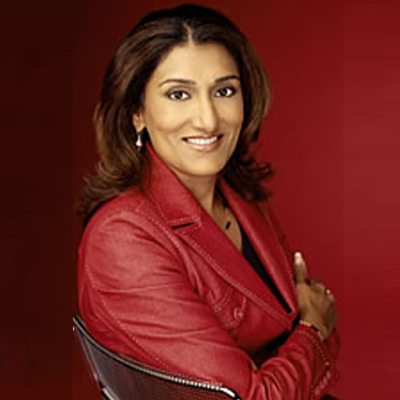
  • ‘CNN is an American-owned news channel, but we are not America-centric’ : Rena Golden – CNN International senior vice president

    ‘CNN is an American-owned news channel, but we are not America-centric’ : Rena Golden – CNN International senior vice president

    A little girl from a small town in Bihar who migrated from India to the US when she was just six years old, Rena Golden is today at the very top rung of the hierarchy at global news major CNN International. As senior vice president, she visited India this week to announce the latest edition of “Eye on India”, focussed this time on the youth power of the country.

    Credited by her colleagues with amazing skills, journalistic and managerial, driving the world’s largest news broadcasting company CNN from just an all-American channel (“I joined 21 years ago when people used to call CNN Chicken Noodle News!”), to an international one reaching 2 billion viewers across 200 countries, she still retains a disarming level of simplicity.

    It is perhaps natural that an American of Indian origin would also be the head of CNN’s Diversity Committee, ensuring that community parity is maintained not just within the organisation but also in the dissemination of news.

    Golden, who studied in two universities in North Carolina, graduating in English with Honours (“My father wanted me to be a doctor, but I wanted to study English”) and started working with CNN from 1985, spoke to Indiantelevision.com’s Sujit Chakraborty on the present status and future plans of CNN.

    Excerpts:

    You have a large hand in shaping the strategic direction of CNN. What is the most significant area you are looking into at the moment?
    I think it is expansion of news beyond the television sphere. We are on the Internet, mobile phones… I think what CNN is interested in becoming is your news source, on whatever platform it may be… your phone, your Blackberry… We want to become your news information source and travel with you, wherever you are.

    CNN’s news website is a tremendous success which attracts a billion users every year. And CNN International has just launched its news service on mobile phone. We are also looking at video on demand and IPTV… we want to be platform agnostic.

    How is IPTV doing in America… there is content available on that platform here in India as well, but the problem is we do not have downloading technology or bandwidth?
    I think even now in the US market the bandwidth is still not there, but the market is growing in South Korea, in Hong Kong and in some of the Nordic countries in Europe, where we can stream the CNN news channel completely on mobile phones. We are still not there on that platform in the US, but I think the important thing is to have your foot in all the areas. CNN is known for that and one of the areas we are looking at is (improving) technology in news gathering.

    That is my second question, in fact. You also deal with the technology of news gathering?
    Yes, for instance, earlier, when we would go for coverage, say in India or the war in Iraq, we would have to travel with 30 suitcases of equipment. Now, thanks to CNN working with Sony, with Panasonic, and other organisations, we have cameras that fit in a suitcase, which you can take as your carry-on luggage.

    When we went to North Korea, we could move in easily and cover news in a much easier manner, which is often cheaper.

    What are the latest innovations and what are the next technological frontiers in news gathering and dissemination?
    Things are getting smaller and smaller… we are looking at shooting footage on a mobile phone. Only last week, we used a Nokia mobile phone and went “live” on CNN. You don’t have to book satellite space. You can just dial into the CNN offices in Hong Kong or Atlanta, and stream news live, so technology is getting smaller and mobile.

    CNN has more than once made public its ambitions to go regional and local. But at least in the context of the Indian subcontinent it has not happened. And now with the explosion in television news in the country, it looks like it never will. I can see your CNNj in Japan, then Turkish and Korean CNN, so why not in India?
    OK, what we have done in India goes beyond what we have done in some of the other regions. We have partnered with IBN and additionally, we have CNN International which covers India not just for Indians but for the rest of the world. Our partnership with CNN-IBN is less than a year old but it has emerged as the number one news channel in this country. That partnership is as strong as what we have in some other regions, say in Turkey where we have tied up with a media channel that broadcasts CNN in Turkish.

    I think there are different models for different markets and the model that we have for the Indian market… Wow! I mean we couldn’t have imagined this. There could be a partnership with some Hindi channel… I am not ruling that out, but what we need is as strong a partner as we have in CNN-IBN.

    We do not have anything to announce here (in terms of a regional channel) so far. We believe in having local partners and we would not do that in India and open a Hindi channel for instance, without a strong local partner. Local partners understand the country much better… So what you see, this partnership with CNN-IBN, is one of our proudest achievements.

    Chris Cramer had told us last year that BBC has a certain Mark Tully factor advantage in India. For the first time though, now both CNN and BBC can be said to running neck-and-neck. It’s been a long while coming but don’t you think it has come too late in the day because of the way Indian news channels have captured virtually all the mind space?
    Sixty years… not just Mark Tully… I think it is a huge association.

    I think also right from the days when we were ruled by the British there was some association, so what do you feel you are looking at here to change that?
    This is the only market where BBC leads the CNN. I think you just put your finger on that. India has a long historic association with Britain and BBC, especially BBC radio, which was here decades before CNN even came to the market. I respect the BBC, no doubt about that.

    But where CNN excels is in breaking news… that’s our DNA, the DNA of CNN-IBN. We also don’t have a British style of presentation, a British view of the world. We have journalists from 50 different nationalities covering news for us. Don’t get me wrong, I have a lot of respect for BBC, but I think CNN has very successfully differentiated itself.

    Unlike a few years ago, when even a major train accident here would not be covered on BBC or CNN, there is a lot of India on these channels now. But I also feel that there are documentaries that need to be made on India. What are the kinds of documentaries you think CNN ought to do on India in the near future? Do you have a kind of road map for that?
    I am glad you brought up that question. CNN has a documentary division, and one recent documentary was on Britain’s Muslim population. We also have a couple of them from Iraq and from Africa, etc. We are also doing documentaries with foreign filmmakers. We have partnered with a filmmaker from Sierra Leon who has done five or six films on the major issues of Africa. That gives us the opportunity to get into some of the under-reported stories of the world. So we are looking at filmmakers to partner with for making documentaries.

    But having said that, the important thing to remember is that we are not a documentary organisation, not a documentary channel. Our first and foremost work is 24-hour news. We believe in context, not only what’s happened but why it has happened.

    Everyone knows now India is changing, especially in the economic and knowledge sectors. What are the specific areas of change that excite you the most and why?
    I think it is the influence that Indians are now having in the diaspora… and not just the diaspora, because many Indians are also coming back home. India’s influence outside India is a story that really excites me.

    In the US, Indians are doing a lot of things. There are Indians heading technology companies, there are a couple of Indian filmmakers in Hollywood, and of course there are those in medicine and engineering. But one area where Indians are not there in the US is politics, which I think is important for us.

    The other thing, which is the topic of this edition of Eye on India, is the Indian youth. There is no other country in the world where 50 per cent of the population in under the age of 25.

    In the early days of the Iraq war, the media was not as critical as it should have been and a lot of American society regrets that

    Looking at the global picture, is there a region-wise break-up of how it all reports back to Atlanta? How does it work?
    Well, we have an Asian production hub in Hong Kong and a hub in Europe and the headquarters is in Atlanta, but we as an organisation are very decentralised. In India, we have 15 people in the bureau, but we cover India primarily by people who have been journalists in India. It is not just Atlanta dictating what stories are to be done, it’s journalists here saying that ‘these are the stories on the front pages of the newspapers today. We think these are the stories that need to be told about India’. It is people who are working in this country, living, breathing India that drives our India coverage (and likewise, across the globe). That is what makes CNN so unique.

    And speaking of regions, can you offer how revenues stack up in percentage terms?
    Our revenue increase over last year is 22 per cent. Which is very good, very, very strong growth.

    A lot has changed in the last 5-7 years. A global news perspective is not solely in the hands of the likes of the CNN and BBC anymore. The impact of Al Jazeera has been well documented. Now the French have also launched their own global news channel. How is CNN changing to meet the challenges of a world view that is no more ruled from a western Anglo-Saxon perspective?
    Let me put this clearly. CNN International is American owned, and we are proud of our American ownership, but CNN International is not America-centric. It would be crazy for us to be broadcasting internationally but from an American perspective. From the business point of view, that would be ridiculous.

    But I think competition always makes us stronger, because competition means we have to be always ahead. We welcome competition. We have been there for 25 years and there is vast acceptance, because CNN’s journalism is top notch. And we feel there is enough room for others as well.

    And we have been talking about ethics and so forth, so what are the checks and balances that are in place to make sure that stories are fair and accurate?
    First of all, we have the standard-practice guidebook, which, of course, all news organisations have, which all CNN journalists have to abide by. Obviously, the journalist reporting knows the story best, but that story is vetted by many people. Along the way there are many different people who touch that story and fact-check it before it actually goes on air. We are much more interested in getting a story right than getting it ‘first’. We are the Breaking News leader, but we would not be that if our objectivity failed.

    Yes, but say you hire me from India and I, for that matter no one, can be totally objective… maybe I am slightly with the BJP or the Congress or whatever, so a tinge of bias creeps in. So how do you correct that? At the desk level?
    Yes, there is always the issue of being subjective, but there are things like hard facts that cannot be changed. That is why we lay so much emphasis on attribution. If you watch the news channel you will sometimes find that one person has been quoted but the other one has not been… this happens sometimes even if the journalist wants to be objective. It’s in their DNA, but it happens, so we tell them, ‘Hey, that guy’s quotes are not there, so go get it’.

    There have been occasions when a story has been held back for a week to make sure that all the players have got the chance to comment. I can’t tell you how much CNN lives and dies by its credibility factor.

    We’ll pick up on a touchy issue, with American media in particular – “embedded” journalism. Isn’t the way the whole Iraq story has developed a severe indictment on the way the media reported on it from the very beginning? What’s the point of the truth coming out now, when all that is left is death and destruction?
    Well, I think the media had not been as critical as it should have been in the early days (of the Iraq war). Not only the media, there are many politicians and different segments of American society that regrets not having been more critical (at the outset). I think that a lot has changed.

    Because and after the massive Iraq fiasco?
    Because of the war in Iraq and other reasons, because of the political season in general, but I do think that a lot of that has changed. I do think the media has got a lot proper.

    Veering off from your day job, as it were, you are on the advisory board of the Atlanta Woman magazine. Tell us something about the magazine and your area of interest in this.
    I am no longer on the board, but this is a local magazine from Atlanta focussing on the businesswomen. I think as a person involved with international news, I am always interested in what’s happening outside my world. And as a mother, as a wife and as a citizen of Atlanta, Georgia, I also have my responsibility of giving something back to my community.

    As the head of the CNN committee on diversity, what are the crucial diversity issues you face and how do you resolve them?
    The diversity issue we face overall is to maintain the diversity of coverage, to be sensitive to diverse cultures. With American, Latin American, African, or Indian people, all working together in the newsroom, it can be tremendously exciting but there is a lot of opportunity of misunderstanding. And what we encourage is a very open communication in our newsrooms, where people can talk to each other honestly, without feeling they are being attacked. But it’s really difficult to work with such diversity of cultures. It’s a tough challenge.

    Sure, but the question is, how do you resolve that?
    We resolve that by getting people to get together and discuss issues together. And we also give people opportunity to take their issues up without putting their names. If somebody wants to talk to me about a report that he or she feels has been unfair to a particular group of people, they can send me an unsigned note.

    We also hold functions where I may not be there but my managers are there. Transparency is the most important thing.

    You are in charge of talent scouting too. What do you think of the talent pool in India in your line of work and how do you plan tapping that pool?
    Well, I’ll tell you what kind of talent we are looking at. There is a lot of talent here. For CNN International, the presenter has to be a really strong journalist, people who know how to write, and more importantly, people who can speak extempore without a script. There are times, during Breaking News stories, when people have to work for four hours at a stretch in front of the camera without a script. These are people who have to have a fairly strong recall, they have to know the history, the culture, and feel confident enough to express themselves without the written script.

    There are people who differ with me and say, ‘No, an anchor is very different from a reporter. They have to look good, have a good voice, look polished all the time… and it’s the reporter who has to be out there and do the story. No. I can’t afford to do that in CNN International.

    Our anchors are the ones who are on the field as much as possible. Because to my mind, there is no difference between an anchor and a reporter. In the case of Lebanon issue last year, for example, I had three or four anchors going from Atlanta reporting alongside CNN reporters.