Tag: BJP

  • Political appointees prefer to bid good-bye to Prasar Bharati following change of government

    Political appointees prefer to bid good-bye to Prasar Bharati following change of government

    NEW DELHI: Even as speculation continues to grow on the spate of resignations from the Board of the Prasar Bharati, it is learnt that one or two more members are expected to put in their papers.


    While no official comment was available with even Prasar Bharati CEO Jawhar Sircar declining to say anything, pubcaster sources said that these resignations could be due to the fact that they were political appointees.


    It is learnt that part-time members Dipa Dixit, Suman Dubey and CR Kesavan have put in their papers.


    Under the Prasar Bharati Act 1990, the part-time members have a term of six years and therefore cannot be removed before that term is over even if there is a change in government or the governance of Prasar Bharati.


    However, one source said that the members are believed to have resigned as a moral obligation since they were appointees of the previous government.


    It is also learnt that the members were apprehensive of greater interference in the working of the autonomous pubcaster, and the resignations could be termed as a ‘boycott’ or ‘protest’.


    Another source said that the members were also unhappy with the fact that there were crucial delays in not only filling vacancies in the Board, but also the vacancies that had been cleared by the Group of Ministers, as crucial to the function of the pubcaster.


    At present, the Prasar Bharati is without a chairperson as Mrinal Pande’s term has come to an end, and the posts of both the Executive Members in-charge of Personnel and Finance.


    Over 1100 persons are believed to have been selected by the selection committees for filling crucial posts, but these are not being cleared by the Government.


    The Prasar Bharati Board comprises its chairman, an executive member (chief executive officer), member (Finance), member (Personnel) and six part-time members.

    That apart, a representative of the Ministry of Information and Broadcasting and the Directors General of All India Radio and Doordarshan are its ex-officio members.

  • Government has no intentions to impose any regulations on the media: Javadekar

    Government has no intentions to impose any regulations on the media: Javadekar

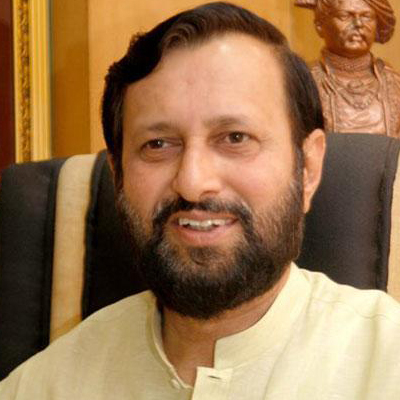
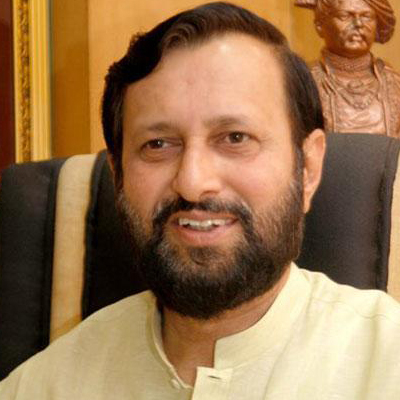
    NEW DELHI: Newly appointed Information and Broadcasting Minister Prakash Javadekar said today that freedom of the press is the cornerstone of a democracy and his first aim in his new portfolio will be to find ways to strengthen this freedom.


    Speaking soon after taking charge of his portfolio, the Minister said that the media and politicians must work together to highlight the problems of the people and bring them before the government.


    Describing himself as ‘just a soldier’, he said he had always stood for freedom of the press and had suffered a 16-month imprisonment during the national emergency in 1975 in this fight as he belongs to a family of journalists.


    Noting that the press has conducted itself in a responsible manner and set up self-regulatory bodies, he said the government would not impose any regulations on the fourth estate.


    The media in its present form gives a ‘rainbow of choices’ and even dissent has its own place in a democratic system of functioning. Constructive criticism is therefore welcome.


    Asked about the frictions with Prasar Bharati, Javadekar said he had not had time to study the issues yet but would like to work in partnership with all the autonomous media units including Prasar Bharati.


    He said in reply to a question that he did not agree with his immediate predecessor that there was no need for an Information and Broadcasting Ministry in the present context.


    Referring to social media, he said that while it presently came under the Information Technology Act, but he would study it and see how it can be helped. He said he would meet all the officials of the Ministry, understand the issues involved and then make some suggestions to the Prime Minister.


    Soon after meeting the media, he met senior officials of the Ministry and also media units, apart from Prasar Bharati CEO Jawhar Sircar and Director of Film Festivals Shankar Mohan.


    Contrary to expectations, Prime Minister Narendra Modi has not upgraded the post of Information and Broadcasting to cabinet rank.


    Like his immediate predecessor Manish Tewari, Javadekar will be a Minister of State with independent charge of Information and Broadcasting Ministry. (He has also been given charge of Environment and Parliamentary Affairs). However, he has ample experience as far as dealing with the media and its problems are concerned, since he like Tewari has served as party spokesperson for the past few years.


    Javedekar has also been one of the nominated members from Parliament to the Press Council of India and hence has dealt with media issues such as paid news. A member of the Rajya Sabha from MaharashtraJavadekar was born in Pune on 30 January 1951 and became associated with the Akhil Bharatiya Vidyarthi Parishad in his young days.


    He commenced his professional life as an employee in the Bank of Maharashtra for 10 years from 1971 to 1981 and also worked in the Rural Development Department.


    His father Keshav Krishna Javadekar was a senior leader of Hindu Maha Sabha who worked as joint editor of Marathi Daily started by Lokmanya Tilak – Kesari before having stints with some other newspapers like Tarun Bharat and Kaal as journalist. He still occasionally writes his thoughts in some newspapers.


    Javadekar has been president of GLOBE India (Global Legislators Organisation for Balanced Environment); In-charge BJP Economic Forum and Cells related to Economy; President, NOINO (National Organisation of Insurance Officers) and president, KCKU (Khadi Commission Karmachari Union).


    As a member of Parliament, he has served as member of the Press Council of India; the Public Accounts Committee; Standing Committee on Human Resources and Development; Consultative Committee for Ministry of Power; Committee on Subordinate Legislation and Committee on Wakf.


    He has earlier served as executive president of the State Planning Board in Maharashtra (1995–1999); been a  member of the Maharashtra Legislative Council from Pune Division Graduate Constituency for 12 years from 1990; chairman of the Task Force on IT in Maharashtra (1977–1999) and chairman of the Working Group on ‘IT for Masses’ of the central government.


    He has also led a delegation to Boston to negotiate Media Lab Asia Project in 2000.

  • Prakash Javadekar takes over as I&B Minister

    Prakash Javadekar takes over as I&B Minister

    NEW DELHI: Senior BJP leader Prakash Javadekar has been sworn in as the new Information and Broadcasting Minister. Javadekar, in an interview to a News channel has said that his first priority as the Minister of State Information & Broadcasting would be to ensure the freedom of media.


    Javadekar, who will take charge of the ministry later today, also said he would like to study three portfolios given to him for three to four days before taking any action.


    Javadekar has also been given (Independent charge) of Environment and Parliamentary Affairs.


    Ravi Shankar Prasad is to be the new communication and information technology minister with cabinet rank. He will also hold charge of the law and justice ministry. 

  • Launch of ‘Modi Tsu’namo’ mobile game by Milestone Interactive Group

    Launch of ‘Modi Tsu’namo’ mobile game by Milestone Interactive Group

    MUMBAI: With BJP’s recent win and Narendra Modi all geared up to take charge of India, Milestone Interactive Group, India’s leading game publishing, marketing, retail and distribution organization has launched the Modi Tsu’namo’ mobile game. The game is available on the Google Play Store and celebrates the spirit of elections in a fun and casual manner whereby the player has to match at least three or more faces of popular Indian election candidates including Narendra Modi, Rahul Gandhi, Arvind Kejriwal and Mamta Banerjee in a single swipe of each leader in any continuous motion combination and earn points. Combinations containing Modi will fetch more points than those containing any other leader. Play the game and celebrate this win for Modi and for India and lead the change by sharing it on Facebook.

    Commenting on the launch of the game, Mr Jayont R. Sharma, Chairman & CEO, Milestone Interactive Group said, “The win for BJP and Narendra Modi in the recent Loksabha elections, has encouraged us to launch theModi Tsu’namo’ mobile game. The game is part of our celebration of this momentous occasion. We are certain that with all the support Shri Narendra Modi has garnered, the players will have a good time playing this mobile game.”

    The game is available on: https://play.google.com/store/apps/details?id=com.milestone.moditsunamo

  • Information and Broadcasting: An uphill journey all the way

    Information and Broadcasting: An uphill journey all the way

    NEW DELHI:  For any person who takes over the mantle of the information & broadcasting ministry (MIB), the handling of the portfolio will be full of potholes created by his or her predecessors, primarily because of the failure to take strong decisions.


    By some mischance or deliberate choice, the MIB has remained without a working head since Priya Ranjan Dasmunshi was forced to leave because of sickness. While Ambika Soni did her best to put into operation plans worked out by the ministry’s bureaucrats or the Telecom Regulatory Authority of India (TRAI), both she and her successor Manish Tewari remained primarily spokespersons of the ruling party.


    Perhaps this was not entirely their fault, but that of the party which failed to realise that the ‘Information’ portfolio does not imply giving party inputs or the media which insisted on only raising party issues whenever these two met the members of the fourth estate.


    There is also no gainsaying that the lower priority given to the MIB – from a full-fledged minister with assisting ministers of state to a single minister of state with independent charge – also contributed to this.     


    With the new government in place, the speculation about who the new minister will be and what expectations can be had will be of considerable interest.


    If the government decides to hand over the portfolio to someone who takes interest in the information and broadcasting sector, then the choice zeroes down to a handful of names. But it is clear that politicians of the standing of Sushma Swaraj or Arun Jaitley who have held this portfolio earlier will not go back to it, and Shatrughan Sinha who has earlier served in the government as minister in-charge of two ministries will agree only if made a full-fledged minister and the chances are that he will want a more important portfolio than the MIB.


    Consequently, the choice falls upon someone like Smriti Irani, unless the Bharatiya Janata Party picks on someone from its allies.


    I&B MINISTRY


    It would help the government if the decisions being taken by the MIB are transparent, and the concerned officials are easily accessible to the media which represents the aspirations of the people.


    While it is true that senior ministry officials are generally reluctant to speak during a session of Parliament, there is no reason for their not doing so at other times.


    Perhaps the secretary of the ministry should designate certain officers to be available to the media at certain hours every day, on phone, if not in person.


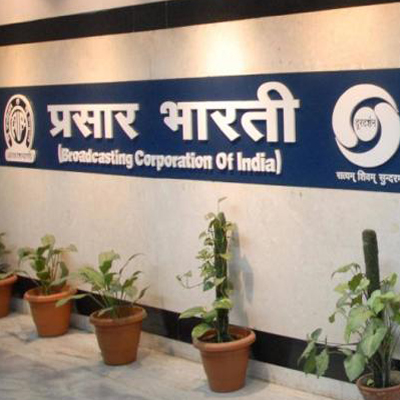
    PRASAR BHARATI


    Notwithstanding who will hold the portfolio, it is clear that it will be no less than being at the edge of the twin-edged sword. Interestingly, one of these two edges was conceived by the erstwhile Jana Sangh (now BJP) which was then part of Janata Party and L K Advani at the head of this MIB.


    Even as B S Lalli was removed from the post of CEO of Prasar Bharati under a cloud of corruption and mismanagement, his successor Jawhar Sircar has taken up cudgels against the ministry on the ground that the public service broadcaster is an autonomous body.


    On the other hand, the government feels that since it pays the salaries, has waived spectrum fee and given other concessions, and has initiated the laying down of rules and regulations regarding employees, it cannot be wished away and has to have a say in the working of the pubcaster.


    The new incumbent in the ministry will therefore have to work out certain ground rules within the ambit of the Prasar Bharati Act 1990 drawing clear lines about its role. Clearly, autonomy does not mean freedom to do anything, but at the same time lays certain constitutional norms or reasonable restrictions.


    In the light of Article 19(1)(a) about freedom of speech and expression, it becomes abundantly clear that the government should not have any control over the content broadcast by All India Radio or telecast by Doordarshan unless this violates the Reasonable Restrictions laid in the Constitution or the Codes under the Prasar Bharati Act or the Cable Television Networks (Regulation) Act 1995. But it may be difficult to stop the government being the financing agency from interfering in the management of the pubcaster.


    In view of this, it is also clear that the spending of the budget laid aside by the ministry for content creation should be left to DD and AIR without day-to-day monitoring by the ministry.


    Furthermore, there has to be greater transparency and quicker decision-making both by the government and by AIR and more particularly Doordarshan about the programmes it wants to commission or broadcast. It is understood that some proposals from independent producers have been pending in DD for almost a decade.   


    The Sam Pitroda Committee on Prasar Bharati is generally repetitive of the provisions of the Prasar Bharati Act, but may help to speed up some processes. The new Minister will therefore have to immediately hold wide-ranging consultations with all stakeholders and take action on the report.


    There is little doubt that DD and AIR are today broadcasting programmes that no private operator dares to do because of the loss of eyeballs (TRPs).


    DOORDARSHAN


    While Doordarshan has made appreciable progress in terms of popularity in semi-urban or urban areas even as it holds the top spot in rural India, there is urgent need to take steps to market the channel even better. While its programmes have become entertaining even as they serve the public by sending out direct or indirect messages, the general perception is to the contrary.


    DD also needs to bring certain channels that are only known in certain regions to the national level. These include DD Bharati, DD Urdu, DD Kashir, and the DD channels in the north east. Greater facility for dubbing popular serials in Hindi would help in this effort.


    AIR


    The audio wing of Prasar Bharati has been treated in a somewhat step-motherly fashion since DD began to grow. There is urgent need to reverse that by getting more people to tune in to radio just the way they tune in to DD.


    This can clearly be done by bringing All India Radio’s National channel and the popular Vividh Bharati channel onto the FM networks so that it is heard in the same way as private FM channels or FM Gold and FM Rainbow.


    AIR has already spent crores of rupees on creating the basic infrastructure for Digital Radio Mondiale, which can make medium-wave or short wave programmes accessible to listeners. The only lacunae appear to be the absence of reasonably priced receivers, and the reluctance of the present Prasar Bharati CEO to the growth of this medium.


    While manufacturers have come forward to produce reasonably priced receivers for use on mobiles, cars or at home, the Government is pushing ahead its programme for the third phase of FM Radio expansion and this is the right time to pursue as DRM sets are also FM compatible. 


    TELECOM REGULATORY AUTHORITY OF INDIA


    Of late, far too many cases have been going to the Telecom Disputes Settlement and Appellate Tribunal (TDSAT) with relation to broadcasting but the problem has been complicated further by the judgment of the Supreme Court that TRAI regulations should not be adjudicated upon by TDSAT.


    Clearly, there is need for TRAI to pay greater heed to its regulations relating to the broadcasting and cable sectors. But since its primary objective has always been telecom, the government will have to consider whether there is need for a separate Broadcast Regulatory Authority of India (BRAI), something which has been tossed around for the past 15 years.


    Allegations are that broadcasters tend to get the TRAI’s hearing more. But in recent times it has been reaching out to more and more cable TV operators when they come up with a logical discussion and argument flow. Perhaps a new BRAI – also provided for in the proposed Broadcast Services Bill – with clearer objectives may help overcome not only the prejudices that are alleged against TRAI.


    The new body could also look at the high taxation down the line – from that levied on manufacturers, broadcasters, cable and other service operators like DTH and HITS, and the consumers (viewers).


    BARC


    The Broadcast Audience Research Council aimed at replacing the outdated present TAM system needs to be expedited.  This may also help the broadcasting industry overcome the hurdles created by the 12-minute ad cap since it will bring in greater transparency.


    SELF-REGULATION


    Self-regulation is healthy as the TV channels will accept decisions of their own ilk more easily than those dictated by the government. It seems to be working well, and it’s best left like that. Content regulation is any way the MIB’s domain, and it can step in and bang its fist on the table if things get out of hand.

    One option being mentioned is that the Inter-Ministerial Committee of the Information and Broadcasting Ministry be vested with greater powers and also made more broad-based with representatives of more ministries, while permitting some civil society intellectuals apart from representatives of News Broadcasting Services Authority (NBSA), the Broadcasting Content Complaints Council (BCCC) or the Advertising Standards Council of India (ASCI) as ex-officio members.


    Furthermore, all the decisions taken by the NBSA, BCCC or ASCI should be finally whetted by the IMC before being made public. The primary purpose of this move would be to ensure that even channels that are not members of these bodies can be covered if the directive comes from the Ministry’s IMC.


    DIGITAL ACCESS SYSTEM


    There is little doubt that the experience of the first two phases of DAS has shown that around 30-40 per cent of the cities covered are still broadcasting on analogue mode. Clearly, there has to be re-think not only on whether the next two phases should be combined (as planned by the outgoing government) or relaxed into more phases with a greater time span, and on whether the regulations drawn up by TRAI in this regard need to be looked at again, since both the consumers and the cable operators appear unhappy.


    DAVP


    Presently, the DAVP gives advertisements to help small and medium newspapers or to propagandize the programmes of the government. It has also introduced short films for television channels or cinema houses, but the rates it pays to the media have remained almost static, since the increases are more symbolic than actual whenever a new advertising policy is announced. It may be worthwhile for the government to consult all stakeholders including the Press Council, ASCI, Indian Broadcasting Foundation, News Broadcasters Association, the Film Federation of India and other film bodies before bringing out the next advertising policy. The recent move by the Supreme Court of setting up a three-member panel to discuss what constitutes advertising and propaganda will be helpful.


    FM BROADCASTING


    The initiative to allow transmission of AIR news on private FM radio on a as-is-where-is basis is a welcome move, but guidelines can be drawn up to permit discussions on entertainment or sports etc. by the channels themselves.


    Even as the process of the third phase has begun, it should be ensured that while on the one hand it is expedited, and on the other it does not clash with the DRM programme since that would force viewers to buy two different receiver sets.


    Undoubtedly, the third phase will help cover almost the entire country, but it has to be ensured that once the auctions are over, the procedures for clearing the channels should not only be speedy, but the annual fee should be affordable.


    COMMUNITY RADIO


    While the pace of the growth of community radio has not been good, the new programmes to provide finance to prospective entrepreneurs may help.  The introduction of awards for Community Radio has been a welcome step.


    Similarly, All India Radio programmes can be made available either free of cost or on a barter basis to channels that make good programmes.


    FILM INDUSTRY


    Although the film industry was given the status of an industry, little else was done to follow this up with positive action. And although it is one of the highest taxed industries in the country, the government has paid little heed to help filmmakers come up with original work. For this reason, the studio system that ruled the industry till the late fifties appears to be coming back with large corporate producers funding and producing films and independent filmmakers still facing an uphill task to find funds.


    The National Film Development Corporation though led by a dynamic leader Nina Lath Gupta has been constrained by a crunch in funds from the MIB. Gupta totally restructure and reinvented NFDC a few years ago until some distrust from the MIB saw funds drying up last year. It needs to have more money at its disposal, and it should be allowed to live up to its mandate of encouraging independent film makers and build a pipeline of more films every year.


    To overcome Manish Tewari’s view that the Films Division (FD) has outlived its existence, it would be a good idea to convert the FD into both a production body for its own producers and a funding body for independent documentary, animation and short films.  The government has to implement the decision of the Apex Court given almost two decades earlier that film magazines of the FD have to be compulsorily exhibited in cinema houses.


    But perhaps the most important problem is the high taxation by the government which still treats cinema as a service industry under the Shops and Establishment Act which treats lotteries on the same footing. Lower taxes – and abolition of entertainment tax – will not only help filmmakers, but also bring in more entrepreneurs to build cinema houses which have depleted to just around 10,000 for a country which has a population that is much larger.  


    FILM CENSORSHIP


    The Film Certification Guidelines under the Cinematograph Act 1952 were last amended in December 1991. If films have become more lax in showing violence or sex-oriented scenes, it is because society all around has changed and so have the members of the Central Board of Film Certification. It is therefore necessary for the new Minister to ensure that the guidelines reflect the level of acceptance of certain norms in society that were a taboo two or three decades earlier.


    Phew! Undoubtedly, all this presents a daunting task for the government. But good governance is known by what it does, not by what it claims it will do.
  • From reel to real: Actors piggy ride on populist parties

    From reel to real: Actors piggy ride on populist parties

    NEW DELHI: When megastar Amitabh Bachchan decided in the mid-eighties to wash his hands off politics (except on screen), one expected that very few from his fraternity would dare take the plunge.


    However, there were a few like Raj Babbar, Shatrughan Sinha and Sunil Dutt who entered politics. Perhaps the only notable entry from the Hindi cinema industry after that was Vinod Khanna, though several south Indian actors either joined the state or centre arena.


    The love between the two magnified as many political parties, particularly Bharatiya Janata Party and Trinamool Congress went all out to woo those from the reel world to the real world. Perhaps this exposure to politics and largely the anti-corruption wave that swept the country in the wake of Anna Hazare’s movement resulted in probably the largest number of film personalities entering the fray for the 2014 polls.

    The 16th Lok Sabha elections saw as many as 40 film personalities from different states, representing different parties campaigning, and many of them surprised all by coming out with flying (party) colours.


    But for the film industry, the constituencies that were worth watching were the ones where the members of the same fraternity pitted against each other.


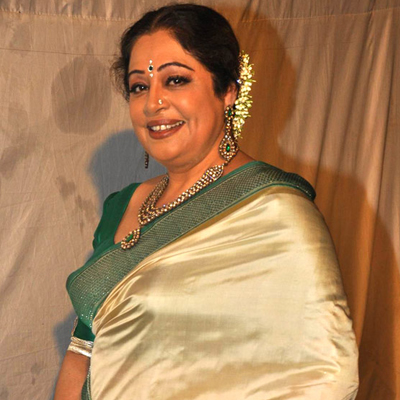
    Of the most keenly watched battles was of Kirron Kher of the Bharatiya Janata Party and Aam Admi Party’s Gul Panag. Kher was shown black flags when she first went to Chandigarh, unlike Panag and yet, Kher came out with flying colours. She defeated a veteran like Pawan Kumar Bansal of the Congress, though many from her constituency said it was more a victory of the party than of the actor herself.  


    Similarly, Mumbai West saw item girl Rakhi Sawant who represented the Rashtriya Aam Party battling it out with Mahesh Manjrekar who represented the Maharashtra Navnirman Sena (MNS) and ultimately emerged as the winner.


    The not-so-‘khamosh’ Shatrughan Sinha once again successfully represented the BJP from Patna Saheb in Bihar where he faced Bhojpuri actor Kunal Singh of the Congress.

    In Birbhum, actor Satabdi Roy of the Trinamool Congress successfully trounced actor Joy Banerjee of the BJP. Similarly, Singer Indranil Sen from TMC expectedly trounced Sidhanth Mahapatra of the Biju Janata Dal from Behrampur.


    For the BJP, versatile singer Bablu Supriya from Asansol, senior actor Hema Malini in Mathura despite initial criticism, Hindi and Bhojpuri actor Manoj Tiwari in North East Delhi, versatile actor Paresh Rawal from Ahmedabad East, and veteran Vinod Khanna from Gurdaspur emerged winners.


    Television actress Smiriti Irani from the high-profile constituency Amethi lost but with a considerably reduced margin, and others who lost included Nimu Bhowmik in Raiganj, George Baker representing Howrah and music maestro Bappi Lahiri from Serampore.


    For the Trinamool Congress, glamorous actor Moon Moon Sen in Bankura, reigning Bengali star Deb (Deepak Adhikari) in Ghatal, Sandhya Sen in Midnapore, actor Arpita Ghosh in Balurghat, and actor Tapas Paul in Krishnagar reached the finishing line ahead of the others, while actor Soumitra Roy from Malda North, and former Bollywood star Biswajit (Chatterjee) from New Delhi had to face defeat.

    The Congress had the largest number of star losers. They included Kannada heroine Ramya in Mandya, the high profile Raj Babbar in Ghaziabad, actor Aparajita Mohanty in Cuttack, veteran Oriya film actor Bijay Mohanty from Bhubaneswar, Hindi and Bhojpuri actor Ravi Kishan from Jaunpur, petite actress Nagma in Meerut, actor Jayasudha in Secunderabad, actor Vijaya Shanthi from Medak, and D Napoleon from Perambalur in Tamil Nadu who was a Minister in the outgoing government.

       
    The AAP faced a similar fate with TV actress Rina Rani who contested from Maharajganj and the actor-dancer Javed Jaffery (son of former comedy actor Jagdeep) from Lucknow being shown the door.


    Actor Innocent representing the Communist Party of India (Marxist) from Chalakkudy in Kerala emerged victor, while renowned award-winning director Prakash Jha representing the Janata Dal (United) from West Champaran in Bihar and former actor Jayaprada of Rashtriya Lok Dal from Bijnor had to face defeats.


    Actor Murali Mohan won from the Rajahmundry seat for the Telugu Desam Party. 

     
    At present, the Rajya Sabha has Javed Akhtar, Jaya Bachchan, Mithun Chakraborty, K Chiranjeevi, Rekha and producer T Subbarami Reddy as members. Smriti Irani who lost to Rahul Gandhi also continues to be member of the Rajya Sabha.


    One cannot ignore the fact that while Bollywood has generally not been very successful in north India, the southern film industry is rich with examples of film-politicians. Some of the popular names are S S Rajendran (SSR), M G Ramachandran, J Jayalalithaa , S Chandrasekar.


    It remains to be seen if the film personalities will rise above to serve the people or will add glamour to the lower house of Parliament.

  • The New Government and Indian Media: Agenda for Reform

    The New Government and Indian Media: Agenda for Reform

    I will begin by taking a cue from a catchphrase Mr. Modi used frequently in his stump speeches through the electioneering. “More Governance. Less Government.”


    If PM Modi follows this through in all those facets of the government that media industries deal with, he will simultaneously:


    • Strengthen plurality of voices and reinforce the media’s ‘Fourth Estate’ role as our democracy’s watchdog and first line of defence

    • Unlock investment interest, domestic and FDI, and quickly create thousands of new jobs in the people-intensive creative content sector

    • Give fillip to revenue growth for the centre and state governments

    • Allow freer play of market forces to accelerate growth in the still nascent media sector

    Let us look at specific examples of each of these:

    • It is nearly two decades since FM radio was first opened up to private broadcasters. Even today, licence conditions prohibit radio broadcasters from news and current affairs. In a laughable concession they are, however, permitted to retransmit, without any editing or alteration, All India Radio news bulletins. In the meanwhile, television, which reaches a much larger slice of the population, has a whole, officially recognised and duly licensed ‘news’ genre. Apart from a visceral fear of real free speech in both the legislative and administrative arms of the government, there seems to be no justification for this position. The Supreme Court admitted a public interest litigation on 17 October 2013 seeking the abrogation of this restriction. Can the new government show us that its heart is in the right place when this matter next comes up for hearing?

    • While restrictions on foreign investment in the news business are nearly universal for easily understood reasons, the government will soon be hearing petitions from several players in the electronic news media about the dire straits they are in. While clearly appreciating the need to ensure that a clear majority in a news business must remain in Indian hands, could the government not consider pushing up FDI to 49 per cent? Similarly, the related-party restrictions on investments in the cable & satellite distribution plant (DAS, DTH, HITS etc.) impede the path for many natural investors. Given the ambitious path laid out to analog sunset at the end of this year, the sector is crying out for more investment and the progress of the digitisation project to date is evidence enough for the consumer and content creator benefits it brings in its wake.

    • A very important reason for mandatory digitisation is that it lays to rest the unregulated analogue cable plant, which from the beginning, has operated in a twilight zone beyond the reach of the state. An unfortunate outcome, for central and state governments, is that incomes and profits of businesses in this segment of the media industry have stayed in the informal, ‘black’ economy. Given turnovers in tens of thousands of crore, the loss to the exchequer over the last several years is evidently sizable. The future, however, looks better. Now if the government acts to open FDI pathways into the distribution plant, this future of big service and entertainment tax revenues might be even closer at hand.

    • The Telecom Regulatory Authority of India (TRAI) was an accidental invitee to the television industry. Once it got in, though, it behaved like the well-known fable about the Arab and the Camel. On a cold night in the desert, the camel requests the Arab if it can only get its freezing nose into the tent. One thing leads to another and soon the camel is in the tent and the poor Arab is freezing out in the open. TRAI has chosen to build a complex framework to regulate tariffs between content providers and distribution platforms with all sorts of caps and restrictions. Interestingly enough, it appears that the regulations work only to protect distribution interests while doing little or nothing for the final consumer. With a multiplicity of content providers and distribution platforms, the likelihood of any player or group of players being able to exert monopolistic or even oligopolistic economic power leading to extortionate impositions on the consumer now appear far-fetched. Under the circumstances, it may be time to wind down this onerous framework. In any case, an erstwhile TRAI chairman Pradeep Baijal, had indicated that regulation would make way for forbearance soon as the last-mile was competitive. How much more competitive can it get with half a dozen DTH players, hundreds of DAS platforms and indications of other initiatives like HITS in the pipeline?

    The country has given an unequivocal mandate to Mr. Modi, his party and coalition. Expectations are stratospheric and everything that accelerates the wheels of business and commerce should be music to his and his government’s ears. BBC’s stated mission “To enrich people’s lives with programmes and services that inform, educate and entertain” is a great encapsulation of the mission of the entire media industry itself. Support this industry and you unleash a catalysing force of good, Mr. Modi.

    Because ultimately, as the Clinton Campaign in 1992 put it pithily, it’s “The Economy, stupid.”

    (These are purely personal views of Provocateur Advisory principal Paritosh Joshi and indiantelevision.com does not subscribe to these views)

  • Narendra Modi: India’s next Prime Minister

    Narendra Modi: India’s next Prime Minister

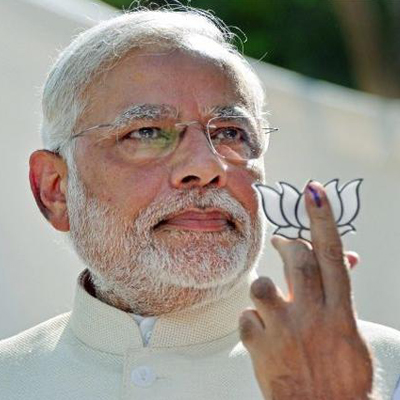
    MUMBAI: As the dusk sets on the historic day in Indian history, soon-to-be India’s fourteenth Prime Minister, Narendra Modi, thanked the people of Vadodara (Baroda) for giving him a record margin of 5.7 lakh votes.


    While the Congress accepted its humiliating defeat, Bharatiya Janata Party (BJP) is busy giving out laddoos to people.


    Even though early leads suggested that BJP was way ahead of other parties, by afternoon all doubts were abolished. At the time of filing this report (7:18 pm) while NDA had secured 337 seats, BJP alone had 283 seats, way past the magical figure of 272. On the other hand, UPA managed only 58 seats, while Congress put up a disappointing figure of 45 seats.


    The Congress saw a resounding defeat as it barely managed to get a few seats while retaining its main seats of Amethi (Rahul Gandhi) and Rae Bareily (Sonia Gandhi).


    It is after 30 years that a party achieved the feat of having a thumping majority to lead the Lok Sabha.  BJP saw clean sweeps in the states of Gujarat, Rajasthan, Delhi and Goa while other states had clear majority. There were a few states like Kerala, Tamil Nadu, West Bengal, Tripura, Sikkim, Odisha and Manipur,where the party couldn’t cement a strong hold.


    The election which saw many firsts has already gone down in the history as the election of the century.

  • Elections 2014: News channels ‘Modi’fy

    Elections 2014: News channels ‘Modi’fy

    NEW DELHI: Even as television channels are trying to be one up on the other in the coverage of the counting process and the general election results, most channels reflected a common perception:that the results were individual-based and not party-based.

    In fact, most channels had the faces of Narendra Modi when showing the results of the Bharatiya Janata Party (BJP), that of Rahul Gandhi when showing the fate of the Indian National Congress (INC), of Arvind Kejriwal when reflecting how the Aam Aadmi Party (AAP) was doing, and so on. The party symbols of these parties were curiously missing from the studio reportage, even as these appeared during the live coverages from all over the country.

    Doordarshan News expectedly was the most sober in its coverage even as it was a little behind the other channels in showing the trends or results, but surprisingly even Times Now appeared to move a bit slowly with the trends and results even as it succeeded in getting a large number of panelists and politicians on board throughout the day.

    Even Lok Sabha TV (LSTV) and Rajya Sabha TV (RSTV) joined the fray for the first time to show the results. However, while LSTV confined itself to showing figures taken from Doordarshan accompanied by a live panel discussion, RSTV had live coverages from different parts of the country in collaboration with DD.   


    Clearly, NDTV 24×7 and ABP News captured a large number of eyeballs with their graphic presentations. NDTV 24×7 showed graphic presentation of the Lok Sabha, with a majority of seats occupied with yellow-coloured figures representing the BJP, and the numbers changed as the trends and results emerged.

    Aaj Tak had moving caricatures of Modi, Gandhi and Kejriwal reflecting the fate of their respective party, with Modi dancing with joy, Gandhi brow in frustration, and Kejriwal looking crestfallen in place of the party symbols.

    Interestingly the poll figures remained on screen even during the commercial breaks, reflecting the interest of the viewer.     

    As expected the presentations on the main news channels were led by their heads including Prannoy Roy of NDTV, Arnab Goswami of Times Now, and Rajdeep Sardesai of CNN-IBN.

    One common repeat throughout the day on all channels were the shots of Modi meeting and taking the blessings of his aged mother after his Vadodara victory and the run of the party for which he is the Prime Ministerial candidate.


    While Times Now appeared very cluttered with too many figures running simultaneously along with several visuals at the same time, channels like Zee News, ABP News, NDTV 24X7, P7, India News, CNN-IBN and NewsX caught the eye with their graphics and presentation.


    The interest in the Indian elections overseas was reflected by BBC Global News, as it went live several times during the day and had a live translation of all press meets being addressed in Hindi. CNN in comparison showed little interest as it only mentioned the results or trends from time to time.

    Clearly, all the channels were out to outdo each other as far as presentation was concerned vis-a-vis live graphics and coverage, and some like Times Now, ABP News, CNN-IBN and NDTV 24X7 catching the eye with their sets, with ABP News and NDTV 24X7 being most innovative.

    But it was clear that all the channels probably spent much more than the budgets initially earmarked by them for today. An earlier report had said that the channels had put aside Rs 1 crore to Rs 1.5 crore for the day, but one reporter of a channel told indiantelevision.com that the amount would go higher.


    Certain common points of discussion emerged throughout the day: was it the victory of Modi, the BJP workers or the RSS (an issue raised by both LK Advani and Sushma Swaraj during the day); will Rahul resign, accepting responsibility; did the allies matter since the BJP had emerged strongly on its own; was this high vote for BJP a rejection of many that it was a communal party; whether BJP leader Giriraj Singh who had made some very damaging statements should be removed from the party; why Sonia and Rahul Gandhi did not take questions and just made statements (Rahul was ready to face question, but left on Sonia’s gesture); and why were Dr Manmohan Singh and Arjun Kejriwal conspicuously missing. Advani and Sushma Swaraj’s attribution of the victory to BJP workers and the Rashtriya Swayam Sevak Sangh; and the virtually plastic smile on the face of Rahul also made for a lot of talk on TV channels and social media.

    But apart from the TV channels and even All India Radio including FM Gold which went live from 8:30 am in the morning, the social media was as active. While live coverage by way of latest figures appeared on sites like yahoo.in, Twitter was very active and was quoted throughout the day by TV channels whenever any personality including Modi and LK Advani sent tweets.


    Several interesting cartoons came on the internet, particularly Facebook, from individuals. One had a cartoon of Rahul Gandhi’s smiling face with the use of a BJP slogan: ‘Acchey din aaney waley hain, hum naani ke ghar jaane waaley hain’ (Good days are coming, we will go to our grandmother’s house) while another had a poster of ‘Dabbang 3’ with the photo of Modi. Some wanted to know if the victory of the film personalities was that of the individuals or the party they represented.    

    Even as the results started coming in the afternoon, the focus shifted entirely to the major personalities in the fray. And it will be interesting to note the conjectures of the channels about possible portfolios, particularly since most TV channels had got the exit polls right by predicting the victory of BJP.

  • 2014 Poll results through the eyes of Bengali channels

    2014 Poll results through the eyes of Bengali channels

    KOLKATA: News channels including ABP Ananda, 24 Ghanta, ETV News Bangla, Focus TV, Kolkata TV and Tara Newz and infotainment channels like Aakash 8 have resembled a battlefield since 8am on 16 May, what with counting of votes taking place in 42 Lok Sabha constituencies.


    Each channel has tried to outshine the other with live shows, panel discussions and what have you in terms of the fate of politicians in the state. Not only have they provided byte-by-byte news to viewers who are glued to their TV screens since morning but they have also kept their websites up-to-speed with the latest updates.


    While the ruling Trinamool Congress (TMC) has emerged the winner, it isn’t exactly the lion’s share of seats that the party was confident of bagging in the face of a challenge from the left front and the Congress. What’s more, BJP, that was hitherto a fringe player in the state, has sprung a surprise by forging a lead in three seats. These are among the reasons why television channels are now eagerly awaiting chief minister Mamata Banerjee’s reaction on the results.  


    Interestingly, while BJP wasn’t able to make the kind of inroads in the state as it desired, quite a few Bengali channels are highlighting the party’s rise in the state.


    A city-based media observer said, “Even when the BJP was in power in 1999, it had only one MP from Bengal but this time, apart from the expected historical win at the centre, channels are talking about BJP making inroads in the state.”


    Another media expert said, “TMC’s result isn’t entirely unexpected. The major surprise is BJP coming up in West Bengal. The opposition vote has got divided.” Talking about the way Bengali news channels covered election result day, he said, “Panellists in local Bengali channels are mostly junior and unimportant leaders of parties.”


    While economist and political analyst, Swaraj Mukherjee questioned, “Kolkata is an island of its own. Trends in the rest of the country never touched this island in the past nor do they today. So TMC wins. The big number is because of big rigging, though TMC will always deny but who can deny the audio-visual documents?”


    “People are quiet. They would have rejoiced if the BJP would have got a few more seats in line with the rest of the country. They cannot react so openly for fear of personal security. None the less, the victory of Sudip Bandopadhyay and Dinesh Trivedi augur well as they are liked by the people in their constituencies,” Mukherjee said, adding, “News channels are covering the news but slanted for fear of government action.”


    A third expert rued, “It seems most of the channels have forgotten that this is a national election and not a Panchayat poll where they can have an overdose of local politics.”


    Whereas Focus Bangla (earlier Ne Bangla) editor-in-chief Biswa Majumdar said that the channel had interviewed most of the big shots in these elections as elections were an important occasion for making a mark in the regional news space.