Tag: BJP

  • “We’ve come a long way from being WPP’s little known agency”: Samrat Bedi

    “We’ve come a long way from being WPP’s little known agency”: Samrat Bedi

    The year 2014 will go down in history as the year of Indian politics. The main contenders of the two-horse race, Bharatiya Janta Party and Congress, launched massive campaigns to woo voters and became the talking point of the year.


    The BJP campaign ran in series with ‘janta maaf nahi karegi’ and ‘achche din aane wale hai’ becoming the most popular taglines of the year. While some pulled a meme on them, others continue to strongly believe in them and hoped to see a better and brighter India.


    The agency behind the ‘political campaign that created history,’ Soho Square, won not only hearts and accolades from the ‘aam janta’ but the advertising fraternity as well. It won the Grand Effie at the Effies 2014, bringing it at par with the bigger agencies like O&M, Lowe Lintas and McCann Worldgroup India.


    Indiantelevision.com’s Meghna Sharma caught up with Soho Sqaure head Samrat Bedi for a quick freewheeling chat after the award function.

    Excerpts:


    After winning the mandate, what was the reaction of the team? Was there a lot of pressure to deliver?


    We knew that it was a challenging one as it was an uncharted territory for the entire team. We had never done anything like this before. When we started working on it, a day’s work felt like what one would usually do in a week’s time.


    We held meetings at 1 pm everyday where we were given a new brief. After watching a lot of news and reading papers, to gauge the nation’s mood, we would again meet around 2:30 pm or so and come up with new content/idea by night.


    We are very proud of the campaign and it was a huge learning lesson.


    Whom would you attribute the win to?


    It was a team effort. It might sound clichéd but the magnitude of the project was so huge that the whole team had to get involved. There was no senior or junior when we got down to working on the campaign as it was unknown territory and needed everyone’s support.


    One can say a benchmark has been created. So, what will be the next big thing for Soho Square?


    Tough question. (laughs) I would like to call it a springboard rather than a benchmark. One can always do better and create newer benchmarks. Nonetheless, it will work as a springboard for us and now help us grow pillar to pillar.


    In a month’s time, we will be launching the coffee table book on the BJP campaign as well. 


    What advice will you like to give other “smaller” agencies?


    Just because we won the BJP mandate doesn’t make Soho Sqaure an expert. We cannot give advise to anyone because we are sure every other agency has the best talent pool and the ambition to come up with fantastic work across categories.


    However, one thing is for sure that the campaign helped us from being the “little known agency of WPP” to an agency which can now be counted amongst the big leagues.


    Sometimes it takes just an idea to change people’s perceptions!


  • Rs 64,840 crore expected as revenue from spectrum auction

    Rs 64,840 crore expected as revenue from spectrum auction

    NEW DELHI: The estimated revenue from the auction of spectrum is targeted at Rs 64,840 crore (excluding 2100 MHz spectrum) of which Rs 16,000 crore is expected to be released in the current financial year.


    The reserve price approved is Rs 3,646 crore pan-India per MHZ in 800 MHz, Rs 3,980 crore for 900 MHz band pan-India excluding Delhi, Mumbai, Kolkata, and Jammu and Kashmir; Rs 2,191 crore pan-India (excluding Maharashtra and West Bengal) in 1800 MHz band.


    The union cabinet chaired by Prime Minister Narendra Modi has approved the proposal of the Department of Telecom to proceed with auction in 800, 900 & 1800 MHz bands.


    The quantum of spectrum to be put to auction is 103.75 MHz in 800 MHz band in all service areas, 177.8 MHz in 17 LSAs in 900 MHz band and 99.2 MHz in 15 LSAs in 1800 MHz band. Thus a total of 380.75 MHz in 800,900 & 1800 MHz is being put to auction.


    Payment terms, eligibility criteria and auction objectives shall be as in the previous auction of February 2014.


    The cabinet also decided that intent to put 2100 MHz to simultaneous auction may be announced along with auction of other bands. Details of this will be announced later on.


    The government has set itself the following objectives for the auctions:


    •    Obtain a market determined price of apectrum in various bands through a transparent process;

    •    Ensure efficient use of spectrum and avoid hoarding;

    •    Stimulate competition in the sector;

    •    Promote rollout of the respective services;

    •    Maximise revenue proceeds from the auctions within the set parameters.
    Eligibility Criterion

    •    Any licensee that holds a UAS/ CMTS/ UL(AS)/UL licence with authorization for Access Services for that Service Area; or

    •    Any licensee that fulfils the eligibility for obtaining a Unified License with authorisation for Access Services; or

    •    Any entity that gives an undertaking to obtain a Unified License for access service authorisation through a New Entrant Nominee as per the DoT guidelines/licence conditions. Can bid for the Spectrum (subject to other provisions of the Notice).

    Payment Terms


    Successful bidders shall make the payment in any of the following two options:

    a)               Full upfront payment within 10 days of declaration of final price or pre-payment of one or more annual instalments; or

    b)               Deferred payment, subject to the following conditions:

    (i)              An upfront payment; of 33 per cent in the case of 1800MHz band, and 25 per cent in case of 900MHz and 800 MHz; of the final bid amount shall be made within 10 days of declaration of successful bidders and final price;

    (ii)            There shall be a moratorium of two years for payment of balance amount of one time charges for the spectrum, which shall be recovered in 10 equal annual instalments.

    (iii)          The first instalment of the balance due shall become due on the third anniversary of the scheduled date of the first payment. Subsequent instalment shall become due on the same date of each following year. Prepayment of one or more instalments will be allowed on each annual anniversary date of the first upfront payment, based upon the principle that the net present value of the payment is protected.

  • Ban on live anti terror ops a good move, feels news industry

    Ban on live anti terror ops a good move, feels news industry

    MUMBAI: The indelible, dark night of 26 November 2008 (26/11 to us all) and its aftermath is still freshly impinged on our minds. The real-time coverage of the Pakistani Lashkar-e-Taiba terror attacks in Mumbai, not only brought out the ugly face of humanity but also had to face a lot of flak for reckless coverage.

    The frame by frame in-depth coverage of the rescue operation shown on television was condemned by many as it had every chance of jeopardising the entire operation.

    Soon afterwards, the television channels had agreed to ban live phone-ins, avoid broadcasting security operations and drop repeated shots post violent crime as part of a self-regulatory exercise on the part of private broadcasters.

    However, the Home Ministry under the new Narendra Modi-led government is once again considering a   ban on live coverage of anti-terror operations by nation-wide television channels.

    The ban on live coverage of anti-terror operations is not yet official. During the UPA government’s time, Information and Broadcasting (I&B) Minister Anand Sharma had drafted a law for a ban, which was apparently scrapped by the then PM Manmohan Singh.

    The Home Ministry has once again asked the I&B Ministry to amend the rules to stop the airing of such terror-based events and wants more amendments to the 15-point Programme Code prescribed under the Cable Television Network Rules 1994 for this purpose.

     The rules were amended in 2009 when private broadcasters were brought within the ambit of the Cable Television Networks Rules. In 2011, another advisory was issued highlighting that a few TV channels telecast interviews with terrorists or terrorist groups, which according to the Government could help them advance their propagandist agenda.

    In 2012, in a stinging rebuke to the electronic media, the Supreme Court said that driven by commercial interests, TV channels put national security in jeopardy by their “reckless” 24×7 live telecast of security operations against the 10 terrorists during the 26/11 attacks on Mumbai.


    “The shots and visuals that were shown live by TV channels could have also been shown after all the terrorists were neutralised and the security operations were over. But in that case, the TV programmes would not have had the same shrill, scintillating and chilling effect and would not have shot up the TRP ratings of the channels,” a bench of Supreme Court judges Aftab Alam and C K Prasad said. “It must, therefore, be held that by covering live the terrorists attack on Mumbai in the way it was done, Indian TV channels were not serving any national interest or social cause,” they said.

    On the matter of the Home Ministry writing to the I&B Ministry and seriously considering the amendment, the News Broadcasters Association (NBA) president and India TV chairman and editor-in-chief Rajat Sharma is not unduly rattled. He goes on to say, “There is nothing new in this. This was discussed soon after the Mumbai terror attacks and in the interest of national security, broadcasters had agreed in principle.”

    NDTV Group executive director and CEO Vikram Chandra feels that it is a good move because there should be clear-cut guidelines on what should and shouldn’t be shown. “I don’t think they can ban channels from showing it, but can only amend the guidelines so that there is clarity. Also, the government needs to be careful on how they proceed in the matter as the whole press will stand up against any ban or censorship.”

    He further adds, “We also want to work towards what is good for the whole country. But there is a difference between censorship and amendments and that gap shouldn’t be nullified.”

    Times Now consultant and strategic affairs expert Maroof Raza approves of any such amendments taken in the near future. “It is a good idea in general since enthusiastic but irresponsible reporting can have negative consequences,” he opines.

    The debatable amendment is now hanging in the balance….


  • State election results: A busy day for news channels

    State election results: A busy day for news channels

    MUMBAI: The year 2014 saw not only the 16th Lok Sabha election, but a number of states undergoing assembly elections as well.


    As the year ends, two states – Jammu & Kashmir and Jharkhand – casted their votes and elected their new governments. The result day i.e. 23 December, was a day of excitement for news channels as most of them started early with predictions. As the day progressed, the counting results were displayed on the screens as media stalwarts analysed the results.


    The numbers clearly showed the mark that Prime Minister Narendra Modi had left on these states as the BJP won a number of seats. In Jharkhand, the party has won with almost majority while in J&K, it is the second largest party after PDP. However, the “breaking news” was J&K Chief Minister Omar Abdullah losing from both Beerwah and Sonawar assembly constituency seats.


    The news channels focused on the next step of the political parties especially in J&K as there was no clear winner. The channels got a panel discussing the same as well as senior editors within the channel analysed the winners, the overall results as well as what discussions are going on behind the closed doors of parties on their next move.


    The analysis continued till late afternoon; with a little break as BJP’s Amit Shah held a press conference to talk about the party’s performance in the two states. “2014 is the year of BJP,” is what the right-hand man of Modi had to say.


    Throughout the day, the channels also gathered as well as took people’s reaction through their digital platforms. Hashtags like #Dec23WithArnab, #NDTVResults were created and promoted on channels as they geared for the big debates to be held at primetime.

  • 2014: The year of bold steps

    2014: The year of bold steps

    The year 2014 will go down in history as the year of bold steps.  Whether it was the postponement of digitisation, the introduction of many a forward-thinking and hard-hitting paper and regulation by government regulator Telecom Regulatory Authority of India (TRAI), the industry’s punts at experimenting with big ticket shows, the completion of the acquisition of the Network18 group by Reliance Industries and the departures that followed thereafter, the push by YouTube into creating  a platform that could disrupt audiovisual content viewing, followed by the drive by broadcast networks to build their own independent digital platforms, the increasing importance of social media for television, the introduction of Reference Interconnect Offer (RIO) deals by Star India in a bid to force the industry to speed up digitisation,  big 4K announcements by Videocon and Tata Sky, the rise and rise of Life OK and SabTV, or the slow descent of Sony (once amongst the top two Hindi general entertainment channels -GECs ) to the number sixth spot, the continuing stranglehold of Star Plus over the Hindi GEC viewer,  the industry’s total disillusionment with existing TV rating provider TAM India, and the swing towards the new industry-backed BARC, the news and niche TV channels’ battle with the the government imposed advertising cap of 10+2 in the courts, the launch of three specialised Hindi general entertainment TV channels, a gradual increase in carriage fee payouts to the cable TV sector by smaller channel owners – all these and many were formed the highlights of the television business in 2014.

    To start with, the government took a firm decision to push ahead the analogue cable TV sunset date to 2016, seeing the state of progress by India’s 60,000 cable TV operators and seven-odd so called national multi system operators (MSOs). Of course, digitisation delay led to a lot of carping by many in the trade, but then it was back to business as usual very quickly. For some, no change was more comfortable than having to reinvent thinking, processes, and also business models – which was proving painful. Those who had pressed their foot on digitisation’s accelerator eased off a bit as they had been given some breathing space.

    The new government

    public://Narendra_D_Modi.jpg2014 was the year of the big change, with the Narendra Modi led Bharatiya Janata Party (BJP) sweeping the ‘election of the century’ and coming to power.  In the new government, the mantle of Information and Broadcasting Ministry was given to Prakash Javadekar, who in his five months tenure made numerous public appearances, making major announcements. Before, the portfolio was passed on to Arun Jaitely in November, Javadekar had made some crucial changes, that of pushing the deadline for digitisation of phase III to December 2015 and of phase IV to December 2016. The move was  done in order to help the indigenous set top box (STB) manufacturers’ boost their businesses as well as allow the MSOs and cable TV operators’ enough time to do it right.

    The year saw the tech savvy Prime Minister announcing his dream of seeing a ‘Digital India’, which was followed by numerous campaigns. It was also the year, when the Media and Entertainment sector envisaged of becoming a $100 billion industry by 2020.


    Cable, DTH and Distribution

    public://222222.jpgIn the cable TV sector, while the tiff between the last mile owners (LMOs) and MSOs over ownership of consumers, billing and revenue share continued like in 2013, some unity could be seen amongst the MSOs with regards to voluntary digitisation after the I&B decided to push digitisation to a later date. The LMOs on the other hand united in several parts of the country to form cooperatives in a bid to get some financial muscle to be able to digitise apart from strengthening their customer base. The year saw not only Hinduja’s headend in the sky (HITS) project taking strides, a new model of distribution: Cable Virtual Network Operator (CVNO) too came up in a few cities like Mumbai and Kolkata.

    Another major development towards the end of the year was the decision of Star India to apply the RIO deal approach with the MSOs. The move while aimed at bringing in addressability and packaging in the DAS markets, saw a number of MSOs coming up with either different packages or putting the network’s channels on a-la-carte.

    With the Average Revenue Per User (ARPU) not showing much signs of improvement, a number of MSOs have started shoring up their broadband offering to customers.  The year also saw Den Networks launching its broadband service in Delhi, with plans of expansion in the coming year.  

    The direct to home (DTH) operators too were seen taking some bold steps with Dish TV launching a sub-brand Zing for the regional markets and Tata Sky and Videocon d2h announcing that they would be introducing 4K set top boxes in India. Not only this, DD Freedish too decided to seed MPEG4 STBs along with MPEG2 boxes in interior areas.

    The icing on the cake was TRAI’s regulation on unbundling, which saw distribution giants, MediaPro and TheOneAlliance parting ways. A lot of other broadcasters too were seen setting up distribution initiatives of their own. 

    Advertising

    public://bjp.JPGThe 16th Lok Sabha elections were not only fought on the ground, but political parties laid siege to the airwaves as well. This general election was the first among many, where media was so extensively (and blatantly) used by political parties.  Far from fighting shy of marketing themselves, the main players – Congress and BJP –spent nearly Rs 400 to Rs 500 crore each on publicity campaigns. An additional Rs 500 to Rs 1,000 crore was spent on related activities such as banners, hoardings, organisation of public meetings and transportation of key campaigners, among others. Not surprisingly, media agencies had estimated around 2 to 2.5 per cent of overall advertisement spends this year to come from elections.

    The year also saw the growth of the e-commerce sector as they intensified their battle. As investments rolled in, the market spends increased to woo customers. And with Finance Minister Arun Jaitley in his maiden budget announcing that manufacturing units will be allowed to sell their products through retail including e-commerce platforms without any additional approval, paving a path for the foreign direct investment (FDI) in the manufacturing sector, the upsurge is expected to continue.

                                                                                                                                                                      News Broadcasters

    public://Mukesh-Ambani-1.jpgThe first half of the year went in covering what seems the country’s biggest election. From exit polls to election result day, one thing was clear that it was a battle of individuals and not parties. And one man leading it all was none other than, BJP’s Narendra Modi.

    The news channels went all out to outdo each other as far as presentation was concerned vis-a-vis live graphics and coverage.  As per industry sources, the channels had earmarked Rs 1 crore to Rs 1.5 crore for the day, but spent a lot more. And with youth stepping out to vote, the channels went all out to social media to gather the pulse of the nation. Channels tied up with Microsoft and Google as well.

    The second big thing, which shook the industry, was when India’s largest company Reliance Industries announced its takeover of India’s largest media companies–Network 18.

    In May, RIL said it would invest about Rs 4,000 crore through Independent Media Trust, of which RIL is the sole beneficiary, to acquire 78 per cent stake in NW18 and about 9 per cent stake in TV18. Founder Raghav Bahl continues to be on the board as a non-executive director.

    The announcement saw senior level exits from the network. The CEO, CFO, COO quit in the days after it. The network’s news channels too saw famous faces like Rajdeep Sardesai moving on.

    The move did make many ask: Is this the death of media independence? But Reliance managers took quick initiative to assuage any such doubts, essentially keeping a hands-off approach from the news network.

    Programming

    public://star.jpgThe television industry saw two major appointments – Uday Shankar taking over as president of Indian Broadcasting Federation (IBF) and NP Singh being elevated as Multi Screen Media (MSM) CEO. Then his predecessor Man Jit Singh was given a US posting and global responsibility in Sony’s home entertainment division.

    As for the programming, the number one channel as per TAM TV ratings, Star Plus intensified its youth turn by launching shows like India’s Raw Star, Airlines and Everest. 

    Zee experimented with content through its new channel, Zindagi, with a slate of programming from across the border – Pakistan . A relief from daily melodramatic soaps got another boost as the country’s first genre-specific Hindi entertainment channel, Epic, finally got a nod from the MIB after more than a year-long wait. MSM too launched two new channels – Max2 and Sony Pal – to add a little more flavour to its pack.

    As industry awaits Broadcast Audience Research Council (BARC) to give out ratings, the body held roadshows across the country to share its updates with all constituents across the entire broadcast value chain, and, equally important, to receive feedback and suggestions.

    Sports

    public://kabbdi.jpgThe year saw India embracing a number of sports leagues apart from cricket, like football, tennis, kabaddi and basketball, that too in different formats. The Pro Kabaddi League, an initiative to revive India’s contact sports was a success and a surprise, not just on television but also at the stadiums, as Indian families cheered  the country’s lost sport. Bud sadly enough, advertisers decided to play a wait and watch game and missed the bus. It was initiated by Mashal Sports and broadcaster Star Sports.

    The Hero India Super League, an IPL styled football domestic tournament was a hit too, on television, social media and fans flocking to the stadiums. Conceptualised by Star Sports, IMG-Reliance and All India Football Federation (AIFF), it garnered a strong advertising support in its maiden year. While bigger brand like Hero, Puma and Amul came on board for the league as title and associate sponsors, individual franchises too drew support from brands.  With advertising and sponsorships stakes high in the Indian Premier league (IPL), these formats have allowed brands with smaller advertising budgets to have a play in the sports television business.

    While the industry did take some bold steps in the year, it hopes to reap the benefits in 2015.
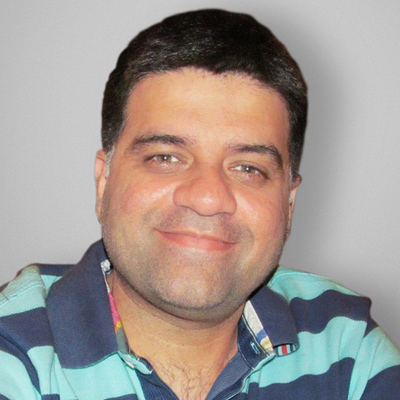
  • “Mr Modi, when are you giving me the big interview you promised?”: Rajdeep Sardesai

    “Mr Modi, when are you giving me the big interview you promised?”: Rajdeep Sardesai

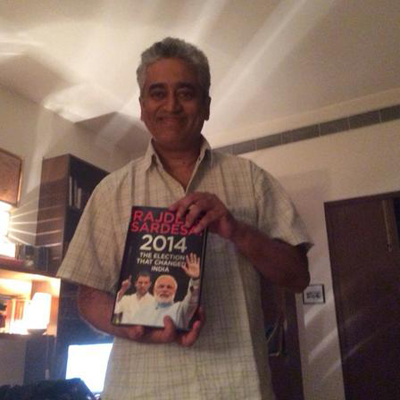
    He is one of Indian television’s most recognisable face as a news presenter and now the author of the best seller ‘2014: The Election That Changed India’. Rajdeep Sardesai may have quit Network18 as IBN18 editor in chief and later on joining the India Today Group as consulting editor, but the man with over 26 years of experience in the field continues to be recognised for his work.


    Sardesai was honoured with the Asian TV Award on 11 December for ‘The Best News Presenter’ for his coverage on the counting day of the general elections.


     The award is a special one for him as he becomes the first Indian to receive the recognition. On the occasion, in a quick chat with Indiantelevision.com’s Herman Gomes, Sardesai speaks about the recognition and upcoming plans for the New Year.


    Your feelings on receiving the award? Do you see Indian journalism receiving its due credit?

    When I was with NDTV, The Big Fight had won the Asian TV Award, three times in a row. At CNN-IBN, India at 9 and our election coverage had won awards for the best news coverage and best current affairs, but to win an individual award as the ‘Best News Presenter’ feels special. Being nominated with icons from CNN, Discovery, Nat Geo and CNBC, along with Chinese and Korean TV, makes it special. I feel honoured to be honoured as the only Indian.


    Are awards and recognition important for journalism?

    Being the first Indian to receive an award like this, feels nice, but only for a moment. Journalism is not about winning awards but about work or the interview you do.  Elections after all is a team game. The award is also for all those who worked with me as a team at my old organisation, CNN IBN.


    Any celebrations planned?

    I am going to have a quiet dinner when my son returns from his hostel. I am planning to take him out for dinner next weekend.  I owe a lot to the family.


    How well is your book ‘2014:The Election That Changed India’ been performing on the shelves?

    The book as of last week was placed at number two in the non-fiction category, behind Sachin Tendulkar’s autobiography: ‘Playing It My way’.  It has been on the best seller list for six weeks. I am told that in one month it has sold more than any other nonfiction political book of 2014. I am taking the book across the country for various promotions and lit fests.  On the weekends I promote the book while on weekdays I am caught up anchoring my show. It’s a packed week!


    Are politicians affected by the revelations in the book?

    Interestingly I find the Congress politicians having more problems with the book than BJP. The BJP politicians had feared the book, but Congress seems to be unhappy now.


    How has the state of journalism changed over the last one year?

    One of the continuing fears I have is the tendency to sensationalise. That continues to remain a trend and has not stopped. This is what I call window journalism, where you have eight people in a window, talking at each other rather than talking to each other.

    But at the same time there is some good work being done. But the sad part is it does not get the due recognition, because some of the less important work dominates the more worthy work.


    We are destroying our credibility in the long run.


    How do you view the growth for online journalism?

    My belief is that digital is going to see a big revolution in the next few years. It will not happen overnight but will take two to three years.


    Are there chances of you joining back CNN-IBN?

    There are no such plans. 2014 has been a roller coaster year for me. Our election coverage is being recognised at the Asian level. The book was a high point while my departure from CNN IBN was an unfortunate one. 


    It has been six months since the new government came to power. Do you think Aache Din Aa Gaye?

    Ache Sitare Aa Gaye, ache din we don’t know. Maybe next year. It’s too early to judge.


    One question you would want to ask the Prime Minister Narendra Modi?

    Mr Modi, when are you giving me the big interview you promised?


    How do you see the year ahead for the Indian media and how are you planning to welcome the New Year?

    I view the year 2015 as the year of introspection for the media including myself. 2014 has been a year of excitement. I am welcoming 2015 by going to Goa and resting by the beach.


    For this year do you want to be known as Rajdeep Sardesai: the journalist or the author?

    I want to be known as a journalist who has written a bestselling book!

  • TV’s 10% growth will add to AdEx growth in 2015 in India, predicts ZenithOptimedia

    TV’s 10% growth will add to AdEx growth in 2015 in India, predicts ZenithOptimedia

    MUMBAI: The year 2014 saw the biggest Lok Sabha elections held in the country with Bharatiya Janta Party winning with a majority giving people a hope of ‘aache din’.

    It has been just over six months of the newly elected government led by Prime Minister Narendra Modi and it seems to have captured the collective consciousness of the country. And as the year comes to an end, ZenithOptimedia’s Advertising Expenditure Forecasts says that falling food prices as well as oil prices have contributed to a reduction in the Consumer Price Inflation to a historic low of 5.52 per cent in October. IMF and World Bank have forecast an identical 6.4 per cent growth in 2015, up from 5.6 per cent in 2014. The stock market index has crossed 28000, up from 20000 in November 2013.

    Hence, we enter 2015 with a strongly positive consumer and business sentiment, albeit recognising that consistent on-ground delivery and reforms will be needed to keep this sentiment up. Hence, cautious optimism, though with way more optimism than same time last year, is still the right expression.

    The agency expects consumption to continue picking up, with passenger car and utility vehicle sales turning positive, credit card spending on the rise, loans for durables growing. From an ad-expenditure point of view, FMCGs will continue their dominance but given the weak monsoons, some categories might stay flat or have slow growth. High growth is expected from telecom, e-commerce, mobile phones, cars and two wheelers, retail, realty and the BFSI sector. 2015 will also be the year of ICC Cricket World Cup, which will also be a trigger to growth in ad expenditure.

    And with the new TV measurement system scheduled to launch in 2015, as is the much-awaited phase III expansion of FM Radio. Regional media, across print, TV and all other media continues to drive growth in media consumption. With internet base increasing to 250 million, smartphone ownership expected to reach 200 million by 2014 end, and the country awaiting the launch of 4G services by telecom operators, online and mobile will continue to see the maximum growth rate. Digital advertising however, has become dearer as the government decided to re-impose service tax.

    Given these factors ZenithOptimedia expects the ad-ex to grow by 12 per cent to Rs 40,307 crore, at an overall level in 2015, as against 10.7 per cent in 2014 (over 2013). This growth will be primarily fuelled by print at 12 per cent, TV at 10 per cent and online and mobile at 25 per cent. Other media are expected to grow between 5 – 10 per cent.


    Global forecast

    The year 2014 continued the trend of seeing the rise of mobile advertising and social media, and the transition to programmatic buying of digital display, will help the global advertising market grow 5-6 per cent a year over the next three years.

    According to ZenithOptimedia, global ad spend will grow 4.9 per cent to reach $545 billion in 2015. The global economy is expected to improve (the IMF predicts 3.8 per cent global GDP growth in 2015, up from 3.3 per cent in 2014), but advertising faces a tough year-on-year comparison after the Winter Olympics, World Cup and US mid-term elections in 2014. Ad spend growth will therefore be slightly below 2014’s 5.1 per cent.

    2016 will be a quadrennial year – with the Summer Olympics, US Presidential elections and the UEFA European Football Championship – and we expect these events to propel ad spend to 5.6 per cent growth that year, before it slips back to 5.2 ad spend in 2017 in their absence.


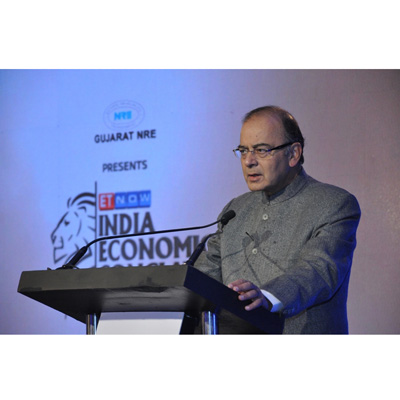
  • Arun Jaitley inaugurates ET Now’s 2nd India Economic Conclave

    Arun Jaitley inaugurates ET Now’s 2nd India Economic Conclave

    MUMBAI: “Fortune favours the brave, and the BJP has made the most softening global crude prices. Not only has it boosted the fiscal health of the economy, but has also eased significant pressure on the domestic prices, indicating that the inflation could go down below the level of 5.5%,” Arun Jaitley said at ET Now’s 2nd edition of India Economic Conclave.
     
    The day long conclave themed – ‘India: The Giant Awakens’ had four sessions that brought together captains of Indian industry, policy makers, institutional investors and civil society leaders that included key ministers like Railways Minister Suresh Prabhu, Industry Minister Nirmala Sitharaman and Power Minister Piyush Goyal.
     
    While making keynote address it was pointed out that the government will make the most of the decisive mandate bestowed on them in the General Election this year. They will push through key legislations like GST, Coal Ordinance, easing land laws and amendments to the New Companies Act. And to push through these laws Jaitley and government is ready to take all stakeholders along. In a move to push the GST Amendment Bill in this session itself, the finance minister will meet his State counterparts to iron out concerns and build consensus.
     
    Speaking to India Inc, the finance minister strongly criticized UPA’s tax policies, saying that, “The government and investments paid a big price for some of the tax measures that would never yield revenues.” Obviously, referring to the controversial retrospective amendment to tax capital gains, transfer pricing of shares and GAAR.
     
    In his government’s endeavor to climb back to a high growth trajectory, Arun Jaitley highlighted the need to push manufacturing and reform the banking sector. While the finance minister said that he was acutely aware of growth and direct taxes growing a slow pace, he was confident of meeting his revenue targets. With his sights set on the February Budget, Jaitley promised to address India Inc’s concerns to boost growth.


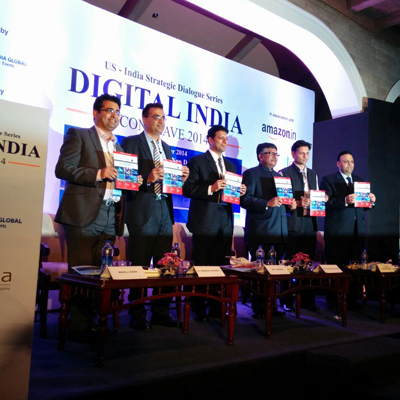
  • ‘Digital India Conclave 2014’ to intensify the ‘Digital India’ initiative

    ‘Digital India Conclave 2014’ to intensify the ‘Digital India’ initiative

    MUMBAI: The Narendra Modi led Indian government officially clicked through the ambitious ‘Digital India’ programme a few months ago. The vision is simple: to usher India into the digital age where each and every citizen can experience the impact. But this simple vision will require a lot of hard graft and investment towards the right kind of infrastructure.

    As a bridge between this vision and reality, India Inc. along with FICCI, Invest India and Chase India is organising a ‘Digital India programme’, a series of online and offline activities pivoting around two roundtables in New Delhi and Washington DC.

    India Inc. has created its own ‘Digital India’ initiative which ties in with the India-US Partnership Hub to bring in a series of online and offline programmes. It will explore the ‘Digital India’ vision and trigger dialogue to plug into this bold new programme.

    This online-offline integrated programme brings in perspectives and participation from senior policy decision makers within government and industry around a discourse to achieve the following objectives:

     • Identify the challenges and opportunities in the ‘Digital India’ initiative
    • Identify synergies that can be created between industries and the government to successfully implement the initiative
    • Explore how the India US collaboration could help achieve the ‘Digital India’ vision
    • Involve key stakeholders in defining a roadmap that will lead to a truly ‘Digital India’
    • Produce a series of online and offline activities to facilitate discourse culminating in a bespoke online publication
    • India is finally coming of digital age and we aim to provide an incisive new digital hub for this new age.

     Commenting on the initiative, Avian Media CEO and Chase India director Nitin Mantri said, “We are proud of this association with India Inc and a key aspect of this initiative is our first Digital India Conclave to be held in New Delhi on 5 December 2014. The sessions will focus on the prominence of the digital advancement across sectors and the requirement to streamline digital with the core business in order to initiate the Digital India initiative.”

    The conclave is in association with Amazon.in, Google and Qualcomm is supported by TCIL and NIXI and is the first phase of the programme which will bring together around 100 -150 key stakeholders across government/public sector, the private sector as well as other influencers such as think tanks, media and specialist experts.

    The first conclave of the ‘Digital India’ Programme is on 5 December 2014 in Delhi while the second conclave will be held in Washington in January 2015.


  • So who does DAS benefit and what does RIO have to do with it?

    So who does DAS benefit and what does RIO have to do with it?

    When the BJP government was last in power with Ms Swaraj at the helm of the MIB, the digitisation process was first mooted in its original form of CAS. The populist notion was to bring down cable prices with the false concept of pay for what you want, so pay less. But little did the government realise that the customer’s cable bill was so significantly subsidised because of ‘under declaration’ that the ‘spoilt’ consumer in the cheapest cable market in the world would either have to reduce his current offering by half or more or if he wanted the same channel line up, would actually have to pay twice as much!

    At that time, the broadcasters were resentful as reduced reach was imminent in an advertising driven market and for DPOs it was definitely not favourable as they would need to reduce the number of analogue channels to piggyback digital cable on some of the frequencies which was otherwise used for analogue channels. (This was because both digital and analogue had to be offered on the same network). And this reduction of analogue channels impacted their carriage potential and hence revenues.

    So who won? None of the key stake holders- broadcaster, DPO or consumer.

    So who does DAS in its new avatar benefit?

    Certainly not the consumer from his cable bill point which was the original populist premise. Sure, the DPOs and broadcasters, once the dust settles down. With the transparency of set top boxes and doing away with ‘under declaration’, the MSO can now collect from the ground higher revenues and hence a bigger chunk eventually to the broadcaster. (Cable revenues were significantly lower than DTH revenues even though cable homes far exceeded DTH homes.) Who else benefits? The government, for sure, by way of higher taxes.

    And the losers of course in the value chain would be no doubt the consumer now shelling out higher ARPUs. And of course the LCO who till now reigned king keeping the bigger chunk of collections.
    So what’s wrong with DAS?

    Fundamentally, the current consumer pricing structure, the RIO rates and the business model. If DAS was to benefit the consumer why is there no B to C model, why are there no retail prices with direct offers from broadcasters to consumers with pipeline commissions to DPOs. Why are RIO rates unrealistic? Why are DPOs free to do retail pricing? The problem is RIO is a regulatory created framework and broadcasters have maxed out after years of price freeze not knowing what to expect.  

    If DAS has to succeed then this whole pricing scenario has to be re-looked. How can the broadcaster market his product if the DPO controls retail pricing? Or given the RIO pricing (which will now be used as a basis for negotiation) will the broadcaster really allow the DPO to play the role of a wholesaler and buy in bulk and retail at attractive customer offerings significantly lower than RIO.

    When regulation hinders market dynamics, it creates more absurdities. Any consumer product needs an MRP. Packages or stand alone. RIO is definitely not helping this process. It’s best the two beneficiaries – the DPOs and the broadcasters finally come together, see eye to eye and work out what is the magical pricing so that packaging and pricing is offered by both and directly to the consumer. If the DPO truly acts as a wholesaler he can surely better any packages the broadcaster directly offers unless of course the broadcaster/channel can go it alone which no doubt will be the true test of content and certainly a success yardstick to measure addressability.

    So can the government bury RIO and keep the consumer in mind!  TV entertainment is mass and needs to be looked at (retailed) as a service similar to that of consumer products! Let’s have an MRP, let’s also have a distributor pricing better than MRP. There is scope for both models to co-exist- DPOs mixing it up and offering multi-broadcaster packages and broadcasters also retailing with negotiated discounts to DPOs for pipeline usage and payment gateway.

    A 100 million plus pay TV homes is a very robust subscription market!

    Lastly, with the BJP now back surely we hope they will complete what they chaotically started. With the honourable I&B Minister Arun Jaitley and MoS Rajyavardhan Singh Rathore now at the helm it certainly looks like MIB is priority and our industry will definitely be both in competent hands and in their cross hairs!


    (These are purely personal views of consultant Sanjev Hiremath and indiantelevision.com does not necessarily subscribe to these views.)