Tag: BJP

  • Parliamentary panel for guidelines on sting operations

    Parliamentary panel for guidelines on sting operations

    MUMBAI: A Parliamentary Committee has asked the government to come out with guidelines and norms for sting operations.

    Headed by Congress MP V Kishore Chandra Deo, the seven-member Committee said: “The Union government may initiate steps for laying guidelines and norms for sting operations.”

    In its report on the alleged cash-for-votes scam, the Committee observed that carrying out sting operations in an unregulated manner, which casts aspersions on members of Parliament, erode the credibility of democratic institutions.

    It further added: “The Committee, is, therefore of the opinion that such motivated trial by the media needs to be regulated.

    The Committee said that sting operations are often driven by sensational quotients. It is to increase the TRP ratings of TV channels vis-a-vis their rivals and more often than not for monetary and other considerations.

    “The committee wishes to express concern over the fact that the media has been indulging in a race to achieve viewership through sensationalism on a competitive basis,” the committee said in its report.

    Expressing concern over the fact that the media is indulging in a race to achieve viewership through “sensationalism” in a competitive basis, it recalled that in the cash-for-votes scam one channel had implied that all members are susceptible to corruption.

    The committee was formed after three Bharatiya Janata Party (BJP) MPs – Ashok Argal, Faggan Singh Kulaste and Mahavir Bhagora – stunned the nation by brandishing wads of cash in the Lok Sabha shortly before the Manmohan Singh government was to face the trust vote on 22 J
  • Parliamentary panel wants regulations for media

    Parliamentary panel wants regulations for media

    MUMBAI: A Parliamentary Committe has called for a favoured statutory regulations for the media as it was concerned over the live telecast of the 60-hour “Operation Black Tornado” conducted by the security forces during the Mumbai terror attack.

    The Rajya Sabha Committee on Petitions, headed by BJP leader M Venkaiah Naidu, said in its report presented in the House that live feed of commandos being air-dropped endangered the success of operations and safety of hostages as also the security forces.

    “The Committee apprehends that the live footage shown by TV channels to the viewers, could also have been used as free intelligence input by the perpetrators sitting far away from the place of incident who allegedly guided the attackers,” it said.

    The report further added, “Committee expects the media to treat information of sensitive nature carefully and endeavour to ensure that the interest of nation and lives of security forces and hostages in such type of operations is not jeopardised by live telecasting.”

    At the same time, it noted that the live coverage was partially restricted later because of “some good sense prevailing with suitable advisories”. Needless to mention, self-regulation by media otherwise was not in place, it said.

    Self-regulation is an ideal situation but it may not be effective to regulate the media particularly in the scenario of growing competition among the channels for supremacy in the business of ratings, it said.

    “The Committee is, therefore, in favour of having statutory regulations in place covering the print and electronic media, in the larger interest of the society, on the model of the Press Council of India vested with more powers,” it said.

  • News Channels: Sensation-fatigue, government’s attitude and regional channels will decide future content

    So, as one captain of the industry says, if the advertisers stay with the credible, then some channels will die out and TAM would have to ask itself serious questions, or “there will be no place for it in the Indian TV news market”.

    Lastly, come to the Content Code. If anyone feels that the government will wait and wait and not act till the news channels give in their draft, slated for this month end (but one never knows), then it would be foolishness.

    This is a precarious position for the ruling UPA and with Gujarat and Himachal Pradesh going the BJP way, it will be even more circumspect in dealing with the media. And yet, it is after all not the parties in power but the bureaucrats who bring out the pending issues in front of successive new ministers and make them do the things they want.

    Many bureaucrats –not necessarily just the ones in Shastri Bhavan – have suffered due to stings and for many of them, controlling content is important. So electoral concerns may have made Prime Minsiter Manmohan Singh ask I&B minister Priyaranjan Dasmunsi to soft pedal for the moment, but the government will ultimately set up the regulator and the code will be in place. At least, that is what Shastri Bhavan insiders have given us to understand.

    In the year to come, content will be shaped by a few things, of which the first will be the government’s attitude to it and that will largely be patterned on how the news channels behave vis-?-vis the government. They can do some serious work on their own Code and the chances are that the government will accept it, just as it had adopted the ASCI code for advertisement. However, if the attitude of the NBA is to play footsie with the government, they could well kill their own chances of governing themselves, which is the best thing one can wish for.

    The second deciding factor would be what some see as fatigue setting in on sensationalism, which even Naqvi has warned about. The channels themselves are running out of sensational ideas that are new and more importantly, that would last, for all the experiments have at last died, and the pace of mortality of newer ideas is increasing.

    The third will be the government’s position on TAM, and it has warned TAM when the CEO failed to turn up for a Parliamentary Committee meeting in Mumbai at the end of this year. If the government – and in all probability it will, because that is a way of controlling content without talking of the much hated Code imposes certain modes of operation and measures TAM must take for rating channels, it will have a direct impact on content.

    Last but not least, and though it will take some time, is the massive oncoming growth of regional channels and their own niche content that would drive the mainstream channels to do a hard rethink.

    For the moment, the proponents of serious journalism are assured, with IBN 7 seeking relief in the fact that they did touch 14 per cent and are doing better business than rival India TV; NDTV seeing market assurance from the fact of its grossing the second tallest figures, and CNN-IBN as well as NDTV going into the diversification drive emphasising that the serious guys are not about to fall by the wayside.

  • ‘Consolidation in news business is an inevitability’ : Laxmi Goel – Zee News Ltd director

    ‘Consolidation in news business is an inevitability’ : Laxmi Goel – Zee News Ltd director

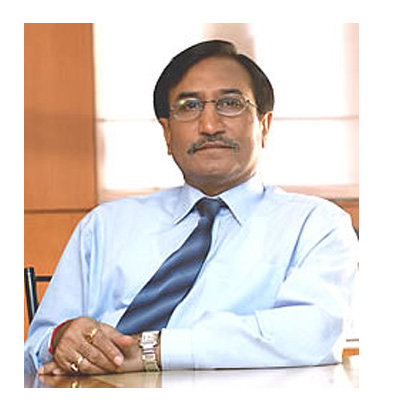
    Laxmi N Goel, director Zee News Ltd and the second of the three brothers of Essel Group chairman Subhash Chandra, is not given to hype and hoopla.

    Even when he has to announce his organisation’s achievements, true to his style, he’s most likely to hold the event in modest surroundings. A case in point being the launch of the book Pehal, which he authored, done in Federation of Indian Chambers of Commerce and Industry auditorium in Delhi instead of a five star hotel. As he says, every paise or penny saved is that much earned, which can be reinvested into the company.

    He doesn’t have any formal training in business management or television programming, but has still managed to oversee the functioning of Zee News channel quite successfully over the years after it was decided to do away with professional CEOs at the helm to manage news.

    These days Laxmi Goel spends more time discussing annual budgets and increments of his colleagues than on the exercising cycle. After all, the restructuring of Zee Telefilms has landed him added responsibilities of all the Zee family regional channels, which have been hived off into Zee News Ltd to conform to government guidelines on foreign investment in television news entities. “I wish I could find some more time for my daily walks,” Goel rues.

    In an interview with Indiantelevision.com, held at the Zee News’ headquarters in Noida on the outskirts of Delhi, Goel discusses some aspects of the restructured Zee News.

    Excerpts:

    Why was the de-merger of Zee News necessary?
    When the organization becomes big, this type of de-merger helps in better control of various aspects of business. However, for me, things still remain the same. We have to do well and show good results to our shareholders. That was the theme earlier. It’s still so.

    Have you settled down in your new role and what would be the agenda now?
    It’s still early to spell out agendas as it’d take five to six months for things to settle down completely.

    But, as I said earlier, the basic process remains by and large the same. We have started a Bengali news channel (24 Ghanta or 24 Hours) and we would evaluate our expansion options as the market pans out.

    The Bengali channel seems to be a case of the Right shaking hands with the Left. Zee’s promoter family are said to be Bharatiya Janata Party and parent RSS sympathizers, while Bengali channel partner Akaash Bangla owners are known backers of the Left parties. Comment.
    I don’t understand what political ideologies, if at all there is one, has to do with business decisions? 24 Ghanta was a business decision where Zee News thought Akaash Bangla to be the right business partner. Moreover, as Akaash Bangla is an existing TV channel, its owners had the advantage of understanding the TV business.

    What would you like to do with the organization now that you have more properties to look after, apart from Zee News and Zee Business?
    The functioning of the organization remains more or less the same. It has just taken a different avatar. What is remarkably different is that there would not be any consolidated profit and loss account for Zee News any more. You journalists can say that we would not be able to hide behind Zee Telefilms with our financial performance any more. Now, that’s a challenge too. We would have to continue showing good results and keep our shareholders happy by nurturing the bottom-line.

    Apart from that, we are now free to take independent decisions on expansion, which will always be guided by market forces. At the moment, we are not actively considering any addition to the present crop of channels, but I cannot predict the future. If a sudden need arises to have a product in a certain segment of television business or geographical area, we can consider it then.

    Do you feel that so many news channels, including those from the Zee News stable, will survive in the long term?
    India is a growing market where increasingly people are formally getting educated. A combination of this has fuelled consumption of news. The trick lies in delivering news quickly and in a manner that is consumer friendly.

    But such mushrooming of news channels all over is unlikely to be supported by the market in the long term. The process of consolidation has started.

    We would have to continue showing good results and keep our shareholders happy by nurturing the bottom-line

    Will the economics of running news channels force consolidation?
    Partly yes. Let’s take, for example, a news channel that aims to have a national presence. On an average capital expenditure on national news channel can range between Rs 800 to Rs 900 million. At times it can go beyond that too. Then the running expense per month for a national news channel comes to approximately Rs 80 million, which would include expenditure on news gathering and marketing activities. Now these figures are not small, though not huge either.

    As different news channels have different business models, over the years mounting expenses will force consolidation. This can happen in the form of mergers and acquisitions or can result in cutting down cost on news gathering and infrastructure by evolving a model where some sharing is done by various players in the industry.

    Carriage fee that most TV channels pay to cable operators, coupled with growing employee wage bill in news organizations, also add to the cost. To outsiders, these costs might not look very important, but let me assure you that carriage fee and increasing pay packets of TV journalists do weigh down a TV news organization.

    Since the Indian news market is still very active, the exact shape of consolidation is difficult to predict accurately. But consolidation is an inevitability.

    How is Zee News Ltd addressing the problems of carriage fee and bloating wage bills?
    We are not as aggressive as other news channels in holding back people who want to leave for another channel for a better pay packet. We do talk to people who want to leave and try to reason out the advantages of Zee News Ltd. However, we feel that beyond a point it’s futile to negotiate on remuneration as the demands and wish list of some people just don’t seem to end. Such people would leave anyway. If not today, then tomorrow.

    In such cases, Zee News lets people go for the larger benefit of the company and its bottom-line. And, there have been innumerable cases when former Zee News employees have requested to be taken back at the salary that they had been drawing at the time of leaving.

    As far as carriage fee is concerned, we feel CAS is the solution. Newer technologies like CAS and DTH would help in arresting the demands of cable operators, which can be unreasonable at times.

    What is the revenue mop up level for Zee News and Zee Business channels?
    A majority of the revenue, of course, comes from Zee News, which is in the range of Rs 10-20 million per month. Out of this, subscription revenue is more than advertising money.

    How are the regional channels doing financially and ratings wise?
    Most of the channels are doing well, but the actual process of consolidation is still on. Only after the formal work is complete, we’d get down to evaluate the prospects of each channel in our company (which include Zee Bangla, Zee Telegu, Zee Gujarati, 24 Ghanta, etc).

    How many news channels do you foresee in the next two to three years?
    At the national level, I foresee 2-4 channels surviving in the next three to five years time.

  • Former I&B minister Pramod Mahajan shot at by brother, remains critical

    Former I&B minister Pramod Mahajan shot at by brother, remains critical

    MUMBAI / NEW DELHI: Senior BJP leader and former information & broadcasting (I&B) minister Pramod Mahajan was shot this morning (Saturday) and remains in a critical condition.

    Mahajan was shot at by his youngest brother Pravin with a Brownie pistol after an argument at the BJP leader’s apartment in Mumbai’s upscale Worli area at around 8 am, news channels have reported.
    The 56-year-old former I&B minister reportedly has four bullets lodged in his body and has suffered grievous injury to his liver, pancreas and intestines. He underwent a nearly four-hour operation at Mumbai’s Hinduja Hospital where he was administered nearly 25 bottles of blood due to the heavy internal bleeding he suffered in the attack. Doctors have not removed the bullets yet and will take a call on that only after keeping him under observation for the next 48 hours.

    It was on Mahajan’s watch that Star India in 1998-99 made its first concerted effort to get a direct-to-home (DTH) broadcast service going with its ISkyB venture. Mahajan had in end-1998 indicated that DTH clearances would come within two-and-a-half months.

    Doordarshan’s news channel is also a brain child of Mahajan, who floated the idea in 1999. The idea of starting such a channel was mooted immediately after the BJP came to power in March 1998. Mahajan gave the green signal for starting the channel after he became I&B minister in December.

    It was also Mahajan who got the idea to upgrade the facilities of Kashmir DD centre to counter Pakistani propaganda unleashed by Pakistan’s state broadcaster PTV in 1999-2000. Though a dedicated Kashmir channel was started with the help of private broadcasters when Arun Jaitley became the I&B minister after Mahajan in 2000, the former had sanctioned a $100m package for the upgradation of DD Kashmir’s centre.

    After Mahajan was shifted to the telecom ministry, holding also the infotec portfolio, he expressly scotched an idea of merging the telecom and I&B ministry to form an ICE ministry for the proposed convergence era.

    It is not wise to make one out of three important ministries of telecom, information and broadcasting and information technology, especially in view of the amount of work involved and number of employees associated, Mahajan had said while opposing a merger of the three ministries.