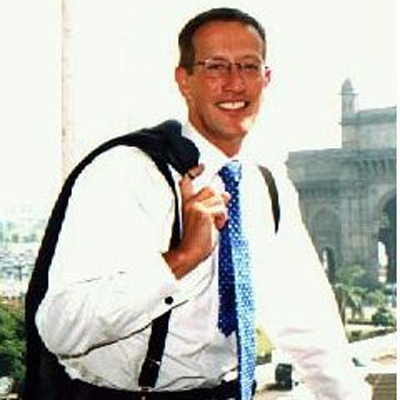
It’s not often that one of CNN’s star anchors comes calling in India. And when it comes to business matters, even less so. It may be a sign of changing times or just a matter of circumstance, but CNN’s Richard Quest was in Mumbai last week on a three-day visit shooting for a special edition of CNN Business Traveller. The episode looks at ‘Doing Business in Different Cultures’ and will have its first airing on Sunday at 7 pm.
This is Quest’s second visit to Mumbai. Trained as a lawyer, Quest joined CNN in February 2001 from BBC World where he was the BBC’s North America business correspondent. He is the anchor for CNN’s daily business show, Business Central and co-anchor of BizNews, a rolling three-hour live morning news and business European breakfast programme.
Indiantelevision.com caught up with Quest who spoke about his special passion for this particular show he does, how he manages the time to anchor the three programmes he fronts and other issues.
The special episode you’re doing for CNN Business Traveller ‘Doing Business in Different Cultures’. What’s it all about and why India as the main focus of this particular episode?
The episode deals with the issue of doing business in a different environment and how you go about it. It’s about recognising cultural differences.
A common feature in Asia is that a lot of people come here (from the West) after months of negotiations, expecting to sign the deal. But after arrival they realise there are more meetings. And then maybe more meetings.
The serious side to it is doing business. How do you actually go about understanding the cultural differences, which cultural differences are important to understand when you travel. The main piece of the programme will be about how international business travellers can better equip themselves when they have to do business in other environments.
From our viewers’ point of view, that’s what they’re most concerned about.
And it’s not just India that we’re covering. The lead package will also have items from Moscow and Australia. In Sydney, we’ll look at how a Japanese banker learns how to do business in Australia.
Why did we choose India? Well, you’ve got a very large country with a growing consumer population, growing companies that are aiming to do business abroad. And how basically the two sides are culturally going to manage to do it.
For example, after I leave here I’m going up to Mastek (a call centre) where they train employees on how to do business in the United States. My producer was yesterday (last Wednesday) in Bangalore.
We chose India as the fulcrum for the show because it was the best halfway house to get in all those strands.
There’s no promotional angle at all to your visit?
No, we’re not doing that.
What are the subjects you will be looking at in upcoming episodes?
Next episode we’ll look at security, all aspects. Everything from personal security, computer security, all those sorts of things.
Then we’re going to look at what we call the new frugality. Basically how companies try to cut the costs of business travel. For that one, the plan is to go around the world in eight days. Travelling economy, mind you.
The big project next year starting in January is I’ve got to learn a language. In six months, I have to get to four on a scale of one to 12.
Seem’s a heck of an effort for a half-hour show that comes once a month.
That’s what differentiates CNN and the BBC from the other news networks.
|
|||
|
There’s the other issue of finding the time for a show like this that demands so much legwork. How do you manage it in between anchoring ‘Business Central’ and co-anchoring ‘BizNews’? After all, these are daily shows that run five days a week. Well, the deal between the producer of this show and the daily show is that I get three days (off the daily shows) in a month to work on Business Traveller. So far, we’ve not been able to manage that though and it’s been more like five days a month. What’s your working week like? How many hours? How much of your inputs go into the shows that you’re presenting? Some anchors don’t do it. Take the travel show for instance. It’s just that I am passionate about business travel. As far as planning and stuff goes, I have to find the time in between my normal working schedule, which runs from 2:30 in the morning rolling till 9:30. After that I pretty much feel too tired to do anything else so it’s certainly a challenge. Looking at the bigger picture, India does not really appear to be up there on the CNN radarscope as far as business is concerned. What we are looking at for the present is to take the existing staff and focusing more on getting out more business stories. We certainly want to do more. We will do more. It is a question of how we do it. There’s no doubt that India is the bastion of our principal opposition (BBC). But that’s certainly not the case outside India. |
|||