Tag: bitcoin

  • What is the Difference Between Bitcoin and Ripple?

    What is the Difference Between Bitcoin and Ripple?

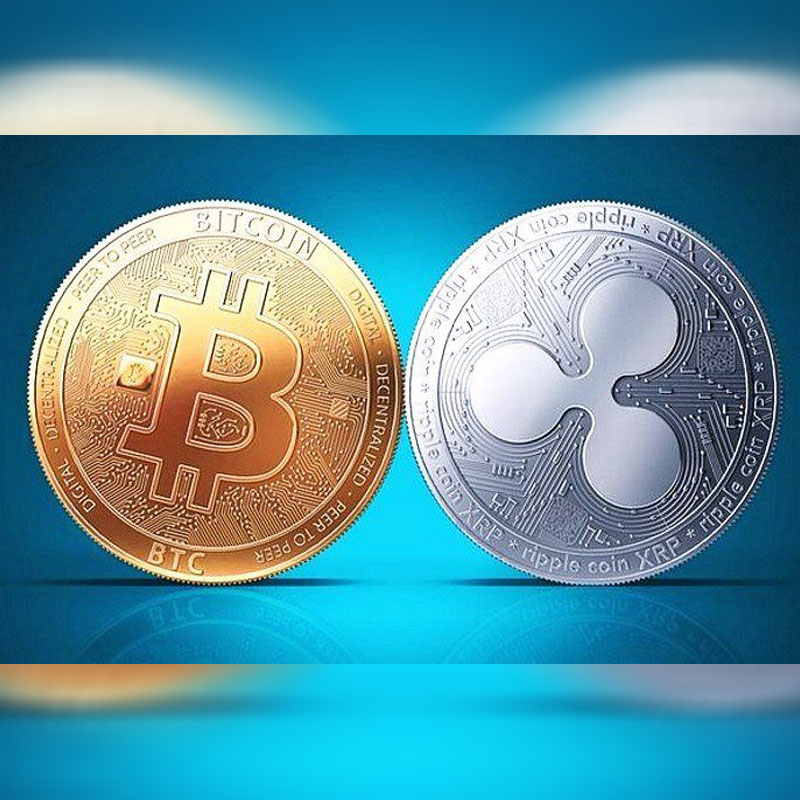
    Cryptocurrencies and blockchain are important points of discussion in the market today. There are many cryptocurrencies available at the disposal of people, but the most popular amongst them is Bitcoin. Ripple is another option that is gaining popularity amongst investors. So what exactly is the difference between Bitcoin and Ripple, and how do they work? Let’s read on!

    Bitcoin:

    Bitcoin is a type of digital cryptocurrency that is based on blockchain technology. It operates on a distributed ledger and is currently being used as a means for payment of goods and services. The history of bitcoin is quite mysterious as it was developed in 2009 by a person or a group of people under the pseudonym ‘Satoshi Nakamoto’. The system is completely decentralised and is not governed by any government, bank or any third party. 

    Under bitcoin, miners can create a ledger of every activity by verifying transactions on an ongoing basis. Upon validating a certain amount of transactions, the miners are rewarded with BTC. Bitcoin uses the blockchain mining concept to validate transactions.

    Ripple:

    Ripple is a payment settlement, currency exchange or remittance system that helps facilitate transactions across borders at lightning speed and at low costs. It is a privately owned company that started in 2012 to develop its own cryptocurrency known as XRP. 

    XRP is used primarily on the Ripple network to facilitate the transfer of money between different currencies. Ripple’s simple idea is to provide a system for direct transfer of assets without incurring any currency exchange fees and reducing transfer speed to seconds.

    Both Bitcoin and Ripple have their native coins, which can be purchased online at some of the best crypto app in India. 

    Differences Between Bitcoin and Ripple:

    Supply:

    Bitcoin has a maximum supply of 21 million coins, out of which more than 18 million is already circulating in the market. It is expected that the entire bitcoins should be minted by the year 2140. On the other hand, Ripple has the maximum supply of 100 billion XRP coins, out of which 60 billion is currently circulating in the market.

    Transaction Speed:

    Bitcoin blockchain takes approximately 10 minutes for any transaction to get confirmed while sending funds to another person. Whereas you can transfer funds to someone using XRP coins on the Ripple network within seconds.

    Uses:

    Bitcoin does not entail any third party involvement as there is no authority to regulate its demand and supply. Bitcoin can be used for varied purposes, from paying for a hotel bill to booking a flight ticket online. 

    However, Ripple acts as an alternative to the current payment settlement system called SWIFT that banks and other financial intermediaries are using. It is a much faster, cost-effective and hassle-free way to transfer funds across countries or borders.

    Number of Transactions:

    Every system can handle a certain number of transactions in a given amount of time before it starts to feel overloaded. 

    Bitcoin can process only up to 7 transactions per second. 

    On the other hand, Ripple can handle up to as many as 1500 transactions per second, making it more scalable than bitcoin.

    Energy Use:

    Since bitcoin uses a mining system to mint coins, it is accused of being an energy-hungry platform. 

    Whereas Ripple consumes negligible power due to its energy-free mechanism.

    Popularity:

    Bitcoin is the first and the most popular cryptocurrency in the world. It is also the largest crypto in terms of market capitalization and owns nearly 70% of the total crypto market.

    Ripple is the 4th largest cryptocurrency by volume and has a circulating supply of 4,540 crore XRP’s in the market. 

    How to Buy Bitcoin and Ripple:

    Bitcoin can be bought off from any of the cryptocurrency exchanges such as CoinSwitch Kuber and stored in a wallet. There are different kinds of wallets available with the owners, which provide different storage, security and access options. These are mobile, desktop, online, hardware and paper.

    Ripple can also be bought from any of the different exchanges such as Bitstamp, Kraken, GateHub etc.

    Conclusion:

    Both Bitcoin and Ripple are cryptocurrencies that can be used to buy goods and services across different categories. Although, there are only a limited number of companies that will accept them for payment.

    Ripple’s price is constantly evolving and is currently looking to be more substantial than the dollar or bitcoin. As I write, the ripple to inr price stands at Rs.78.46 and inr to btc price stands at Rs.47 lakhs.


  • Lessons Learned With Bitcoin

    Lessons Learned With Bitcoin

    Blockchain technology is one of the newest buzzwords in business. It is hardly surprising considering that the tech is having such an impact over so many different industries.

    If you look at the infographic compiled by BitFortune.net, you can see how this tech has been changing the way that we approach different business tasks.

    Out of all the industries, however, it is the financial industry that has seen the most upheaval thanks to this tech. Banks have been put on notice that there are faster ways to move money, even when it comes to cross border transactions.

    Blockchain tech shows that there are ways to keep track of assets, transfer ownership, and operate more efficiently and more securely. The Bitcoin network was proof of this in its early days. And banks have been responding by looking into creating their own blockchain based apps over the last few years.

    Are we at a stage where the industry is completely willing to rely on the blockchain tech? Not quite yet. The majority of current uses of blockchain revolves solely around cryptocurrency, and activities such as trading in cryptocoins, gambling on Bitcoin casino websites, and so on. The tech has yet to truly move on into other industries, so it seems that blockchain still has a lot to teach us. When it was still reasonably obscure, it was proven to be a viable system. What it has not yet proven to be is easily scalable, and this is something that companies need to consider.

    Bitcoin was originally intended as an experiment. Did anyone think at the time it would get as big as it did? But the downside to the increase in popularity of the currency is that the system has become a lot more bloated.

    If all things go well, transaction verification takes around 10 minutes on the system. But that depends on how many transactions have been submitted to the chain. The more transactions, the higher the potential lag between transmission and verification. Increasing delays in verification times are proving to be a big issue.

    Also, of issue is that the charges to use the network have increased substantially. And this is another lesson that we can take from here – the bigger and more popular the chain gets, the more computing power it takes.

    In the early days, mining coins was relatively simple and didn’t require any specialized computer equipment. That has changed now as the chain has gotten more popular and more people are trying luck at mining rewards.

    As a result, miners are seeing diminishing returns for mining the system, making it a far less attractive option. And, if the miners decide that it is no longer worthwhile to continue, that could mean that system would slow down so much that it would become untenable.

    The counter move would be to make it more profitable again for miners, and that means increasing the transaction fees again. This, in turn, makes the system less attractive for those processing transactions on it.

    So, no, we are not likely to see all the major banks switching over just yet. There are a lot of kinks to be straightened out first. That said, it will be interesting to see what will people come up with in future as a way of dealing with these issues.

    Article and image courtesy Bitfortune.net.

  • Facebook to ban cryptocurrency ads

    Facebook to ban cryptocurrency ads

    MUMBAI: Facebook is banning ads on its social network that promote cryptocurrencies, initial coin offerings and binary options saying they’re “frequently associated with misleading or deceptive promotional practices.”

    In a blog post on Tuesday, the company outlined a new policy prohibiting ads that “promote financial products and services that are frequently associated with misleading or deceptive promotional practices.”

    The policy will be “intentionally broad” while Facebook works to understand which ads are deceptive or misleading, from companies “not currently operating in good faith,” the company said in the post. Facebook, along with its other properties including Instagram, won’t allow ads that say “Use your retirement funds to buy Bitcoin!” for example, or those that promote binary options trading, a risky derivative with an all-or-nothing payoff.

    As public interest in bitcoin and other digital currencies has skyrocketed, Facebook users may have seen an uptick in ads for investing in cryptocurrencies. Late last year, bitcoin’s popularity and value surged. In December, one bitcoin was worth $17,000. It has since fallen to $10,000.

    “We want people to continue to discover and learn about new products and services through Facebook ads without fear of scams or deception,” Facebook product management director Rob Leathern wrote in the post. “That said, there are many companies who are advertising binary options, ICOs and cryptocurrencies that are not currently operating in good faith.”

    A spokesman for Facebook said ad policies will be enforced through both automated and manual reviews, and ads that lead to websites where the main business model is cryptocurrency, ICOs, or binary options won’t be allowed. Facebook users can also report ads that they believe violate the policy.

    Also Read:

    YouTube, FB to corner major ad spend globally over 5 years

    Social media most significant for snackable content: NBA India MD

    MIB to collect data on satellite capacity needs, digital chatter

  • It’s ‘Agility’ for festival of Media Asia Pacific

    It’s ‘Agility’ for festival of Media Asia Pacific

    MUMBAI: The Festival of Media Asia Pacific (FOMAP), the largest gathering of media leaders in Asia Pacific, is back for its third year.

    “The theme of this year’s event is ‘Agility’, and will see influential speakers sharing unique regional perspectives on how businesses can be more ‘agile’ in adapting to the ever-changing media landscape,” said, Founder of Festival of Media and Chairman of C Squared Charlie Crowe. “Attendees will have the opportunity to learn about some of the most topical issues affecting the industry today, whilst getting the chance to network with a broad range of media companies from across Asia.”

    Topics being discussed at the 2014 event include the future of Native Advertising in Asia, virtual media trading, social media in the newly-opened up Myanmar, unlocking the potential of Indian consumers and understanding Bitcoin, among others.
    The Festival will attract over 700 delegates from across 22 countries in Asia, who will be coming together to hear from some of the media industry’s most agile and forward-thinking leaders.

    Charlie Crowe added, “A stellar line-up of exciting industry speakers, excellent awards programs, and thought-provoking content, all within the larger Asian media context, means that FOMAP 2014 is set to be the most exciting yet.”

    Some of the speakers for the event include:

        Linda Yueh, Chief Business Correspondent, BBC World News
        Rita Nguyen, Co-Founder and CEO, SQUAR
        Vipul Chawla, VP and CMO, Yum! Asia
        Mark Laudi, Former CNBC presenter
        Daryl Lee, Global CEO, UM
        Leo Liang, Senior Director of National Business Development, Youku Tudou
        Steve Mosko, President, Sony Pictures Television
        Scott Lamb, VP of International, Buzzfeed
        Lakshmi Pratury, Host and Curator, The INK Conference
        Rose Tsou, Senior Vice President, APAC, Yahoo!
        Peter Vessenes, Founder and CEO, CoinLab, Chairman Bitcoin Foundation
        Manmeet Vohra, Marketing Director, Tata Starbucks
        Jerry Wind, Professor, Wharton Future of Advertising Program

     The festival will take place from 16-18 March at the Capella Singapore.