Tag: Biscuits

  • TAM Sports: IPL 18 ad frenzy – brands swing for the fences as ad volumes hit record highs

    TAM Sports: IPL 18 ad frenzy – brands swing for the fences as ad volumes hit record highs

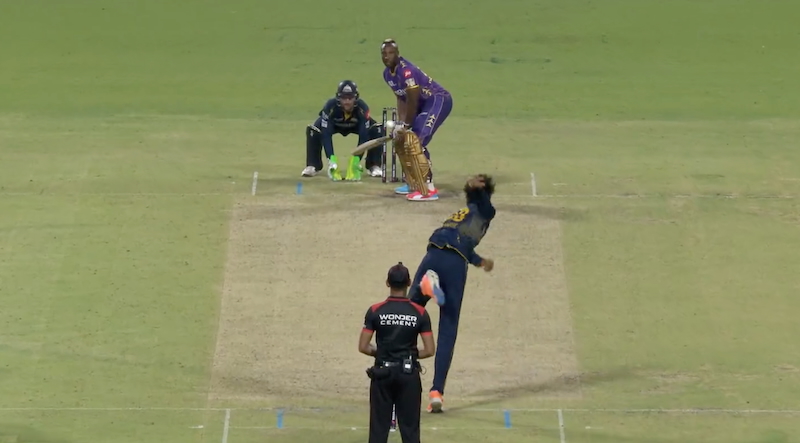
    MUMBAI; The wickets may be tumbling on the pitch, but in the advertising arena, it’s pure carnage — with brands smashing sixes every over. Fresh data from TAM Sports shows that ad volumes for IPL 18 (first 40 matches) have surged past last year’s figures, underlining one unchanging truth: nothing unites — or excites — Indian marketers like cricket.

    The numbers tell a story of big bets and even bigger ambitions.

    The top five categories — e-commerce gaming, pan masala, aerated soft drinks, digital wallets, and biscuits — have steamrolled the competition, grabbing nearly 60 per cent of the ad pie. In a cricket-mad nation, snack cravings and fantasy sports dreams are, clearly, recession-proof.

    Leading the advertising scoreboard are heavy-hitters like Dream11, Parle Products, Sporta Technologies, KP Pan Foods, and PepsiCo India. Dream11, in particular, seems to be playing Test cricket while others are stuck in a T20 mindset — blanketing screens with a relentless media barrage.

    But it’s not just the usual suspects jostling for screen time.

    IPL 18 has welcomed a new squad of ambitious rookies: online payment apps, solar energy brands, smartwatches, and a fresh wave of wearable tech firms, all eager to cash in on the cricketing carnival. The brand line-up today mirrors a new India — digital-first, experimental, and willing to go big.

    The scale-up is staggering:
    * TV ad volumes during IPL 18 are over three times higher than in the pre-IPL season.
    * New categories have grown by over 25 per cent year-on-year.
    * Connected TV advertising has spiked, with brands now chasing the living room, the bedroom, and even the metro ride home.

    Sports channels are having a summer of dreams, while GECs and movie channels quietly sulk. Every IPL season rewrites the broadcast pecking order — and 2025 is no exception.

    Beyond TV, the smart money is on a multi-screen blitzkrieg. Brands are synchronising 10-second TV spots with mid-match mobile banners, OTT pre-rolls, and influencer-led meme storms. If you’re breathing and own a device, chances are someone is trying to sell you a soft drink, an SUV, or a fantasy cricket app right now.

    Bottom line: IPL is no longer just a sports tournament; it’s India’s biggest marketing Super Bowl — stretched over two luxurious months.

    The brands that win this season won’t just outspend rivals; they’ll outthink, out-hustle, and out-wow them.
    Because in IPL 18, as in cricket, it’s not the cautious that survive. It’s the ones who know when to send it sailing into the stands.

  • “We believe brand strength is crucial in this category”- Britannia vice-chairman & MD Varun Berry

    “We believe brand strength is crucial in this category”- Britannia vice-chairman & MD Varun Berry

    It’s been 11 years since Varun Berry has been serving as managing director of food company Britannia Industries. Since then, the designation of vice-chairman has been added to his titles. But a lot more has happened at Britannia: its product portfolio has significantly expanded beyond biscuits into adjacent categories like dairy, cakes, rusk, and croissants. He has focused on driving innovation, strengthening distribution networks particularly in rural areas, and implementing robust cost efficiency measures.

    Prior to joining Britannia, Berry had a long stint at PepsiCo, where he held various leadership positions including CEO of PepsiCo Foods for Greater China. He also served as CEO of PepsiCo’s Indian snack food business.

    Berry is known for his strong operational expertise and focus on execution. During his tenure, Britannia has consistently improved its market share in the biscuits category while maintaining healthy profit margins despite inflationary pressures. He has emphasised direct distribution expansion, particularly in rural markets, and driven premiumisation across product categories.
    His management style focuses on systematic improvements in distribution, cost management, and innovation. Under his leadership, Britannia has also made significant investments in new manufacturing facilities and automation to support growth. 

    Berry  recently made a presentation  after the company’s Q3 and nine month  2025 financials as well as answered investment analysts’ questions. Excerpts from the presentation and question and answers sessions..

    On the macro environment.

    It’s been quite challenging. Food inflation was nearly in double digits, with cereals up 6.5 per cent and oils and fats around 15 per cent. The government’s GDP projections show real GDP growth at 5.4 per cent and nominal at 8 per cent, though they’re forecasting a recovery to 10.5 per cent in the second half.

    On inflationary pressures on input costs and on managing them.

    We’re seeing palm oil up 43 per cent, cocoa up 103 per cent, flour up 4 per cent, and corrugated boxes up 15 per cent. Overall commodity inflation is about 11 per cent. It would have been 2-4 per cent higher if we hadn’t done forward buying. Sugar has remained flat, and laminates saw a nominal three per cent increase. We have been forward buying of key commodities, getting in manufacturing efficiency improvements, optimising procurement, improving Logistics,  keeping overhead cost under control, and managing employee cost -targeting 0.75x of revenue growth, optimising work capital limit usage and using capacity strategically.

    On Britannia’s growth relative to the industry

    Based on the exit numbers and public declarations by other companies, we’re performing ahead of the industry. Our core biscuits business grew about 5.5 per cent in volume terms, with total volume growth at 6 per cent, showing the positive impact of our adjacency businesses.

    On the approach to  different segments

    We’re taking a multi-tiered approach. For our  core product, biscuits, we have launched  premium cookies with new variants like fruit & nut, butter, jeera. We have maintained popular price points with grammage management.  We have ringfenced our core products and are very clear we will be protecting market share  by innovating in existing segments. In our premium offerings we have launched Britannia Pure Magic Choco premium offerings. There are new premium croissant variants, an upgraded cake portfolio and premium cheese. 
    In the value segment, we have introduced Rs 5 packs for Rusk and our focus has been on maintaining competitive pricing while strategically managing grammages. 

    On  brand investments.

    We’re focusing on several areas: Critical growth brands, innovation-led initiatives, higher impact social media activation, tactical consumer promotions, digital campaigns showing strong consumer connection,  premium segment emphasis, regional preference consideration, and brand strength maintenance against competition.

    On growth in  adjacency businesses

    We’re seeing strong momentum. Croissants will cross Rs 200 crore next year, milkshakes have already crossed Rs 200 crore and are growing high double digits. 17 per cent contribution from e-commerce
    We’ve launched new products like a dual-flavoured layer cake, a Rs 5 pack in rusks, and a triple chocolate croissant. In drinks, we’ve introduced Winkin’ Cow Grow, a Rs 20 flavoured milk fortified with 16 nutrients.

    bihar plant

    On the cake portfolio.

    We’re in the midst of a full cake portfolio relaunch with new graphics and improved recipes that are outperforming competition. We have launched a triple chocolate variant. Similarly, we’re rolling out a relaunch of our entire cheese portfolio. These relaunches are backed by new graphics and superior recipes. Our cheese is beating competition in taste tests.

    On the company’s  approach to the salty snacks category.

    We’re being very deliberate here. While we recognise it’s a large category, it’s also highly competitive. We’re running pilots in some markets, experimenting with different formats, marketing approaches, product specifications, working on advertising pull vs push, on pack sizes and grammage,  and on consumer preferences.  We’ll only launch nationally when we’re absolutely confident of sustainable success.

    On the company’s advertising strategy

    We’re focusing on critical growth brands and innovation, with increased emphasis on high-impact social media activation. This approach is delivering better productivity for our advertising investments

    On  competitive pressures, particularly from new entrants

    While we’re aware of new entrants, including large players, we believe brand strength is crucial in this category. Price alone isn’t sufficient for success, and our established brands have consistently maintained their position despite competitive pressures.

    On Britannia’s e-commerce strategy

    We’ve developed in-house capabilities for data-based consumer insights and personalised content. E-commerce contribution varies significantly by category – about four per cent for biscuits, 17 per cent for croissants, nine per cent for cakes, and 11 per cent for dairy products. It’s particularly effective for new product launches.

    Varun berryOn the company’s approach to innovation

    We’re taking a measured approach. For instance, our Pure Magic Choco Frames with Harry Potter themes, launched exclusively for e-commerce and modern trade, is performing exceptionally well. We’re focusing on innovations that can be sustained and scaled.

    On distribution initiatives

    We’re implementing several strategic changes. For urban retail, we have a five-part strategy: leveraging high-potential outlets, right-sizing service frequency, upskilling salesmen capabilities, upgrading technology for better productivity, and increasing feet on street. We’re also planning a refresh of our rural route-to-market approach. Direct distribution has been  increased to 2.88 million outlets from 2.79 million. Then rural distributors have expanded to 31,000 from 30,000. We are also laying greater emphasis on focus states with distribution growing at 2-2.5 times the average.

    On growth in the focus states.

    They contribute about 15-16 per cent to our overall revenue and are growing at 1.3-1.4x the company average. These states represent 35 per cent of the rural category, and our market share there is less than half of what we have in the rest of the country, so there’s significant headroom for growth.. Following distribution-led, brand-led growth strategy. No big bang pricing strategies. Focus is  on sustainable growth through execution excellence

    On  the capex outlook

    We’re taking a break after significant investments. Planning to keep it between Rs 150-200 crore annually, unless volume growth demands more. We have three new plants with new lines and sufficient capacity headroom, so we’re well-positioned for now.

    On the  outlook on margins
    While we don’t give forward estimates, we’re confident about managing the current challenges. The 6-6.5 per cent price increases, combined with our 2.5 per cent cost savings target and other efficiency measures, should help us maintain our profit margins. We’ve navigated similar environments successfully in the past.

    On the company’s approach to  cost leadership
    Our cost savings programme has evolved significantly. In 2013-14, it represented 0.7 per cent of revenue; now it’s at 2.5 per cent. We reset these targets annually – whatever is achieved ends with the year, and we start fresh with new initiatives each April. 

    On the company’s  ESG initiatives

    We’ve received recognition from Times Now for ESG impact and a silver award from Scotch ESG awards. We’ve run a successful campaign highlighting our achievement of 100 per cent plastic neutrality, energy efficiency, and water stewardship.

    On  managing the price-point products given the inflation

    A: For popular price points like Rs 5 and Rs 10, we’re carefully managing grammage while ensuring consumer value. We’re also introducing new price points where relevant, like our Rs 20 Winkin’ Cow Grow product, which helps us tap into new market segments.


    On the company’s international business
    The international business continues to perform well across markets. While we don’t break out specific numbers, it’s showing consistent growth and remains a focus area for us.

    On employee costs fluctuations.

    We had a Rs 75 crore impact in Q3 related to stock appreciation rights, based on share price movements. Last quarter had a Rs 50 crore provision, and Q1 had about Rs 25 crore. These fluctuations are based on share price changes – when the share price moved from Rs 6,338 to Rs 4,762, it impacted the provisions.

    On the approach to  technology and digital transformation

    Several initiatives are underway: we are developing e-commerce capabilities in-house even as we are taking a data-based consumer insight approach. We are producing a lot personalised content along with the automation of sales force and digital tech upgrades. Tools have been put in place to enhance productivity and platforms where consumers can engage have been built. Digital campaigns are being managed on these platforms and outside. 

    On pricing strategy in FY 2025 as against FY 2023

    Initially, we thought it would be a deflationary year and had actually taken some price decreases. Then the inflationary trend emerged. We were also hopeful that government duties on fats would be temporary, but as the finance minister clarified, these are here to stay as part of the effort to indigenise fats in India. Now we’re taking decisive pricing actions. We’re implementing a three-phase price increase totalling 6-6.5 per cent: two per cent already implemented, 2.5 per cent being implemented; Q1 FY26: 1.5 per cent planned. This is calibrated to address the 11 per cent commodity inflation while maintaining competitiveness.
     

  • ITC Sunfeast unveils first 100 per cent paper based packaging

    ITC Sunfeast unveils first 100 per cent paper based packaging

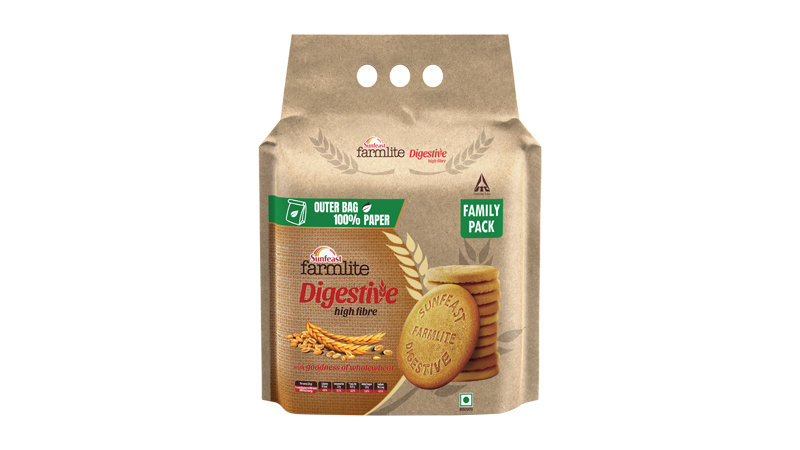
    Mumbai: ITC Sunfeast Farmlite, a range of wholesome biscuits from ITC Foods, has launched its new offering Sunfeast Farmlite digestive biscuit family pack in 100 per cent outer paper bag packaging. An industry innovation in packaging, this move establishes the brand as a trendsetter in the biscuit category.

    Sunfeast Farmlite, is the brand to embrace 100 per cent outer paper packaging in the industry. The ergonomics of design aspects have been carefully curated, making the paper packaging consumer-friendly, visually appealing and convenient. This latest innovation aligns with the brand’s effort towards reducing plastic and encouraging consumers to make sustainable choices in their everyday purchases.

    Today, consumers are increasingly prioritising not just wellness and nutrition in their purchasing decisions but environmentally responsible brands are also increasingly being sought after. Sunfeast Farmlite acknowledges this requirement, and the new packaging caters to their enlightened preferences.

    Commenting on the initiative, Ali Harris Shere, chief operating officer, Biscuits & Cakes Cluster, ITC Foods Division said, “We believe that we have to be not only agile, consumer focused and innovative, but also purpose driven. The launch of the first-ever outer bag made from 100 per cent paper is a significant step towards the brand’s commitment to promote sustainable packaging. Consumers too are increasingly becoming more conscious of responsible choices, and we are committed to providing them with products in packaging that are sustainable. This is an industry-first initiative and plans are underway to adopt this packaging for other biscuit products in due course of time.”

    This initiative is in line with ITC’s Sustainability 2.0 vision which strives to strengthen the company’s multi-dimensional efforts in sustainability, which includes creation of an effective circular economy for post-consumer packaging waste.

    Sunfeast Farmlite digestive family pack with the new 100 per cent outer paper bag packaging will be available with the 800 g SKU on Flipkart. Will soon be available on other e-commerce/quick commerce platforms and supermarkets as well.

  • Biscuit maker Parle Products sets foot in packaged wheat flour market

    New Delhi: Known for its biscuits, snacks and confectioneries, Parle Products is now expanding its portfolio with the launch of ‘Parle G Chakki Atta’.

    The owner of famous biscuit brand Parle-G is tapping into the flour category with an aim to capture urban and rural markets with 100 per cent wheat atta. The distribution of atta has already begun in northern & western parts of the country under three categories – 2kg, 5kg and 10kg with competitive pricing, it announced on Monday.

    According to the food company, Branded atta segment has gained momentum since the pandemic outbreak. With movement restrictions in place, Parle’s venture into the new category is in the lines of being agile on marketing strategies while also capitalizing on hygiene and convenience factors that has become a priority in today’s environment.

    Being a staple in most households, the atta is being launched under the brand name ‘Parle G’ to build on this established faith by consumers and enable them to feel secure about their buying decisions. “Parle G Chakki Atta is a wholesome product which can provide tasty and healthy rotis with assurance of six hours softness,” said the company.

    Parle Products, senior category head, Mayank Shah, highlighted that branded wheat flour is one of the largest segments in the foods industry and the majority of the demand is currently being met by local mills or neighbourhood chakkis.

    “The urban markets lead in the consumption of packaged atta making it largely an urban phenomenon. But with the onset of the pandemic, the need for hygienically ground wheat flour and an assurance of trusted brand is driving consumers in the Tier 2 and Tier 3 cities to switch to Branded Atta. We aim to reach the remotest household in the country to provide hygienically ground atta and help consumers switch to hygienic

    Options,” he said.

    According to Shah, Parle G Chakki Atta will be a game changer in the market. “Being a pioneer in the food business, it is our responsibility to consumers to provide nutritional, credible and quality products. We look forward to continuously evolving into a brand that puts consumer well-being first,” he added.

  • Mondelez India expands its presence into the morning snacking space with Bournvita Fills

    Mondelez India expands its presence into the morning snacking space with Bournvita Fills

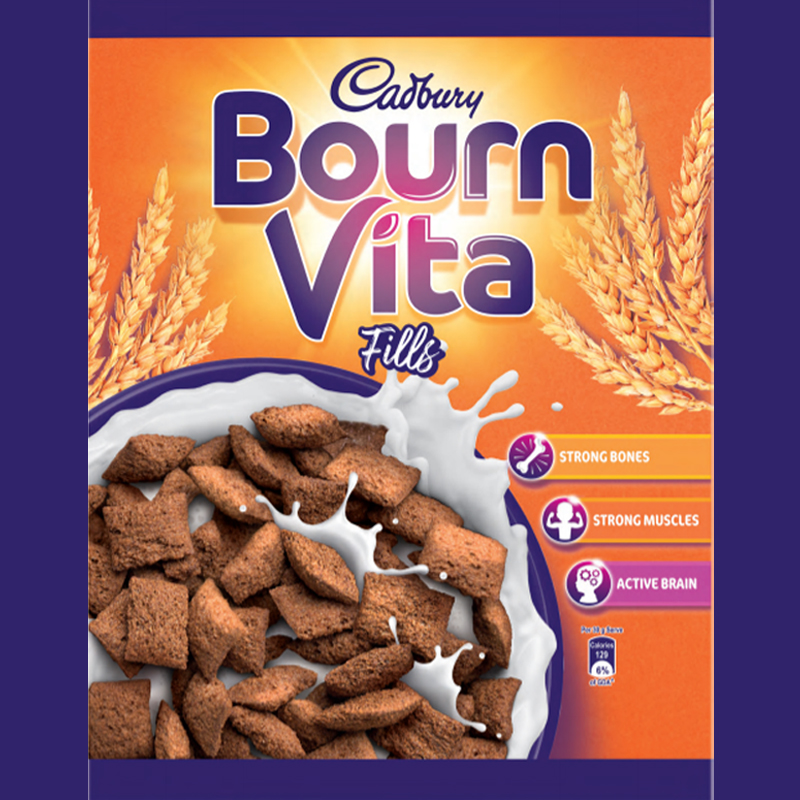
    DELHI: Mondelez India, the makers, and bakers of some of India’s favourite snacking brands – Cadbury Dairy Milk, Bournvita, Oreo, etc., has expanded its morning snacking presence, with the launch of Bournvita Fills. The company is expanding its legacy and much-loved brand – Bournvita into the morning snacking space – another foray after Bournvita Biscuits. This innovative new avatar of Bournvita, is a nourishing morning snack which provides the nutritional benefits of Bournvita of strong bones, strong muscles and active brain and fuelling the morning snacking needs of the nation.

    Commenting on the launch, Mondelēz International president – India Deepak Iyer says, “For more than 70 years, our products have delighted consumers, both at an emotional and a functional level. Bournvita continues to play a crucial and trusted role in consumers’ lives. A few years back, the brand extended successfully into morning snacking occasion with the launch of Bournvita Biscuits. Today as part of the same strategy the brand is expanding its presence in the morning snacking occasion through the launch of Bournvita Fills – an easy to eat and nutritious snack that can be had with or without milk. We see tremendous opportunity for this product and are excited about the role it will play in the lives of our consumers.”

    Mondelez India associate director – marketing (gums, candies, beverages & meals) Inderpreet Singh added, “Bournvita has been one of India’s most trusted brands, for more than 70 years now, and it continues to meet the nutritional needs of the nation with an array of offerings. Banking on the brand’s equity and trust, the launch of Bournvita Fills is yet another wholesome offering that will add value to the lives of our consumers through its nutritional composition & delicious taste – especially in today’s day and age when consumers are increasingly leaning towards snacking options that are healthier.”

    With Bournvita Fills, the company is not only offering consumers more choice but also empowering them to snack right, bringing alive the company’s mission to provide the right snack, for the right moment, made the right way. Continuing to rely on India’s much loved and trusted brand Bournvita’s 70 years old legacy, Mondelez India aims to continue to ride the wave of innovation by introducing such offerings and adding to its progressive snacking portfolio.

    The launch will be supported by a high decibel integrated marketing campaign, devised to garner maximum awareness on the new product. Bournvita Fills is priced at Rs. 10 for a small pack (18 gms) and Rs. 170 for a large pack (250 gms) and is all set to hit the shelves in the markets of Andhra Pradesh, Telangana and Maharashtra in the initial phase, followed by a pan-India launch in the coming months.

  • Unibic makes a dent in the cookie segment

    Unibic makes a dent in the cookie segment

    MUMBAI: Premium cookies, which were once seen as a product only for elite consumers, have now become accessible to everyone. As a result, the biscuits and cookies industry in India has been expanding at a compound annual growth rate (CAGR) of 10 per cent in the last three years and is currently valued at Rs 145 billion.

    India is currently the world’s largest biscuit-consuming nation and the industry is expected to grow at a CAGR of 14 per cent by the end of 2019. The biscuit segment is projected to be worth approximately Rs 279 billion.

    In 2015, the cookie category accounted for the largest share in the country’s biscuits market and was closely followed by plain biscuits and sandwich biscuits. The western region and metro cities are the largest markets for biscuits in India as consumers with higher disposable income don’t mind spending more on consumables such as biscuits.

    In 2015 and 2016, the cookie segment, which includes brands such as Unibic, Bournvita Biscuits, Britannia Good Day and Parle Platina, witnessed a rising number of urban consumers and working population that helped in boosting the sale for the segment.

    According to a research conducted by 6Wresearch, the India biscuit market stood at $3.9 billion in 2016, and is projected to grow to $8.2 billion by 2023. In terms of centre-filled biscuits, the segment is majorly dominated by the urban population. Further, non-premium biscuits accounted for majority of the revenue share in 2016. Nevertheless, premium biscuits are gaining huge acceptance in tier-I and II cities.

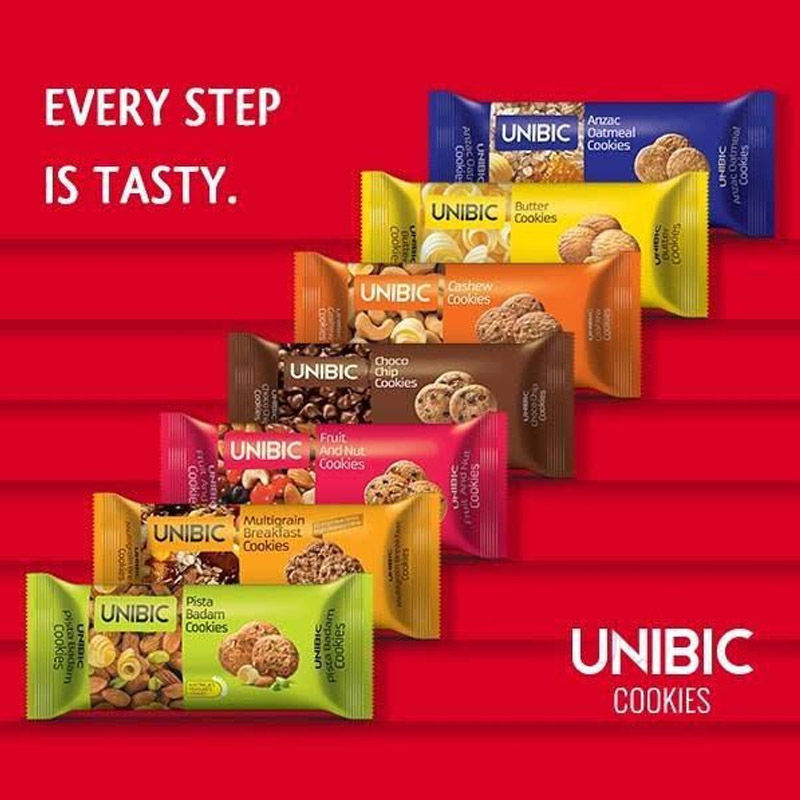
    Bengaluru-based premium cookie maker Unibic Foods has become a recent favourite for most urban consumers that are looking for a premium cookie and what has worked for the brand, is the power of word of mouth. With a strong presence in the southern market, Unibic is actively working towards making a strong foothold in the northern belt.

    The biscuits market today is 80 per cent organised with localised players dominating the regional markets. Unibic Foods head of marketing Aarti Iyer says, “The northern market is a heavy cookie consumption market and we see huge potential there. Although there are local players who are pretty strong in those markets, our focus will be to make sure all our variants are available in the North and not just selective products.”

    Unibic had actor singer Shruti Hassan as its brand ambassador for over a year but eventually decided to end the contact and now has a mascot, called UBU. Although the company used Hassan for most of the advertising in southern market, she was limited to only few ads up in the North. Now with an increased focus on marketing and advertising, Unibic is looking at strengthening its position in North India while not overlooking its primary south market.

    East and North India have the highest consumption of biscuits and cookies in the country. Iyer also mentioned that Unibic is looking at investing in Northeast India where they will be pushing in some strategy and plans to tap into the market.

    The cookies and biscuits market is worth Rs 6000 to 6500 crore today. The top four players in the market for biscuits and cookies today are Parle Products, Britannia, ITC and Surya Foods and Agro, where both Britannia and Parle account for 61 per cent share of the market. But Unibic is gradually stepping into the race by introducing its large variety of cookies for the Indian consumer. The company’s turnover stood at Rs 60 crore by 2010 and has been growing at a CAGR of 50 per cent. In 2017, Unibic added its fifth manufacturing facility with an investment of Rs 12 crore, which will take its capacity to 100 tonnes a day.

    Rather than following the conventional ‘one for all’ marketing strategy, Unibic plays to its strength in each market along with the market conditions and consumption patterns. Iyer adds, “Our marketing varies region to region. On one hand, for a cosmopolitan city like Bangalore, it is a blend of TV, outdoor and digital because the consumption of media here is very different from other smaller areas. On the other hand, Tamil Nadu has a high consumption of TV content so it makes more sense to invest in it there rather than on digital and OOH. Similarly, in the Northeast, the local channels are big and so we invest there.”

    The cookie brand relies heavily on television for its advertising follows by digital and OOH. Iyer says, “TV still holds the biggest chunk of our advertising and will remain our core focus, but digital is something that we are going to go a little stronger now, not just in terms of social media to create brand affinity but also in term of digital space as such.” In the South, Unibic advertises on GEC, youth and music channels. Although it hasn’t advertised as such in the North, it wants to focus on kids channel, lifestyle and GEC channels to target the urban north market.

    Unibic does not undertake any print campaigns and wants to stay away from the medium.

    Healthy snacking category is a very niche territory in India and though people are conscious about what they want to eat, it’s only a small majority that focuses on eating right all the time throughout the day. The company launched snack bars in 2017 in key metros and mini metros across India which has helped the brand in targeting the desired target audience and profile for the product.

    According to the company, Delhi, Bangalore, Cochin and Chennai have been its major markets for snack bars. Unibic doesn’t want to restrict itself to the health segment but is rather looking at it as a healthier snacking option, a category which is predominantly ruled by localised products with higher calories. Iyer makes it clear that they don’t want to promote the snack bars as something which is for health-conscious people but more so as a snacking option for every Indian. Additionally, a healthy snack could possibly be in the pipeline for Unibic.

    The company exports to 10 counties including US, UK, Australia, Singapore, Europe, Nepal and Bhutan. The products have been well received in Nepal and Bhutan but the other markets are still underserved.

    Although glucose biscuits account for about 25 per cent share in the industry, premium biscuits and cookies are moving up the consumption ladder rapidly. Compared to other FMCG products, the penetration of biscuits and cookies is pretty high, with urban area accounting to 94 per cent whereas it stands at 83 per cent in rural areas. Unibic has midrange and basic butter and milk cookies that start as low as Rs 10, but its core focus will be on premium cookies.

    While the company has a good portfolio of products and the consumers today have an affinity to premium cookies, Unibic still has a long way to go before it can beat the ITCs and Britannias of the world to capture a substantial chunk of the market.

    Also Read :

    RAW Pressery working on slow but steady expansion

    Kids’ candy segment: Communication sees a shift

    Britannia enters chocolate segment

    Parle launches campaign for new Milano range

  • Sunfeast Mom’s Magic celebrates the mom in all of us

    Sunfeast Mom’s Magic celebrates the mom in all of us

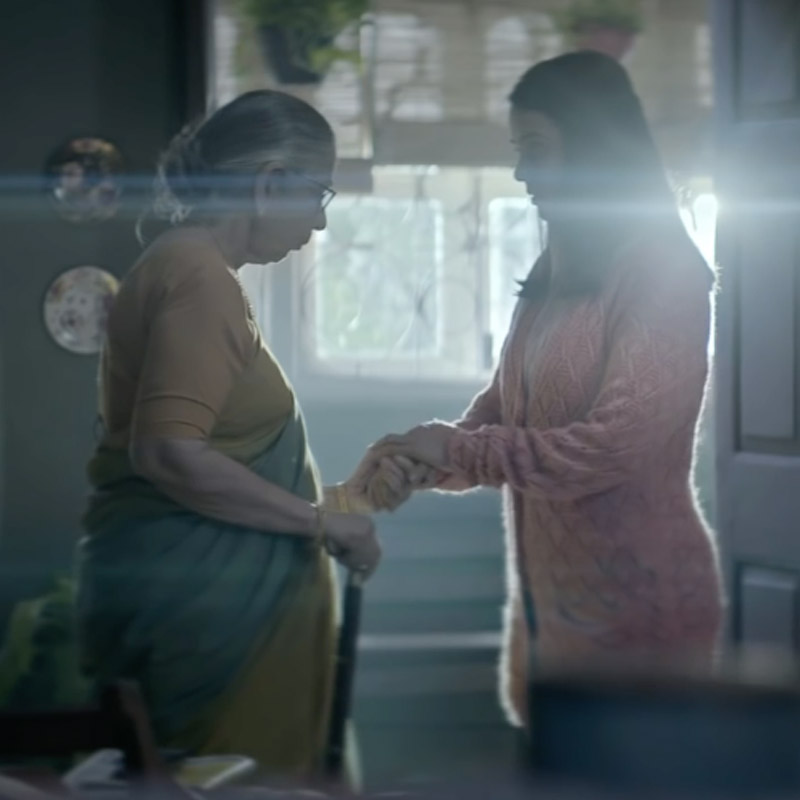
    MUMBAI: In a digital campaign conceptualised by Ogilvy Bangalore, Sunfeast Mom’s Magic veered off the beaten path for Mother’s Day and paid homage to the mother-like figures that have positively impacted the lives of those they care for in an attempt to get people to acknowledge these relationships.

    Ogilvy South chief creative officer Mahesh Gharat says, “Sunfeast Mom’s Magic stands for mom’s values. We believe that there is a mom in every one of us and this instinct transcends conventional boundaries. On this Mother’s Day, we wanted to celebrate the beauty of such relationships through this video.”

    In July 2003, ITC made a foray into the biscuits market by launching the Sunfeast range of biscuits. Within a span of 12 years, Sunfeast has well-established presence in almost all categories of biscuits.

    Sunfeast Biscuits straddle all segments of the market led by Dark Fantasy at the premium end. In addition, ITC also launched Sunfeast Farmlite Digestive All Good biscuit made from whole wheat flour of Aashirvaad Atta which makes it naturally rich in fibre content and brings alive ITC’s commitment to provide delightful experiences to every consumer. The company also Sunfeast Dark Fantasy Yumfills Cake in its portfolio which is a soft pie cake, filled with crème.

  • Patanjali continues TV ad blitz in Feb 2016; spends Rs 20 crore

    Patanjali continues TV ad blitz in Feb 2016; spends Rs 20 crore

    MUMBAI: It’s got ambition: turn Indian prime minister Narendra Modi’s dream of ‘make in India’ a reality. The Swami Ramdev-Acharya Balkrishna-founded Patanjali Yogpeeth & Divya Mandir Trust has launched a slew of fast moving consumer goods products over the past couple of years, set up vast and deep distribution channels reaching them into every nook and corner of rural – and now spreading into urban –  India. Beginning first with ayurvedic products, it moved into cateogries  like toothpaste, ghee, oil, noodles, soap, shampoo, biscuits and what have you dominated by multinationals like Hindustan Lever, Prctor and Gamble, Colgate Palmolive. And it has been making the big boys nervous, slowly chewing away impressive market shares in almost every category.  Revenues are slated to touch Rs 5,000 crore this year and Rs 20,000 crore over the next three years.

    It is backing its onward march with a massive advertising warchest  over the past year, emerging as the top spender on television, a position it continued to retain in the period 11 February 2016 to 11 March 2016.

    According to data that indiantelevision.com has obtained, the brand gave out out checks of close to Rs 28 crores on television ads in this period,  without considering the discounts it has enjoyed on individual deals. As per several industry experts, if one were to take these discounts into account, the guesstimated figure is close to Rs 20 crore.

    What is interesting to note is that unlike most of its rivals,  the genre that Patanjali spends most on is news channels, be it regional  or national news, instead of Hindi GECs. The brand used 65.5 percent of its total television advertising spends on news channels, followed by Hindi GECs with 29.89 per cent and 3.89 percent on regional entertainment channels. The brand also shells out 0.76 per cent or Rs 15 lakhs of its advertisisng spends on its in-house spiritual channel Aastha TV.

    “Going by its advertising spends in the media, Patanjali is going with media differentiation as a strategy. A lot of FMCG brands invest in soft programming which mostly comes down to the GEC sector. When everyone is in one sector, it is good to differentiate oneself and take another positioning,” explained veteran brand consultant and business strategist Harish Bijoor.

    “Secondly”, Bijoor noted,” news is the new entertainment. As a genre, it has changed from simple reporting of facts to what we call news entertainment. If you look at the television debates today, they are often pitted against highly rated entertainment shows, and therefore have larger audiences these days. Not only do you have the men watching, but women also enjoy this new variation of entertainment. Therefore I think Patanjali is playing smart by being visible on the news space.”

    In the Hindi GEC space, it spent close to Rs 1.8 crore on Star Plus, followed by Rs 1.5 core on Sony Entertainment Television and Rs 1 crore on Zee TV approximately. However, the brand buys inventory from most number of channels under Zee Entertainment Enterprises Limited (ZEEL).

    Patanjali has a good presence in the regional entertainment market as well, with Zee Kannada leading others in the genre in terms of Ad EX from the brand.

    As per Broadcast Audience Research Council India’s ‘Top 10 Brands’ report, the Patanjali brand has bagged as many as 21,751 insertions in week 10, followed by Colgate with 15,553 television ad insertions. One can easily see the clear lead that Pantanjali commands over the second in the list. While the brand’s investment is definitely a leading factor for its growing visibility on both TV and the shelves, careful and strategic media buying is also to be credited for its continued domination of television space. The Patanjali group has given part of its media buying mandate to Delhi based agency Vermillion Communications, and if reports by industry insiders are to be believed, there are two other local agencies that work with Patanjali.

    A late entrant to India’s Fast Moving Consumer Goods market with a wide number of retailable products, Patanjali has quickly moved on to go head on with market leaders such as Parle. The brand’s quick rise to fame, at least can be attributed to its aggressive direct marketing strategy and strong distribution reach, thanks to its retail deal with the Future Group.

    Patanjali branded products were already selling well before it decided to invest heavily in TV ads. A media expert close to the development said, “The products were selling a lot already, even before the brand was well known in the media space. But for sure this strong media presence has given the brand a very good exposure, and its sales must have augmented as well. It clearly shows that the brand is aiming for a multi-fold growth.”

    Lauding Patanjali’s  effort in going aggressive with its TV buying, Bijoor cautioned, “I think other brands need to be worried of this late entrant. Not only does it have a very hard working product and an excellent distribution network, its recent entry into advertising spends clearly shows it is reaching for the top.”

    Several industry veterans however beg to differ. Dentsu Aegis Network South Asia CEO and chairman Ashish Bhasin said, “I don’t think Patanjali poses a serious worry for other players in the category. In the FMCG business, they have plans for every competitor. Hypothetically, if there were five competitors for an FMCG brand earlier, now they have one more to consider and marketers will plan accordingly. ”

    When asked if spending huge advertising money will work in the brand’s favour in the long run. Bhasin replied, “The brand has definitely spent a significant amount on television in the past few months. Whether it will sustain the same throughout the year is hard to say. It is understandable for a brand launching itself and trying to build a quick presence for itself to spend in the tried and trusted media. It is too early to say how long its continued dominance of the television space will work out for it.”

    Bhasin isn’t the only one who voices uncertainty about Patanjali continuing with its chart topping spending spree in the coming months. A veteran media player under condition of anonymity opined, “I think Patanjali’s current trend of buying TV ad slots aggressively will go down in a month. It had the gall when it entered media marketing with its aggressive strategy, the brand has achieved that, and I don’t think it has a reason to continue the same spends on television.”

    Other media observers state that the Patanjali group is working to a plan. “The foot on the advertising pedal is not going to be eased,” sas a source very close to the group. “Patanjali’s marketing mavens are  going to move into more clever and refined media buying as it starts  rolling out its products in even more kirana stores and large outlets in urban and suburban India. Both Swamiji and Acharyaji want to create a mutli-product giant competing with long established players, and for that aggressive marketing, distribution and advertising will have to continue.”

    Whether Patanjali continues to spend tens of crores per month or not, the presence of such an aggressive spender among the advertisers definitely augurs well for TV advertising as a whole – and news channels in particular.

  • Patanjali continues TV ad blitz in Feb 2016; spends Rs 20 crore

    Patanjali continues TV ad blitz in Feb 2016; spends Rs 20 crore

    MUMBAI: It’s got ambition: turn Indian prime minister Narendra Modi’s dream of ‘make in India’ a reality. The Swami Ramdev-Acharya Balkrishna-founded Patanjali Yogpeeth & Divya Mandir Trust has launched a slew of fast moving consumer goods products over the past couple of years, set up vast and deep distribution channels reaching them into every nook and corner of rural – and now spreading into urban –  India. Beginning first with ayurvedic products, it moved into cateogries  like toothpaste, ghee, oil, noodles, soap, shampoo, biscuits and what have you dominated by multinationals like Hindustan Lever, Prctor and Gamble, Colgate Palmolive. And it has been making the big boys nervous, slowly chewing away impressive market shares in almost every category.  Revenues are slated to touch Rs 5,000 crore this year and Rs 20,000 crore over the next three years.

    It is backing its onward march with a massive advertising warchest  over the past year, emerging as the top spender on television, a position it continued to retain in the period 11 February 2016 to 11 March 2016.

    According to data that indiantelevision.com has obtained, the brand gave out out checks of close to Rs 28 crores on television ads in this period,  without considering the discounts it has enjoyed on individual deals. As per several industry experts, if one were to take these discounts into account, the guesstimated figure is close to Rs 20 crore.

    What is interesting to note is that unlike most of its rivals,  the genre that Patanjali spends most on is news channels, be it regional  or national news, instead of Hindi GECs. The brand used 65.5 percent of its total television advertising spends on news channels, followed by Hindi GECs with 29.89 per cent and 3.89 percent on regional entertainment channels. The brand also shells out 0.76 per cent or Rs 15 lakhs of its advertisisng spends on its in-house spiritual channel Aastha TV.

    “Going by its advertising spends in the media, Patanjali is going with media differentiation as a strategy. A lot of FMCG brands invest in soft programming which mostly comes down to the GEC sector. When everyone is in one sector, it is good to differentiate oneself and take another positioning,” explained veteran brand consultant and business strategist Harish Bijoor.

    “Secondly”, Bijoor noted,” news is the new entertainment. As a genre, it has changed from simple reporting of facts to what we call news entertainment. If you look at the television debates today, they are often pitted against highly rated entertainment shows, and therefore have larger audiences these days. Not only do you have the men watching, but women also enjoy this new variation of entertainment. Therefore I think Patanjali is playing smart by being visible on the news space.”

    In the Hindi GEC space, it spent close to Rs 1.8 crore on Star Plus, followed by Rs 1.5 core on Sony Entertainment Television and Rs 1 crore on Zee TV approximately. However, the brand buys inventory from most number of channels under Zee Entertainment Enterprises Limited (ZEEL).

    Patanjali has a good presence in the regional entertainment market as well, with Zee Kannada leading others in the genre in terms of Ad EX from the brand.

    As per Broadcast Audience Research Council India’s ‘Top 10 Brands’ report, the Patanjali brand has bagged as many as 21,751 insertions in week 10, followed by Colgate with 15,553 television ad insertions. One can easily see the clear lead that Pantanjali commands over the second in the list. While the brand’s investment is definitely a leading factor for its growing visibility on both TV and the shelves, careful and strategic media buying is also to be credited for its continued domination of television space. The Patanjali group has given part of its media buying mandate to Delhi based agency Vermillion Communications, and if reports by industry insiders are to be believed, there are two other local agencies that work with Patanjali.

    A late entrant to India’s Fast Moving Consumer Goods market with a wide number of retailable products, Patanjali has quickly moved on to go head on with market leaders such as Parle. The brand’s quick rise to fame, at least can be attributed to its aggressive direct marketing strategy and strong distribution reach, thanks to its retail deal with the Future Group.

    Patanjali branded products were already selling well before it decided to invest heavily in TV ads. A media expert close to the development said, “The products were selling a lot already, even before the brand was well known in the media space. But for sure this strong media presence has given the brand a very good exposure, and its sales must have augmented as well. It clearly shows that the brand is aiming for a multi-fold growth.”

    Lauding Patanjali’s  effort in going aggressive with its TV buying, Bijoor cautioned, “I think other brands need to be worried of this late entrant. Not only does it have a very hard working product and an excellent distribution network, its recent entry into advertising spends clearly shows it is reaching for the top.”

    Several industry veterans however beg to differ. Dentsu Aegis Network South Asia CEO and chairman Ashish Bhasin said, “I don’t think Patanjali poses a serious worry for other players in the category. In the FMCG business, they have plans for every competitor. Hypothetically, if there were five competitors for an FMCG brand earlier, now they have one more to consider and marketers will plan accordingly. ”

    When asked if spending huge advertising money will work in the brand’s favour in the long run. Bhasin replied, “The brand has definitely spent a significant amount on television in the past few months. Whether it will sustain the same throughout the year is hard to say. It is understandable for a brand launching itself and trying to build a quick presence for itself to spend in the tried and trusted media. It is too early to say how long its continued dominance of the television space will work out for it.”

    Bhasin isn’t the only one who voices uncertainty about Patanjali continuing with its chart topping spending spree in the coming months. A veteran media player under condition of anonymity opined, “I think Patanjali’s current trend of buying TV ad slots aggressively will go down in a month. It had the gall when it entered media marketing with its aggressive strategy, the brand has achieved that, and I don’t think it has a reason to continue the same spends on television.”

    Other media observers state that the Patanjali group is working to a plan. “The foot on the advertising pedal is not going to be eased,” sas a source very close to the group. “Patanjali’s marketing mavens are  going to move into more clever and refined media buying as it starts  rolling out its products in even more kirana stores and large outlets in urban and suburban India. Both Swamiji and Acharyaji want to create a mutli-product giant competing with long established players, and for that aggressive marketing, distribution and advertising will have to continue.”

    Whether Patanjali continues to spend tens of crores per month or not, the presence of such an aggressive spender among the advertisers definitely augurs well for TV advertising as a whole – and news channels in particular.

  • OREO creates history with GUINNESS WORLD RECORDS  for Most People Dunking Cookies

    OREO creates history with GUINNESS WORLD RECORDS for Most People Dunking Cookies

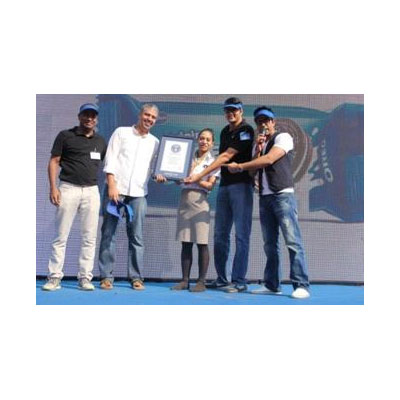
    MUMBAI: Oreo, the world’s No.1 biscuit brand by Cadbury India (a part of Mondelez International), made a place for itself in the record books of GUINNESS WORLD RECORDS ™ for Most people dunking cookies. The record-breaking event, conducted at IIT Powai on Sunday, December 22, 2013, during the institute’s cultural festival – MoodI, saw over 1796 people discovering the fun of enjoying Oreo in the ‘Twist, Lick, Dunk’ style together. The previous record was set in Argentina where 1503 people participated.

    Oreo’s special ritual of ‘Twist, Lick, Dunk’ has been enjoyed by millions of consumers around the world for nearly hundred years. This ritual of Oreo has been at the heart of numerous warm family moments of childlike delight that everyone treasures. With the GUINNESS WORLD RECORDS event, Oreo aims to engage more consumers in this unique ritual and bring alive the brand experience.

    Commenting on the achievement, Chella Pandyan, Associate Vice President – Biscuits, Cadbury India Ltd, said “With Oreo, we are constantly evaluating platforms that give us the opportunity to broaden the brand’s appeal across age groups and today’s GUINNESS WORLD RECORDS attempt is one such endeavor. The Twist, Lick, Dunk ritual is an integral part of the brand’s DNA and seeing such a large number of consumers performing it together has been truly special. We are excited to have successfully achieved this record and want to thank all the participants and MoodI for their valuable support.”

    GUINNESS WORLD RECORDS Adjudicator, Fortuna Burke, said, “We would like to congratulate the Oreo team on this achievement and entering the record books of Guinness World Records. Today’s attempt has been very impressive and it has been a pleasure to officially adjudicate Oreo’s record-breaking attempt.”

    Amrita Kumar, Managing Partner, Candid Marketing, the brand activation agency which organized this activity said, “It makes us proud to be a part of a historic event of breaking a Guinness World Record. To organize and then watch so many people come together to Twist, Lick and Dunk and be a part of the largest ever Dunkathon is exhilarating. “

    GUINNESS WORLD RECORDS has been inspiring, engaging and entertaining people since 1955 and is the best-selling copyrighted title of all time.