Tag: Bindass

  • “Bindass is platform-agnostic; a relaunch is on the cards:” Nikhil Gandhi

    “Bindass is platform-agnostic; a relaunch is on the cards:” Nikhil Gandhi

    Youth are a fickle audience. Especially considering that today’s young are a mobile first generation, and it is difficult to nail them down and make them watch simple telly.

    No one understands this more than Star India’s Channel [V] which brought the curtains down on youth programming and reinvented itself as a music channel recently.

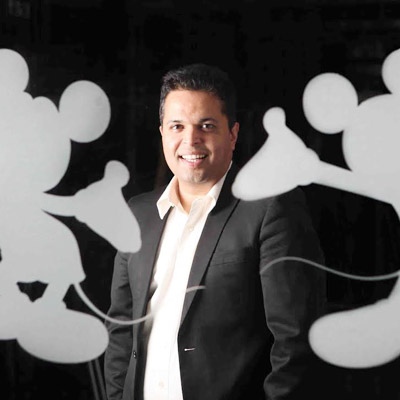
    And of course no one understands this more than Disney India Media channels VP and head of revenue Nikhil Gandhi. He has the responsibility of running the mousehouse’s channel’s in India comprising of youth channels – Bindass and Bindass Play and kids channels – Disney Channel, Disney Junior, Disney XD and Hungama TV, and  movie channels – UTV Movies and UTV Action.

    What’s grabbing his attention these days is Bindass. Launched as  a youth channel in 2007 under the UTV umbrella, it aired cult shows such as as Yeh Hai Aashiqui, Love by Chance, and  Emotional Atyachaar which got it  into the top 3 slot in the youth channel genre.  But that was in the pre-smart phone era, when video consumption on hand held devices was not that ubiquitous.

    Over the past few months, Gandhi and his Bindass team, have been working on reinventing the channel into one which is relevant for today’s mobile and Internet data guzzling youth. Among the first steps it took was to release a series first online on its Facebook page. Called Girl In The City it caught the youth’s imagination.

    Indiantelevision.com caught up with Gandhi to know what else is on the cards for Bindass viewers in an exclusive tete a tete.:
    Excerpts:

    What’s in store for Bindass?

    Bindass started out in 2007 and we have completed nine years. And this is going to be the 10th year of its existence. We are planning something very exciting. We have changed the way that content is getting developed on the channel. We are not looking at channel content only but platform agnostic content. We started off with the journey of this thought process three months back with a show called as Girl in the City (GITC) which has now come up to become the second most viewed show as a web series in India for which we partnered with Facebook. The way we did it was that we launched the show on the social media platform every Thursday which went on to the channel on Friday and then subsequently on YouTube by Saturday. 30 million views, the second most viewed web series in India. And we  are working with the best talent, right from Anand Tiwari to writer Sanyuka Chawla Shaikh. We worked with the best talent, directors and writers for the show. The talent that we worked with is exceptional which we plan to continue with going forward.

    The good part is that the content marketing was phenomenon which was earlier called as branded content or AFP is becoming a new buzzword for marketers. Everybody wants to get into the content space. And so we are pioneering that effort along with a lot of other guys who are in the same space. Next year, starting October you will see new shows launching on the Bindass interactive platforms (Bindass, Bindass Play, Snapchat, Instagram, Twitter, Blogs, etc) . It is not necessary to have a 22 minuter on Facebook, I can also choose to have five  minuter there. Or a six second Vine video. Marketers and advertisers are loving this because we are providing them this holistic engagement. The views and the numbers are just phenomenal.

    So, we are saying about 30 minutes of what?. How much does a normal Bindass show get in terms of the audience?

    I can’t compare it completely like that because there we have different metrics like TVR TVT or DVR. The truth is Bindass reaches out to 90 million homes, so the reach is there. So the reach is there but the engagement has to move up to a level where I can at least say that even if we are getting million views a week, in 15 weeks I will be providing 15 million views. The number is not small, it is quite staggering and there is lot of repeat value and of library value.

    The best part of this is it also gives me an advantage to expand into different territories. Now, I have syndicated this show in Pakistan, I have syndicated this show on inflight. So my eco-system of revenue generation is different all together. First of all, I have got great brand partners. The partners for GITC – sponsor Castrol and powered by partner ebay, saw the power in storytelling and then we integrated them seamlessly into the show; it was not overtly in your face branding. We found a very good talent in the young YouTuber Mithila Palkar. She is extremely talented and now the entire world wants to work with her.

    We did a lot of exciting stuff not just from the web series point of view but also from the ancillary programming around it and around her. She did something called as Facebook live interactions with the audience through which we got a lot of on the spot feedback about the show, about the length, the quality of the show. Everyone did a great job. So, this is now going to become the mantra of Bindass going forward.

    And what else is going to happen?

    We are revamping the entire look and feel of Bindass in the month of October. You will see a whole new avatar of the channel. The micro content that we are going to create around it is going to be phenomenal. That also leaves a space for us to probably move into the events space which we have stayed away from a long time. Anything interesting from the ground perspective, we may want to partner with.

    Our main  stay  is going to be platform agnostic content. The good part is we own the IP and the library is for life. Given our global presence now, GITC is travelling as a format to Indonesia. So, the Maker Studios team in South East Asia in Singapore is now taking up this concept and creating a show for either the Philippines or the Indonesian market which for us is a phenomenal way forward.

    So, likewise, our next show is going to launch either in end of October or first week of November. I think the way forward clearly for us is to get into this space for largely digital content,  separate content for on-air. The sky’s the limit as far as the creativity is concerned.

    What happens to Bindass Play? Does it continue?

    Bindass Play continues. It is a very sweet music channel. It is a highly profitable business. We are looking at creating ancillary content around Bindass Play that we did last year through Bollywood Republic. This entailed us moving into smaller towns, checking out the talent , recreating and rehashing Bollywood songs. It did very well for us. If you put both Bindass and BindassPlay together as a network, we stand tall as the number one youth network on television. And if I add the digital elements to it which is Facebook, YouTube and everything else our digital initiatives on YouTube, we are a very strong healthy leading youth network in the country. Which gives you a holistic view of two youth channels leading the space on TV, the entire digital play, and most importantly the content creative capability that we have right now is what is driving us.

    But you have reduced your presence on YouTube?

    But if I put my video up on YouTube, I get that many amount of views. All my old library content is still there. Any new exciting stuff, unless its made for YouTube, I don’t put on YouTube. GITC was made for digital, so the third leg of it went on to YouTube. But specifically If I am making a show for television, I don’t need to necessary put it on YouTube. So that’s the change that’s coming about in our thought process.

    So are you working with all partners?

    We are open to working with all partners, everyone is talking to us. We are working with people who share the same vision. Our thought of owning IP is very clear. We are working with very good talent from the face perspective.  So that’s the vision we have taken on for Bindass. We are here for the long run.

    You will see a lot of this action starting from October from our perspective and we will be announcing many of these initiatives very soon. I think the kind of advertisers who are getting attracted to this and the kind of support that we are getting from brands is phenomenal. They have seen what we have done with GITC, with other shows. The last 10 years have created a mega library of sorts.

    So Bindass will continue with its edginess and brand ethos?

    Bindass has its own brand ethos. It does not necessarily mean edginess. That era is over now. If you look at GITC, it’s a rom-com web  – there’s romance, there’s love, there’s emotion; there’s a lot of empowerment, achievement, confidence building. Bindass from that sense if you look at the way the brand has evolved, you will see that we have through a lot of iterations with the brand. And today if you look at the real meaning of Bindass, it actually means confidence.

    Bindass is a term and we are the only TV channel in the country with a brand that has got meaning in the country. Every other channel today has just a television name. Bindass is an attitude and that is our inherent advantage. It means fearless, fun, free, frank, etc which are all attributes of confidence. We have realised this through our on-going research that for the last so many years is that the parentage have become cooler. Today the children can talk to their parents because they are equally young.

    The father is not anymore saying that you have to wear a saree or salwar kameez at home, he understands his daughter or son. He is not saying my way or the highway – that you have to become a doctor or an engineer. Today, we have got DJs, gliders, etc who are making careers out of things that you have never ever imagined before and the parents are supporting them. So a lot of that confidence is coming from parents and family. The second part is coming from the youth’s aspirations. They all want to make it big in life. Their attitude is not of rebellion at all but of let’s make it happen.The manifestation of all of this is Bindass. Every show you see will have this element of Bindass coming about extremely strongly.

    Our vision is to empower the youth of the country. We want to stand tall as this figure, supporting you guys. Go out make it happen. Need So it is not enough for you to become an engineer or doctor. You have to have that Bindass attitude which is a very confident attitude.

    What happens to getting advertisers on board? Do you see them coming?

    As the brand specifically, I think the advertisers, the clients, who have been with us for so many years have now realized now that this is the way forward.  It is not enough for you to just put it out there. We have several channels in the youth space trying to be something. I won’t take names but just putting up a show on your channel and getting a few GRPs is not the way this business works. You need to have that element of understanding the youth. You need to understand what is driving their thought process, how are they  looking at making this thing work. And that is what we call the new Bindass millennial.

    What is driving their attitude and confidence in them. Pillar of support is their circle, their dreams. And the drive to succeed is their attitude and actions. What is their circle of support? I can talk to my parents, I can talk to my friends if I am in a situation; I know that I have a backup which is driving me that’s my confidence. In earlier times, my confidence was also restricted, because I could not speak to my father. My dad wanted me to become a chartered accountants and I did not want to. That was the cause, the reason for rebelling at that time. Now there is no need because the parents understand their children and want them to go for it. They have become supportive- that is the element of confidence. As this is the pillar of support, follow your dreams,  break the barriers and receive abundance freedom, sky is the limit.

    I don’t want to think small, I just want to make it big. I don’t want to work, I won’t. I’ll do whatever I feel. I have seen so many people in my own friend and relative circles. I could never imagine in my dreams that my father would allow me to become a wildlife photographer. It is all about having the will to succeed. Instant gratification. I want it now. This is all getting into the fact that there is a lot of exposure happening, because this millennial is a digital native. You talk to them about Donald Trump, they will give you their opinions; you talk to them about what’s happening in the world with the whole ISIS crisis, they will give their opinions. You talk to them about Michael Phelps world record, they will give you their opinion. Their universe is driving around their phones, their IPads, their tablets.

    And the reason we have taken this platform-agnostic content approach. Just to give you a brand personality manifestation, we are looking at at Alia Bhatt. That is our brand personality – versatile, good looking, urban, sexy, smart, trendy, confident. My elements of Bindass is this.

    We have always been 2D in our packaging. We are looking, for the first time,  at going 3D. So the whole coming of Bindass is going to be new look and feel, this new brand philosophy, the manifestation of this great content.

    What about traditional television distribution?

    We are looking at increasing our digital reach on television through all that’s happening on digitization. Hopefully in the next six months from here or maybe in the next one year from here, India will be completely digitized. So if I am talking 100 million or 150 million homes digitized reach on television with just two brands- Bindass and Bindass Play.  Right now, I’m talking about 250 million homes that my brands will reach out to with all my digital platforms which is a huge massive brand to reckon with going forward.

    What is the number of audience we are looking for out of 150 million audience category? It is not everyone in the universe who will consume this data.

    15 to 21 is my demographic. Even if you go to Hohsiarpur, everyone is on Google, and on facebook. Just look at the kind of interactivity they get, it’s mind boggling. I travel the length and breadth of the country into many towns, I have observed that everybody has access to the internet and that is what is enabling this whole philosophy of being a digital native and us getting the confidence of driving that.

    What is the number? Is it 20 million or 15 million or 10 million people the young people out there?   People who could possibly be the key target audience of Bindass?

    It’s far more than that. First of all you know the great number of 65-70 per cent of India being in the age of 15-40.  That is my number. Whether they are engaging with me on television or on my Facebook or YouTube or Instagram or Vine, I am getting them wherever they are.

    But Facebook is about 150 million to 200 million users….

    My own Facebook page has 10 million fans in two brands.  When I do a show on Facebook, they pump it out to their universe and then if I am syndicating the same show to various people, I am going through a huge massive turnover of sorts in terms  of  numbers. So, I have got the platforms, the audience and the brand. I got the look and feel and I have also got the entire pedigree of the Bindass out there. What I am focusing now is content creation capability which is what is driving and propelling this entire engine and creating the modernisation on top of it.

    Will you build the same structure and tap into these possibilities?

    Absolutely. After I have a team which is already there, we are going out to tap various possibilities. The beauty of it is brands which never thought of coming onto the channel before have suddenly latched onto this.Now they are saying Boss, let’s make it happen.

    How are you putting this in your executive producers in the network? How are you integrating this entire brand  philosophy with them?

    They have already been with us so everybody is in the understanding of the coming age of Bindass and what we stand for. They are part of our focus group discussions and research. When I give the vision of what we want to do, the first click was let’s stop thinking as a 42 minute episode. I urge them to come up with a 10 second spot or 10 second video which makes sense to me. We will blow it up.

    So, content today cannot have a duration cut. It is to have a creative cut and to see what work well exceptionally for it. I think that we have also gone into a philosophy wherein we don’t think that I have to create 22 minute episode showing long scenes. We can’t do that as the audience is a digital native. They are consuming maximum amounts of videos on WhatsApp. I need 100  of my videos to be on Vine, Instagram and WhatsApp and SnapChat. .

    Like Snapchat with a 10 sec video with or without giving link to television…

    Exactly. It’s like a 30 second promo. You watch a promo, you get a synopsis of what you gonna see in the half an hour or one hour program. A guy who is spending one hour a day on mobile constantly checking his apps, give him a sense over there by creating a 10 or 20 second video. Most importantly the virality has to be out there. That guy, who  gets video, needs to have the ability or the push that I need to send this to my group and that is the success of content.

    Are you going to raise ad rates?

    We have already raised our ad rates. We are the highest in the market from an FCT perspective. What we are now raising is the premium in terms of content. So when we go out to brands, we actually sell the story first. We have stopped selling and have started telling. No selling shows, start telling stories. That is the shift in the revenue teams is to stop selling and start telling. And that has created great success. We have 10 brands lined up for our next shows confirmed already.
  • Bindass to launch web series titled ‘Girl in the City’ on 28 April

    Bindass to launch web series titled ‘Girl in the City’ on 28 April

    MUMBAI: bindass, India’s leading homegrown youth entertainment brand, is all set to present yet another fun, free spirited and young show. Titled Girl in the City, the channel’s first fiction web series will see a premier on Facebook, followed by a telecast on other platforms. The 13 episode series of 15 minutes each will first go live on Facebook, followed by a television airing on bindass. The series will further see a wider digital release on YouTube, thus catering to both the digital and television audiences. Through an engaging narrative, the series will portray a journey of self-discovery, one that is chartered by most young Indians today in pursuit of their dreams.

    The web series will launch on 28 April 2016.

    bindass has roped in Facebook, eBay India, and Castrol Activ as brand partners for the new offering. With Facebook coming on board as the media partner for the first airing, eBay and Castrol Activ will seamlessly be integrated into the script to play a significant role in the story. The protagonist, Meera, will be seen interning at a seller on eBay to help the team come up with a new fashion range. Castrol Activ, which comes on board as the presenting partner will also find a fit in the screenplay as they look to promote their Scooter Oil, which is primarily efficient for in-city travel among women audiences.

    “bindass has always evolved with the youth by trying to cater to their aspirations and being their friend. The dynamic nature of their entertainment needs and consumption patterns pushed us to think of a concept that has the potential to not only entertain the digital audiences, but will also reach out to the television viewers,” said Disney India Media Networks VP and head revenue Nikhil Gandhi.

    Speaking about the brand partnerships, he said, “We are thrilled to partner with three of the biggest brands, namely Facebook, eBay and Castrol Activ to present this series. eBay and Castrol Activ will have a significant presence in the show, beyond just product placement. Facebook has more than 126 million users in India, a substantial chunk of which, fall within our core target group. bindass already has more than 8 million facebook fans engaging with the brand on a regular basis, because of which we took a conscious decision to launch our first web series on the social networking platform.”

    Girl in the City is a coming of age story of 21 year old Meera from Dehradhun, who comes to the bustling city of Mumbai to pursue her dream in the fashion industry.


  • Bindass to launch web series titled ‘Girl in the City’ on 28 April

    Bindass to launch web series titled ‘Girl in the City’ on 28 April

    MUMBAI: bindass, India’s leading homegrown youth entertainment brand, is all set to present yet another fun, free spirited and young show. Titled Girl in the City, the channel’s first fiction web series will see a premier on Facebook, followed by a telecast on other platforms. The 13 episode series of 15 minutes each will first go live on Facebook, followed by a television airing on bindass. The series will further see a wider digital release on YouTube, thus catering to both the digital and television audiences. Through an engaging narrative, the series will portray a journey of self-discovery, one that is chartered by most young Indians today in pursuit of their dreams.

    The web series will launch on 28 April 2016.

    bindass has roped in Facebook, eBay India, and Castrol Activ as brand partners for the new offering. With Facebook coming on board as the media partner for the first airing, eBay and Castrol Activ will seamlessly be integrated into the script to play a significant role in the story. The protagonist, Meera, will be seen interning at a seller on eBay to help the team come up with a new fashion range. Castrol Activ, which comes on board as the presenting partner will also find a fit in the screenplay as they look to promote their Scooter Oil, which is primarily efficient for in-city travel among women audiences.

    “bindass has always evolved with the youth by trying to cater to their aspirations and being their friend. The dynamic nature of their entertainment needs and consumption patterns pushed us to think of a concept that has the potential to not only entertain the digital audiences, but will also reach out to the television viewers,” said Disney India Media Networks VP and head revenue Nikhil Gandhi.

    Speaking about the brand partnerships, he said, “We are thrilled to partner with three of the biggest brands, namely Facebook, eBay and Castrol Activ to present this series. eBay and Castrol Activ will have a significant presence in the show, beyond just product placement. Facebook has more than 126 million users in India, a substantial chunk of which, fall within our core target group. bindass already has more than 8 million facebook fans engaging with the brand on a regular basis, because of which we took a conscious decision to launch our first web series on the social networking platform.”

    Girl in the City is a coming of age story of 21 year old Meera from Dehradhun, who comes to the bustling city of Mumbai to pursue her dream in the fashion industry.


  • “Our carriage bill is down 30-35%; subscription up 14-15%”: Nikhil Gandhi

    “Our carriage bill is down 30-35%; subscription up 14-15%”: Nikhil Gandhi

    2015 will be remembered as a memorable year for Disney India’s TV biz. The mouse house took its TV channel distribution in its own hands when it terminated its joint venture with the Viacom outfit Indiacast.  For several years it had experimented with other distribution partners like Sun Distribution Services to Star Den, both of which are non-existent now.

    A new venture Disney Media Networks was set up and media vet Nikhil Gandhi – who was responsibile for revenue and profitability across Disney India media channels comprising of youth channels – Bindass and kids channels – Disney Channel, Disney Junior, Disney XD and Hungama TV, movies channels – UTV Movies and UTV Action –  was given its charge.

    His challenge: to jiggle out distribution and subscription  revenues from India’s fragmented cable TV ecosystem, while keeping affiliate fees under control even as he ensured carriage of Disney India’s eight channel bouquet.

    Six months down the line, Gandhi seems to have done well, if one goes by this exclusive interview to indiantelevision.com’s Anirban Roy Choudhury.  He speaks about the challenges he has and continues to face, and why he is still optimistic.

    Excerpts:

    How has the journey been so far? What made Disney decide to distribute its TV channels on its own?

    It has been a fabulous six months. The market has been receptive to whatever we are doing, which has been a major boost for us. We have been in the business for over 10 years now and we have been distributing through different partners. We started with Star, then we went to Sun and then to IndiaCast, following which we were on an agency relationship with them. Therefore we needed to take a call on what we really wanted to do.

    I think our network is one to reckon with. We have six per cent viewership share which is probably five or six times compared to the one following us. So we are the fifth largest broadcast network. That’s why we thought we could go out and take the business in our hands and see what we could do at the distribution level.

    One, it was also important to get our carriage fee bill down, which each  broadcaster is trying his level best to do. Two and the most important one was to get the subscription business in order. 

    What are the challenges that you faced and how did you counter them?

    We had to inform the ecosystem – the MSOs’ and the DTH players about Disney Media Networks, that we have eigh channels, we have very high premium brands. We had to tell them what we are and what value we could add to them. I think that at certain point after our initial efforts, they did realise that they had never seen Disney as an entity in its own right. They began to understand the value that we brought to the table in terms of packaging. They realised we were the leaders in kids and youth channels and we had a sizeable movie business. We were not just another bouquet, we were leaders of sorts. The challenge was to communicate that and the team did a fantastic job.

    I think that the deals that we have struck are our biggest achievement. We have reached very big milestones in the first year itself. To begin with we have got our carriage bill down by 30 to 35 per cent and at the same time we have taken our subscription revenue up 14 to 15 per cent and it happened after rounds of negotiations and discussions with our carriage partners.

    When you talk about distribution success, do you mean a pan India success or is it a particular market?

    It is a pan India success for us. We are distributed nationally. Our channels reach east, west, north and south. And that is because of the fantastic work done by our teams on ground. We got a fantastic bunch of talented people from across different fields. They have successfully communicated what really Disney Media Networks stands for, and most of the negotiations are done by them. So whenever we talk about success or numbers, it is pan India that we are talking about, and not a particular market.

    What is your opinion about the CPS model? If rolled out properly, will it enhance your subscription revenue?

    CPS is there…and yet it’s not there as a whole. In phases I and II, we know what is going on. Phases III and IV will take shape with time. It’s good that we’ve digitized, now what really matters is how it is being addressed, how the CAF is filled up and how it is packaged. 

    It is a great move forward, and as a broadcaster and content provider, we can only add value to the process by giving superior content and a brand which will enhance ARPUs.

    CPS will happen as the progression of packaging happens and the progression of addressability happens.

    The MSO-LCO equation needs to change and become more mature. Yes, the moves are very positive, but we are still not there, there are areas where we need some amount of investor players to come and change the game at least from a mind-set point of view. CPS will go up with ARPU going up.  And when there is a transparent system in place that enables addressability, subscription revenue will move up in the right direction.

    What is your opinion on the regulators stand so far?

    The regulators have been very pro industry, which is a great thing. We have seen how there was a hard stance when it came to the phase III deadline. So I think it’s a very bold move, because for them also, it’s about getting the industry which is so big in size organised and deriving the maximum out of it in terms of entertainment tax and other revenue generating propositions. And an organised platform is always more transparent, and transparency is the need of the hour for the industry. So I think the regulator’s stand so far has been immensely pro industry.

    Do you think content, if paid for in India, will grow?

    ARPUs’ have been flat for last 10 years. So obviously India is not paying for content, but the moot point is that India is capable of paying more. We, at Disney, are manufacturers; we are content providers. There are platforms and there are wholesalers and retailers involved.  It is the retailers and the wholesalers who need to drive the ARPU and there are many elements on which it all depends.

    At a pricing level we are restricted by the RIO model, and then on the ground level there is the LCO who by no means is interested as it might hurt him. I think to drive payment for content, the LCO – MSO equation needs to change, DTH needs to play its role and it all needs to happen in a collaborated manner.

    I think there is a need for standard pricing similar to any other industry. You buy toothpaste the price is the same everywhere.  In India there is a legacy involved in the way it has been run. The legacy needs to change. It is changing, we expected it to change fast, but it’s actually changing at a snail’s pace.

    Can the broadcasters not play a role in ensuring higher ARPU?

    Look at what the broadcasters are offering these days. Look at the quality of the content. It’s premium content created with superior sophistication. There are HD channels offering HD content. A few of them have rolled out 4K channels.

     So while ARPU has remained same over the last 10 years, the investment on content did not stop. It kept on going. New formats, acquisitions, new and bold ways of storytelling have been explored, and then there are the additions in the number of channels every year.

    Rs 300 for 50 channels 10 years ago, has now become 250 channels of superior quality for the same old price. We have witnessed a few ARPU movements at least in the metros with DTH and a few MSOs, but these are minuscule movements. The movements need to happen much faster because that’s where the motivation is. From a broadcaster’s point of view, there is nothing that we can do but play the game as per the nature of the business.

    You spoke about collaboration, recently we witnessed switching off of signals, what is your opinion on such acts?  

    Firstly, the switching off of services and disturbing the consumer at a fundamental level is very unfair, it should not happen. There could be differences on the negotiation table, but that by no means should disturb the end consumer. 

    The fact that the consumer is deprived of a service in itself is very sad.  I don’t subscribe to such negotiations. We have also gone through highs and lows in our negotiation process but, at the end of the day, you cannot starve your consumer of superior content, or any content for that matter, because the consumer has subscribed for it. The ecosystem is such that the business is dependent on ad sales, and that is why the switch offs’ happen.

    What should lead the business, subscription or ad revenue?

    Ad sales should be an icing on the cake, subscription revenue should steer the business. Look at the mature markets – subscription revenue is leading the business, the negotiations that happen there are at a different level.

    Fundamentally the broadcast business has to be a subscription led business. You can have an advertising-based play that we are seeing with the FTA’s and that’s majorly because of the huge population of our country and the market size and the reach that TV offers. But a premium pay channel creating original superior content needs to be pay first.

    What is your take on the growing OTT business?

    At the heart of the OTT ecosystem is bandwidth and the bandwidth needs to improve.  What will be interesting to see is if it becomes subscription based (SVOD) or advertising based video on demand (AVOD). 

    Now if you are providing superior content for an AVOD model you are not creating a great environment as such. It’s all about how you form the habit. Consumers who consume OTT content are paying about Rs 1,000 for data, and we tend to think that the same consumer will not pay for  content. This mentality is not a long term one, we need to think 10 years ahead and then take steps.

    Smart TVs are in place; people are talking about 8K.  There are great leaps in terms of technology, but if we don’t take the correct steps, we won’t be able to get value out of the OTT business.

    Will you make yourself available on OTT platforms? Star has Hotstar, SPN has Sony Liv, ZEE has a couple of them and Viacom is launching VOOT. Is Disney also looking towards launching an OTT platform?

    Anywhere where consumption is there, we will make ourselves present. That’s the way forward for us. We do have plans, but we are at a very nascent stage as far as OTT is concerned. As a linear service we will be available on all OTT platforms, but when it comes to launching our own venture we will evaluate when the time is right.

    Where are you generating more subscription revenue from, DTH or cable?

    DTH has a slight edge over cable when it comes to our subscription revenue. We are gradually moving towards level contributions from both the platforms. Now with DAS phase III, I think the headroom for growth is massive in the case of cable. At this stage I think that DTH, given its organised and transparent nature, has the edge.

    Is it the bouquet mode of distribution that you are looking at, at this stage?

    Most of our deals are all bouquet offerings, if there is any platform that requires a youth offering or kids offering or a movie offering, such deals happen at a very high CPS price and we create those packages. We are there on a la carte as an offering, but there is a very small set of consumers who subscribe to the service. So it’s largely all bouquet.

    What is it that Disney Media Networks is looking for in the foreseeable future?

    I have mandated the team in Disney that the subscription business needs to overtake the ad sales business over the next three years’  and that will change the entire ecosystem. An MSO cannot then threaten me with a switch off and that’s what we are targeting. We were at about 65:35 ratio, now we have become 60:40 so we are moving towards that direction. Over time the target is to make it 40:60 or 30:70 for that matter.


  • “Our carriage bill is down 30-35%; subscription up 14-15%”: Nikhil Gandhi

    “Our carriage bill is down 30-35%; subscription up 14-15%”: Nikhil Gandhi

    2015 will be remembered as a memorable year for Disney India’s TV biz. The mouse house took its TV channel distribution in its own hands when it terminated its joint venture with the Viacom outfit Indiacast.  For several years it had experimented with other distribution partners like Sun Distribution Services to Star Den, both of which are non-existent now.

    A new venture Disney Media Networks was set up and media vet Nikhil Gandhi – who was responsibile for revenue and profitability across Disney India media channels comprising of youth channels – Bindass and kids channels – Disney Channel, Disney Junior, Disney XD and Hungama TV, movies channels – UTV Movies and UTV Action –  was given its charge.

    His challenge: to jiggle out distribution and subscription  revenues from India’s fragmented cable TV ecosystem, while keeping affiliate fees under control even as he ensured carriage of Disney India’s eight channel bouquet.

    Six months down the line, Gandhi seems to have done well, if one goes by this exclusive interview to indiantelevision.com’s Anirban Roy Choudhury.  He speaks about the challenges he has and continues to face, and why he is still optimistic.

    Excerpts:

    How has the journey been so far? What made Disney decide to distribute its TV channels on its own?

    It has been a fabulous six months. The market has been receptive to whatever we are doing, which has been a major boost for us. We have been in the business for over 10 years now and we have been distributing through different partners. We started with Star, then we went to Sun and then to IndiaCast, following which we were on an agency relationship with them. Therefore we needed to take a call on what we really wanted to do.

    I think our network is one to reckon with. We have six per cent viewership share which is probably five or six times compared to the one following us. So we are the fifth largest broadcast network. That’s why we thought we could go out and take the business in our hands and see what we could do at the distribution level.

    One, it was also important to get our carriage fee bill down, which each  broadcaster is trying his level best to do. Two and the most important one was to get the subscription business in order. 

    What are the challenges that you faced and how did you counter them?

    We had to inform the ecosystem – the MSOs’ and the DTH players about Disney Media Networks, that we have eigh channels, we have very high premium brands. We had to tell them what we are and what value we could add to them. I think that at certain point after our initial efforts, they did realise that they had never seen Disney as an entity in its own right. They began to understand the value that we brought to the table in terms of packaging. They realised we were the leaders in kids and youth channels and we had a sizeable movie business. We were not just another bouquet, we were leaders of sorts. The challenge was to communicate that and the team did a fantastic job.

    I think that the deals that we have struck are our biggest achievement. We have reached very big milestones in the first year itself. To begin with we have got our carriage bill down by 30 to 35 per cent and at the same time we have taken our subscription revenue up 14 to 15 per cent and it happened after rounds of negotiations and discussions with our carriage partners.

    When you talk about distribution success, do you mean a pan India success or is it a particular market?

    It is a pan India success for us. We are distributed nationally. Our channels reach east, west, north and south. And that is because of the fantastic work done by our teams on ground. We got a fantastic bunch of talented people from across different fields. They have successfully communicated what really Disney Media Networks stands for, and most of the negotiations are done by them. So whenever we talk about success or numbers, it is pan India that we are talking about, and not a particular market.

    What is your opinion about the CPS model? If rolled out properly, will it enhance your subscription revenue?

    CPS is there…and yet it’s not there as a whole. In phases I and II, we know what is going on. Phases III and IV will take shape with time. It’s good that we’ve digitized, now what really matters is how it is being addressed, how the CAF is filled up and how it is packaged. 

    It is a great move forward, and as a broadcaster and content provider, we can only add value to the process by giving superior content and a brand which will enhance ARPUs.

    CPS will happen as the progression of packaging happens and the progression of addressability happens.

    The MSO-LCO equation needs to change and become more mature. Yes, the moves are very positive, but we are still not there, there are areas where we need some amount of investor players to come and change the game at least from a mind-set point of view. CPS will go up with ARPU going up.  And when there is a transparent system in place that enables addressability, subscription revenue will move up in the right direction.

    What is your opinion on the regulators stand so far?

    The regulators have been very pro industry, which is a great thing. We have seen how there was a hard stance when it came to the phase III deadline. So I think it’s a very bold move, because for them also, it’s about getting the industry which is so big in size organised and deriving the maximum out of it in terms of entertainment tax and other revenue generating propositions. And an organised platform is always more transparent, and transparency is the need of the hour for the industry. So I think the regulator’s stand so far has been immensely pro industry.

    Do you think content, if paid for in India, will grow?

    ARPUs’ have been flat for last 10 years. So obviously India is not paying for content, but the moot point is that India is capable of paying more. We, at Disney, are manufacturers; we are content providers. There are platforms and there are wholesalers and retailers involved.  It is the retailers and the wholesalers who need to drive the ARPU and there are many elements on which it all depends.

    At a pricing level we are restricted by the RIO model, and then on the ground level there is the LCO who by no means is interested as it might hurt him. I think to drive payment for content, the LCO – MSO equation needs to change, DTH needs to play its role and it all needs to happen in a collaborated manner.

    I think there is a need for standard pricing similar to any other industry. You buy toothpaste the price is the same everywhere.  In India there is a legacy involved in the way it has been run. The legacy needs to change. It is changing, we expected it to change fast, but it’s actually changing at a snail’s pace.

    Can the broadcasters not play a role in ensuring higher ARPU?

    Look at what the broadcasters are offering these days. Look at the quality of the content. It’s premium content created with superior sophistication. There are HD channels offering HD content. A few of them have rolled out 4K channels.

     So while ARPU has remained same over the last 10 years, the investment on content did not stop. It kept on going. New formats, acquisitions, new and bold ways of storytelling have been explored, and then there are the additions in the number of channels every year.

    Rs 300 for 50 channels 10 years ago, has now become 250 channels of superior quality for the same old price. We have witnessed a few ARPU movements at least in the metros with DTH and a few MSOs, but these are minuscule movements. The movements need to happen much faster because that’s where the motivation is. From a broadcaster’s point of view, there is nothing that we can do but play the game as per the nature of the business.

    You spoke about collaboration, recently we witnessed switching off of signals, what is your opinion on such acts?  

    Firstly, the switching off of services and disturbing the consumer at a fundamental level is very unfair, it should not happen. There could be differences on the negotiation table, but that by no means should disturb the end consumer. 

    The fact that the consumer is deprived of a service in itself is very sad.  I don’t subscribe to such negotiations. We have also gone through highs and lows in our negotiation process but, at the end of the day, you cannot starve your consumer of superior content, or any content for that matter, because the consumer has subscribed for it. The ecosystem is such that the business is dependent on ad sales, and that is why the switch offs’ happen.

    What should lead the business, subscription or ad revenue?

    Ad sales should be an icing on the cake, subscription revenue should steer the business. Look at the mature markets – subscription revenue is leading the business, the negotiations that happen there are at a different level.

    Fundamentally the broadcast business has to be a subscription led business. You can have an advertising-based play that we are seeing with the FTA’s and that’s majorly because of the huge population of our country and the market size and the reach that TV offers. But a premium pay channel creating original superior content needs to be pay first.

    What is your take on the growing OTT business?

    At the heart of the OTT ecosystem is bandwidth and the bandwidth needs to improve.  What will be interesting to see is if it becomes subscription based (SVOD) or advertising based video on demand (AVOD). 

    Now if you are providing superior content for an AVOD model you are not creating a great environment as such. It’s all about how you form the habit. Consumers who consume OTT content are paying about Rs 1,000 for data, and we tend to think that the same consumer will not pay for  content. This mentality is not a long term one, we need to think 10 years ahead and then take steps.

    Smart TVs are in place; people are talking about 8K.  There are great leaps in terms of technology, but if we don’t take the correct steps, we won’t be able to get value out of the OTT business.

    Will you make yourself available on OTT platforms? Star has Hotstar, SPN has Sony Liv, ZEE has a couple of them and Viacom is launching VOOT. Is Disney also looking towards launching an OTT platform?

    Anywhere where consumption is there, we will make ourselves present. That’s the way forward for us. We do have plans, but we are at a very nascent stage as far as OTT is concerned. As a linear service we will be available on all OTT platforms, but when it comes to launching our own venture we will evaluate when the time is right.

    Where are you generating more subscription revenue from, DTH or cable?

    DTH has a slight edge over cable when it comes to our subscription revenue. We are gradually moving towards level contributions from both the platforms. Now with DAS phase III, I think the headroom for growth is massive in the case of cable. At this stage I think that DTH, given its organised and transparent nature, has the edge.

    Is it the bouquet mode of distribution that you are looking at, at this stage?

    Most of our deals are all bouquet offerings, if there is any platform that requires a youth offering or kids offering or a movie offering, such deals happen at a very high CPS price and we create those packages. We are there on a la carte as an offering, but there is a very small set of consumers who subscribe to the service. So it’s largely all bouquet.

    What is it that Disney Media Networks is looking for in the foreseeable future?

    I have mandated the team in Disney that the subscription business needs to overtake the ad sales business over the next three years’  and that will change the entire ecosystem. An MSO cannot then threaten me with a switch off and that’s what we are targeting. We were at about 65:35 ratio, now we have become 60:40 so we are moving towards that direction. Over time the target is to make it 40:60 or 30:70 for that matter.


  • Bindass to launch season 4 of ‘Yeh Hai Aashiqui’

    Bindass to launch season 4 of ‘Yeh Hai Aashiqui’

    MUMBAI: Bindass, the zesty youth oriented channel known for providing edgy content, is planning to supplement its line-up with the launch of the fourth season of Yeh Hai Aashiqui.


    The one-hour long show will be rolled out on 21 February and will be aired every Sunday at 6 pm.


    Produced by Bodhi Tree Productions and Red Dot Productions, Yeh Hai Aashiqui will feature dramatised love stories in a refreshing way. Besides the new season, the show will also sport an entirely new feel as well as hosts narrating the stories.


    Sources close to the development inform Indiantelevision.com that the per episode production cost of the new season is approximately between Rs 14-15 lakh.


    The story line for this new season will retain the same flavour of love as in the previous seasons and will explore the emotions, confusions and the chaos with unique love stories, informs a source close to the development.


    While the third season Yeh Hai Aashiqui – Sun Yaar Try Maar, was hosted by Anshit Sharma a.k.a Rapper Maddy, the fourth season will see Niti Mohan and Mohit Chauhan narrating the episodes in the show. The duo will also recreate the title track with their vocals.


    According to information available, Bindass is looking at closing deals with the show’s previous season sponsors like Glam Up and Fogg. The channel has not yet locked in any sponsors for the new season as of now and is in talks for the same.


    Plans are to have a finite season four of Yeh Hai Aashiqui. However, the total number of episodes will depend on the audience’s demand.

  • Bindass to launch season 4 of ‘Yeh Hai Aashiqui’

    Bindass to launch season 4 of ‘Yeh Hai Aashiqui’

    MUMBAI: Bindass, the zesty youth oriented channel known for providing edgy content, is planning to supplement its line-up with the launch of the fourth season of Yeh Hai Aashiqui.


    The one-hour long show will be rolled out on 21 February and will be aired every Sunday at 6 pm.


    Produced by Bodhi Tree Productions and Red Dot Productions, Yeh Hai Aashiqui will feature dramatised love stories in a refreshing way. Besides the new season, the show will also sport an entirely new feel as well as hosts narrating the stories.


    Sources close to the development inform Indiantelevision.com that the per episode production cost of the new season is approximately between Rs 14-15 lakh.


    The story line for this new season will retain the same flavour of love as in the previous seasons and will explore the emotions, confusions and the chaos with unique love stories, informs a source close to the development.


    While the third season Yeh Hai Aashiqui – Sun Yaar Try Maar, was hosted by Anshit Sharma a.k.a Rapper Maddy, the fourth season will see Niti Mohan and Mohit Chauhan narrating the episodes in the show. The duo will also recreate the title track with their vocals.


    According to information available, Bindass is looking at closing deals with the show’s previous season sponsors like Glam Up and Fogg. The channel has not yet locked in any sponsors for the new season as of now and is in talks for the same.


    Plans are to have a finite season four of Yeh Hai Aashiqui. However, the total number of episodes will depend on the audience’s demand.

  • Bindass to roll out two youth centric shows in November

    Bindass to roll out two youth centric shows in November

    MUMBAI: Bindass, the Hindi entertainment channel targeted at the Indian youth owned by Disney India has always connected to the youth by providing content and a free spirited zesty time. 


    The channel will be adding two new shows targeted at the youth this November.


    The first show titled Tu Con Main Con will be launched on 7 November. The promo of the show is smart, zesty, and sleek and also includes a lot of gizmo and gadgets. Tara and Dhruv are roped as the leads for the show. The plot talks about two con artists who with their charming personalities and smart actions, spindle the fraudsters in the society. The program is produced by SunShine and will run every Saturday at 7 pm.


    Next in line is a classic sitcom, a laughathon titled Kota Toppers produced by BodhiTree. Slated to go on air on 20 November, this show be aired every Friday at 7 pm. Kota Toppers sheds light on the lives of six characters from Vardhan Coaching Classes namely Abhay, Naici, Raghav, Saina, Piyush, Siddharth and Riya, trying their luck to clear the IIT exam. The storyline talks about the logic and reason of the group behind preparing for the exams, Vardhan’s quirky and different style of teaching, the group ganging up against an external factor, their conflicts and interpersonal dynamics.


    Talking about the two new shows, Disney India – Media Networks VP and head – content and communication Vijay Subramaniam said, “We have constantly evolved when it comes to the content broadcasted on Bindass. I strongly believe that youth power is gender neutral. We have all passed through the ‘over-enthusiastic’ phase in our lives. So I think it is very important for us to connect to the youth with our shows. The youth will share a bond, a connection with these two new shows on board. Tu Con Mein Con will emotionally connect with the youth raising many questions about the characters, whereas Kota Toppers will help the students shed off all their stress by simply laughing it out.”


    Currently the channel airs youth centric shows like Yeh Hai Aashiqui, Halla Bol and Love by Chance amongst others with a wide catalogue of Bollywood music from morning to noon.

    Bindass launched the third season of the show Yeh Hai Aashiqui – Sun Yaar Try Maar on 25 October, which is produced by Lotus Talkies and airs every Sunday at 7 pm. Maintaining the element of love to its core, the third season will feature a collection of one-sided love stories experienced by people and traces how they expressed their feelings to their loved ones. The show has brands like L’oreal and Glam-Up on board.


    Speaking on the same, Subramaniam said, “This show highlights the lives of people who love someone but don’t have courage to convey it. The story talks about the journey of such lovebirds who muster courage to go and admit it. After the success of Yeh hai Aashiqui, we are really looking forward to this new season.”


    With BARC releasing its all India data including rural areas, Subramaniam believes that this new data will definitely help the channel grow and will equally be effective as the channel grows in the rural areas too. The channel is working with reference to the youth dynamics from the consumers and the broadcast will continue to provide services regardless of territory.


    “With increased digitisation, the aspirations are constant. Young people are young people and their hopes, dreams, wishes, everything is similar. It does not matter where they come from,” added Subramaniam.

  • What the MSM-ESPN deal means

    What the MSM-ESPN deal means

    MUMBAI: When the enemy looks extremely threatening, you bring in allies to help you do battle. And if your ally is a friend-turned-foe of your enemy, it makes the war that much more interesting. And combative.


    We are referring to what’s about to happen in the Indian sports television ecosystem. Multi Screen Media India (Sony Entertainment Television India) has struck a deal with the US-based mega sportscaster ESPN Inc under which it will be helping bring in the brand once again into the country as its partner. 


    ESPN was Star TV’s former mate in Asia until 2012 wherein they ran and distributed channels in several Asian countries jointly including in India.


    The current MSM-ESPN agreement is for the long term and will be for India and the Indian sub-continent. The joint venture will see new co-branded sports channels, a multisport website and an app rolling out over the next few months. The companies will also be working together to develop original sports programs, something which has been sorely lacking in India, with the exception of a couple of them on Star India’s sports channels.

     
    As a first step of the union, MSM’s sports channel Sony Kix is being rebranded as Sony ESPN.


    It’s interesting that the two are exchanging vows at the time they are.


    The IPL bids are slated to take place next year and the buzz is that Star India is likely to take the bidding to close to the $4 billion mark for all rights. With Sony-ESPN combining their resources and putting up a common front, they are quite likely to put up a stiff fight against Star India. (Others who could throw in a bid include Zee Telefilms and Discovery’s Eurosport). And not just at the IPL auctions but also for all the other sports rights when they come up for renewal.


    “However,” a high ranking Sony International Television executive told Indiantelevision.com, “there is no way pricing for the IPL could go up four times. A multiplier of two times or three times over the previous bid is conceivable but above that will make it a big losing proposition.”


    What’s also of interest is how Disney is shaping its presence in India. Its family entertainment initiatives got a leg up when it invested in acquiring Ronnie Screwvala’s UTV a few years ago. This deal gave it access to UTV Motion Pictures as well as channels such as Bindass and Hungama.


    Disney India recently severed its distribution alliance with IndiaCast Media – part of Viacom18 and has been reaching out to satellite and cable TV platforms to strike deals with them directly.


    Now with Disney’s sports offshoot ESPN partnering with MSM, one will have to see whether the latter’s distribution arm MSM Media Distribution resources will be used to shore up the efforts of the distribution team at Disney India. Or will the two work totally independently?


    Sports programming in India is likely to also get a shot in the arm. ESPN is renowned for its studio-based shows and live coverage of events. Live sports content in the deal includes major US college football (including the College Football Playoff and comprehensive coverage of the college football bowl season); major US college basketball (including the March Madness NCAA Championship Tournaments); NCAA college sport championships from baseball, softball, lacrosse, soccer; Boxing (including Premier Boxing Champions and ESPN’s Big Fights Library); X Games; ESPN Films Emmy-Award Winning 30 For 30 documentaries amongst others.


    What’s also relevant is the fact that both ESPN and MSM are going hell for leather after digital content properties too. The duo has its eyes on developing a co-branded localized multi-sport website and app, which will provide coverage of cricket, football, tennis, the NBA, badminton, field hockey and more. The sports content – both video and text – will be delivered on MSM’s OTT platform Sony Liv, and sonyliv.com as well as highly popular cricket portal espncricinfo.com.  


    Each of these websites, television channels and OTT platforms will be used to cross promote each other, giving it tremendous marketing heft.  Additionally, their social media presence is to be beefed up in order to give sports lovers a destination to engage with each other and with their sports stars.


    The whole in this case is going to be greater than the sum of the two parts. With the entry of a rejuvenated ESPN into India, the entire sports broadcasting ecosystem is likely to see rapid improvements as more money will be pumped in by both Star and the American sportscaster along with MSM.


    And this is going to be a win-win for the various administrations, associations, players and professionals,   team owners, and vendors involved in sports and sports broadcasting – and ultimately the sports fan.

  • “Make sure that the attitude you wear fits you and is not forced:” Vijay Subramaniam

    “Make sure that the attitude you wear fits you and is not forced:” Vijay Subramaniam

    The youth of India believe in purposive action and are restless for change at all levels, their own lives, society and circumstances. One man, who has studied the young adults very closely is Disney India Media Networks VP – content and communications Vijay Subramaniam.


    Talking about one of the leading youth network in the country, bindass, with his passion and perseverance, the channel has been consistently entertaining young adults with content and campaigns that are purposive and action-oriented, with more than 1000 hours of path-breaking original content.


    He intends to inspire the youth of the country to actively do something about issues that surround them and believes that young people can fight the system and bring in the change. With Subramaniam being at the helm since its inception, the channel has grown in viewership by more than 150 per cent and today reaches out to 1.3 times more young adults since launch.


    In conversation with Indiantelevision.com’s Disha Shah, he talks about bindass’ journey, his views about today’s youth and how different they are from previous generations, the best way of engagement and more.


    Excerpts:


    How has bindass’ performance and journey been since its launch?


    It’s been one of the most interesting journeys for us with the brand. Seven years ago, when we set up bindass, it was exciting for us to be able to create a well defined Indian youth brand. The landscape back then and even now is such that most young adult brands tend to be international. It was an interesting challenge for us to provide the Indian youth with a brand, which they could not only relate to and see the reflections of themselves in, but also a brand that would understand the nuances of everything Indian.


    The journey has been incredible. In terms of viewership alone, in the last seven years, we have grown by over 150 per cent. We have added 90 million viewers, who are tuning in on a weekly basis. The evolution of this brand has seen significant increases in its performance at every step.


    Today as a composite, if we take the other brand that we had launched alongside bindass, i.e bindass play, together they command 19 per cent of the market of young adults, which is essentially the age group of 15-24 Sec AB.


    What do you think about the youth today? How is this generation, as a group, different from the previous generations (both politically and socially)?


    One of the corner stones of our success, both as bindass as well as to tell great stories to this audience, has been our ability to constantly converse with them. Very often people talk about research which is very important but I do believe that continuous dialogue with our audiences is the most important factor.


    Young people are casual, informal and shape the world through that lens. First and foremost I think today’s generation is booming with confidence. Everyone today is hoping to hit the high orbit and want to do well for themselves. There is a lot of optimism there.


    Secondly, they live in a world of abundance. What they see out there is really what we describe as tetras of opportunities. What’s crucial for them is their ability to make sense of it all. The youth today looks for meaningful relationships with brands, such as us, that help them navigate through the tetras of opportunities and help them to get through their desired goals. It’s also a generation that has deep-rooted commitment to things that really matter to them. As we have seen very often, when push comes to shove, this generation rises up and is willing to be scouted.


    Another interesting dimension is their interpretation of freedom. It is very important and matters a lot to them. Here, I am talking about all kinds of freedom, from expression to choosing their own boundaries. Alongside this dimension are achievements and successes and with that comes materialism.


    They live in a world where there are no borders, frankly. Be it social media or the amount of technology available to them… today’s generation is born into it. Their ability to see the world through a global lens is far easier than generations prior to that.


    Overall, it is a very confident, optimistic, positive and energetic generation and we at bindass reflect all of these in everything that we do in our journey with them.


    What according to you is the best way to engage the young? What works with them?

    Engagement is a broad term. For us, we have to choose methods of engagement on the basis of what we mean to them – while we are their friends; we are also responsible for their entertainment. Our focus engagement is through entertainment that is purposeful, enabling, funny as well as empowering. Our aim is to provide content that allows them to lean back and yet the message is the lean forward one.


    Through the themes that I spoke about, comes the ability to engage. However, what makes for fruitful engagement with them is dialogue and not monologue. The dialogue should reflect their attitude and spirit and above all else we should be able to constantly walk in step with them as their attitudes change, are shaped and re-shaped. That’s what creates successful meaningful engagement with young people.


    bindass’ shows like Halla Bol, Yeh Hai Aashiqui and Emotional Atyaachar all cater to the youth. How do you ensure that each show stands different from each other?


    We have a continuous conversation with our TG and that is possible only because of our robust research mechanism. We have tried to focus on different dimensions in the themes that we believe entertain young people in India. From that perspective, we have explored the entire spectrum of the theme of love and relationships. Right from Yeh Hai Aashiqui, which talks about strong love stories and relationships, to the other end of the spectrum – Emotional Atyachaar that talks about what happens when love goes wrong or even Pyaar Ka The End.


    And why this is important to young people? They want a 360 degree view of themes that matter to them because ultimately at some level they relate to it. While they are being entertained by the content, they absorb what is shown and also apply it to their lives.


    Talking about our second theme, empowerment, the first season of Halla Bol narrated stories of women facing harassment and fighting back. The second season took it a few notches higher by showcasing women fighting the system. We are seeing a lot of success in our society on that front. This is yet another reflection of how important empowerment is for young people.


    We also did a show called Change Ayega, Hum Layenge, which was a satire on the fact that if you are just going to indulge in armchair activism, nothing is going to change. Young people have to get up and get going and bring about change.


    The inspiration and source for a lot of differentiation comes in our deep understanding of themes from all dimensions. And that allows us to put our stories and different pieces of content that are both entertaining and engaging and at the same time giving a very holistic view of the themes that matter to the young people.


    Does creative talent understand youth programming today?


    Absolutely for bindass. For us, our success as a brand has been to be able to partner with creators right across the board and help them benefit from our rich understanding of young adults in India. A lot of this knowledge that we have, is transferred within our creative eco-system.


    From an overall industry perspective, creative talent today is progressive and has a good understanding of the target audience. It is ultimately about your focus. If they are focused on the youth, the understanding is very high and if their focus is on other age segments, then their understanding is not necessarily that high.


    What have you learnt about your audience?  


    One is the dialogue, which is a two-way interaction with the audience, regardless of the medium of entertainment. Second is to be able to wear your attitude and make sure that the attitude fits you and is not forced. It’s like a group of friends, each one has a distinct personality but when they come together, they form a nice group. The third lesson is that if you want to win them. you have to walk with them and be one of them. Lastly, this is a restless audience because they have so much to achieve and so we have to reflect those needs.


    What are the platforms on which the youth consumes more content today – television or digital?


    Between the access of technology and that of hardware, the fact remains that they are looking for their source of entertainment at points and devices that are convenient to them at that point in time.


    Keeping this in mind, as a brand that they care about, it is important for us to reflect that moment. This is the relationship that is changing in terms of their traditional consumption and we do believe that we need to be present wherever they want us to be present.


    For example, earlier the youth looked at television as a lead medium, whereas digital was to provide marketing support and extend a bit of the television universe. But at bindass, we have always pioneered our digital first strategy. We have always looked at these two universes as being symbiotic and not one leading and the other following. We have also looked at important philosophies through all these access points for young people and all of these are active and not promotional.


    Besides television, bindass had also launched initiatives like Dreamstart and bforchange. How has the response been for them?


    We were very clear that bindass will play a certain role on television and there are other roles that bindass, as a brand, will play with our other consumer touch points. Both the properties played a very important role on digital as the call to action made way for live conversations, tracking progress, engaging and interacting that are best done using the digital environment.


    Both initiatives had started with driving the brand message of being the enabler of purposive action. Today I am very proud to say that the partnerships Dreamstart did are commendable and we are getting perfect partners for the initiative. We are trying our hands on the music space as well. With the other initiative bforchange, we could bring about 170 NGOs onto a digital platform and make it so easy for people to access and pledge their support to them.


    Nowadays, most of the Hindi general entertainment channels (GECs) are tapping into the youth genre through new shows. Do you feel that going forward they can be your direct competitor?


    We welcome them (laughs). We are not just about the shows that we air but also a state of mind in the lives of our consumers. We are a part of the youth’s group today and in order to stay there, we need to stay relevant.


    Anyone who is willing to entertain will get the attention of the audience if done correctly. Young adults today loves a variety of entertainment. At any point of time, while they will be entertained by many, the fact is that they still prefer a few and those are the ones that they have made an emotional investment in. We believe that bindass is a brand that our audiences will make an emotional investment in.


    On the other hand, the advantage of more variety of programming coming through is that we get to tell even more differentiated stories of high quality. When Hindi GECs also move in these dimensions, it also gives a creative uplift to the entire eco-system and that is a welcome benefit for all of us.