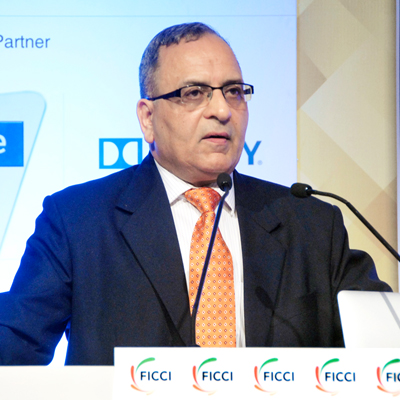
Tag: Bimal Julka

  • DD News to broadcast opening and closing of Commonwealth Games as Ten Sports remains unrelenting

    DD News to broadcast opening and closing of Commonwealth Games as Ten Sports remains unrelenting

    NEW DELHI: Doordarshan News will telecast live the opening of the Commonwealth Games from Glasgow.


    The telecast of the Games being held from 24 July to 4 August will commence at 1.00 am India time.


    Programmes (Live/Highlights) will also be telecast during the Games on DD News.  That apart, All India Radio will carry the live commentary of the opening and closing and events involving Indians.


    Regular Highlight Capsules will be telecast daily by DD News. All events where Indians are taking part will be highlighted with live coverage.


    I&B Ministry secretary Bimal Julka told indiantelevision.com that the Ministry wanted the telecasts on DD News.


    It is learnt that DD Sports and Ten Sports failed to reach an agreement on the issue, and the Ministry issued a show cause notice to Ten Sports on Tuesday evening for declining to share the feed with DD Sports.


    Julka said, “We have recommended to Prasar Bharati to show the games on DD News. The Board was of the opinion that it would be a loss of revenue if sports is telecast on DD National.” 


    He said that the primary news bulletins in the mornings, afternoons and evenings will not be disturbed, unless there is some sporting event involving Indians.

    The Commonwealth Games being held in Glasgow is considered a sports event of national importance, making it mandatory for the rights holder (Ten Sports in this case) to share the broadcast with Prasar Bharati under the Prasar Bharati (Mandatory Sharing of Signals) Act. The sports event is mandated to be carried on the terrestrial network to ensure that viewers who do not have access to cable or DTH services can also view the games. Usually, DD telecasts such events on DD National (which is a terrestrial network) and on DD Sports (available on cable and DTH) after working out an agreement with the rights holder with regard to marketing and revenue sharing. Under the Act, DD gets 25 per cent of the commercial revenue, the rest going to the rights holder. 

    Julka described as an exaggeration estimates by DD revealed that it would incur a loss of Rs 2.5 crore every day, totaling to a loss of Rs 27.50 crore in 11 days if it shifted its regular programming for the Games telecast.

    Giving reasons for not shifting the Games to DD National, sources said around 2.8 million viewers may be affected by shifting DD News from the terrestrial mode for the period of CWG as compared to 115.3 million viewers if the games are shown on DD National. Similarly, DD National earns advertising revenue of about Rs 350 crore compared to Rs 5 crore by DD News which would be adversely affected. 

  • Inquiry ordered into crash of AIR FM tower servicing five private FM operators in Delhi

    Inquiry ordered into crash of AIR FM tower servicing five private FM operators in Delhi

    NEW DELHI: The government has ordered an inquiry into the reported crash during a storm on 30 May of the 149-meter high power FM transmitter of All India Radio in Kingsway Camp in north Delhi.


    The services of five private FM operators who were using this transmitter were ‘severely’ disrupted following the crash as the antennae and feeder cable were damaged.


    The tower was built by the Broadcast Engineering Consultants (India) out of funds provided by the government.


    The inquiry to be completed within 15 days and submitted to Information and Broadcasting Ministry secretary Bimal Julka will be conducted by former AIR chief engineer Mukul Tyagi, former TSL (Allahabad) chief manager A K M Tripathy, Prasar Bharati director (E) P Das, and Telecom Engineering Centre director (Radio) Bal Kishan.


    The Committee will go into the circumstances of the crash, and construction of the tower including site selection and awarding of tenders etc. Any expenditure involved in testing samples of the tower will be borne by the government.

  • FinMin gives Prasar Bharati enhanced grants-in-aid

    FinMin gives Prasar Bharati enhanced grants-in-aid

    NEW DELHI: The grants-in-aid for Prasar Bharati has been raised from the revised estimates of Rs 2089.56 crore in 2013-14 to Rs 2421.58 crore, even as there is no separate investment by the government in the pubcaster for the second year in a row.


    Interestingly, the grants-in-aid for Prasar Bharati had been raised in the interim budget (for four months) by the previous government to Rs 2331.58 crore which remains the same and the only difference is in the addition of Rs 90 crore for Kisan TV.


    In the budget for 2014-15 presented in Parliament, Finance Minister Arun Jaitley has made provision of Rs 200 crore from Internal and Extra-budgetary resources for Prasar Bharati and the total plan outlay for broadcasting is Rs 731.58 crore.


    An explanatory memorandum says that the grants-in-aid is meant for meeting the salary and salary related expenditure. In addition, there is a proposal for Kisan TV for making available information to farmers across the country for which a provision of Rs 100 crore was announced. I&B Ministry secretary Bimal Julka confirmed to indiantelevision.com that the Planning Commission had sent a note about setting aside Rs 100 crore for Kisan TV.


    Expenditure on salaries of Prasar Bharati has fallen on the shoulders of the government since all Prasar Bharati employees who were in employment as on 5 October 2007 have been given deemed deputation status.


    The total budget of the Information and Broadcasting Ministry has been raised to Rs 3316 crore for 2014-15 against the revised budget of Rs 2855.03 crore (against the initial allocation of Rs 3035.65 crore) for the year 2013-14.     


    The budgetary allocations in most sectors have remained the same as proposed by the then Finance Minister P Chidambaram in the interim budget earlier this year on 17 February in view of the forthcoming elections, apart from Kisan TV and some other smaller changes.


    The allocation under ‘Secretariat – Social services’ covering centenary of cinema celebrations and digitisation of cable television among other things has gone up to Rs 126.55 crore as against the revised estimates of Rs 79.72 crore. Other subjects under this head include the National Film Heritage Mission, anti-piracy measures, promotion of Indian cinema overseas, production of films and documentaries, and setting up a centre of excellence for animation, gaming and visual effects. The explanatory note adds that Secretariat – Social services also covers expenses on development of community radio, and development support to the north-east as well as Jammu and Kashmir and ‘other identified areas’. Interestingly, the allocation in this sector is Rs 3 crore less than the proposal by Chidambaram in the interim budget.


    The allocation under the film sector has, unlike last year, been increased to Rs 135.81 crore for 2014-15. The budget for the film sector for 2013-14 was Rs 117.17 crore while the revised estimates had put this figure at Rs 116.42 crore. There is an additional outlay of Rs 7.18 crore towards certification of cinematographic films.


    For the fifth year in a row, the government has not announced any investment in the National Film Development Corporation.


    The allocation for Press Information Services which includes grants to the Press Council of India has been marginally increased to Rs 65.44 crore from last year’s revised estimates of Rs 57.56 crore to meet the expenses for the Press Information Bureau, the Press Council of India, and to the Press Trust of India for running the non-aligned countries news pool.


    The allocation to the Electronic Media Monitoring Centre has been increased substantially to Rs 13.75 crore from the revised estimates of Rs 7.17 crore in 2013-14. The EMMC was set up for monitoring television and radio channels for violation of programme and advertising codes.


    The allocation for advertising and visual publicity has been lowered to Rs 230.37 crore against the revised estimates of Rs 241.6 crore and budget allocation of Rs 239.06 crore for 2013-14, covering expenditure incurred by the Directorate of Advertising and Visual Publicity for publicity campaigns through advertising and other printed materials, as well as through radio, television, exhibitions and other outdoor campaigns. The allocation is thus just Rs 3 crore more than that made by Chidambaram.


    The allocation for research and training in mass communication has been doubled to Rs 33.54 crore (as proposed in the interim budget) as against the revised estimates of Rs 15.91 crore and the budgetary allocation of Rs 17.85 crore for 2013-14. This covers the Indian Institute of Mass Communication and the Research and Reference Division of the I&B Ministry which collects and collates basic information on subjects of media interest for providing assistance to the Ministry and to its media units, Indian missions overseas, and newspapers and news agencies.


    There is a major increase in the lump sum provision for projects/schemes for development of north-eastern areas including Sikkim to Rs 100.5 crore for 2014-15. The budgetary allocation was Rs 90.5 crore in 2013-14 which had come down in the revised estimates to Rs 74 crore.

  • I&B Ministry-bashing unwarranted, says NDTV’s Narayan Rao

    I&B Ministry-bashing unwarranted, says NDTV’s Narayan Rao

    MUMBAI:  For the past one and a half years, India has been undergoing stomach churning change in the television industry thanks to the government mandated rollout of digitisation. With the due date to complete digitisation nationwide getting closer (31 December), much needs to be done. Now, with a new government in place and new Information and Broadcasting (I&B) Minister Prakash Javadekar assuring the industry that digitisation will be implemented, expectations are only rising.


    The recent CII meeting that took place with Javadekar saw industry stalwarts express their woes and wish-lists to the minister. They also expressed their displeasure at the inefficiency of the I&B bureaucracy.


    I&B joint secretary of broadcasting Supriya Sahu and I&B secretary Bimal Julka were targets of accusations of delays in clearances and permissions.


    Some other industry leaders – while appreciating the fact that the I&B Ministry  pushed through DAS, whereas CAS in 2006-2007 just fell through –  have lambasted even the TRAI – along with the I&B Ministry – at industry  gatherings over the past six months for not moving fast and determinedly enough on many issues that have impacted their businesses.


     NDTV vice chairperson and News Broadcasters Association president KVL Narayan Rao thinks that industry needs to keep a cool head and not resort to bureaucracy bashing. Narayan Rao has nearly 30 years work experience; half of that was spent in the bureaucracy with the Indian Revenue Service (1979-1994); the other half has been with the news network NDTV.


    Says he: “I think the attack on the bureaucracy, particularly that on the I&B Ministry, was quite unfair. We currently have some highly efficient officials at the I&B Ministry who have shown a lot of understanding of our issues and have tried to do all they can to solve them. Supriya Sahu and Bimal Julka come immediately to mind.”


    At the CASBAA India 2014 conference in New Delhi earlier this year, Sahu made a detailed presentation on the progress and benefits of digitisation stating that only 10 broadcasters had shared data with the Ministry. She appealed to other broadcasters to share revenue data with them so that the government could ascertain whether the digitisation dividend was really coming the way of industry.


    If one harks back to 2012 almost everyone was cynical that the government mandated digital addressable system (DAS) rollout would ever become a reality. Almost everyone scoffed at even the suggestion. But it was a determined ministerial secretariat led by the then secretary Uday Kumar Varma and his team which consisted of Supriya Sahu and her directors Reijemon who pushed it through – along with the TRAI. Julka who replaced Varma has been following the same narrow strait.


    Hence Rao feels that constant hurling of barbs at ministry officials is unpalatable. Says he:  “Please remember that this is virtually the same lot of officials who ensured the implementation of the first two phases of digitisation which isn’t an easy task at all, who also issued the notification on ratings agencies, a long pending demand of the industry, and issued over 400 permissions for channels and who have allowed self/independent regulation to prevail. Yes there have been delays now and then but how much of that can be attributed to the bureaucrats is debatable.”


    Indeed, several initiatives were taken by the I&B mandarins. Officials regularly met (at one time it was almost weekly) with industry executives – whether from broadcasting, MSOs, or LCOs – to asses digitisation’s progress. The security clearance check that directors of various channels were subject to – which pained many a broadcaster – came at the behest of the Ministry of Home Affairs.


    When a large grouping from the broadcasting industry  rose against the only TV ratings agency TAM, it was the I&B Ministry that took note of it and came up with policy guidelines for TV viewership monitoring. It was the Ministry which also pushed the institution of Broadcasting Audience Research Council, which the industry had kept in cold storage for almost half a decade.


    After the Saradha chit fund scam, the Ministry quickly stepped in and did a check of the shareholding pattern of various channels to prevent repeats of a similar nature.


    When TRAI came out with the 10+2 ad cap regulation, the Ministry supported the broadcasters’ view in keeping it at bay till digitisation pans out, though nothing concrete has come out of it as yet.


    Additionally, while the Ministry did use the stick, it also doled out carrots by extending DAS deadlines on more than a few occasions – keeping in mind the realities on the ground – to give it a reasonable chance at success. Despite the long rope extended by both TRAI and the I&B Ministry, industry at the cable TV and MSO level has yet to begun physical billing for DAS subscribers even in some phase I cities. Forget about phase II.


    Says a media observer: “Agreed for the last three or four months of the UPA regime the Ministry’s focus was on the election; industry issues were not a high priority. It was not a fault of the civil servants alone; the Ministry itself and the government on the whole could not move, thanks to the losses in the New Delhi state elections, and the stigma of corruption which kept hitting the Congress I in its face. I can understand some sections of the industry getting edgy, nervous and agitated for many a broadcaster’s, DTH operator’s business plans are linked to digitisation’s success and the fact that bureaucrats and ministries don’t throw a spanner in the works.”


    She adds: “But we have to remember we have a new government led by Narendra Kumar Modi who has a lot more freedom than the previous regime. There’s a lot of positivity around, even though there are economic challenges on hand. The industry should look ahead, and not back. Things can only get better, and with experienced officials in the Ministry at helm, it will be easier to push through things. New ones could end up taking longer as they will have to come to grips with the sector – and that takes time.”


    That’s a piece of advice which the irate members of the industry can ponder upon.

  • Code of Conduct bars clearance of any new TV channels in May 2014

    Code of Conduct bars clearance of any new TV channels in May 2014

    NEW DELHI: Even though it is said that the government is run by bureaucrats and not by politicians, the change in government in the month of May brought stagnancy to the process of clearances of television licences.


    In fact, the month saw the first half being ruled by the United Progressive Alliance (UPA) and the second half by the National Democratic Alliance (NDA).


    A large number of new applications including Media Content and Communications Services (MCCS) that runs the ABP group of channels, Star India, Epic TV among others have been waiting in queue for a new licence.


    Information and Broadcasting Ministry secretary Bimal Julka says that the delay was primarily because of the Code of Conduct that had come into force. He adds, “There was clear mandate from the Election Commission that no action like clearances for new channels should be given without its permission.”


    The list of permitted private satellite TV channels in India remains constant at 795. Out of these 393 are news and current affairs channels while the remaining 402 are non-news and current affairs channels.


    The first four months of 2014 saw licences being given to nine channels including AXN HD and SET HD.


    The Ministry also placed on its website the names of the companies which own these channels, the language, and the date when permission was granted. 

  • Activities galore at India Pavilion of the Cannes Film Festival

    Activities galore at India Pavilion of the Cannes Film Festival

    NEW DELHI: The India Pavilion at the 67th Cannes Film Festival saw an unprecedented presence this year.


    Organised by the Information and Broadcasting Ministry in association with the Federation of Indian Chambers of Commerce and Industry (FICCI), the packed pavilion was inaugurated on 15 May by Indian Ambassador to France Arun K. Singh, I&B secretary Bimal Julka and Indian cinema legend Kamal Haasan.


    Others present were veteran filmmaker and producer Ramesh Sippy; renowned filmmaker Sudhir Mishra; YRF Entertainment CEO, actor and producer Uday Chopra; screenwriter Arash Amel; Cannes Film Market executive director Jerome Paillard,; FICCI secretary general A. Didar Singh and filmmaker and producer Bobby Bedi.


    The Indian presence at the India Pavilion also included film industry stalwarts such as Film Federation of India president Ravi Kottarakara, T.P. Aggarwal who is the first Indian vice president of FIAPF – the International Federation of Film Producers Associations, and Film and TV Producers Guild of India CEO Kulmeet Makkar.


    The pavilion saw a lot of interesting activity with hoards of people jostling for space as they watched the interactive sessions. The first day saw a session on ‘The Making of Grace of Monaco’ – featuring Uday Chopra and Jonathan Reiman from YRF Entertainment – one of the producers of the opening film at the festival – and Arash Amel, the writer of the film. Anchored by Patrick Frater, Asia Bureau Chief of Variety, the discussion hinted at interesting growth and expansion for Indian cinema in the international space by means of collaboration and co-production.

    A very special session, ‘The Journey to Cannes’, was organised at the pavilion for ‘Titli’, India’s official entry in the Un Certain Regard section of the festival. (The festival’s Critics Week section had also selected another Indian film, Gitanjali Rao’s ‘TrueLoveStory’.)


    The cast and crew of ‘Titli’ – director Kanu Behl; actors Ranvir Shorey and Shashank Arora; writer Sharat Katariya; editor Namrata Rao; Yash Raj Films VP international operations Avtar Panesar; Sikhya Entertainment founder Guneet Monga and CEO Anurag Kashyap Films were felicitated by the Ministry of I&B, and also spoke about their experience of making the film and being selected to be screened at the Cannes Film Festival.

    A feature of the activities at this year’s India Pavilion at the Cannes Film Market was exclusive networking receptions co-hosted by the Ministry and film bodies, producers and filmmakers from three countries: New Zealand, Australia and Germany.


    The New Zealand event was organised in coordination with the New Zealand Film Commission; the delegation was led by NZFC CEO Dave Gibson, and comprised filmmakers and producers from the country; Screen Australia CEO Graeme Mason led the Australia contingent; and German Films organised the third event.


    The Indian guest list saw representation from filmmakers, producers and industry body members at Cannes this year. This new initiative is aimed at promoting and forging ties for co-production and partnerships between India and these countries.


    On the sidelines of these events were structured B2B meetings between Indian delegates and international stakeholders in order to facilitate business promotion and explore opportunities for partnership between the Indian film community and the global one.

    Sessions were also held on co-production with representatives from India and six other countries, and a discussion on Single Window Clearance for promoting hassle-free film shooting for the global film community in India.


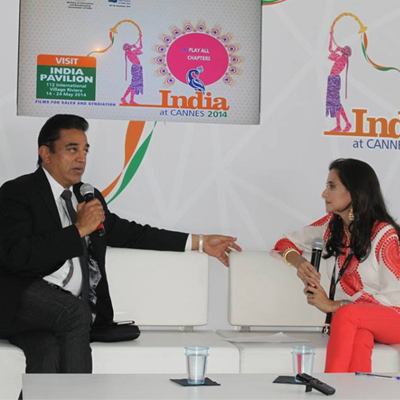
    Kamal Haasan was interviewed by critic and anchor Anupama Chopra; filmmakers Ramesh Sippy, Sudhir Mishra and Bobby Bedi were seen in conversation about Indian cinema today and going forward, and Indian films at Cannes over the years.

  • TDSAT again adjourns DTH licence fee case to 8 July on plea by operators

    TDSAT again adjourns DTH licence fee case to 8 July on plea by operators

    NEW DELHI: The petition by private direct-to-home (DTH) operators challenging the notice of the government for clearing arrears of licence fees has once again been adjourned – this time to 8 July – as the operators have still not filed their rejoinders to the reply by the government.


    The adjournment was allowed by Telecom Disputes Settlement and Appellate Tribunal (TDSAT) chairman Aftab Alam and Kuldeep Singh on a mention by counsel for the various DTH operators.

     
    TDSAT also noted that the earlier assurance by the government that it will not pressurise the operators in this regard till the case is taken up for hearing will continue.


    The petitioners have alleged that the demand by the Information and Broadcasting Ministry is contempt of court as the matter in this regard is pending in the Supreme Court.


    However, Information and Broadcasting Ministry secretary Bimal Julka had earlier told indiantelevision.com that the apex court had not issued any stay order. However, the government had filed a caveat in this regard, conscious that the TDSAT or the Supreme Court may be moved in the matter.

     
    The Ministry had recently sent a notice to the six private DTH operators with regard to licence fee dues amounting to Rs 2,066 crore. The private operators are Tata Sky, Dish TV, Airtel Digital TV, Reliance Big TV, Sun Direct and Videocon d2h.


    According to the notice, the six private operators had been asked to pay the amount within 15 days.

     
    However, most of the operators contacted said they had cleared the dues of licence fee.

     
    The operators say the licence fee as demanded under the rules is on gross revenue (GR) whereas they have been asked to pay the fee on the basis of Actual Gross Revenue (AGR). The operators have said the fee should be only on subscription revenue and not on allied earnings such as dividend and interest income. 
     

    Even as the matter was pending, Tata Sky had late last month made a payment of Rs 383 crore to the Ministry to cover its license fee and other dues. A demand draft of the amount was submitted to the Ministry. Even as other operators had said that they would prefer to wait till the next hearing.
     

    Tata Sky had then said that the amount covered license fee for the year 2013-14 according to the rate specified for license as well as past dues.

  • Kamal Haasan to open Indian Pavilion at 67th Cannes Film Festival

    Kamal Haasan to open Indian Pavilion at 67th Cannes Film Festival

    NEW DELHI: Versatile actor Kamal Haasan will inaugurate the Indian pavilion – 112 Village International Riviera with a terrace overlooking the Meditarranean Sea – at the 67th Cannes Film Festival commencing on 14 May.


     Being set up by the Federation of Indian Chambers of Commerce and Industry (FICCI) in coordination with the Information and Broadcasting Ministry (I&B), it will be inaugurated by Haasan who is chairman of the FICCI Media and Entertainment Business Conclave on 15 May in the presence of Indian Ambassador to France Arun K Singh, I&B secretary Bimal Julka, and Marche du Film (the Cannes Film Market) director Jerome Paillard.


    The inaugural addresses will be followed by a discussion on ‘The Making of Grace of Monaco’, the inaugural film of the 2014 Cannes Film Festival. The interactive session anchored by veteran journalist Patrick Frater who is Asia Bureau Chief of Variety, will witness a discussion amongst key personnel from YRF Entertainment led by its head Uday Chopra – the Hollywood arm of the Bollywood powerhouse Yash Raj Films, and one of the producers of ‘The Grace of Monaco’, and the writer of the film; Development and Production at YRF Entertainment head and executive producer Jonathan Reiman and British-Iranian writer Arash Amel.


    The afternoon will see a discussion and felicitation of ‘Titli’, India’s official selection at the festival (Un Certain Regard section) along with the cast and crew including director Kanu Behl. The other Indian film selected at the Festival is Gitanjali Rao’s 19-minute animated romance ‘True Love Story’ which is the only Asian film in the Critics’ Week of the Festival. Titled ‘The Journey to Cannes’, this session will feature ‘Titli’ director Kanu Behl, YRF VP international operations Avtar Panesar, Sikhya Entertainment founder Guneet Monga, Anurag Kashyap and actor Ranvir Shorey.


    The India Pavilion will showcase 100 years of Indian cinema across linguistic, cultural and regional diversity with the aim of forging an increasing number of international partnerships in the realms of distribution, production, filming in India, script development and technology and promoting film sales and syndication.


     In particular, the area of focus at this year’s Cannes Film Festival is establishing India as a global film shooting destination and highlighting initiatives such as Single Window Clearance and co-production agreements with various countries that will enable this.


    The Ministry has ensured that the space available for Indian delegates is probably the biggest in the Cannes village (126 sq metres). To ensure optimum utilization of this coveted space, the Ministry and FICCI have worked to make a schedule of pre-structured B2B meetings for delegates.


    For the first time, the Ministry is releasing the “India Film Guide for Cannes” at the inaugural ceremony with exhaustive descriptions of the policy initiatives of the Ministry, its affiliated bodies; details of all India’s co-production agreements; all Indian films at Cannes and all visiting India delegates; key databases pertaining to the sector and the winners of this year’s national awards.


    FICCI, in association with the Ministry will be organising interactive sessions with Indian and international film industry stakeholders at the India Pavilion.


     Speakers at these sessions will include New Zealand Film Commission CEO Dave Gibson; Telefilm Canada CEO Carolle Brabant; Toronto Film Festival’s Artistic director Cameron Bailey; Rotterdam International Film Festival’s Cinemart manager Marit van den Elshout; Lighthouse Productions, China, CEO Cindy Shyu; John Penotti of Ivanhoe Productions in the United States; Special Treats Productions CEO Colin Burrows and crew members from Grace of Monaco.


    The India Pavilion will be showcasing trailers of recent Indian films and displaying brochures and other literature of Indian film companies. FICCI will be facilitating structured B2B meetings between Indian and international delegates at the festival, and coordinating for exclusive networking events. Alongside, the ‘India Film Guide’, which will list all film related initiatives undertaken by the Government of India and information about all Indian films and delegates at Cannes this year, will be distributed to key international stakeholders.


    India will be represented at Cannes by Julka as well as industry stakeholders such as Uday Chopra, Dibakar Banerjee, Bobby Bedi, Ravi Kottarakara and Supran Sen, president and secretary general respectively of the Film Federation of India; Film & Television Producers Guild of India CEO Kulmeet Makkar, and actors Mallika Sherawat and Ranvir Shorey among others.


     The India Pavilion will see the presence of Indian filmmakers whose films have been selected at Cannes this year – filmmakers Kanu Behl and Gitanjali Rao and other industry veterans and stars.


    “We are honoured and privileged to be working with and on behalf of the Ministry at the prestigious Festival,” FICCI secretary general Dr A. Didar Singh. “It is the next step in FICCI’s continual efforts to bring Indian entertainment to the global forefront.”

  • Govt. seeks public view on advertising guidelines

    Govt. seeks public view on advertising guidelines

    NEW DELHI: The government has sought the views of the general public following a Supreme Court verdict that an Advertisement Code needs to be drawn up to differentiate between advertisements about government messaging and those that are politically motivated and designed to patronise media organization and get favourable media coverage.


    In its verdict on 23 April, the apex court set up a three-member committee for this purpose, to be coordinated by Information and Broadcasting Ministry secretary Bimal Julka, which held its first meeting on 5 May. The Committee has been asked to submit its report within three months, and so various stakeholders have been asked to submit their views within four weeks.     


    The Court wanted substantive guidelines to be laid down until the legislature enacts a law in this regard.


    The Court felt that the Advertising Code of the Directorate of Advertising and Visual Publicity did not draw this distinction.


    The petitions had been filed by Common Cause and the Centre for Public Interest Litigation. 

  • Supreme Court sets panel on government advertisements

    Supreme Court sets panel on government advertisements

    NEW DELHI: Pursuant to the Supreme Court order for forming panel to frame guidelines to regulate publicly funded government advertisements, the Information and Broadcasting Ministry has formally notified the names of Bangalore’s National Law University director Prof NR Madhav Menon, former Lok Sabha secretary general T K Vishwanathan and senior advocate Ranjit Kumar.


    I&B Ministry secretary Bimal Julka will be the member secretary of the committee, which held its first meeting on 5 May.


     The Ministry said the report will be given preferably within three months of the date of the judgment, 23 April, by the panel after an intricate study of all the best practices in public advertisements in different jurisdictions.


     The apex court bench headed by chief justice P Sathasivam with justice Ranjan Gogoi and N V Ramana had said that the existing guidelines of the Directorate of Advertising and Visual Publicity (DAVP) do not cover such advertisements. There was therefore a need for substantive guidelines to be issued by the Court until the legislature enacts a law in this regard.


     The court passed the order on a public interest litigation (PIL) filed by the NGOs Common Cause and the Centre for Public Interest Litigation (CPIL) pleading it to frame guidelines. The petition sought issuance of guidelines for curbing ruling parties from taking political mileage by projecting their leaders in official advertisements.


     It was, the Court said, ‘vividly clear’ that the DAVP guidelines, which are available in the public domain, only deal with the eligibility and empanelment of the newspapers/journals or other media, their rates of payment, and such like matters. Besides, it only specifies that in releasing advertisement to newspapers/journals, the DAVP would not take into account the political affiliation or editorial policies of newspapers/journals.


     “Hence, it is evident that there is no policy or guideline to regulate the content of government advertisements and to exclude the possibility of any mala fide use or misuse of public funds on advertisements in order to gain political mileage by the political establishment.”


    The Government in its counter affidavit claimed that 60 per cent of the advertisements released by the DAVP on behalf of various Ministries/Departments/Public Sector Undertakings of the Central Government relate to classified or display/classified category such as UPSC/SSC or recruitment, tender and public notices, etc. The respondents asserted that government advertisements sometime carry messages from national leaders, ministers and dignitaries accompanied with their photographs.


    However, government counsel K Radhakrishnan said the purpose of such advertisements is not to give personal publicity to the leaders or to the political parties they belong to rather the objective is to let the people know and have authentic information about the progress of the programmes/performance of the government they elected and form informed opinions, which is one of the fundamental rights of the citizens in our democracy as enshrined in the Constitution.


    The apex court noted in its judgment that the immediate cause of filing these writ petitions in 2003 and 2004 respectively was stated to be the numerous full page advertisements in the print media and repeated advertisements in the electronic media by the Central Government, State Governments and its agencies, instrumentalities including public sector undertakings which project political personalities and proclaim the achievements of particular political governments and parties at the expense of the public exchequer.


    It was also the assertion of the petitioners – Common Cause represented by Meera Bhatia and the Centre for Public Interest Litigation (CPIL) represented by Prashant Bhushan – that such advertisements become more blatant and assumes alarming proportions just before the announcement of the general elections. Accordingly, it was the stand of the petitioners that such deliberate misuse of public funds by the Central Government, State Governments, their departments and instrumentalities of the state is destructive to the rule of law.


    It was also alleged that it allows the parties in power to patronize publications and media organizations affiliated to the parties in power and also to get favourable media coverage by selective dispersal of the advertising bonanza. It was projected that the use of public funds for advertising by public authorities to project particular personalities, parties or governments without any attendant public interest is mala fide and arbitrary and amounted to violation of Article 14 of the Constitution. It was also argued that use and wastage of public funds in political motivated advertisements designed to project particular personality, party or government by wasting public money is also in violation of the fundamental rights under Article 21 because of diversion of resources by the governments for partisan interests. Such violation, therefore, attracts the remedy under Article 32 for the enforcement of fundamental rights of the citizens.