Tag: Bimal Julka

  • Use the power of cinema and other modern tools to spread knowledge and learning, says Jaitley

    Use the power of cinema and other modern tools to spread knowledge and learning, says Jaitley

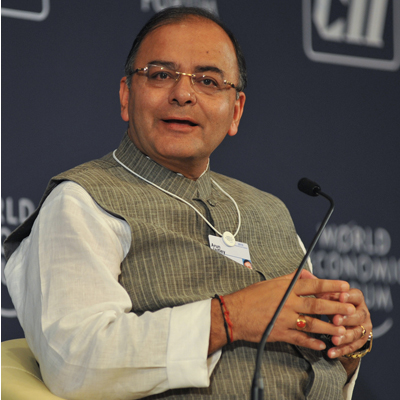
    NEW DELHI: Information and Broadcasting Minister Arun Jaitley said today that filmmakers and creative people should use modern tools like cinema to spread knowledge and learning.

    Referring to the Bal Swaccha Abhiyaan launched today on the occasion of the 125th birth anniversary of Pandit Jawaharlal Nehru, he said ‘Swachhta’ should be instilled as one of the core moral values in childhood so that children practice the habit of cleanliness as part of their childhood and personality.
     
    Inaugurating the first Rashtriya Bal Film Mela which coincided with Children’s Day, he stressed that celluloid media had become a powerful source of knowledge in the Information age and cinema had been emerged as a powerful tool for education in addition to its manifest function of entertainment.
     
    The Rashtriya Bal Film Mela would help in instilling values of cleanliness practiced and propagated by Mahatma Gandhi, the Minister added.
     
    Jaitley called upon the young children to watch the films made by veteran film director Shyam Benegal, who was present, including ‘The Making of Mahatma’ and ‘The Discovery of India’.  

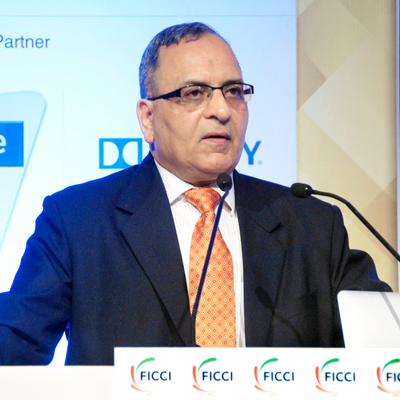
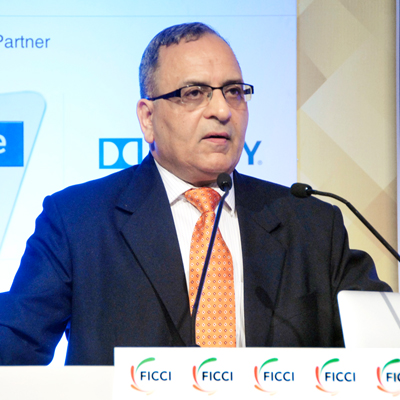
    I&B secretary Bimal Julka said around three million watch films made by the Children’s Film Society, India, which has organised this three-day Festival.

    He pointed out that this will be held every second year, alternating with the International Children’s Film Festival (Golden Elephant) held in Hyderabad every alternate year by the CFSI which was set up at the initiative of Nehru as a soft power to unite children.
     
    He said the Ministry was carrying forward the vision of Prime Minister Narendra Modi regarding Swachh Bharat through this festival on the theme of ‘Swachhta.’
     
    Eminent sportsperson Sania Mirza, who recalled that she had always looked forward to the Gold Elephant as a child in Hyderabad, asked the children present to take a pledge with her to keep the country clean.

    Actresses Dia Mirza and Sakshi Tanwar also demonstrated how it was easy to keep the environment clean by regularly cleaning their own neighbourhoods. Kunal Roy Kapur and Divya Dutta have anchored the show.
     
    The three day festival would provide an opportunity for children to appreciate high-quality film content, experience value-based entertainment, and to trigger their imagination about environment conservation and cleanliness.

     
    The festival would showcase a bunch of internationally acclaimed children’s films on the theme of cleanliness. CFSI’s latest production, Pappu Ki Pugdandi was the inaugural film in the festival.


    Other films that would be screened in the festival include Kaphal which won the National Award for Best Children’s Film, Shortcut Safari which will be premiered for the first time, The Goal, Ek Ajooba (CFSI productions), Karamati Coat, Summer with the Ghost, Sunshine Berry & Disco Worms, Yeh Hai Chakkad Bakkad Bumbe Bo, The Boot Cake, Hawa Hawaii, Krish Trish Baltiboy- 3, and Goopi Gawaiiya Bhaga Bajaiiya.


    The festival would feature interactive workshops on film making with experts from the Film and Television Institute of India and the Satyajit Ray FTI in Kolkata, film appreciation, animation, Charlie Chaplin’s Mimes, and storytelling. Live dance performances, magic act, sand act, and puppetry along with various competitions such as painting on the theme, ‘Swachhta’, and digital collage on the theme ‘Clean India’ and the craft of making utility items from waste materials, were being organised on the sidelines of the festival.
     
    The inauguration was followed by a cultural programme with school children, the Prince Dance Troupe, Shiamak Davar’s Junior Group which included some disabled children, and the renowned artist Vilas Nayak giving performances.
     

  • I&B Ministry to study why MSOs are not taking indigenous STBs

    I&B Ministry to study why MSOs are not taking indigenous STBs

    NEW DELHI: The Information and Broadcasting Ministry (I&B) will facilitate a meeting of manufacturers of indigenous set top boxes (STBs) and multi-system operators (MSOs) next week in view of complaints by the manufacturers that no orders were being placed for their STBs.


    This was decided at a meeting of the Task Force which will oversee the next two phases of digital addressable system (DAS) and which met under the chairmanship of Ministry Additional Secretary J S Mathur here today.


    Earlier this week, the manufacturers had met Ministry secretary Bimal Julka and made the same complaint.


    The participants were apprised that around 3.5 households had to be covered in the third phase of digitisation.


    A Ministry source told indiantelevision.com that the meeting discussed various roadblocks on the road to full digitisation and ways to overcome these hurdles.


    Star India legal & regulatory senior vice president Pulak Bagchi, who is also the representative of the broadcasters said emphatically that broadcasters would support voluntary transition to DAS as long as there were some ground rules.


    He also said that broadcasters were prepared to give concessions to operators switching over to DAS provided the operators totally stopped analogue transmission.


    Bagchi also said that it should be made mandatory that any MSO or local cable operator who switches over to DAS should switch off analogue and not run both systems.


    The meeting was attended by around 20 people and included representatives of trade bodies like FICCI and CII, apart from MSOs, LCOs and DAS advisor Yogendra Pal.


  • Veteran journalist A Surya Prakash is the new Prasar Bharati chairman

    Veteran journalist A Surya Prakash is the new Prasar Bharati chairman

    NEW DELHI: Senior journalist A Surya Prakash has been appointed the chairman of the Prasar Bharati Board, succeeding Mrinal Pande whose term ended around six months earlier.


    The appointment, which will be for three years, was made on the recommendation of a three-member committee headed by Vice President M Hamid Ansari and comprising Press Council of India chairman Markandey Katju and Information and Broadcasting Ministry secretary Bimal Julka.  


    Pande completed her tenure on 30 April this year. 


    The pubcaster, which was created by the Prasar Bharati (Broadcasting Corporation of India) Act 1990 but notified in 1997, is governed by the Prasar Bharati Board, which comprises a chairman, an executive member (chief executive officer), a member (finance), a member (personnel), six part-time members, a representative of the I&B Ministry and the directors general of All India Radio and Doordarshan as ex-officio members.


    The chairman is a part time member. 


    Prakash has vast experience of both TV and print media. He has held key positions in several print and electronic media organisations.


    He was editor of Zee News; executive editor of the Pioneer; India editor of Asia Times which is a business and political daily published from Bangkok and Singapore; political editor of the Eenadu Group of Newspapers; and chief of bureau, Indian Express, New Delhi.


    He is also known for his well-researched interventions on national political issues. He is the founder-director of the Film and Media School at the Institute of Integrated Learning in Management, New Delhi, and founder-director of the Pioneer Media School. 


    Prakash is currently consulting editor of the Pioneer newspaper and a distinguished fellow at Delhi-based Vivekananda International Foundation (VIF), a think tank with which National Security advisor Ajit Doval was also associated earlier.  

  • New central service officers need to be tech-savvy: Bimal Julka

    New central service officers need to be tech-savvy: Bimal Julka

    NEW DELHI: Information and Broadcasting secretary Bimal Julka has said that young officers training in central services need to be tech-savvy and to keep pace with the rapidly changing information and communication scenario.

    The challenge is to respond swiftly and firmly in real-time basis, he added, noting that the electronic media was developing at a very fast pace.

    “Reaching out to the masses at the grass-root and involving them in the development process is one of the biggest challenges before the Government”, he said while delivering his address at the valedictory function of induction training for the officer trainees of Indian Information Service (IIS) – 2013 and 2014 batch – at Indian Institute of Mass Communication.

    Julka said that the role of information service officers was critical in meeting this challenge as it enabled the bridging of the gap between people and the government. He exhorted the officer trainees to develop specialised communication strategies and tools for the successful implementation of various flagship programmes of the government such as Prime Minister’s Jan-dhanYojana, Swachh Bharat Mission, Beti Bachao, and Shramev Jayate Karyakram.

    Julka said his Ministry acts as a facilitator and enabler of government communication


  • DAS task force to meet on 8 October amidst protests

    DAS task force to meet on 8 October amidst protests

    NEW DELHI: Almost a month after its constitution, the task force set up for the implementation of digitisation in the country and particularly overseeing the execution of the last two phases of Digital Addressable System (DAS) is expected to meet on 8 October at 10:30 in Delhi.


    However, local cable operators who have already expressed their protest at not being given a voice in the Task Force have not been invited to the meeting.


    Talking about the meeting, Information and Broadcasting Ministry secretary Bimal Julka told indiantelevision.com that all the stakeholders named in the task force order of 12 September had been nominated and are expected to be at the meeting. Although an official of the Information and Broadcasting Ministry denied this.


    LCOs who form the backbone of the cable television system in the country said no organisation of LCOs had been included in the task force or invited in the meeting.


    Meanwhile, ASSOCHAM Media and Entertainment Committee co-chairman Sujatha Dev informed the industry body that she is unaware of how a representative of ASSOCHAM was nominated to the task force.  


    National Cable & Telecommunication Association president Vikki Choudhry has in a letter to the I&B Minister Prakash Javadekar alleged that “In spite of all your endeavours taken to clean up the mess that had been created on account of DAS by the previous UPA government, few officials still attached to the MIB are bent on misleading and misguiding you on this much controversial DAS issue.”


    He has also pointed out that certain categories had not been invited to the task force meeting despite them being directly involved in implementation of DAS which included five Independent MSOs one each from North, South, East, West and North East region, five registered LCO associations one each from North, South, East, West and North East regions, a representative of the Association of Regional Television Broadcasters of India/ Regional News Broadcasters Association, five prominent consumers organisations, one each from North, South, East, West and North East regions, a representative of ASSOCHAM and a representative of Telecom Equipment Manufacturers Association of India (TEMA).


    Choudhry added that while there had been mention of these in the order of 12 September constituting the task force, no persons had been nominated for these categories.


    Additionally, he also revealed that there was no representation / invitation sent to Conditional Access System Vendors (an integral part of the entire DAS) and Subscriber Management System (SMS) that controls the entire DAS ecosystem after integration with the CAS.


    According to the 12 September order, the new task force was to be headed by I&B additional secretary as chairperson, with Telecom Regulatory Authority of India (TRAI) principal advisor for broadcast and cable satellite, I&B Ministry joint secretary broadcasting, representatives from the MSO Alliance, five independent MSOs one each from north, south, east, west and north east regions, five registered LCO associations one each from north, south, east, west and north east regions, representatives from the Indian Broadcasting Foundation, News Broadcasters Association, Association of Regional Television Broadcasters of India, DTH Association, FICCI, CII, ASSOCHAM, CEAMA, Department of Telecommunications, Department of Electronics and Information Technology, DG: Doordarshan, DG: All India Radio, BECIL, BIS, five prominent consumer organisations one each from north, south, east, west and north east regions and 33 state level nodal officers one each from the states/union territories governments.

    The task force was to act as an interface between the government and the industry in matters related to implementation of DAS in the cable TV sector and monitor the execution of DAS. It also will have to analyse the roadblocks that may come in the way of digitisation and suggest measures.


    While NBA and IBF will be participating in the meeting, representatives of cable operators associations from different states are protesting against the exclusion of LCOs and MSOs from the meeting. 


  • Government notifies new dates of phase III and phase IV of DAS

    Government notifies new dates of phase III and phase IV of DAS

    NEW DELHI: The Government has finally issued the notification postponing the dates of phase III and phase IV of implementation of digital addressable system (DAS) to December 2015 and December 2016 respectively.


    Indiantelevision.com was the first to break the news about the postponement of the dates for DAS phase III and IV. Speaking to indiantelevision.com I&B secretary Bimal Julka had confirmed that ‘the government had decided to delay the digitisation deadline by a full year in order to give all those involved enough opportunity to overcome all the unseen hurdles that had come up after the UPA government mandated  DAS and the various analogue sunset dates.’


    The notification says that the change has been done ‘on being satisfied to do so in public interest’.


    The DAS notification has been issued by way of amendment to the notification issued on 11 November 2011 which had made it “obligatory for every cable operator to transmit or re-transmit programmes of any channel in encrypted form through digital addressable system.”


    Although the Government had announced its decision to postpone DAS in phase III and phase IV to encourage greater indigenisation of set top boxes, no action could be taken until issuance of the notification.


    Until now, the deadline for phase III was September 2014 and for phase IV December 2014.


    In the first two phases of digitisation, which included cable TV households in the four metros and other major cities, most of the STBs that were installed had been imported from other countries.


    After he took over as Information and Broadcasting Minister, one of the major areas of focus of Prakash Javadekar has been indigenisation of STBs and Ministry sources said the new dates are in keeping with inputs supplied to the Minister in this connection.


    The ministry has made efforts to get STBs declared as Telecommunication Network Equipment which will enable domestic manufacturers to get exempted from certain taxes, an official said.


    Nearly 110 million STBs are required to be installed in cable TV households in the remaining two phases of digitisation and the extended deadline will ensure that the domestic manufacturers prepare themselves and meet this demand, officials said.

  • Local STB manufacturers confident of meeting target of DAS phase III and IV

    Local STB manufacturers confident of meeting target of DAS phase III and IV

    NEW DELHI: The Information and Broadcasting (I&B) Ministry has been assured by manufacturers of domestic set top boxes (STBs) that they will be able to meet the demand of 11 crore STBs needed for the final two phases of cable television digitisation.


    This assurance was given to I&B Ministry secretary Bimal Julka over the weekend with manufacturers to check the status of indigenous manufacturing of STBs.


    I&B Minister Prakash Javadekar had recently told that it was unfortunate that good quality STBs were being exported overseas and poor quality STBs from overseas were being installed.


    Earlier, he had said that the Ministry will take steps to solve problems of local manufacturers including those relating to taxation.


    The manufacturers appreciated the efforts of the government for resolving their long pending demand of C-form. They said that they have sufficient installed capacity to meet the full demands of STBs locally and said the government’s initiative would help give employment to about 50,000 people and would attract an investment of about Rs 500 crore. It would generate local support facility for repair of STBs and would also help in smooth implementation of digitisation initiative in the country. 

    The Finance Ministry had on 13 August extended the facility of Form ‘C’ under section 8(3) (b) of Central Sales Tax (CST) Act 1956 to STBs thus fulfilling the major demand of the domestic STB manufacturers who would charge CST @ 2 per cent against VAT of 12-14 per cent being paid earlier. 

    The phase III of digitisation to be completed by December 2015 would cover all other urban areas (municipal corporations/ municipalities) which were not covered in first two phases. Phase IV to be completed by December 2016 would cover the rest of India.


    The meeting was attended by the members of the consumer electronics and appliances manufacturers association (CEAMA) and representatives from STB manufacturers such as My Box Technologies, Dixon Technology, Videocon, Jabil, One-Eight Technologies, Skyworth Digital, Spectra Innovations, Indieon, Logic Eastern and Simmtronics.

  • Govt. rejects TRAI proposal for lower reserve fee for FM phase III auctions

    Govt. rejects TRAI proposal for lower reserve fee for FM phase III auctions

    NEW DELHI: The recommendations by the Telecom Regulatory Authority of India (TRAI) to review the reserve price for FM phase III auctions have not found favour with the Information and Broadcasting (I&B) Ministry.


    TRAI had recommended a change, after going through the views expressed by radio channel operators and new stakeholders that the price was too high.


    However, the Ministry has pointed out to TRAI that the reserve price was fixed by a Group of Ministers and later approved by the Union Cabinet.


    TRAI had expressed apprehensions that the auctions could be jeopardized since many operators felt the price was too prohibitive. The phase III reserve fee formula (highest bid of phase II), has already led to a lot of opposition from broadcasters.


    When asked if this would lead to lesser number of bidders for phase III, I&B secretary Bimal Julka told indiantelevision.com, “We will cross the bridge when we come to it. At this moment, I can only say that we have accepted the TRAI recommendations with some exceptions.” 

    When the process begins – hopefully expected to start by October as indicated by Ministry sources – phase III is set for auction of 839 FM channels across 294 cities. These sources did not feel the reserve price was a major issue as the players likely to bid for the channel are large parties.


    However, the Ministry sees nothing wrong with the TRAI recommendation of allowing 15-year licence period for operators migrating from phase II to phase III as phase II had provided for 10 years of licence.


    TRAI had also recommended a lower minimum channel spacing of 400KHz for FM radio broadcast, as against 800KHz now, to allow more radio stations which has not been accepted by the Ministry. 

    The recent 2G auctions which came as a result of an order of the Apex Court had justified the need for a low reserve fees.


  • Contribution of filmmakers from north east appreciated globally: Julka

    Contribution of filmmakers from north east appreciated globally: Julka

    NEW DELHI: Information and Broadcasting secretary Bimal Julka has lauded the role played by cinema in the cultural integration of the country with the north-eastern states and said it is the rich cultural legacy of the north east cinema from renowned film personalities which creatively impact the young minds of the country.


    Tracing the journey of films from the region, Julka said story lines, professional and technological expertise of the industry of films from the region have been appreciated at the global stage.


    Speaking at the closing ceremony of the north east film festival fragrances, Julka said the participation of stakeholders associated with the film industry was critical. He invited suggestions from the people for the approach, methodology and philosophy regarding the future roadmap of convening such festivals. 


    Appreciating the efforts and initiative of the I&B Ministry, Meghalaya Governor K K Paul said it is the fragrances from north east which brought the diverse culture of the region to the centre stage. Dr Paul added that the perceived gaps among the cultures could be filled with the appropriate and positive messaging from radio, TV and films.


    The three-day long film festival concluded with the screening of Pradip Kurbah’s film RI. The screening of the closing film was preceded by a cultural event that saw classical pianist Nise Meruno’s performance and rendition of Naga folk-based choir by ‘Nagaland Singing Ambassadors’. 

  • DAS deadline extended to December 2015

    DAS deadline extended to December 2015

    NEW DELHI: The deadline for the digitisation of cable television systems in the entire country has been put off to December 2015.


    While Phase I of digital addressable system (DAS) came into effect in March last year and Phase II later in the year, the entire process was supposed to be completed by December this year.


    Information & Broadcasting Ministry secretary Bimal Julka speaking exclusively to  indiantelevision.com said that the government had decided to delay the digitisation deadline by a full year in order to give all those involved enough opportunity to overcome all the unseen hurdles that had come up after the UPA government mandated  DAS and the various analogue sunset dates.


    He said that the previous UPA  government had failed to complete all the required work with regard to regulations, licences, permissions etc and so the current NDA government’s  I&B Minister Prakash Javadekar – after consulting all the stakeholders – has decided to put off the final date by one year.


    Julka was confident that digitisation would be completed  well before the end of 2015, but said the new last date had been set keeping in mind the various issues that need resolution.


    Earlier, the Ministry had said Phase III covering all urban areas (Municipal Corporations/Municipalities) would be digitised by 30 September 2014 and Phase IV covering the rest of India would be digitised by 31 December 2014.


    The DAS process had led to several problems including court cases in various parts of the country. In the first phase for the four metros, Chennai could not be covered because of a stay by the Madras High Court. The second phase covered 38 cities with populations of more than one million. However, reports say that analogue systems are still working not only in the metros but also in these cities.


    Furthermore, cable operators feel that the set top boxes being imported are of inferior quality with very few facilities for servicing. The MSOs went to the Telecom Disputes Settlement & Appellate Tribunal (TDSAT) challenging the ratio of profit sharing between the various stakeholders. And TDSAT has been flooded with litigation involving broadcasters, MSOs, LCOs and DTH operators over the past year and a half – coinciding with the government’s thrusting digitisation down the throats of those involved in India’s relatively unorganised cable TV ecosystem. 


    Julka said that all these issues had been taken into consideration before taking the decision to put off DAS by a year.