Tag: Bimal Julka

  • MIB, USIBC discuss on promoting India as a film shooting destination

    MIB, USIBC discuss on promoting India as a film shooting destination

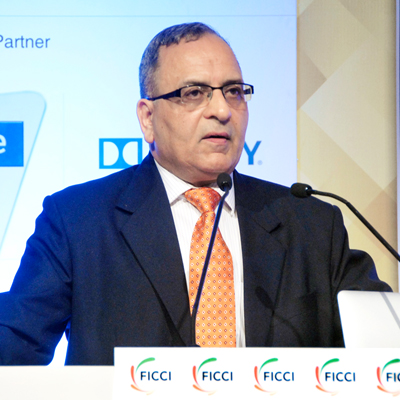
    NEW DELHI: Ministry of Information and Broadcasting (MIB) secretary Bimal Julka has emphasized on the government’s efforts to make India a film-shooting destination.


    He said efforts were on to set up a ‘Film Facilitation Unit’ to promote the concept of ‘Single Window Clearance’.


    Addressing a US-India Business Council (USIBC) delegation led by 21st Century Fox senior vice president Joe Welch, he said the government was committed to facilitate the digitization process for television in Phase III and Phase IV as per the given timelines.


    Discussion centered around the media and entertainment (M&E) sector in India and the steps taken by the government to promote “Make-in-India” across various platforms in different sectors. The discussions also focused on the possible collaborative avenues related to anti piracy. 


    Julka gave an overview of the growth of the industry in critical areas of the M&E sector.


    During the discussions, the delegation was also informed about the new policy initiatives of the Ministry in the broadcasting and film sector. Julka emphasized on the role of the MIB in disseminating the schemes of Government across media platforms in an effort to sensitise the masses.


    The meeting was attended by senior MIB officers and members of the Council representing different segments of the M&E industry in US.

  • Kisan TV launched; Modi calls for greater synergy between farmers & agricultural scientists

    Kisan TV launched; Modi calls for greater synergy between farmers & agricultural scientists

    NEW DELHI: Doordarshan’s Kisan TV channel was launched today (26 May) with Prime Minister Narendra Modi calling upon agricultural scientists to create a link with the farmers through the channel to reach the latest technologies and related information to them.


    Dedicating the channel to the nation at a function in the tastefully decorate Vigyan Bhavan, Modi said that the channel could serve as a medium to take forward the green revolution and the slogan of ‘Jai Jawan Jai Kisan’ given by former Prime Minister Lal Bahadur Shastri.


    As an example, he said that satellite technology has helped the country get more accurate weather forecasts, which can help the farmers plan ahead. Similarly, agricultural scientists can help farmers become self-reliant in growth of pulses, which has virtually come to an end and led to shortage of proteins among the young.


    Those present on the dais included Minister of Agriculture Radha Mohan Singh, Minister of State for Information and Broadcasting Rajyavardhan Rathore, Cabinet secretary Ajit Seth Prasar and Bharati Board Chairman Surya Prakash. Others present included I&B secretary Bimal Julka, Prasar Bharati CEO Jawhar Sircar, PB Advisor VAM Hussain, DD director general C. Lalrosanga, DD Kisan DDG Ranjan Mukherjee, DD Kisan advisor Naresh Sirohi, and several senior officials of Doordarshan.


    The channel was launched with Prime Minister Modi pressing the remote control with a short clip from the channel. The tagline of the new channel is ‘DD Kisan – Badalte Bharat ki Shaan.’ The Prime Minister also flagged off two Kisan Raths, which will go all over the country to apprise people about the new channel. Kisan TV is a free-to-air channel available on all direct-to-home (DTH) platforms.


    Modi said that the channel would help bring about greater cohesion between farmers all over the country and between farmers and the agricultural scientists and Universities.


    He added that some feel that the country already has far too many television channels, but he was convinced that each has a role to play. For example, he said sports channels, more than the government or sports bodies, had helped encourage young people to take to sports in a big way and win laurels for the country.


    Agriculture Minister Radha Mohan Singh informed that a special cell had been set up in his Ministry to coordinate amongst agricultural universities and scientists on the one hand and with the channel on the other. He said, “India is a country of farmers and therefore it is important for them to know how they can help the yield through modern methods.”


    I&B’s Rajyavardhan Rathore said that the occasion and venue itself were reminiscent of the need for cohesion. “Program kisan ka, bhavan vigyan ka,” he said referring to Vigyan Bhavan where the event took place.


    He noted that this was first programme taking place on the commencement of the second year of the National Democratic Alliance Government.


    Rathore said that the channel, which will be available in all languages, will not only take the scientist to the farmer, but will also make sure of the need for entertaining the farmer.


    Prasar Bharati Board chairmam Surya Pralash clarified that the channel was primarily in Hindi but all important programmes will be dubbed in different languages and shown in the respective parts of the country.


    He noted, “As far as I know, India is the first country to have a television channel devoted to farmers and agriculture.”


    Referring to the role of Prasar Bharati as a public service broadcaster, he said that the Information and Broadcasting Ministry would remain answerable to the people as long as public money was being put into the channel. He admitted calling the broadcaster autonomous and yet answerable to the Ministry was akin to a ‘tight rope walk.’ 

  • MIB launches pan-India multimedia exhibit highlighting Modi Govt’s one year

    MIB launches pan-India multimedia exhibit highlighting Modi Govt’s one year

    NEW DELHI: A multi-media exhibition titled “Saal Ek Shuruaat Anek” set up by the Directorate of Advertising and Visual Publicity (DAVP) opened here today to showcase the achievements and policy initiatives across different sectors of the Narendra Modi helmed government.


    Inaugurating the exhibition, Information and Broadcasting Minister Arun Jaitley said that the multimedia mode had been adopted to sensitize the people on different initiatives taken across critical sectors. The exhibition would be taken to State Capitals and rural areas.


    MoS Rajyavardhan Rathore and secretary Bimal Julka apart from DAVP DG and senior officers of the Ministry were present on the occasion.


    Jaitley said that under the current initiative, exhibitions of the similar kind would be organized in all State Capitals along with one more city in each state except Bengaluru (Bengaluru), which will be covered in the second phase as model code of conduct is in place for local body elections in the state.
     

    The exhibition in the state capitals would commence on 26 May, 2015 and end on 1 June, 2015. Under Phase-II of the exhibition outreach programme, 30 sites had been selected with varying dates of commencement. The campaign on such sites would commence around 7 June and end on 20 June. In all 60 static multimedia exhibitions will be organized.


    As part of the rural outreach programme to sensitize the rural masses, DAVP was deploying 345 mobile exhibitions to reach out to 643 districts in the country for a period of one month.


    Jaitley also flagged off the Multi Media Mobile Van from the exhibition site along with Rathore.


    The Minister also highlighted the key features of the proposed Kisan Channel to be launched on 26 May by Prime Minister Narendra Modi. Jaitley specifically mentioned the key benefits that would accrue to the farming community in terms of knowledge, understanding of issues, matters related to meteorology and the new technologies being adopted in the agriculture sector.


    The Multi Media Exhibition focuses on critical sectors highlighting the achievements in the last one year. These are: Annadata Sukhi Bhava (Farmers’ Welfare), Sarve Bhavantu Sukhinah (Mainstreaming the Deprived), Shrameva Jayate (Ensuring Dignity of Labour), Nari Shakti, Desh ki Tarakki (Our Daughters Our Pride), Jan Dhan se Jan Suraksha (Financial Inclusion and Security), Bharosa (Government that Trusts the People), Sushasan (Transparent and Corruption-free Government), Saksham Bharat (Education and Skilling), Sarve Santu Niramayah (Health Assurance to All), Swachh Bharat (Cleanliness is next to Godliness), Dharti ki Dharohar (Leaving behind a better planet), Vasudhaiva Kutumbakam (Friendship on equal Footing), Ashtalakshmi (Development of the North East), Nagar – Shehar, Vikas ki Lehar (Urban Transformation), Tamaso Ma Jyotirgamaya (Power for All), Parivahan se Parivartan (Transportation for Transformation), Swarajya se Surajya (Delivering Good Governance), Vibrant Economy (Tej Gati, Aarthik Pragati) and Har Haath ko Kaam (Jobs for All).

  • TRAI Chairmanship: An onerous responsibility fraught with delicate diplomacy & balancing acts

    TRAI Chairmanship: An onerous responsibility fraught with delicate diplomacy & balancing acts

    NEW DELHI: For any bureaucrat assigned to an autonomous organization under any Ministry, the biggest problem is to ensure smooth functioning between the Ministry and the organization.


    Even as Ram Sewak Sharma, a 1978-batch IAS officer of Jharkhand cadre who is currently serving as secretary in the Department of Electronics and Information Technology appears to be the favourite for the hotseat of chairman of the Telecom Regulatory Authority of India (TRAI), he is one of over seventy-five contenders who reportedly include Information and Broadcasting secretary Bimal Julka.


    Erstwhile chairman Rahul Khullar had taken charge of the regulatory body on 14 May 2012, and demitted office earlier this month on 13 May.


    TRAI had been established under an Act of Parliament to deal with telecom issues, but was given additional charge of broadcasting just over a decade earlier. Even though it appears to have handled broadcasting issues with fair competence, the bent of mind of the officials in the regulator is still towards telecom.


    Convergence: A delicate balancing act


    The task for the seventh chairman of TRAI becomes even more onerous: he has to ensure smooth coordination with two Ministries. Even though TRAI technically falls under the Communication and Information Technology Ministry, it has to also work at tandem with the Information and Broadcasting Ministry. 


    This balance between the two Ministries becomes crucial, considering that the National Democratic Alliance (NDA) Government is again talking about convergence at a time when two of the primary players who were involved on this issue a decade earlier when the matter had come up – to utter failure – are still in the cabinet. Arun Jaitley then headed Law and now heads the Finance and I&B Ministries, whereas Sushma Swaraj, who was then in charge of I&B Minister is now in External Affairs. In that round, the late Pramod Mahajan as Communications Minister was also part of the Group of Ministers headed by then Finance Minister Yashwant Sinha.


    The fact remains that convergence is bound to become a hotly debated subject during the tenure of the new chairman, and a lot of diplomacy will be required to balance the demands of the two ministries.


    Digital India and Broadband


    Even as a lot has been heard about programmes on Digital India and Make in India with little tangible showing so far in telecom and broadcasting, one of the greatest challenges the new incumbent will have to face is ensuring the growth of broadband.


    At present, India is at the 89th position in Network Readiness Index with countries like Singapore, Finland and Sweden having become leaders and by TRAI’s own admission the broadband connectivity is abysmally low with just 99.2 million subscribers by March this year. 


    In view of this, the government’s ambitious national broadband plan to connect as many as 2.5 lakh villages through optic fibre appears to be too far-fetched and even came in for sharp criticism from outgoing chairman Khullar, who termed the move as “impossible” to implement and something that is bound to “fail.” In fact, he said a plan to connect the entire country at one go is not the right way of providing broadband connectivity to all.


    Broadcasting Sector


    Expectedly, TRAI will need to not only strengthen its broadcasting team but also ensure greater coordination among officers in both broadcasting and telecom. This is also obvious from the number of policy decisions with regard to broadcasting, which have been taken to the Telecom Disputes Settlement and Addressable System and the Courts.


    The primary challenge that TRAI faces in broadcasting is to establish its credibility of being impartial and not playing into the hands of the broadcasting lobby. The cable operators and independent multi-system operators have been crying hoarse over this issue, often leading to litigation.


    In fact, the regulator has had to backtrack several times in the recent past, either on its own or because of Telecom Disputes Settlement and Appellate Tribunal (TDSAT) and court decisions and hopes the Supreme Court will come to its aid.


    A day after Khullar laid down office, TRAI on 13 May announced that amendments to its tariff orders issued on 1 October, 2004 and 21 July, 2010, which had been set aside by TDSAT earlier this month would be subject to the outcome of the appeal filed by the regulator before the Supreme Court.


    The two amendments made by the TRAI to its tariff orders that aimed at preventing broadcasters from giving their channels directly to the subscribers and putting commercial subscriber at par with ordinary subscribers were struck down by TDSAT on 9 March.


    TDSAT said TRAI must now undertake a fresh exercise ‘on a completely clean slate. It must put aside the earlier debates on the basis of which it has been making amendments in the three principal tariff orders none of which has so far passed judicial scrutiny. It must consider afresh the question whether commercial subscribers should be treated equally as home viewers for the purpose of broadcasting services tariff or there needs to be a different and separate tariff system for commercial subscribers or some parts of that larger body. It is hoped and expected that TRAI will issue fresh tariff orders within six months from to-day.’


    On 16 May, TRAI failed to get a stay from the Supreme Court of the order of TDSAT setting aside the amendments in two tariff orders, which had sought to put an inflation-linked hike of 27.5 per cent on addressable and non-addressable systems.


    The regulator also failed to get permission to take action against television channels violating its diktat of a total of 12 minutes of commercial and promotional advertisements every hour, though all broadcasters were asked to keep records of this by the Delhi High Court.


    Despite announcements, there has been little progress in the Make in India campaign as far as indigenous set top boxes for digital addressable systems go and most consumers have to put up with Chinese or other boxes.


    Similarly, analogue transmission continues in many parts of the cities and towns that have gone digital and the Government failed to get the stay of Digital Addressable Systems (DAS) in Chennai vacated.


    The subscription charges for the average consumer under DAS still continues to create confusion as far as free to air and pay channels go and that is the primary reason for the LCO’s inability to do proper billing – giving a reason for the broadcaster to complain.


    The Direct-to-Home (DTH) sector also complains about the fee charged by the Ministry, which they say makes it difficult for them to continue or earn profits.


    Both Internet Protocol TV (IPTV) and headend-in-the-sky (HITS) are still considered nascent technologies despite having been around for some years, and TRAI will have to find ways to encourage their growth, particularly in the face of smartphones which can receive live TV signals for which they often pay nothing.


    While the nation is talking about digital technology, Prasar Bharati feels that Frequency Modulation, which is an analogue technology, should be promoted until the nation is read for digital radio sets. This seems to militate against the crores of rupees spent by All India Radio (AIR) in Digital Radio Mondiale technology. Though TRAI has not interfered as it is a matter between the I&B Ministry and the public service broadcaster, it may have to do so if digitization has to succeed.


    Both the Government and TRAI have been announcing that e-auctions of the first batch of Phase III FM would begin in May but the month is almost at an end and no date has been fixed yet.


    Telecom Sector


    The new chairman would be taking charge at a time when the telecom sector is facing major turmoil with the emergence of over-the-top (OTT) operators. While the broadcasting community appears to be happy as the communication OTT will help popularize its programmes, the cellular operators feel OTT will affect their revenues adversely. The TRAI consultation paper also touched upon net neutrality, which is bound to gain controversy in the era of convergence.


    If the successor is Sharma, then his task will become even more challenging as it is bound to militate against the post he has been holding until now and where he had in fact set up a committee on the same subject even as a Parliamentary Committee is also considering this issue.


    Spectrum and the inability of the government to auction the entire spectrum available in the last e-auction – with 12 per cent remaining unsold – is bound to trouble the regulator. Added to that is the fact that despite the fact that the last e-auction was held in the tenure of the present government, Minister Prasad recently assuring the industry that the auction of spectrum in the future too would be conducted in a timely, fair and transparent way.


    Even as 3G is still to become a success, the regulator has been asked to look at 4G at a time when many telecom service providers are facing problems.


    Other challenges in telecom include extending the mobile network to rural India, and a debate whether India is ready for Virtual Network Operators.


    Clearly, the new chairman has to burn the midnight oil and at the same time avoid heartburn as he goes about his task of resolving the multifarious tasks before him.

  • Karunanidhi opposes SC rule against ban of politicians’ pictures in govt ads

    Karunanidhi opposes SC rule against ban of politicians’ pictures in govt ads

    NEW DELHI: DMK chief and former Tamil Nadu chief minister M Karunanidhi has lashed out at the Supreme Court’s ban on the photos of politicians in government ads.


    The veteran politician has said that this takes away the rights of the states.


    He was quoted in media reports as saying, “The PM and CMs are of same status in a federal set-up. In states, people give more importance to the CMs than the PM. A picture of a CM is inevitable in state govt advertisements. There are few educated people. The pictures help people understand ads better.”


    Holding that taxpayers’ money cannot be spent to build “personality cults” of political leaders, the Supreme Court restrained ruling parties from publishing photographs of political leaders or prominent persons in government-funded advertisements.


    The Court said such photos divert attention from the policies of the government, unnecessarily associate an individual with a government project, and pave the way for cultivating a “personality cult.”


    A bench of Justices Ranjan Gogoi and N.V. Ramana said the photos of only three constitutional authorities – the Prime Minister, the President and the Chief Justice of India – can be used in such ads. However, the personal approval of these three authorities will be necessary before publication.


    The observations of the Court were based on examination of the findings of a Committee led by Bangalore’s National Law University Director N.S. Madhava Menon set up in May last year, which had submitted its report in October. The Committee was set up by the Information and Broadcasting Ministry pursuant to an order of 23 April last year. Other members were former Lok Sabha secretary general T K Vishwanathan, and senior advocate Ranjit Kumar. Bimal Julka, secretary in the I&B Ministry, was the member secretary of the Committee.


    The court passed the order on a public interest litigation (PIL) filed by the NGOs Common Cause represented by counsel Meera Bhatia and the Centre for Public Interest Litigation (CPIL) represented by advocate Prashant Bhushan pleading it to frame guidelines.


    The petitions sought issuance of guidelines for curbing ruling parties from taking political mileage by projecting their leaders in official advertisements.


    The Menon panel had recommended a complete ban on publishing of photos in the ads. It had further said that no ads should be allowed on election eve.


    However, Justice Gogoi made changes in four cases. Instead of a complete ban on publishing of photos of all individuals, it said pictures of PM, President and CJI can be used provided they personally clear it – thus, in a way, making them also accountable for the publication.


    Secondly, the court improvised on the Menon committee recommendations to direct the government to appoint a three-member Ombudsman body of persons with “unimpeachable integrity.”


    The bench disagreed with the panel’s suggestion for a performance audit on such government ads.


    Holding that there had been “misuse and abuse” of public money on such advertisements, the three-member committee headed by eminent academician Professor Menon had framed guidelines to regulate expenditure and contents of such ads.


    The report had said only pictures and names of the President, the Prime Minister, Governor and Chief Ministers be published.


    The apex court bench had then said that the existing guidelines of the Directorate of Advertising and Visual Publicity (DAVP) do not cover such ads. There was therefore a need for substantive guidelines to be issued by the Court until the legislature enacts a law in this regard.


    The three members of the committee recommended that the governments must prepare a list of personalities whose birth or death anniversaries will be marked with ads in advance.


    The government must then specify which Ministry should release the ad to avoid different departments and state-run companies from paying tribute to the same leader with a multitude of ads. “There should be a single advertisement only,” the Committee said.


    The committee said that its recommendations are to prevent “the arbitrary use of public funds for advertising… to project particular personalities, parties or governments without any attendant public interest.”


    As was reported earlier by Indiantelevision.com, the move is likely to impact the revenues of some media groups as television channels will no longer be able to run TVCs by state governments featuring Chief Ministers and other local political leaders.

  • MIB sends TV channels’ list to Home Ministry for fresh security clearance

    MIB sends TV channels’ list to Home Ministry for fresh security clearance

    NEW DELHI: The Ministry of Information and Broadcasting (MIB) has forwarded a list of 82 TV channels, teleports and news agencies to the Home Ministry for a fresh round of security clearance as their initial ten-year licenses expire.


    Last week, the Home Ministry had also agreed to examine all cases of multi-system operators (MSOs) awaiting security clearance to get licenses for digital addressable system. MIB secretary Bimal Julka told Indiantelevision.com that the initial license was for ten years. Julka will also be meeting concerned officials of the Home Ministry in this regard.


    If found suitable, permission will be granted for renewal for an interim period up to 31 December, 2015 or till the final decision on channels’ application for renewal of permission is taken, whichever is earlier.


    However, TV channels, teleports, news agencies and MSOs have been asked to furnish an affidavit to the effect that the company will abide by all the provisions of the latest Uplinking/ Downlinking Guidelines and other relevant instructions/ modifications issued from time to time.


    All applicants have been asked to send the information to the MIB along with supporting documents within l5 days to enable it to proceed further in the matter.


    Prominent names among those whose cases are coming up for renewal include several channels of Bennett, Coleman & Co., Eenadu Television, Panorama Television, Prism TV, Television Eighteen India, Zee Entertainment Enterprises, Zee Media Corporation (erstwhile Zee News), IBN18 Broadcast and Times Global Broadcasting Company.


    Broadcasters may also enclose the details of Board of Directors (BOD) and latest Share Holding Pattern (SHP) including foreign direct investment (FDI) component, if any, duly accompanied by requisite approval of the Foreign Investments Promotion Board (FIPB).


    The companies were also asked to ensure submission of the annual renewal fee for both Uplinking and Downlinking at rates as applicable as per Guidelines and for the period that may be due.


    For full list of TV channels, Teleports and News Agencies, click here.


  • I&B Ministry wins Platinum Icon award for Comprehensive Web presence

    I&B Ministry wins Platinum Icon award for Comprehensive Web presence

    NEW DELHI: The Information and Broadcasting Ministry has been awarded the Platinum icon award for Comprehensive Web presence in the Web Ratna Awards 2014.


    The award was conferred by Communications & Information Technology Minister Ravi Shankar Prasad to R. Jaya, Joint Secretary on behalf of I&B Secretary Bimal Julka along with the New Media Wing team of the Ministry. C&IT Ministry Secretary R S Sharma was also present. 


    The award was presented to the Ministry for having a significant presence on all social media sites, which makes it accessible for users through multiple online platforms. The website follows GIGW guidelines. It caters to the information needs of various stakeholders by providing access to all the policies and guidelines issued by the Ministry.


    The home page of MIB website has timestamp, giving last update details. The website has a dedicated Hindi version besides regular English version. The portal has a Google enabled search facility to search within the HTML content. The website is based on Content Management System (CMS). 


    Prasad called for a collective approach of related Government departments to create a friendly outlook, after presenting the the IIIrd Web Ratna Awards. He said “Digital India” initiative is fundamentally aimed at making Government more people friendly and to bridge the gap between haves and have not through digital empowerment. 


    He said that the Government was shortly coming out with “Open Software Policy” to further the process of transparency and credibility in administration. The Department of Posts and Common Service Centers, with presence in nearly four lakh centers, are being deployed to further empower less privileged people by digitalization.


    He said with the internet penetration reaching 30 crore, India is only next to China in terms of reach and this number is all set to touch 50 crore in couple of years, India is all set to digitally transform the society.


    Web Ratna Awards have been instituted by the Ministry of Communications and Information Technology, acknowledges unique initiatives/practices of various states/UTs in the realm of e-governance. The Government has been bracing for innovation and transformation in delivery of information/services with adoption of best ICT practices.


    Web Ratna Awards recognize these e-governance initiatives and were instituted to appreciate and acknowledge the initiatives and contributions of individuals & institutions and their innovations, which have empowered the Government in achieving the vision of good governance. Web Ratna Awards was instituted in the year 2009.


  • Enhanced reach & instant dissemination on social media impacts content quality

    Enhanced reach & instant dissemination on social media impacts content quality

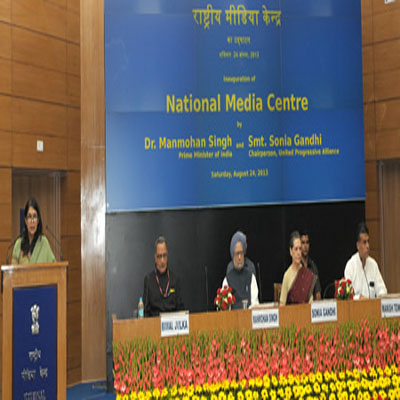
    NEW DELHI: Minister of State for Information and Broadcasting Rajyavardhan Rathore said on 19 March that the enhanced reach and instant dissemination on social media had impacted the content style and precision of both photography and videography.


    This had led to instant communication across different social media platforms, he said while inaugurating the first National Photography and Videography Workshop organized at the National Media Centre here.


    Rathore said that the Ministry would explore the possibility of organizing similar workshops in other parts of the country including the North East wherein the potential was tremendous as the initiative was innovative in approach involving the professionals associated from the concerned domains.


    The workshop would also act as a facilitating tool in carrying forward the messages of the Government across platforms accessed by different cross sections of the population. As technology was the principal driver of innovation, it had become a critical determinant and catalyst in enhancing the skills of the individual and organization.


    The impact of the dynamic growth of technology was self- evident as there was a proliferation of changes across formats. The enhanced reach, instant dissemination on social media had impacted the content style and precision of both, photography and videography. This had led to instant communication across different social media platforms.


    The government is keen to fulfil the aspirations of Prime Minister Narendra Modi, whose emphasis has been on upgradation of skills through appropriate training methods and tools. The workshop was designed keeping in mind the basic parameters of the ‘Skill India’ initiative. Relying on the basic principles and outline of the ‘Skill India’ initiative, the workshop was an attempt to hone the skills of Government personnel associated with photography and videography.


    Speaking on the craft and art of photography, Rathore said that like any other art photography and videography could be mastered through right inputs. The workshop was an appropriate tool in this direction.


    Recounting the history of photography, Rathore mentioned that pictures had a long lasting impact. Today historic occasions were remembered on several instances only through pictographic description. This was perhaps the reason for the immense popularity of ‘Coffee Table Books’ on different subjects.


    Earlier, I&B secretary Bimal Julka said the workshop had been designed to address the immense skill opportunities that had emerged in the media and entertainment sector. As ‘Skill Development’ was a comprehensive approach involving critical stakeholders in the Government, the endeavor of the Ministry was to incorporate the ‘Skill India’ initiative across its training programmes. The workshop also provided a platform for the Government to converge its expertise and skills, keeping in mind the challenges of assignments, events in the media space dominated by social media, emerging technologies and competitive environment.


    Julka mentioned that as key programmes and initiatives of the Ministry involved technological prowess and a thorough understanding of contemporary changes, the Workshop was certainly a step in the right direction.


    He specifically highlighted the role and relevance of the workshop in the context of the archival heritage of the Ministry across platforms. It was for this purpose that an attempt had been made to bring together different aspects of technology for both, the photography and video segment. For this purpose, professional agencies specializing in digital technology, animation and graphics had been invited to provide value addition to the personnel associated from Photo Division and Doordarshan.


    The key highlight of the workshop was the Joint Session on the History of Art and Appreciation of Photography addressed by eminent photographer Rajesh Bedi and renowned cinematographer Santosh Sivan. Both shared their experiences involving the critical themes with regard to content presentation, layout, use of technology etc.


    The one-day workshop had been organised with two parallel sessions being held concurrently on Photography and Videography. The parallel sessions have been organised keeping in mind the common themes and integration between platforms and the need of skills / tools and contemporary development in both the sectors. Approximately 25 organisations / Ministries are attending the workshop. Over 135 officers participated in the Workshop. 

  • States asked to involve community radio stations in disseminating info on govt policies

    States asked to involve community radio stations in disseminating info on govt policies

    NEW DELHI: District magistrates of Indian states have been asked to proactively involve community radio stations in the dissemination of information regarding government policies. 


    A communication on the same will be sent across to District Magistrates soon. The move is a part of steps that are being taken to facilitate the enhanced role of CRS stations at the state level.


    Addressing the closing session of the fifth Community Radio Sammelan, Information and Broadcasting secretary Bimal Julka said that appropriate directions would be issued to the Directorate of Advertising and Visual Publicity to address all important issues including the enhanced presence of the medium across the media plans concerning the Central Government ministries and departments.


    Julka assured participants of the Sammelan that the inputs and suggestions given during the three-day workshop would be included in the future policy planning and deliberations of the Ministry. 


    Regarding operational issues being faced by the stations, Julka said that the Ministry had been involved in discussions with concerned stakeholders at appropriate forums including the Inter-Ministerial Committee of CRS Stations.


    He said the Sammelan convened by the Ministry provided critical inputs for harnessing the potential of the medium. As a medium, CRS stations led the way in facilitating interactive platforms amongst the community enabling an opportunity for the local communities to highlight their success stories and learn from each other. As an outreach tool, the medium played an important role in facilitating information on key flagship schemes of the government namely ‘Swachh Bharat Abhiyan’, ‘Beti Bachao. Beti Padhao’ and ‘Jan Dhan Yojna’ amongst others. 


    Julka also said that the objective was to ensure high trajectory of growth. He added that Community Radios not only made people aware about their rights and entitlements but acted as an important tool for empowerment of masses especially women and marginalized communities. As a platform, it encouraged the local youth to mainstream their talents. As a medium of communication, the CR Stations also promoted and acted as a repository of local folk songs and culture. The repository of rich heritage showcased across CR stations reiterated the diversity of the country in a language and form understood by the people.


  • IFFI to highlight films from NE; FD commissions films from region: Julka

    IFFI to highlight films from NE; FD commissions films from region: Julka

    NEW DELHI: Information and Broadcasting secretary Bimal Julka has said that the forthcoming International Film Festival of India (IFFI) in November will have a special section on the North East to expose the feature and non-feature films made in Meghalaya. 


    In addition, the Films Division has implemented a special component under a Plan Scheme for production of short films from the North East. The Division has commissioned 54 films from the North East in the past five years. 


    Julka was speaking after inaugurating the third edition of the Indian Panorama Film Festival at U Soso Tham auditorium in Shillong last evening. The festival opened with the screening of the award winning Marathi film Dr. Prakash Baba Amte: the Real Hero, directed by Samruddhi Porey.


    A host of film personalities including director Anjan Dutt were present at the inaugural ceremony, which was also attended by Meghalaya chief minister Dr. Mukul Sangma and Meghalaya Information and Public Relations minister A.L. Hek. 


    Julka said that the Ministry has been focusing on showcasing films from the North East to encourage production of films in the region. A North East Film Festival was also held in New Delhi recently.


    Appreciating film productions by young film makers from the North East, Julka said numerous short and non-feature films from the region have received National Awards.


    Julka informed that in 2014-2015, a week-long film-making workshop was also organized in Aizawl in Mizoram and another workshop is currently being conducted in Silchar in Assam. In this endeavour, the Films Division plans to conduct four such film making workshops every year in the North East, to familiarize film makers from these states with the latest technology in film making. 


    Eight feature films and three non-feature films will be screened over three days. The film festival is being organised by the Directorate of Film Festivals in collaboration with the state Government.


    Other feature films to be screened during the festival are Drishyam (Malayalam), December 1 (Kannada), Kuttram Kadithal (Tamil), Ankhon Dekhi (Hindi), Othello (Assamese), Ri (Khasi), Teenkahon (Bengali) and Ranjana Ami Ar Ashbona (Bengali). Non-feature films to be screened during the festival are Songs of the Blue Hills by Utpal Borpujari (Nagamese/English), A Dream Never Dies (Assamese) and Ek Hota Kau (Marathi). 


    Indian Panorama Film Festival is being held in Shillong for the last two years and this will be the third edition of the festival.