Tag: Bimal Julka

  • FIFS announces 4th edition of the GamePlan conference

    FIFS announces 4th edition of the GamePlan conference

    Mumbai: Fantasy sports self-regulatory industry body, the Federation of Indian Fantasy Sports (FIFS), has announced the fourth edition of its Annual Conference – GamePlan 2021, to be held virtually on 25 August. The event will witness the launch of an industry report on online fantasy sports (OFS), ‘Online Fantasy Sports: Creating a Virtuous Cycle of Sports Development’ along with in-depth discussions on the growth, impact, and potential of the industry.

    GamePlan 2021 will include keynotes by UP Law Commission, chairman, justice AN Mittal; Government of Telangana, Industries and Commerce (IandC) and Information Technology, principal secretary, Jayesh Ranjan; Invest India, MD & CEO, Deepak Bagla and justice (retd) Arjan Sikri. 

    The conference will host a ‘CEO Roundtable on leadership Lessons from Founders’ with Dream11 and Dream Sports, co-founder & CEO, Harsh Jain; MPL, co-founder & CEO, Sai Srinivas; Games 24×7, co-founder & CEO, Bhavin Pandya, and MyTeam11, co-founder & CEO, Vinit Godara. 

    Besides the report launch and keynotes, there will also be three panel discussions on ‘The Economic Impact of OFS in India’, ‘Fantasy Sports: Fuelling Sports Consumption and Fan Engagement’, and ‘The Evolving Legal Landscape of Fantasy Sports in India’.

    Among the eminent dignitaries speaking at the event are Dream11 and Dream Sports, COO & co-founder, Bhavit Sheth; Indian quizzer, orator, writer, sports producer and VP at Baseline Ventures India Pvt Ltd, Joy Bhattacharya;  ITW Mediaworx, managing partner & CEO, Nikhil Vyas; NBA India, AVP-global partnerships, Siddharth Chury; Gameplan Sports, MD, Jeet Banerjee; enJogo, co-founder & CEO, Kishore Taid; Supreme Court of India, senior advocate, Gopal Jain, and Saraf & Partners, partner, Vaibhav Kakkar. 

    The panel discussions will be moderated by Ninanand Mathew, founding partner, Santosh Mathew;  TMT Consulting, Deloitte, partner, Prashant Rao; Deal Advisory, partner and  KPMG India, head – media and entertainment, Girish Menon; IndiaTech.org, president and CEO, Rameesh Kailasam, and LawNK,  principal lawyer, Nandan Kamath.

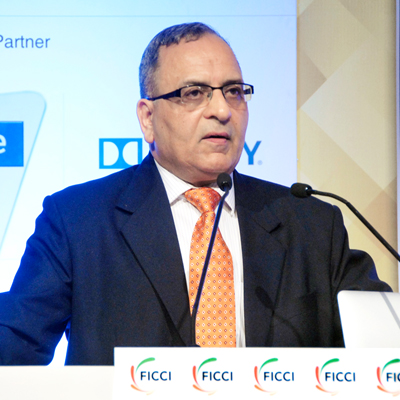
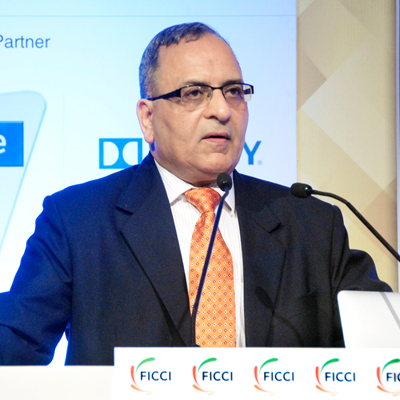
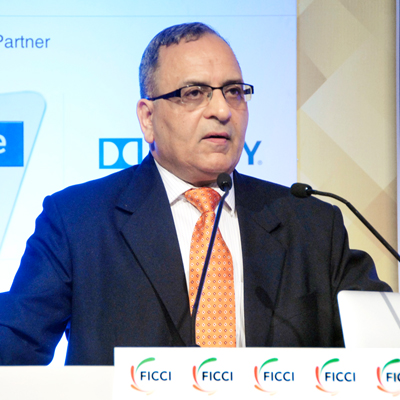
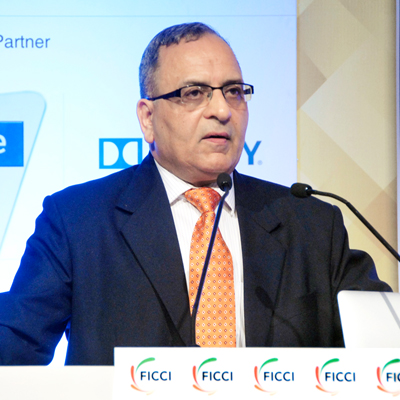
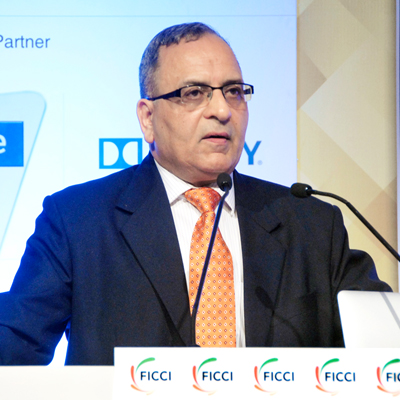
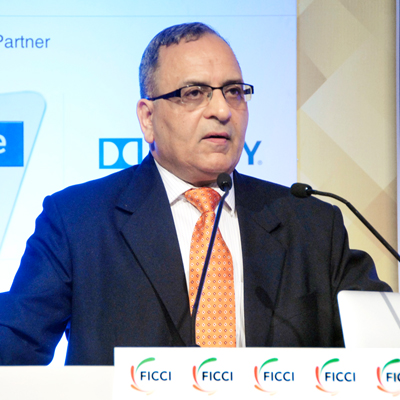
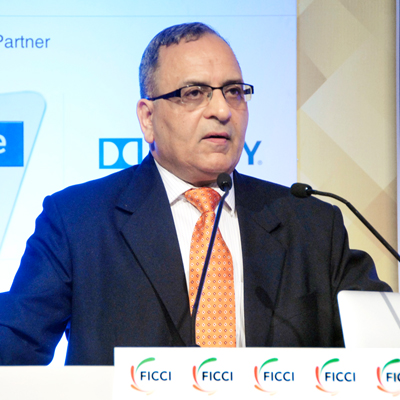
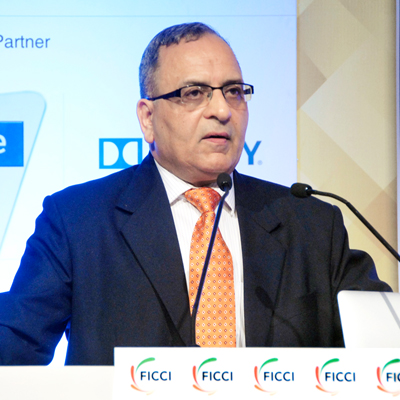
    Commenting on the announcement of the new edition, FIFS and FSRA, and former CIC, Govt of India, chairman, Bimal Julka said, “We are delighted to be back with the fourth edition of GamePlan where, together, we will deliberate on the impact and potential of the Online Fantasy Sports industry. With the right guidance and regulations, the Indian OFS industry will certainly have a far more positive impact on the Indian economy and sports ecosystem.”

    The 2020 edition of virtual GamePlan was attended by over 1500 delegates from technology platforms, game developers, fantasy sports operators, financial institutions, payment gateways, consulting firms, media agencies, sports leagues, and legal advisory firms.

  • Centre appoints Yashvardhan Kumar Sinha as new CIC

    Centre appoints Yashvardhan Kumar Sinha as new CIC

    MUMBAI: Former diplomat and central information commissioner Yashvardhan Kumar Sinha has reportedly been appointed as the country’s next chief information commissioner (CIC), two months after the position fell vacant.

    Media reported that 155 applications were received for the post of CIC.

    The decision to appoint Sinha was taken after a meeting of the selection panel headed by prime minister Narendra Modi on 24 October. However, Congress leader in the Lok Sabha Adhir Ranjan Chowdhury, who is also a member of the panel, has submitted a dissent note.

    The Opposition leader was against the shortlisting process, alleging a failure to follow the Supreme Court’s transparency guidelines, issued in a February 2019 case brought by RTI (Right to Information) activist Anjali Bhardwaj. Chowdhury also objected to the fact that journalist Uday Mahurkar had been shortlisted for a commissioner position although he was not on the list of applicants.

    Sinha was sworn in as information commissioner on 1 January 2019. He is a former diplomat who was appointed as high commissioner of India to the United Kingdom and Sri Lanka.

    The commission is the highest appellate authority under the right to information act, and consists of a panel including chief and up to ten commissioners. The commission has been headless twice this year, due to a two month delay in appointing the last chief Bimal Julka, and another two month period since he retired at the end of August. The commission has not functioned at full strength for almost four years, and currently has only five commissioners.

  • FIFS names Bimal Julka as new chairman

    FIFS names Bimal Julka as new chairman

    MUMBAI: The Federation of Indian Fantasy Sports (FIFS) has appointed Bimal Julka as chairman. In his new role, Julka will work closely with all stakeholders to further strengthen the operating standards of the Indian fantasy sports industry.

    Julka takes over from John Loffhagen, who served as chairman for over three years. Loffhagen will assume the role of a strategic advisor and support FIFS on collaborating with relevant international bodies in the industry.

    With over four decades of service in the government at both state and national levels, Bimal Julka is an Indian Administrative Service (IAS) officer of the 1979 batch belonging to the Madhya Pradesh cadre. He served as chief information commissioner at the Centre until September 2020. Prior to that, he held several senior posts in the Ministry of Defence, Civil Aviation, Information & Broadcasting, External Affairs, Finance, Commerce and Public Relations.

    FIFS CEO Anwar Shirpurwala said, “Having such a senior dignitary like Julka representing fantasy sports will strengthen the industry’s credibility, and we are sure to witness new strides towards reformations and standardisation of the rapidly growing fantasy sports industry.”

    Julka described the fantasy sports segment as a new and disruptive industry that has great potential to strengthen and promote sports in the country through meaningful fan engagement. “While fantasy sports are seeing unprecedented growth in both users and operators, there arises an equal need to protect the users and promote responsible growth,” he added.

    Founded in 2017, FIFS is India’s first self-regulatory industry body for fantasy sports. At present, it has 35 members who cumulatively account for over 99 per cent of India’s fantasy sports market.

  • Former I&B Secretary Bimal Julka is now Information Commissioner in Central Information Commission

    Former I&B Secretary Bimal Julka is now Information Commissioner in Central Information Commission

    NEW DELHI: Former Information and Broadcasting Ministry Secretary and retired Indian Administrative Service officer Bimal Julka is among the three persons who have been appointed Information Commissioners in the Central Information Commission.

    The others are retired Staff Selection Committee Chairman Amitava Bhattacharyya and retired Secretary (Security) in the Cabinet Secretariat Divya Prakash Sinha.

    While Julka was from the Madhya Pradesh cadre of 1979, Bhattacharya was an IAS officer of the Gujarat cadre in the 1980 batch, Sinha was an Indian Police Service officer of the 1979 batch in the Manipur-Tripura cadre.

    The appointments have been made for a term of five years from the date on which they enter upon their office or till they attain the age of 65 years, whichever is earlier.

    The appointments are under the Right to Information Act 2005.

  • Former I&B Secretary Bimal Julka is now Information Commissioner in Central Information Commission

    Former I&B Secretary Bimal Julka is now Information Commissioner in Central Information Commission

    NEW DELHI: Former Information and Broadcasting Ministry Secretary and retired Indian Administrative Service officer Bimal Julka is among the three persons who have been appointed Information Commissioners in the Central Information Commission.

    The others are retired Staff Selection Committee Chairman Amitava Bhattacharyya and retired Secretary (Security) in the Cabinet Secretariat Divya Prakash Sinha.

    While Julka was from the Madhya Pradesh cadre of 1979, Bhattacharya was an IAS officer of the Gujarat cadre in the 1980 batch, Sinha was an Indian Police Service officer of the 1979 batch in the Manipur-Tripura cadre.

    The appointments have been made for a term of five years from the date on which they enter upon their office or till they attain the age of 65 years, whichever is earlier.

    The appointments are under the Right to Information Act 2005.

  • SC agrees to hear review pleas against its order relating to pictures of politicians on govt. ads

    SC agrees to hear review pleas against its order relating to pictures of politicians on govt. ads

    NEW DELHI: The Supreme Court will hear on 14 September a batch of petitions filed by various states seeking a review of the decision of the apex court relating to photos of politicians on government advertisements.


    The Court had earlier given a direction on a public interest petition that only photographs of the Prime Minister, President and Chief Justice of India can be published in official media advertisements and not those of chief ministers. But the personal approval of these three authorities will be necessary before publication.


    Justices Ranjan Gogoi and Prafulla C. Pant which had passed the original directions on 13 May said the review petitions will be heard in open court.


    Prior to the order, the judges perused the petitions of Tamil Nadu, West Bengal, Karnataka, and Assam in the chamber.


    The four states filed the review petitions challenging the 13 May direction as being discriminatory and erroneous since it has permitted the photograph of the Prime Minister but not the chief ministers who too are elected representatives of the people.

    The states pointed out that the expert panel had recommended display of photos of CMs/governors as well but the Court had restrained the states from displaying photos of CMs/governors.


    The petitions said: “There is nothing wrong if the publication issued by the government highlighting the achievements of the government contains photographs of the chief minister and the other ministers if they have made contribution to the achievements of the state government. The judgment is completely silent regarding the exclusion of the chief minister who is the head of the state government. If the photograph of the Prime Minister is permitted on the publication/advertisement then the photographs of the chief minister must have also been permitted by this court.”


    The May order had come on public interest litigations (PIL) filed by the NGOs Common Cause represented by counsel Meera Bhatia and the Centre for Public Interest Litigation (CPIL) represented by advocate Prashant Bhushan pleading it to frame guidelines.


    Holding that taxpayers’ money cannot be spent to build “personality cults” of political leaders, the Court had restrained ruling parties from publishing photographs of political leaders or prominent persons in government-funded advertisements.


    The Court said such photos divert attention from the policies of the government, unnecessarily associate an individual with a government project, and pave the way for cultivating a “personality cult”.


    The observations of the Court were based on examination of the findings of a Committee led by Bangalore’s National Law University Director N.S. Madhava Menon set up in May last year which had submitted its report in October.


    The Committee was set up by the Information and Broadcasting Ministry pursuant to an order of 23 April last year. Other members were former Lok Sabha Secretary General T K Vishwanathan, and senior advocate Ranjit Kumar. Bimal Julka, Secretary in the Ministry, was the member Secretary of the Committee.  

  • Road fraught with political & bureaucratic potholes for new MIB secy

    Road fraught with political & bureaucratic potholes for new MIB secy

    For a person taking charge as the head of bureaucracy in any Ministry, perhaps the biggest challenge is to put aside his or her own personal views and get down to translating the decisions of the Government and the Minister into action.


    However, this becomes even more onerous when there are tasks that have to be accomplished within just a few months.


    For senior Indian Administrative Services (IAS) officer Sunil Arora, who is slated to take over as secretary in the Ministry of Information and Broadcasting (MIB) from 1 September, the first major task looming over him is Phase III of the Digital Addressable System (DAS) for Cable TV, which has to be accomplished within four months. 


    Arora is an IAS officer from the Rajasthan cadre of the 1980 batch. His immediate predecessor – Bimal Julka belongs to the 1979 batch from Madhya Pradesh. Julka took over his post in the MIB in July 2013 when Uday Kumar Varma retired.


    DAS PHASE III


    Even though the present government changed the deadlines for the last two phases of DAS, the stakeholders do not appear to be ready for it. There is still a dire shortage of compatible set top boxes (STBS), and there has been little headway despite the incentives offered under the Make in India scheme. Even at present, a large number of local cable operators (LCOs) are having to work with poor quality STBs made in China or other countries. 


    Added to that is the fact that a large number of broadcasters, multi system operators (MSOs), and LCOs still have to work out their agreements – an issue further complicated by the directives of the Telecom Disputes Settlement and Arbitration Tribunal (TDSAT), which wants a re-look at the tariffs.


    It is also a fact that analogue transmission continues in many parts of cities and towns that have gone digital and the Government has failed to get the stay of DAS in Chennai vacated. 


    TRAI


    Although these are issues that the Telecom Regulatory Authority of India (TRAI) is dealing with, all decisions relating to the broadcasting sector can only be effective if there is proper coordination between the regulator and the Ministry. This effectively means there has to be a quick response to any issues that either parties raise to the other, if deadlines have to be met.


    Other issues pending before TRAI relating to broadcasting include the need to reconsider the foreign direct investment (FDI) norms for media, shortage of spectrum, a growing demand by states seeking permissions to start their own television channels despite the TRAI having opined against it twice since 2008. 


    Although broadcasting duties were handed over to TRAI just over a decade back, it is also clear that the Ministry will have to consider whether there is need to form a broadcasting-specific body as TRAI is primarily a body set up for the telecom sector. If the Government decides to continue with TRAI handling both portfolios, the Regulator will be under pressure from the MIB to strengthen its broadcasting team and also ensure greater coordination among officers in both broadcasting and telecom.    


    With convergence of technologies becoming a reality, and with issues of spectrum already bringing telecom and broadcasting together, the National Democratic Alliance (NDA) Government has again begun to talk about convergence and this is bound to gather pace over the next two years.


    SPECTRUM


    Though the Defence Ministry has in principle agreed to hand over some spectrum and swap some other spectrum, the whole process is caught up in bureaucratic wrangles. If the Ministry wants to continue with its policy of ensuring there are no caps on the number of television and FM radio channels or direct-to-home (DTH) and Headend in the Sky (HITS) platforms in the country, the issue of spectrum will need early solution. 


    FM RADIO AUCTION


    The Government is in the midst of the FM Radio e-auction, and is committed to continue the process till all slots in the first stage of Phase III – of 69 cities, which already have FM channels – are completed. With at least 13 cities failing to get even a single bid, the new secretary may have to find ways of either lowering the reserve price for those cities or move those cities to the next stage. 


    The fact that the cumulative winnings from the channels auctioned so far has exceeded the reserve price by more 100 per cent is undoubtedly a matter of great satisfaction, but some cities failing to attract bidders remains to be an irritant.


    AD CAP


    The matter of enforcing the advertising cap of 12 minutes an hour is already before the Courts, but the Ministry may have to do a rethink in the light of the I&B Minister Arun Jaitley having said that he was opposed to ad caps on the print or electronic media, and because the free-to-air channels (most of which are news channels) have already expressed their opposition to this. TRAI had failed to get permission to take action against television channels violating its diktat of the total of 12 minutes of commercial and promotional advertisements every hour, though all broadcasters were asked to keep records of this by the Delhi High Court. 


    SPREAD OF FM RADIO vs DRM


    Even as All India Radio (AIR) has spent crores of rupees on the digitised Digital Radio Mondiale (DRM), Prasar Bharati feels that Frequency Modulation (FM), which is an analogue technology should be promoted until the nation is ready for digital radio sets. The Ministry can resolve this issue only if it can ensure adequate manufacturing at affordable process of DRM sets under the Make in India programme. Until then, this continues to be a thorn in the already dicey relations between the public service broadcaster and the Ministry.


    COMMUNITY RADIO


    More than a decade has elapsed since the introduction of community radio, but the number of operational stations still remain very low. To boost this sector, the Government introduced a new scheme last year for funding community radio, but bureaucratic wrangles continue to hold up the smooth implementation of this scheme. 


    PRASAR BHARATI & THE MINISTRY


    On paper, as per the Prasar Bharati (Broadcasting Corporation of India) Act 1990, it is clear that the pubcaster is autonomous. However, in reality this appears quite contrary.


    On the one hand, as a measure to help the pubcaster, a Group of Ministers had decided that persons employed as on 5 October, 2007 will get the salary and pension from Government funds. However, for employees who joined after that date, Prasar Bharati was left to fend for itself.  


    Since Prasar Bharati is listed as an autonomous company under the Ministry, this means – and it appears so even from the manner in which questions relating to the pubcaster are answered in Parliament – that there is dispute on what real autonomy is.


    Prasar Bharati CEO Jawhar Sircar – a former bureaucrat himself – feels the government does not given him full freedom and there is interference at every level and has said so either in speeches in articles by him or others in the pubcaster.


    While there is generally full autonomy as far as content goes, there are allegedly checks and balances placed by the government in administrative matters. 


    Journalists on the Parliamentary beat are often flabbergasted by the fact that when it suits the Government, a reply will say that the pubcaster is an autonomous body, and yet there are times when the Government has intervened even in appointments in Prasar Bharati.


    FOREIGN DIRECT INVESTMENT


    The TRAI had given its recommendations for an increased FDI in many sectors of the media in a report in July 2013. Although there was some change by the Government earlier this year, it has still not implemented the FDI report of TRAI in full.  


    SECURITY CLEARANCE


    While the Home Ministry has decided it is doing away with security clearance for MSOs, it has not taken a decision as far television channels are concerned. While the issue relating to foreign ownership can be understood, the denial of security clearance to Sun TV continues to flummox everyone in the media.


    It is generally felt that an accused is not guilty till proven, but the Home Ministry and the MIB appear to have decided that the Maran brothers should be denied security clearance despite the fact that the cases against them have no relation to the security of the country, and are in fact an incursion on the freedom of the media. Even the Supreme Court while permitting Sun Group companies to take part in the FM auction said so.


    PAID NEWS


    It is now almost five years since the issue of paid news became the talk of the town. The Press Council of India set up a committee, which even gave recommendations, and a Parliamentary Panel along the Election Commission also wanted some steps to be taken to stop this. However, there has been no tangible action so far in this matter.


    FILM INDUSTRY


    The film industry has been raising similar issues year after year. As far as taxation issues were concerned, it was hoped that the Goods and Services Tax (GST), when implemented will help. But the way the matter is stuck in Parliament forces the industry to just wait and watch.


    Entertainment tax is another issue on which there has been no unanimity and states have different taxes. About a decade earlier a proposal for bringing cinema into the Concurrent List of the Constitution might have solved the problem, but most states opposed the idea. 


    In a country producing around 1000 feature films every year, apart from the large number of films from overseas, India still suffers from an acute shortage of theatres, with the number less than 11,000. With the high rates of ticketing charged by the multiplexes, the average cinegoer is denied the pleasure of seeing a film in a cinema hall. 


    All attempts to curb video piracy appear to have failed because the film industry and the government have failed to work together to curb the menace. This in turn means huge losses for the makers of bold films unless there are big stars to lure the audiences.


    The Film Museum has been in the planning and making for more than a decade, but it does not appear that the Museum planned for 2013 to coincide with a centenary of cinema will see the light of day for at least a couple more years.


    The Film and Television Institute of India (FTII) has been caught in a logjam that just refuses to untangle. The appointment of a Chairperson, who was said to be close to the ruling party, is what triggered the issue, but the continued struggle has led to the police making an entry into the campus in Pune. 


    Clearly, the new MIB secretary has his job cut out for him and will have to tread carefully on the long road ahead – but it is not without political or bureaucratic potholes that can hold up even his best intentions.


  • Sunil Arora appointed new I&B Ministry secretary

    Sunil Arora appointed new I&B Ministry secretary

    MUMBAI: The Information and Broadcasting (I&B) Ministry has found a new secretary in senior IAS officer Sunil Arora. He will be succeeding Bimal Julka whose tenure will end on Monday, 31 August, 2015.


    Arora’s appointment comes at a time when the I&B Ministry is in the midst of several important activities including the Phase III FM radio e-auctions and digitisation of phase III and IV. Arora is a 1980 batch IAS officer of Rajasthan cadre and currently secretary Ministry of Skill Development and  Entrepreneurship.


    Arora, earlier has also functioned as Air India CMD.

  • I&B secy Bimal Julka stresses value of social media in reaching out to people

    I&B secy Bimal Julka stresses value of social media in reaching out to people

    NEW DELHI: Information and Broadcasting Ministry Secretary Bimal Julka has said social media initiatives of the government had provided people a platform to communicate directly with the government through methods such as Crowdsourcing, which encouraged such innovations.


    He stressed the need for qualitative information flow and interface of citizens with the communication strategy of the government. “This has led to people centric communication and facilitated enhanced outreach and visibility of government communication across platforms,” he said.


    Julka said this in discussions with Queensland University of Technology, Australia vice chancellor Professor Peter Coaldrake, here today.

    “The communication paradigm has undergone a shift with a 360 degree approach being adopted to address the communication needs and challenges,” he said.


    He also referred to flagship schemes of the government namely Digital India, Skill India, Make In India, which had provided an opportunity to media units to reach out to defined target audiences. 


    He specifically highlighted the use and effectiveness of initiating Talkathons, which provided a direct interface with the people leading to effective citizen centric communication. “Such initiatives would encourage a culture of inclusive and participative decision making,” he said.
     

    During the meeting, Julka and Professor Coaldrake reviewed the current training mechanism between the Ministry and QUT with regard to in-service training of Indian Information Service officers. Both agreed that the future training agenda should include contemporary issues related to media and communication studies. They emphasized that Skill Development was critical for in-service training of officers handling government communication.

  • Broadcasters urged to publicize International Yoga Day on 21 June

    Broadcasters urged to publicize International Yoga Day on 21 June

    NEW DELHI: With the United Nations’ endorsement of observing 21 June as International Yoga Day for the first time, representatives of the Information and Broadcasting and AYUSH Ministries today met broadcasters to seek their proactive participation.


    I&B secretary Bimal Julka and AYUSH secretary Nilanjan Sanyal interacted with the representatives of News Broadcasters Association, Indian Broadcasting Foundation, CRFI, FCSR and representatives from Digital Cinema to ensure enhanced coverage, content and reach across news, GECs, digital, CRS and radio platforms.


    Both emphasized that the collaborative effort would also reinforce the vision of the Prime Minister Narendra Modi and this would also enable the event having an international impact with the focus on Yoga being a people’s movement.


    Representatives from the industry bodies promised to proactively participate in promoting the event while at the same time providing and broadcasting content free of cost.


    They mentioned that content would be sourced in the form of spots featuring popular TV artists on GEC platforms, and messages endorsing the relevance of Yoga. These spots would run across the broadcaster’s network on both news and GEC segments.


    Industry representatives also agreed to take forward content created by the AYUSH Ministry on their platforms pro bono.


    They agreed to popularize the Yoga initiative on news platform on the news segment through Special programmes, discussions and studio-based events. It was also agreed that the events associated with International Yoga day would be covered appropriately.


    Representatives of the industry from radio, digital cinema and community radio stream also offered to take the advocacy efforts forward through their network and distribution platforms.