Tag: Bimal Jhulka

  • DAS expected to remain priority with new I&B Ministers

    DAS expected to remain priority with new I&B Ministers

    NEW DELHI: Manufacturers of Digital Addressable System set top boxes today assured the Information and Broadcasting Ministry that they had the adequate quantity of boxes needed and it was now up to local cable operators to place orders for them.


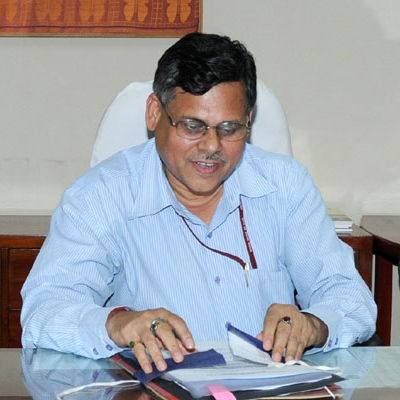
    This assurance was given at a meeting chaired by I& B Secretary Bimal Julka at the initiative of the Ministry.


    Ministry sources told indiantelevision.com that the manufacturers generally thanked the government for its proactive role in the matter of DAS.


    The Ministry was assured that the manufacturers will be able to meet the demand of 110 million boxes needed for the final two phases of cable television digitisation.


    The manufacturers appreciated the efforts of the government for resolving their long pending demand of C-form. They said they have sufficient installed capacity to meet the full demands of STBs locally and said the measures taken by the government would help the indigenous manufacturing industry to give employment to about 50,000 people and would attract an investment of about Rs 500 crore. It would generate local support facility for repair of STBs and would also help in smooth implementation of digitization initiative in the country.


    The Finance Ministry had on 13 August extended the facility of Form ‘C’ under section 8(3) (b) of Central Sales Tax Act 1956 to Set Top Boxes thus fulfilling the major demand of the domestic STB manufacturers. Domestic STB manufacturers would charge CST @ 2 per cent against VAT of 12-14 per cent being paid earlier.


    Meanwhile, both I&B Minister Arun Jaitley and Minister of State Col. Rajyavardhan Singh Rathore have in their meetings with senior officials said that DAS has to be given the uppermost priority.


    It is learnt that the meeting of the Consultative Committee of members of Parliament of the I&B Ministry slated for tomorrow will also take up the issue of DAS of cable television networks.


    The Phase-III of digitization oe completed by December 2015 would cover all other urban areas (Municipal Corporations/ Municipalities) which were not covered in first two phases. Phase-IV to be completed by December 2016 would cover the rest of India.

  • Goa to be permanent venue of International Film Festival of India

    Goa to be permanent venue of International Film Festival of India

    NEW DELHI: Although Goa has been the venue of the International Film Festival of India since 2004, there has been discussion year after year on whether it should continue to remain so, with a large section of the film industry particularly from eastern and north east India opposing this move.


    However, Information and Broadcasting Minister Prakash Javadekar has reiterated that Goa will be formally made the permanent venue for the festival.


    The Minister made this statement after the signing of the ritual annual Memorandum of Understanding between the Ministry and the state government at the State Secretariat in Panaji in the presence of Javadekar and Goa Chief Minister Manohar Parrikar. The MoU was signed by Ministry secretary Bimal Julka and Goa Chief Secretary B Vijayan.


    The 45th edition of the festival will be held from 20 to 30 November.


     “With the signing of the MoU, Goa will now be designing permanent facilities and world-class infrastructure for the festival at Goa, which has matured as a venue for IFFI,” declared Javadekar. This year will be the State’s 11th time hosting the IFFI.


    With its peculiar culture and hospitable atmosphere, Goa would soon catch up with renowned international film festivals like Cannes, Javadekar added.


    With a few days to go, Javadekar expressed confidence in the facelift planned for the festival, which is being organised by a steering committee comprising representatives of the Directorate of Film Festivals, the State and reputed film industry stakeholders.

  • “Cuts in Modi interview on DD made internally”

    “Cuts in Modi interview on DD made internally”

    NEW DELHI: The Information and Broadcasting ministry has denied any knowledge of the fate of the interview conducted by Doordarshan of Bharatiya Janata Party prime ministerial candidate Narendra Modi on the public broadcaster.


    I& B secretary Bimal Julka told indiantelevision.com that the matter was not raised before the ministry and therefore, there was no question of any cuts or changes to the interview conducted by DD.


    He said the ministry was not aware of the letter reported to have been written by Prasar Bharati CEO Jawhar Sircar to board members where he is reported to have written that failure to give autonomy to the public broadcaster was the main reason for this.


    In a letter to the board members, Sircar accepted that certain portions of the interview on DD were ‘apparently edited’. He wrote that he had received a large number of queries about this and blamed the entire episode on the ministry, saying the government can interfere in the form of transfer, appointment and punitive action against Prasar Bharati officials.


    DD News director general also told imdiantelevision.com that the decision to delete certain portions was taken internally and there was no interaction with the ministry in this regard. In fact, he said the ministry was not even aware of the interview until it was telecast.


    Sircar said in the letter: “It appears that while portions critical of Doordarshan were telecast, certain comments on other personalities were apparently edited in the Modi interview telecast on 27 April,” he said.


    He wrote that the board has taken several resolutions in the last two years, seeking more operational autonomy from the ministry, but without success. “In a way, therefore, the MIB lost the opportunity to convince a young minister (Manish Tewari) to break this long traditional linkage between the ministry and the News Division, which has continued unabated since PB was born and assigned its distinct role in 1997.”


    Sircar noted that after the DD team got the interview with Modi, there were concerns that they had not yet managed a counter-interview with Congress vice president Rahul Gandhi. “I gave DG News the strength to go ahead and telecast the interview, even though there were concerns that a balancing interview from the other side could not be procured, despite best attempts of DD News,” Sircar said.


    He said, “Another pertinent initiative of the PB Board to bring in external professionals met with some degree of success, but where the post of the director general of Doordarshan and AIR are concerned, it did not succeed.” 


    “The Recruitment Rules still ensure that only government and quasi-government persons can occupy the post, which is pegged at approximately Rs 22 lakh per annum against sharply higher market rates. I have tried my best to explain that these need to be reviewed because times are changing, but I have not succeeded. If there had been some degree of fresh thinking in these two proposals, we may not have faced the type of public criticism that a single interview has invited,” he added.


    Doordarshan had reportedly edited out some parts out of Modi’s interview where he had referred to Priyanka Gandhi Vadra and to Congress President Sonia Gandhi’s Political Advisor Ahmed Patel.

  • Susan Sarandon inaugurates 44th edition of IFFI

    Susan Sarandon inaugurates 44th edition of IFFI

    MUMBAI:  The 44th edition of the International Film Festival of India (IFFI) got underway with Hollywood star Susan Sarandon lighting the ceremonial lamp on 20 November.


    The inauguration ceremony was attended by actors as well as officials which included the likes of Kamal Hasan, Waheeda Rahman, information and broadcasting secretary Bimal Jhulka, information and publicity (Goa government) minister Milind Naik, Goa chief minister Manohar Parrikar and union minister of state for information and broadcasting (ind. charge) Manish Tewari.
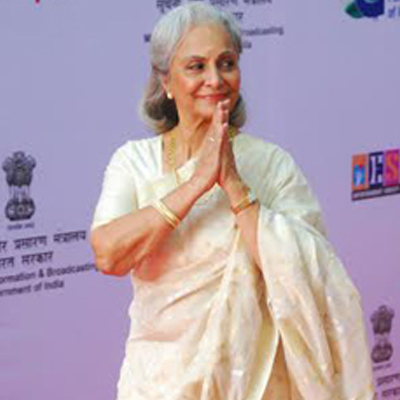
    Waheeda Rehman was honoured with the first Centanary Award at the event


    Speaking on the occasion, Jhukla said: “We are promoting India as a filming destination and to encourage foreign film makers to come to India we are setting up a single window clearance system”.


    The top official also said that over Rs 600 crore will be invested on the National Film Heritage Mission. Asia contributes to half of the world’s film production and half of it comes from India, he added.


    Asha Bhosle, who spoke on the occasion, said that she herself hailed from Goa and expressed her debt to the film industry. “I sang my first song when I was 10. I have been singing since then. The film line has given us so much,” the legendary singer said.


    Susan Sarandon, who won an Academy award for her role in the film ‘Dead Man Walking’, among several other Oscar award nominations, said that she was looking forward to spending her time in Goa appreciating films and the place.


    “India has produced so many films rich in history of cinema. I am looking forward to meeting artists and seeing film,” the actress said.

  • Former I&B Secretary proposes fresh study into ad cap

    Former I&B Secretary proposes fresh study into ad cap

    NEW DELHI: It’s been a month and more since former Information & Broadcasting secretary Uday Kumar Varma relinquished his post to Bimal Jhulka. But you can’t get broadcasting  out of Varma’s blood. After all he and his team in the I&B almost single handedly forced a fragmented cable TV sector and a disbelieving television ecosystem to follow the government mandate for digitsation.  

    Now the former secretary has proposed that with the onset of digitisation, it is  possible for the Telecom Regulatory Authority of India (TRAI) to get all the data needed for a fresh look at the 12 minute ad cap which the regulator had mandated earlier this year.
    Uday Kumar Varma

    Speaking exclusively to indiantelevision.com Varma said  that the Telecom Disputes Settlement & Appellate Tribunal (TDSAT) has stayed the implementation  of the ad cap on news channels, and the TRAI should use this time to conduct a study on how much time is being devoted to advertising by the various television channels and determine how much can and should actually be devoted by them.  He stated that the regulator should be able to complete a thorough study in two or three months.

    Varma said that while the ad cap was sought to be enforced in view of the provisions of the Cable Television Networks (Regulation) Act 1995, the situation had changed considerably since with a much larger number of television channels than previously anticipated.

    He felt the 12-minute ad cap was in any case arbitrary as it was based on the experiences in other countries rather than in the Indian context.

    He agreed that there were some channels – particularly regional language ones – which aired up to 30 minute per hour of ads, but pointed out that the new regime under digitisation afforded TRAI the freedom to study the issue afresh.

    He said a method had to be found to enforce whatever ad cap is decided upon finally, since many channels are not members of either the News Broadcasters Association or the Indian Broadcasting Foundation. Even otherwise, he said all broadcasters were not on the same page on this issue.

    Asked about the demand that the ad cap be put off to December 2014 by when the entire country would have gone digital, Varma declined to comment as he said the matter was before the TDSAT.

    Merger of Phase III and IV of DAS

    On the topic of the merger of Phase III and IV of the digitisation process, Varma said it had been found this would work better since towns and rural areas in these two phases come under the jurisdiction of district collectors, and management would be easier.

    The merger would also give more time to stakeholders to put their infrastructure in place.

    Analogue Switch-off Justified

    Meanwhile, Varma said he stood by the decision to switch off analogue transmissions when resorting to digital addressable systems.

    He further added that permitting the co-existence of  both analogue and DAS, as had been done in the United States or the United Kingdom, would have led to a ‘warped policy’ in a country like ours.

    Digitisation should be seen as a means to make the broadcasting sector more transparent and give a better choice and viewing experience to the consumer, he said, adding that it  had also led to greater investments from India and overseas.

    The very fact that subscribers, who have switched over to DAS were not complaining and there were many others opting for the new system, meant the average Indian had become more conscious of what they were watching on TV.

    Affordability is not a major issue as those who have not yet bought digital set top boxes ‘will do so without being coerced’ once they see the advantages in terms of quality of picture, services, and value added services that may follow.

    Varma felt the method of collection and sharing of subscription fees too is undergoing a major change, and the consumer will be able to see the benefits of this. Furthermore, carriage fees charged by cable TV operators and MSOs had also come down and this would be reflected in the fee they charge subscribers.

    Varma believes that even the rural TV viewer will be in a position to partake of the fruits of cable TV digitisation. He pointed out that fatter wallet subscribers in metros and cities who will be paying  for value-added services and other benefits  will, in a sense, subsidise the rural consumer who is not so rich.

    As the adage goes, take from the rich to feed the poor. Even in television!

  • I&B officials: Digitisation drive will accelerate further

    I&B officials: Digitisation drive will accelerate further

    NEW DELHI: For all those who think that there’s going to be a slowdown in cable TV digitisation. It is time to think again. All thanks to the focus of the Information and Broadcasting Ministry on the preparations for the upcoming elections next year.

    In fact, the teams at I&B and TRAI, which have been spearheading the drive along with TRAI representatives, has been informed by  new secretary Bimal Jhulka and TRAI chairman Rahul Khullar, to keep the foot on the accelerator pedal and if possible rev the digitisation drive even more.

    Last week, I&B sources told Indiantelevision.com that MSOs and other television ecosystem players are being told to start planning for phase III and phase IV of digitisation from now itself. Phase III and phase IV have been compressed into a single deadline which will end in December 2014.

    “The learnings from phase I and phase II are being put into place,” says an I&B source. “We will be setting up deadlines for import of set top boxes and for rollout of the boxes. There will also be a clear game plan about which channels will be switched off to force the pace of digitisation and CAF forms in the smaller towns and rural areas. We want the transition from analogue to digital to be smoother in the next phase.”