Tag: Bikano

  • 2024: The year that was – A snapshot of the snacks & sweets segment

    2024: The year that was – A snapshot of the snacks & sweets segment

    MUMBAI: Snacks are some small nibbles you munch on just to satisfy your cravings sometimes. But it’s no surprise that consumption has surged in a big way  – in fact the growth has been unprecedented – in 2024. The increasing population, growing incomes of people, and the shifting priorities of consumers are increasing the demand for snacks. 

    According to a report by global market research group, Imarc  the Indian snacks market was valued at ?42,694.9 crore in 2023. It is expected to swell dramatically by more than doubling by 2032, reaching ?95,521.8 crore. 

    This impressive growth is being driven by consumers’ love for convenience, the increasing role of e-commerce, and improved food safety standards.

    festivals increasing demand

    Festivals Lead to Increased Demand

    The festive season brings  joy not only to consumers but also to the FMCG brands. During this time of the year, gifting, celebration, and indulgence in snacks and sweets are synonymous.

    Many brands launched new products this year and created special hampers to meet the festive demand with variety and innovation.

    According to logistics intelligence platform for online retailers Clickpost’s report, online sales in this year’s festival season surged by as much as 49 per cent through tier-2 and tier-3 cities. And for brands, it’s probably the perfect opportunity in recent times to garner new customers, boost sales, and even better their market reach in those relatively smaller towns and cities.

    Kush Aggarwal

    Rural Growth and online expansion

    Rural areas are now an important part of the growth of FMCG brands. NielsenIQ data reports that rural markets expanded by six per cent in the Q3 of 2024, a rate greater than that of urban areas, which grew at 2.8 per cent. Small producers, however, also appeared to recover, playing a big role in the overall growth of the industry.In the meantime, the e-commerce expansion has shaken the snack and sweets industry. In the past three years, India has acquired 125 million online buyers and expects to add 80 million more by end-2025. This trend is increasing the accessibility of snacks and sweets throughout the country by improving convenience and availability more than ever.

    Swiggy delivery
    Consumer Trends Shaping the Industry

    Consumer preference is one of the major drivers of innovation in the snacks and sweets segment. Younger generations (Genz, Gen Alpha),  along with the influence of western eating patterns, are raising the demand for quick, ready-to-eat options. Sustainability too is gaining priority. On the other hand, brands are adopting eco-friendly packaging using recyclable materials, compostable, and biodegradable materials as well. This is being done to protect the environment as well as to satisfy the so-called woke younger segments sensitivity to sustainability. 

    Looking Ahead

    The Indian FMCG industry, especially the snacks and sweets category, has shown resilience in a challenging economic environment. From festive sales and rural growth to online expansion and sustainable packaging, the sector continues to evolve to meet consumer demands. Brands are not just satisfying cravings but also creating delightful experiences, making snacks and sweets a key part of India’s dynamic food landscape.

    (The views in this article are the author’s and Indiantelevision.com needn’t subscribe to them)

  • Bikano announces #PyarKaMeethaBandhan campaign

    Bikano announces #PyarKaMeethaBandhan campaign

    Mumbai: As the festive fervor of Raksha Bandhan envelops the nation, Bikano has unveiled an emotionally stirring campaign aimed at fostering the spirit of love, bonding, and compassion. This unique initiative, an extension of the much-loved “#PyarKaMeethaBandhan campaign,” not only celebrates the festival but also raises awareness about adoption and the power of sibling relationships.

    In continuation of the remarkable #PyarKaMeethaBandhan campaign launched last year, Bikano embarks on an inspiring journey to touch hearts and create meaningful connections. This year’s campaign delves into the profound emotion of sibling love while simultaneously encouraging adoption as a beautiful way to expand families. The heartwarming television commercial depicts a poignant scene where a young boy yearns for a sister to tie him a rakhi. His wish is fulfilled when his parents surprise him with a newly adopted sister, reinforcing the belief that love knows no boundaries.

    Bikanervala Foods Pvt Ltd & Bikano director Manish Aggarwal emphasised, “This Raksha Bandhan, we’re thrilled to unveil a campaign that not only honors the timeless bond between siblings but also underscores the importance of adoption in nurturing new relationships. Our society has more than 2 crore orphans, and the adoption rate is decreasing. Through our campaign, we aim to raise awareness about adoption and inspire people to consider embracing a new member into their families. By sharing your support for adoption, you can be a part of this noble cause.”

    Bikano marketing head Kush Aggarwal has expressed, “Festivals are moments of unity, joy, and heartfelt connections. Through our #PyarKaMeethaBandhan campaign, our goal is to etch an unforgettable Raksha Bandhan in the hearts of all. Whether it’s via our vibrant social media presence, resonating across the radio-waves, or collaboratively crafting emotional connections with select societies and NGOs, Bikano aspires to weave a rich tapestry of emotions. This campaign stands as a testament to the enduring power of sibling bonds and the warmth of adoption.”

  • Bikano sponsors team Dabang Delhi for PKL season 9

    Bikano sponsors team Dabang Delhi for PKL season 9

    Mumbai: Bikano has become the official sponsor of team Dabang Delhi for the upcoming season nine of the Pro Kabaddi League.

    Following this partnership, the Bikano logo will feature prominently on the right sleeves of team Dabang Delhi’s competition t-shirts this season. It will also splash across all in-stadium branding collateral and across ATL-BTL and digital branding as well.

    Speaking about this partnership, Bikanervala Foods director Manish Aggarwal said, “This has been a blessed year for brand Bikano as markets are open and people are back to spending on snacks after two years of lockdown. In order to consolidate these good times, as a leading FMCG company, we are looking to spread awareness about our brand and products via diverse, aggressive marketing campaigns. And what could be better than being associated with the Pro Kabaddi League and, more specifically, the previous season’s defending champions, Team Dabang Delhi? Kabaddi is a beloved sport in India, and the league has managed to win the hearts of millions of people across the world, so we decided to sponsor the original sport of India.”

    “The fact is that the Dabang Delhi team is in great form this year. It should therefore come as no surprise that Dabang Delhi was our first choice when we decided to extend our sponsorship to this league,” Aggarwal elaborates.

    Adding to it, Bikano head of sales Sanjeev Wadhwa said, “The popularity of the Dabang Delhi team is growing with every match and we are proud to be associated with the champions as their sponsor. We are confident that it will bring good visibility to our brand. This is because the famous Bikano logo will feature prominently on the right sleeves of Team Dabang Delhi’s competition t-shirts. It will also feature on all other in-stadium branding material, and all ATL-BTL and digital branding too.”

    He continued, “We are already running a high-frequency advertising campaign around our much-loved bestselling Bikano Bhujia across several prominent television channels, social media, and on-ground platforms. We intend to take the “#HumseBehtarBhujiaKoJaaneKaun” campaign to the next level with this sponsorship. This addition will help us further consolidate the brand awareness that we have created over the years. We are focused on connecting with our existing consumers and showcasing our Bhujia category to new consumers. We want to become the preferred choice among all our stakeholders and be part of every Indian family, be it in India or overseas.”

  • Bikano launches new TVC positioning itself as ‘bhujia expert’

    Bikano launches new TVC positioning itself as ‘bhujia expert’

    Mumbai: Snack and packaged food manufacturer Bikano has launched a new TVC highlighting the difference between any plain bhujia and Bikano’s bhujia.

    The new ad spot conveys the brand’s message in a fun and lively way. A man wheelchair-bound man with a plastered leg is seen coming out of the society elevator and quickly getting to the store to slam Babu Lal for sending him an ordinary pack of bhujia. When he specifically demands Bikano from him, the Bikano mascot appears in the scene to remind Babu Lal that Bikano is the only bhujia. The commercial ends with the tagline ‘Hum Se Behtar Bhujia Ko Jaane Kaun.’

    “Bhujia is not just a snack for Indians, it is a food mood, a winner on the leader board of Indian namkeen,” commented Bikano director Manish Aggarwal. “At Bikano, we understand and appreciate that fact, hence we only use the finest quality of ingredients to produce the world-famous Bikano Bhujia, and the same goes for all our products. Our bhujia TVC reiterates why Bikano is a preferred brand in the category.” 

  • GUEST COLUMN: Brand Positioning in FMCG sector is more than just good packaging, logos

    GUEST COLUMN: Brand Positioning in FMCG sector is more than just good packaging, logos

    Mumbai: The FMCG sector happens to be one of the toughest and volatile categories to succeed, often regarded as modern branding’s birthplace. The FMCG market in India was valued at $110 billion in 2020. The overall market size of FMCG had nearly tripled as compared to 2012. Furthermore, by 2025, the market is expected to grow to 220 billion dollars.

    There are numerous brands in India catering their products to millions of people across the country and generating immense capital. However, to become recognised as a household brand, it takes a lot more than just good packaging and ‘nice’ logos. Brand positioning needs synchronised efforts of different moving parts to create a perception in the marketplace that drives the business forward. 

    What is Brand Positioning?

    Brand positioning in simple words can be defined as the place a brand wants to own in the target audience’s mind. It’s about identifying, exploring and refining the distinctiveness of a brand through an effective positioning strategy. The most important aspect of positioning the brand is that it allows a company to be distinct from its competitors which helps communicate value, increase brand awareness and justify the pricing. All these factors impact the bottom line in a significant way.

    Strategies that Act as Allies to Brand Positioning Efforts

    Successful brands incorporate different strategies to create authentic customer experiences around their products. These brands provide their target audiences with a compelling reason to buy through effective communication and reaching out to them. While deciding to position the brand in the marketplace, there are certain strategies that can be adopted to stay ahead in the race and drive towards increasing consumer engagement.

    Creating Brand Loyalty

    At the heart of every successful FMCG company lies returning customers. This is especially true for the FMCG segment where products are usually consumed frequently and quickly. For long-term success, brand loyalty is critical that helps ensure consumers become tunnel-visioned concerning a brand. To drive brand loyalty, many companies make the mistake of competing alone on price. It is important to understand that consumers aren’t just looking for the cheapest products. Typically, they look for the right blend of value and quality. Value is not only about price but involves a complex mix of the brand promise, brand culture, brand values, corporate social responsibility, customer experience, etc. that all add up to enhance the perceived brand value.

    Aligning with the Needs of the Target Audience

    While this may sound odd but to become a household brand, it is desirable to be appealing to the right target audience instead of a broader audience. Apart from knowing the market, competitors, the sector’s environment intimately and understanding what the ideal customer wants, it is also essential to know how the offering can enhance their lives. It’s only when there is a proper understanding of the consumer needs, loves, hates and aspirations that companies can craft a focused and concise brand message that cuts through the noise. In the present age, customers are bombarded with messages from multiple channels throughout the day. The challenge is to put forward the right message, on target to grab their attention, at the right time and then, most importantly, to hold that attention. Companies can develop a customer avatar that they can use to underpin their brand’s proposition and profile. The brand should indicate why and how it’ll meet the consumer needs and that it understands what really matters for the audience.

    Evolving with Time

    The FMCG market is undergoing constant evolvement and brands need to be flexible to be at par with the changing times. Successful brands quickly recognize trends and act on them with shifts in strategy that helps them to stay relevant and meet market requirements over the years. With increasing digital media consumption, the evolution of business models and proliferation in internet connectivity, FMCG companies have vast opportunities to create value by leveraging digital media across the value chain to drive the effectiveness of operations and efficiency. However, there is a thin line between incorporating new trends and staying relevant versus losing sight of what the brand stands for. Instead of ‘muddying the waters’ with an excessive range of confusing brand messages, brands must always remain true to the core of what they stand for.

    (Dawinder Pal is head of marketing at Bikano. The views expressed in this column are personal and Indiantelevision.com may not subscribe to them.)

  • Bikano expands its western snacks category with three new products

    Bikano expands its western snacks category with three new products

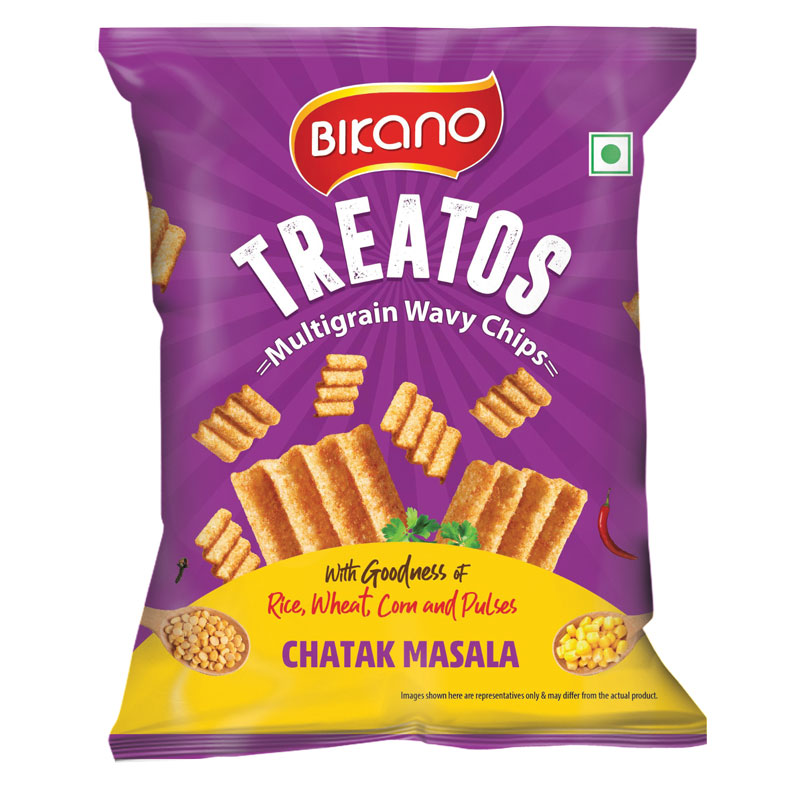
    Mumbai: Snacks major Bikano has announced the launch of three new products ‘Mexican Crunch’ and ‘Fun Sticks’ (two variants) to increase its market share and revenue stream in the western snacks category. Available at different price points, the new products are aimed at solidifying the brand’s presence in the western snacks market.

    All three new launches will be promoted across channels like digital, retail and print media.

    “The new launches provide us a means to target new markets and customers, increase market share, sell more and eventually increase our revenue streams,” stated Bikano director Manish Aggarwal. “A wide range of products portfolio also gives confidence to the retailer and provides an opportunity to infuse new energy into the channel, thus increasing sales revenue. Treatos Mexican Crunch and Chatax Fun sticks are definitely going to work as fuel for growth.”

    “The new work-from-home culture post lockdowns has grown the munching habit among people. Observing these trends, we believe that the snacks market is going to get even bigger. For the initial six months, we are expecting sales revenue of Rs 25 lakhs per month and will gradually attempt to achieve Rs one crore sales per month from these three products,” he further said.

    Gen-Z and the millennial population are considered a big market by FMCG companies for the snacks segment. With snacking brands focusing more on products with low-calorie count and less oil, they are able to encourage the younger generation towards healthier snacking choices, said the brand.

    “Indians are experimenting, seeking variety and are open to trying new products and experiences. Businesses need to be quick to tap into the fast-growing and profitable categories. Diversifying the portfolio makes sense as it helps mitigate risk and is not necessarily a costly affair. Most product changes are consumer-led, and this is to cater to their explicit and implicit needs,” said Bikano’s head of marketing Dawinder Pal.

    “In Mexican Crunch, peri-peri is the most popular flavour. Also, it is 100 per cent corn-based which gives a crunchy bite. On the other hand, the USP of Chatax Fun Stick is the taste and flavour which differentiates it from competitors. The product is very tasty and light to eat. For the Treatos Mexican Crunch we are targeting the age group of 10-30 years, while for the Chatax Fun Sticks, our target group is five years to 18 years,” added Pal.

  • Bhujia, extrudes and the festive season: Bikano’s go-to-market strategy for H2

    Bhujia, extrudes and the festive season: Bikano’s go-to-market strategy for H2

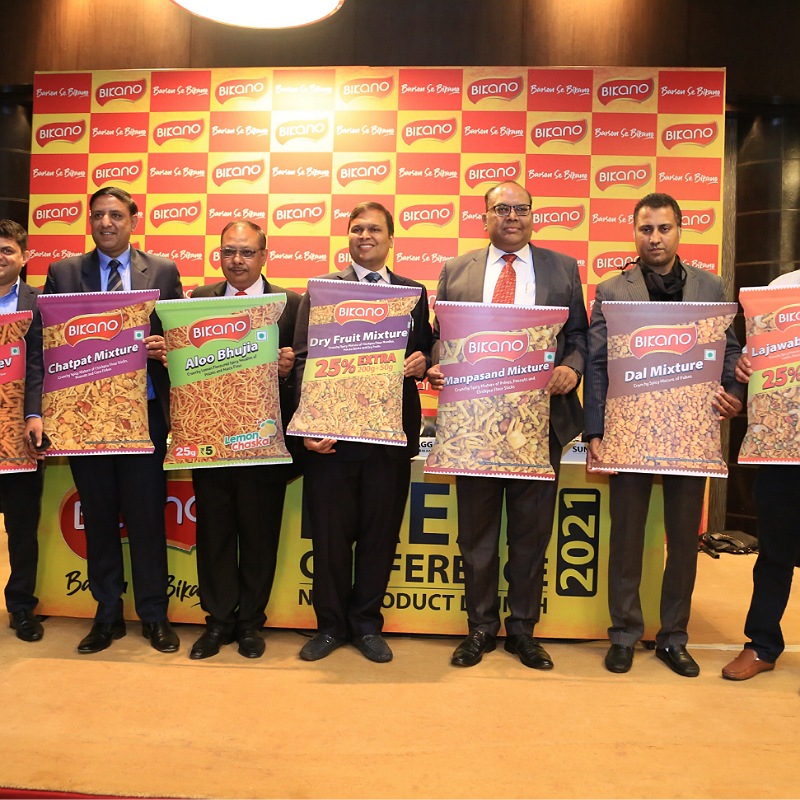
    Mumbai: The second half of 2021 began on a bustling note for packaged snacks brand Bikano. The Company has launched two new snack ranges – a tea-time maida-based snack range and an extrude range under sub-brand Fatax, a new campaign for its star product – Bhujia, and the festive blitz focusing on sweets. The launches are part of Bikano’s well-thought-out strategy for the rest of the year even as the Delhi-based FMCG firm sets out to achieve its larger goals of establishing itself as the Bhujia specialist and market leader, developing the extrudes category and driving volumes for sweets with festive offerings.  

    Bikanervala Foods, head of marketing, Dawinder Pal takes us through these developments and their strategic importance for the Company in the light of trends, that emerged out of the pandemic year. When Pal joined Bikano from Bonn Group of Industries in October 2019, little did he know that in addition to transitioning from leading a premium western snacks category to heading marketing function for a traditional snacks brand, he will also have to deal with another unexpected industry-wide transformation, just six months down the line. Fortunately, the change was largely positive for him as well as Bikano.

    Taste and flavours reign supreme

    There’s no denying the emergence of health and hygiene consciousness as the most important trends out of 2020. From sanitisers to ‘virus-resistant’ clothing lines, brands across categories grabbed the opportunity to come up with new offerings. Bikano also introduced a range of diet namkeen mixtures and multigrain chips. However, with the setting in of post-covid rationalisation, it became clear that while snacking had definitely embraced hygiene, thus providing an advantage to packaged foods brands, the wave of health-consciousness was short-lived.

    “Even though there’s more awareness and talk of healthy-snacking, the quantum of it is quite low. When it comes to snacks, people are more glued to the taste; there’s still an unwillingness to compromise on it,” says Pal.   

    With renewed confidence, Bikano decided to go full throttle on traditional tastes and flavours, delivered with the hygiene advantage of packaged foods. Bhujia emerged as the obvious choice to lead the Indian snacks category. The humble snack contributes a whopping 35 per cent to Bikano’s namkeen category sales. “We are targeting Rs 200 cr in revenues from Bhujia (Aloo and Bikaneri) in the next two quarters,” says Pal.

    The namkeen and snacks market in India is valued at about Rs 35,000 crore, with Bhujia and Sev enjoying a 25 per cent share. Currently, the second-biggest player, Bikano wants to become the market leader in Bhujias. To this effect, the brand recently launched a campaign – ‘Hum Se Behtar Bhujia Ko Jaane Kaun’ – positioning itself as the “Bhujia specialist”.

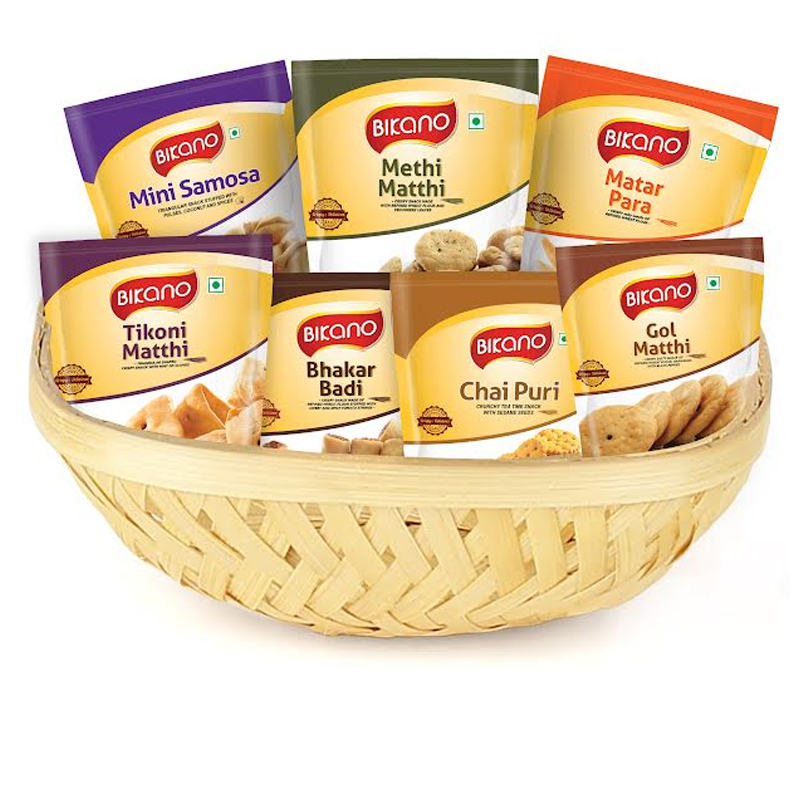
    Bikano’s new tea-time range of refined wheat flour (maida)-based snacks, launched in July is further expected to provide it an edge over the competition. Consisting of seven products – Bhakar Badi, Tikoni Mathi, Gol Mathi, Matar Para, Methi Mathi, Mini Samosa and Chai Puri – the range is primarily targeted at the northern markets.

    Unlike traditional Indian snacks where it is the second biggest player, Bikano’s foothold in the western category which includes extrudes, wafers and bridges are not as strong. Pal tells us that since the time he joined, efforts to capture the western snacks market have picked up significantly. With a minimal presence in wafers and bridges ensured, the brand decided to aggressively pursue the high-volume, high-growth extrudes category which targets kids.

    In July, Bikano introduced a revamped extrudes range consisting of Ringz, Puffees, Cheese Balls, Pasta Crunch and Jungle Safari for children aged three to ten years. The objective was to augment presence in the 16000cr western snacks market, within which, extrudes (6000cr) is the fastest-growing sub-category at 23-25 per cent YoY.

    During the launch, Bikano, director Manish Aggarwal had stated that the new range is expected to give the Company a sales surge of up to Rs 15 crore in this fiscal.

    Another top gainer of 2020 for Bikano was the sweets category. Explaining the phenomenon, Pal states, “While our snacks TG remained unaffected, as consumer behaviour shifted towards hygiene, we felt the change – a positive one – most prominently in the sweets category, with volumes doubling in the last two years. That’s also when festive became an important part of our portfolio and yearly plans.”

    Last festive season, the brand achieved 40 per cent growth over the previous year. It has the same target for this year.

    Overall, the Company is eyeing 125cr in revenues from global markets and 1250cr from domestic market in this financial year.

    Changing Media Needs

    Bikano’s media strategy has been a combination of ATL and BTL, with print (newspapers and magazines), tactical outdoor, BTL activations, PoS branding and digital dominating the mix along with some TV. The brand has collaborated with Chhota Bheem for the launch of its Fatax extrudes range. As its builds the kids-oriented extrudes category, more such associations can be expected to increase the quantum of advertising on TV.

    Within digital, Bikano prioritises social media. “We are using the modern social media platforms to build preference for our traditional products among millennials who are more inclined towards western snacks,” Pal remarks.  

    Pal has deployed the OTT medium significantly for the brand’s advertising needs in the US and Canada. Commenting on the rather muted presence on Indian OTT platforms, he notes, “OTT brands in the US offer clear audience segmentation, for instance, the Willow TV app is dedicated exclusively to Cricket. The phenomenon is yet to happen in the Indian OTT space, where there’s no evident differentiation, but we do plan to explore it in the coming year.”

  • Bikano positions itself as ‘bhujia specialist’ in new campaign

    Bikano positions itself as ‘bhujia specialist’ in new campaign

    Mumbai: Snacks and packaged foods brand Bikano has launched a new campaign ‘Hum Se Behtar Bhujia Ko Jaane Kaun’ to strengthen its position in the market as ‘bhujia specialist’. The brand had recently launched a new product variant – ‘Aloo Bhujia Lemon Chaska’ – to expand the portfolio and to differentiate its products in the bhujia category.

    The namkeen and snacks market in India is valued at about Rs 35,000 crore and over the recent past, it has been witnessing healthy growth. The increased sale of traditional snacks like bhujia, sev, and mixtures has significantly contributed to the industry’s expansion. Capitalising on the same, Bikano’s objective is to penetrate the market further by foraying into newer distribution channels and strengthening their existing channels of distribution, said the brand in a statement.

    “Leveraging this authenticity of original Bikaneri bhujia, we are aiming to expand the realm of our offerings by channeling energies towards entering newer sales and distribution channels,” said Bikano director, Manish Aggarwal. “We will also be maximising the potential of digital and other relevant promotional mediums to ensure seamless presence and capture market share. Bhujia is one of the products which have been part of Bikano’s culinary legacy since the beginning. The market share of the Bhujia & Sev category is 25 per cent of the traditional snacks market in India and we are expecting a considerable sales surge in this category,” he added.

    Aggarwal further said that the product also sees robust demand from several international markets such as the US, Canada, Europe, Gulf countries, Australia and New Zealand.

    “At Bikano, we imbibe the spirit of Bikaner that reflects the true taste of Indian culture. Crunchy, rich tangy flavours merged with spices make our Bikaneri and Aloo Bhujia a mouth-watering snack,” said Bikano, head of marketing, Dawinder Pal. “With the tagline –‘Humse Behtar Bhujia ko Jaane Kaun’, we want to establish Bikano’s authority in bhujia manufacturing and take the position as Bhujia specialists in the market.”

    “The campaign will be rolled out across channels including ATL and BTL. Aloo Bhujia and Bikaneri Bhujia are among the substantial contributors in the namkeen segment for us. Also, looking at the current situation, we as a brand are solely focused on value creation that will help us thrive in the market,” he added.

    Bikano said it has stocked Bikaneri bhujia and aloo bhujia across the company’s general and modern trade network. These products are available in a various range of packaging and price points.

  • GUEST COLUMN: FMCG companies took to apps, bet big on direct-to-consumer reach

    GUEST COLUMN: FMCG companies took to apps, bet big on direct-to-consumer reach

    Mumbai: The eruption of COVID-19 has left millions and millions of businesses scurrying for survival. Although somewhat less affected than some categories, the FMCG companies also faced headwinds for some time. And to counter these headwinds, technology has been the single most important intervention that they have employed during these trying times. And of the technologies, applications enabling a direct route to the consumer as well as other businesses in the value chain have been most prominent.

    While placing their faith in these applications, FMCG companies have also recast their value chains weeding out unnecessary elements at various levels allowing themselves greater leverage vis-à-vis their vendor partners and establishing a more direct connect with their end-consumers. And among FMCG firms, food companies, or those with prominent food product portfolios have been particularly noteworthy for taking the app route.  A step ahead of general trade, modern trade, or even traditional e-commerce channels, these apps have been popular yet necessary go-to modes for these companies.

    The big B2C advantage

    How does B2C prove to be advantageous for FMCG companies? Until now, customer-relationship building and acquiring customer insights were largely the preserve of the retailer community. However, what B2C apps do is that they facilitate a direct and one-on-one company-to-consumer relationship, with the former no more having to make efforts to establish bonding with a faceless consumer. On top of allowing deeper end-consumer insights for companies and brands, they can catalyse more relevant and individualised product and service propositions by the brand to the consumer thus leading to a more enriching customer experience which in turn would drive increased customer acquisition, conversion, and retention for the brand. And needless to say, the power balance between the brand and the retailer is further shifted in favour of the brand and away from the retailer.

    B2B applications not too far away

    However, this taking to applications has not been limited to B2C channels. FMCG companies have also incorporated apps in their business processes directly targeting retailers and kirana stores who offload their products and serve as a last-mile seller/supplier to end-consumers. Identifying and prioritising retailers who delivered top volume businesses, the companies made sure that the retailers continued to place orders for their products, and even more efficiently using these applications than they did before. In fact, thanks to Covid, the earlier forecasts projecting a contribution of around 10 per cent digital channels in the total FMCG market in the next ten years in the country has been advanced to next three to four years now. And at the same time, cutting out or minimising the role of distributors especially in terms of selection of retail outlets, the brands have reclaimed their power vis-à-vis the latter while effecting greater streamlining and consolidation of their distribution systems.

    Proliferation of new products

    While pivoting to digital technologies, B2C and B2B apps, the FMCG companies have also realigned their product portfolios in a major way capitalising on the shifting consumer preferences and behavior in times of the pandemic. And as part of this realignment, there has been a proliferation of new and innovative products which have been introduced to the market in the last few months. With health and hygiene being a predominant consumer focus, as many as 3,000 products in the health and hygiene category have been estimated to be launched in the September quarter alone last year. Earlier, in the April-September quarter, as many as 9,700 new products were launched by FMCG companies. Mindful of and in response to the country-wide lockdowns in place and customers being confined to their homes, 125 products were introduced in-home cooking segment alone during March-August 2020 in categories including ketchup, jams, cheese, and milk powders.

    Exploring alternative channels of distribution too

    Even as D2C apps gain traction, the FMCG companies are also exploring tie-ups with new-age delivery startups, food-tech service players, food aggregators, hyper-local apps, and courier firms to have their products delivered to the doorsteps of the end-consumer. In fact, some FMCG companies are also making product-specific tie-ups with delivery platforms and micro delivery platforms.

    Digitisation not limited to distribution: Influencer marketing gets a boost

    Rising uptake in apps and the broader digitisation has not only been confined to retail and distribution but also advertising and marketing. And riding on the increasingly entrenched position of social media and its consumption, influencer marketing has become a big part of FMCG’s digital marketing strategy in recent years. According to a report, globally, nearly a fifth (19 per cent) of FMCG companies have raised their influencer spending significantly as compared to pre-COVID-19 levels. And within India, during the festive season campaign alone, influencer marketing saw a 20 per cent jump in campaigns. A digital marketing agency has estimated India’s influencer market at $75-150 million a year, as compared to the global market of $1.75 billion, which is only set to get bigger in the coming months and years.

    Other technologies that could aid the B2C momentum

    At the same time, apart from apps, there are several related B2C technologies and platforms that could add teeth to the ongoing B2C drive. They could range from customer data platforms to data management platforms to marketing automation tools to business intelligence and data visualization tools to social listening tools, among others.

    So, in the future, there is no doubt that the B2C apps as part of an FMCG company’s digitisation program will acquire a more permanent dimension. Notwithstanding a resurgence of Covid in certain states, now with vaccination underway and revival of consumer sentiment in urban India, FMCG businesses including food companies are set to see greater activity and growth.  

    (Manish Aggarwal is director, Bikano, Bikanervala Foods Pvt Ltd. The views expressed in the column are personal and Indiantelevision.com may not subscribe to them.)

  • Bikano ropes in Chhota Bheem for launch of new snack range

    Bikano ropes in Chhota Bheem for launch of new snack range

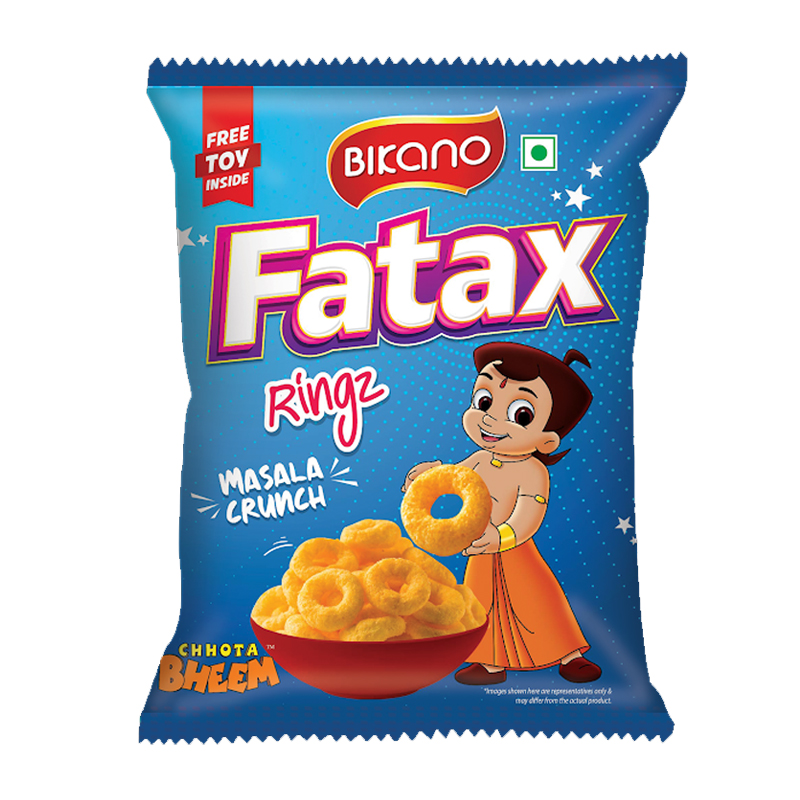
    Mumbai: Snacks major Bikano has taken the license for one of India’s most popular kids-show characters Chhota Bheem for the launch of its extruded products range under the sub-brand ‘Fatax’. The new offerings include Ringz (masala and tomato flavour), Puffeez, Cheese Balls, Pasta Crunch, and Jungle Safari.

    The launch is aimed at augmenting Bikano’s presence in the rapidly growing ‘western snacks’ market (valued at RS 16000 crore) within which extrudes have witnessed significant growth and continue to expand at 23-25 per cent. In India, the extrude snacks market is expected to grow at a CAGR of over 20 per cent by 2024, the company said in a statement.

    Major factors driving increased consumption in this category are growing young population, rising per capita income, and competitive pricing as well as the introduction of smaller packs, it added.

    In order to penetrate this growing market, Bikano has targeted its revamped extrude range at children aged three to ten years. The company will be running a digital campaign and TVC to promote the new offerings and its association with Chhota Bheem.

    “With its unique and message-driven content, Chhota Bheem has been consistently capturing the hearts of kids in India and globally all these years,” said Bikano, director, Manish Aggarwal. “This collaboration will not only attract kids to our offerings but will also drive them towards more diversified snacking options. Western snacks as a category is currently led by chips, with extrude being a small part of it. We want to drive growth in this segment as the market is ever-expanding. With our new sub-brand ‘Fatax’, we aim to deliver the best products and further develop the category in our portfolio. Offering new products on a regular basis has been our prime focus. Apart from that, the new range is expected to give us a sales surge of up to Rs 15 crore in this fiscal.”

    Speaking on looping Chhota Bheem for the launch, Bikano, head of marketing, Dawinder Pal, stated, “Puffed and extruded snacks are a major trend nowadays, as they provide numerous options with plenty of interesting combinations of flavours. However, along with taste and flavour, we also need a compelling product story and visual appeal to target kids and youngsters. Chhota Bheem has a high recall among our TG. This association will enable us to get an edge over our rivals and drive sales for the category.”

    The new products are available across Bikano’s general and modern trade network.