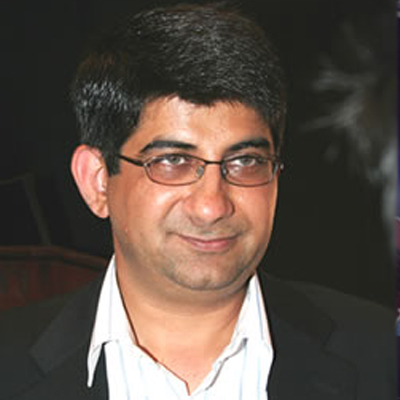
Tag: Bijoy A K

  • Indian television advertising is very much underpriced’ : Joy Chakraborthy – Zee Network executive VP Network Sales

    Indian television advertising is very much underpriced’ : Joy Chakraborthy – Zee Network executive VP Network Sales

    Joy Chakraborthy took charge of Zee Network as ad sales head in early 2005, at a time when Zee TV was going through a crucial phase. Chairman Subhash Chandra was strategising a turnaround for the flagship channel and a number of big ticket shows were being readied, with the expectations of re-writing Zee TV's fortunes in the Hindi GEC arena.

    As Network sales head, Chakraborthy's first challenge was to project Zee in a new light. "Zee had a perception problem in the market and a section of the trade had written it off. We wanted to create a new impression and build on that," Chakraborthy says."There couldn't have been a better time for me to head the network's sales team," he gushes.

    Speaking to indiantelevision.com's Bijoy A K, Chakraborthy elaborates on the strategies that worked for Zee, future plans and on the industry scenario.
    Excerpts:

    You have completed a year as the sales head of Zee network. Please elaborate on the key industry learnings you could gather during this period?
    A crucial lesson we have learnt is on the significance of soaps in the GEC prime time game. We have learnt that GEC is all about soaps, but different from Saas-Bahu sagas. People buy a channel for consistency and not for spikes only. In the industry, on an average, 70 per cent revenue is tied up on a long-term basis and only soaps can fulfill that promise. Innovative programming is fine, but they should be scheduled and timed very effectively. When you innovate, it should not be just a programming decision but a collective decision including sales, marketing and programming.

    Everybody had written Zee off. But we could pull off a turnaround — what seemed impossible until some time back – through team work, discipline, passion, accurate timing and by keeping the faith intact. As expected, the trade has responded to this change very positively, and now we enjoy the backing of the entire market. This is because of the strong relationships we had built during this period. What I am driving at is the fact that, relationships play a key role in this industry. This period also showed us who are our real friends and who are opportunists. Also, it has been a learning for me that both, people and organizations are important, and one cannot exist without the other.

    How is the industry evolving? Give us a low down in the recent developments and the trends?
    Indian television advertising is very much underpriced and we have decided to bring this issue into focus, under the banner of the Indian Broadcast Foundation (IBF). In a couple of months, we are planning to come out with certain guidelines on pricing, which would hold a lot of significance for the industry. Our main concern is the underpricing of television. It is a powerful medium and it should get its due, especially at a time when the costs of programming and marketing have skyrocketed. All network sales heads are now represented in IBF and we are united on this cause.

    The present scenario is very confusing. Television is booming, but clients are very tentative to take a call on TV as compared to the print as television research is more confusing and dynamic and changes everyday. I think an increase of 15 per cent to 20 per cent in rate is due immediately. It should also be noted that cricket of late has not affected GEC/Hindi movies viewership, which are the primary revenue drivers in C&S. The Hindi movie genre is still very much underpriced and same is the case with regional channels.

    I keep hearing that the English entertainment space is shrinking, but I don't agree with this as this is the genre with least wastage and where even an advertiser is a viewer.

    Does GEC still hold an edge over other genres when it comes to delivery and demand? Or has there been a change in the pattern?
    GEC will always hold the edge as maximum revenue comes to this genre. For any client, the reach build up and in some cases, frequency by smart scheduling comes from GEC. According to me, the genre pecking order would remain as: GEC, Hindi Movies, Regional, News, Sports – in that order.

    In the last two years, unique content channels have seen so much of a price cut that the FCT has increased drastically and revenue in the genre has hardly moved. I sometimes wonder how they are still surviving in business.

    Regional television space holds a lot of potential though it faces tough competition from print. The key segments driving growth in regional are: Retail, education and real estate, in addition to general categories like FMCG, telecom services, consumer durables etc.

    Zee has already started working on all these segments. We have started roping in retail clients and our next focus is on the real estate and education. Though there is a slow transition of main print category advertisers to television, the good news is that these clients have realised the power of television.

    Did the recent stock exchange fluctuations impact sales?
    The fluctuations haven't affected us at all. Actually, Zee recorded better sales during this period of May-June. June-July usually has a lean period tag attached to it, but this year, it was different. This is one change in the normal pattern. These days, there is nothing called lean or peak period. This is due to the boom in categories such as telecom, services, finance and the perennial FMCG.

    Today, advertisers are not limiting themselves to a particular genre due to media fragmentation. Most clients are there in almost all the channels/genres. Earlier, there used to be a particular set of advertisers for particular genres, such as premium products for English entertainment channels. These days, even FMCG brands are keen on English channels. It is a trend of aspirational marketing.

    'With the good performance, our viewer base has also expanded and this, in turn, helps us to better our performance on a consistent basis'

    The last one year saw Zee TV pulling off a turnaround in Hindi GEC, by reaching the second position. Could you briefly outline what happened during this eventful phase?
    During this period, the sales team was able to initiate a lot of changes successfully. To start with, we decided to remove the paid bonus system and agreed to reduction of ad sales inventory. This helped to change the general perception that, Zee has unlimited inventory. Then, we made it a point to keep away from attempting any innovation in terms of sales. This is because, the delivery of innovations take too much of time for the value we generate. Also, I have observed that in spite of doing innovations, the clients/agencies are always unhappy with the implementations, however good you might do. So why do innovations?

    We also focused on doing more client/agency meetings and met people at all levels. The Zee Network had a perception problem in the market, and the sales team has positively addressed this. I felt a lot of our positives were not known to the market. We had been very firm in our decisions and we always made it a point to abide by our well-defined sales policy. I have ensured all commitments/deliverables are in writing and not verbal, as this avoids conflict when people change at channel/agency side. When it comes to deals, the attempt has been to create win-win situations. We reduced our FCT to an effective level to create demand and initiated a very transparent sales policy.

    We also introduced the Matrix system, which played a key role in bettering the network performance. We appointed individual sales heads, responsible for strategy, revenues and targets of their channels. We have senior people as branch heads in the business deployed in key markets such as Delhi, Kolkata and the South whose roles are more tactical and they ensure revenue spread across all channels and have their branch targets. Both sales heads and branch heads work very closely with themselves and with me.

    For me, Zee has turned out to be a great place to work. It is a place with total freedom and great empowerment. I would say internal stability in Zee is very high. All decisions are discussed and not pushed down your throat. We have the best bunch of professionals, both at senior and junior level.

    Please comment on your face-off with Star. Star recently initiated its counter strategy to block your surge in the 9-10 pm time band. What impact has it made on your game plan?
    You feel happy when the leader reacts. Zee has pioneered the strategy of launching soaps with innovative media breaks. Seeing Star also doing the same for their show has been an ego booster for us. Coming to the second part of your question, it felt even better when the leader's tactics didn't affect our numbers and the market demand.

    With the good performance, our viewer base has also expanded and this, in turn, now helps us to better our performance on a consistent basis. Earlier, when we launched a show, rating in the range of 1 TVR to 2 TVR was considered as satisfactory or good. Now, our new launches pick up very fast and the shows even record an opening rating of 2+ TVR on an average basis. This has inspired us to fight Star in its own bastion – the 10 – 11 pm band – with non-soaps such as Johny Aala Re and Sabash India.

    So what is the next big idea? What will be Zee's next focus?
    We have now settled ourself comfortably in the 6 pm – 8 pm and the 9 – 10 time bands. You will be seeing some more launches in the months to come which will strengthen our FPC even further. The programming, marketing and sales wings are now working on the strategies to strengthen the 8-9 pm band.

    What is the strategy you follow to sell Day Parts?
    We have made lot of efforts to increase the demand for the Non Prime Time (NPT) band. Each sales package has got a mix of PT and NPT. We ideally would love to sell at 30:70 for PT/NPT. We have also been selling early NPT and late night slots for religious/tele shopping properties. As a result of focusing on NPT, our inventory FCT consumption has doubled in NPT.

    Which are the client segments that top your delivery list these days?
    Still FMCG is number one, though there has been a major upswing in Telecom/Services/Auto/ to name a few. The concern has been the consumer durable category with a few big players not clear about their plans. Additionally, SMS has emerged as a key revenue driver for us for our interactive shows.

    Speaking about the network performance, what is the scorecard?
    Zee TV is on top followed by Zee Cinema. Zee TV was underpriced when I took over, and now we are steadily moving in the right direction of rate. We activated rate corrections twice for the network during the six months and now, as the festival season is coming, you can expect another correction soon. For some channels, it will be across all day parts and for some it will be programme based.

    Revenue wise, maximum share comes from Zee TV followed by Zee Cinema, Zee Marathi, Zee Bangla, Zee English cluster, Zee Music and Zee Smile. The beginning of the year has been very good and I am sure we will touch a new high this fiscal.

    Now let us take it one at a time. To start with, please comment on the performance of Zee Cinema. What is the plan for this year?
    As a sales person, I can't ask for a better channel than Zee cinema which has been consistently delivering for years in the face of stiff competition. My colleagues in programming and marketing have given us a product which is a must have in all media plans, specially if it is targeting the "cow" belt (Hindi heartland). Since the last two years, the Amitabh movie band Shaniwaar ki Raat Amitabh Ke Saath has been our key driver. This year, we have introduced a youth block – Klub. We have our own share of blockbusters for the year also.

    Zee Smile has been keeping a low profile these days. Is the channel in an orphaned state, or is there a plan on the anvil?
    You will soon know our plan for Smile. But for sales, Smile has been a great help to get incremental revenues. The channel is very well distributed in non traditional markets and hence, you will find lots of brands advertising on Smile.

    Speaking about regional channels, you are in charge of sales of two key players Zee Bangla and Zee Marathi. How did these two channels fare in the last one year period?
    This year, we have practically re-launched Zee Bangla with a slew of new programmes and this will boost its sales potential. We are again going to do sales initiated programmes like Durga Pooja and Jatra.

    Zee Marathi has now become the clear number one. We are there in almost all plans. We have also set up a separate sales team to develop retail and non traditional advertisers like educational institutes, real estate, local jewelers, classified etc and the results are showing.

    Comment on the delivery of your event properties.
    During the last one year, there has been an extra thrust on good events, and the efforts have paid off very well, I would say. We have converted the Saregama finals as an on-ground event and the attempt has met with great success. This had inspired us to take the Saregama Ek Mein Aur Ek Tum finals to Dubai. Apart from winning a global appeal, going to international venues helps sales also. Zee Cine Awards, Mauritius and even the Zee F- Awards, have done very well for us.

    We have Zee Astitva Award, Zee Marathi Awards, Zee Gaurav Puraskaar, Zee Amader Gaurav, Zee Songeet Puroshkaar to name a few, lined up in the next few months across various channels.

    Have you retained Amap's service as an alternative rating agency to Tam?
    Yes. We need to have two meters because the industry needs competition in this realm also. It is always good for the trade. It brings out the best of everyone. According to me, each of them can coexist, triggering healthy competition. I am not making a judgment here, but for the betterment of industry, we need two parallel rating systems. The earlier we acknowledge this, the better it would be for all of us.
  • ‘With cricket action coming up, Sony has initiatives lined up in the digital space’ : Kaushal Modi – Sony Entertainment Television India head licensing & telephony

    ‘With cricket action coming up, Sony has initiatives lined up in the digital space’ : Kaushal Modi – Sony Entertainment Television India head licensing & telephony

    After establishing its digital platform 2525 with a slew of activities in 2004, Sony India’s 2005 plan was to take it to the next level to turn it into a substantial revenue generating model. To drive the strategies, it needed an experienced hand in this space to head the division. The search ended in Kaushal Modi, who was then a key player in arch rival Star India’s digital strategies. Thus, in February 2005, Modi switched to Sony India in the capacity of head, licensing and telephony.

    Going into the second half 2006, Sony’s game plan now mainly revolves around the game of cricket and Modi is banking on the bonanza to contribute significantly to the growth of his digital activities. “With cricket action coming up, Sony has got lots of initiatives lined up in this space. The action will start ticking from October 2006 onwards. We are still working on our plans,” he says.

    On the licensing front, Modi is exploring new markets and under his leadership, Sony has even entered the arena of format sales. “Sony used to sell its shows in the international markets and was never into selling formats. This year, for the first time, we have tried exploring this space with soaps ‘Kaisa Yeh Pyaar Hai’ and ‘Yeh Meri Life Hai’ and the experiment has generated an encouraging response,” says Modi. And he is betting big on new content platforms such as Video on Demand (VoD) and IPTV to drive the growth in this sphere.

    In an interview with Indiantelevision.com’s Bijoy A K, Modi explains the market scenario, the strategies and the game plan for the year.

    Excerpts:

    This year’s MipTV witnessed the trend of TV producers investing in buying formats as against just broadcasters doing so. Would it make a negative impact on the syndication strategies of broadcasters?
    Yes. Earlier, broadcasters used to drive these activities at MipTV. But, now, the scenario has undergone a change. There are many international format companies, which are very keen on the Indian market. While bigger companies such as Endemol and Fremantle do have direct access to the Indian market through their offices in the country, some of their smaller counterparts — who don’t have direct access to India — depend on markets such as MipTV and Mipcom. This is the international scenario right now.

    Coming to the second part of your question, this trend doesn’t make a difference to our business strategies. We are content aggregators and not content creators. The format owners are never in a position to squeeze money out of their clients. It is up to the broadcaster (buyer) to pick up a format or not.

    Sony has taken its two shows – Kaisa Yeh Pyaar Hai and Yeh Meri Life Hai, which are not game shows – to MipTV in Cannes this year for the purpose of syndication and formatting. How was the experience? Have you struck deals with international companies?
    Earlier, Sony used to sell its shows in the international markets and was never into selling formats. Now, this year, we have kicked off our format syndication activities. We tried exploring this space with soaps Kaisa Yeh Pyaar Hai and Yeh Meri Life Hai and the experiment has generated an encouraging response. We haven’t signed any buyer yet, but there are enquiries from various foreign broadcasters. Some of the Asian and European (Germany and Poland) have expressed interest in the format. They want to recreate the content, giving it a local treatment. The talks are still going on.

    Please comment on the demand for our homegrown properties abroad? Do you keep the international market also in mind, while developing original formats?
    The advent of new technologies is changing the face of the international content syndication market. In the international market, new content platforms including Video on Demand (VOD) and IPTV have been boosting this business segment. The new technology helps the content aggregator to target niche consumer segments, however small in size they are.

    For example, if you have 5000 Indians living in a certain area in Japan and you want to target them with your content, you can do that with the help of these new technologies. Thus, you have a viable business model in hand. This has opened up new markets across the globe.

    Speaking about the potential of Indian properties in the international markets, there is a significant Indian diaspora – though not critical enough to drive the business — supporting the trade. Genre-wise, I would say there is a stress on movies.

    South East Asia has always been the strong traditional market for Indian content. But now, with the advent of new content platforms, Europe and Africa have also started showing interest in our content. European channels such as RTL2 (Germany) have been showing a lot of interest in Indian content. As I mentioned earlier, there is a demand for movies. But, at the same time, some of these European channels now want to try shorter series as well.

    Hence, developing homegrown properties, which can be saleable in the international markets also, sounds a lucrative idea. But, our main focus continues to be India and the strategy has always been to leverage on the original Indian content. For us, the Indian viewer always comes first while conceptualising ideas.

    What will be the size of the content syndication market with regard to Indian television? Please speak on the market dynamics including growth potential and competition.
    It is a highly fragmented market in India and it will be very difficult to put any number to it. Apart from the three or four big players, there are several medium-sized companies and then hundreds of smaller players including sub-brokers. The traditional syndication market is stagnant. New content platforms will drive the business. This will be driving almost 50 per cent of the revenues in the near future.

    Competition is there in all forms, whether it is producers or broadcasters. Speaking about Sony’s content syndication plan, I would say we haven’t yet exploited the segment to the full extent. We have just started. Healthy competition definitely helps. With competition, you have new markets opening up across the globe. Players keep moving, looking for greener pastures.

    The advent of new technologies is changing the face of the international content syndication market

    How much does the content syndication business contributes to Sony India’s kitty?
    It is definitely not a topline driver for Sony. It is more of a bottomline driver. Though it contributes a miniscule compared to other revenue streams, it plays a significant role in the total scheme of things. It creates a market value for the channel. It creates added revenue opportunities through an existing property. We have to keep in mind that, here the channel is not making any new investments.

    Speaking about the future potential, content syndication & licensing will contribute well to drive exponential growth.

    Star India recently revamped its short code 7827 and looks very aggressive on its interactive and digital plans. What can we expect from Sony this year in this space?
    With cricket action coming up, Sony has got lots of initiatives lined up in this space. The action will start ticking from October 2006 onwards. We are still working on our plans.

    Speaking about our digital presence, Sony already has a Wap site. But we haven’t been promoting it much since the Wap technology is still in its nascent stage of growth in India. Hence, we haven’t been banking on the Wap site much to drive user downloads. A good percentage of our content download happens through the telecom operator sites. We are also weighing options to launch a mobile voice platform.

    Please elaborate on your digital and wireless strategy
    The entire department has been created to leverage the opportunities this space offers. Sony envisages that, the future is going to be digital. New technologies driven by mobile phones, iPods and other handheld devices will spearhead an exponential growth. The atmosphere is very encouraging since mobile connectivity in the country has really picked up. Keeping the changes in mind, we are closely working to build a digital content bank and making our programming and content available across all the available platforms. The thrust will be on creating a dedicated mobile and internet community.

    Convergence of television and portals appears to be the latest mantra for entertainment. Please elaborate on Sony’s plans and the progress in this segment.
    We have our online presence in setindia.com. To offer content through broadband, we have tied up with SifyMax. This association helps us to offer some of our popular shows such as Fame Gurukul and Indian Idol through broadband. This way, we are able to capitalise on the significance of SifyMax as a popular destination for online content. This is a win-win situation for both of us. We also have content associations with Indiatimes and Tata VSNL.

    How do you plan to leverage Set India’s programming portfolio with the mobile initiatives? Are there plans to make mobisodes out of your popular soaps?
    I would say, the Indian market is yet to see a proper mobisode. The mobisode revolution is still bit away in the horizon as the technology is not yet ready to accommodate it. What we all have been doing is, repurposing our content for mobile phone. And the advantage: you can target different audience segments with various niche products made out of a single programme.

    Globally, most of the mobile companies are getting out of the content sector to focus on their main areas of strength. In India also, should mobile operators have to move out of the content space? Please offer your take on this.
    The international market has been witnessing lots of alignments between content providers and the technology companies. Internationally, we have entertainment companies sticking on to content operations, while technology companies concentrating on the technical aspects. Obviously, you can’t lay your hands on both the businesses because it is difficult to focus on these diverse segments. The same applies to the Indian market as well.

    Are you looking to partner international companies in the digital space? What is your take on the global scenario?
    Sony in talks with some of the players for digital distribution of content and we have already got Jump TV on board in this space. We are in advanced stages of talks with some of the European and US players and an announcement in this regard will be made soon.

    What are the issues that will foster an even faster mobile market growth in India?
    What is critical is creating best practices and formula for the industry. Industry practices should be standardised so that, it will encourage the players to roll out a variety of services. There should be flexibility in pricing. There is huge potential in areas such as voice offerings and subscription services. By working together as a team, we can capitalise on the huge growth potential the space offers.
    Will web streaming as a concept catch up in India?
    Web streaming is yet to catch up in the country because of the bandwidth issues. But, with falling broadband prices, it has got a huge potential to deliver, especially in the area of interactivity. If the government’s bandwidth targets for the fiscal are met, the market would undergo a tremendous change.
  • ‘We should leverage on each other’s strength and boost the sector by providing the consumer a common platform of services’ : Viren Popli – Star senior VP, Interactive Services

    ‘We should leverage on each other’s strength and boost the sector by providing the consumer a common platform of services’ : Viren Popli – Star senior VP, Interactive Services

    For the last six years, Viren Popli has been an integral part of the Star India system. As the international business senior VP, Popli reported to Kaushik Dalal before moving to the Wireless division to work with Sumantra Dutta. As he puts it, those were days when he worked quietly behind the camera and enjoyed the ‘privacy’ too.


    The so-called privacy was soon broken when he was made the head of Interactive Services in February 2005. As he recognizes the tough task he has at hand to build this emerging business as a strong revenue stream, Popli settles down to give his first interview to the media.


    At the Wireless division, Popli and his team are making efforts to create a highly sought after destination brand for mobile content, Star 7827, to offer specially created and aggregated content for the mobile screen available through SMS, WAP, Web and voice platforms. In this interview with indiantelevision.com’s Bijoy A K, Popli shares Star’s plans and talks about the evolving digital market.


    Excerpts:

    Star India has been spending the last three years to prepare the first draft of its wireless and interactivity plan. And as the first step, the revamped version of Star’s wireless platform 7827 has been unveiled. What went into the research? What are the key findings?

    Several things went into the research. Firstly, we have tried to analyse the effectiveness of areas such as voting, gaming and content. For example, on the gaming front, we have tried to look at the effectiveness of text games and java games. We wanted to know how the product actually sells itself.


    Secondly, we have done a lot of focus group studies and discussions across the country to gather useful feedback. Lastly, while doing the research, we did a series of internal studies which covered the whole News Corp platform. News Corp entities across the globe are doing various things on mobile. Hence, we were able to exchange ideas.


    Research provided us with a total new insight into the market. For example, very few people in this country know how to download using a mobile. There are booklets and help manuals released by mobile phone companies, but you won’t get a solution in any of those. Someone had to teach people to effectively use the mobile phone in such practical situations.


    People are willing to learn technology and pay for it, if they are provided the right content. What kind of content is desired by the mobile community? What is the age group structure here? What is the significance of the word of mouth communication in this segment? Through our research, we got an idea on the kind of efforts we have to make to provide the right response. We also learnt that flexibility, speed and relevance are the most important pieces of this business.

    Could you elaborate on your digital and wireless strategy?

    Our first goal is to make our mobile service 7827 as the most preferred platform both for content owners/mobile operators and consumers. The next focus will be on content. I would rate content space as the biggest challenge in the wireless business.

    What is the next step?

    We want to deliver an all-pervasive service available on all platforms, whether it is text, web or WAP. For an average Indian, Web and WAP are high-end technology words. Hence, we also want to put together an easy-to-access interface method that is more accessible.

    How much of investment has gone into revamping 7827?

    The project requires a significant funding. I can’t provide you the actual figures because we are still in the investment mode. We want to expand in the areas of technology, content and marketing. This is an ongoing process.

    What are the issues that will foster an even faster mobile market growth in India?

    The mobile business has grown tremendously, but the industry is just three or four years old. It will still take some time to evolve. The value chain and the relationship need to fall in place. The audio visual content should reach the masses. The market requires effective strategies and marketing initiatives to attract consumers to audio visual content. This will be crucial for the market to grow.


    3G is still some distance away as far as India is concerned. The Indian market has explored 2G and 2.75G technologies really well, but I would say there is still room for improvement. These technologies have still juice in them to drive innovative concepts and deliver better results.


    Instead of waiting for the arrival of 3G, we should explore the 3C business, which is Cool Connected Consumer. Mobile phone is no more a mere communication equipment. We change our mobile phone models in such frequency, while we never make an attempt to change our fixed phones. Here the content, as the driver of such a phenomenon, takes centre stage. As a content provider for wireless, we want to make sure that the market will not run short of content. That is what we are doing here. We believe that, content can force the technology to catch up or take a leap.

    We have learnt that, flexibility, speed and relevance are the most important pieces of this business

    Will web streaming as a concept catch up in India?

    It is a tremendous opportunity. As I said, it again depends on technology and the technology depends on the content. If the content is really attractive, we will have more and more people opting for the broadband service.

    What is your take on the global scenario? Is there any learning from the China market, where Star Wireless is already operational?

    This space is all about intelligence and experimentation. One interesting development has happened in the international space. Globally, most of the mobile companies are getting out of the content sector. The operators have found working on the content space — which is not actually their main area of strength – very distracting. Across the platform, the players have decided to focus on their main areas of strength.


    In India also, mobile operators will have to move out of the content space. It would be very difficult for them to run content services. Focus on a niche area is very important in this sector.

    Who are the key players occupying the digital and wireless space?

    Yahoo is very strong in the communication space, while Google reigns supreme in search. Entertainment companies are aggressively eyeing the digital space. Fox, for example, has taken major inititatives. There are also many small companies. But once consolidation happens, we will have four or five big aggregators and a range of secondary companies working around them in niche areas.

    What is the role played by News Corp. in Star India’s interactive initiatives?

    There is a macro direction element present in the whole process. News Corp. as a company has been a great idea exchange platform. It is all about sharing ideas and capitalising on the ideas and thoughts exchanged through this vast network. Since each individual country has its own local environment, we won’t be able to accept all the ideas generated. We will have to see what survives in our environment. However, the global platform has helped us tremendously to share and generate information and ideas.

    News Corp recently acquired the social network portal Myspace.com. Are you looking at creating a similar networking platform in India?

    The concept of online social networking has been very successful in the West. Star India is also exploring opportunities to launch a social networking portal on its mobile platform.

    Star India launched mobisodes last year. Now it is more than six months since this happened and how was the experience? How much did the initiatives contribute to Star India’s revenues during the fiscal?

    It did really well. We had significant number of video downloads, though the lack of technology awareness and penetration limited the exercise to certain areas. However, I would say, the initiative covered its costs and made a profit.

    Interactivity works for a channel or a programme, when the viewer chooses mobile phone over remote control

    You are about to launch your mobile voice platform. What are the growth plans for this?

    We have signed agreements with Hutch and BSNL, while more deals are on the anvil. We will have a different short code on Voice. On the technology front, there is bit of a problem since BSNL has a separate short code digit structure. In that case, we will have to market two different short codes for Voice. At present, we are trying to sort this issue out.


    We are also working on the Voice content. The radio channel will offer a mix of created, aggregated and Star India content.

    How do you plan to leverage Star India’s programming dominance with the mobile initiatives? Are there plans to make mobisodes of your popular soaps including Kyunkii…??

    All our programmes can go to mobile as well. At the same time, variations of these programmes can also go. For example, it would be interesting to watch Tulsi’s (the lead character in Kyunkii..) fashion transformation over the years in a mobisode. We can present alternative storylines through mobisodes. Lots can be done in terms of this content variation.


    We have plans to do a lot of things this way. But, I am not in a position to offer a timeline since, once we start such an initiative, we will have to be consistent with our delivery. We can’t provide Kyunkii.. on mobile for a week and forget about it. We will have to offer the Kyunkii.. content six days a week. It requires significant amount of planning and improvisation. The editing of an episode for mobile itself would consume significant amount of time. Hence, to make a formal announcement, we want to be confident of our delivery cycle.

    Does it also work in reverse? Will 7827 also help in driving up viewership?

    It can be assumed that the consumer downloading a mobisode of our programme is a loyal viewer of our shows. The interest in the programme must be inspiring him to download the mobisode of that particular programme. Hence, we believe that mobile holds tremendous potential to boost viewership and audience base.


    Now, how to take it ahead? Here is where interactivity comes in. We are looking at various methods to boost interactivity by way of the existing mobile technologies. Interactivity works for a channel or a programme, when the viewer chooses mobile phone over remote control. There are these traditional methods such as contests and special schemes. Interactivity can be a more powerful weapon, if used effectively in breaks. We are looking at various strategies to improve on this front.

    Any SMS-driven shows from Star? Are you planning any mobile-based gameshow at the moment?

    I have nothing concrete to offer you at the moment. But we are definitely exploring this segment.

    Has Star recently bought any show formats for the mobile and internet?

    We keep scanning the environment. But nothing significant has caught our attention as of now.

    Are you planning to work with film producers for mobile and other interactive initiatives?

    We are looking to work with every content provider in the country, including filmmakers and producers. In fact, we are very keen to work with film producers.

    How much have broadcasters raked in as revenues through SMS services during the last fiscal? How fast will it grow this year?

    It is in the range of Rs 750 million to Rs 1 billion. With more initiatives coming in, we expect this to double this fiscal.

    In the next five years, how much will the mobile division contribute to Star India’s revenues?

    Mobile will evolve as a strong revenue stream for Star India, after advertising and subscription. It is difficult to forecast the figures, because the technology will undergo lot of changes during the next five years.

    Will it be totally subscription driven or is there a scope for ad revenues in the immediate future?

    In the mobile content platform, there have been many experiments to generate advertising revenues. There is this method of inserting brands in content, but it is not generally very effective because of the space constraints. That is just one way of doing it. We believe that the real opportunity is yet to happen and there should be a better way out. Marketing and branding should be handled in a smarter way in this case.

    What is your take on in-game advertising?

    In-game advertising can be effective in the case of console and PC gaming. But, again, when it comes to mobile, we have space restrictions. The brand will look too small to generate appeal. Branded games can be one way out. Still, how many people would want to download a branded game? This space requires an effective strategy.

    What are the plans in India for the Lost game?

    Buena Vista International Television (BVITV) owns the rights for the game and as far as I know, they are very keen to launch the product in India.

    In the next five years, mobile will be a strong number three as Star India’s revenue resource, after advertising and subscription

    Are there any Indian shows that you feel have potential for this kind of an extension?

    Absolutely. I would say, most of our shows have the potential to be extended as various mobile initiatives. But we haven’t really zeroed in on any particular show as yet.

    Have you struck deals with international companies?

    The plan is to aggregate the best content from across the world. We are planning associations with companies working in the areas including content, applications, technology and games. We haven’t reached a position to name any particular company as our associate yet.

    How would you like to explore the interactive market segments such as video sharing, messaging, connecting and email through your digital initiatives?

    We are an entertainment and information service provider. We would stick to what we are doing at present. There is no plan to offer services which are outside our purview.

    How do you rate competition in this segment?

    All the players have competed really well to create their own space in the mobile industry. The next incremental step should be a leap in terms of strategies. All of us should come together to empower the business. We should try to leverage on each other’s strength and boost the sector by providing the consumer a common platform of services.