Tag: Bigg Boss

  • “You call ‘Bigg Boss’ scripted or non-scripted you will end up watching it”- Abhishek Rege

    “You call ‘Bigg Boss’ scripted or non-scripted you will end up watching it”- Abhishek Rege

    MUMBAI: “It’s been ten years for Endemol in India and we proudly say that we are the first International production house that has not wrapped up and gone back. Today, at this point, we are poised to be the leaders in the non-scripted format,” says Endemol Shine India TV business COO Abhishek Rege.

    The production house which has brought some major international formats to India, Endemol Shine India doesn’t require any introduction. The popularity and fan following of its shows like Bigg Boss, Fear Factor: Khatron Ke Khiladi, Deal or No Deal and Voice say it all!

    In 2006, Endemol started production in India and first enthralled Indian audiences with the Indian adaptation of Big Brother . The production house has had a successful run in  the fiction and non-fiction space since then.

    In conversation with Indiantelevision.com’s team, Rege speaks about his journey with Endemol Shine India, shares his views on BARC rural data, digital space and responds to rumours about Bigg Boss being a scripted format. Excerpts of the interaction:

    How challenging has your stint with Endemol been? What have the major highlights been?

    It’s been a great roller-coaster ride. We have seen really tough times between 2011 and 2012. There was a large amount of fragmentation that we went through in the market as well, but overall, the journey starting from Laughter Challenge and Chhote Miyan to doing Bigg Boss, the Voice and “So You Think You Can Dance” today has been fantastic. It has been a rich and wonderful experience and not to mention – a great learning. We had some great partnerships with international players and also locally. It has been a great run.

    For me, the major highlights in the journey were when Viacom launched its Hindi entertainment channel Colors and we went in with Bigg Boss, Fear Factor and created a new franchise of Chhote Miyan. Our attempt to bring in professional wrestling into the GEC space with partnerships with TNA too was a fulfilling experience.

    Investments into our Endemol Indian entity by CA Media and our foray into the movie business were also the high points.

    Until now, only English entertainment channels aired international content. Now Comedy Central is rolling out the home-grown Indian show Challenge Accepted. Do you see more of that happening in the near future? And do you think these shows have the scope to be licensed globally?

    Absolutely! The English entertainment sector is going through a lot of growth. Until now, the competition was between who acquired the best of the shows from various catalogues. Doing a show like Challenge Accepted is a big step, if it works, you will see others trying to emulate it. But at the end of the day, the economics will drive any such foray.

    You need something locally developed, because if you buy formats then cost will be a big roadblock for producing a show. The budgets for such shows may not be too high and hence one may not be able to do big ticket shows in this space as yet. The monetization potential for such adapted shows will be lower because they are likely to cater to Indian audiences only.

    After the rural data roll out do you see content becoming a bit conservative?

    Not really. From the advertisers’ perspective, it’s more about what content they are picking up, which in turn depends on their target group. We need to understand if those rural pockets attract national advertisers or local. The market which clients look for are towns and cities which have access to national brands or are self-distribution points. So in reality, broadcasters are not catering to a hard-core rural group. Hard-core rural audiences don’t have the same affiliation to buy national brands as they are prized very high as compared to what they can afford. That is the market segmentation wherein the advertisers decide who their consumers are, and that will make the difference. Therefore, rural data should not be affecting content strategies too much.

    Bigg Boss is one of Endemol’s marquee shows. However, it’s often rumoured of being scripted to some extent. What is your response to that?

    It’s not scripted, is all that I can say. Bigg Boss is one of those shows where the PR is not limited to any positive or negative buzz.  It’s one of those shows which feed on anything about it. Whether they love it or hate it, whether it’s scripted or not, people will end up watching the show. They want to know when the next fight will happen and they will come back to watch it.

    How is the interest in the regional Bigg Boss versions growing?

    We did three seasons of Bigg Boss Kannada and now will be doing a second season in Bangla soon. Though Bigg Boss season one in Bangla didn’t hit the top as compared to the Kannada market, we had 50 per cent of the channels’ GRPs at that point of time. While in Kannada, the first season of Bigg Boss which aired on Colors Kannada did extremely well, the second season didn’t go all as planned. But the third season that aired on Colors Kannada again broke all the records.  The success of Bigg Boss season 3 in Kannada proves that we have a great potential in the Tamil & Telugu markets.

    Endemol has produced a few sports shows like 100% De Dana Dan, Stumped etc. What kind of scope is there in the sports content space and can we expect anything new on that front this year?

    We don’t have anything that is specifically targeted at sports. But yes, we have a lot of scope in the sports genre. Our focus right now is films. We did a show called IPL Rockstars where singers performed in the stadium while the crowd gathered before a match was about to start. We haven’t delved further in this genre yet except something like Stumped which is more Call TV, but right now we are focusing more films.

    Do you think India has truly woken up to branded entertainment? Is there anything lined up from Endemol in that space?

    The potential on branded entertainment for the producer is always questionable because of the structure that we follow here. The broadcaster gets all the rights and product placements. Therefore, it’s not that easy for a producer to garner a share in the branded space. I think digital will be the door which will be a lot more open for branded content. Right now we don’t have anything in that space but the future looks promising.

    How different is it producing content for OTT players and television? Can an OTT production be more expensive than TV?

    It’s quite different producing content for OTT as compared to television because you need someone to understand the sensitivity and the attention span of the consumer when it comes to OTT.  There will also be comparisons on scripted and non-scripted content from both the sides. You need to have power packed content for digital. Edits will play a major role. You just can’t run a drama or a soap on it – that is more for catch-up. Digital is a place where you can have creative freedom as well. It is where your lifestyle, youth & niche segments will come in, and as far as production costs are concerned, it can be cheaper than regional and it can be more expensive than GEC, for making something premium like the Game Of Thrones.

    On what basis do you decide on the international formats that can be brought to India and how much are they modified to suit Indian sensibilities?

    We look at two things while adapting international formats, one is the cultural adaptability and the other is how economically feasible will it be? The format should be relevant to the Indian audience and to our culture. We can’t bring shows which have cultural differences or something which our audiences might not relate to. Also we have to see if the format is financially feasible or not. In the UK, production houses spend around US$ 10 million on a pilot, and here we don’t have that budget even for an entire series.

    We modify the format to an extent where the rules of the key game play are not affected. There are always some Dos’ and Don’ts of every format that have to be protected.

    What other formats of Endemol do you plan to get to India in the near future?

    That’s tough to answer because we keeping pitching and we don’t decide what comes in, the broadcasters decide that. I think the line-up for most of the broadcasters is pretty much tied up, so we are waiting to see what will come out from this year’s MIPTV/ MIPCOM.

    What are Endemol’s plans going forward? What’s in store from Endemol India in 2016 in terms of fiction and non-fiction?

    Our focus will be a lot on films, that’s going to be our key acceleration area while our TV focus will continue as usual. But films’ are something which will help us to take next the step to diversify and grow. Digital is another area we are looking closely at. In the non-fiction space we will be coming up with season 3 of Bigg Boss in Bangla soon, and then we will be doing the subsequent seasons for Kannada and Hindi at the end of the year. Also looking forward to the subsequent seasons of other franchises we have set up to come in this year.

     

  • “You call ‘Bigg Boss’ scripted or non-scripted you will end up watching it”- Abhishek Rege

    “You call ‘Bigg Boss’ scripted or non-scripted you will end up watching it”- Abhishek Rege

    MUMBAI: “It’s been ten years for Endemol in India and we proudly say that we are the first International production house that has not wrapped up and gone back. Today, at this point, we are poised to be the leaders in the non-scripted format,” says Endemol Shine India TV business COO Abhishek Rege.

    The production house which has brought some major international formats to India, Endemol Shine India doesn’t require any introduction. The popularity and fan following of its shows like Bigg Boss, Fear Factor: Khatron Ke Khiladi, Deal or No Deal and Voice say it all!

    In 2006, Endemol started production in India and first enthralled Indian audiences with the Indian adaptation of Big Brother . The production house has had a successful run in  the fiction and non-fiction space since then.

    In conversation with Indiantelevision.com’s team, Rege speaks about his journey with Endemol Shine India, shares his views on BARC rural data, digital space and responds to rumours about Bigg Boss being a scripted format. Excerpts of the interaction:

    How challenging has your stint with Endemol been? What have the major highlights been?

    It’s been a great roller-coaster ride. We have seen really tough times between 2011 and 2012. There was a large amount of fragmentation that we went through in the market as well, but overall, the journey starting from Laughter Challenge and Chhote Miyan to doing Bigg Boss, the Voice and “So You Think You Can Dance” today has been fantastic. It has been a rich and wonderful experience and not to mention – a great learning. We had some great partnerships with international players and also locally. It has been a great run.

    For me, the major highlights in the journey were when Viacom launched its Hindi entertainment channel Colors and we went in with Bigg Boss, Fear Factor and created a new franchise of Chhote Miyan. Our attempt to bring in professional wrestling into the GEC space with partnerships with TNA too was a fulfilling experience.

    Investments into our Endemol Indian entity by CA Media and our foray into the movie business were also the high points.

    Until now, only English entertainment channels aired international content. Now Comedy Central is rolling out the home-grown Indian show Challenge Accepted. Do you see more of that happening in the near future? And do you think these shows have the scope to be licensed globally?

    Absolutely! The English entertainment sector is going through a lot of growth. Until now, the competition was between who acquired the best of the shows from various catalogues. Doing a show like Challenge Accepted is a big step, if it works, you will see others trying to emulate it. But at the end of the day, the economics will drive any such foray.

    You need something locally developed, because if you buy formats then cost will be a big roadblock for producing a show. The budgets for such shows may not be too high and hence one may not be able to do big ticket shows in this space as yet. The monetization potential for such adapted shows will be lower because they are likely to cater to Indian audiences only.

    After the rural data roll out do you see content becoming a bit conservative?

    Not really. From the advertisers’ perspective, it’s more about what content they are picking up, which in turn depends on their target group. We need to understand if those rural pockets attract national advertisers or local. The market which clients look for are towns and cities which have access to national brands or are self-distribution points. So in reality, broadcasters are not catering to a hard-core rural group. Hard-core rural audiences don’t have the same affiliation to buy national brands as they are prized very high as compared to what they can afford. That is the market segmentation wherein the advertisers decide who their consumers are, and that will make the difference. Therefore, rural data should not be affecting content strategies too much.

    Bigg Boss is one of Endemol’s marquee shows. However, it’s often rumoured of being scripted to some extent. What is your response to that?

    It’s not scripted, is all that I can say. Bigg Boss is one of those shows where the PR is not limited to any positive or negative buzz.  It’s one of those shows which feed on anything about it. Whether they love it or hate it, whether it’s scripted or not, people will end up watching the show. They want to know when the next fight will happen and they will come back to watch it.

    How is the interest in the regional Bigg Boss versions growing?

    We did three seasons of Bigg Boss Kannada and now will be doing a second season in Bangla soon. Though Bigg Boss season one in Bangla didn’t hit the top as compared to the Kannada market, we had 50 per cent of the channels’ GRPs at that point of time. While in Kannada, the first season of Bigg Boss which aired on Colors Kannada did extremely well, the second season didn’t go all as planned. But the third season that aired on Colors Kannada again broke all the records.  The success of Bigg Boss season 3 in Kannada proves that we have a great potential in the Tamil & Telugu markets.

    Endemol has produced a few sports shows like 100% De Dana Dan, Stumped etc. What kind of scope is there in the sports content space and can we expect anything new on that front this year?

    We don’t have anything that is specifically targeted at sports. But yes, we have a lot of scope in the sports genre. Our focus right now is films. We did a show called IPL Rockstars where singers performed in the stadium while the crowd gathered before a match was about to start. We haven’t delved further in this genre yet except something like Stumped which is more Call TV, but right now we are focusing more films.

    Do you think India has truly woken up to branded entertainment? Is there anything lined up from Endemol in that space?

    The potential on branded entertainment for the producer is always questionable because of the structure that we follow here. The broadcaster gets all the rights and product placements. Therefore, it’s not that easy for a producer to garner a share in the branded space. I think digital will be the door which will be a lot more open for branded content. Right now we don’t have anything in that space but the future looks promising.

    How different is it producing content for OTT players and television? Can an OTT production be more expensive than TV?

    It’s quite different producing content for OTT as compared to television because you need someone to understand the sensitivity and the attention span of the consumer when it comes to OTT.  There will also be comparisons on scripted and non-scripted content from both the sides. You need to have power packed content for digital. Edits will play a major role. You just can’t run a drama or a soap on it – that is more for catch-up. Digital is a place where you can have creative freedom as well. It is where your lifestyle, youth & niche segments will come in, and as far as production costs are concerned, it can be cheaper than regional and it can be more expensive than GEC, for making something premium like the Game Of Thrones.

    On what basis do you decide on the international formats that can be brought to India and how much are they modified to suit Indian sensibilities?

    We look at two things while adapting international formats, one is the cultural adaptability and the other is how economically feasible will it be? The format should be relevant to the Indian audience and to our culture. We can’t bring shows which have cultural differences or something which our audiences might not relate to. Also we have to see if the format is financially feasible or not. In the UK, production houses spend around US$ 10 million on a pilot, and here we don’t have that budget even for an entire series.

    We modify the format to an extent where the rules of the key game play are not affected. There are always some Dos’ and Don’ts of every format that have to be protected.

    What other formats of Endemol do you plan to get to India in the near future?

    That’s tough to answer because we keeping pitching and we don’t decide what comes in, the broadcasters decide that. I think the line-up for most of the broadcasters is pretty much tied up, so we are waiting to see what will come out from this year’s MIPTV/ MIPCOM.

    What are Endemol’s plans going forward? What’s in store from Endemol India in 2016 in terms of fiction and non-fiction?

    Our focus will be a lot on films, that’s going to be our key acceleration area while our TV focus will continue as usual. But films’ are something which will help us to take next the step to diversify and grow. Digital is another area we are looking closely at. In the non-fiction space we will be coming up with season 3 of Bigg Boss in Bangla soon, and then we will be doing the subsequent seasons for Kannada and Hindi at the end of the year. Also looking forward to the subsequent seasons of other franchises we have set up to come in this year.
     

  • Only two cases of vulgarity and indecency on reality TV shows reported to Government in last two years

    Only two cases of vulgarity and indecency on reality TV shows reported to Government in last two years

    NEW DELHI: Only two instances have come to the government over the past two years of vulgarity and indecency in reality shows on television, and both relate to Colors.

    Answering a question in Parliament today, Information and Broadcasting Minister Arun Jaitley however ruled out any guideline to check such trends as he said “the existing provisions contained in the Programme and Advertising codes and the existing mechanism are considered adequate to regulate content including reality shows on TV channels”.

    In the first case relating to Bigg Boss Season-7, Colors had been issued an advisory on 26 March 2014 and a warning was issued on 8 January last year on the second case relating to “Fear Factor Khatron Ke Khiladi-Dan Ka Blockbuster” when the channel was asked to run an apology scroll.

    The Minister said in reply to a question that the content telecast on private satellite TV channels including reality shows of different genres is regulated under the cable Television Networks (Regulation) Act, 1995 and cable Television Network Rules, 1994 framed there under. The Act does not provide for pre-censorship of any programmes and advertisements telecast on such TV channels.

    However, it prescribes that all programmes and advertisements on such TV channels should be in conformity with the prescribed programme code and Advertising code enshrined in the Act and the rules framed there under, which contains a whole range of principles to be followed by these  channels including the reality shows carried thereon.

    He said the Government has set up Electronic Media Monitoring centre (EMMC) to review the content of private TV channels in the contest of violation(s) of programme and Advertising Codes.

    An Inter-Ministerial committee (IMC) has also been set up in the Ministry to look into the specific complaints or suo-motu take cognizance against the violation of programme and Advertising codes and appropriate action is taken as per cable Television Networks (Regulation) Act’ 1995, if any violation if established.

    This Ministry also issues advisories to TV channels from time to time on various issues, which are also relevant to reality shows. These are available at Ministry’s website www.mib.nic.in.

    In addition,the  National Commission for Protection of Child Rights (NCPCR) has formulated the ‘Guidelines for Media Reporting on children, which have been circulated by this Ministry among ail TV channels/NBA,/IBF on 23 November 2012. The guidelines lay down provisions to be followed by broadcasters/producers in case child participants are taken in their shows.

    Besides, as part of its self-regulating mechanism, Indian Broadcasting Foundation which is a representative body of non-news & current affairs TV channels, has set up the Broadcasting content Complaints Council (BCCC) headed by retired High Court judge Mukul Mudgal to examine complaints about television programmes. BCCC has also issued some Advisories on various issues related to reality shows to their member channels, which are available at their website i.e. www.ibfindia.com.

    The Programme code, inter-alia, provides that no programme should be carried in the cable service which (i) offends against good taste or decency; (ii) contains anything obscene, defamatory, deliberate, false and suggestive innuendos and half truths; and (iii) denigrates women through the depiction in any manner of the figure of a women, her form or body or any part thereof in such a way as to have the effect of being indecent, or derogatory to women, or is likely to deprave, corrupt or injure the public morality or morals.

    Action is taken against defaulting channels whenever any violation of the said codes is noticed or brought to the notice of the Ministry.

  • Only two cases of vulgarity and indecency on reality TV shows reported to Government in last two years

    Only two cases of vulgarity and indecency on reality TV shows reported to Government in last two years

    NEW DELHI: Only two instances have come to the government over the past two years of vulgarity and indecency in reality shows on television, and both relate to Colors.

    Answering a question in Parliament today, Information and Broadcasting Minister Arun Jaitley however ruled out any guideline to check such trends as he said “the existing provisions contained in the Programme and Advertising codes and the existing mechanism are considered adequate to regulate content including reality shows on TV channels”.

    In the first case relating to Bigg Boss Season-7, Colors had been issued an advisory on 26 March 2014 and a warning was issued on 8 January last year on the second case relating to “Fear Factor Khatron Ke Khiladi-Dan Ka Blockbuster” when the channel was asked to run an apology scroll.

    The Minister said in reply to a question that the content telecast on private satellite TV channels including reality shows of different genres is regulated under the cable Television Networks (Regulation) Act, 1995 and cable Television Network Rules, 1994 framed there under. The Act does not provide for pre-censorship of any programmes and advertisements telecast on such TV channels.

    However, it prescribes that all programmes and advertisements on such TV channels should be in conformity with the prescribed programme code and Advertising code enshrined in the Act and the rules framed there under, which contains a whole range of principles to be followed by these  channels including the reality shows carried thereon.

    He said the Government has set up Electronic Media Monitoring centre (EMMC) to review the content of private TV channels in the contest of violation(s) of programme and Advertising Codes.

    An Inter-Ministerial committee (IMC) has also been set up in the Ministry to look into the specific complaints or suo-motu take cognizance against the violation of programme and Advertising codes and appropriate action is taken as per cable Television Networks (Regulation) Act’ 1995, if any violation if established.

    This Ministry also issues advisories to TV channels from time to time on various issues, which are also relevant to reality shows. These are available at Ministry’s website www.mib.nic.in.

    In addition,the  National Commission for Protection of Child Rights (NCPCR) has formulated the ‘Guidelines for Media Reporting on children, which have been circulated by this Ministry among ail TV channels/NBA,/IBF on 23 November 2012. The guidelines lay down provisions to be followed by broadcasters/producers in case child participants are taken in their shows.

    Besides, as part of its self-regulating mechanism, Indian Broadcasting Foundation which is a representative body of non-news & current affairs TV channels, has set up the Broadcasting content Complaints Council (BCCC) headed by retired High Court judge Mukul Mudgal to examine complaints about television programmes. BCCC has also issued some Advisories on various issues related to reality shows to their member channels, which are available at their website i.e. www.ibfindia.com.

    The Programme code, inter-alia, provides that no programme should be carried in the cable service which (i) offends against good taste or decency; (ii) contains anything obscene, defamatory, deliberate, false and suggestive innuendos and half truths; and (iii) denigrates women through the depiction in any manner of the figure of a women, her form or body or any part thereof in such a way as to have the effect of being indecent, or derogatory to women, or is likely to deprave, corrupt or injure the public morality or morals.

    Action is taken against defaulting channels whenever any violation of the said codes is noticed or brought to the notice of the Ministry.

  • Colors opens ‘Bigg Boss’ Season 10 doors for viewers to participate

    Colors opens ‘Bigg Boss’ Season 10 doors for viewers to participate

    MUMBAI: Even as the ninth season of one of the most controversial reality shows on Indian television – Bigg Boss – is waiting to crown its winner this weekend, the next season of the show has opened its doors to the public as contestants in the house for the first time ever.


    For nine seasons in a row, Bigg Boss has housed celebrities of all sorts – from the hugely popular ones to the lesser known ones. Now for the first time, in the tenth season, Colors will fulfil aspirations of a few people, who will get an opportunity to taste the life of a Bigg Boss contestant, staying in confinement for over 100 days along with other popular celebrities and have a go at walking away with name, fame and prize money!


    Commenting on this game changing proposition, Colors CEO Raj Nayak said, “Bigg Boss as a show is like a study in human psychology. One can learn so much about human behaviour through the actions of the housemates in a given situation. As we take on this interesting content innovation, we look forward to receiving some interesting entries from our increasing viewer base. We will be scouting for some great contestants in the months to come. You could be a doctor, engineer, lawyer, teacher, preacher, banker, entrepreneur, home-maker, taxi-driver, coolie, from any domain, any socio-economic background, have any caliber, if you think you are an entertainer, then this is the break that you have been looking for.”


    He further elaborated, “Every year we receive thousands of emails, SMS-texts, enquiring about ways to enter the show. Finally, the day has arrived. Hope the fans and avid viewers make full use of this opening.”


    As the channel gears up for the casting, the call for entries will start now for all enthusiasts. Interested participants can upload their videos at – www.colorstv.com/biggbossentry. 


    The three-minute video should showcase a trait of the participant that will make them eligible for Bigg Boss. The entries will open on 23 January and will be accepted until 31 May, 2016. The audition and the shortlisting process will start thereafter.


    The channel is also planning a promotional blitzkrieg to excite the masses to partake in this. The campaign will include on-air promos, radio promotions and outdoor. The Colors team will go to the length and breadth of the country in search of the most eligible contenders for the show.


    Viewers will be able to see the on-air integration of this announcement in Bigg Boss Season 9’s grand finale at 9 pm on Colors.

  • Colors opens ‘Bigg Boss’ Season 10 doors for viewers to participate

    Colors opens ‘Bigg Boss’ Season 10 doors for viewers to participate

    MUMBAI: Even as the ninth season of one of the most controversial reality shows on Indian television – Bigg Boss – is waiting to crown its winner this weekend, the next season of the show has opened its doors to the public as contestants in the house for the first time ever.


    For nine seasons in a row, Bigg Boss has housed celebrities of all sorts – from the hugely popular ones to the lesser known ones. Now for the first time, in the tenth season, Colors will fulfil aspirations of a few people, who will get an opportunity to taste the life of a Bigg Boss contestant, staying in confinement for over 100 days along with other popular celebrities and have a go at walking away with name, fame and prize money!


    Commenting on this game changing proposition, Colors CEO Raj Nayak said, “Bigg Boss as a show is like a study in human psychology. One can learn so much about human behaviour through the actions of the housemates in a given situation. As we take on this interesting content innovation, we look forward to receiving some interesting entries from our increasing viewer base. We will be scouting for some great contestants in the months to come. You could be a doctor, engineer, lawyer, teacher, preacher, banker, entrepreneur, home-maker, taxi-driver, coolie, from any domain, any socio-economic background, have any caliber, if you think you are an entertainer, then this is the break that you have been looking for.”


    He further elaborated, “Every year we receive thousands of emails, SMS-texts, enquiring about ways to enter the show. Finally, the day has arrived. Hope the fans and avid viewers make full use of this opening.”


    As the channel gears up for the casting, the call for entries will start now for all enthusiasts. Interested participants can upload their videos at – www.colorstv.com/biggbossentry. 


    The three-minute video should showcase a trait of the participant that will make them eligible for Bigg Boss. The entries will open on 23 January and will be accepted until 31 May, 2016. The audition and the shortlisting process will start thereafter.


    The channel is also planning a promotional blitzkrieg to excite the masses to partake in this. The campaign will include on-air promos, radio promotions and outdoor. The Colors team will go to the length and breadth of the country in search of the most eligible contenders for the show.


    Viewers will be able to see the on-air integration of this announcement in Bigg Boss Season 9’s grand finale at 9 pm on Colors.

  • Burger King launches a limited edition The Bigg Boss Whopper

    Burger King launches a limited edition The Bigg Boss Whopper

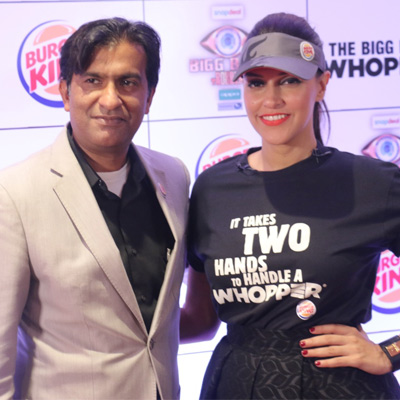
    MUMBAI: Burger King in association with leading Hindi General Entertainment Channel, Colors, launches a limited edition Whopper to commemorate the successful completion of its first year of operations in India. The Bigg Boss Whopper, named after the hugely popular Bigg Boss Double Trouble, promises to double up the experience for all Whopper (R) lovers.  The limited edition BIGG BOSS WHOPPER was unveiled by the glamorous Neha Dhupia at the BURGER KING outlet at Andheri today.


    Speaking on the anniversary, Burger King India CEO Rajeev Varman commented “We are absolutely overwhelmed by the response we’ve received in India.  We are delighted to see the growth our brand has achieved in just one year of operations here and look forward to continued success here. India is a strategic market for us and is well poised to be one of our largest markets globally” On the launch of The Whopper ®, he added “We have sold more than 2 million Whoppers (R) in India and The BIGG BOSS WHOPPER ® is a perfect treat for all the Whopper lovers out there. With Its juicy, saucy, fiery and crunchy favour, The BIGG BOSS WHOPPER doubles up in taste, size and experience” On the association with COLORS, Mr Varman added “We wanted to add some more excitement to the Whopper and BIGG BOSS NAU was the perfect choice. Just like the show, The BIGG BOSS WHOPPER is BIG and DOUBLES up in taste and experience with its juicy, saucy, fiery and crunchy flavour. We are confident that the association will bring us closer to our consumers and build-in a stronger brand recall”


    The BIGG BOSS WHOPPER will be available in three variants – Veg, Chicken and Mutton at all the BURGER KING outlets in India till January 2016.


    Commenting on the association, Colors CEO Raj Nayak said, “Food and entertainment are two elements which always go hand-in-hand. Bigg Boss has always presented parivarik entertainment avenues to viewers, much like how Burger King is about creating a family experience with its delectable menu options. As Double Troubles brews in the Bigg Boss house this year, the fieriness of the contestants and their journey has been perfectly captured in the limited edition BIGG BOSS Whopper. Having said that, we would like to congratulate Burger King on completing the one-year milestone in India, and look forward to building a strong relationship with the brand.”


    Speaking on the launch the very excited Neha Dhupia commented “I am glad to be a part of this association, I am a huge fan of the Whopper and I am glad that now I can have it in India as well. My personal favourite is the Mutton Whopper; however I have now added the BIGG BOSS WHOPPER to that list. The BIGG BOSS WHOPPER is full of flavour and crunch and every bite makes you crave for more. The BIGG BOSS association has further added to the excitement quotient of the WHOPPER®. I am sure like me with each bite you will wonder which of the BIGG BOSS contestants does each flavour resonates with”


    Burger King opened its first outlet in India on 9th November 2014 at Select City-walk mall in Delhi; now operates 32 restaurants across Mumbai, Delhi NCR, Pune, Bengaluru, Chandigarh, Punjab and Hyderabad and is all set to launch its first outlet in Chennai this month.


    Prior to the launch in India, BURGER KING conducted an extensive research across cities to understand the taste preferences of consumers in India. The product development process was started from scratch, with the entire menu developed in India to suit the Indian taste palates. The India menu was tested through consumer research with 3000 consumers prior to the launch.  Apart from the flagship Whopper (R), which is available for Indian consumers in Veg, Chicken and Mutton variants, the brand also has on offer a very unique and tasty Chicken Tandoor Grill burger which is one of the bestselling product and a favourite across markets. In its endeavour to offer innovative and great tasting products to customers, the brand has recently introduced Hi-Fries in three variants – cheesy, Italian and Chicken and Chicken Keema Crunch burger.


    BURGER KING has also introduced a very easy upgrade to combo pricing that helps customers enhance their dining experience. You can upgrade any burger to a combo including fries and a fountain drink at just INR 50 across the menu. 


    The unique appeal for Burger King lies in the quality where the brand is conscious of its standards and uses 100 percent protein like chicken and mutton to form the patties and uses pulp of real fruit in its shakes. The quality is reflected clearly in the superior taste and helps the brand live up to its promise of ‘Taste is King’.


    In a constant endeavour to improve guest experience, BURGER KING has recently launched its delivery services in India. Capitalizing on online apps which are finding a huge appetite among urban customer, BURGER KING® has developed a single user-friendly tech enabled platform, to provide current and potential customers faster access to the much loved burgers at the click of a button. This speed of delivery has been centred around ensuring no compromise on product quality and is focused on enhancing overall customer experience.

  • “We plan to introduce innovative disruptive new age content in 2016:” Deepak Dhar

    “We plan to introduce innovative disruptive new age content in 2016:” Deepak Dhar

    Millennials in India have grown up watching reality television perhaps even before they could pick their favourite subjects or role models.


    Shows such as Bigg BossMaster ChefThe Voice and Emotional Attyachar amongst others need no introduction, nor does their production house Endemol Shine India, which is heralded by one of the brightest minds in India’s reality TV landscape – Deepak Dhar as managing director and CEO.


    Dhar joined the production and content creating giant in 2005, after paving a successful career in media with companies like Star TV, MTV, Channel V, etc. Armed with his expertise in reality television, Dhar went on to lead Endemol with some of the most challenging and ambitious projects.


    At the launch of Khatron Ke Khiladi’s seventh season, which is slated to go on air on Colors early next year, Dhar speaks to Indiantelevision.com’s Papri Das on the current landscape of reality TV, prospects of producing home grown format shows in India, the company’s relationship with broadcasters and more.


    Excerpts:


    What’s new in Khatron Ke Khiladi season 7 from the production perspective?

    We have 60 different stunts lined up this season. It’s already a task to set up one and now we have 60 of them to put in place. Not to mention, the scale of each stunt will go up this season, matching international standards. The new locale (Argentina) has also allowed us to try different things and explore various possibilities in terms of the type of tasks. The schedule includes shooting in Argentina in Buenos Aires for 40 days. Our crew of about 160 people and contestants will celebrate their Diwali there.


    Have you tried anything new when it comes to production technique?

    We are shooting in Argentina, which is an evolved market from a technical standpoint and that works in our favour. We plan to use drones to shoot some scenes as well. They are not easily used in India as there are restrictions, but shooting in Argentina will enable us to do so. These are stunt friendly locations. We have a few things in mind but we plan to explore them once we reach the shoot location.


    Do you notice any new trends in the landscape of reality TV shows in India?

    I feel that reality TV has become a very staple diet for Indian viewers. It has also seen an evolution of sorts. At some point in time it used to be more focused on song and dance. People have now moved on from that and are looking for edgy content dealing with relationships, drama and danger. It is all about making it more real and how the people onscreen can relate to the people watching them.


    That is why shows like Bigg BossMaster Chef, Fear Factor etc are doing well as they feel more real, and connect the audience with a sort of warmth on screen. I wouldn’t call this a new trend but that’s just how things are shaping the landscape.


    Are there any plans to introduce new international formats in the Indian market in the near future?

    There are quite a few formats from the Endemol Shine system that we are bringing in. Shows like The HuntedThe Circus of the Celebrities and The Australian Spelling Bee. There are a lot of innovative disruptive new age content that we have to offer, that will hit the screens next year.


    Are Indian production houses at a stage where a home grown format can be taken internationally?

    Why not? Largely a lot of song and dance reality formats have been home grown here, for example Dance India Dance (DID). A lot of drama, stunt based shows and game shows do come in from across the globe because we want something tried and tested. We don’t want to invest in something that might have a chance of not working with our audience. I do feel that India has the potential to create a home grown format in the song and dance segment.


    We also made something called Big Switch for Bindass a few years ago that involved switching people’s identities and their circumstances. We successfully ran that for two seasons and probably will come up with a third very soon.


    As producers do you get enough freedom from the broadcasters?

    As far as Endemol Shine India is concerned, our relationship with broadcasters is mutually beneficial. Colors for example has lapped up our formats for reality television quite well. They have taken Bigg Boss and Khatron Ke Khiladi to the next level, with a huge push on the marketing and celebrity side as well as by simply scaling up the content. They believe in airing disruptive content and we tend to have a lot of that.


    Out of all the reality shows you have produced or been part of, which has been the most challenging?

    They were all challenging and fun in their own right. But if I had to pick and choose, I found producing five seasons of The Great Indian Laughter Challenge a refreshing experience. It was a challenge because it was an unchartered territory for Indian reality TV. We couldn’t pre-calculate the parameters and variables involved that could go right or wrong for the show. It was all new for us. Comedy wasn’t mainstream those days. It was in the realm of smaller events. We picked it up and established an entire genre of reality shows from it.


    With VOD platforms like Hotstar, Voot, HOOQ, ErosNow et al emerging as the new medium for content consumption, how is Endemol positioning itself in the programming ecosystem?

    We are already creating and producing digital content formats for some of these OTT players. We have brought in formats from our international partners because those are evolved markets familiar with OTT and digital content. We are in talks with some of these players to see how we can start mounting them up.


    Is India finally catching up to short format fiction shows?

    The shortening of content is bound to happen due to fragmentation of mediums and due to the gradually reducing attention span of viewers. People are getting restless. They want to see the start and end of a scripted program and binge watching is becoming a concept as well. People now want to watch and complete a series maybe within one or two weekends or maybe over a month. With this viewing behaviour spreading across genres, producers must also shift and re-think in that direction, and go for more and more finite shows.


    What does week 41 and 42 BARC data mean for you as a content provider?

    It’s still too early to comment or even start shifting gears based on the data. Let the ecosystem stabilise and settle a bit. It is just about stabilising, so we must wait before forming any opinions based on it or our content strategy. The new numbers will throw us new trends as well, and we are keeping an eye on them for new possible show concepts.

  • Colors Kannada to ramp up programming with ‘Bigg Boss’ & 3 new fiction shows

    Colors Kannada to ramp up programming with ‘Bigg Boss’ & 3 new fiction shows

    MUMBAI: Taking its entertainment quotient several notches higher, Viacom18’s regional channel Colors Kannada is all set to launch as many as four new shows. 


    Come 25 October and the Kannada version of Bigg Boss will go on air. Additionally, the channel is also ready to regale its audience with three new fiction shows in November.


    The third season of Bigg Boss will hit screens from 25 October and will be aired from Monday to Friday in the 9 – 10 pm prime time slot. On weekends, the show will be aired from 9 – 10:30 pm.


    On the fiction front, Colors Kannada will be launching a show titled Kinari, based on a mother – daughter relationship on 2 November at 6 pm.


    The second fiction show titled Gandhari will launch on 23 November in the 10:30 pm band. The story is about a man who aspired to become a pilot but unfortunately loses his eyesight. He then lives his dreams through his wife.


    The third, as yet untitled show, will also be launched on 23 November.


    While the first season of Bigg Boss aired on Colors Kannada, the second season was aired on Star India’s Kannada general entertainment channel (GEC) Suvarna TV. Now in its third season, the Kannada Bigg Boss is back on Colors Kannada and will be hosted by Karnataka actor Kichcha Sudeep.


    Speaking to Indiantelevision.com, Viacom 18 EVP and project head of regional channels Ravish Kumar said, “Two years ago we broughtBigg Boss in Kannada for the first time and it did brilliantly. We are excited to bring it back. The Bigg Boss format is such that the moment you put 14-15 people in a house, people get a totally different scene because it’s a pure reality show and nobody can predict that what is going to happen next.”


    While in its previous two seasons, the Kannada Bigg Boss was shot on the same sets as the Hindi version of the show in Lonavala. However, since the ninth season of the Hindi Bigg Boss on Colors is also currently underway, this is the first time that a separate house has been built in Bangalore for the Kannada version.


    To promote the show across platforms, Colors Kannada has adopted a 360 degree marketing approach. Talking about the same, Kumar said, “We are spending a lot on marketing. Promotions are across the print, radio and outdoor mediums. Apart from this, we are also doing cross channel promotions. More than a thousand promos are being airing on our own channels, which is the single largest platform in that market.”


    Kumar also informed that the channel has also advertised the show on trains and railway platforms. Additionally, the show will have a big presence at the Dusshera Mela, which has a footfall of 10,000 -15,000 per day. “We are also doing cross-promotions on shows whereBigg Boss is being talked about,” he added.


    Colors Kannada has roped in OLX as the presenting sponsor of Bigg Boss season 3. On the other hand, Gemini Cooking Oil and Eastern Masala have come on board as the co-powered by sponsors, whereas Vini Cosmetics is one of the associate sponsors of the show.


    “From the advertiser and sponsor perspective, Bigg Boss is the biggest property in the Kannada region so far. There are numerous opportunities for brand integration over a period of 100 days. No other show in this country allows this kind of exposure to brands. We have a very good mix of national and regional advertisers. Before we go live, we will have three or four more sponsors on board,” Viacom 18 regional regional channles sales head Bikash Kundu tells Indiantelevision.com.


    The format of the reality show is such that a lot of effort goes into the actual logistics. Talking about the show’s per-episode expenditure, Kumar said, “So far, this is the most expensive non-fiction format that the Kannada market has ever seen. No one has even come closer because on a per day basis, it is way higher than any other show. The cost is anywhere close to three – five times the cost of the non-fiction shows.”


    When it comes to ratings, Colors Kannada has been leading the genre as per Broadcast Audience Research Council (BARC) India data. “Our content strategy is simple – to give the best to people in both fiction and non-fiction series. We also do movie premiers and buy them optimistically depending on the price. In short, we try to be a complete channel for our viewers,” he said.


    In the non-fiction space, in addition to Bigg Boss, the channel also has other international formats in Kannada like Super Minute(adaptation of Minute To Minute) and Dancing Stars (adaptation of Jhalak Dikhla Jaa). “This year we also did Dancing Junior Star andIndian Reality Show, which had 14 young boys and girls travelling through seven different states of India,” Kumar said.


    While initially, the channel’s strategy was to take Colors’ top shows like Balika Vadhu and Madhubhala and adapt them for the Kannada market, now it has in its kitty, a slew of original fiction shows like Puttagowri Maduve, Lakshmi Baramma, Maja Talkies and Akka.


    “In our three years’ journey, we have launched more than 25 – 30 shows. Hence, we have a very strong success rate,” Kumar said.


    Sharing his views on BARC rolling out the rural data, Kundu added, “I think with BARC rolling out rural data, regional channels are likely to benefit. Having said that, we are number one in Karnataka and the kind of rates and growth that we have in revenues, has been phenomenal. So yes, we are positive and confident that with this initiative, the rates will go up.”

  • Colors confident of unleashing ‘Bigg Boss’ juggernaut at 10.30 pm

    Colors confident of unleashing ‘Bigg Boss’ juggernaut at 10.30 pm

    MUMBAI: Come 11 October, 2015 and the definition of prime time viewing on Indian television history will be officially redefined as Bigg Boss season 9 will be aired in the late time slot of 10.30 pm. Accustomed with the 9 pm slot, the show has established itself as one of the finest property in the general entertainment genre, but as was reported earlier by Indiantelevision.com, this year due to the super performance of Colors’ existing prime time shows, the channel’s programming team was forced to postpone Bigg Boss to the 10.30 pm slot.


    The moment the new time slot became public knowledge, the immediate presumption that emerged was the possibility of content edging towards the adult category with more violence and at times even vulgar. However, Colors CEO Raj Nayak has pooh-poohed all such speculations. He said, “The strong point of Bigg Boss in the last few seasons has been its establishment as a family viewing entertainment entity, which helped us grow our ratings. We are not going to compromise with that. So the show will continue to be a family viewing entity.”


    The press conference for the official launch of the show was off with a flying start with a satirical banter between Bigg Boss host Salman Khan and Nayak. As reported earlier by this website, the show’s theme this year is Double Trouble. Khan in his inimitable style candidly asked Nayak what double trouble means to him and when does it start. Nayak smilingly replied, “For me double trouble starts with the start of April, when I start talking to your (Salman Khan) agency and they quote me a rate double of what we paid last season.” 


    The lighthearted banter continued throughout and both Nayak and Khan were sportingly part of it. When Endemol India MD and CEO Deepak Dhar was introduced Nayak reminded the audience in a tongue and cheek manner that it was not only Salman’s fee that gets doubled every year, even Endemol’s remuneration takes a substantial hike.


    Speaking about the extension of prime time, Nayak said, “I think today prime time goes on till 12 o’clock in the night, the success of Comedy Nights is a big example of that.”


    Speculations were also rife that courtesy to the late night premiering of the show, the ratings and the ad rates may face a blow. However, Nayak is unperturbed. “Bigg Boss is Colors’ biggest show. If we don’t believe in the fact that it will be successful, why would we invest such huge money? I would have liked Bigg Boss to come in at 10 o’clock but am confident about it in the 10.30 pm slot too. Research shows that in urban areas people go back to home a little late and hence 10 pm would have been the best time to unwind with a one hour show. But with God’s grace, we have the problem of plenty and a slot leader (Yeh Meri Ashique) at 10 pm so we cannot disturb leading show and put Bigg Boss in place of that.”


    Throwing light on the show’s target group, Nayak said, “Target audience is an exaggerated and over spoken factor in India where we have a huge percentile of single TV houses. Bigg Boss by default or by design appeals more towards the younger audience than the older. The older audience watches it but seldom speaks about it. People who normally never watch Hindi GECs turn out to be Bigg Boss followers. So overall the show caters to a diverse audience across all age groups.”


    Colors has a strong social media analysis team, which analyses each and every movement across all the platforms. If the analysis depicts an addressable issue, the programming team immediately looks into it, which results to better sustainability. “We may not make a change immediately but we do follow them continuously. We have a separate infrastructure to check between spam and genuine feedback. We take social media feedback very seriously,” added Nayak.


    As was reported earlier, the presented by, powered by and driven by slots in the sponsorship inventory have already been sold to Snapdeal, Oppo and Maruti Suzuki respectively. Commenting on advertisers’ reaction on the time change, Nayak said, “The sponsors are demonstrating faith in what we are doing and the fact that we already have a majority of our sponsors on board, is proof of that.”


    Endemol CEO and MD said, “The concept of Bigg Boss has always kept the audiences intrigued. The theme of ‘Double Trouble’ promises to offer double the fun and entertainment with various twists and surprises. This year too fans of this biggest reality show format will be hooked to the TV, as this season the contestants will be put in unanticipated situations that will make an interesting watch for the viewers. The production value of the show will be more enormous and the expertise of the team working on the show will leave no stone unturned to offer unlimited doze of entertainment.”


    When quizzed if 10.30 pm slot was a pressure factor for Endemol, Dhar said, “Pressure factor, yes, because it’s a new time slot that we are not yet used to but the pressure is there every year. Bigg Boss at 9 pm was up against the biggest shows of the country and it delivered commendable ratings. So I don’t see a reason why it won’t deliver at 10:30 pm. The time change is a challenge as well as an opportunity.”


    Concurring with Nayak on the prime time definition, Dhar said, “People are now creating content for 11 pm and 11.30 pm slots. So the traditional definition of prime time is no longer relevant. People now, specially from the urban areas are ready to watch television till late. And a show like Bigg Boss where it’s more of unwinding than using one’s brains, a time slot later down the night should be comfortable.”


    Snapdeal senior vice president marketing Srinivas Murthy said, “Big Boss is only getting bigger and better with every season. We joined hands with television’s most popular show last year and engaged with our audiences on a daily basis through innovative in-programme integration. We are very excited to partner with Big Boss Nau and look forward to great response from the viewers this season too.”


    Speaking on his return as the host of the show for the sixth time, Khan said, “This season with Double Trouble being the flavour, contestants have no choice but to double up and face the trouble, or remain disconnected and invite trouble! Bigg Boss Nau comes with the promise of unlimited and unadulterated entertainment, which will create a strong bond between viewers and the contestants fuelled by fun, empathy and sometimes sympathy.”


    Oppo Mobiles India CEO Mike Wang added, “We are pleased to renew our association with the immensely popular show Bigg Boss this season. We firmly believe that this partnership will help establish our reach across India giving us an opportunity to connect with a wider audience. There is no platform better than entertainment in India and we wish the show a huge success.”


    Whatever Nayak and his team at Colors are churning out these days, is turning into gold. With the channel climbing up the ratings chart to become the number one Hindi GEC recently as per BARC as well as TAM data, the Bigg Boss entertainment juggernaut comes at a perfect time. It now remains to be seen if the show’s new time slot manages to sustain ratings or better still, enhance it even further.