Tag: Bigg Boss

  • Helo partners with India’s biggest entertainment show ‘Bigg Boss Season 13’

    Helo partners with India’s biggest entertainment show ‘Bigg Boss Season 13’

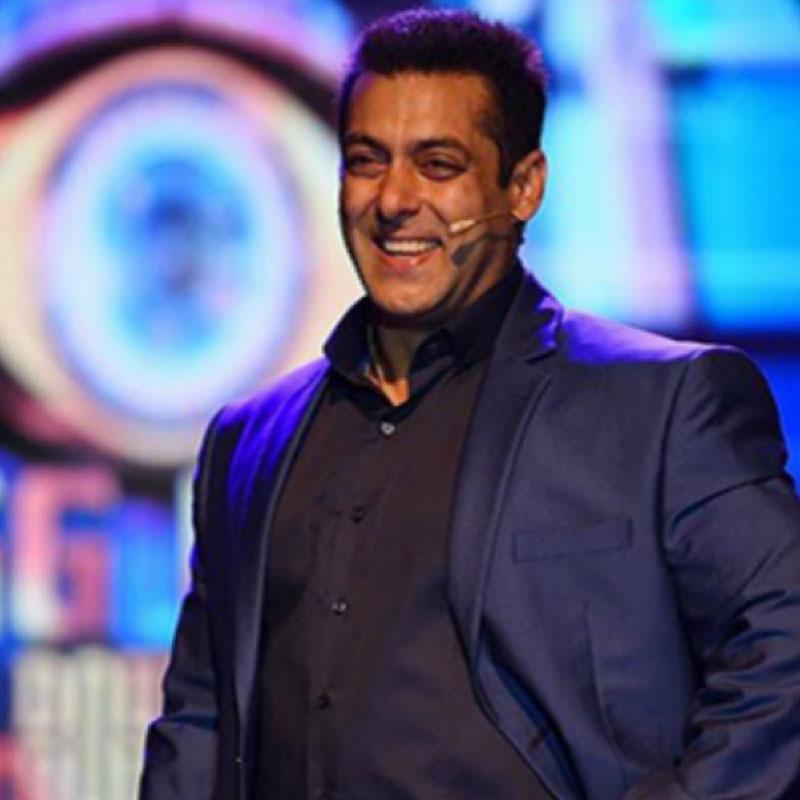
    Mumbai: Reiterating its commitment to provide its community of over 50 million monthly active users access to popular, trending and engaging content, Helo has launched a strategic partnership with leading entertainment show Big Boss Hindi Season 13, hosted by Salman Khan. 

    As part of this partnership, Helo is offering users exciting opportunities to meet and engage with the contestants of the hit reality show. One lucky Helo user will stand a chance to meet the contestants and feature with them in one of the weekend episodes.  

    This partnership between Helo and Bigg Boss Hindi Season 13 comes after a series of successful stints with the regional versions of the show in Kannada, Marathi, Telugu, and Tamil. As a part of its Bigg Boss Kannada partnership, Helo launched an in-app engagement campaign, where Helo users got to interact with their favourite BBK contestants by following the trending hashtags #ಬಿಗ್ ಬಾಸ್ ಚಾಲೆಂಜ್ as well as the contestants’ personal accounts. Through the hashtag #ಬಿಗ್ ಬಾಸ್ ಚಾಲೆಂಜ್, Helo users selected tasks for the BBK contestants to perform during the show.

    Helo also recently partnered with Bigg Boss Marathi for its second season as its social media partner and gave select Helo users a chance to become the ‘Caller of the Week’ and ask their favourite contestants in the Bigg Boss House quirky and fun questions of their choice.

    Mahesh Shetty, Head, Network Sales, Viacom18 said, “With Bigg Boss being our flagship property, it has a huge fan base and our association with Helo will help us expand it further. Our aim has always been to make the show more engaging and entertaining for our viewers so that they also feel a part of the fun-filled journey of the inmates. Through this partnership, we hope to bring our audience closer to the Bigg Boss experience.

    “We’re delighted to partner with Bigg Boss again, this time for Bigg Boss Hindi Season 13. Our partnership with Bigg Boss is in line with our mission to constantly connect our users with their favourite content, in the language that they are most comfortable with. Following our previous regional partnerships, which saw unprecedented engagement from Helo users with over 20 billion combined impressions on the app, we are looking forward to reaching greater heights when it comes to engaging our users with Bigg Boss Hindi.” said Chhandita Nambiar, Head of Entertainment, Helo.

    Helo users will also get day-to-day updates on all activities at the Bigg Boss house and the show’s contestants, by following the official handle of Voot/Colors on the app. To further engage with the viewers and Helo users, official Bigg Boss fan page of the reality show’s contestants will provide all the latest news and updates from the show. This fan-generated content will be shortlisted and featured on the Bigg Buzz episode. Each week, one fan will win a hamper or referral point from Helo. The show went live on 29th September, airing from Monday to Sunday.

  • Star Maa launches BiggBossIsWatchingYou campaign

    Star Maa launches BiggBossIsWatchingYou campaign

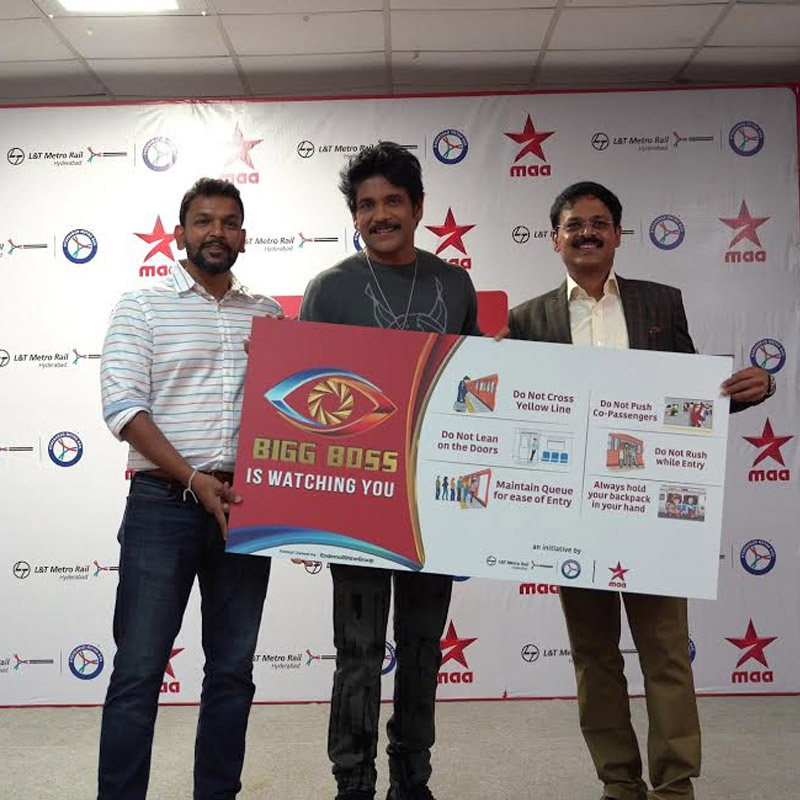
    MUMBAI: Star Maa and L&T Metro Rail Hyderabad Ltd with an attempt to create an effective civic sense-based communication launched a campaign through the World’s biggest television property of Telugu entertainment Bigg Boss.

    The civic sense campaign has been executed in all 48 metro stations covering areas including concourse, platform level and retail space. Specially customised Jingles with similar messaging are played in all metro trains. The campaign planned for entire Bigg Boss season will enable all metro commuters to be aware of dos and don’ts at metro rail and metro station premises. This has derived awareness on safety measures, rules of metro, encouraging more usage in a proper manner at their convenience.

    Speaking to the media, Host Akkineni Nagarjuna said, “This is a perfect combination of entertainment + important message to society and using the Bigg Boss platform for creating awareness on civic sense. I understood that the campaign is well received by the metro travellers and other set of audience. I am happy that Star Maa and LTMRHL has come forward with such innovative & socially responsible campaign.”

  • The Format that changed TV forever In India and across The Globe Turns 20!

    The Format that changed TV forever In India and across The Globe Turns 20!

    MUMBAI: Big Brother, (aka Bigg Boss in India) – the original reality format – celebrates its landmark 20th birthday today.  On the 16th September 1999, nine Housemates moved in a purpose-built house in the Netherlands, equipped with 24 cameras and no contact with the outside world to be watched 24/ 7 by Big Brother. A cultural phenomenon was born, and the TV revolution aired its first ever episode that night on Dutch Broadcaster Veronica, part of RTL.

    Since its launch, Big Brother has taken the world by storm, with 471 series of 28,391 episodes commissioned in 60 markets and airing pan regionally in 80 since its launch. 7,153 housemates from around the globe have spent 35, 143 days in the house and there have been 5, 035 evictions.

    Twenty years since its worldwide debut, Big Brother is enjoying one of its best years yet and is constantly being renewed internationally with 22 productions in 18 markets confirmed to air in 2019.

    In India Bigg Boss has conquered audiences, in Hindi, Kannada, Bangla, Telugu, Marathi, Tamil and Malayalam. With 30 seasons under its belt Globally Endemol Shine India is the only one in history of the franchise who has produced the Big Brother format (Bigg Boss) in multiple languages for different broadcasters. Bigg Boss has now been produced in India in 7 languages and today produces more than 600 episodes in a 365-day calendar year.

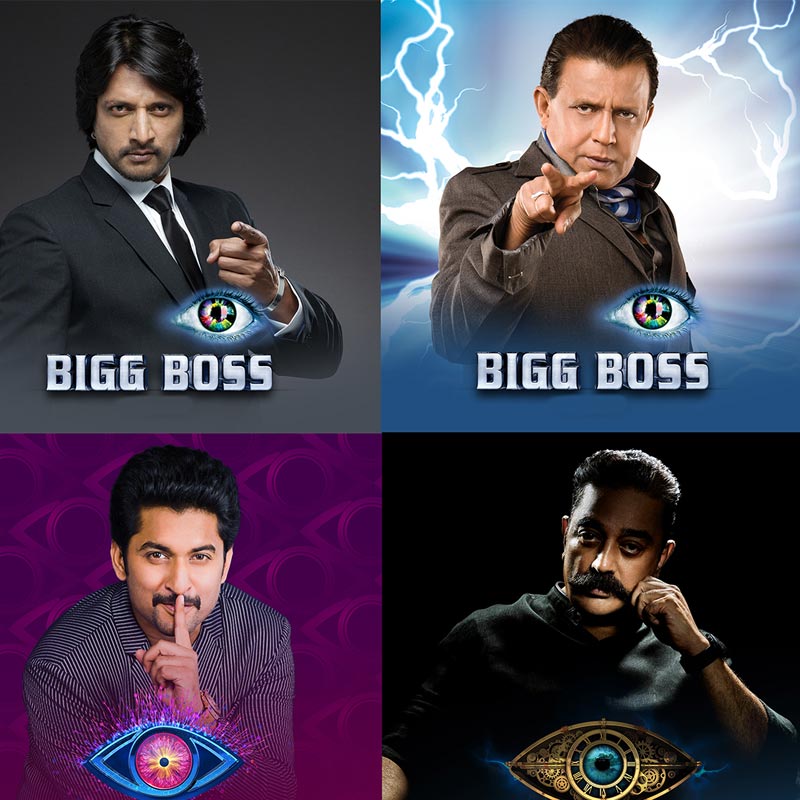
    With huge stars such as Salman Khan, Kamala Hassan, Nagarjuna, Mohanlal, Mahesh Manjrekar and Sudeep as hosts, an interesting mix of contestants and an amazing creative and production team, the show continues to garner huge TRPs and driving in viewers every season.

    Talking about the completion of 20 years of Big Brother globally, Abhishek Rege, CEO, Endemol Shine India said, “Big Brother is undoubtedly the most popular non-scripted show across the globe entertaining viewers from all strata of society. In India too, the show has been well received and has garnered a huge fan following.  The ongoing appreciation for the franchise across the globe and in India, no matter the language, is testament to the effort of the creative and production teams at Endemol Shine globally and our understanding of geographies and of local audiences.”

    Engaging audiences with interactivity
    Big Brother is more interactive and immersive than ever, whether it be viewer polls, making decisions for tasks or else the weekly evictions which are the bedrock of many global schedules. Big Brother stands out in the way it engages the audience to be part of the show, and earlier this year saw 202 million votes cast in Brazil in a single eviction.

    Innovating with technology
    Big Brother has always thrived on changes in the tech and TV landscape and fans have more access to the show’s content than ever before, whether it be watching episodes on YouTube in Spain where the series had a dual strategy to produce the programme for linear and online or streaming on a broadcaster’s SVOD or AVOD platform in markets like the US, Canada and Finland.

    The show is innovating with tech within productions too. Big Brother Poland was the first version of the reality hit to be filmed in a real-life existing house. This has been followed by the recent relaunch in Finland, where the house was located in the heart of Helsinki in REDI shopping mall.  These new types of productions are only possible because of advanced technology and state of the art cameras which allow the show to be produced in innovative ways. It also furthers the creative freedom for the producers with fully connected houses enabling access to rooms to be limited or to give housemates certain privileges such as access to the fridge or even the coffee machine. Existing locations also have created a truly authentic environment for relationships to develop.

    Sustainability
    And the format is rolling our green initiatives too, in Germany the production team of VIP series saved an estimated 12,000 coffee cups after switching to reusable bamboo cups and all groceries for the House were sourced locally.

    In Finland, the new house will be made with recycled materials and with water scarcity a significant issue in India, the production has installed waste water recycling, as well as placing water restrictions for housemates and one of the regional versions even features an empty swimming pool to make a point about the limits.

    None of us know what the next twenty years will bring, but one thing for sure, the world is watching.

    Big Brother in numbers
     
    1. 7,153 people have entered the Big Brother house of which 517 were from Bigg Boss India so far)
    2. There have been 5,035 evictions of which 372 were in Bigg Boss India so far
    3. 28,391 episodes of Big Brother have aired globally of which 2942 were in Bigg Boss India
    4. Over 35,143 days have been spent in the house of which 2908 were in Bigg Boss India
    5. There have been 471 series to date, making 471 Big Brother winners 30 of which were in India  
    6. 3,000 people applied via telephone for the first ever series in the Netherlands
    7. There were 24 cameras in the original Big Brother house in the Netherlands. The most recent version in Finland has 51, whereas in Italy they shoot with an astounding 100+ cameras. India used 89 cameras in the BB Hindi S12
    8. The oldest housemate to enter the Big Brother house is Lionel Blair who at 85 joined Celebrity Big Brother in the UK. 75-year-old Jerry MacDonald who came third in the US series 10 in 2008
    9. Julie Chen Moonves is the longest serving Big Brother host, having presided over the US show for 19 years since its launch in 2000
    10. 1 baby has been born in the Big Brother house; this took place in the Netherlands in 2005
    11. The longest uninterrupted television broadcast of Big Brother lasted 8, 763 hours from 2nd March 2004- 1st March 2005 in Germany
    12. A record 202 million votes were cast in one eviction in Brazil in March this year.  These second highest being Bigg Boss Tamil with 19, 59, 37, 000 votes
    13. 7 versions of Big Boss in 7 different regional languages (Marathi, Tamil, Bengali Telugu, Hindi, Kannada, Malayalam) have aired in India.
    14. Big Brother has 62.5 million digital followers.
    15. There have been 7.3 billion lifetime video views
    16. 59 couples met in the House.
    17. 5 marriages have taken place within the House of which 2 were from Bigg Boss India
    18. 12 children have been born from Big Brother romances.
    19. Since launch Big Brother has been commissioned in 60 countries, some of which aired pan-regionally taking the show to 80 countries.
    20. An estimated 12,000 single use coffee cups were saved when the production of Big Brother VIP in Germany switched to reusable bamboo cups.

  • Colors partners with vivo as presenting sponsor for Bigg Boss 2019

    Colors partners with vivo as presenting sponsor for Bigg Boss 2019

    MUMBAI: COLORS collaborates with the premium global smartphone manufacturer, vivo as the presenting sponsor for Bigg Boss 2019. Produced by Endemol Shine India, the show has attained a cult status over the years and has become one of the sought-after reality shows hosted by actor Salman Khan. 

    Promising to be packed with utmost thrill and excitement, the new all celebrity season will have many surprise elements that will make it a stellar watch for the audience. 

    Elaborating on the sponsorship, Viacom18 Head, Network Sales Mahesh Shetty said, “Bigg Boss is one of the largest platforms in the entertainment segment.  With every season, the show has set new benchmarks in the television reality space and has become one of the widely viewed shows of the country. The format and content of the show allows us to experiment with brand integrations and associations that reach out to a sizable number of audience across all age groups and  it is the only show that cuts across festivities. With its growing success and popularity, more and more brands have come forward to explore innovative customizations and partnerships to deliver their business ambitions. vivo is one of the trusted mobile phone brands with a growing consumer base and we are happy to welcome them on board as the presenting sponsor.”

    Talking about the collaboration,  vivo India Senior Vice President Jerome Chen said, “We at vivo are constantly looking for innovative ways to connect with our consumers and their interest areas. We always aim to create new and effective marketing platforms that will engage our audiences across the country. We are excited about our partnership with COLORS for Bigg Boss. The show is one of the most popular reality TV shows that brings the diverse audience together with its entertaining content.”

    Being the most anticipated and celebrated shows of Indian Television, the upcoming season of Bigg Boss will continue to entertain the audience with high octane drama and action. 

  • Hindi GECs flirted with formats, sensed OTT challenge

    Hindi GECs flirted with formats, sensed OTT challenge

    MUMBAI: When it came to content, OTT platforms captured the zeitgeist of 2018. Premium digital video content was relentlessly rolled out by the likes of Amazon Prime, Netflix, ALT Balaji, Hotstar, Voot and Zee5, keeping the audiences hooked at all times. Naturally, the band of programmers at some of India’s biggest broadcast networks felt the heat as a new wave of content competition hit India. Heads of Hindi GECs pulled out all stops in order to stay ahead of the game and keep their viewers happy. Thankfully for them, the cord-cutting trend, prevalent in several countries, didn’t turn to India. However, the sheer scale and quality of OTT content audiences were exposed to this year should be a cause for worry entertainment channels.

    ‘TV isn’t dying, in fact, both TV and OTT is growing simultaneously,’ was a line often heard this year. That’s perhaps the reason broadcasters remained confident that daily soaps, fiction and non-fiction shows on TV would continue to command viewership numbers.

    The advent OTT players increased the overall demand for content. While Indian broadcasters put out over 100,000 hours of content annually across formats and languages, newer entrants continued to pump in more cash per episode (though for much smaller quantities of content) and tried to snap up the best available talent. 

    The overall cost of content rose by almost two to three per cent of the broadcasters’ top line. With OTT companies refusing to take their foot off the pedal, broadcasters have no choice but to pay up. However, if their bid for quality programming fails to generate higher viewership which can be monetized better, broadcasters may not pursue quality, and stick to current cost metrics.

    As far as content consumption was concerned, regional content too made its mark this year. While Hindi language consumption remains the country’s preferred choice, growth was fastidiously led by regional content. Backing this up with some facts, it was reported that the daily tune-ins on TV by the HSM led to 68.4 per cent, whereas in the South market it led to 78.3 per cent. Simultaneously, the advertisement expenditure in FY18, Hindi GECs declined by nine per cent as compared to an increase of 5.4 per cent in on regional channels. 

    It was also a year of full surprises for the Hindi GECs, especially on the leadership front. Top-notch industry executives decided to call it quits including veteran Colors CEO Raj Nayak who dropped the bombshell of his Viacom18 exit after a distinguished seven-year stint with the media and entertainment conglomerate. Another prominent personality Discovery India and South Asia head Karan Bajaj also called it a day. Industry insiders believe the bespectacled Bajaj timed his exit to perfection, stepping aside when it mattered most. Both of them haven’t hinted at what gigs they are likely to take up next. Another heavyweight – Deepak Rajadhyaksha – who was heading Zee TV, turned to Viacom18 with his mantle being handed over to the broadcaster’s English cluster head Aparna Bhosle.

    The GECs also flirted with formats and played around with show timings in an attempt to infuse life into programming. Here's a quick recap of how some of India's most-loved Hindi GECs tried to stay ahead in a cluttered segment.

    Colors

    Having a stronghold in the mythological and fantasy drama genre, it revived Naagin for season three giving it an 8 pm slot on the weekend. Another supernatural drama Tantra by Swastik Productions was aired on weekdays at 11 pm. Rashmi Sharma Telefilms’ Vish Ya Amrit: Sitaara, a supernatural thriller, was given the weekday 10.30 pm slot.

    Two leading ladies of not just Viacom18, but the entire industry, added more feathers to their caps. Manisha Sharma, who was in charge of Colors, was elevated as the chief content officer – Hindi mass entertainment. She heads both Colors and Rishtey. Kids’ cluster head Nina Jaipuria’s portfolio further expanded to include both kids TV network and Hindi.

    The channel reshuffled its programming line-up post the launch of historical saga Dastaan-E-Mohabbat Salim Anarkali, Monday-Saturday at 8.30 pm, by replacing the drama series Udaan which was shifted to 7 pm slot. Internet Wala Love, which aired at 7 pm was moved to 6.30 pm time band while Savitri Devi College and Hospital, which aired at the 6.30 pm slot was called off.

    After a two year hiatus, Colors came back with the launch of season 8 of reality show India’s Got Talent, to be shown on weekends at 10 pm. The show was planned to replace horror anthology television series, Kaun Hai? That was produced by Contiloe Pictures and was scheduled to air every Friday to Saturday at 10.30 pm. Also, another home-grown reality show Entertainment Ki Raat season 2 was given the weekend 9 pm slot, promoted from its debut season slot of 10.30 pm. The show was replaced with the reality show Rising Star produced by Optimystix Entertainment. Bigg Boss 12 was also launched but with a new time-slot at 9 pm.

    Sony

    Hindi GEC Sony Sab started a new weekend slot titled ‘Sab Ka Weekend Plan’ with two new shows India Ke Mast Kalandar – Atrangi Hain Ye!and Namune. The channel aired the former show every Saturday and Sunday at 8 pm whereas the latter was at 9 pm. The Kapil Sharma Show is all set to make a comeback after a hiatus of more than a year. The channel had stopped airing fresh episodes of the show from September 2017.

    Taking Colors’ Bigg Boss 12 head-on was Sony’s tentpole show Kaun Banega Crorepati (KBC) season 10 at 9 pm. Following that, the channel launched two fictional drama Patiala Babes and Ladies Special post-KBC. The channel pulled the plug on Yeh Pyaar Nahi Toh Kya Hai, which was aired at 9.30 pm, following poor ratings.

    The network also announced that Sony Pictures Network India’s (SPNI) newly launched content production arm Studio NXT will focus on creating premium, high investment content that can also travel outside India. Headed by Sony Entertainment Television (SET) EVP and business head Danish Khan, the content studio began its journey with Kaun Banega Crorepati (KBC) season 10 which was co-produced with Big Synergy.

    The channel is experimenting with new shows and formats in the time slot starting 8.30 pm. The channel aired comedy-drama Main Maike Chali Jaungi, replacing Dus Ka Dum and Zindagi Ke Crossroads. Dus Ka Dum aired on Monday and Tuesday while Zindagi Ke Crossroads aired from Wednesday to Friday.

    Zee

    Zee TV’s primetime offering included Manmohini, produced by LSD Films, every Monday to Friday at 7.30 pm. &TV launched a live singing reality show for kids Love Me India and fantasy show Vikram Betaal ki Rahasya Gaatha. Zee TV launched a new fiction show named Tujse hai Raabta on 3 September, weekdays at 8.30 pm, produced by Full House Media.

    ZEEL elevated Aparna Bhosle as the business head of its flagship Hindi GEC Zee TV. Bhosle headed the premium and FTA GEC cluster. The move comes in the wake of Deepak Rajadhyaksha’s exit from the company. He was the deputy business head at Zee TV. Rajadhyaksha joined Viacom18 as business head of Colors Marathi and Colors Gujarati.

    Zee also took three of its shows abroad for a remake, in collaboration with African countries – Punar Vivah, Dance India Dance and Pavitra Rishta.

    Ending the year 2018 on a high note, &TV opened doors of endless opportunities for makers to experiment with content. Supernatural ruled the roost this year for the channel, progressive concepts and live reality remained at the top of the list. From launching its first live reality show for kids to introducing supernatural in a new style, &TV presented its khaas andaaz with not one but many pieces of content that were rolled out. The channel launched shows like ‘The Unconventional Saas (Perfect Pati)’, ‘Love with supernatural twist (Laal Ishq)’,’ Reliving childhood stories (Vikram Betaal Ki Rahasya Gatha)’, ‘ The mysterious Daayan (Daayan)’, Kids Live singing with ‘Love Me India’ and ‘High Fever… Dance Ka Naya Tevar’.

    Star

    Star India signed a multi-season, multi-year deal with Talpa Media for The Voice franchise, comprising The Voice and The Voice Kids. The new series will be produced by Banijay Asia, a Banijay Group company.

    Star Bharat’s socio-thriller Kaal Bhairav Rahasya returned for a second season featuring new mystery and folklore. Star Bharat launched a mythological show Radha Krishn airing Monday to Friday at 9 pm, replacing political drama Saam Daam Dand Bhed. The show was produced by Swastik Productions who have had several successes in the genre including Shani, Mahakali, and Porus. It also announced the launch of a new finite fiction show that narrated the story of firebrand freedom fighter Chandrashekar Azad in about 110 episodes, produced by Anirudh Pathak.

    The main GEC Star Plus launched a new show Karn Sangini at 7 pm. The show replaced channel’s reality show Sabse Smart Kaun. With Karn Sangini, the channel is dealing with the new genre of mytho-romance. Produced by Shashi and Sumeet Mittal, the show narrated the never-seen-before tale of a royal princess Uruvi who chose her love and stood by it against all odds.

    Discovery Jeet

    Despite heavy promotions in its launch stage, Discovery Jeet didn’t quite manage to grasp the pulse of the audience.

    Jeet entered the Hindi GEC sweepstakes on 12 February with five hours of daily programmes, out of which three hours were original programming, with content available in Hindi, Tamil, and Telugu. The channel launched with a distribution blitzkrieg to more than 100 million households and signed up Netflix as the exclusive global OTT partner.

    Despite the network’s best effort, the channel failed to rate. Initially thought of a challenger to the existing GEC order, Jeet fizzled out without much of a fight.

    According to Broadcast Audience Research Council data week 9, the channel garnered 6096 impressions (000s) in the 7 pm to 11 pm time slot, while it secured 15908 impressions (000s) for the whole day’s viewership. Currently, the channel airs syndicates content dubbed in Hindi.

    Overall, almost all channels heavily swapped shows for one another in order to keep audiences steady and growing. Unlike earlier years, when channels relied on primetime shows for years, times are changing and audiences are picky and broadcasters realise that.
  • OTT platforms chasing the regional pie

    OTT platforms chasing the regional pie

    MUMBAI: It isn't just the broadcast sector that's woken up to the call of the regional, but even the budding over the top (OTT) platforms.

    On the stage of Vidnet 2018, hosted by Indiantelevision.com, experts from India’s leading OTT platforms were present. Voot Originals head and VP Viacom Tanya Bami, Eros Now VP editorial and content strategy Piyush Bhatia, monozygotic CEO Ravi Luthria, Arre Sharan Budraja and Spuul content head Girish Dwibhashyam shared their views on the state of content on OTT. The panel was moderated by Monozygotic founder Rajiv Laxman.

    Dwibhashyam highlighted about Spuul’s SVOD format and said that initially its primary focus was largely outside India but over a period of time, it captured users in India as well. According to him, currently, long form and live television are more suited for SVOD and for short form content which is less than 10 minutes, AVOD is the way to go. He added, “Earlier, viewership used to come from Mumbai, Delhi metro belt but in the last 9-10 months the consumption has started coming in from the small towns for regional languages like Bhojpuri, Punjabi and that is the trend that we are observing these days. So our focus in India will be more in vernacular languages as we believe that the next 400 million internet users will be different from people right now and they will largely speak vernacular language and would want to watch the content in their own language rather than English language.”

    Bami agreed to Dwibhashyam's point about Indian audiences getting inclined towards regional content. She said, “Half of the population is supposed to parallelly grow by 23 per cent in the next couple of years. So, those are people moving away from TV and if they were to watch TV, they will be already on Voot.” Furthermore, according to her, people are moving away from conventional mainstream content and are looking at the international channels and OTT platforms and those are the stories that are offered in regional languages which will gain traction from the viewers. “So the attempt is to move into pure-play storytelling and that will attract newer audiences to the ones who are digital natives. So to top-up the footfall that we may have is why we would go SVOD. Each show will attract the audiences like we did a very big experiment with a popular show on MTV, Kaisi ye Yaariyan, by bringing it on Voot.”

    Throwing light on the original content on the platforms, Bami said that serving original content is a must, but content strategy is also important. She said that the platform will be able to maximise and juice it up around content like extra dose, or behind the scenes or probably any sort of engaging content to the audiences will attract eyeballs. She explained by giving an example of Bigg Boss’s content strategy on Voot with Video Vichaar.

    Commenting on the same, Bhatia also added that original content is everyone’s primary focus on every OTT platform. While Luthria said the industry should get into more collaborations and developing content base because that will drive the industry. “Three years down the line you see the problem coming in that there are so many things happening. Also, if you are saying that there is no consolidation, then there will be more disruptive content because everyone will be running behind the same pie. So, I suggest there should be collaborative, creative content development.”

    Dwibhashyam concluded by saying that the Bible for content for OTT will be the internal consumption dashboard. “I think the future is going to be where we have seen it with Netflix or Amazon that how they used their internal data, that every platform today knows what content is actually getting consumed and what type of content works basically and in future consumers are going to see the stuff that they would like to watch.”

  • Endemol Shine’s new bet on the scripted genre

    Endemol Shine’s new bet on the scripted genre

    MUMBAI: Endemol Shine, known for producing shows such as Bigg Boss, Master Chef, Khatron Ke Khiladi and Dance India among others and also known as the non-scripted format giant, has plans to play the next game in the scripted genre. After Deepak Dhar made a move from the company, Abhishek Rege filled his shoes, adding regional flavour to Bigg Boss in the Viacom18’s bouquet and web series for ALTBalaji. Now, the network is looking forward to creating original content for Netflix and Amazon Prime.

    Indiantelevision.com caught hold of Rege at the Bigg Boss 12 launch event. He said that the major chunk of programming right now on Hindi GECs is daily soaps. “It is still the staple to a large extent. This apart, talent and reality shows work well in terms of viewership. Among the talent shows, I believe that dance programs have a slight edge over singing,” said Rege.

    As per the KPMG M&E report 2018, reality shows got just 28 per cent of viewers, followed by comedy serials, family drama and serials, Hindi feature films and news/ news-based programmes garnered 34 per cent, 37 per cent, 38 per cent and 56 per cent respectively.

    Producing a show for the regional audience is costs less than the Hindi speaking market. Rege said that the cost of production will increase with inflation and other things such as the salaries of the employees, but the allocated cost of production needs to be decreased down the line. “Globally also we try out newer technologies, newer processes to follow to reduce cost without sacrificing quality. We are testing out a few technologies and hopefully in the near future we would be able to do this in India as well,” he added.

    The company’s new focus is on scripted formats. Rege doesn’t count web series as digital property but rather a scripted property meant for a different audience that consumes content on different platforms.

    As far as TV’s relevance in the digital age is concerned, Rege said that the future of TV is large even now. “Digital platforms have been offering a certain premium content that will be far and few in between because I think that Netflix doing Sacred Games has found the right spot. So we see the activity will go up and also Voot has just announced a number of shows. Similarly, Hotstar, ALTBalaji, Amazon and Netflix also have a lot coming up,” he said.

    There are a decent number of players in the market for programming and what remains to be seen is the amount of content they need to put on air to create a good library. For this year, apart from its regular diet of Bigg Boss and Fear Factor, there are investments in scripted genres. A certain book’s rights and some original ideas are under development.

    Endemol’s aim would be to retain the shows’ IPs. “While everyone thinks that it is easy to do that on web series, it will depend on how it will be monetised. If there is a clear monetisation potential, then we can take the risk of an X amount of the total cost of production. When you go ahead you know where the money is coming from and how much of it is coming to us. Unless that is completely clear it is not easy to take the risk and therefore it is still some time away, but the attempt is to keep every IP of the shows that we produce,” he said. 

  • ‘Bigg Boss’ 12 to hit the small screen on 16 September

    ‘Bigg Boss’ 12 to hit the small screen on 16 September

    MUMBAI: Colors TV is all set to launch its flagship show Bigg Boss on 16 September this year. Hosted by Salman Khan, this show will air on weekdays at 9 pm. Bigg Boss 12 will replace Dev 2 and Dance Deewane on Colors. As per sources, Salman will shoot for the promo in the first week of August.

    This reality show will once again have a mix of celebrities and commoners as contestants. While the audition to rope in commoners is underway, the makers are having meetings with popular celebrities. The twelfth season could prove to be far more interesting than the previous seasons because not individuals but ‘jodis’ will take part as a unit. The makers have already clarified that not just spouses but parents, siblings, co-workers and even friends would be seen as contestants.

    As of now, the tentative contestants list includes, Rithvik Dhanjani and Asha, Srishty Rode and Manish Naggdev, Gurmeet Chaudhary and Debina Bonnerjee and Danny D and Mahika Sharma, Shafaq and Falak Naaz, Dipika Kakar and Shoaib Ibrahim, Siddharth Sagar and Subuhi Joshi, Milind Soman and Ankita Konwar and mother-son duo Vibha and Puru Chibber.

    Bigg Boss, an Indian version of a Dutch reality show Big Brother has successfully completed 11 seasons. The first season of the show was hosted by Arshad Warsi, followed by Shilpa Shetty and Amitabh Bachchan in the second and third editions respectively. From fourth season till now Salman Khan has been hosting the show and while every year, there’s a speculation that Salman might not host Bigg Boss, he comes back with an enhanced paycheck.

  • Endemol shine india celebrates the launch of the 25th season of the bigg boss franchise in india!

    Endemol shine india celebrates the launch of the 25th season of the bigg boss franchise in india!

    MUMBAI: Bigg Boss, the ultimate reality show has done it again! After conquering audiences, across Hindi, Kannada, Bangla, Telugu, Marathi and Tamil markets the show launched its premiere season in Malayalam this weekend. The launch marks the 25th season in totality for the franchise in India. Globally Endemol Shine India is the only territory in history of the franchise to have produced the Big Brother format (Bigg Boss) in multiple languages for different broadcasters. In India, Bigg Boss is now produced in 7 languages, with an output of 600 episodes across the calendar year.

    Having become a favorite since its launch in 2006, Big Boss is undoubtedly the biggest & most popular reality show in India with an enviable viewership.  Over the years, it’s found a place in the heart of the viewer breaking across languages, traditions & cultures. Produced at a mammoth scale, the show is testament to a synergy between provocative creatives, state of the art production and logistics.

    While first produced in Hindi, the show became easily adapted itself to other languages and cultures – & still garners huge TRP’s (often rated the #1 Non-Scripted) for its broadcasters and their digital platforms. With the legacy of having Iconic stars as hosts, the show boasts of an association with the likes of Salman Khan, Kamala Hassan, Nani, Mohanlal, Mahesh Manjrekar and Sudeep with an equally compelling mix of housemates.

    Talking about the completion of 25 seasons of the franchise in India market, Abhishek Rege, CEO, Endemol Shine India said, “Bigg Boss, now in its 7th language and 25th season, is undoubtedly the most popular non-scripted show across the country entertaining viewers from all strata of society. We have come a long way since the launch in 2006. The Series has always been well received and has become part of the Nation’s TV viewing culture.  The ongoing appreciation for the franchise, no matter the language is testament to the effort of the Creative and Production teams at Endemol Shine India and their understanding of geographies and of local audiences. The love for the show constantly encourages us to strive to entertain, innovate and engage the viewers season after season.”

    Endemol Shine India has produced over 170 shows which have translated in to nearly 6000 hours of programming across 8 languages. Boasting of one of the most experienced creative & production teams across all genres, in the business –  the company takes pride in ensuring that the franchise remains refreshed and that the level of intrigue regarding the show only grows each season. 

  • ‘Bigg Boss’ holds appeal across languages: Viacom18’s Ravish Kumar

    ‘Bigg Boss’ holds appeal across languages: Viacom18’s Ravish Kumar

    MUMBAI: Viacom18’s punt on Bigg Boss, the biggest reality show in the country, has paid off in a big way over the last ten years with an astronomical number of viewers on TV as well as the company’s digital platform Voot. After entertaining the Hindi masses, Colors launched the show in Kannada, Bengali and Marathi in order to garner regional audiences.

    “We were the first to pioneer Bigg Boss in Kannada and that expanded the franchise beyond. At that time, it was huge because we didn’t know how it would work and it was a big chunk of the budget for a market that has always shown an appetite for reality shows,” Viacom18 head of regional entertainment Ravish Kumar told Indiantelevision.com.

    While Bigg Boss Hindi usually has an hour-long episode, some of the regional slots stretch as much as an hour and a half. “The beauty of the show is, no matter what language you do it in, the moment you put new people in the house, it becomes an entirely new show,” he said.

    Colors, according to Kumar, shares a great overall working relationship with Endemol, the producer of the show, although, at times, there are creative differences. The duo has utilised its respective experience in markets effectively. “They were good in listening to us especially in the regional space, where their expertise was low and together we have built that. They, on the other hand, have a lot of learning from the other markets internationally,” he added.

    With over 331 million viewers hooked on to the show across India, the first ever edition of Bigg Boss in Marathi premiered with a grand launch event on 15 April at 7 pm. The show, anchored by actor-director-producer Mahesh Manjrekar has Dabur Red Paste as presenting sponsor.

    Prior to joining Viacom18 in 2011, Kumar was the executive VP and business head – regional channels at Star TV and a global category director at Reckitt Benckiser. He brings more than 23 years of experience in building brands, driving innovation, creating high-performance teams and delivering superlative business results across leading Fortune 500 companies in the US, the UK and India.

    In the latest episode of Indiantelevision.com’s Executive Dossier, Viacom18 head of regional entertainment Ravish Kumar spoke about the show’s success in Kannada, his experience of working with Endemol Shine and plans for other languages.

    Also Read :

    No reason for GECs to panic as IPL grabs eyeballs

    The era of dance reality shows

    Owning IP not priority for Big Synergy