Tag: Bigg Boss

  • Viacom18: The ‘Bigg Boss’ of brand integrations

    Viacom18: The ‘Bigg Boss’ of brand integrations

    MUMBAI: Evolution is the key to survival. And the Media and Entertainment industry has mastered the art.


    With changing times, the broadcasters, advertisers along with media agencies are coming up with newer and better ways to put forth their message to their viewers beyond the 10 sec or 30 sec TVC. Innovative ways are being found and negotiated to go beyond the 12 minute ad cap authored by the government.


    One such network, which through its numerous entities, can be said is at the forefront of it is Viacom18. Take a look at its latest film Mary Kom or Colors’ Bigg Boss. They are a perfect example of how brands can be integrated.


    According to Viacom18 group CEO Sudhanshu Vats, as the network offers sponsorships, it will continue to strengthen the value additions like in the case of Snapdeal and Bigg Boss.


    Madison Media, recently did brand integrations with the reality show for TVS Scooty Zest and Britannia. Says the media planner from the agency, who didn’t want to be named, “No other network has so many reality shows under its belt. And they all provide a perfect platform to showcase what the sponsor needs to communicate to the audience.”


    The deal is made on the table when sponsor and title sponsors come on board. The value additions help the brands to get value for the big bucks they spend on them.


    For instance, in Bigg Boss, the key carriers of the brand integration which is also an integral part of the show’s format are the various ‘tasks’ that are given to the housemates to prove themselves. “We ideate in a manner that a brand /product gets woven beautifully in a given task and their positioning and offerings gets highlighted in a seamless manner. For example, the Snapdeal portal used by the housemates to buy essential household items,” says Colors CEO Raj Nayak.


    Brands that associate as sponsors, gets branding presence in the house most suitable for their category.  The Garnier Men’s Products posters are put up in the bathroom, which gets featured in the show every day; similarly, making a call to a loved one, using the Oppo Smart Phone.  Nayak adds, “Suitable to the format and content, brand consumption/ usage is also integrated within the day’s activities.”


    The network’s youth entertainment channel, MTV, started embedded advertising in the beginning of the year and since then have had many clients willing to take the new form of advertising. The first few ones being Nokia, Tuborg, ITC and Gionee. 


    The phenomenon isn’t new, but a lot of broadcasters are taking the route to keep the advertisers happy as well as get in the mullah. The network, which follows the restricted advertisement air time, hikes its rates at regular intervals to keep the in-flow going. And through its numerous properties keeps the marketers happy. 


    With the onset of reality shows, advertisers have got more opportunities. Also, one can have repeat messaging in non-fiction shows, which is not too easy to introduce in fiction shows.  However, if ample development time is given, then even in fiction shows brand stories can be fused, as Colors did with Tata Motors for its show 24.


    IPG Mediabrands India GM (content and experiences) Dhruv Jha elaborates on the Tata Motors and 24 deal. “These integrations are more like an extension of the media deals, but they need to done in a smart manner. A forced-upon integration can put off a viewer and not benefit both the channel and the brand as well.”


    To make the integration an integral “part” of the show, one needs to draw the fine line. The task isn’t easy.


    Ideation starts with the brand brief; next comes synergising the key messaging of the brand with the most suitable content piece so as to hit the viewers/ consumers in the most fitting manner.  It is also important to review the operational aspect during ideation – arranging for the products, branding scope in the scene, feasibility of integrating the brand ambassador etc.  Social media is often used to create pre and post telecast buzz around the integrations.


    “Innovation is something that has been ingrained in our channel’s DNA, and as the saying goes, if you’ve seen it before, it ain’t innovation. We challenge ourselves with every show – whether its Bigg Boss, Khatron ke Khiladi, Jhalak Dikhhla Jaa, India’s Got Talent or 24 to ensure that there’s a delight factor both for the viewers as well as the sponsors,” boasts Nayak.


    The brands which show the most interest to come on board are e-commerce and smartphone companies. And now with the markets stabilising, the channels are also seeing renewed interests from auto sector, food and FMCG sectors.


    The trend is now veering towards integration of brands “strategically” across all engagement points and not be uni-dimensional or have a shotgun approach. 

  • OPPO India to sponsor Colors’ ‘Bigg Boss 8’

    OPPO India to sponsor Colors’ ‘Bigg Boss 8’

    MUMBAI: OPPO India, a global technology brand with presence in North America, Europe and Asia has associated with Bigg Boss season eight as ‘Powered By’ sponsor.


    The partnership with OPPO India is a strategic decision, which creates synergies between both brands as they reach out to their respective target audiences.


    OPPO Mobiles India CEO Tom Lu said, “It’s been our endeavour to establish a closer connect with the Indian society ever since we became a part of it. A hugely popular show like Bigg Boss on Colors will give us a platform to come closer to the Indian masses. During the show, viewers will get to know more about OPPO’s commitment to designing beautiful technology products with an open attitude and how OPPO’s range of innovative smartphones help create fun memorable moments. We wish the show enormous success.”


    Colors CEO Raj Nayak said, “We are happy to announce our association with OPPO India as the powered by sponsor for Bigg Boss season 8 and are glad that OPPO has chosen the show as a platform to launch its newest campaign. We look forward to building a positive relationship with the brand and strengthening our association.”


    The Chinese smartphone brand made its entry into the Indian market in early 2014 with its flagship device OPPO N1.


    Hosted by Salman Khan, Bigg Boss brings together celebrities from different walks of life as they remain isolated from the outside world while experiencing many twists and turns during their stay in the Bigg Boss house for over three months.

  • Intex targets revenue of Rs 6500 crore by 2016; to focus on south India

    Intex targets revenue of Rs 6500 crore by 2016; to focus on south India

    BENGALURU: Intex Technologies (India) that got into the mobile business around two years ago, had initially focused on the north and west Indian markets. Now, it has set its eyes on the south to help grow its business, starting off with Karnataka. The company is targeting revenues of Rs 6500 crore (a little more than $1 billion) by FY 2016.


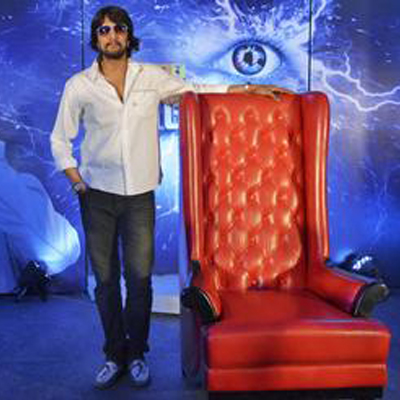
    It has roped in Kannada actor Sudeep, who is also the anchor of Suvarna TV’s reality show Bigg Boss Kannada 2, as its brand ambassador for a year. The TV/movie star launched Intex’s new range of aqua mobile handsets – Aqua Style- in Bengaluru earlier this week.


    The company states that its revenue doubled to Rs 2000 crore in FY-2014 as compared to Rs 1000 crore in FY-2013 and it plans to close the current fiscal with revenue of Rs 3500 crore. 65 per cent of the company’s business comes from mobile phone sales.


    Intex senior general manager mobile business Sanjay Kumar Kalirona said, “The Aqua range has been widely accepted by our customers across India. The Aqua Style has been designed keeping in mind, the need for style and quality. We are focused on increasing our footprint in Karnataka and I am certain that our association with Sudeep will be well accepted by the regional audiences. With Aqua Style, we aim to empower youngsters looking for a mobile that speaks about their personality.” 


    Earmarked for brand spends is Rs 150 crore for FY-2015, with around Rs 100 crore solely on mobile phone promotion. Intex is planning a Rs 30 crore to Rs 40 crore campaign over the next three to four months, with a big percentage of the spends in south India. The campaign will cover print, television, radio, outdoor, social media and BTL activities, along with retail branding strategies. 


    Intex had roped in Farhan Akhtar as its brand ambassador in 2013, and launched two TVCs featuring its smartphones – Aqua i5 and Aqua i7 with him. It plans to launch its third TVC, also with Farhan for Aqua i5 HD as one of the four to five TVCs planned for this fiscal. 


    To enhance its customer base, Intex has joined hands with various players in the sports and entertainment industry through associations with cricket tournaments and a partnership with Sanjay Leela Bhansali for the Priyanka Chopra-starrer biopic on Mary Kom.


    Most of the creative work has been done in-house, and the company has two to three agencies for media-buying, sources at Intex said.


    Intex is a player in India in mobile handset, consumer durables and IT accessories. It claims that it has a pan India presence through its wide network comprising 29 stock and sales offices and over 800 service touch points.

  • Bigg Boss Kannada 2 rules the air-waves on Suvarna TV in its first week

    Bigg Boss Kannada 2 rules the air-waves on Suvarna TV in its first week

    MUMBAI: The verdict is out… Bigg Boss Kannada Season 2 tops the charts with an overall 5.7 TVR. The grand launch episode aired with a 6.7 TVR and the intriguing mix of housemates are all set to make this the most exciting season of Bigg Boss on Suvarna TV.

     
    The reality show is attracting strong eye balls in a short span of time and has scored a peak TVR of 7.9 on the first elimination on Saturday during the nail biting FIFA World Cup matches. And now, taking further the encouraging success of the Bigg Boss regional formats, the show will soon expand its Southern presence with Tamil and Telugu variants by the end of this year.

     
    Endemol India COO Abhishek Rege said, “Bigg Boss Kannada has done it again; its irresistibly interesting and unpredictable content has enraptured the viewers. With lots more surprises on the way; host Sudeep and this year’s interesting mix of housemates will ensure that this season is going to be an addictive one.”

    Produced by Endemol India Private Limited, Bigg Boss presents the unique combination of reality and real, unscripted drama. It is the ultimate reality show where 14 celebrities from Cinema, Television, & other fields compete for the BIGG BOSS winner title. They would live under the same roof for over 14 weeks with cameras following their every little move 24×7 and Bigg Boss, the ultimate authority in the house who ensures that their stay is anything but comfortable. As the 14 contestants vie to survive in the Bigg Boss house, one will see all emotions – irritation, backbiting and backstabbing reach its prime. This is one reality show that brings out the best and the worst side of contestants, loud gets louder, bold gets bolder and mean gets meaner.

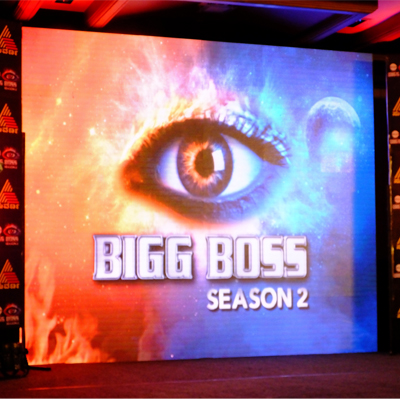
    Bigg Boss Season-2 is telecasted every day at 8 pm only on Suvarna TV

  • Asianet Suvarna clinches ‘Bigg Boss Kannada 2’

    Asianet Suvarna clinches ‘Bigg Boss Kannada 2’

    MUMBAI: After showing two successful seasons of the Kannada version of Kaun Banega Crorepati titled Kannada Kotyadipathi, Asianet Suvarna is all set to treat its viewers to another big ticket reality show. Season two of Bigg Boss Kannada is shifting hands from ETV Kannada to Asianet Suvarna.


    Sources from the channel have confirmed the news to indiantelevision.com and said that the deal with Endemol, the production house, has also been finalised. Actor Sudeep will host the second season as well. Currently, hunt for the contestants is on and the show is slated to go on air in a couple of weeks.


    The first season of the show was aired on ETV Kannada between 24 March 2013 and 30 June 2013 with 15 inmates and Vijay Raghavendra finally winning the show with Rs 50 lakh as prize money. Bigg Boss Bangla was aired on ETV Bangla last year between 17 June and 14 September.

  • We are neither threatened by Hindi nor do we ignore it: Ravish Kumar

    We are neither threatened by Hindi nor do we ignore it: Ravish Kumar

    Certainly not his maiden stint at handling regional, Ravish Kumar was earlier with Star, managing Star Pravah and Star Jalsha for two years. While he originally got on-board Viacom 18 to head the network’s proposed movie channel which did not materialise for some reason, he quickly rose to the challenge of reviving three regional territories.

    Today, as Viacom 18 executive vice president and business head – regional channels, ETV Kannada, ETV Bangla and ETV Odiya, Kumar is close to completing three years with the network even as the regional market continues to grow from strength to strength.

    On any given day, Kumar is running from pillar to post, what with three different portfolios to handle. However, on a rare day that he was able to find some time, indiantelevision.com’s Vishaka Chakrapani sat him down to understand the business of regional channels. Excerpts…

    How has your experience been with working on regional channels?

    To take up these channels and turn them around is a huge task. Regional channels involve a lot of experimenting and risk-taking. These are vibrant channels in vibrant markets and are full of ideas.  We have started seeing results on some of the channels and on others we have built a solid foundation.

    What makes each market different from the other?

    All states are unique and have a varied cultural background, literature, heritage, theatre etc. This gives a tremendous canvas to paint from.  There is a strong sense of expectation and a strong sense of progressiveness from the people, which means there is a lot of place for us to introduce discontinuities in content.

    After the acquisition by Network 18, one of the first things you did was to get Bigg Boss on the Kannada and Bangla channels. How has it worked and how are the formats working for regional?

    In all three markets, we changed the primetime slot within one year and have reinvented the entire portfolio of fiction and non-fiction. We’ve experimented with established formats like Bigg Boss and Jhalak Dikhlaja and also created our own IP with a show called Indian.  The base of the show is that while you are a Kannadiga, do you understand the nuances of being an Indian. We took a team of 18 to 22 people and took them across the country, where they had to adapt to the local way of life. This is our own format, which gave us more or less the same ratings as Bigg Boss.

    We did Indian in Kannada last year and we intend to renew it but we are looking at reinventing as well. Season one is done and it is of no use to do it a second time. The IP is the fundamental guts of the show which takes you out of your comfort zone and gives you experiences that you haven’t had before to make you a more confident person.  We go for the emotional hook that makes you stronger and exposes you to a life as never seen before.

    So last year, we experimented with big-ticket formats and right now, we are doing a hybrid of Jhalak Dikhlaja called TakadhimithaDancing Stars in which we have licensed the version from BBC Productions and are producing it on our own. We have worked successfully in all three models. International formats, our own IPs, and a hybrid model.

    Adaptation is a misused word. You have to look at whether a show is relevant for the market. Whether the practice or the theme of the show is prevalent in that region.

    If you are doing a huge international format show like Bigg Boss or India’s Got Talent, the scale of production is huge. You have to pay format fee, licence fee that takes the cost to a different level. So there is a certain expectation with what you can do and what you cannot and there is an expectation that people also have which is hard to meet.

    But reinventing for a show every year is a difficult task. It is a challenge because it’s not easy to reinvent. But in a regional market, there is so much more to do. I can be as creative as I want. We don’t care about ratings; what we care about is making sure people like what we put there. We have upped the quality and variety of content in the three channels. So deliver a product and keep your faith in it.

    But big formats have not yet entered Odisha yet? What kind of a market is it?

    Odisha is a smaller market for us and not as well developed or monetised as the others.  There is a limit on the amount we can spend in this market. But what works here is dubbed shows. And we also have six to seven of our own shows. The weekend property is song and dance-based as opposed to big shows due to budget restrictions.

    In Odisha, we are in the process of adapting shows from Tamil and Telugu and from our sister channel, Colors, too. In terms of content, people want soaps, drama, aspirational and progressive shows. In the regional market, you also have the responsibility to educate people. For viewers such as housewives, television is their window to the world. Their ecosystem is very limited. When they watch a serial like Balika Vadhu, which is followed by a learning section, that is what they are really interested in.

    Colors manages to make money out of Bigg Boss by balancing its PnL and not by money earned through the show. Do you also work in a similar manner for regional adaptations of Bigg Boss?

    We are far more sensitive to PnL. There is a limit to the amount of money I can put, even though I want to do a big-ticket show. So that confines or prevents me from taking on more than I can chew. You need to be sensitive to costs in these markets because the cost Hindi can afford is not necessarily the cost we can work with in the regional space and we don’t want to compromise on quality.

    What are the kind of fiction shows that you have on your Kannada channel?

    We have done adaptations of Balika Vadhu and Madhubala called Puttagowri Maduve and Ashwini Nakshatra, respectively. We also have three of our own original shows: Agnisakshi, which is recently launched; Lakshmi Baramma and Charanadasi. Everything has worked for us. So we seek to provide quality and outstanding stories. Madhubala and Ashwini Nakshatra may have started out similarly but now, their stories are extremely divergent.

    How has the market evolved in these three states?

    I think regional continues to grow faster than Hindi. Earlier in Bangla and Kannada, you would pull in GRPs by pulling in people to watch. The market now has stabilised at a level and now you are taking share from each other. The TV penetration and coverage continues to grow. We are going to have a new method of looking at data, which might lead to some redefinition of universe. TV hasn’t reached saturation. We are now seeing increasing penetration of second TV households.

    ETV has a slightly older audience due to its long existence. How do you ensure your fiction shows reach out to the right TG, especially the youth?

    In fiction, our stories are very mainstream and we are giving newer talent a chance. We are supplementing it a lot with our non-fiction shows. Non-fiction is what draws the youth to the channel.  But we ensure that whatever we put out is not excluding any particular group. We are realising that great content works across the board. The definition that we have to tailor content to fit an age group is a myth.

    Would it have been possible for the ETV group to make such investments prior to acquisition by Network 18?

    These channels, according to my understanding, had been on the selling block for quite some time. So, they were managing bottom lines carefully and not looking at growth. They were actually managing for profit. Would they have actually turned around and put this kind of money in the shows? Probably not, but it is hard to answer.

    How do you manage competition with the Hindi market?

    Anyone who wants to watch Hindi is welcome to do that. We don’t fight Hindi.  We continue with our strategy, irrespective of what Hindi is doing. Let me put it this way – we are not threatened by them but we don’t even ignore them and if there is any learning to be had, we are constantly monitoring Hindi to see what we could be doing bigger and better. I have a canvas that is beautiful. It allows me to pick and choose from Hindi and international as well.

    What is your viewership share in each state?

    TAM data for the four-week average ending week 12, shows that in Kannada, we are 25 per cent; Udaya is 31 per cent; Suvarna is 22 per cent; and Zee Kannada is 12 per cent.  We used to be number four or five in this market and now we are a strong number two. In Odisha, Tarang has 40 per cent, Sarthak has 30 per cent and we are at 14 per cent. In Bangla, Star Jalsha is 49 per cent, Zee Bangla is 37 per cent, and we have 10 per cent.

  • GSEAMS signs sports icon Sangram Singh as its exclusive talent

    GSEAMS signs sports icon Sangram Singh as its exclusive talent

    MUMBAI: GSEAMS (Global Sports Entertainment And Media Solutions) – which in less than a year’s time – after successfully establishing the intellectual property division and movie marketing division has forayed into its third division “GSEAMS – Talent Management”  which has signed on its first talent sports star, actor, youth icon and Bigg Boss finalist Sangram Singh.


    Speaking on this new found association Arjun Singgh Baran and Kartik Nishandar say: “We are very happy to have Sangram Singh on board with us. He epitomises the youth of the country as well as his connect with the common man is tremendous. Our core focus in the coming few months would be on youth and fitness brands which can have a good connect with their target audience by associating with Sangram Singh. Sangram has been one of the only few candidates who has come out with such a clean image even from a show like Bigg Boss. Sangram also has no vices and he believes in high moral values and a no supplement fitness regime. He believes that through the power of the mind one can achieve anything. We are in talks with multiple television channels, production houses for roles best suited for him. We also would soon be launching a range of sports apparel and accessories under Sangrams own label and are in talks with prospective partners for the same.”


    Commenting on the association Sangram Singh says: “I have known Arjun and Kartik from a long time and have seen the work both of them have put in building the Big Live division they set up at Reliance Broadcast and also the way GSEAMS has been doing in the past one year. I am very excited with the plan that they have in store for me and look forward to working with them.”


    After having a successful stint with Reliance Broadcast Network Arjun Singgh Baran & Kartik Nishandar started GSEAMS 10 months back. Since the inception of the company there has been no looking back for the media duo wherein under the media solutions division the team has been involved in marketing more than eight movies with banners such as Viacom, Eros and others, providing media solutions to clients like Reliance Infra and creating television content be it their own IP such as the IMA Marathi Music Awards on Star Pravah or producing shows for other channels and clients.


    Clear domain understanding and a passion for media marketing through new age channels and mediums are the reasons why Arjun and Kartik chose to foray into the above divisions and now the talent management wing.

  • Making sense of the loss-making Bigg Boss

    Making sense of the loss-making Bigg Boss

    MUMBAI: Love it or hate it but you just can’t ignore it! Which is what not just viewers but also television channels have been doing ever since Endemol India introduced Bigg Boss.


    First presented by Sony Entertainment Channel in 2006 with Arshad Warsi as the host, the ever popular reality show started off with a bang only to end with a whimper when the channel was forced to relinquish the loss-making show.


    Though that didn’t stop a five-year-old Colors from taking up where Sony had left, the channel continued to lose a lot of money over Bigg Boss even as the show became more and more popular.


    Intrigued by Colors’ determination to hold on to such a loss-making property, indiantelevision.com posed the question to CEO Raj Nayak in an earlier interview, to which he answered: “I do it because it is a cult show. People wait for it. Advertisers want it. If you speak to ‘Streax’, the owner told me two containers were bought in Afghanistan because of Bigg Boss. That is Bigg Boss for you.”


    He further said: “We generate PR worth Rs 15-20 crore when Bigg Boss is about to start. That’s the kind of cult image the show has – 100 days of non-stop entertainment during prime time, like an IPL match. We will not stop doing those things as the viewers want it. So, as long as it matches my bottom P&L, I am able to manage it, I am fine.”


    Indeed, one of the reasons to continue investing nearly Rs 120 to Rs 130 crore in Bigg Boss is the kind of buzz it generates well ahead of the launch. The contestants, their choice of clothes, their language and mannerisms, the controversies around them – constitutes fodder for endless discussion and hence, nothing to be unhappy about.


    Also according to Nayak, Bigg Boss gets the best advertisers by virtue of it getting the best ratings. Fact is while fiction is Colors’ staple food, advertisement rates for non-fiction shows are higher. Then again, walking the tightrope between fiction and non-fiction is of essence.


    Yet another reason for continuing with Bigg Boss is the rub-off it has on ‘Brand Colors’. “When you go to a restaurant, there will be many dishes (Chef’s specials) that will be expensive. They don’t make money on that but they keep it because some people keep coming for those dishes. And yet, these people eat other stuff as well,” explained Nayak.


    The show was high on viewership throughout the season; however it was its finale episode that added a cherry on the cake. It had all the makings of a ‘masaledaar’ blockbuster including power-packed performances by the contestants and the host Salman Khan himself.


    “The season seven has been the most watched, most buzzed and most trended season of all times,” believed Colors’ weekend programming head Manisha Sharma.


    Bigg Boss seven debuted with 7,711 TVTs on its opening day and continued to have a successful run for several of weeks.


    The spill-over effect of the popularity of Bigg Boss was felt on shows Colors airs before and after Big Boss. For example, in week 44 of TAM TV ratings, viewership of Madhubala rose to 4,441 TVTs from 4,305 TVTs a week earlier and that of Uttaran jumped to 4,299 TVTs from 3,722 TVTs.


    For Lodestar UM vice-president Deepak Netram, Bigg Boss is the kind of show which is an investment for the long term for the channel.


    A senior media planner said while Colors is seeing a 10 to 15 per cent year-on-year increase in the cost of producing Bigg Boss, the show continues to have a loyal set of viewers and continues to deliver on ratings.


    “It’s like you are making a product but not getting the right price for it. But does that mean you will stop making the product? Obviously, you will continue making the product. The problem you have is in terms of sales,” he said.


    Yet another planner opined the channel wouldn’t give up on the show. “If the show is making losses, it does not mean it won’t happen. Some other channel will pick it up and make it. So, they will sell it to their competitors. And the show has its audience; they will lose the viewers.


    So, to not lose those viewers, Colors will have to make the show. To get the right value, you’ve got to get sales active,” he rounded off.

  • Adding an Islamic shade to the Colors’ canvas

    Adding an Islamic shade to the Colors’ canvas

    MUMBAI: It was in the early nineties that a show like Gul Gulshan Gulfaam on Doordarshan captured the life of the Muslim community. It was probably for the first time in India that a show gave the masses at large an opportunity to take a sneak peek in to the life of the Islamic households in the country. Set in Kashmir, it was about the tribulations of the Kashmiris surviving on the business of houseboats in the Dal Lake.

    Much later, at the end of the same decade, Heena and Shaheen, both of which aired on Sony Entertainment Television, captured the life Muslim women, their struggles and a lot more, giving the audience another chance to look at the life of a Muslim household closely. Around the same time, came Tanha – a show with the collaboration between India and Pakistan. It was not just set in a Muslim milieu but also became popular for its insightful portrayal of the community and the characters, not just in India and Pakistan but also in the entire subcontinent. Zaaraaired on Sahara One in 2006 was another show capturing the essence of the culture.

    More recently, a serial on Star Plus – Sajda Tere Pyaar Mein that ran for few months in 2012 featured the life of a Muslim woman whose patriotic credentials were questioned; and Qubool Hai on Zee TV captures the contemporary Muslim household with the unfolding of an interesting love story. Interestingly, Qubool Hai has become one of the most popular shows in the Hindi GEC space. Its ratings are almost close to 5862TVTs (as per Tam ratings for week 49).

    And when a concept has become so popular, it isn’t a surprise to see something very similar (as far as the set up is concerned) inspiring others. Close on the heels of Zee TV, now, Colors is set to air its new show Beintehaa – a first for the channel focusing on the pan-Muslim milieu with a story of two similar and headstrong individuals Aaliya and Zain, who are tied in a volatile relationship.

    The show would be aired at the prime-time slot – 9 pm every Monday to Friday from 30 December. A replacement for Bigg Boss, the show is being promoted heavily across platforms as the channel is keeping its hopes high on this one. Colors weekday fiction head Prashant Bhatt says that the narrative style of the show and its backdrop is going to be its USP, which would not just pull the regular TV viewers but will also draw the younger audience from the age group of 14 above.

    “The story telling has a simple, yet intriguing style with a contemporary set up and that’s going to be the pull,” says Bhatt.

    If we look at all the shows made with a Muslim backdrop in the past, we would realise that each of them have been really popular during the time they were aired. Yet, unlike other Indian cultures, from Punjabi and Gujarati to Bihari, Harayanvi, Rajasthani and Marathi, on which many shows have been made till date, there have been very few with a Muslim milieu. An avid TV viewer can easily summon up the number of TV serials based in an Islamic household.During the launch of Beintehaa in Mumbai recently, when asked what has kept TV away from exploring this community, Bhatt revealed that Colors has been looking for such a concept since almost two years now. “We have been waiting for almost two years to get this colour onto the Colors canvas,” he remarks and adds, “We were not getting a story suitable enough to do justice to the culture. Finally the story that Farhan Salaruddin (the producer and writer of the show) brought to us felt as if it was tailormade to display the Muslim culture,” he says.

    And the channel didn’t wait for so long because the competitor channel came up with Qubool Hai, neither was it ever in a hurry to start with something similar. “We were not in a race. We wanted to come up with something that does complete justice as well as is developed well,” he says.

    And if we go by the expert views the idea of featuring this Islamic culture is on its way to becoming a trend. Veteran TV writer Gajra Kottary credited for pathbreaking shows like Balika Vadhu says that many people haven’t tried their hand at capturing this backdrop because of the stigma associated with it. “Another thing that may have kept many away is the fear of not pulling the masses. But it may become a trend as it would give the makers as well as viewers an opportunity to explore something really new,” she says.

    Even Salaruddin, who has earlier co-produced the show Bind Banunga Ghodi Chadunga thinks the same. According to him, since his show is very contemporary and resonates with the present day’s lifestyle of youngsters it is going to be liked by masses across religion. “It isn’t isolated to showing the Islamic culture. It explores the overall life of two Muslim youngsters, from their difficulties to their dilemmas,” he says and adds that the show will work for its content.

    Media veteran Divya Radhakrishnan reflects the same views. “The Muslim backdrop is just a creative setting. It will give the creatives a chance to explore new avenues. But any show doesn’t work because of the backdrop, rather it works because of the content,” she says.

    Salaruddin is also happy to get the primetime slot which will give his story more visibility. The presence of other strong shows doesn’t bother him much. “The other shows were new at one point of time too. With time, we will make our place,” he says.

    While the entire Colors team is betting big on the content, we also hope that like earlier TV shows in the same backdrop, this one will work well too.

  • Bigg Boss’ rides high on negative publicity

    Bigg Boss’ rides high on negative publicity

    MUMBAI: Not that Bigg Boss, or for that matter even the original format Big Brother, has ever been in news for good things, but the seventh season of the celebrity reality show seems to be riding high on negative publicity.  While in the earlier seasons, it was just the in-house fights, some of the most popular ones involving Dolly Bindra, Raja Chaudhary, Kamal R Khan, Pooja Misra etc, which made headlines, this time the happenings inside the house is also coming out and reaching the police station.

    The recent news is about a case against actor Ajaz Khan. Apparently, on 28 December, a case was filed against him for calling BJP’s prime ministerial candidate Narendra Modi a “chor”. The BJP political wing in North Mumbai lodged a police complaint against Ajaz and the show for apparent defamatory statement.

    The number of legal cases this season has just been on a rise. The first case was against Armaan Kohli filed by Sofia Hayat for sexual assault. The actor was taken to Lonavala police station from the Bigg Boss house but however he got and re-entered the house.

    If that wasn’t enough, another case was filed in Hyderabad against the host Salman Khan and the producers of the show for allegedly hurting the religious sentiments. According to the complainant, certain expressions used by the actor for describing elimination and promotion of participants were offensive.

    Surprisingly, there was not much use of abusive language in this season of the show. However, other factors like celebrity tantrums, physical proximity among contestants all have kept the show in the spotlight since the beginning. From Kushal Tandon jumping off the wall and contestants flouting the rules of the house to two contestants getting intimate in the house, everything has kept the show in the limelight.

    Recently, there was also a strong buzz that actor and producer Sachiin Joshi was also going to take strong legal action against Kushal Tandon. The actor was in the show to promote his filmJackpot and was called ‘dedh footiya’ by the TV actor.

    With only two days to go for the show’s finale, one can only hope that the season ends without anymore controversies.