Tag: Big TV

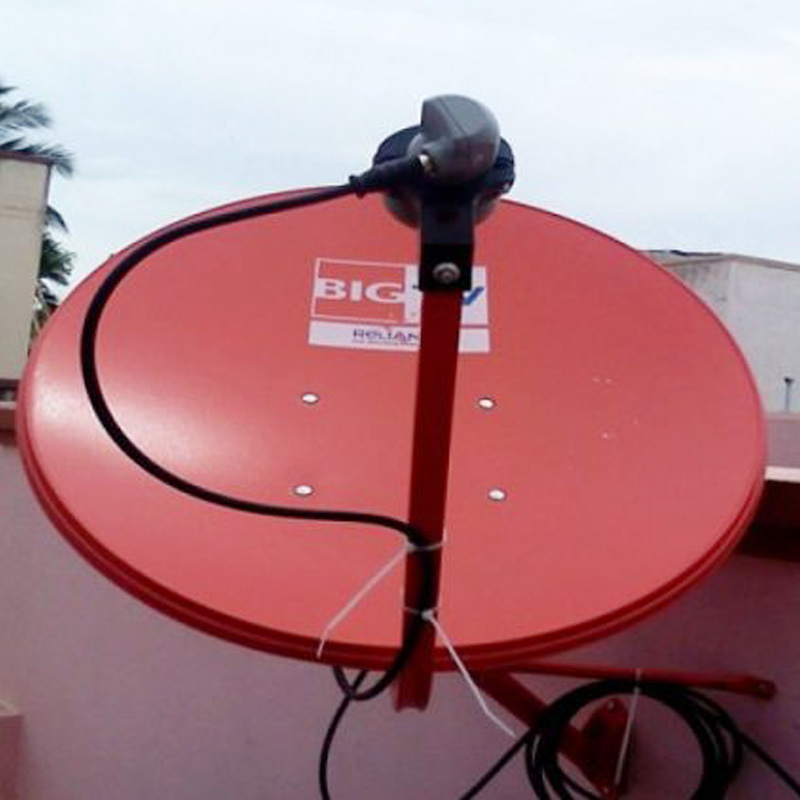
  • Reliance Big DTH to take FTA route under new management?

    Reliance Big DTH to take FTA route under new management?

    MUMBAI:  Is another free-to-air (FTA) DTH operator pawing to take off in India? If the statements made by the Pantel Technologies (the company that took over the ailing Reliance Big DTH) management in media releases are to be believed, then the answer is in the affirmative.

    Yesterday, Sri Adhikari Brothers Television Network and Pantel Technologies announced through a release on the Bombay Stock Exchange that the companies had arrived at an understanding to jointly create a bouquet of over 20 FTA channels comprising diverse genres, such as entertainment, kids, infotainment, mythological, and movies.

    The release further stated that “the varied product offering will strengthen the business of Reliance Big TV (RBTV) and will give a leg up to the largest FTA network in India. FTA channels have shown an upsurge with all the leading broadcasters showing a keen interest in the FTA product offering.”

    Pantel Technologies CMD Vijendra Singh was quoted in the release as saying: “Our main aim is to develop the entertainment appetite of the rural market and create an alternative India. With our coalition with Sab Group, we will bring together our technological proficiency and their content expertise thereby enabling us to provide good content for rural India, which is what we are committed to for their upliftment.”

    Pantel had acquired the entire shareholding of RBTV with the business on an “as-is, where-is” basis. The transaction ensured that all 1.2 million customers of Big TV would continue to enjoy uninterrupted services, the company said in a statement. The deal also ensured continuity of employment for about 500 employees of RBTV.

    Attempts to connect with SAB group managing director Markand Adhikari and Singh were not successful.

    However, if Indiantelevision.com’s interpretation of the announcement today is correct, then it should prove encouraging for private broadcasters. The  Prasar Bharti-owned FTA service FreeDish has been an unmitigated success but its future looks in doubt with conflicting reports appearing about whether the powers that be want to continue providing the slots to private players. According to sources in the public sector Prasar Bharti, minister of information and broadcasting Smriti Irani has put a full stop to the e-auction process as the government wants to populate the FreeDish platform with its own channels.

    Also Read:  Veecon Media acquires Reliance Big TV

    Sab Group, Pantel Tech join hands to launch over 20 FTA channels

    Reliance launches JioTV for web

  • DD reaches 92 per cent of India; FreeDish 30 million homes

    DD reaches 92 per cent of India; FreeDish 30 million homes

    NEW DELHI: Doordarshan in terrestrial mode is estimated to be available to about 92 per cent population spread over 81 per cent area of the country, the Parliament has been told.

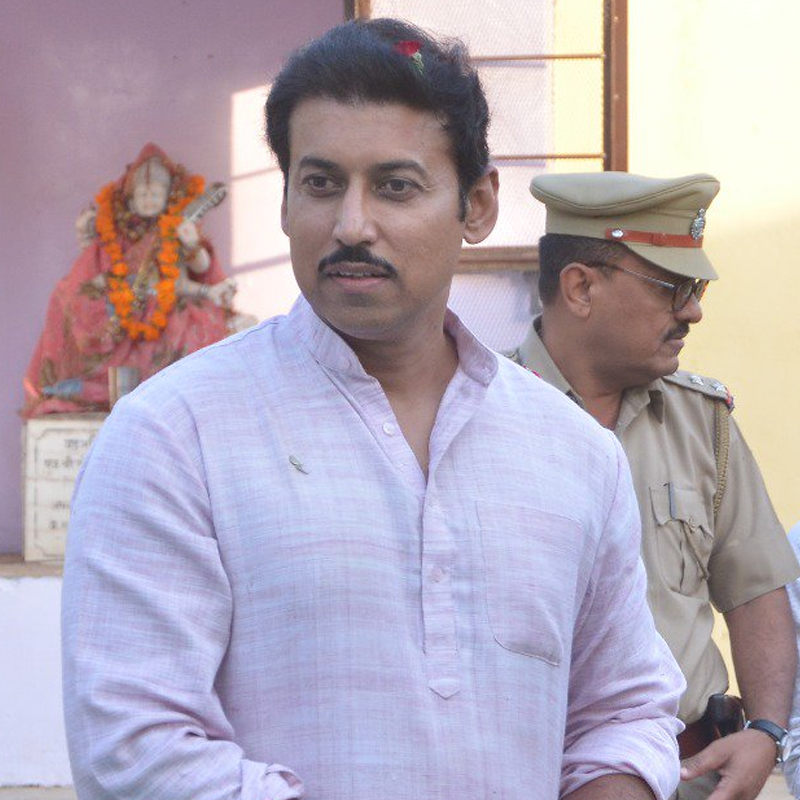
    However, in satellite mode, multichannel TV coverage of Doordarshan reaches all the areas of the country through Doordarshan’s free-to-air DTH service FreeDish. It is possible to receive DTH signals anywhere in the country with the help of a small-sized dish receive unit, the minister of state for information and broadcasting Rajyavardhan Rathore said.

    Modernisation of Doordarshan network by utilising modern techniques and equipment is a continuous process. Schemes in this regard have been formulated and implemented from time to time. The modernisation plan covers a broad spectrum, which includes digitalisation, adoption of new technologies, upgradation and replacement of old ageing equipment, etc.

    According to industry estimates, DD FreeDish has reached about 20 to 30 million homes with 80 TV channels and 32 radio channels. This information is based on the KPMG- FICCI (Klynveld Peat Marwick Goerdeler – Federation of Indian Chambers of Commerce and Industry) Indian Media and Entertainment Industry Report 2016.

    The minister said there was no restriction on any channel for obtaining a slot on DD FreeDish through e-auction as DD Free Dish Platform was Free-to-Air and no subscription was charged by Doordarshan from viewers.

    The minister said, in the e-auction held so far by Doordarshan, no pay channel had participated. (However, it is learnt that Zee News and Big TV which are pay channels successfully bid for beaming free to air on FreeDish).

  • DD reaches 92 per cent of India; FreeDish 30 million homes

    DD reaches 92 per cent of India; FreeDish 30 million homes

    NEW DELHI: Doordarshan in terrestrial mode is estimated to be available to about 92 per cent population spread over 81 per cent area of the country, the Parliament has been told.

    However, in satellite mode, multichannel TV coverage of Doordarshan reaches all the areas of the country through Doordarshan’s free-to-air DTH service FreeDish. It is possible to receive DTH signals anywhere in the country with the help of a small-sized dish receive unit, the minister of state for information and broadcasting Rajyavardhan Rathore said.

    Modernisation of Doordarshan network by utilising modern techniques and equipment is a continuous process. Schemes in this regard have been formulated and implemented from time to time. The modernisation plan covers a broad spectrum, which includes digitalisation, adoption of new technologies, upgradation and replacement of old ageing equipment, etc.

    According to industry estimates, DD FreeDish has reached about 20 to 30 million homes with 80 TV channels and 32 radio channels. This information is based on the KPMG- FICCI (Klynveld Peat Marwick Goerdeler – Federation of Indian Chambers of Commerce and Industry) Indian Media and Entertainment Industry Report 2016.

    The minister said there was no restriction on any channel for obtaining a slot on DD FreeDish through e-auction as DD Free Dish Platform was Free-to-Air and no subscription was charged by Doordarshan from viewers.

    The minister said, in the e-auction held so far by Doordarshan, no pay channel had participated. (However, it is learnt that Zee News and Big TV which are pay channels successfully bid for beaming free to air on FreeDish).

  • DTH subs in Jharkhand, West Bengal, J&K jump manifold with DAS Phase III

    DTH subs in Jharkhand, West Bengal, J&K jump manifold with DAS Phase III

    MUMBAI: As a result of being the major beneficiaries of cable television digitisation in the country, direct to home (DTH) operators in January have seen an increase of 62 per cent in their subscriber base, with states like Jharkhand, West Bengal and Jammu & Kashmir being the major contributors as per Chrome Data Analytics & Media.

    While Jharkhand’s DTH subscriber base jumped to 54 per cent in January from a meagre one per cent; in West Bengal, where there was almost nil DTH penetration, a jump to 42 per cent has been seen. Jammu & Kashmir, on the other hand, upped its DTH subscriber base from 22 per cent to 61 per cent post the Digital Addressable System (DAS) Phase III deadline of 31 December, 2015.

    Bihar followed next with a 32 per cent jump in DTH subscriber base. The state’s 13 per cent DTH penetration has now has increased to 45 per cent.

    With a 31 per cent jump in subscriber base, Gujarat’s DTH penetration now stands at 34 per cent, while Chhastisgarh registered a hike of 22 per cent and achieved 39 per cent DTH penetration in January.

    Karnataka’s DTH subscriber base saw an increase of 12 per cent with the state achieving 21 per cent DTH penetration. While Goa saw a 11 per cent jump at 21 per cent. 

    With an increase ranging from four – 10 per cent, the DTH penetration percentage in other states stood as follows: Uttar Pradesh – 78 per cent, Haryana – 32 per cent, Rajasthan – 41 per cent, Punjab – 22 per cent and Uttrakhand – 45 per cent as per Chrome Data Analytics & Media.

    As of 30 June, 2015 there were 78.74 million registered DTH subscribers, of which only 39.74 million were active subscriber being served by six private DTH operators. As of October 2015, the market share of these DTH operators was as follows: Dish TV – 27 per cent, Tata Sky – 20 per cent, Airtel Digital – 19 per cent, Videocon d2h – 16 per cent, Sun Direct – 12 per cent and Big TV – six per cent.

    As of 31 December, 2015, while Dish TV’s subscriber base stood at 1.4 crore, Videocon d2h boasted of 1.13 crore subscribers and Airtel Digital TV had 1.11 crore subscribers. The subscriber numbers for Tata Sky, Sun Direct and and Big TV are not known.

    Now with the share of DTH subscribers increasing across the country, it will be interesting to note, which operator has benefited the maximum with DAS Phase III. 

    What’s more, despite the stay by the High Court in five states on the implementation of DAS Phase III due to shortage of set top boxes (STBs), there has been a successful 50 per cent digitisation for phase III across the country according to Chrome.

    It may be recalled that earlier this year, Chrome had claimed that post the Phase III deadline of 31 December, 2015, over 70 per cent digitisation had been achieved when analogue signals were completely switched off in various cities. However, the company has now revised its figures in the wake of analog signals being switched on again in various states, which has been stated as the cause for the steep fall in digitisation percentage in a place like Goa.

    According to the revised data provided by Chrome, three states namely Andhra Pradesh, Kerala and Punjab have achieved more than 90 per cent digitisation as of January 2016.

    Below is the percentage of digitisation achieved by Indian states in descending order:

    Andhra Pradesh – 94 per cent

    Kerala – 93.5 per cent

    Punjab – 90 per cent

    Uttar Pradesh – 89.2 per cent

    Bihar – 68.4 per cent

    Haryana – 66.7 per cent

    Goa – 64.9 per cent

    Rajasthan – 64.2 per cent

    Jammu & Kashmir – 61.2 per cent

    West Bengal – 60 per cent

    Jharkhand – 59.5 per cent

    Chhattisgarh – 56.2 per cent

    Uttarakhand – 53.4 per cent

    Karnataka – 51.8 per cent

    Gujarat – 51.6 per cent

  • DTH subs in Jharkhand, West Bengal, J&K jump manifold with DAS Phase III

    DTH subs in Jharkhand, West Bengal, J&K jump manifold with DAS Phase III

    MUMBAI: As a result of being the major beneficiaries of cable television digitisation in the country, direct to home (DTH) operators in January have seen an increase of 62 per cent in their subscriber base, with states like Jharkhand, West Bengal and Jammu & Kashmir being the major contributors as per Chrome Data Analytics & Media.

    While Jharkhand’s DTH subscriber base jumped to 54 per cent in January from a meagre one per cent; in West Bengal, where there was almost nil DTH penetration, a jump to 42 per cent has been seen. Jammu & Kashmir, on the other hand, upped its DTH subscriber base from 22 per cent to 61 per cent post the Digital Addressable System (DAS) Phase III deadline of 31 December, 2015.

    Bihar followed next with a 32 per cent jump in DTH subscriber base. The state’s 13 per cent DTH penetration has now has increased to 45 per cent.

    With a 31 per cent jump in subscriber base, Gujarat’s DTH penetration now stands at 34 per cent, while Chhastisgarh registered a hike of 22 per cent and achieved 39 per cent DTH penetration in January.

    Karnataka’s DTH subscriber base saw an increase of 12 per cent with the state achieving 21 per cent DTH penetration. While Goa saw a 11 per cent jump at 21 per cent. 

    With an increase ranging from four – 10 per cent, the DTH penetration percentage in other states stood as follows: Uttar Pradesh – 78 per cent, Haryana – 32 per cent, Rajasthan – 41 per cent, Punjab – 22 per cent and Uttrakhand – 45 per cent as per Chrome Data Analytics & Media.

    As of 30 June, 2015 there were 78.74 million registered DTH subscribers, of which only 39.74 million were active subscriber being served by six private DTH operators. As of October 2015, the market share of these DTH operators was as follows: Dish TV – 27 per cent, Tata Sky – 20 per cent, Airtel Digital – 19 per cent, Videocon d2h – 16 per cent, Sun Direct – 12 per cent and Big TV – six per cent.

    As of 31 December, 2015, while Dish TV’s subscriber base stood at 1.4 crore, Videocon d2h boasted of 1.13 crore subscribers and Airtel Digital TV had 1.11 crore subscribers. The subscriber numbers for Tata Sky, Sun Direct and and Big TV are not known.

    Now with the share of DTH subscribers increasing across the country, it will be interesting to note, which operator has benefited the maximum with DAS Phase III. 

    What’s more, despite the stay by the High Court in five states on the implementation of DAS Phase III due to shortage of set top boxes (STBs), there has been a successful 50 per cent digitisation for phase III across the country according to Chrome.

    It may be recalled that earlier this year, Chrome had claimed that post the Phase III deadline of 31 December, 2015, over 70 per cent digitisation had been achieved when analogue signals were completely switched off in various cities. However, the company has now revised its figures in the wake of analog signals being switched on again in various states, which has been stated as the cause for the steep fall in digitisation percentage in a place like Goa.

    According to the revised data provided by Chrome, three states namely Andhra Pradesh, Kerala and Punjab have achieved more than 90 per cent digitisation as of January 2016.

    Below is the percentage of digitisation achieved by Indian states in descending order:

    Andhra Pradesh – 94 per cent

    Kerala – 93.5 per cent

    Punjab – 90 per cent

    Uttar Pradesh – 89.2 per cent

    Bihar – 68.4 per cent

    Haryana – 66.7 per cent

    Goa – 64.9 per cent

    Rajasthan – 64.2 per cent

    Jammu & Kashmir – 61.2 per cent

    West Bengal – 60 per cent

    Jharkhand – 59.5 per cent

    Chhattisgarh – 56.2 per cent

    Uttarakhand – 53.4 per cent

    Karnataka – 51.8 per cent

    Gujarat – 51.6 per cent

  • Its Raining Gold on Zee Anmol

    Its Raining Gold on Zee Anmol

    MUMBAI: Zee Entertainment Enterprises Limited (ZEE), India’s leading television, media & entertainment conglomerate’s recently launched free-to-air GEC ‘Zee Anmol’ is happy to announce its festive season bonanza for its valued viewers. The channel has plans of daily gifting its ‘anmol’ viewers ‘Ek tola sona’ amongst several other bumper prizes as the gratification of its 2-week contest called ‘Zee Anmol Dekho, Sona Jeeto’. Starting 25th October till 5th November, questions about the channel’s primetime shows will be posed to viewers in the course of their telecast between 6:30 and 10 PM daily. Viewers will be required to SMS ZA <Their Answer> <Their Name> <City Name> to 57575. One lucky winner will take home ‘1 tola sona’ every day and many more will walk away with other exciting prizes. What’s more … winners will be declared on the very next day!

    Positioned as ‘Dil Choo Jaaye’, ‘Zee Anmol’ is a channel that believes in touching people’s hearts through real, genuine emotions depicted through some of the best shows that Indian Television has ever seen. ‘Zee Anmol’ stands for the most invaluable things in life – Love, family, memories! Already available across major MSO’s, cable operators and key DTH platforms such as Dish TV, DD Direct, Tata Sky, Big TV, Siti Cable, Hathway, DEN, Digi Cable and WWIL, ‘Zee Anmol’ showcases some of the choicest, hand-picked content in the history of Indian television including the most unforgettable shows from ZEE’s repository. It features some of the current hot favorite fiction and non-fiction properties of Zee TV as well as entertaining movies and kids’ content. The current programming line-up of ‘Zee Anmol’ includes shows like ‘Pavitra Rishta’, ‘Choti Bahu’, ‘Saat Phere’, ‘Naagin’, ‘Maayka’, ‘Kasamh Se’, ‘Sindoor’, ‘Jhansi ki Rani’, ‘India’s Best Dramebaaz’, ‘Shabaash India’ and ‘Dance India Dance’ amongst others.

    Tune in to ‘Zee Anmol’ for entertainment that is bound to touch your hearts. It cant get better for the viewers to win gold every day.
     

  • Sun TV channels threatens to pull plug on Reliance Big TV

    Sun TV channels threatens to pull plug on Reliance Big TV

    MUMBAI: The sun is likely to set on Reliance Big TV. The south’s leading broadcaster has issued a public notice to the Anil Ambani-owned Big TV that it better pay up money owed to it or it will pull the plug on 18 channels in different languages that are carried on the DTH platform.

    According to Sun Network sources, Reliance Big TV has been given a deadline of three weeks as per TRAI rules to cough up back dues which some say have not been paid for six months.

    According to an industry source, Reliance Big TV had earlier received a notice from another aggregator for non-payment of subscription dues but had made the payment after it was issued.

    The 18 channels which will go off air from Reliance Big TV, if the dues are not cleared are: KTV, Sun Music, Sun News, Gemini TV, Gemini Comedy, Udaya TV, Udaya Comedy, Udaya Movies, Udaya News, Gemini News, Gemini Music, Gemini Movies, Adithya TV, Sun TV, Udaya Music, Chutti TV, Surya TV and Kiran TV.

    The notice comes at a time when there were newspaper reports that Reliance Big TV was close to concluding merger talks with Sun DTH. Obviously things have not moved forward positively and it’s quite likely the deal has been aborted. Reliance Big TV subscribers are hoping things get sorted out on the Sun TV channel carriage front.

  • Max and Six back on Reliance Big TV

    Max and Six back on Reliance Big TV

    MUMBAI: With six days left for the Indian Premier League (IPL), direct-to-home operator Reliance Big TV has sorted out its dispute with MSM Discovery, the exclusive distributor of IPL‘s official broadcasters Sony Max and Sony Six.

    MSM Discovery, the joint venture between Multi Screen Media (MSM) and Discovery Communications that manages TheOneAlliance, had earlier in the day pulled the plug on Reliance Big TV by switching off signals of Max and Six for non-payment of dues.

    However, Reliance Big TV cleared the outstanding dues that finally led to TheOneAlliance agreeing to resume signals effective tonight.

    MSM Discovery President Rajesh Kaul confirmed that the dispute with Reliance Big TV has been amicably resolved. “Yes, we have resolved our issues with Reliance Big TV. The signals of Max and Six to Reliance Big TV will resume tonight,” Kaul told Indiantelevision.com.

    Reliance Big TV spokesperson refused to comment on the issue.

    The decision to switch off signals to Reliance Big TV would have affected almost two million subscribers who would have had to miss one and a half months of IPL action that kicks off on 3 April.

    Earlier, TheOneAlliance had issued a public notice in Economic Times and Business Standard informing subscribers of an impending switch off.

  • ‘Carriage market has exploded and will close this fiscal at Rs 14 billion’ – Gurjeev Singh Kapoor

    ‘Carriage market has exploded and will close this fiscal at Rs 14 billion’ – Gurjeev Singh Kapoor

    Broadcasters are being hit hard by hefty carriage fees as bandwidth is getting choked both on analogue cable and DTH (direct-to-home). Building formidable distribution bouquets is high on their agenda as they struggle to ramp up subscription revenues which are estimated to touch Rs 28 billion this fiscal.

    Star Den, a 50:50 joint venture between Star and Digital Entertainment Networks, is quickly adding regional channels to complete its otherwise strong Hindi and English entertainment-news-kids bouquet. Zee-Turner is the only other broadcasting distribution company which has a formidable regional content lineup.

    Star Den is eyeing a revenue of Rs 10 billion at a time when the television industry is beginning to feel the first serious signs of a slowdown in advertising revenues. Analysts say this will be a hard task to achieve, despite the boon from DTH revenues. Big TV and Airtel Digital TV launched later in the year, reducing prospects of a full-fiscal revenue gain for the broadcasters.

    In an interview with Indiantelevision.com’s Sibabrata Das, Star Den Media Services chief executive officer Gurjeev Singh Kapoor talks about the dark holes in the distribution business and how the company plans to ramp up growth in a tough business environment.Excerpts:

    Is the steep climb in carriage fees upsetting the business model of broadcasters?
    The carriage market has exploded and is expected to end this fiscal at close to Rs 14 billion, up from Rs 6 billion a year ago. As there is a huge amount of bandwidth constraint on analogue cable and even DTH, the industry has changed in terms of carriage. DTH operators are offering 200 channels while the Information and Broadcasting ministry has given the nod to 370 channels. A plethora of channel launches in the Hindi general entertainment, news and regional space has meant that there is a fierce fight for frequency. In a market where funding was easily available, channels were willing to pay more for space on cable networks. Insanity ruled the market.

    Will we see a correction in the carriage market?
    The balancing act has to happen now. With private equity and other sources of funding drying up, many broadcasters have started contracting their distribution budgets. We could see a flat carriage growth next year as channels start rationalising their costs. Broadcasters are in no position to be omnipresent in all cable networks; they will have to pick and choose where they want to be present and optimise their resources.

    But we will continue to see more channel launches next year as Reliance ADAG is planning to get into broadcasting space. Even existing players like Star India have plans to add more channels. Won’t this ensure that the carriage tap continues to flow freely?
    We may see a 10-15 per cent growth in carriage fee market in FY’11 as more channels enter the race. The next two years will be the blue litmus test for many broadcasters. For the weak channels, there could be a shake out. The fact is that distribution costs have grown unmanageably high.

    There can be no potential threat to carriage revenues unless the digital universe expands to at least 25 per cent. When we reach that stage, other models can emerge like broadcasters getting into agreements for sharing their distribution revenues with delivery platform providers.

    Are broadcasters getting united to resist on carriage fees?
    Broadcasters have doled out so much money in the past because of competition that it will be difficult to correct the system fully. More so, as we will see new channel launches. Carriage fee is being governed by market forces. But it is good that the thought process has started to fight carriage fees collectively. How far that will succeed only time will tell.

    Would you want Trai to (Telecom Regulatory Authority of India) come out with some regulation on carriage?
    I wish there could be some kind of formula that can be arrived at to regulate carriage. As an idea, it is definitely good since the regulator has mandated pricing issues.

    How difficult is it to ramp up subscription revenues in the backdrop of MSOs (multi-system operators) consolidating the cable TV market and Trai introducing pricing regulations?
    Subscription revenue for pay-TV broadcasters will close at Rs 28 billion in FY’09, up from Rs 23 billion a year ago. Even though there is a slowdown in the market and the times are tough, the industry expects a 10-15 per cent growth in FY’10.

    Isn’t that growth mainly because of DTH?
    DTH, undoubtedly, has expanded the market. But ARPUs (average revenue per user) haven’t grown in the DTH business; they are virtually the same as that of cable. IPTV, though much talked about, has also not happend this year.

    Will Star Den’s revenue touch Rs 10 billion this fiscal?
    While we are looking at very aggressive numbers and have set ourselves a very challenging task, I can’t comment on our financials.

    Do broadcasting distribution companies see the consolidation in the cable TV sector as a welcome change?
    The marketplace will make it difficult for small networks even as broadcasters rationalise their distribution budgets. Networks who have a geographical spread can bargain hard with broadcasters. In the short term, they will get paid more and will be reluctant to pay for more subscribers. But in the long term, it is better that the industry moves towards a better structured environment. MSOs and broadcasters have to join hands and realise that ultimately money has to come from the ground.

    Since the parent owner of Star Den also runs a cable TV company, how do you leverage the power of your bouquet to push the cable distribution business?
    We operate as independent entities. We treate Den like the other MSOs.

    Star India had earlier inked a distribution deal with sports broadcaster Neo which did not last long after the new management took over. Do you feel that the Star Den bouquet is strong but still incomplete without sports channels in its mix?
    We are currently distributing 23 channels and are in a very strong position to post growth. We have great quality content in the Hindi general entertainment space with Star Plus as the leader and Star One in the fifth spot. In the news television space, we have Times Now which leads in the English segment, CNN-IBN, IBN7 and Star News. CNBC TV18 and Awaaz, of course, are leaders in their segments and are powerful subscription-driven channels.

    In the kids genre, we have Hungama and the three Disney channels. For the English-viewing audiences, we have a formidable presence in Star Movies, MGM and Star World. We also distribute NGC and Zoom.

    We are now filling up the missing pieces and adding the regional bouquet. With Star buying majority stake in Asianet, we will cover all the languages down south. Star has also launched a Bengali and a Marathi general entertainment channel while the one in Gujarati is in the pipeline.

    Will Colors (the second most-watched Hindi GEC from the Viacom18 stable) automatically come to your bouquet when it decides to go pay?
    I wouldn’t like to offer any comments.

    Will you also be getting the MTV channels after Viacom’s contract with One Alliance expires on 31 March, 2009?
    I don’t want to comment on this.

    What about the wedding and home shopping channels that Star is planning to launch next year?
    Whatever niche channels Star launches, we will be happy to service. Niche channels will have a demand particularly on digital platforms. One the Fox channels launch, we will also be happy to distribute them.