UTV Television, one of the foremost television production studios in India, has seen many ups and down in the past. At one stage it was one of the premier TV production houses in the country. Then a clutch of upstarts – Balaji Telefilms, BAG Films, Big Synergy, Sphere Origin, Director‘s Kut, Shakuntalam, and Endemol – came and swept business from under its feet.
But over the past couple of years, the division of UTV – promoted by Ronnie Screwvala – has been piecing together its story show by show. It began by venturing into the production of Marathi and southern Indian language shows. Then it focused on putting together a slate of Hindi non-fiction shows. The fact that the quantum of fiction shows on its genre sheet all but disappeared did not perturb the pioneer of TV in this country.
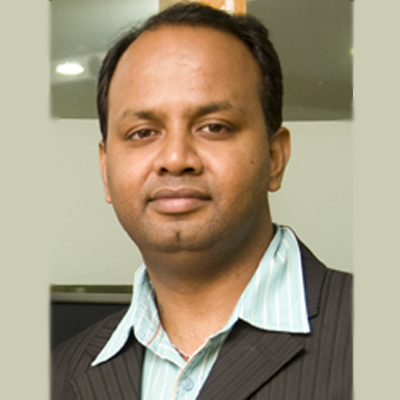
The man helming the division is Santosh Nair, who was earlier in UTV‘s air time sales division. Nair spoke to Indiantelevision.com‘s Gaurav Laghate about the developments so far and the roadmap ahead.
Excerpts:
What are the changes you introduced in UTV‘s television content business after taking over as head a year back?
I joined UTV in May 2005 but was taking care of the airtime sales division down south. Since last year, I have taken over the overall television business.
We have really worked towards putting together the best creative team. We got back Indrajit Ray as chief creative officer. And we have put the right people at the right place.
Now we are concentrating on developing show formats. Two major and much talked about formats that our team has developed are – Dance India Dance (season one) and Emotional Atyaachaar.
Apart from this, I can say a lot of thought has gone into setting the roadmap for the future.
Was there a need to change the team structure?
We have different teams looking after fiction and non-fiction content. Both the verticals have their development teams also, which develop home grown ideas. Dance India Dance was part of that, and recently Emotional Atyaachaar was internally homegrown.
All these separate teams are driven by different individuals.
We are seeing a greater focus on non-fiction shows rather than fiction. Why?
Yes, in the last couple of years, our strategy had been to focus on an area, which was very wide open, that is non-fiction. And now we are the only content company that produces shows in Hindi, Marathi, Tamil, Kannada, Malayalam and Telugu.
But why was the focus greater on non-fiction shows?
We wanted to fill the vacuum that was sitting over there in terms of a content delivery vehicle for non-fiction content. I think we have been fairly successful in doing that because in that span of two years, we did only non-fiction.
We had non-fiction shows like Chhota Packet Bada Dhamaka, Dance India Dance first season (on Zee TV), Ek Haseena Ek Khiladi (Colors) and Cash Cab (Bindass).
Apart from one long running saga Bhabhi (on Star Plus), we didn‘t have any other fiction to look at.
But don‘t you think the fiction quotient, what generally is termed as the staple diet, has come down?
These shows clearly established us as a non-fiction brand. But yes, having said so, people started looking at us as a pure non-fiction content provider. They forgot that we started as a company which delivered great fiction content.
‘People started looking at us as a pure non-fiction content provider. They forgot that we started as a company which delivered great fiction content‘
So how are you positioning yourself now?
We are focused on growth. 2009-10 has been to cement this entire platform in terms of being looked as both a fiction as well as a non-fiction provider.
Talking about projects, how many new shows do you have in the pipeline ?
The second quarter is when we will go all guns blazing. We have many shows in the pipeline; we are starting with a primetime show on ETV Marathi.
We also have four fiction shows for Hindi GECs including one (Rakt Sambandh, a remake of a Telugu show) for Imagine TV. For the other three shows, I can‘t share the details as we are in the process of signing the LoI. But I can tell you that we are working with the top channels.
There are also two non-fiction shows, out of which one is the mother of all reality shows. But again I cannot give details right now.
Are these standalone initiatives or are they being done in partnership with others?
We have a partnership with UTV Tele Talkies Ltd (UTTL), wherein we have on board Prashant Jadhav, the man behind Kasauti Zindagi… We are working on a fiction show for Imagine TV. It will be on air by end of this quarter.
We have also been producing Sonu Sweety with Rajesh Berry Entertainment Ltd for Sab.
And about your recent entry in the regional space…
In Marathi yes, but for Southern languages our association with Sun has been since the time of the network‘s inception.
But you were not producing shows for the Sun Network. You were primarily doing airtime sales…
In the last couple of years, we have moved from being purely an airtime sales outfit to a more of a mix and match of own productions and marketing the same.
How do you see the growth in regional markets like Marathi?
In the last couple of years, regional markets have been systematically growing. And if you look at pan-India or Hindi GEC, you will see shows catering to the Marathi audience, like Pavitra Rishta.
There is huge scope, but only if you do volume business as margins are very less. But yes, it is a growing market and we are looking at it in a serious manner. The Bengal market is also where we are looking to expand, but only after establishing ourself in the Marathi space.
Coming to your content, you are producing Emotional Atyachaar, which is a bit edgy in nature. How is the response for the show? You are planning a second season also?
Emotional Atyachaar has really cut the ice with audiences as far as Bindass is concerned. The audiences actually liked it. It has got the channel to a GRP level where it had never reached before. It had also beaten cult shows on competitive channels.
And talking about Bindass, it is a youth channel, so it is okay to have edgy content. Anyway there is a very thin line. And yes, the second season of Emotional Atyachaar is coming in very soon.
So you see a change in viewership trends?
Viewership patterns are definitely changing. People are ready to experiment; they are looking at some kind of differentiation of content and that‘s where you see successes like Sach Ka Saamna and Emotional Atyachaar.
For example, in the midst of a huge crowd of Hindi GECs, Colors came in. Everyone thought what is this? But they took their punt and it worked. See it is the small differentiator, which will drive the content. Otherwise it is going to be one mundane thing where daily sagas are coming in. So for the daily soaps also that we are working on, we are trying to do something different. The story might remain the same, but it is all about the treatment, how you take it forward.
You said DID was your format, but the IPR remains with Zee?
With Hindi broadcasters, what happens is that the IPR remains with the channel. And historically it has been happening this way. But we took a bold stand when we decided to retain the IPR of Shararat.
But that was a long time back, now all the IP is vested with the broadcaster. It is as simple as that. Emotional Atyaachaar‘s IPR is with Bindass, although it‘s a group company.
So if you don‘t have IPR, how are you intending to grow? If you see international production houses like Endemol and Frementle, they all retains their IPRs.
We have already started working on some projects where we can retain IPR as it is going to be the future. We are working on certain finite series, where we will retain the IPR. We will produce it first, before even going to the channel and pitching it.
And how do you intend to fund it?
We will opt for internal funding. And we will de-risk it by producing four episodes and sampling it to broadcasters.
In case we have a very solid finite – 13 or 22 – episodic series, then we can think of producing it in full.
Internationally, we see the syndication model in the television business. It allows producers to take on the risk of production and getting the reward by selling it to various outlets globally. Why can‘t we have such a model here?
See, in India since we don‘t retain IPRs we cannot have the syndication model. And channels that run repeat content, are mostly low cost in operations.
And even if some demand comes from international markets, the broadcaster, with the IPR, makes most of the money.
But with shows on Sun Network you can guard the IP.
The benefit any company that works with Sun has, is that they can retain their IPR. The model there is completely different – you produce, you market, you pay slot fees. That‘s the benefit with Sun. So you have shows which are running there, which you can remake in other languages. We have a long standing relationship with Sun Network.
And at the same time you can not produce content for competitors. That‘s the condition Sun has?
Well, in terms of revenue and feasibility it makes sense to work with Sun as it is the biggest network down south.
So apart from the IPR issue, what other challenges are there for a production house?
We have already seen one big challenge when recession happened. Channels were looking at cutting down expenses including production costs. They want the same product at a lesser cost. So that was the biggest challenge and learning that we got in the last so many years.
We really had to sit back and think on how to strategise and minimise the cost. Not only in terms of our business but on a macro level also.