Tag: Big Data

  • Trai seeks views on Big Data & AI adoption to improve telecom services in future

    Trai seeks views on Big Data & AI adoption to improve telecom services in future

    Mumbai: The 5G spectrum auction that happened recently is a big step towards the launch of new internet and telecom experience in India. 5G will take India’s telecom services to the next level and bring it at par with countries like China, the US, and South Korea.

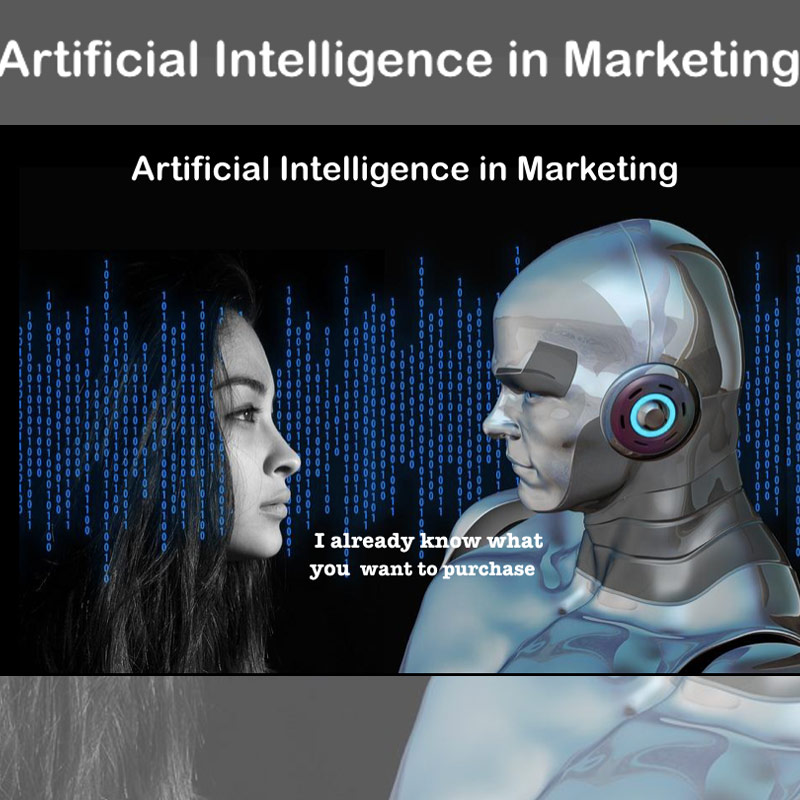
    A step towards fueling future innovation, the government is now trying to leverage & integrate artificial intelligence (AI) and big data (BD) in the telecommunication sector as both are inherently synergistic. To make this possible, The Telecom Regulatory Authority of India (Trai) has released a consultation paper on “Leveraging AI and BD in the telecommunication sector.” The regulatory body has asked its stakeholders to submit any consent and issues regarding the consultation paper by 16 September & 30 September will be the last date for counter comments.

    5G would bring advancement in the media & entertainment industry as the consumers soon be able to access faster internet speed and services. It will enable faster download speeds, lower latency (the response time to transfer computer information), greater flexibility and ability to support more devices.

    Through the 5G auction, a total of 51.2 GHz spectrum was sold and 71 percent of total spectrum was put up for sale. It helped the government to earn a record Rs 1.5 lakh crore recently.

    Further, the telecom regulator, in its consultation paper, sought opinions on areas where the telecom networks’ present and future capabilities could be used to leverage AI and BD. The paper also presented examples of AI and BD already deployed in telecom networks by the operators in India & other jurisdictions.

    Leveraging AI and BD in 6G era

    The regulator also looked at developments happening in the 6G and possibilities emerging in the 6G era to leverage AI and BD in the telecom sector as well as other sectors where telecom can play an important and crucial role.

    The consultation paper followed the department of telecom’s referral to Trai in June 2019, in which the department requested a recommendation on leveraging AI and BD in a synchronised and effective manner to improve the overall quality of service, spectrum management, network security, and reliability.

    The paper stated, “It has been noted that 5G and beyond networks will provide a plethora of data that may be useful for telecom as well as other sectors. Edge computing in the 5G era may offer opportunities to other sectors to train and validate their AI models in the telecom networks.”

    “In 5G and beyond, networks may also offer privacy-preserving architectures to adopt and accelerate AI and BD in other sectors,” the paper added.

    The paper covered risks associated with the adoption of AI and BD, such as unethical use, bias in data and algorithms, model instability, regulatory and legal noncompliance, and risk mitigation methods and mechanisms. Further, there is a risk of privacy among users, which includes data exploitation, the risk of identification and tracking, and individual profiling.

    It also further stated, “If privacy concerns are not addressed and trust is not instilled among the users, then it may become one of the biggest concerns in the adoption of AI.”

    The paper’s focus was on privacy concerns and their impact on developing intelligent solutions. The paper identified and presented various solutions and initiatives that may be taken to address the risks and concerns. It also suggested ways to overcome these constraints for faster adoption of AI.

    Trai mentioned in its paper that they also noted the latest developments in the field of AI, which may be useful in multi-domain, multi-vendor, and multi-AI model environments.

  • Is India ready for the impact of AI on marketing?

    Is India ready for the impact of AI on marketing?

    MUMBAI: From self-driving cars to voice assistants Siri and Alexa, artificial intelligence (AI) is expeditiously becoming popular. While one may think of AI only as intelligent robots or technology, it encompasses everything from Google’s search algorithm to e-commerce to geo-target and understanding consumer behaviour. 

    AI has taken a hold of the advertising and marketing industry too along with big data, analytics, machine learning (ML), and chatbots. Not one advertising or marketing conference goes by without one or more sessions on the subject. 

    It was in 2017 that marketers realised the leverage AI and ML provided. But the reality is far from the hype as marketers in India and around the world are still unacquainted with the technology and the benefit it can add to business.

    Today, companies are gathering thousands of records from each consumer touch point. They have the entire database of what their consumer is searching for, from which device and how long before they actually purchase it. Companies can also trace the consumer’s likes and dislikes by scrutinising their customer profile. This large set of data about consumer behaviour, which is also known as big data, provides definite information to brands that can help their business. This is where AI comes into the picture.

    public://kirin.jpg

    AI in marketing terms consists of machine learning, deep learning and natural language processing applications. But the hard reality is that many of the tools that are being marketed as AI are still in their primitive form and there is a long way before companies can actually begin to use AI to yield better results. Currently, a lot of brands feel the urgency to adopt the modern and new technologies to keep up with the changing marketing dynamics, but AI, just like any other technical tool, is not a magic solution and requires time, resources and money. 

    Though the name sounds fancy, it may not be essential for every brand to jump on the bandwagon. Agencies, being industry experts, first need to familiarise themselves with how best to use AI for their client before even discussing client readiness of AI in marketing strategy. Setting the record straight, The Glitch managing partner and business head Kabir Kochhar says that the first step to getting clients interested in using these tools by showing them the money. “Showing improved return on investment will get clients to take notice and giving them deeper insights into their customers will allow and inform them on their future product roadmaps,” he says. 

    public://goolge.jpg

    For instance, predictive analytics allows online players like Amazon, Netflix, Hotstar, Myntra, Flipkart and YouTube among others to surface and finesse recommendations. Putting together information from diverse datasets is a common use of AI. Even the most advanced tech firms in Silicon Valley are just beginning to unearth its possibilities. Dentsu Aegis Network chief data officer Gautam Mehra suggests that if media companies do not catch up, it’s definitely going to affect them as we do see the local OTT players and even telecoms such as Jio building significant data practices.

    In spite of all the automation and move to programmatic, there are large parts of media planning and strategy that are still being done laboriously by human intervention. While stating that currently only some really sharp media planners will come up with half a dozen hypotheses and run tests that either prove or disprove the same, Indigo Consulting national head of strategy Devang Raiyani believes that going forward, a few startups will lead this and big media players will wait till some of them acquire critical mass and acquire them. 

    The revolution of AI in marketing has been propelled by the advent of affordable and advanced data analytics tools, extensive datasets and a growing acceptance of the data-driven approach to marketing decision making by marketers. With the advent of cloud computing, it’s very easy to scale without having to make large upfront investments. Most of the cost to use an AI system is rarely the system itself, but in ensuring you have the right data in the right format prepared for the AI engine. While stating that certain AI systems require some level of initial investment in technology, Mehra points out that these, however, sustain themselves within a year and hence it’s not really a CapEx investment in that sense. And then there are AI systems that are absolutely turn-key and pay-per-use.

    It is a herculean task for agencies to convince clients unaware of AI to use the technology. In such cases, Raiyani opines that the best way is to prove the use-cases at the fringes, create a few proof of concepts before betting big as the challenge with most Indian companies is that data available is not very clean and highly fragmented across touch-points. He believes that it will be the GAFAs (Google – Apple – Facebook – Amazon) of the world who will lead this change.

    Kochhar thinks that the grasp of terms such as AI and big data are theoretical and in practice, we’re just scratching the surface on how AI can transform industries. “For now, agencies need to think of it as a tool of inspiration for the copywriter as it will essentially eliminate a bunch of A/B testing we currently do to see the effectiveness of communication,” he says.

    AI in creative advertising has been touted as a replacement to human copy although there’s still a long way to go for that since, in advertising, context is everything and the nuances of language still need to be mastered. AI will help throw up more insights based on user interaction with ads and act as a guide showcasing the types of communication routes that can have a higher impact on the end user. 

    Also Read :

    FabIndia sets aside 40% on digital advertising

    Vodafone India modernises for IoT-ready future

    How iProspect’s Vivek Bhargava foresaw a digital future two decades ago

    Talent retention is key, says Mindshare’s Prasanth Kumar

  • Digital will be core of ad budgets by 2020: DAN report

    Digital will be core of ad budgets by 2020: DAN report

    MUMBAI: The increasing penetration of digital media in India is creating huge opportunities for marketers to reach out to untapped audiences in newer ways than before. Marketers are getting innovative with the way they choose to advertise to their audience.

    As of 2017, the Indian ad industry stands at Rs 55960 crore and is estimated to grow with a CAGR of 11 per cent till 2020 to touch Rs 77623 crore. This growth will be driven by the smart phone revolution and the subsequent spends on digital advertising, according to the second edition of media and digital marketing communications company Dentsu Aegis Network’s (DAN) digital report that was launched yesterday.

    India is on the brink of transitioning into a digital economy with a big push from the government and the public private partnership model. The Indian government’s concerted endeavours to boost digitisation coupled with an array of economic reforms and policies have infused higher momentum into India’s participation in a digital economy. The telecom sector has contributed in equal measure — lower data rates, improved connectivity have put India on a path to a mobile revolution of sorts.

    The Telecom Regulatory Authority of India (TRAI) estimates the internet population in the country to hit 738 million by 2020. Currently India’s internet subscriber count stands at around 430 million. As per TRAI’s performance indicator report for July-September 2017, a total of 129 million rural subscribers and 300 million urban subscribers are connected via internet or broadband services. The tele-density in urban areas is 74 per cent whereas it is around 14 per cent in rural India.

    Ad spends have seen double digit growth rates in e-commerce, BFSI, automotive and telecom in 2017. Ad spends have seen the highest increase in e-commerce with 13 per cent and BFSI at 11 per cent. Television takes the largest share of media spends at 40 per cent (Rs 22526 crore) followed by print at 34 per cent (Rs 18981 crore) and digital media at 15 per cent (Rs 8202 crore).

    While spends on television will grow with a CAGR of eight per cent till 2020, its contribution to the advertising market has been on a decline. The digital ad industry is estimated to grow with a CAGR of 32 per cent by 2020 as advertisers are now adopting digital media as a branding medium, not merely a performance medium. The highest spender on digital is e-commerce followed by telecom and BFSI sector. The spends on digital video is expected to see the highest growth rate followed by display and social media. OTT and an engaging mobile experience will also help in driving the digital growth.

    DAN chairman and CEO South Asia Ashish Bhasin believes that digital is no longer a medium but a way of doing business. It is how consumers interact with brands. “The digital transformation is affecting every business and agencies and marketers who don’t recognise this will be left behind. Digital is a behavioural change taking place with the consumers, not just a way of building a brand. This is a critical difference many don’t understand,” he says.

    Brands are slowly shifting their marketing budgets to digital platforms as the digital medium becomes all pervasive and consumers increase time spent on this medium. Even though digital ad platforms have been instrumental in direct sales, so far they do not match up to traditional media when it comes to brand building. Brand building is largely happening through mature ad mediums such as TV rather than digital.

    Marketers are moving from purely mass-targeting platforms to a mix of traditional
    and digital platforms. This makes use of the relative advantages of both media for an optimal marketing strategy. Traditional media provides a better reach in comparison to digital media while the latter is unparalleled when it comes to measurability. When it comes to performance marketing, digital media has evolved as a powerful platform. The explosive growth of internet-enabled businesses such as e-commerce, digital wallets, etc., has also caused a shift of ad money towards this medium as businesses targeting consumers inclined to online transactions rely on digital ad platforms. Meanwhile, the smaller brands also prefer to make investments on digital platforms as compared to bigger brands it provides better return on investment (RoI).

    Automotive sector has had one of the highest growth in ad spends last year and is expected to spend a large majority of its ad budget on traditional media. Within digital, it distributes the budget across all ad formats. Growth in ad spends for e-commerce has been the highest and it spends the highest proportion of marketing budget on digital media and mostly on search and social media. Additionally, telecom also spends a high amount of its marketing budget on digital media but mostly on media and video.

    Marketing has been an ever-evolving field. It’s normally exposed to so many new technologies and is an early adopter for most of them. This happens because the consumer is nearly always a step ahead and the competition is stiff. Businesses today have to acquire and retain consumers extremely efficiently in the marketing process. There is a limit to how many line items a digital marketer can create and manage effectively at a human level. No matter how many segments our planners create, no matter how finely we slice and dice the data, it’s extremely difficult to connect all the dots. Here is where machines come in helpful.

    But the digital advertising industry is faced by several challenges like slow pace of digital transformation, lack of unified metric system, ROI on programmatic, ad frauds and the growing use of ad blocking softwares.

    Having said that, the future of digital advertising looks bright and optimistic with the rise in video content, engaging mobile experience, voice-based interaction, data science and machine learning and transformation in payment mechanism.

  • Guest column: Digital outlook for 2018

    Guest column: Digital outlook for 2018

    MUMBAI: The year 2017 is behind us and, as we peek into 2018, there is so much to look forward to. The digital landscape is so dynamic and ever-evolving that an annual trend-spotting article would be unfair. But still there are key areas where digital is heading and I can safely say that 2018 is going to be a year of technology and innovation. 2018 is also the year of the dog, according to the Chinese calendar, and brands and agencies who remain loyal to their technological prowess and who are open to newer territories will emerge as differentiators in the cluttered space. 

    Consolidated big data

    Data is going to the king going forward. Empirical evidence suggests that with exhaustive consumer behaviour and spending patterns, marketers can position their brands accordingly. This, coupled with improved data analysis and research, can improve customer experiences and journeys, personalise marketing initiatives and make the whole experience meaningful and convenient.

    AI will lead the way

    If AI were added to the mix, it becomes a formidable weapon in interpreting data. The data is useless unless there is an intelligent way of analysing it. And AI does that precisely. 2018 will be the year we will see this going mainstream. AI will help to not just optimise customer experiences but also reduce marketing investments by finally removing the subjective nature around the question of what worked and what didn’t.

    Focus on visual search  

    The latest mobile phone from Google has a feature called Google Lens. This was used by Nokia also few years ago but Google is now backing it with their redoubtable AI technology. For instance, Google Lens will help users learn all about a retail outlet by simply pointing their phone camera at it.  The search could throw up discount coupons, too, leading to direct footfalls. Visual search can be leveraged by retail and travel brands. As the feature matures, we will see use cases across the spectrum. 

    Algorithms will keep evolving

    Machine learning will make algorithms much smarter and we will see marketing models changing. 2018 may just be the year that will define the direction marketing automation will take in years to come.

    Blockchain and IndiaChain

    Blockchain was the buzzword of 2017. Blockchain was used by Bitcoin but the scope is not limited to cryptocurrencies only. In lay man’s terms, blockchains are encrypted and secured distributed ledgers of economic transactions. On the same lines, NITI Aayog has an ambitious plan to develop its own blockchain called IndiaChain. The idea is to build a distributed ledger system that makes data manipulation virtually impossible through verification by other stakeholders in the network. Not just across the nation, once operational, IndiaChain will also be the largest blockchain in the world. What’s in it for marketers? Well to start with, Indian fintech companies will benefit a lot from IndiaChain. It will allow them to leverage this network to their advantage. This will speed up contract enforcements, minimise fraudulent transactions, increase transparency and precision in operations.

    Talk and search

    Back in 2016, when Google introduced its new assistant and messaging platform, there were quite a few eyebrows raised. The question was, in the cluttered messaging environment, was this any different? Well to be fair, Google has answered its detractors. The Google Assistant can engage in a two-way conversation with the user and this has been possible because of Google’s language-processing algorithm. With the rise of voice-driven search assistants from Amazon and Apple, spoken search-terms will be the norm.

    The author is founder and CEO of Tonic Worldwide. The views expressed are personal and Indiantelevision.com may not subscribe to them.

    Also Read :

    India ad spend to grow by 12.5% in 2018: DAN report

    Industry applauds Sam Balsara as he turns 67

  • Rentrak acquires social media tracker SponsorHub

    Rentrak acquires social media tracker SponsorHub

    MUMBAI: Rentrak has acquired SponsorHub, the Big Data platform for the sports and entertainment industry, offering proprietary social media measurement for sports, political and advertising brands.


    SponsorHub offers the most trusted industry benchmarking for top brands in the sports technology and entertainment space. Its tools measure and track brand engagement in sports and branded entertainment initiatives, ranging from the Olympics and World Cup, to TV and movies.


    Rentrak’s acquisition of SponsorHub advances its mission of providing unprecedented audience measurement and targeting to enable marketers to reach the right audience at the right time. Through its acquisition of SponsorHub, Rentrak will offer products that measure the effect of social media on television, dynamic ad insertion, online video advertising, movies and branded content integration.


    “TV continues to be more social and our industry-leading analytics greatly complement Rentrak’s services. The combination of Rentrak’s current products with SponsorHub’s social media SaaS platform will provide the most precise set of tools to measure the effect of social media. We’re looking forward to the new products that will be developed through this acquisition,” said SponsorHub CEO Robert Johnston.


    “We are excited to add social media measurement to our TV Everywhere products, as it will give additional transparency and purchasing flexibility for brands and agencies through SponsorHub’s social media products,” added Rentrak vice chairman & CEO Bill Livek.

  • Mindshare APAC launches adaptive solution suite for brands

    Mindshare APAC launches adaptive solution suite for brands

    MUMBAI: Mindshare APAC has launched FAST (Future Adaptive Specialist Team), a unique solution suite, which aims to provide data led adaptive marketing services to brands looking to make sense of the deluge of data that is engulfing marketing communications. 


    One of the key headwinds that brands are facing due to this data deluge is the dynamism and uncertainty in the customer journey and the primary purpose of FAST is to help clients take control of the same.


    Mindshare’s FAST is the first of its kind in Asia Pacific from any marketing communications company.


    FAST comprises six services that clients can choose from or use as an integrated solution. As part of Data Management, powered by The Data Alliance from WPP, FAST provides data advisory services to help clients prepare their data management strategy, and to help them on how they can use technology to make sense of the data.


    Performance Marketing is an insights-driven outcome-based service that helps clients harness the power of search, e-commerce and mobile marketing in an integrated manner. With Programmatic Strategy, Mindshare has developed a proprietary architecture that leverages GroupM’s global scale with advanced behavioral targeting that delivers dynamic advertising to the most valued target at the most opportune time. 


    Real-Time Marketing, hallmarked by The Loop, is an adaptive decision making engine that influences the dynamic consumer journey, using real time insights to drive real time actions. 


    Finally, FAST provides capabilities in Digital Analytics with tools to better understand the digital trail, attributed right down to the last mile action. And for clients who have rich Enterprise data, Mindshare will integrate its own proprietary data with 3rd party data to provide Big Data services in partnership with Crayon Data by developing brand specific affinity graphs.


    Designed specifically for clients with centralized needs, Mindshare has gathered digital specialists from across the network to create five FAST hubs, located in Singapore, London, New York, Shanghai and Mexico City. FAST is particularly open sourced in building strategic partnerships in each of the Hubs to leverage local knowledge and expertise and they are fully integrated within the existing agency teams in the region.


    Mindshare Asia Pacific COO Gowthaman Ragothaman said, “In the last 15 days, FAST has built up significant traction, demonstrating its value to our clients and their businesses. It is more than just a concept, it is a step in the right direction – one that is built on a sound understanding of our client’s business needs and their expectations of what the future of media should be. By adding new and evolved capabilities and leveraging off of our global scale, FAST showcases Mindshare’s ability to constantly and quickly adapt to the need of the day, and is poised to be our key differentiator as it begins to deliver results for our clients.”

  • Big Data: Helping maximise the return on investments

    Big Data: Helping maximise the return on investments

    MUMBAI: Flip through business channels or newspapers and everyone seems to be talking about the Big Data.


    And in the current digital revolution phase, it has become quite imperative for brands to efficiently and effectively leverage Big Data for strategic business decisions.


    The rise of social and mobile computing means huge volumes of precious customer and prospect insights are available to further propel the business. However, extracting and making sense of this raw data, as well as data from traditional systems of record, requires definitive use of cases in which tangible business objectives drive experimentation with new tools, analytical techniques and operating processes for pinpointing potential returns on information — and investment.


    So, Big Data Analysis is helping companies gain deeper insights into customer behaviour and industry trends, thus letting them make informed strategic decisions to improve their operational and marketing ROI.   In layman’s terms, Big Data can be defined as collection of data much larger than can be stored and computed in an individual large server. Generally the data comes from different sources like Data Warehouses, Sales data, online customer behaviour logs and social media streams. Because of rapid digitisation, the data is getting captured at a faster rate and continues to grow over time. These are popularly called as 3V’s of Big Data (Variety, Velocity and Volume), explains IntelliGrape engineering VP Narinder Kumar.


    Global spending on Big Data hardware, software, and services will grow at a compound annual growth rate (CAGR) of 30 per cent through 2018, reaching a total market size of $114 billion as per a recent report from AT Kearney.


    It’s relevance in today’s world has grown multifold because though data analytics and lot of related techniques have been in use since long time but these were generally under realm of very large organisations. “Rapid digitisation, pervasiveness of internet enabled devices and social media has led to Big Data explosion in recent times. Existing tools and techniques are either not capable to easily handle such large data-sets or find it difficult to keep pace with such fast pace of data evolution,” points out Kumar.


    He adds, “Alongside Big Data explosion, we are witnessing technology advances in terms of innovative products to harness power of Big Data. Hadoop ecosystem, NoSQL Databases, cloud platforms, analytical & visualisation tools have made it possible for mid and even small organisations to harness power of Big Data.”


    Thanks to technology spurt, today organisations can apply for Big Data techniques in multitude of ways. For instance, an e-commerce portal can build recommendation engines to up-sell and cross-sell visiting customers. A bank can propose tailor made policies to its customers based upon their financial history, their existing portfolio along with their demographic details. A mobile service provider can predict churn and reach out to the potential customer base with more innovative plans.


    Kumar says, “In brief, Big Data allows organisations to be become more data driven in formulating their marketing and product strategies rather than relying on guts, assumptions and expert opinions.”


    Having said that, there are companies that don’t know how to use Big Data to their benefit. “This is largely because the entire landscape has grown very vast in a relatively short span of time. We would say, Big Data domain is under early stages of maturity in multiple aspects. Many organisations are sitting on fences and waiting for the technologies to be more mature and best practices to evolve. As a result, we see several half-hearted attempts towards Big Data adoption. We witness a lot of PoC (Proof of Concepts) or isolated adoptions of Big Data analytics. This leads to low returns of Big Data investments for organisations,” reasons Kumar.


  • Mindshare partners exclusively with Crayon Data

    Mindshare partners exclusively with Crayon Data

    MUMBAI: In a landmark move, Mindshare has entered into an exclusive partnership with Crayon Data to power its planning, insights and consultancy offering.


    The main aim of combining Mindshare’s proprietary data and research with Crayon Data’s big data collection and analytical capability is to offer greater adaptive solutions for marketers. And provide ability to not only identify different consumer profiles and segments, but also target and track those profiles across a complex range of media channels, including social media and video.


     For Mindshare, the partnership continues its focus on developing leadership in Adaptive Marketing, a shift that is impacting how the agency thinks about services, products and ways of working. Mindshare’s core DNA is about disruption, provocation and speed, working with open source partners to continuously re-define how media agencies should behave.


    With this in mind Mindshare has consciously entered into a range of strategic partnerships across new emerging domains such as big data, mobility, online video, cross screen measurement, advocacy and social content. The agency has re-structured its approach to bring data, content, technology and accountability together in a way, which has unlocked dramatic growth opportunities for both clients and partners.


    Mindshare’s Products, Partnerships & Services council chairman and APAC chief client officer Sudipto Roy said, “One of today’s key business challenges is the complexity surrounding the collection of data making traditional database processing and management tools ineffective in helping clients make optimal decisions about their customers’ needs. It’s a fundamental requirement of business success. Without the ability to support customer needs, organisations fail.”


    “We are looking at this collaboration to dramatically transform the way consumer insights are mined and connected to our clients’ categories. For one FMCG company, we were able to unearth consumer connections and interests in a way that is almost impossible to do through standard research based methods. For a B2B client, we were able to unlock and profile a million potential leads with exact identification of what they would be likely to buy. This is a game changer; both for insights and for performance/ CRM based initiatives. It’s not a surprise that Crayon Data was recently chosen as one of the top five companies by IBM’s Watson Developer Challenge.” he added.


    Crayon Data is one of the fastest growing “big data” startups founded with a vision to simplify the world’s choices. The SimplerChoicesTM engine simplifies the decision making process for marketers, using proprietary algorithms to sort the complexity and present meaningful connections between data points and providing predictions of what consumers really want. The foundation of Crayon’s Choice Engine is the Taste Graph (B2C) and Interest Graph (B2B).  Crayon’s taste graph (for B2C companies) already has over 550 million taste nodes reaching close to a billion through 2014. The company’s interest graph (for B2B companies) has extensive information on over 10 million enterprises, with 500M data points.


    Crayon Data founding director Suresh Shankar said, “Media, analytics and behaviour is all going digital, and choices are proliferating in every aspect of our life from media to daily decisions. The partnership seeks to marry Mindshare’s media data sets and expertise, and its innovations like Loop Room, with Crayon’s choice engines, algorithms, and taste/interest graphs. This partnership forms part of a big transformation and caters to our mission of turning the misery of choosing into the magic of choice.”

  • IntelliGrape signs up with DataStax Partner Network program

    IntelliGrape signs up with DataStax Partner Network program

    MUMBAI: IntelliGrape, which is a leading player in building custom Big Data solutions, has joined hands with DataStax to increase the adoption of their Apache Cassandra-based database, used by more than 400 companies including more than 20 in the Fortune 100.


    The DataStax Partner Network (DSPN) is built around business collaborations with solution, application, infrastructure and ecosystem partners such as Accenture, Apigee and many others.


     “We are delighted to welcome IntelliGrape into the DataStax Partner Network as our first partner in New Delhi.  IntelliGrape clearly offers some great experience with Cassandra projects and without doubt will benefit both businesses and the Cassandra community” said DataStax Channel director Tim Marston.


    As a member of DataStax partner network, IntelliGrape will offer scalable, flexible and more business relevant Big Data solutions built on Apache Cassandra platform. Basis this association, IntelliGrape will also have access to DataStax’s ETL/Data Integration, BI/Reporting and Development Tools.


     “We are very excited to join hands with DataStax, which we feel will help us leverage this cutting edge platform to build and support Big Data solutions for our enterprise and start-up clients” mentioned IntelliGrape VP engineering Narinder Kumar. He further added, “All businesses across the globe are witnessing rapid technological and digital revolution, leading to a burgeoning amount of data, which needs to be analyzed efficiently and effectively for strategic business decisions.”

  • “Use of social media is good when it adds value to communication strategy”

    “Use of social media is good when it adds value to communication strategy”

    MUMBAI: Social-mobile-video marketing is an area waiting to be explored, at least in the Indian context. However, players like Digital Quotient – which already has a presence in the field with over 70 staff across key locations in India – will continue to enjoy a first movers’ advantage over those who come after them.


    Indiantelevision.com’s Priyanka Nair got Digital Quotient COO Vinish Kathuria to speak at length about the changing digital ecosystem, social media and everything in between…


    How have the demands of marketers from the digital platform changed in recent years?


    The Indian digital ecosystem is changing positively over the last decade. Marketers are trying their level best to catch up with consumers’ needs in the digital world. Today, digital is a must-have media vehicle. Gone are the days when we were asked, “What can be done on digital?” The need of the hour is how to take communication to the next level on digital. Tangible and controlled experiments are what brands expect from digital agencies today.


    With changing consumer demographics, it is necessary for digital agencies to have a clear idea of the business objectives of various brands. At Digital Quotient, we look at campaigning for a brand from a very strategic point of view. I think that should be the approach taken by agencies today.


    How is social media gaining importance in a marketer’s communication plans? Are the brands getting it right in terms of social media?


    It can be noted that every brand wants to have a social media presence. While some brands are getting it right in terms of social media, many others need to revise their approach. The first thing that brands should stop doing is racing towards fetching more likes. The question that brands which are looking for business should ask themselves more often is: “Does it add any value to the communication strategy?”


    Brands should understand that on social media, timeliness is of the utmost importance. A social media user has a different mindset. Brands should ensure a strategy whereby consumers are not left with stale or outdated content. Engagement mechanism is a must for social media branding. On the other hand, there are many brands which are using social media purely for post consumer service. This is an interesting move. Social media is now definitely a medium that cannot be ignored but it is up to brands how they shape up strategies that are worthy of attention.


    What are the key things that brands should keep in mind to build a healthy social media conversation? 


    It is just like any other marketing medium that needs to be accepted first. Though social media is largely technology-driven, it is emotional connect and remembrance that matters for consumers. It can be observed that content is taking different shifts over the years. From text-heavy content, brands are today looking at making a splash on social media through videos and pictures. Humanising content is what makes any social media conversation healthy.


    Mobile has still not been leveraged to the best of its capabilities by Indian brands. What is your observation on this?


    Earlier, conversations were very telephone-led but today, marketers are jumping into the mobile fray. It is for reach that marketers are looking at mobile as a communication platform. Brands need to take a cue from how global marketers are looking at social and mobile integration. There is much learning that comes from there, which is noteworthy. One thing is clear with the current numbers: India will soon lead the charts when it comes to mobile reach.


    Brands are betting big on video in digital campaigning. How can brands further optimise the use of video?


    There are many brands that roll out TVCs on social media. TVC is the easiest replication that a brand can do but clearly, it is not an ideal one. That is what brands are getting wrong when it comes to video. It is very important that brands create videos that are shareable. Brands need to start using different formats such as Vine or Instagram. Content curation is something that brands are leveraging on while creating videos.


    Do brands understand the power of big data?


    Understanding big data needs different skill sets. It is relatively new to decode for many professionals. Numbers driven from big data are fascinating and are like an asset that marketers can put to use. Time will help marketers discover the power of big data.