Tag: Big Brother

  • Havas India teams up with Banijay Asia to bring entertainment firepower to advertising

    Havas India teams up with Banijay Asia to bring entertainment firepower to advertising

    MUMBAI: Advertising is eating entertainment—or is it the other way round? Havas India has struck a strategic partnership with Banijay Asia, the regional arm of Europe’s largest studio, to fuse the art of selling with the craft of showmaking. The alliance marks a bet that brands can no longer afford to sit on the sidelines of culture; they must wade into the thick of it.

    Banijay Entertainment, the Paris-headquartered titan behind global juggernauts like Survivor, Big Brother and Temptation Island, has built its Asian operation into a content factory. In India alone, Banijay Asia has churned out The Kapil Sharma Show, Bigg Boss, Nach Baliye, The Night Manager and The Voice—hits that have shaped prime-time viewing and water-cooler chatter.

    Under the new arrangement, Havas India will plug into Banijay Asia’s storytelling muscle to create what it calls “entertainment-led brand storytelling”. Translation: adverts that don’t feel like adverts. The partnership stretches beyond India to cover Havas clients across South-East Asia, including Singapore, Malaysia, Indonesia, Thailand, Vietnam, Cambodia, the Philippines, South Korea and Japan.

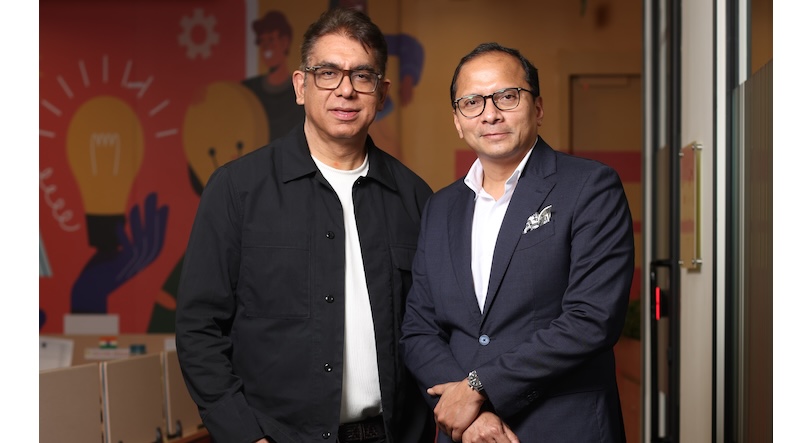
    “Advertising today is no longer confined to conventional mediums; it thrives at the intersection of entertainment, content and culture,” said Havas India, South-East Asia and North Asia group chief executive Rana Barua. The goal, he added, is to help brands “drive cultural and business impact” by thinking bigger and bolder.

    Banijay Asia founder & group chief executive Deepak Dhar argued that India and the wider Asia-Pacific region are “ready for a more immersive, content-first approach to brand building”. With Havas’s network reach and Banijay’s format expertise, the two aim to make brands “part of everyday conversations”.

    The tie-up reflects a broader trend: the blurring of boundaries between advertising and entertainment. Banijay Entertainment has already launched a specialist division, Banijay Branded Entertainment, to capitalise on brands’ hunger for original content. This partnership takes that ambition eastward, where audiences are younger, mobile-savvy and increasingly allergic to traditional ad formats.

    Havas India, which operates 24 agencies and divisions across media, creative and health verticals, has been on a tear. The network has won multiple clients and industry gongs over the past three years, including being named a Great Place to Work three times running. With over 2,500 staff across Mumbai, Gurugram, Bengaluru and four other cities, it is positioning itself as one of India’s nimblest advertising shops.

    Banijay Asia, meanwhile, continues to expand its slate. The studio has Indian adaptations of Monk, House and Suits in the pipeline, alongside non-scripted fare like Rise and Fall and Temptation Island. Its parent company, Banijay Entertainment, operates over 130 production companies across 21 territories and delivered more than 17,000 hours of content in 2024. Revenues hit €3.35bn last year, with EBITDA of €528m.

    Whether brands can truly become entertainment—or merely crash the party—remains to be seen. But with this partnership, Havas and Banijay are betting that the future of advertising looks less like a 30-second spot and more like a binge-worthy series.

  • Banijay Asia secures BBC Studios’ format rights in India

    Banijay Asia secures BBC Studios’ format rights in India

    MUMBAI: The Deepak Dhar-headed Banijay Asia has been appointed as the exclusive production partner for BBC Studios’ formats in India, following BBC’s exit from local production in the market.

    The multi-year agreement gives Banijay Asia exclusive rights to BBC Studios’ catalogue of scripted and unscripted formats, including The 1% Club, Dancing with the Stars, The Office and Ghosts.

    Banijay Asia has established itself as a leading format adaptor in India, having successfully produced local versions of global hits like MasterChef, Big Brother, and more recently, The Night Manager and Call My Agent: Bollywood.

    The deal strengthens Banijay Asia’s format portfolio as BBC Studios shifts its India strategy from direct production to licensing partnerships.

     And it brings Dhar closer to his long cherished  dream and vision of making Banijay the largest format licensing and production studio  in India. 

  • nexGTv acquires rights for 25 key entertainment assets by ATechnos

    nexGTv acquires rights for 25 key entertainment assets by ATechnos

    MUMBAI: Need the latest dope on the Udta Punjab controversy, or want to know which superstar has bagged the lead in the next instalment of the hit franchise Dhoom? If such viral content is what you’re looking for, look no further! nexGTv, India’s largest subscription-led video entertainment app, has acquired the digital rights to 25 key entertainment assets developed and distributed by ATechnos, a leading digital media content distribution and techno media company.

    ATechnos provides services in Video/Audio/Text/Image/App distribution and production domain. Their media distribution arms in 52+ countries have empowered thousands of customers worldwide and enabled several key content distribution partnerships. ATechnos is currently distributing approximately 11,000 clips in more than 17 languages on a daily basis.

    Speaking on the tie-up, nexGTV COO Abhesh Verma said, “In today’s digital-first world, snackable viral content is fast emerging as the preferred entertainment option for viewers across the globe. Even Indian viewers have caught on the trend, as can be witnessed by the rise in mobile-based video data traffic within the country. Since we, at nexGTv, have always tailored our offerings to meet the requirements of our subscribers, partnering with ATechno was a logical decision. The association greatly augments the entertainment options available on our platform and allows our users to stay informed about the latest trends, developments and gossip from the entertainment industry worldwide.”

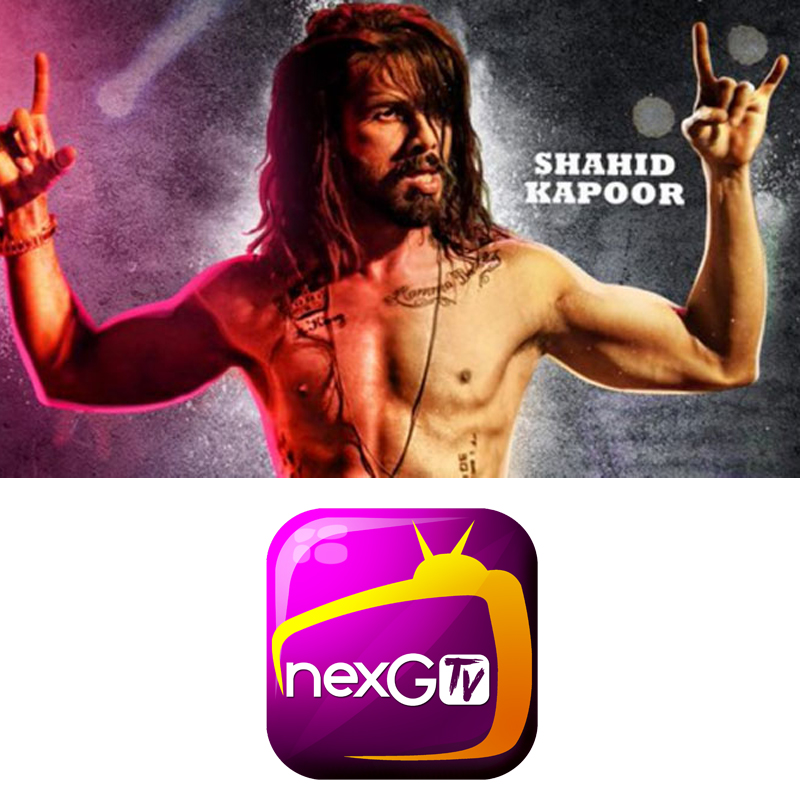
    The move will allow nexGTv users to view premium videos containing celebrity interviews, public reactions on trending topics besides style updates and news that range from bewildering to bizarre from around the globe. Be it a sneak peek in to Shahid Kapoor’s smoking hot workout videos or the controversial scandals inside the Big Brother’s house, nexGTv subscribers can catch up on all the latest news and developments in the world of entertainment! So what are you waiting for? Download the nexGTv app on your smartphone today, or visit www.nexgtv.com today!

  • nexGTv acquires rights for 25 key entertainment assets by ATechnos

    nexGTv acquires rights for 25 key entertainment assets by ATechnos

    MUMBAI: Need the latest dope on the Udta Punjab controversy, or want to know which superstar has bagged the lead in the next instalment of the hit franchise Dhoom? If such viral content is what you’re looking for, look no further! nexGTv, India’s largest subscription-led video entertainment app, has acquired the digital rights to 25 key entertainment assets developed and distributed by ATechnos, a leading digital media content distribution and techno media company.

    ATechnos provides services in Video/Audio/Text/Image/App distribution and production domain. Their media distribution arms in 52+ countries have empowered thousands of customers worldwide and enabled several key content distribution partnerships. ATechnos is currently distributing approximately 11,000 clips in more than 17 languages on a daily basis.

    Speaking on the tie-up, nexGTV COO Abhesh Verma said, “In today’s digital-first world, snackable viral content is fast emerging as the preferred entertainment option for viewers across the globe. Even Indian viewers have caught on the trend, as can be witnessed by the rise in mobile-based video data traffic within the country. Since we, at nexGTv, have always tailored our offerings to meet the requirements of our subscribers, partnering with ATechno was a logical decision. The association greatly augments the entertainment options available on our platform and allows our users to stay informed about the latest trends, developments and gossip from the entertainment industry worldwide.”

    The move will allow nexGTv users to view premium videos containing celebrity interviews, public reactions on trending topics besides style updates and news that range from bewildering to bizarre from around the globe. Be it a sneak peek in to Shahid Kapoor’s smoking hot workout videos or the controversial scandals inside the Big Brother’s house, nexGTv subscribers can catch up on all the latest news and developments in the world of entertainment! So what are you waiting for? Download the nexGTv app on your smartphone today, or visit www.nexgtv.com today!

  • “You call ‘Bigg Boss’ scripted or non-scripted you will end up watching it”- Abhishek Rege

    “You call ‘Bigg Boss’ scripted or non-scripted you will end up watching it”- Abhishek Rege

    MUMBAI: “It’s been ten years for Endemol in India and we proudly say that we are the first International production house that has not wrapped up and gone back. Today, at this point, we are poised to be the leaders in the non-scripted format,” says Endemol Shine India TV business COO Abhishek Rege.

    The production house which has brought some major international formats to India, Endemol Shine India doesn’t require any introduction. The popularity and fan following of its shows like Bigg Boss, Fear Factor: Khatron Ke Khiladi, Deal or No Deal and Voice say it all!

    In 2006, Endemol started production in India and first enthralled Indian audiences with the Indian adaptation of Big Brother . The production house has had a successful run in  the fiction and non-fiction space since then.

    In conversation with Indiantelevision.com’s team, Rege speaks about his journey with Endemol Shine India, shares his views on BARC rural data, digital space and responds to rumours about Bigg Boss being a scripted format. Excerpts of the interaction:

    How challenging has your stint with Endemol been? What have the major highlights been?

    It’s been a great roller-coaster ride. We have seen really tough times between 2011 and 2012. There was a large amount of fragmentation that we went through in the market as well, but overall, the journey starting from Laughter Challenge and Chhote Miyan to doing Bigg Boss, the Voice and “So You Think You Can Dance” today has been fantastic. It has been a rich and wonderful experience and not to mention – a great learning. We had some great partnerships with international players and also locally. It has been a great run.

    For me, the major highlights in the journey were when Viacom launched its Hindi entertainment channel Colors and we went in with Bigg Boss, Fear Factor and created a new franchise of Chhote Miyan. Our attempt to bring in professional wrestling into the GEC space with partnerships with TNA too was a fulfilling experience.

    Investments into our Endemol Indian entity by CA Media and our foray into the movie business were also the high points.

    Until now, only English entertainment channels aired international content. Now Comedy Central is rolling out the home-grown Indian show Challenge Accepted. Do you see more of that happening in the near future? And do you think these shows have the scope to be licensed globally?

    Absolutely! The English entertainment sector is going through a lot of growth. Until now, the competition was between who acquired the best of the shows from various catalogues. Doing a show like Challenge Accepted is a big step, if it works, you will see others trying to emulate it. But at the end of the day, the economics will drive any such foray.

    You need something locally developed, because if you buy formats then cost will be a big roadblock for producing a show. The budgets for such shows may not be too high and hence one may not be able to do big ticket shows in this space as yet. The monetization potential for such adapted shows will be lower because they are likely to cater to Indian audiences only.

    After the rural data roll out do you see content becoming a bit conservative?

    Not really. From the advertisers’ perspective, it’s more about what content they are picking up, which in turn depends on their target group. We need to understand if those rural pockets attract national advertisers or local. The market which clients look for are towns and cities which have access to national brands or are self-distribution points. So in reality, broadcasters are not catering to a hard-core rural group. Hard-core rural audiences don’t have the same affiliation to buy national brands as they are prized very high as compared to what they can afford. That is the market segmentation wherein the advertisers decide who their consumers are, and that will make the difference. Therefore, rural data should not be affecting content strategies too much.

    Bigg Boss is one of Endemol’s marquee shows. However, it’s often rumoured of being scripted to some extent. What is your response to that?

    It’s not scripted, is all that I can say. Bigg Boss is one of those shows where the PR is not limited to any positive or negative buzz.  It’s one of those shows which feed on anything about it. Whether they love it or hate it, whether it’s scripted or not, people will end up watching the show. They want to know when the next fight will happen and they will come back to watch it.

    How is the interest in the regional Bigg Boss versions growing?

    We did three seasons of Bigg Boss Kannada and now will be doing a second season in Bangla soon. Though Bigg Boss season one in Bangla didn’t hit the top as compared to the Kannada market, we had 50 per cent of the channels’ GRPs at that point of time. While in Kannada, the first season of Bigg Boss which aired on Colors Kannada did extremely well, the second season didn’t go all as planned. But the third season that aired on Colors Kannada again broke all the records.  The success of Bigg Boss season 3 in Kannada proves that we have a great potential in the Tamil & Telugu markets.

    Endemol has produced a few sports shows like 100% De Dana Dan, Stumped etc. What kind of scope is there in the sports content space and can we expect anything new on that front this year?

    We don’t have anything that is specifically targeted at sports. But yes, we have a lot of scope in the sports genre. Our focus right now is films. We did a show called IPL Rockstars where singers performed in the stadium while the crowd gathered before a match was about to start. We haven’t delved further in this genre yet except something like Stumped which is more Call TV, but right now we are focusing more films.

    Do you think India has truly woken up to branded entertainment? Is there anything lined up from Endemol in that space?

    The potential on branded entertainment for the producer is always questionable because of the structure that we follow here. The broadcaster gets all the rights and product placements. Therefore, it’s not that easy for a producer to garner a share in the branded space. I think digital will be the door which will be a lot more open for branded content. Right now we don’t have anything in that space but the future looks promising.

    How different is it producing content for OTT players and television? Can an OTT production be more expensive than TV?

    It’s quite different producing content for OTT as compared to television because you need someone to understand the sensitivity and the attention span of the consumer when it comes to OTT.  There will also be comparisons on scripted and non-scripted content from both the sides. You need to have power packed content for digital. Edits will play a major role. You just can’t run a drama or a soap on it – that is more for catch-up. Digital is a place where you can have creative freedom as well. It is where your lifestyle, youth & niche segments will come in, and as far as production costs are concerned, it can be cheaper than regional and it can be more expensive than GEC, for making something premium like the Game Of Thrones.

    On what basis do you decide on the international formats that can be brought to India and how much are they modified to suit Indian sensibilities?

    We look at two things while adapting international formats, one is the cultural adaptability and the other is how economically feasible will it be? The format should be relevant to the Indian audience and to our culture. We can’t bring shows which have cultural differences or something which our audiences might not relate to. Also we have to see if the format is financially feasible or not. In the UK, production houses spend around US$ 10 million on a pilot, and here we don’t have that budget even for an entire series.

    We modify the format to an extent where the rules of the key game play are not affected. There are always some Dos’ and Don’ts of every format that have to be protected.

    What other formats of Endemol do you plan to get to India in the near future?

    That’s tough to answer because we keeping pitching and we don’t decide what comes in, the broadcasters decide that. I think the line-up for most of the broadcasters is pretty much tied up, so we are waiting to see what will come out from this year’s MIPTV/ MIPCOM.

    What are Endemol’s plans going forward? What’s in store from Endemol India in 2016 in terms of fiction and non-fiction?

    Our focus will be a lot on films, that’s going to be our key acceleration area while our TV focus will continue as usual. But films’ are something which will help us to take next the step to diversify and grow. Digital is another area we are looking closely at. In the non-fiction space we will be coming up with season 3 of Bigg Boss in Bangla soon, and then we will be doing the subsequent seasons for Kannada and Hindi at the end of the year. Also looking forward to the subsequent seasons of other franchises we have set up to come in this year.


  • “You call ‘Bigg Boss’ scripted or non-scripted you will end up watching it”- Abhishek Rege

    “You call ‘Bigg Boss’ scripted or non-scripted you will end up watching it”- Abhishek Rege

    MUMBAI: “It’s been ten years for Endemol in India and we proudly say that we are the first International production house that has not wrapped up and gone back. Today, at this point, we are poised to be the leaders in the non-scripted format,” says Endemol Shine India TV business COO Abhishek Rege.

    The production house which has brought some major international formats to India, Endemol Shine India doesn’t require any introduction. The popularity and fan following of its shows like Bigg Boss, Fear Factor: Khatron Ke Khiladi, Deal or No Deal and Voice say it all!

    In 2006, Endemol started production in India and first enthralled Indian audiences with the Indian adaptation of Big Brother . The production house has had a successful run in  the fiction and non-fiction space since then.

    In conversation with Indiantelevision.com’s team, Rege speaks about his journey with Endemol Shine India, shares his views on BARC rural data, digital space and responds to rumours about Bigg Boss being a scripted format. Excerpts of the interaction:

    How challenging has your stint with Endemol been? What have the major highlights been?

    It’s been a great roller-coaster ride. We have seen really tough times between 2011 and 2012. There was a large amount of fragmentation that we went through in the market as well, but overall, the journey starting from Laughter Challenge and Chhote Miyan to doing Bigg Boss, the Voice and “So You Think You Can Dance” today has been fantastic. It has been a rich and wonderful experience and not to mention – a great learning. We had some great partnerships with international players and also locally. It has been a great run.

    For me, the major highlights in the journey were when Viacom launched its Hindi entertainment channel Colors and we went in with Bigg Boss, Fear Factor and created a new franchise of Chhote Miyan. Our attempt to bring in professional wrestling into the GEC space with partnerships with TNA too was a fulfilling experience.

    Investments into our Endemol Indian entity by CA Media and our foray into the movie business were also the high points.

    Until now, only English entertainment channels aired international content. Now Comedy Central is rolling out the home-grown Indian show Challenge Accepted. Do you see more of that happening in the near future? And do you think these shows have the scope to be licensed globally?

    Absolutely! The English entertainment sector is going through a lot of growth. Until now, the competition was between who acquired the best of the shows from various catalogues. Doing a show like Challenge Accepted is a big step, if it works, you will see others trying to emulate it. But at the end of the day, the economics will drive any such foray.

    You need something locally developed, because if you buy formats then cost will be a big roadblock for producing a show. The budgets for such shows may not be too high and hence one may not be able to do big ticket shows in this space as yet. The monetization potential for such adapted shows will be lower because they are likely to cater to Indian audiences only.

    After the rural data roll out do you see content becoming a bit conservative?

    Not really. From the advertisers’ perspective, it’s more about what content they are picking up, which in turn depends on their target group. We need to understand if those rural pockets attract national advertisers or local. The market which clients look for are towns and cities which have access to national brands or are self-distribution points. So in reality, broadcasters are not catering to a hard-core rural group. Hard-core rural audiences don’t have the same affiliation to buy national brands as they are prized very high as compared to what they can afford. That is the market segmentation wherein the advertisers decide who their consumers are, and that will make the difference. Therefore, rural data should not be affecting content strategies too much.

    Bigg Boss is one of Endemol’s marquee shows. However, it’s often rumoured of being scripted to some extent. What is your response to that?

    It’s not scripted, is all that I can say. Bigg Boss is one of those shows where the PR is not limited to any positive or negative buzz.  It’s one of those shows which feed on anything about it. Whether they love it or hate it, whether it’s scripted or not, people will end up watching the show. They want to know when the next fight will happen and they will come back to watch it.

    How is the interest in the regional Bigg Boss versions growing?

    We did three seasons of Bigg Boss Kannada and now will be doing a second season in Bangla soon. Though Bigg Boss season one in Bangla didn’t hit the top as compared to the Kannada market, we had 50 per cent of the channels’ GRPs at that point of time. While in Kannada, the first season of Bigg Boss which aired on Colors Kannada did extremely well, the second season didn’t go all as planned. But the third season that aired on Colors Kannada again broke all the records.  The success of Bigg Boss season 3 in Kannada proves that we have a great potential in the Tamil & Telugu markets.

    Endemol has produced a few sports shows like 100% De Dana Dan, Stumped etc. What kind of scope is there in the sports content space and can we expect anything new on that front this year?

    We don’t have anything that is specifically targeted at sports. But yes, we have a lot of scope in the sports genre. Our focus right now is films. We did a show called IPL Rockstars where singers performed in the stadium while the crowd gathered before a match was about to start. We haven’t delved further in this genre yet except something like Stumped which is more Call TV, but right now we are focusing more films.

    Do you think India has truly woken up to branded entertainment? Is there anything lined up from Endemol in that space?

    The potential on branded entertainment for the producer is always questionable because of the structure that we follow here. The broadcaster gets all the rights and product placements. Therefore, it’s not that easy for a producer to garner a share in the branded space. I think digital will be the door which will be a lot more open for branded content. Right now we don’t have anything in that space but the future looks promising.

    How different is it producing content for OTT players and television? Can an OTT production be more expensive than TV?

    It’s quite different producing content for OTT as compared to television because you need someone to understand the sensitivity and the attention span of the consumer when it comes to OTT.  There will also be comparisons on scripted and non-scripted content from both the sides. You need to have power packed content for digital. Edits will play a major role. You just can’t run a drama or a soap on it – that is more for catch-up. Digital is a place where you can have creative freedom as well. It is where your lifestyle, youth & niche segments will come in, and as far as production costs are concerned, it can be cheaper than regional and it can be more expensive than GEC, for making something premium like the Game Of Thrones.

    On what basis do you decide on the international formats that can be brought to India and how much are they modified to suit Indian sensibilities?

    We look at two things while adapting international formats, one is the cultural adaptability and the other is how economically feasible will it be? The format should be relevant to the Indian audience and to our culture. We can’t bring shows which have cultural differences or something which our audiences might not relate to. Also we have to see if the format is financially feasible or not. In the UK, production houses spend around US$ 10 million on a pilot, and here we don’t have that budget even for an entire series.

    We modify the format to an extent where the rules of the key game play are not affected. There are always some Dos’ and Don’ts of every format that have to be protected.

    What other formats of Endemol do you plan to get to India in the near future?

    That’s tough to answer because we keeping pitching and we don’t decide what comes in, the broadcasters decide that. I think the line-up for most of the broadcasters is pretty much tied up, so we are waiting to see what will come out from this year’s MIPTV/ MIPCOM.

    What are Endemol’s plans going forward? What’s in store from Endemol India in 2016 in terms of fiction and non-fiction?

    Our focus will be a lot on films, that’s going to be our key acceleration area while our TV focus will continue as usual. But films’ are something which will help us to take next the step to diversify and grow. Digital is another area we are looking closely at. In the non-fiction space we will be coming up with season 3 of Bigg Boss in Bangla soon, and then we will be doing the subsequent seasons for Kannada and Hindi at the end of the year. Also looking forward to the subsequent seasons of other franchises we have set up to come in this year.


  • China’s maiden ‘Big Brother’ shot on Endemol Shine India’s sets

    China’s maiden ‘Big Brother’ shot on Endemol Shine India’s sets

    MUMBAI: The Indo-China memorandum of understanding (MoU), which was signed between the two countries while Prime Minister Narendra Modi visited China earlier this year probably showed its first practical prominence as Endemol Shine shot China’s maiden Big Brother season in India.


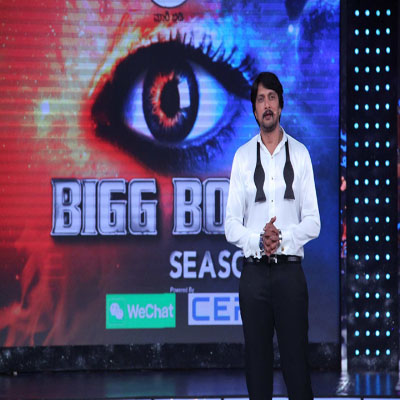
    Big Brother’s Indian adaptation – Bigg Boss is shot in Lonavala, which is in the outskirts of Mumbai. The sets in Lonavala are erected at a factory leased by Endemol. However, the set, which was used to shoot for the first ever Chinese edition was that of the Kannada version of Big Boss. It was on these sets, which were rebuilt to suit the international version where Chinese contestants dramatically fought to win the first ever title.


    Endemol Shine India, which has a rich experience of producing eight seasons of Bigg Boss so far with the ninth season set to launch in October, facilitated the Chinese branch of the production house with a 400 member crew. There were 40 representatives from China and together they executed the first edition of Big Brother China, which will be telecast by online platform Youku Tudou.


    This is the first time in the show’s global history that it will beam on a digital platform. China’s Youku Tudou platform garners traction of 580 million unique visitors every month and was the ideal choice to showcase the show in order to get maximum eyeballs.


    According to sources close to the development, the planning was going on for a very long time and the two counterparts held rounds of talks before the final execution. The decision to shoot in India under the guidance of experienced people who have been associated with various editions of Bigg Boss was primarily to use the infrastructure and expertise, which will eventually result in huge cost savings.


    The Chinese team brought in their creative directors, story editors, and remote camera operators, whereas the rest was executed by the Indian crew. The huge lingual differences within the team comprising members from the two respective countries were erased by translators. “Most of the communication were happening in English,” a source present on the sets of Big Brother China in India informs Indiantelevision.com.


    According to a senior official in the production fraternity, the two most populous country of the world shaking hands to execute an entertainment project is massive boost for the media and entertainment industry. “I hope this is just the beginning and we have many more such collaborations going forward. Such associations are rejuvenating and certainly a matter of pride for the industry,” the official said on condition of anonymity.


    In India, Bigg Boss 9 is set to unveil soon on Colors and the show with Salman Khan as the host is eagerly awaited. “It was not the Bigg Boss India sets, which were used for the Chinese edition shoot. The India set is exclusively used only for India edition,” said a source close to the development.


    Endemol Shine China managing director William Tan, Youku Tudou senior director Amy Shundong Xu, Rebecca De Young, who was once a producer of Big Brother UK and Endemol India CEO Deepak Dhar were amongst those spotted around the sets. Big Brother China shoot got over on 18 September, 2015 and the Chinese team will be flying back immediately.

  • Endemol Shine Group inks pan Balkan deal for ‘Big Brother’

    Endemol Shine Group inks pan Balkan deal for ‘Big Brother’

    MUMBAI: The newly launched global content creator, producer and distributor, Endemol Shine Group, has inked a new Pan Balkan deal for Big Brother. The reality juggernaut will return to five markets in the region including Croatia, Serbia, Bosnia, Macedonia and Montenegro, marking the format’s comeback where it last aired in 2011.


    Endemol Shine Group has licensed the format to RTL Croatia, who will produce in house as well as airing the smash hit series. Meanwhile Serbian production company Emotion has also picked up the rights and will make the show for major broadcasters in Serbia, Bosnia, Macedonia and Montenegro, details of which will be announced in due course.


    The production will be filmed over 100 days at the regional hub in Serbia and will air simultaneously in each market, launching later this year. The series will feature housemates from Croatia, Serbia, Bosnia and Herzegovina, Montenegro and Macedonia all filmed together in the one Big Brother house.


    Big Brother remains one of the world’s biggest and longest-running entertainment hits and this deal is just the latest in a series of comebacks the format has made over the years. We’re thrilled to see the show returning to the Balkans for a pan regional series that will introduce a new, multi-national line up of housemates to fans in five markets,” said Endemol Shine Group CEO of Central and Eastern Europe and MENA regions Marina Williams.


    The original reality format Big Brother launched in the Netherlands more than 15 years ago and changed the face of television. Twenty-five series aired in more than 70 countries across 2014. The format continues to be a hit in the USA, UK, Italy, Spain, Canada and Israel as well as in Latin America, Central and Eastern Europe, Scandinavia, Africa and Asia.


    Williams and her teams regionally oversee Endemol Shine Group’s newly combined catalogue of formats. The new company’s regional presence includes local production hubs in Poland, Middle East and North Africa, Russia and Turkey, with the Central and Eastern Europe format distribution team representing remaining territories.

  • Channel 5 renews ‘Big Brother’ for three more years

    Channel 5 renews ‘Big Brother’ for three more years

    MUMBAI: Channel 5 has extended its UK rights deal for Big Brother with Endemol Shine UK for a further three years allowing it to continue airing its popular reality flagship until at least the end of 2018.


    Under the terms of the extended deal, Channel 5 will continue to broadcast two series of Celebrity Big Brother and one series of Big Brother each year, as well as associated programming, all produced by Endemol Shine UK label, Initial. 


    The renewal follows record ratings for the latest series of Celebrity Big Brother broadcast on Channel 5 in January, which attracted an average audience of 3.1 million per episode and an 11.4 per cent share of viewing.


    Following the acquisition of Channel 5 by Viacom International Media Networks, repeats of Celebrity Big Brother also appeared on MTV UK and outperformed the channel’s all day average audience amongst 16-34s by almost 20 per cent. More than 21 million viewers tuned into the series at least once across all VIMN-owned channels during the course of its run.


    Channel 5 chief operating officer Paul Dunthorne, who negotiated the deal extension on behalf of the broadcaster, said, “Big Brother in all its guises brings a huge and varied cross section of viewers to Channel 5 and typifies the appointment-to-view programming we want on the channel. It remains one of TV’s most talked about and popular programmes and I’m genuinely delighted we’ve secured it for at least three more years.”


    Initial managing director Nick Samwell-Smith added, “Channel 5 is a fantastic home for Big Brother. Over the past four years we’ve worked closely together to keep this extraordinary format feeling fresh, noisy, and creatively vibrant.  I’m thrilled that this landmark deal means we can look forward to three more years of big characters and juicy storylines from inside our favourite house.”


  • 21st Century Fox, Apollo combine Shine, Endemol and Core Media to create content powerhouse

    21st Century Fox, Apollo combine Shine, Endemol and Core Media to create content powerhouse

    BENGALURU: Rupert Murdoch’s 21st Century Fox and private equity firm Apollo Global Management LLC (Apollo) announced an awaited agreement to create a leading global multi-platform content provider. The agreement brings together Apollo’s Endemol and Core Media with 21st Century Fox Shine Group and to form one of the largest content creators in the world. Sophie Turner Laing, former managing director of content at BSkyB, will serve as the group’s CEO.

    Financial terms of the agreement were not disclosed, and completion of the transaction is subject to regulatory clearances and other customary closing conditions. Industry sources say that this is a 50:50 partnership between 21st Century Fox and Apollo.

    In 2011, Apollo bought Core Media, which owns the Idol franchise. Also, in 2011, Murdoch’s News Corp (now 21st Century Fox) paid $ 673 million for Shine Group, a UK producer of Biggest Loser. Elizabeth Murdoch then owned 80 per cent of the Shine Group.

     
    Prior to completion of the transaction, Endemol, Shine and Core will continue to operate as separate companies. Upon completion of the transaction, Core will retain its own capital structure. The transaction is expected to be completed by the end of the calendar year. AGM Partners is serving as financial advisor to 21st Century Fox.

     
    Current Endemol CEO Just Spee and Shine Group CEO Alex Mahon will remain with their respective companies for an extended period following the close of the transaction, working with Turner Laing on the transition and integration of business operations. Following the transition period, both will step down in 2015 to pursue new opportunities. Upon the transaction’s close Elisabeth Murdoch will step down as non-executive chairman of Shine Group.


    “This partnership advances our strategy of accelerating Fox’s growth in worldwide television production,” said 21st Century Fox president and CEO Chase Carey. “The combination of these assets will create a leading global format business with a deep and diverse portfolio of products, enhanced distribution capabilities, and world-class creative talent. We are extremely grateful to Alex Mahon for her leadership of Shine and are delighted to partner with Apollo in supporting Sophie Turner Laing, and the talent at Shine, Endemol and Core, in our shared mission to form an unrivalled team to lead this truly global content creation business.”

     
    Turner Laing said, “Content has never been more creatively vibrant and exciting and our exceptional production and distribution capabilities will be a magnet for talent to realise their creative ambitions across all platforms on a regional and global scale.”

     
    Apollo senior partner Aaron Stone said, “The group will have impressive capabilities to offer the creative community and to invest in all aspects of media’s future.  At the heart of this partnership are the businesses’ thousands of employees around the world.”

     
    The combined company will have disparate shows like the MasterChef which has more than 50 editions around the world, Big Brother, Hell on Wheels, Idol and So You Think You Can Dance properties.

    Turner Laing has spent the last decade at BSkyB, where she oversaw content strategy and was instrumental in the expansion of its portfolio of entertainment channels, including the Company’s partnership with HBO says 21st Century Fox.