Tag: BIF

  • Sectoral wishlists for Budget 2024-25: What industries hope to see

    Sectoral wishlists for Budget 2024-25: What industries hope to see

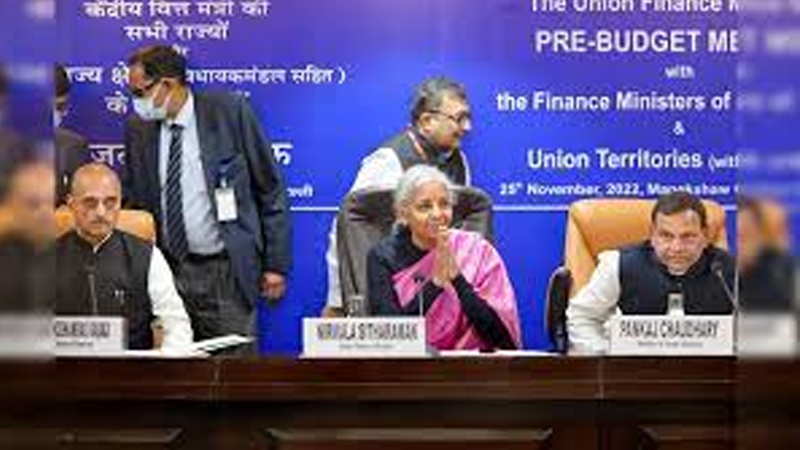
    Mumbai: The Union Budget for 2024-25, scheduled to be presented on 1 February, is a highly anticipated event for every sector of the Indian economy. From infrastructure, Information technology, telecom, agriculture, healthcare, and human resources to education, stakeholders are eagerly waiting to see how the government’s financial roadmap will impact their industries. This article will delve into the key highlights and expectations for different sector’s industry leaders in Budget 2024-25, based on pre-budget consultations, industry reports, and expert analyses.

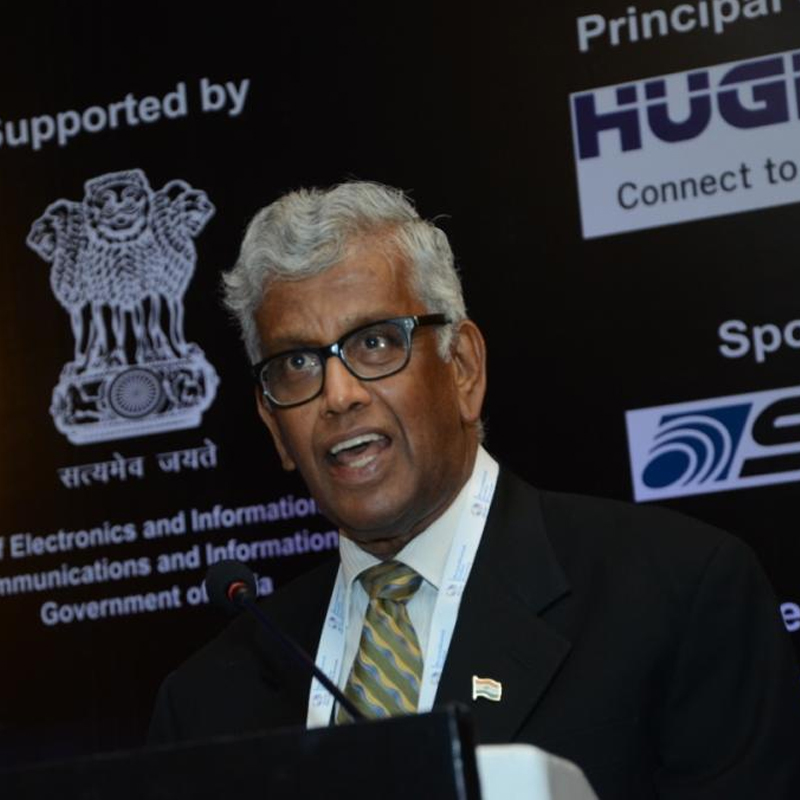
    1.      BIF president T V Ramachandran said, “India is undergoing rapid digital transformation on the back of continuous Government reforms. The recently notified Telecommunications Act 2023 is a game changer and will help catalyze the growth of the sector even further.

    As Broadband India Forum, we would like to see the Union Budget 2024-25 focus on three important aspects viz.

    ●        Facilitate affordable Broadband through Satcom through reasonably modest spectrum fees

    ●        Budgetary support for the growth of Public Wi-Fi through waiver of duties & levies on equipment and on revenues

    ●        Budgetary support to incentivize Fiber to the Building +Wi-Fi to enable rapid growth in Fixed Broadband, by way of reduction in statutory fees and levies and exemption of GST on service revenues

    With the above measures, we hope that Union Budget will help accelerate the momentum of the reforms in the sector which has been set by other Government policies & measures”

    2.      Fujitsu global delivery centres head Manoj Nair said, “Major economies across the world are seeing a challenging macroeconomic situation with slowdowns that have affected various industries. Amid this period, it is the tech industry that is leading the charge in recovery with a positive outlook. The demand for IT skills, especially in the new-age technologies – AI, ML, analytics, data science and other digital capabilities continues to surge presenting an opportune time to GCCs to further scale and usher in the next phase of digital revolution in India. India is a leading hub of Global Capability Centers (GCCs) with 1500+ GCCs housed in India that play a crucial role in growth of the tech industry. According to EY, the domestic GCC market size is expected to hit US$110b by 2030 with the number of GCCs  expected to scale to 2400. Over the past few years, there has been a major shift in how GCCs operate – from delivering cutting-edge services to becoming powerful innovation hubs. These GCCs, with their vast trove of STEM talent and heavy investments in technology and upskilling are uniquely positioned to spearhead digital transformation for customers. Our technical capabilities across AI, ML, data science, cloud, automation, enterprise applications are crucial to powering deep research and product development. “

    “Now, as GCCs continue to invest in reskilling talent in the face of evolving tech landscape, building demand-based and niche skills in relevant areas, they are playing a crucial role in employment generation for India. With GCCs being a major engine for economic growth, Budget 2024 can play a key role in facilitating growth and sustainable development. GCCs require support and investment for infrastructure and growth environment. The Budget 2024 can help GCCs further scale and accelerate innovation at a faster rate as India emerges as the world’s technology and services hub.”

    3.      STT GDC India chief financial officer ) Bimal Khandelwal said, “As India charges ahead on its digital transformation journey, the upcoming budget offers a timely window to cultivate a world-class data center ecosystem that steers this advancement. We are hopeful of incentives to spur domestic manufacturing and infrastructure builds specially tailored for data centers’ massive scale and seamless connectivity needs. Attractive capital subsidies for setting up future-ready facilities and easy financing options to offset development costs will unleash growth. We also envision provisions that encourage the adoption of renewable energy to meet data centers’ clean power appetites. Additionally, preferential procurement directives favoring home-grown data centers will provide an upside. With an emphasis on nurturing a cutting-edge domestic data center industry, India can swiftly go up the technology value chain and cement dominance in delivering digital services globally. Having granted an infrastructure tag has remarkably expedited logistics. “

    4.      Fujitsu International Regions HR shared services head Sumit Sabharwal said, “As an HR leader, I eagerly anticipate the 2024 budget, urging the Government of India to prioritize robust investments in skill development. A strategic focus on honing our workforce’s capabilities will propel India’s IT industry to new heights, fostering innovation, and global competitiveness. The India artificial intelligence market size reached $ 680 million in 2022 and further it is expected to reach $3,935.5 million by 2028, showcasing a growth rate (CAGR) of 33.28% between 2023-2028. Data Science and Analytics have emerged as a game-changer across industries, with organizations harnessing data-driven insights to make informed decisions. With exponential growth in the digital realm, this field is expected to witness substantial opportunities in the coming years. The demand for STEM jobs in India has increased by 44% in the last 5 years. STEM skills will be a requirement for 80% of the jobs created in the next decade. To meet the increasing demands for STEM professionals in India’s rapidly growing technology, engineering, and manufacturing sectors, it becomes imperative to offer robust STEM education. For organizations, it has become necessary to provide upskilling and reskilling opportunities to existing employees. The Fourth Industrial Revolution is upon us, and STEM education will align closely with its demands. To keep up with this new information-based and technology-dependent world, India must scale up the innovation ladder with initiatives.”

    5.      Fujitsu JDU head Meghan Nandgaonkar shared his views saying that, “Technology has played an important role in India’s growth story. Our expectation from Budget 2024 furthers to boost technology solutions for sustainable society, green initiatives, agro-tech, etc., Additional focus on skilling initiatives for people engaged in traditional sectors, using technology and online delivery along with incentives for technology companies in Tier 2 and Tier 3 cities.”

  • TRAI reducing TSP/ISPs & VSAT service-providers’ burden: Broadband Forum

    NEW DELHI: Expressing satisfaction that many of its demands had been met in the latest recommendations by the Telecom Regulatory Authority of India, Broadband India Forum has said it is a small but significant step in the right direction to help reduce the burden of the TSP/ISPs as well as that of the VSAT service-providers thereby  paving the way for a more active engagement of the ISPs and TSPs offering Internet Access Services to increase broadband penetration in the country

    BIF president T V Ramachandran hoped that this would be the first of many such recommendations from the Regulator to expedite broadband penetration and the vision of the prime minister to fully realise the dream of ‘Digital India’.

    He said the recommendations for streamlining the procedure/process of allocation of satellite capacity and the frequency allocation subsequently by WPC for VSAT service providers and capping it to be provided in a time bound manner –within a span of  three months was indeed praiseworthy.

    He said further went on to mention that the idea of a single window clearance for all clearances/approvals/payments through a transparent online mechanism was a “wonderful and welcome idea in this age of digital payments and single point responsibility”.

    Ramachandran said BIF’s position stand vindicated on many of the points made by the Regulator stand vindicated. These include the given spectrum bands be charged administratively and on a link-by-link basis; P-AGR should not be prescribed either for ISP licenses or for Commercial VSAT Licenses; SUC calculation/determination should continue to be based on the existing formula instead of as a percentage of the AGR; and delayed payment in case of SUC should be charged on the basis of SBI PLR +2%.

    Also Read :

    Industry surprised on Deepak’s transfer from DoT, Jio connection refuted

    5G network: Huawei launches 5000 series station & microwave bearer solution

    Don’t levy spectrum usage charges as percentage of AGR: TRAI

  • TRAI wi-fi ideas will lead to backhaul requirements, benefit TSPs: BIF

    MUMBAI: Broadband India Forum president T.V. Ramachandran has lauded the recommendations from the telecom regulator TRAI on ‘Proliferation of Broadband  through Public WIFI‘ announced on 9 March and called it as a huge step towards expediting the availability of affordable and accessible broadband everywhere and to achieve the vision of  Digital India. 

    He said and he hoped that the Department of Telecom will provide their early consent to these recommendations and pave the way for boosting broadband penetration in the country currently languishing at a lowly 18 per cent as compared to that of mobile which is at 93 per cent.

    Explaining the importance of this regulation, Ramachandran pointed out that based on Global Average of one hotspot for every 150 persons; India should have approx. 8 Million hotspots. However, the total number of hotspots as of 2016 based on TRAI’s own report was only 31, 500. He was confident with the implementation of these recommendations; the number of hotspots would accelerate to help bridge the huge deficit that exists.

    Ramachandran went on to further state  that this would lead to introduction of a number of new small time players in WIFI provisioning space who will be able to boost the broadband availability to the masses. Besides he also mentioned that due to this, there is likely to be huge explosion of backhaul requirements and TSPs are likely to hugely benefit out of this.

    Pointing out some of the salient and path breaking recommendations made by the Regulator, he mentioned a few viz.

    a) Clarification of the mis-understanding that arose in the UL-VNO regulations regarding the clause of exclusivity by asking the DOT to amend the UL-VNO guidelines to clarify that a UL-VNO can parent to multiple NSOs for offering of Internet services.

    b) Re-iteration of  its earlier position regarding freeing up new spectrum bands for Wifi access in the 5.8Ghz band and to expedite opening up of the  E & V bands for improving backhaul capacity ( E band) and for both backhaul and for high capacity access in case of V band

    c) Suggestions towards reduction in duties to make WiFi access devices cheaper so as to pave the way for affordable WiFi services in public places, and in turn, boost broadband penetration.

    d) Suggestion for creation of a new category of `public data office aggregators’ (PDOAs) who shall deliver Public WiFi services. It has also suggested that such aggregators work with small entrepreneurs who will provide the venues for `public data offices’ for such mass WiFi deployment.

    Under specific registration requirements (to be formulated by DOT). This move shall encourage Village Level Entrepreneurship & thus provide large employment opportunities in rural areas.

    e) The regulator has also permitted ease of authentication when roaming across several hotspots and also through a process of one-time authentication using eKYC, eCAF, MAC ID or through a secure Mobile app.

    Ramachandran said that BIF shared the vision of TRAI to decentralize the internet service sector and open up the sector for provision of broadband services through a plethora of smaller players through the simple process of ‘registration‘. This will result in significant increase in broadband penetration and the uptake of broadband enabled services  and applications throughout the country that will help catapult India into the top league of nations with high density of broadband users and higher average speed and capacity consumed per user.

    Also Read: 

    TRAI wants reduction of import duty on Wi-fi equipment to help growth

  • Broadband Forum report links incentives under GST to Digital India success

    Broadband Forum report links incentives under GST to Digital India success

    NEW DELHI: As online media consumption in India has shown growth over the past few years with mobile devices having taken over as the preferred medium of consuming online media, the government needs to incentivise further mobile handset manufacturing under the proposed Goods and Services Tax (GST), according to a new study.

    The Broadband India Forum (BIF), in association with knowledge partner Ernst & Young (EY), in a research paper unveiled yesterday said that it becomes important to grant incentives to domestic manufacturing in order to set off the “local disabilities” in manufacturing, including the booming mobile handset manufacturing.

    Wider deployment of 4G networks along with affordability and indigenisation, smartphones are going to drive mobile broadband to the next level of penetration, the BFI-EY report stated, adding that mobile handset manufacturing in India has gained fresh momentum in the past two years with a number of OEMs and third-party contract manufacturers setting up facilities in the country. The number of mobile handset manufacturing facilities reached 40 in August 2016 from just three in 2014 driven by the increase in duty differential in Union Budget 2015 to 11.5 per cent from five per cent, the report highlighted.

    According to Partner EY Bipin Sapra, “(Mobile) Handset manufacturing industry has seen a tremendous growth in past few years driven by government’s ‘Make in India’ initiative and policy changes such as duty reduction on domestically manufactured handsets. It is expected that the adoption of smartphones in India will go up to 688 million by 2020 as compared to 238 million in 2015. With the introduction of GST, most of the current central and state taxes/duties will be subsumed under GST. Thus, it is expected that the incentives available to domestic manufacturers under the current regime would decrease and there is need to continue the incentives under the GST regime to meet the increasing demand through domestic production.”

    The report, which notes the country has embarked on one of the world’s most ambitious broadband project with the `Digital India’ programme seeking to transform India into a digitally empowered society and knowledge economy, suggested the government may walk the extra mile to extend similar benefits to the component manufacturers that would encourage more investment in India and give a boost to the handset manufacturing eco-system.

    Pointing out that once the eco-system is created, the prices of parts and components may also become more competitive that in turn will reduce the cost of mobile handsets and make Indian handset manufacturers more competitive globally, BIF president T.V. Ramachandran said, “The broadband device today is a smartphone. We need to increase smartphone penetration as India today has less than 30 per cent smartphone penetration. This can only happen through local manufacturing and by further increasing local value addition.”

    The GST alone will by itself not be the driver for incentivising manufacturing in a country and some of the essential factors for a sustained manufacturing environment in the country are infrastructure, a robust manufacturing ecosystem, skilled manpower, technology, R&D facilities, etc., the report said.

    The report has also come out with a formula that may be adopted to hand out incentives to domestic manufacturing under GST.

    Electronics and Information Technology secretary Aruna Sundararajan, who was present during unveiling of the report, said, “This complementary study by EY-BIF, providing how incentives can be continued under GST to the domestic handset industry, will be helpful for the government to frame a better policy and boost local handset manufacturing.”

  • Broadband Forum report links incentives under GST to Digital India success

    Broadband Forum report links incentives under GST to Digital India success

    NEW DELHI: As online media consumption in India has shown growth over the past few years with mobile devices having taken over as the preferred medium of consuming online media, the government needs to incentivise further mobile handset manufacturing under the proposed Goods and Services Tax (GST), according to a new study.

    The Broadband India Forum (BIF), in association with knowledge partner Ernst & Young (EY), in a research paper unveiled yesterday said that it becomes important to grant incentives to domestic manufacturing in order to set off the “local disabilities” in manufacturing, including the booming mobile handset manufacturing.

    Wider deployment of 4G networks along with affordability and indigenisation, smartphones are going to drive mobile broadband to the next level of penetration, the BFI-EY report stated, adding that mobile handset manufacturing in India has gained fresh momentum in the past two years with a number of OEMs and third-party contract manufacturers setting up facilities in the country. The number of mobile handset manufacturing facilities reached 40 in August 2016 from just three in 2014 driven by the increase in duty differential in Union Budget 2015 to 11.5 per cent from five per cent, the report highlighted.

    According to Partner EY Bipin Sapra, “(Mobile) Handset manufacturing industry has seen a tremendous growth in past few years driven by government’s ‘Make in India’ initiative and policy changes such as duty reduction on domestically manufactured handsets. It is expected that the adoption of smartphones in India will go up to 688 million by 2020 as compared to 238 million in 2015. With the introduction of GST, most of the current central and state taxes/duties will be subsumed under GST. Thus, it is expected that the incentives available to domestic manufacturers under the current regime would decrease and there is need to continue the incentives under the GST regime to meet the increasing demand through domestic production.”

    The report, which notes the country has embarked on one of the world’s most ambitious broadband project with the `Digital India’ programme seeking to transform India into a digitally empowered society and knowledge economy, suggested the government may walk the extra mile to extend similar benefits to the component manufacturers that would encourage more investment in India and give a boost to the handset manufacturing eco-system.

    Pointing out that once the eco-system is created, the prices of parts and components may also become more competitive that in turn will reduce the cost of mobile handsets and make Indian handset manufacturers more competitive globally, BIF president T.V. Ramachandran said, “The broadband device today is a smartphone. We need to increase smartphone penetration as India today has less than 30 per cent smartphone penetration. This can only happen through local manufacturing and by further increasing local value addition.”

    The GST alone will by itself not be the driver for incentivising manufacturing in a country and some of the essential factors for a sustained manufacturing environment in the country are infrastructure, a robust manufacturing ecosystem, skilled manpower, technology, R&D facilities, etc., the report said.

    The report has also come out with a formula that may be adopted to hand out incentives to domestic manufacturing under GST.

    Electronics and Information Technology secretary Aruna Sundararajan, who was present during unveiling of the report, said, “This complementary study by EY-BIF, providing how incentives can be continued under GST to the domestic handset industry, will be helpful for the government to frame a better policy and boost local handset manufacturing.”

  • BIF bats for OTT regulations & level-playing field for all in Net Neutrality debate

    BIF bats for OTT regulations & level-playing field for all in Net Neutrality debate

    NEW DELHI: Broadband India Forum (BIF) has put its weight behind proposals to regulate OTT services, saying they too should be guided by same principles as ISPs and telecom service providers (TSP).

    “There  should be level playing field between the ISP/TSPs  and the OTT players. OTT players need to be brought under the same regulatory regime as the ISP/TSPs,” BIF has said in a submission on a pre-consultation paper on Net Neutrality to telecoms and broadcast regulator TRAI. 

    TRAI has been seeking comments since March 2015 from stakeholders on the issue of Net Neutrality and related matters like OTT, zero-rating plans and possible regulations.

    Since last year, several such papers have been issued by the regulator in an effort to finalise recommendations that could possibly go on to become industry regulations. BIF briefly alluded to this “piecemeal approach and not addressing the larger subject in one go” as this was fuelling ambiguities.

    Batting for plans like zero-rating offered by some Indian telcos earlier and Facebook’s FreeBasic — since then outlawed by TRAI — the Forum says, “At our stage of development, our highest need is internet adoption and increased data usage and whatever facilitates that, needs to be heartily supported”.

    Free Data should be permitted and it should be left to the service providers (ISP/TSPs) to decide whether they want to enter into such arrangement with the content providers or not basis their business case and requirement of technical development, BIF says.

    In India, OTT services are flowering every day, keeping in step with Asian trends.

    Some OTT services, available in India, include Star’s Hotstar, Zee’s dittotv, Viacom18’s Voot, Sony’s SonyLiv, Arre, Times group’s Box TV, Asian companies-owned Hooq and Viu and global giants like Netflix, apart from the likes of WhatsApp, Skype, YouTube and Hike. 

    No ex-ante regulation is required since there is enough competition and the market is vibrant enough, says the Forum, adding in case of violations, on ex-post basis, TRAI can examine tariff plans on a case by case basis after giving a reasonable opportunity to the operators of being heard.

    Dwelling on the economics of  broadband infrastructure, BIF highlights  efficient services would require investments up to Rs 500,000 crore over the next 3-5 years. Moreover, as per Government commitments, the Digital India initiative itself will require investments to the tune of  Rs. 113,000 crore.

    “It was the flexibility of service pricing that was permitted to the TSPs that led to mass adoption of voice services. A similar approach is warranted for ensuring adoption of data services. However, entrepreneurs are reluctant to start a new Internet based businesses when online customers are limited due to low adoption of data services,” BIF has said, adding that consumers are unwilling to invest in “expensive data plans” in the absence of adequate local content.

    Interestingly, BIF’s stand that telecoms is a capital–intensive sector where government mandates may hamper private investments, in some way, is also echoed by Hong Kong-based Asian organisation CASBAA.

    “We do not believe TRAI or the government should adopt policies that result in reducing or rationing of funds for (telecom) network investment. Advocates of `networks for all, open to all’ sometimes tend to forget that capable networks are costly, and they will not build themselves,” CASBAA had said in its submission to TRAI on Net Neutrality last year.

    Cautioning against replicating some existing regulation that may impede innovation, CASBAA had said TRAI and the government must avoid seeing the online content industry as another facet of the mature television content supply industry, ripe for extension of the same regulatory approaches governing the “traditional” TV industry. 

    “This would be a colossal mistake, especially at this new stage of development of online content supply in India. Overregulation will constrain development of newer business models which could be of great benefit to consumers and to India’s overall economic development,” the Asian industry organisation had said, hinting that a holistic view needs to be taken by regulators.

    Similarly, BIF in its recent submission has said the question of modernization of communications regulation…should be reviewed holistically and periodically to ensure same services are treated in a technologically neutral way, while protecting consumer rights and achieving the objectives of Digital India.

    The Forum has taken the initiative to define Net Neutrality in the Indian context and some key characteristics of Net Neutrality, amongst others, as:

    – No Blocking
    – No Throttling
    – Open Internet
    – No improper  prioritization (paid or otherwise)
    – Open, easy and non-discriminatory access
    – Recognition of at least four categories  of traffic and different traffic management techniques for different categories but having the same within each category
    – Equitable regulatory treatment of similar or near-similar services
    – Permission of zero rating systems.  

    (1 USD = 67.4874 INR)

  • BIF bats for OTT regulations & level-playing field for all in Net Neutrality debate

    BIF bats for OTT regulations & level-playing field for all in Net Neutrality debate

    NEW DELHI: Broadband India Forum (BIF) has put its weight behind proposals to regulate OTT services, saying they too should be guided by same principles as ISPs and telecom service providers (TSP).

    “There  should be level playing field between the ISP/TSPs  and the OTT players. OTT players need to be brought under the same regulatory regime as the ISP/TSPs,” BIF has said in a submission on a pre-consultation paper on Net Neutrality to telecoms and broadcast regulator TRAI. 

    TRAI has been seeking comments since March 2015 from stakeholders on the issue of Net Neutrality and related matters like OTT, zero-rating plans and possible regulations.

    Since last year, several such papers have been issued by the regulator in an effort to finalise recommendations that could possibly go on to become industry regulations. BIF briefly alluded to this “piecemeal approach and not addressing the larger subject in one go” as this was fuelling ambiguities.

    Batting for plans like zero-rating offered by some Indian telcos earlier and Facebook’s FreeBasic — since then outlawed by TRAI — the Forum says, “At our stage of development, our highest need is internet adoption and increased data usage and whatever facilitates that, needs to be heartily supported”.

    Free Data should be permitted and it should be left to the service providers (ISP/TSPs) to decide whether they want to enter into such arrangement with the content providers or not basis their business case and requirement of technical development, BIF says.

    In India, OTT services are flowering every day, keeping in step with Asian trends.

    Some OTT services, available in India, include Star’s Hotstar, Zee’s dittotv, Viacom18’s Voot, Sony’s SonyLiv, Arre, Times group’s Box TV, Asian companies-owned Hooq and Viu and global giants like Netflix, apart from the likes of WhatsApp, Skype, YouTube and Hike. 

    No ex-ante regulation is required since there is enough competition and the market is vibrant enough, says the Forum, adding in case of violations, on ex-post basis, TRAI can examine tariff plans on a case by case basis after giving a reasonable opportunity to the operators of being heard.

    Dwelling on the economics of  broadband infrastructure, BIF highlights  efficient services would require investments up to Rs 500,000 crore over the next 3-5 years. Moreover, as per Government commitments, the Digital India initiative itself will require investments to the tune of  Rs. 113,000 crore.

    “It was the flexibility of service pricing that was permitted to the TSPs that led to mass adoption of voice services. A similar approach is warranted for ensuring adoption of data services. However, entrepreneurs are reluctant to start a new Internet based businesses when online customers are limited due to low adoption of data services,” BIF has said, adding that consumers are unwilling to invest in “expensive data plans” in the absence of adequate local content.

    Interestingly, BIF’s stand that telecoms is a capital–intensive sector where government mandates may hamper private investments, in some way, is also echoed by Hong Kong-based Asian organisation CASBAA.

    “We do not believe TRAI or the government should adopt policies that result in reducing or rationing of funds for (telecom) network investment. Advocates of `networks for all, open to all’ sometimes tend to forget that capable networks are costly, and they will not build themselves,” CASBAA had said in its submission to TRAI on Net Neutrality last year.

    Cautioning against replicating some existing regulation that may impede innovation, CASBAA had said TRAI and the government must avoid seeing the online content industry as another facet of the mature television content supply industry, ripe for extension of the same regulatory approaches governing the “traditional” TV industry. 

    “This would be a colossal mistake, especially at this new stage of development of online content supply in India. Overregulation will constrain development of newer business models which could be of great benefit to consumers and to India’s overall economic development,” the Asian industry organisation had said, hinting that a holistic view needs to be taken by regulators.

    Similarly, BIF in its recent submission has said the question of modernization of communications regulation…should be reviewed holistically and periodically to ensure same services are treated in a technologically neutral way, while protecting consumer rights and achieving the objectives of Digital India.

    The Forum has taken the initiative to define Net Neutrality in the Indian context and some key characteristics of Net Neutrality, amongst others, as:

    – No Blocking
    – No Throttling
    – Open Internet
    – No improper  prioritization (paid or otherwise)
    – Open, easy and non-discriminatory access
    – Recognition of at least four categories  of traffic and different traffic management techniques for different categories but having the same within each category
    – Equitable regulatory treatment of similar or near-similar services
    – Permission of zero rating systems.  

    (1 USD = 67.4874 INR)

  • Assembling imported parts not ‘Make in India’ says Broadband Forum

    Assembling imported parts not ‘Make in India’ says Broadband Forum

    NEW DELHI: Observing that assembling in India goes against the very principle of Make in India, the Broadband India Forum has criticized the decision to roll back import duties levied on mobile phone components and said this “is a step not in sync with encouraging manufacture of these items in India.”

    BIF, a dedicated Forum with representation from Telecom Service Providers, Technology Providers, R&D and Chip Design Companies, System Integrator, Project Management, Service & Solution Provide, MSO and DTH, Satellite & VSAT Service Providers, in its appeal to the Communication and Information Technology ministry has requested immediate withdrawal of the import duty rollback on populated PCBs and phone accessories in the interest of ‘Design in India’ as these equipments provide maximum opportunity for design and R&D.        

    In its recent Notification of 5 May 2016, the government decided to roll back import duties levied on components of mobile phones in the Union Budget 2016. The notification brought down the duty on chargers, batteries and headsets from 29 percent to 12.5 percent (at par with that of imported handsets) and lowered the duty on populated PCBs (printed circuit boards) to 0 percent from 2 percent (instead of raising it to 12.5 percent).

    In ia note to the Department of Industrial Policy and Promotion and the Department of Telecom,  the BIF has highlighted that no entity will design and invest in R&D in India if the PCB continues to be imported from China at 0 percent (zero) duty in fully-manufactured form. Though the increase in duty on imported handsets by 12.5 percent has increased manufacturing intensity of mobile phones in India from 5 million/year (50 lakh/year) to 100 million/year (10 crore/year), the local value addition is hardly 1 to 2 percent. Therefore, increasing duty on populated PCBs is the next logical step.

    BIF president T V Ramachandran remarked, “While the industry was hoping the government moved ahead with its 2015 initiative, this recent announcement has pushed the country back to the days of phone assembly, instead of progressing to a phased-manufacturing regime. This notification goes against the letter and spirit of the stated intent of the government, which is to gradually reduce the electronic imports and achieve ‘Net Zero Imports’ by 2020 under ‘Make in India’, as part of the Digital India action plan. Therefore, we request the government to withdraw this notification immediately.”

    The mere assembly of PCBs in India will immediately increase value addition to 10 percent from the current 1 percent, with scope of increasing it further with investment in ‘Design in India’ and R&D. It will also raise the quality of jobs and prevent these moving to other markets (in case they provide better economic conditions than India), and encourage component manufacturing in India by enabling components to be consumed in India (most components used in mobile phones are housed in PCBs).

    In its request, BIF also highlighted that India faces a unique challenge in terms of compulsion to encourage and initiate indigenous design and manufacturing or ‘Make in India’ with higher local value addition. Accordingly, it is imperative to work towards reduction of the exponentially increasing Import Bill for electronics/telecom equipment and services – an expense expected to surpass the oil import bill by 2020 (estimated at $ 400 billion).


  • Assembling imported parts not ‘Make in India’ says Broadband Forum

    Assembling imported parts not ‘Make in India’ says Broadband Forum

    NEW DELHI: Observing that assembling in India goes against the very principle of Make in India, the Broadband India Forum has criticized the decision to roll back import duties levied on mobile phone components and said this “is a step not in sync with encouraging manufacture of these items in India.”

    BIF, a dedicated Forum with representation from Telecom Service Providers, Technology Providers, R&D and Chip Design Companies, System Integrator, Project Management, Service & Solution Provide, MSO and DTH, Satellite & VSAT Service Providers, in its appeal to the Communication and Information Technology ministry has requested immediate withdrawal of the import duty rollback on populated PCBs and phone accessories in the interest of ‘Design in India’ as these equipments provide maximum opportunity for design and R&D.        

    In its recent Notification of 5 May 2016, the government decided to roll back import duties levied on components of mobile phones in the Union Budget 2016. The notification brought down the duty on chargers, batteries and headsets from 29 percent to 12.5 percent (at par with that of imported handsets) and lowered the duty on populated PCBs (printed circuit boards) to 0 percent from 2 percent (instead of raising it to 12.5 percent).

    In ia note to the Department of Industrial Policy and Promotion and the Department of Telecom,  the BIF has highlighted that no entity will design and invest in R&D in India if the PCB continues to be imported from China at 0 percent (zero) duty in fully-manufactured form. Though the increase in duty on imported handsets by 12.5 percent has increased manufacturing intensity of mobile phones in India from 5 million/year (50 lakh/year) to 100 million/year (10 crore/year), the local value addition is hardly 1 to 2 percent. Therefore, increasing duty on populated PCBs is the next logical step.

    BIF president T V Ramachandran remarked, “While the industry was hoping the government moved ahead with its 2015 initiative, this recent announcement has pushed the country back to the days of phone assembly, instead of progressing to a phased-manufacturing regime. This notification goes against the letter and spirit of the stated intent of the government, which is to gradually reduce the electronic imports and achieve ‘Net Zero Imports’ by 2020 under ‘Make in India’, as part of the Digital India action plan. Therefore, we request the government to withdraw this notification immediately.”

    The mere assembly of PCBs in India will immediately increase value addition to 10 percent from the current 1 percent, with scope of increasing it further with investment in ‘Design in India’ and R&D. It will also raise the quality of jobs and prevent these moving to other markets (in case they provide better economic conditions than India), and encourage component manufacturing in India by enabling components to be consumed in India (most components used in mobile phones are housed in PCBs).

    In its request, BIF also highlighted that India faces a unique challenge in terms of compulsion to encourage and initiate indigenous design and manufacturing or ‘Make in India’ with higher local value addition. Accordingly, it is imperative to work towards reduction of the exponentially increasing Import Bill for electronics/telecom equipment and services – an expense expected to surpass the oil import bill by 2020 (estimated at $ 400 billion).