Tag: BharatNet

  • TRAI: DAS-Bharatnet Digital India’s ‘Aadhaar’

    TRAI: DAS-Bharatnet Digital India’s ‘Aadhaar’

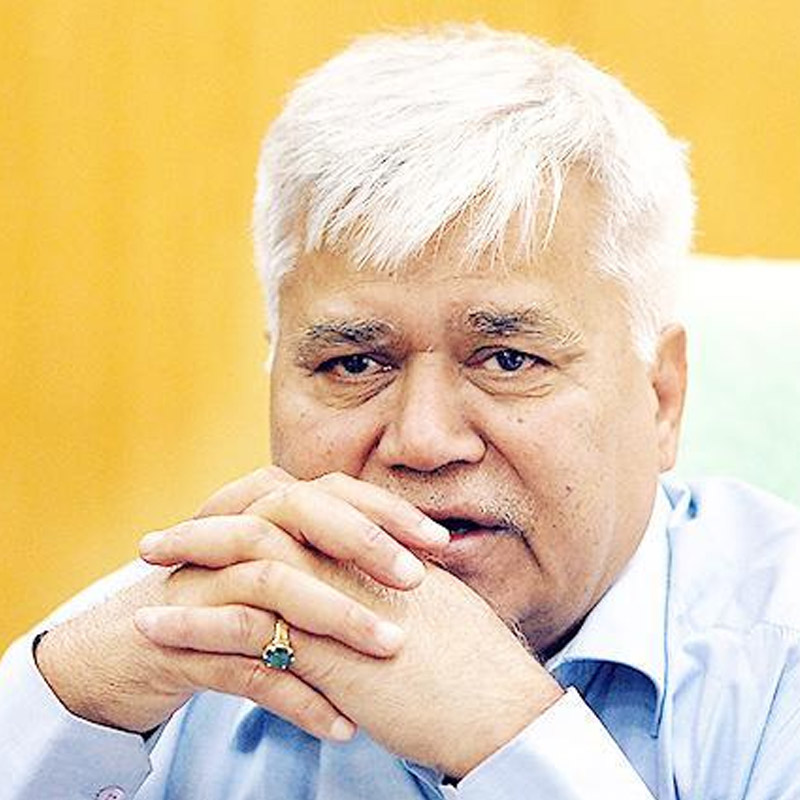
    NEW DELHI: Telecom Regulatory Authority of India chairman R S Sharma said that the country would gradually shift to a payment system using Aadhaar card instead of the various private pay systems or wallets.

    He also mentioned that the implementation of Bharatnet will be faster and effective with PPP model, and further combined with Digital Cable Television System, India will reach a new level of digital connectivity.

    At a seminar on “Demonetisation to Digital Remonetisation”, Sharma said that “Cost, Convenience, and Confidence are crucial factors for a successful Digital Payment System implementation in India.

    In the meet organzed by FICCI, he said 1.1 billion people already have Aadhaar cards and the number was going up everyday.

    Sharma said one of the nine pillars of TRAI in a report given early this year was to go cashless. This report which also refers to Unified Payment Interface (UPI) and Unstructured Supplementary Service Data (USSD) was already being implemented by banks.

    The regulator was now working on a system of Aadhaar KYC (Know Your Customer) whereby any consumer could directly be able to use his Aadhaar identification to make payments. Electronic KYC is also in place.

    He said that TRAI had given a paper about Aadhaar authentication system to UIDAI as early as October 2010 and said this is vital.

    This involved three elements: What I know (my finger print or Iris), what I have (Credit or Debit Cards) and What I am (Biometrics).

    Aadhaar interoperability was also suggested in 2010. Thus, the software for going cashless is in place but has to be implemented as both software and infrastructure are in place.

    It was important for the finance sector to get integrated into the telecom sector in this regard.

    Answering a question, he said that the systems have to be made simple so that everyone is able to understand and implement them.

    Sharma highlighted the pillars of Digital India and mentioned the need of an effective Digital Infrastructure, and how availability and affordability of digital solutions formulates the base of Digital Remonetisation. The TRAI chairman highlighted how JAM Trinity creates a robust system within India, which further creates a digital inclusion with Aadhaar users across India.

    Sharma recommended that in order to create a well operational and sustainable digital and cashless economy, it is vital to eliminate convenience charge by the banks. He firmly suggested that interoperable or interlinked digital wallets can additionally support the digital payment systems of India.

    The meet was part of an ICT policy dialogue with the agenda to discuss the challenges and opportunities that lie before the ICT sector, government and the regulators following the demonetisation move.

  • TRAI: Give 100 MB a month free data to rural area subs

    TRAI: Give 100 MB a month free data to rural area subs

    NEW DELHI: India’s telecoms and broadcast carriage regulator Telecom Regulatory Authority of India (TRAI) has recommended to the government to provide limited free data to rural subscribers as part of efforts to boost e-payments and digital economy.

    “In order to bridge the affordability gap for the persons residing in rural areas and to support government’s efforts towards cashless economy by incentivising digital means, the Authority recommends that a scheme under which a reasonable amount of data, say 100 MB per month, may be made available to rural subscribers for free,” TRAI said in a set of recommendations on Monday on `Encouraging Data Usage in Rural Areas Through Provisioning of Free Data’.

    TRAI further stated that greater broadband access, particularly for large parts of the rural population can be the force to drive integration of the “unconnected and the underserved in economy”, thereby helping to enhance the overall value of the network.

    “Greater broadband access has the power to augment productivity of the agricultural sector as well as small enterprises, facilitate easier and more efficient participation of the rural population in governance, generate new employment opportunities and enable a host of services like e-commerce, e-learning, e-banking etc. As an increasing number of government services are also being electronically delivered, expanding rural Internet access has become a matter of urgency and is essential in fulfilling the vision of Digital India,” TRAI said.

    The regulator further suggested that the cost of implementation of the scheme may be met from the fund that telecom operators contribute to spread telecom connectivity in rural areas or known as USOF.

    TRAI also suggested that to increase participation of other entities for incentivizing free data, there is a need to introduce third party (aggregator) to facilitate schemes that are TSPs or telecom service provider agnostic and non-discriminatory in their implementation and that this scheme for free data must not involve any arrangement between the TSP and the aggregator/content provider and should not be designed to circumvent TRAI directives banning discriminatory tariffs for data.

    As part of the process, TRAI has suggested that the aggregators will need to register with Department of Telecoms (DoT); the registrant must be a company registered under Indian Companies Act, 1956; the validity of registration shall be for five years; the registrant shall not either directly or indirectly assign or transfer the registration in any manner whatsoever to a third party either in whole or in part.

  • TRAI: Give 100 MB a month free data to rural area subs

    TRAI: Give 100 MB a month free data to rural area subs

    NEW DELHI: India’s telecoms and broadcast carriage regulator Telecom Regulatory Authority of India (TRAI) has recommended to the government to provide limited free data to rural subscribers as part of efforts to boost e-payments and digital economy.

    “In order to bridge the affordability gap for the persons residing in rural areas and to support government’s efforts towards cashless economy by incentivising digital means, the Authority recommends that a scheme under which a reasonable amount of data, say 100 MB per month, may be made available to rural subscribers for free,” TRAI said in a set of recommendations on Monday on `Encouraging Data Usage in Rural Areas Through Provisioning of Free Data’.

    TRAI further stated that greater broadband access, particularly for large parts of the rural population can be the force to drive integration of the “unconnected and the underserved in economy”, thereby helping to enhance the overall value of the network.

    “Greater broadband access has the power to augment productivity of the agricultural sector as well as small enterprises, facilitate easier and more efficient participation of the rural population in governance, generate new employment opportunities and enable a host of services like e-commerce, e-learning, e-banking etc. As an increasing number of government services are also being electronically delivered, expanding rural Internet access has become a matter of urgency and is essential in fulfilling the vision of Digital India,” TRAI said.

    The regulator further suggested that the cost of implementation of the scheme may be met from the fund that telecom operators contribute to spread telecom connectivity in rural areas or known as USOF.

    TRAI also suggested that to increase participation of other entities for incentivizing free data, there is a need to introduce third party (aggregator) to facilitate schemes that are TSPs or telecom service provider agnostic and non-discriminatory in their implementation and that this scheme for free data must not involve any arrangement between the TSP and the aggregator/content provider and should not be designed to circumvent TRAI directives banning discriminatory tariffs for data.

    As part of the process, TRAI has suggested that the aggregators will need to register with Department of Telecoms (DoT); the registrant must be a company registered under Indian Companies Act, 1956; the validity of registration shall be for five years; the registrant shall not either directly or indirectly assign or transfer the registration in any manner whatsoever to a third party either in whole or in part.

  • Net subs grow significantly but public Wi-Fi idea flayed

    Net subs grow significantly but public Wi-Fi idea flayed

    MUMBAI: Even as internet subscribers are growing significantly across Indian states, TRAI’s idea of public Wi-Fi has been flayed by stakeholders.

    Maharashtra has recorded the highest number of internet subscribers in India at 29.47 million, followed by Tamil Nadu, Andhra and Karnataka in that order, according to government data. At the end of March 2016, India had a total of 342.65 million subscribers. BharatNet project meantime plans to connect all 2.5 lakh gram panchayats in the country through broadband.

    Delhi had registered 20.59 million internet users, while Kolkata and Mumbai recorded 9.26 million and 15.65 million, respectively.

    Tamil Nadu recorded 28.01 million subscribers, while the neighbouring states of Andhra Pradesh and Karnataka respectively registered 24.87 million and 22.63 million. Himachal Pradesh saw the lowest number of subscribers at 3.02 million.

    Of the over 342 million subscribers, over 67 per cent are from urban India. At the end of FY16, the rural internet subscriber base stood at 111.94 million. Tamil Nadu recorder the highest number of urban subscribers at 21.16 million, while UP (East) telecom circle is ahead in terms of rural internet customer base at 11.21 million.

    Public Wi-Fi condemned

    Telecom stakeholders recommending an open and cheap internet have raised concerns over privacy and regulatory hurdles following the release of TRAI’s consultation paper on public Wi-Fi.

    The Internet Freedom Foundation co-founder Aravind Ravi Sulekha was apprehensive that the proposed regulations could lead to invasion of privacy and interfere with the freedom of hotspot providers to operate freely. The proposals may turn out to be regressive, Sulekha said.

    TRAI proposed hotspot providers would have to register with the government and users could access hotspots only after paying using a service tied to their Aadhaar number.

    Centre for Internet and Society policy director Pranesh Prakash said that TRAI solution was a classic example of over-regulation and centralism. It turns out that TARI was unclear about the problem to be solved, he added.

  • Net subs grow significantly but public Wi-Fi idea flayed

    Net subs grow significantly but public Wi-Fi idea flayed

    MUMBAI: Even as internet subscribers are growing significantly across Indian states, TRAI’s idea of public Wi-Fi has been flayed by stakeholders.

    Maharashtra has recorded the highest number of internet subscribers in India at 29.47 million, followed by Tamil Nadu, Andhra and Karnataka in that order, according to government data. At the end of March 2016, India had a total of 342.65 million subscribers. BharatNet project meantime plans to connect all 2.5 lakh gram panchayats in the country through broadband.

    Delhi had registered 20.59 million internet users, while Kolkata and Mumbai recorded 9.26 million and 15.65 million, respectively.

    Tamil Nadu recorded 28.01 million subscribers, while the neighbouring states of Andhra Pradesh and Karnataka respectively registered 24.87 million and 22.63 million. Himachal Pradesh saw the lowest number of subscribers at 3.02 million.

    Of the over 342 million subscribers, over 67 per cent are from urban India. At the end of FY16, the rural internet subscriber base stood at 111.94 million. Tamil Nadu recorder the highest number of urban subscribers at 21.16 million, while UP (East) telecom circle is ahead in terms of rural internet customer base at 11.21 million.

    Public Wi-Fi condemned

    Telecom stakeholders recommending an open and cheap internet have raised concerns over privacy and regulatory hurdles following the release of TRAI’s consultation paper on public Wi-Fi.

    The Internet Freedom Foundation co-founder Aravind Ravi Sulekha was apprehensive that the proposed regulations could lead to invasion of privacy and interfere with the freedom of hotspot providers to operate freely. The proposals may turn out to be regressive, Sulekha said.

    TRAI proposed hotspot providers would have to register with the government and users could access hotspots only after paying using a service tied to their Aadhaar number.

    Centre for Internet and Society policy director Pranesh Prakash said that TRAI solution was a classic example of over-regulation and centralism. It turns out that TARI was unclear about the problem to be solved, he added.

  • TRAI upholds public private partnership model for BharatNet implementation

    TRAI upholds public private partnership model for BharatNet implementation

    MUMBAI: The Telecom Regulatory Authority of India (TRAI) has recommended the public private partnership (PPP) model, which aligns private incentives with long-term service delivery in the vein of the Build-Own-Operate-Transfer (BOOT) model for implementing the national broadband project – BharatNet.


    As per its recommendations to the government, TRAI broadened the scope of the private sector company or ‘concessionaire’s’ role in implementing BharatNet. 


    TRAI had issued the consultation paper on the implementation model for BharatNet on 17 November last year to find alternate model implementation.


    According to TRAI’s consultation paper, “The scope of the concessionaire’s work should include both the deployment and implementation of the OFC and other network infrastructure as well as operating the network for the concession period. Concessionaires shall be entitled to proceeds of revenue from dark fibre and/ or bandwidth.”


    “The scope of concessionaires should be selected by way of a reverse bidding process to determine minimiability Gap Funding sought for concession. The area of implementation may be analogous with the Licensed Service Areas (LSAs) or the StateiUT. The use of a reverse bid process to determine lowest VGF sought can ensure that the amount of support from public funds is rational,” said TRAI in its consultation paper. 


    TRAI also added that the contracting agency may, in the first phase, explore the appetite and response of the potential BOOT participants through bidding process. “This can either be done in one go for the entire country (by having StatesiLSA or packages as ‘Schedules’) or it can be done beginning with certain States with larger potential of bidders’ response,” the paper said.


    The authority recommended in the second phase (after excluding those area where BOOT model can be implemented), that an EPC contractor may be selected, who should be responsible for building the network and will have defect liability period of two years after completing the network. “When the network is about to be completed, the contracting agency should engage a third party (through bidding process) who should be responsible for managing and marketing the network as per the broad principles laid down by the Government. The overlapping defect liability period of two years should be used to ensure smooth transition from construction to maintenance phase,” TRAI said.


    Other salient features of the recommendations are as follows:


    1) The period of concession should be coterminous with the technical life of the fibre. At present the consensus on this is 25 years. Such a period should be sufficient time to align the concessionaire’s incentives with high quality installation for service delivery, while also providing a large enough window to make a reasonable profit.


    2) The period may be further extended in blocks of 10, 20 and 30 years at the mutual agreement of the Government and the concessionaire. Care must be taken to ensure that the concessionaire provides access to all service providers in a non-discriminatory and transparent manner. Such competition is essential given that all manner of content (including entertainment, entitlements and Government services) will be delivered on the network.


    3) In addition the relationship between the concessionaire and the service provider should be at arm’s length. This can be ensured by mandating a legal separation of the businesses of infrastructure provision and service provision in case of overlapping interests to preclude the possibility of a vertically integrated entity abusing its position.


    4) Liberal eligibility criteria that allows for broad participation is necessary to ensure the participation of a large number of bidders and guarantee a strong and competitive auction process to enable optimal price discovery.


    5) There is no need to place a cap on participation in the bidding process – however a cap should be set on the number of implementation areas that agreed. This can ensure that the bidders’ capacity and resources are not   stretched thin due to winning bids for too many areas.


    6) Concessionaires be provided with flexibility in terms of route for laying optical fibre, choice of construction, topology and technology in order to ensure technical as well as economic efficiency. This flexibility is subject to the same standards of redundancy and quality as outlined for BharatNet by the Committee on NOFN .


    7) The Central and State Governments act as anchor clients to purchase a minimum amount of bandwidth (100 Mbps) to be purchased at market prices for the provision of services. Additionally, the mandating of a minimum amount of fibre (e. g. 50 per cent) be set aside for use by other service providers in order to encourage competition may be considered.


    8) RoW is perceived as a major risk factor by the private sector, safeguards recognising such a possibility and outlining the steps to be taken must be put in place under the agreement to attenuate such risk and encourage participation. Guaranteed provision of free RoW is a necessary and non-negotiable precondition to successful deployment of BharatNet, subject to the reinstatement of public property to its original condition.


    9) Involvement of State Governments is essential for success of the project irrespective of the strategy chosen for implementing it. States/UTs should be made an integral part of the project implementation and an institutional mechanism both at the State and District level should be created to effectively coordinate and sort out the implementation issues.


    10) The Central and State Government should additionally consider becoming involved with the concessionaire by becoming a minority equity partner ( -26 per cent) in the selected consortium – this can reduce the perceived risks and thus lower the costs of obtaining private finance while also automatically solving the risks associated with windfall profits. In addition, this can help the Government check monopolistic behaviour on the part of the concessionaire.

  • TRAI upholds public private partnership model for BharatNet implementation

    TRAI upholds public private partnership model for BharatNet implementation

    MUMBAI: The Telecom Regulatory Authority of India (TRAI) has recommended the public private partnership (PPP) model, which aligns private incentives with long-term service delivery in the vein of the Build-Own-Operate-Transfer (BOOT) model for implementing the national broadband project – BharatNet.


    As per its recommendations to the government, TRAI broadened the scope of the private sector company or ‘concessionaire’s’ role in implementing BharatNet. 


    TRAI had issued the consultation paper on the implementation model for BharatNet on 17 November last year to find alternate model implementation.


    According to TRAI’s consultation paper, “The scope of the concessionaire’s work should include both the deployment and implementation of the OFC and other network infrastructure as well as operating the network for the concession period. Concessionaires shall be entitled to proceeds of revenue from dark fibre and/ or bandwidth.”


    “The scope of concessionaires should be selected by way of a reverse bidding process to determine minimiability Gap Funding sought for concession. The area of implementation may be analogous with the Licensed Service Areas (LSAs) or the StateiUT. The use of a reverse bid process to determine lowest VGF sought can ensure that the amount of support from public funds is rational,” said TRAI in its consultation paper. 


    TRAI also added that the contracting agency may, in the first phase, explore the appetite and response of the potential BOOT participants through bidding process. “This can either be done in one go for the entire country (by having StatesiLSA or packages as ‘Schedules’) or it can be done beginning with certain States with larger potential of bidders’ response,” the paper said.


    The authority recommended in the second phase (after excluding those area where BOOT model can be implemented), that an EPC contractor may be selected, who should be responsible for building the network and will have defect liability period of two years after completing the network. “When the network is about to be completed, the contracting agency should engage a third party (through bidding process) who should be responsible for managing and marketing the network as per the broad principles laid down by the Government. The overlapping defect liability period of two years should be used to ensure smooth transition from construction to maintenance phase,” TRAI said.


    Other salient features of the recommendations are as follows:


    1) The period of concession should be coterminous with the technical life of the fibre. At present the consensus on this is 25 years. Such a period should be sufficient time to align the concessionaire’s incentives with high quality installation for service delivery, while also providing a large enough window to make a reasonable profit.


    2) The period may be further extended in blocks of 10, 20 and 30 years at the mutual agreement of the Government and the concessionaire. Care must be taken to ensure that the concessionaire provides access to all service providers in a non-discriminatory and transparent manner. Such competition is essential given that all manner of content (including entertainment, entitlements and Government services) will be delivered on the network.


    3) In addition the relationship between the concessionaire and the service provider should be at arm’s length. This can be ensured by mandating a legal separation of the businesses of infrastructure provision and service provision in case of overlapping interests to preclude the possibility of a vertically integrated entity abusing its position.


    4) Liberal eligibility criteria that allows for broad participation is necessary to ensure the participation of a large number of bidders and guarantee a strong and competitive auction process to enable optimal price discovery.


    5) There is no need to place a cap on participation in the bidding process – however a cap should be set on the number of implementation areas that agreed. This can ensure that the bidders’ capacity and resources are not   stretched thin due to winning bids for too many areas.


    6) Concessionaires be provided with flexibility in terms of route for laying optical fibre, choice of construction, topology and technology in order to ensure technical as well as economic efficiency. This flexibility is subject to the same standards of redundancy and quality as outlined for BharatNet by the Committee on NOFN .


    7) The Central and State Governments act as anchor clients to purchase a minimum amount of bandwidth (100 Mbps) to be purchased at market prices for the provision of services. Additionally, the mandating of a minimum amount of fibre (e. g. 50 per cent) be set aside for use by other service providers in order to encourage competition may be considered.


    8) RoW is perceived as a major risk factor by the private sector, safeguards recognising such a possibility and outlining the steps to be taken must be put in place under the agreement to attenuate such risk and encourage participation. Guaranteed provision of free RoW is a necessary and non-negotiable precondition to successful deployment of BharatNet, subject to the reinstatement of public property to its original condition.


    9) Involvement of State Governments is essential for success of the project irrespective of the strategy chosen for implementing it. States/UTs should be made an integral part of the project implementation and an institutional mechanism both at the State and District level should be created to effectively coordinate and sort out the implementation issues.


    10) The Central and State Government should additionally consider becoming involved with the concessionaire by becoming a minority equity partner ( -26 per cent) in the selected consortium – this can reduce the perceived risks and thus lower the costs of obtaining private finance while also automatically solving the risks associated with windfall profits. In addition, this can help the Government check monopolistic behaviour on the part of the concessionaire.