Tag: BharatNet

  • Tripartite MoU signed between USOF, Prasar Bharati and ONDC

    Tripartite MoU signed between USOF, Prasar Bharati and ONDC

    Mumbai: Universal Service Obligation Fund (USOF) under Department of Telecommunications (DoT), signed a tripartite MoU with Prasar Bharati (under the Ministry of Information & Broadcasting) and Open Network for Digital Commerce (a Digital Public Infrastructure (DPI) initiative of Department for Promotion of Industry and Internal Trade, Ministry of Commerce & Industry) to proliferate affordable and accessible digital services across the country. The objective of the MoU is to bundle broadband services with OTT and e-commerce platforms for rural India riding on BharatNet infrastructure under the USOF.

    USOF has been instrumental in enabling highspeed broadband and mobile connections across Gram Panchayats (GPs) and villages in the country. This MoU will enable the bundled Prasar Bharati OTT as a service, including linear channels, Live TV and on-demand content, among the end consumers while USOF will ensure efficient and highspeed broadband services in rural and remote areas. The national public service broadcaster, Prasar Bharati, with an unparallel legacy content, consumer reach and brand recall, will source and produce content that will run on its OTT platform. In addition, the Open Network for Digital Commerce (ONDC), a leading player in digital infrastructure, will provide the technical expertise and necessary framework in enabling digital commerce in products & services. This will be expanded to cover more services like education, health, training, credit, insurance, agriculture amongst others.

    The PM’s vision and MoC’s unwavering commitment to foster a conducive environment for digital innovation underpins this truly unique collaboration synergizing connectivity, content and commerce to empower rural India.

    The MoU was signed in the presence of Dr Neeraj Mittal, Secretary (Telecom), Sh. Niraj Verma, Administrator, USOF, Sh. T. Koshy, MD & CEO, ONDC, Sh. A.K. Jha, ADG, Platforms, Prasar Bharati and Sh. Sunil Kumar Verma, Joint Secretary, DoT.

  • Budget 2022: 5G & rural broadband BharatNet to boost overall internet connectivity

    Budget 2022: 5G & rural broadband BharatNet to boost overall internet connectivity

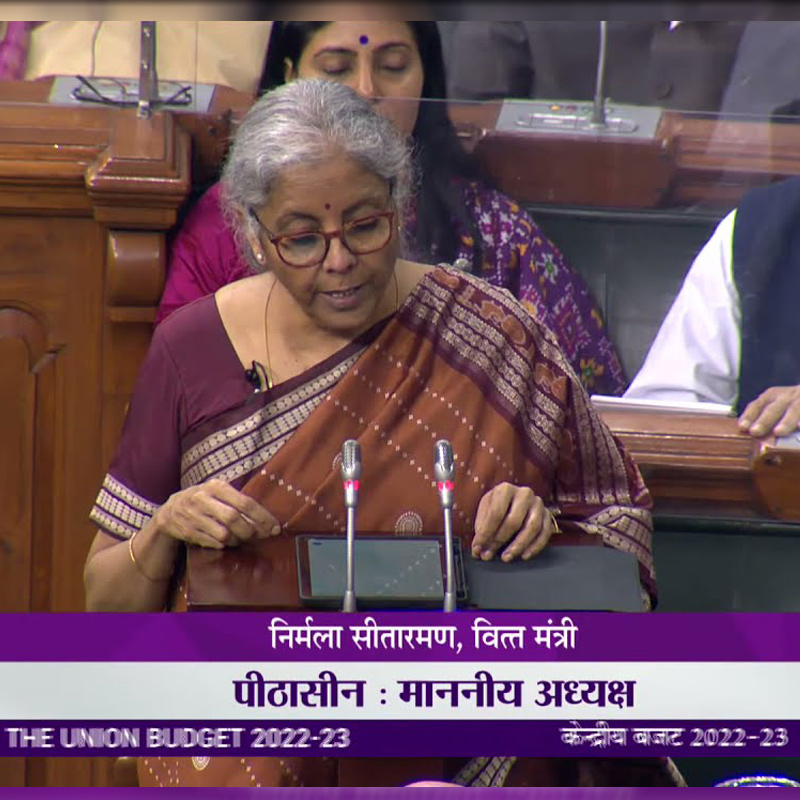
    Mumbai: Giving a boost to the country’s Digital India ambitions, finance minister Nirmala Sitharaman while announcing the union budget 2022 on 1 February said that 5G telecom services will be introduced in India in FY2022-23. Spectrum auctions are likely to be held soon to facilitate the roll-out of 5G by private telecom companies. Design-led initiatives for 5G and other technologies will henceforth be included in the production linked incentive (PLI) scheme, added Sitharaman.

    Among other big announcements impacting telecom/internet connectivity, BharatNet broadband is expected to be ready by 2025. Contracts for laying optical fibres in all villages will be awarded under the project through public-private partnerships in 2022, 2023. “Our vision is that all villages and their residents should have the same access to e-services as urban areas,” stated Sitharaman while adding that five per cent of the annual collections Universal Service Obligation Fund will be allocated to enable affordable broadband and mobile penetration in rural and remote areas.

    The government’s flagship rural broadband connectivity program, BharatNet aims to bring broadband to 361,000 villages across 16 states, including 1.37 lakh gram panchayats. by acting as a middle-mile network allowing Internet service providers (ISPs), local cable operators, MSOs and other agencies to use its bandwidth and incremental fibre.

    According to the economic survey released on 31 January 2022, as on September 2021, 5.46 lakh km Optical Fiber Cable has been laid, a total of 1.73 lakh Gram Panchayats (GP) have been connected by Optical Fiber Cable (OFC) and 1.59 lakh Gram Panchayats are service ready on OFC under the BharatNet project. In addition, 4173 GPs have been connected over satellite media. Wi-Fi hotspots have been installed at 1.04 lakh Gram Panchayats of which services are being provided at 0.64 lakh, catering to more than 16.17 lakh subscribers with a data usage to the tune of 5670.42 TB per month

    The survey further revealed that internet penetration in the country is growing steadily with internet subscribers increasing from 302.33 million in March 2015 to 833.71 million in June 2021. While 67.2 percent of internet subscribers had narrowband connections and 32.8 percent had broadband connections in 2015, the composition had reversed by June 2021 with only 4 percent of subscribers having narrowband and 96 percent with broadband connections. As of September 2021, around 161 villages out of 354 villages have been covered with mobile service.

    Here is what the industry experts had to say:

    Elara Capital’s Karan Taurani noted, “Push towards affordable and high speed fixed broadband internet will boost digital content consumption and smart TV penetration into rural and smaller towns. It will also lead to shifting of eyeballs from TV to digital at a much rapid pace in smaller towns too, just like it has happened in metros.”  This will help enable strong user and consumption growth for the B2C-led internet and new-age companies, which in turn will lead to a rapid shift from traditional to digital. According to him, this could have a positive impact on overall advertising, as internet companies now account for a sizable share of ad spends in India.

    However, Taurani rued the absence of initiatives to protect the interests of traditional media despite the negative impact of Covid. “There was no relaxation on the license fees or royalty for radio industry, no financial grant or tax benefit for the traditional media which has seen a sharp decline over last two years and still struggles to get back to pre Covid levels, and no reduction in GST for cinema ticket prices, despite cinema being one of the most impacted medium during the pandemic,” he said.

    Welcoming the push for internet connectivity, Logicserve Digital founder and CEO Prasad Shejale said, 5G spectrum auctions will finally make the dream of a tech-savvy India a reality, further boosting the country’s digital infrastructure. Additionally, the launch of a design-led manufacturing scheme for the 5G ecosystem as part of the PLI scheme will ensure affordable broadband and mobile communication even in far-flung areas. The availability of high-speed internet connectivity in urban as well as rural areas will encourage marketers to experiment with blockchain, AR, VR. The overall budget is future tech-enabled and balanced.”

    “Media consumption is in for a disruption like never before. 5G is going to change the way digital functions and is going to just accelerate the metaverse and Web3 adoption,” added White Rivers Media CEO and co-founder Shrenik Gandhi.

    Specialised task force for AVGC

    The M&E industry will also benefit from setting up a specialised task force for the promotion of Animation, visual effects, gaming and comics (AVGC) industry, as well as the expansion of the ‘One class, one TV channel’ program of PM eVIDYA from 12 to 200 TV channels proposed under the budget.

    Zeel MD and CEO Punit Goenka said, “The holistic focus on broad-based economic recovery in the Union Budget, with a huge emphasis on job creation and digital ecosystem of the country, is positive for India Inc. at large. The steps announced to build domestic capacity for the Animation, Visual-Effects, Gaming, and Comics segment will certainly help enhance capabilities, enabling the Country to compete more effectively at a global stage. An extension in the credit line guarantee scheme is also a welcome move, which will provide some much-needed relief to the relevant sectors which were impacted due to the pandemic.”

    According to vernacular audio platform Khabri’s co-founder and CEO Pulkit Sharma, regional languages will be empowered through the program, which enables all states to provide supplementary education in regional languages for classes 1 to 12. “These digital initiatives will provide for a more conducive environment for the adoption of tech-based learning and which will directly route to empowering youth from real Bharat,” he said.

  • Interoperable Bharat Wi-Fi to provide 1mn hotspots by ’19-end

    Interoperable Bharat Wi-Fi to provide 1mn hotspots by ’19-end

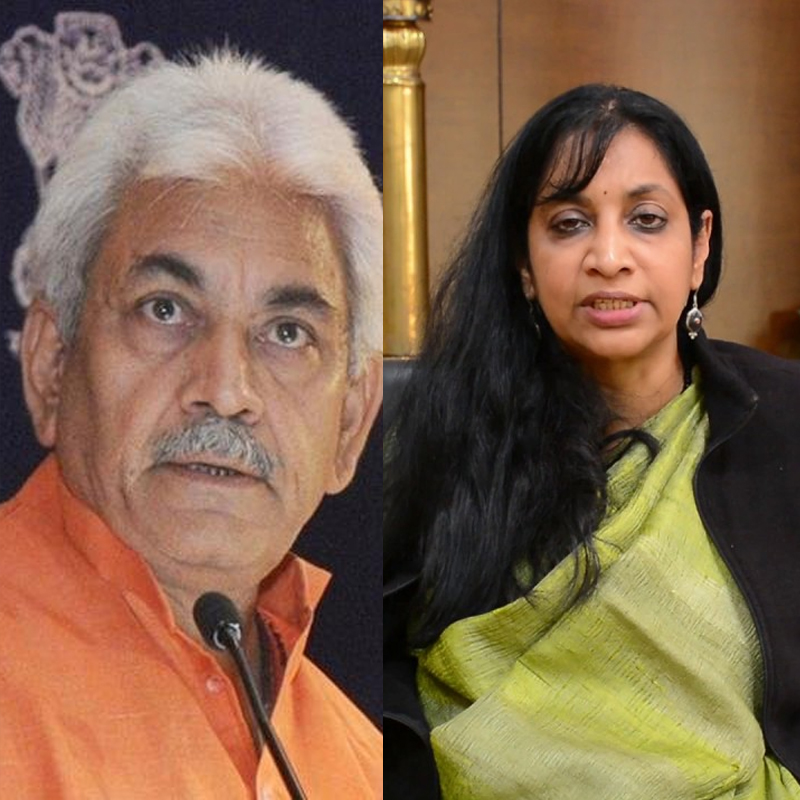
    NEW DELHI: Indian Telecom Minister Manoj Sinha has said the country will rollout one million Wi-Fi hotspots in the country by December 2019 via Bharat Wi-Fi, a country-wide common inter-operable platform. His colleague, IT and Electronics Minister Ravi Shankar Prasad later highlighted the government was also taking steps towards effective data protection as the country becomes more digital.

    Announcing the connectivity initiative at the inauguration of the second edition of the India Mobile Congress 2018 (IMC) yesterday here, the Telecom Minister said Bharat Wi-Fi will be owned and operated by telecom service providers, ISPs and virtual network operators (VNOs) and consumers will have access to Wi-Fi hotspots of any of the partnering operators.

    The interoperable Wi-Fi initiative is part of the Indian government’s fibre optic project BharatNet that aims to connect the country’s 250,000 gram panchayats or local village administrations and has “put mobility in the centre of next digital revolution”, the Minister highlighted, adding rise in convergence of services has led to adoption of new technologies.    

    Pointing out that revenue generation in India’s telecom sector has seen a rise of 220 per cent in the last four years, Sinha said, along with the information technology segment, the two sectors presently contribute approximately 6.5 per cent to the country’s GDP and has the potential to grow further.

    Sinha, along with his other ministerial colleagues and industry stalwarts, including Reliance Industries’ Mukesh Ambani and Bharti Airtel’s Sunil Mittal, also unveiled the National Frequency Allocation Plan 2018 (NFAP), a roadmap for the Indian digital communications industry.

    The NFAP released a quantum of 605 MHz license-exempt spectrum in 5GHz band for wireless access services and radio local area networks in outdoor to meet the ever-growing appetite for data (from a current figure of 50 MHz since 2007).

    The frequency allocation plan also offered over 30 license-exempt bandwidths for short range devices (SRDs), ultra-wideband devices (UWDs) and additional spectrum for M2M services, creating opportunities for the public to enjoy benefits from technologies and enabling the industry to build domestic manufacturing eco-system. India has signalled its spectrum plans for 5G services aspiring to adopt the next generation technology.

    “The country is at the cusp of a digital revolution with disruptions happening in each and every sector and industry. With growing smartphone and internet penetration and with the finalisation of National Digital Communication Policy 2018, these are exciting times for the telecom sector, and the society at large,” Sinha said, adding that the launch of several innovative products will pave the path to accomplish Prime Minister Modi’s “vision of a digitally connected India”.

    The three-day India Mobile Congress 2018 has been organised by Department of Telecoms and Cellular Operators Association of India (COAI).

    Earlier in the day while RIL’s Mukesh Ambani said Jio is ready to again disrupt the market with its fixed-line broadband service, Bharti Airtel’s Sunil Mittal exhorted the government to make more telecom industry-friendly policies as the sector continues to be highly taxed, similar to the tobacco industry, which is proving to be detrimental.

    Among the key highlights of the first day of the IMC was the participation of 5G trials by companies like Reliance Jio InfoComm, Intel, Nokia and Qualcomm.

  • Parliamentary IT report cites high charge by Antrix as hurdle to satellite connectivity

    Parliamentary IT report cites high charge by Antrix as hurdle to satellite connectivity

    MUMBAI: Despite the Department of Telecommunications (DoT) citing high cost of satellite-delivered bandwidth to reach remote areas for providing broadband services, parliament’s committee on IT has observed that prohibitive cost should not come in the way of availing of the services as adequate funds are available, including those from Universal Service Obligation Fund (USOF).

    Earlier also DoT special secretary N Sivasailam blamed the turf war between the ministry and Indian Space and Research Organisation (ISRO) for delays in taking connectivity to far-flung areas.

    While in phase I of BharatNet project, satellite connectivity was taken up only in one gram panchayat (GP), but in phase II, more than 6407 GPs are planned to be connected. 4938 GPs are in North Eastern Region, 885 GPs in Jammu & Kashmir and 584 GPs are in the rest of the country. 1407 GPs were supposed to be provided with broadband connectivity through satellite by June 2018 by BSNL and the rest were to be completed by December 2018 through a bidding process. BSNL was expected to have completed connectivity to 1407 GPs by now.

    Shortage of satellite bandwidth and huge operational cost charged by “Antrix” are cited as the impediments associated with connectivity through satellite. The high operational cost is due to ISRO’s monopoly and the DoT has informed the committee that with the availability of more bandwidth in two to three years, sufficient capacity shall be available.

    “The capital cost of satellite is very little. But the recurring cost is prohibitive. We provide satellite connectivity on a very small bandwidth to Andaman and Nicobar and it costs us something like Rs 300 crore for that small population to be able to pay for bandwidth. It is typically because of the monopoly of ISRO. In India, satellite communication is 300 times more expensive than in the US. So, satellite is prohibitive. We are going for it only in areas where it is not technically feasible to do any other thing,” DoT secretary stated.

    Areas like Jammu and Kashmir, Uttarakhand, Himachal Pradesh and the North Eastern states have had basic challenges halting the project’s timely implementation. “The committee recommends that sincere efforts be made to achieve the target of providing connectivity through satellite to all the identified 6407 GPs covering above states,” the recommendation adds.

    When the committee questioned the DoT on the issue of availability of sufficient bandwidth, the representative of the department stated, “We want higher bandwidth for which the USOF and the Bharatnet can make the payment. But the bandwidth is not available. They are going to put two satellites in the orbit this year. With that more bandwidth would be available. But right now, there is a crunch of bandwidth with ISRO in these difficult areas, particularly in Jammu and Kashmir and North-East. So, the issue with the ISRO is availability of bandwidth and the cost is very high. It is higher if we compare it with the international rates.”

    Since heavy investment is involved, the committee even questioned if providing connectivity through satellite will be sustainable in the long run. To this the department stated that with the availability of more bandwidth in two to three years of time especially through High Throughput satellites in Ka-Ku band and Ka-ka band from DOS/ISRO sufficient capacity shall be available. ISRO is planning to launch series of satellites in near future to make available the enhanced satellite bandwidth.

    BharatNet project can enhance the lives of thousands giving them access to information available online and enhanced communication with the privileged part of the country. The ISRO and DoT issue needs to be resolved on priority basis to put an end to the delayed implementation.

  • BharatNet project will boost rural broadband services: Telecom Minister

    BharatNet project will boost rural broadband services: Telecom Minister

    NEW DELHI: There are 412.60 million broadband connections in the country of which 106.52 million are in rural areas, Communication Minister Manoj Sinha said yesterday.

    Sinha said in the Lok Sabha or India’s Lower House of Parliament that broadband services in rural areas have seen good progress on the back of substantial development in the telecommunication sector.

    “The number of broadband connections in the country as on 31 March 2018 stood at 412.60 million out of which rural broadband connections are 106.52 million, which constitutes 25.82 per cent of total connections,” he said, adding that the government is implementing the flagship BharatNet project to link each of the 250,000 gram panchayats or the local village administrations in the country through optical fibre network.

    This is the largest rural connectivity project of its kind and is the first pillar of the Digital India programme, he said.

    Phase-I of the project has been completed in December 2017 and over 100,000 village administrations have been made service-ready. Phase II of BharatNet project, which aims to connect 150,000 gram panchayats (GPs) through high speed broadband, has been launched and is targeted to be completed by March 2019.

    The optical fibre being laid under the BharatNet project is expected to be the primary means for internet backhaul, which can be leveraged to service the telecommunications towers in the rural areas. This, in turn, will give a boost to mobile internet availability and adoption in the rural areas. 

    As part of BharatNet project, the last mile connectivity, through Wi-Fi or any other suitable broadband technology is being provided at all the GPs in the country. At each GP, on an average five access points are envisaged that include three points for government institutions and two for public places.

    Overall mobile Internet penetration in the country has seen major changes in the last four years. The total number of Base Transceiver Stations (BTS) across the country has increased from 790,000 in 2014 to more than 18,00000 as of March 2018 of which 905,000 BTS are of 4G. The increased number of BTS has resulted in greater adoption of mobile internet across the country, the Minister said. 

  • Rs 37-bn panchayat wifi plan by Mar ’19, IMG to meet today

    Rs 37-bn panchayat wifi plan by Mar ’19, IMG to meet today

    MUMBAI: The central government is drafting an ambitious Rs 37-billion plan so as to cover around 5.5 lakh villages with wifi facility for all panchayats by March 2019, a senior Department of Telecom official has said. Also, data shared by the telecom minister Manoj Sinha showed that internet service has started in 33,430 gram panchayats as of 6 September.

    The inter-ministerial panel (IMG) of the Telecom Commission is scheduled to meet on Friday to consider phase-2 of BharatNet project under which 1.5 lakh GPs are to be covered with high speed broadband network.
       
    This month, the government expected to put out a tender for 2.5 lakh GPs (gram panchayats) to be covered so that 5.5 lakh villages would have had access to mobile broadband, the telecom secretary Aruna Sundararajan said, PTI reported.

    The government expects to start broadband services with about 1,000 megabit per second (1 gbps) across 1 lakh gram panchayats by 2017-end.

    Earlier, the plan was to provide 100 megabit per second connectivity to village panchayats, but, under the new BharatNet, the broadband speed has been enhanced 10 times to one gigabit per second at every panchayat level.

    One lakh wifi will used under BharatNet service. The other 1.5 lakh need not be on BharatNet from Day 1. Once BharatNet was completed, the government planned to integrate all wifi backward with BharatNet, Sundararajan said.

    At download speed of 1 gbps, an user can theoretically download a video equivalent to the size of a general Bollywood movie in about 2 seconds.

    Under the new policy, the government will focus on linking some 40,000 villages and increase availability of regular Internet access facility to 70 crore people, from 30 crore, by 2022.

    The secretary pointed out the pace of implementing BharatNet had accelerated by seven times in the last one month. Earlier, 150 installations a day were being done.

    As of July 2017, 2,21,925 kilometres of optical fibre cable (OFC), covering 1,00,299 gram panchayats, were laid and 25,426 GPs provided with broadband connectivity.

    The government, Sundararajan said, has already completed optical fibre rollout in one lakh GPs and is installing electronic equipment for commissioning of broadband services.

    The department has crossed 61,000 GPs where electronic (equipment) have been installed. In the next 2-3 months, it will complete the installation as well as integration to the network. The network for one lakh GPs will be functional before the end of this year.

    Also Read:

    GTPL Hathway pockets Rs 480-mn Gujarat govt contracts

    Fortinet deploys over 500 WiFi locations across Mumbai

    Wi-Fi: TRAI plans to set up ‘open’ WANI, seeks inter-operable, sachet-priced model

    NDMC-MTNL tie up to provide free Wi-fi & FTTH

  • TRAI chief pushes for b’band over cable TV, BharatNet for upping penetration

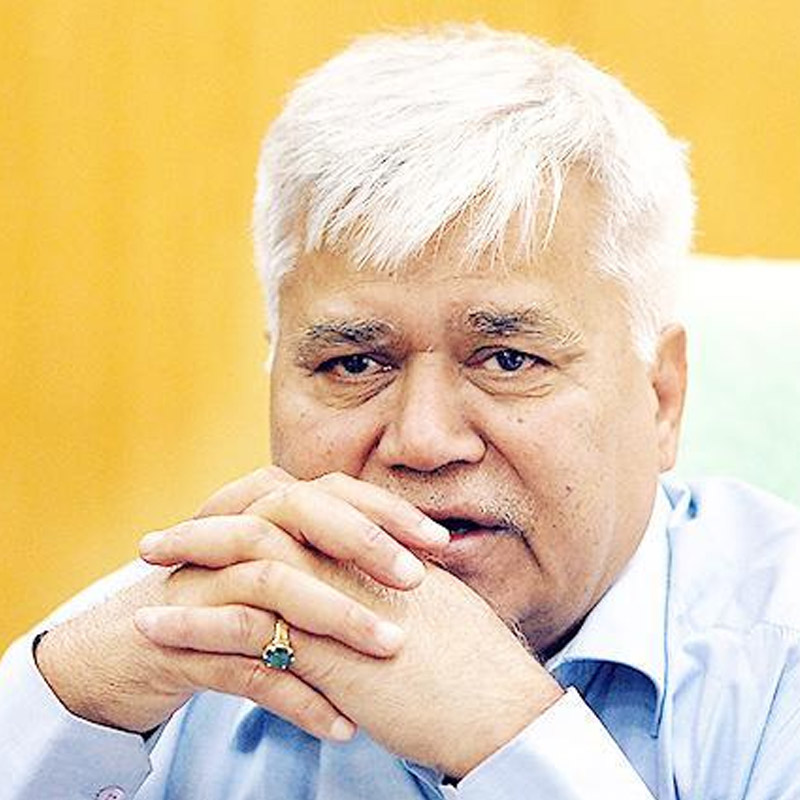
    NEW DELHI: Pointing out that initiatives such as broadband over cable and government’s OFC project BharatNet are important to increase broadband penetration, TRAI chairman RS Sharma has called for aggressively boosting India’s data connectivity profile as the country lags way behind many Asian countries on this score.

    According to Sharma, India’s data connectivity ranking was below Sri Lanka, Vietnam and Singapore, and way below the 46 per cent of average data connectivity level worldwide.

    “Indian telcos have delivered ubiquitous voice connectivity at affordable rates, but data connectivity remains a pain-point with the country ranked at 138 among the 175-odd countries, which is even below many African countries and island nations,” the Economic Times quoted Sharma from his keynote address at the ET Telecom India Mobile Congress last Friday.

    Highlighting the proactive nature of the regulator in giving fillip to broadband penetration, Sharma said the sector regulator has already recommended deployment of cable TV infrastructure for beefing up broadband, especially since 100 million homes already have cable connections. More recently, it has advocated freeing up new spectrum bands to ring in affordable Wi-Fi services in public places, the ET report stated, adding the chief regulator revealed the Department of Electronics & IT (DeitY) and the telecom department (DoT) were jointly initiating “a pilot program to offer affordable Wi-Fi, affordable Wi-Fi connectivity with free localized content“.

    Asserting that the national broadband project BharatNet would see significant acceleration in the coming months, the ET report quoted Sharma as saying the project could play a key role in boosting India’s overall data connectivity profile if implemented through the public-private partnership model as suggested by TRAI.

    Responding to a query on high spectrum costs in India, Sharma said the regulator had advocated a “pay-as-you-go model” for spectrum payouts to ease fiscal pains for telcos.

    Going forward, the sector regulator, according to the report, may also suggest that mobile virtual network operators (MVNOs) be allowed to partner with multiple telcos, which would give consumers more choice for voice and data services and also allowing telcos more options to monetize unused airwaves.

  • Budget 2017: After DeMo, govt. announces sops for digital infra & economy

    Budget 2017: After DeMo, govt. announces sops for digital infra & economy

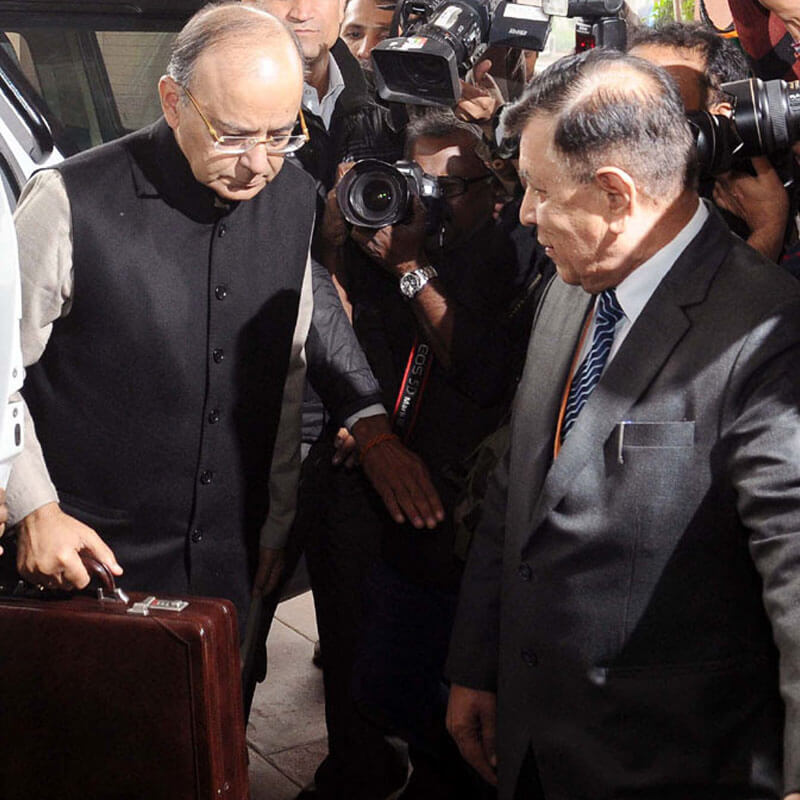
    NEW DELHI: Stating that the budget for 2017-18 was on the agenda to “Transform, Energise and Clean India” in a RAPID (Revenue, Accountability, Probity, Information and Digitisation) way, Finance Minister Arun Jaitley announced various concessions for pushing ahead digital economy, which indirectly may benefit some segments of the media and entertainment sector.

    Under the BharatNet Project, 1, 55,000 km optic fibre cable had been laid in the country. The allocation for BharatNet Project had been increased to Rs 10,000 crore in 2017-18. By the end of 2017-18, high speed broadband connectivity on optical fibre will be available in more than 1, 50,000 gram panchayats (village administrative offices), with wi-fi hot spots and access to digital services at low tariffs. A DigiGaon or digital village initiative will be launched to provide tele-medicine, education and skills through digital technology, Finance Minister Arun Jaitley said.

    The allocation for OFC-based network for defence services had also been increased from Rs 2710 crore in the last budget to Rs 3000 crore in 2017-18.

    Coupled with push towards digital payments for services, including in the broadcast and cable segments, investments in the internet infrastructure and telecom equipments will likely have cascading benefits for the media sector too, especially those offering video streaming services on phones and other hand-held devises.

    The finance minister said a shift to digital payments has huge benefits for the common man. The earlier initiative to promote financial inclusion and the JAM trinity were important precursors to government’s current push for digital transactions.

    In a budget, which for the first time since independence was presented on 1 February instead of the last day of the month, Jaitley said an eco-system was being created to make India a global hub for electronics manufacturing. Over 250 investment proposals for electronics manufacturing had been received in the last two years, totalling an investment of Rs 1.26 lakh crore. A number of global leaders and mobile manufacturers have set up production facilities in India. “I have therefore exponentially increased the allocation for incentive schemes like M-SIPS and EDF to Rs 745 crore in 2017-18. This is an all-time high,” he added.

    A major announcement by Jaitley was the abolition of the Foreign Investments Promotion Board (FIPB) and further liberalisation of FDI policy for which necessary announcements will be made in due course.

    Jaitley said: “Our government has already undertaken substantive reforms in FDI policy in the last two years. More than 90 per cent of the total FDI inflows are now through the automatic route. The FIPB has successfully implemented e-filing and online processing of FDI applications. We have now reached a stage where FIPB can be phased out”.

    He said the telecom sector was an important component of Indian infrastructure eco-system. He claimed the recent spectrum auctions have removed spectrum scarcity in the country and this will give a major fillip to mobile broadband and Digital India for the benefit of people living in rural and remote areas.

    In a boost to domestic industry, a special additional customs duty of 2 per cent is being levied on Populated Printed Circuit Boards (PCBs) for use in the manufacture of mobile phones, subject to actual user condition.

    Noting that India is on the cusp of a massive digital revolution, Jaitley said there was evidence of increased digital transactions. The BHIM (Bharat Interface for Money) app would unleash the power of mobile phones for digital payments and financial inclusion. A total 12.5 million people had adopted the BHIM app so far, Jaitley said, adding that the government will launch two new schemes to promote the usage of BHIM: referral bonus scheme for individuals and a cash back scheme for merchants.

    Aadhar Pay, a merchant version of Aadhar Enabled Payment System, was being launched shortly. This will be specifically beneficial for those who do not have debit cards, mobile wallets and mobile phones. A Mission will be set up with a target of 25,000 million crore digital transactions for 2017-18 through UPI, USSD, Aadhar Pay, IMPS and debit cards. Banks have targeted to introduce additional one million new PoS (point of sales) terminals by March 2017 and they will be encouraged to introduce two million Aadhar-based PoS by September 2017, the finance minister said.

    Jaitley said the Government will consider and work with various stakeholders for early implementation of the interim recommendations of the Committee of Chief Ministers on digital transactions. The Committee on Digital Payments, constituted by Department of Economic Affairs, had recommended structural reforms in the payment eco system, including amendments to the Payment and Settlement Systems Act 2007.

    In a boost for digitisation, the government has removed service tax on e-tickets booked through IRCTC (Indian Railways’ website).

    According to a PTI report, after a flat day time trading Sensex zoomed 485.68 pts to close at 28,141.64.

  • Budget 2017: After DeMo, govt. announces sops for digital infra & economy

    Budget 2017: After DeMo, govt. announces sops for digital infra & economy

    NEW DELHI: Stating that the budget for 2017-18 was on the agenda to “Transform, Energise and Clean India” in a RAPID (Revenue, Accountability, Probity, Information and Digitisation) way, Finance Minister Arun Jaitley announced various concessions for pushing ahead digital economy, which indirectly may benefit some segments of the media and entertainment sector.

    Under the BharatNet Project, 1, 55,000 km optic fibre cable had been laid in the country. The allocation for BharatNet Project had been increased to Rs 10,000 crore in 2017-18. By the end of 2017-18, high speed broadband connectivity on optical fibre will be available in more than 1, 50,000 gram panchayats (village administrative offices), with wi-fi hot spots and access to digital services at low tariffs. A DigiGaon or digital village initiative will be launched to provide tele-medicine, education and skills through digital technology, Finance Minister Arun Jaitley said.

    The allocation for OFC-based network for defence services had also been increased from Rs 2710 crore in the last budget to Rs 3000 crore in 2017-18.

    Coupled with push towards digital payments for services, including in the broadcast and cable segments, investments in the internet infrastructure and telecom equipments will likely have cascading benefits for the media sector too, especially those offering video streaming services on phones and other hand-held devises.

    The finance minister said a shift to digital payments has huge benefits for the common man. The earlier initiative to promote financial inclusion and the JAM trinity were important precursors to government’s current push for digital transactions.

    In a budget, which for the first time since independence was presented on 1 February instead of the last day of the month, Jaitley said an eco-system was being created to make India a global hub for electronics manufacturing. Over 250 investment proposals for electronics manufacturing had been received in the last two years, totalling an investment of Rs 1.26 lakh crore. A number of global leaders and mobile manufacturers have set up production facilities in India. “I have therefore exponentially increased the allocation for incentive schemes like M-SIPS and EDF to Rs 745 crore in 2017-18. This is an all-time high,” he added.

    A major announcement by Jaitley was the abolition of the Foreign Investments Promotion Board (FIPB) and further liberalisation of FDI policy for which necessary announcements will be made in due course.

    Jaitley said: “Our government has already undertaken substantive reforms in FDI policy in the last two years. More than 90 per cent of the total FDI inflows are now through the automatic route. The FIPB has successfully implemented e-filing and online processing of FDI applications. We have now reached a stage where FIPB can be phased out”.

    He said the telecom sector was an important component of Indian infrastructure eco-system. He claimed the recent spectrum auctions have removed spectrum scarcity in the country and this will give a major fillip to mobile broadband and Digital India for the benefit of people living in rural and remote areas.

    In a boost to domestic industry, a special additional customs duty of 2 per cent is being levied on Populated Printed Circuit Boards (PCBs) for use in the manufacture of mobile phones, subject to actual user condition.

    Noting that India is on the cusp of a massive digital revolution, Jaitley said there was evidence of increased digital transactions. The BHIM (Bharat Interface for Money) app would unleash the power of mobile phones for digital payments and financial inclusion. A total 12.5 million people had adopted the BHIM app so far, Jaitley said, adding that the government will launch two new schemes to promote the usage of BHIM: referral bonus scheme for individuals and a cash back scheme for merchants.

    Aadhar Pay, a merchant version of Aadhar Enabled Payment System, was being launched shortly. This will be specifically beneficial for those who do not have debit cards, mobile wallets and mobile phones. A Mission will be set up with a target of 25,000 million crore digital transactions for 2017-18 through UPI, USSD, Aadhar Pay, IMPS and debit cards. Banks have targeted to introduce additional one million new PoS (point of sales) terminals by March 2017 and they will be encouraged to introduce two million Aadhar-based PoS by September 2017, the finance minister said.

    Jaitley said the Government will consider and work with various stakeholders for early implementation of the interim recommendations of the Committee of Chief Ministers on digital transactions. The Committee on Digital Payments, constituted by Department of Economic Affairs, had recommended structural reforms in the payment eco system, including amendments to the Payment and Settlement Systems Act 2007.

    In a boost for digitisation, the government has removed service tax on e-tickets booked through IRCTC (Indian Railways’ website).

    According to a PTI report, after a flat day time trading Sensex zoomed 485.68 pts to close at 28,141.64.

  • TRAI: DAS-Bharatnet Digital India’s ‘Aadhaar’

    TRAI: DAS-Bharatnet Digital India’s ‘Aadhaar’

    NEW DELHI: Telecom Regulatory Authority of India chairman R S Sharma said that the country would gradually shift to a payment system using Aadhaar card instead of the various private pay systems or wallets.

    He also mentioned that the implementation of Bharatnet will be faster and effective with PPP model, and further combined with Digital Cable Television System, India will reach a new level of digital connectivity.

    At a seminar on “Demonetisation to Digital Remonetisation”, Sharma said that “Cost, Convenience, and Confidence are crucial factors for a successful Digital Payment System implementation in India.

    In the meet organzed by FICCI, he said 1.1 billion people already have Aadhaar cards and the number was going up everyday.

    Sharma said one of the nine pillars of TRAI in a report given early this year was to go cashless. This report which also refers to Unified Payment Interface (UPI) and Unstructured Supplementary Service Data (USSD) was already being implemented by banks.

    The regulator was now working on a system of Aadhaar KYC (Know Your Customer) whereby any consumer could directly be able to use his Aadhaar identification to make payments. Electronic KYC is also in place.

    He said that TRAI had given a paper about Aadhaar authentication system to UIDAI as early as October 2010 and said this is vital.

    This involved three elements: What I know (my finger print or Iris), what I have (Credit or Debit Cards) and What I am (Biometrics).

    Aadhaar interoperability was also suggested in 2010. Thus, the software for going cashless is in place but has to be implemented as both software and infrastructure are in place.

    It was important for the finance sector to get integrated into the telecom sector in this regard.

    Answering a question, he said that the systems have to be made simple so that everyone is able to understand and implement them.

    Sharma highlighted the pillars of Digital India and mentioned the need of an effective Digital Infrastructure, and how availability and affordability of digital solutions formulates the base of Digital Remonetisation. The TRAI chairman highlighted how JAM Trinity creates a robust system within India, which further creates a digital inclusion with Aadhaar users across India.

    Sharma recommended that in order to create a well operational and sustainable digital and cashless economy, it is vital to eliminate convenience charge by the banks. He firmly suggested that interoperable or interlinked digital wallets can additionally support the digital payment systems of India.

    The meet was part of an ICT policy dialogue with the agenda to discuss the challenges and opportunities that lie before the ICT sector, government and the regulators following the demonetisation move.