Tag: Bharat Ranga

  • Beginnen Media onboards Anooj Kapoor and Tushar Bansal

    Beginnen Media onboards Anooj Kapoor and Tushar Bansal

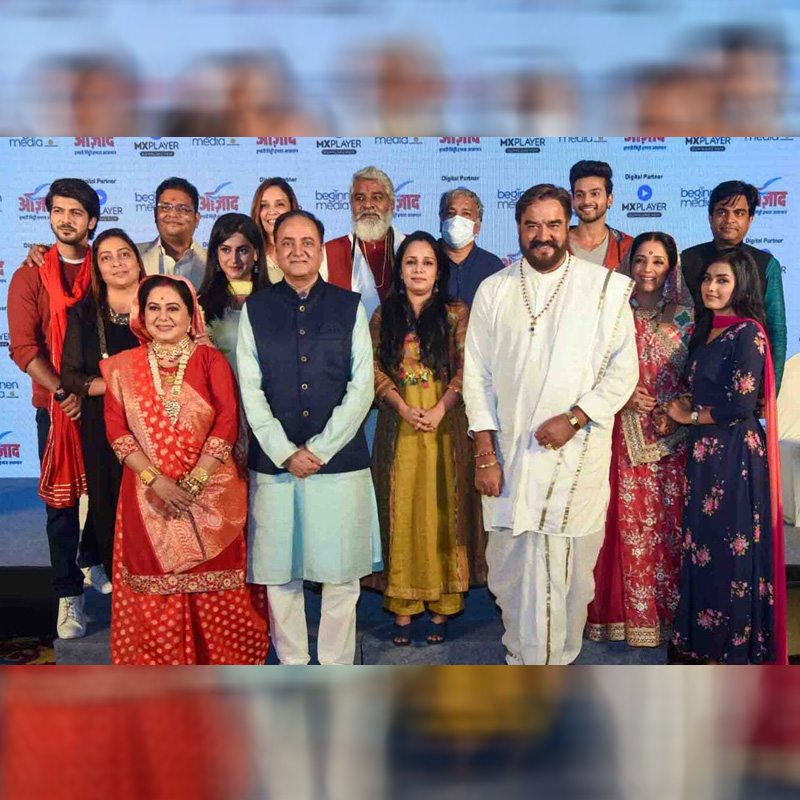
    Mumbai: Beginnen Media has announced the appointment of Anooj Kapoor as chief content, creative and consumer officer and Tushar Bansal as chief revenue officer for the TV channel – Azaad.

    In his previous stint, Kapoor launched Sony Pal and served as SAB TV business head where he was instrumental to transform the brand into a high-yield profitable channel, said the statement.

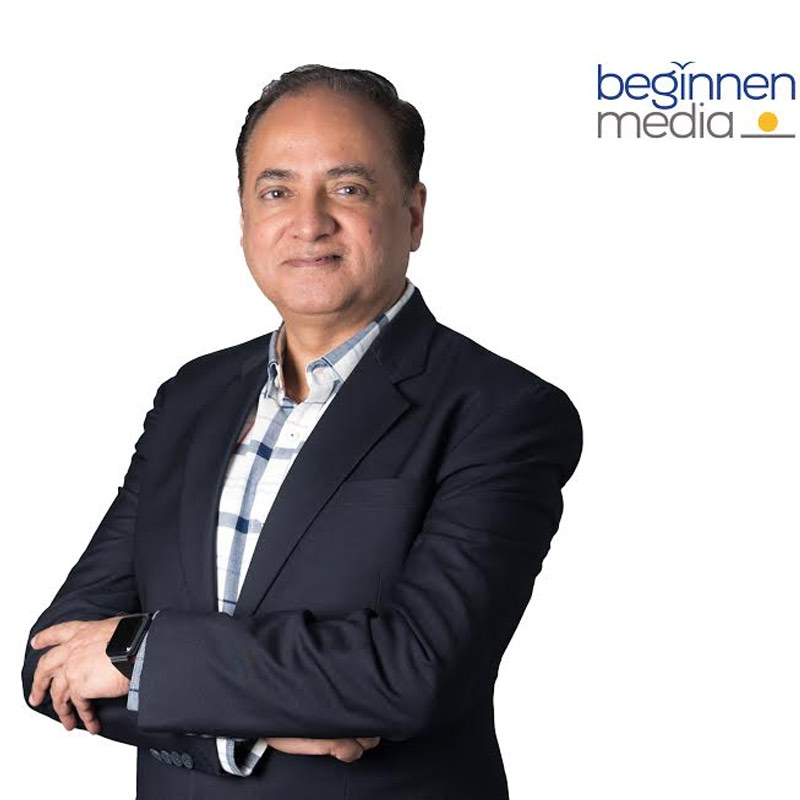
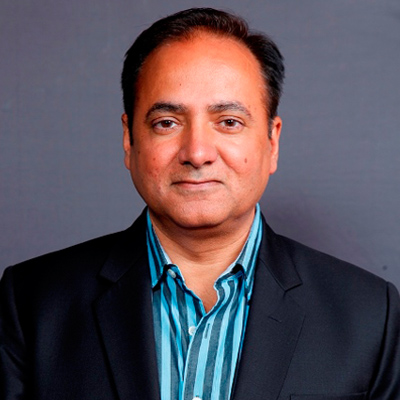
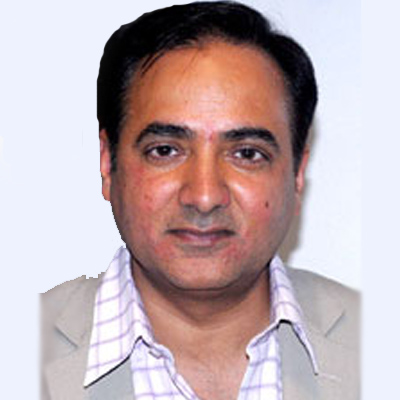
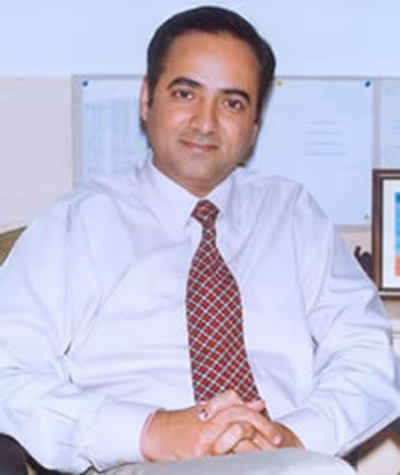
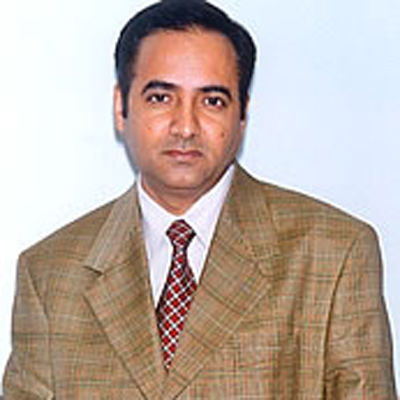
    “I’m pleased to announce that Anooj and Tushar have joined the leadership team at Azaad,” said Beginnen Media managing director Bharat Ranga. “Anooj understands heartland audiences’ tastes closely and is deft at telling ‘mazedaar’ stories to win their hearts. He leads the strategic edge and rustic power to brand Azaad. Tushar will pursue the campaign to bring about the premium status that the rural audiences rightfully deserve.”

    Kapoor will head product development, programming and content strategy, product innovation, content creation, and curation. Kapoor will also provide the strategic inputs for Azaad’s growth path. He has successfully straddled over three decades in the field of marketing, advertising, and television.

    “I am very happy to be a part of India’s first rural entertainment channel, a very relevant but ignored positioning by a GEC,” said Kapoor. “Bharat and I go a long way. I am very happy to associate with him and look forward to creating another exciting GEC Brand with Azaad.”

    Bansal will spearhead the ad revenues division at Azaad. He has two decades of experience in ad sales and driving strategic initiatives for garnering revenue opportunities. He has worked with prestigious media houses like Zee Entertainment, Sony and Ten Sports in leadership positions, with the latest being the executive cluster head at Zee Entertainment Enterprises.

    “These are exciting times to join Azaad, a point where growth in TV households is much faster than urban and the viewership is also showing an upward trend in the rural markets,” said Bansal. “There is a remarkable emergence in the economic, social and technological environment in the rural market and every advertiser is looking at ways to reach the ‘ru-urban’ consumers. The journey seems very interesting and I look forward to contributing in shaping up the revenue model for advertisers in rural and free-to-air category on Azaad.”

  • Azaad launches first two Originals designed for the rural mindset

    Azaad launches first two Originals designed for the rural mindset

    Mumbai: Beginnen Media’s first consumer-specific entertainment channel, Azaad has announced its Originals content offering exclusively designed for the ‘Rural Mindset’.  The premium Hindi rural entertainment channel will be launching two new shows titled ‘Meri Doli Mere Angana’ and ‘Pavitraa Bharose Ka Safar’, both of which have been created after deeply understanding the rural person through years of periodic syndicated research, said the channel on Tuesday.

    Staying true to the brand proposition of ‘Hamari Mitti Hamara Aasman’, themes have been specially created to attract, engage and connect with this super mass. Starting 14 September, ‘Meri Doli Mere Angana’ will air at 9:00 p.m and ‘Pavitraa Bharose Ka Safar’, at 9: 30 p.m on Azaad as well as on MX Player (digital partner).

    Produced by Jitendra Gupta and Mahesh Tagde from Tell-A-Tale Media, ‘Meri Doli Mere Angana’ portrays the beauty and complexities of relationships in the Bithoor-based Singh family, especially the loving bond between Janki and her father. The show captures Janki’s journey from being an innocent daughter to becoming an experienced daughter-in-law who learns to manage complex situations and relationships in a society that differentiates between the two roles. Astha Abhay plays the lead protagonist Janki. Surendra Pal, Rudrakshi Gupta and Ankit Raizada will be seen in key roles.

    ‘Pavitraa Bharose Ka Safar’ is a family drama set in Meerut. While it is based on the main themes of encouraging women empowerment and battling societal issues, the show also depicts the passionate love story of two diverse personalities. Produced by Santosh Singh, Rochelle Singh, and Pearl Grey from Parth Production, ‘Pavitraa Bharose Ka Safar’ is the story of Pavitraa, the daughter of an underprivileged taxi driver who aspires to complete her education and become self-reliant. She fights against all odds to become a successful entrepreneur who strived to make other women capable of taking care of their families and themselves in all respects. The role of Pavitraa is played by Shaily Priya. The cast also includes Neelu Vaghela, Kumaar Raajput and Sheezan Mohammed.

    Commenting on the Originals launch, Beginnen Media Pvt Ltd (BMPL) managing director, Bharat Kumar Ranga, said, “It’s an industry-first with Azaad making the shift from a creative to a consumer-focused business model. Gaining the trust of our viewers is at the heart of our model as our customer experience is based on deep insights. Our Originals have a rural consumer-centric proposition which places the viewer, rather than the creative at its core.”

    Welcoming the viewers who had joined the launch event live from different villages in North India, he added, “By its sheer size, the rural super mass is clearly emerging as a segment with huge untapped opportunities. Azaad’s philosophy of ‘People Centricity’ reflects the rural DNA that is the Unapologetically Real Indian (U-R-I). We are delighted to present the ‘UnionShip’ with our content creators, Jitendra Gupta, Mahesh Tagde, Santosh Singh, Rochelle Singh, and Pearl Grey who have created our first two originals. The shows are relatable and would inspire the U-R-I mindset to reconcile with rural traditions and values while ushering in a sense of dynamism and growth to meet their aspirations.”

    “Azaad is a first on many levels. There has always been a clear-cut divide between urban and rural India, where rural in spite of being a majority, unfortunately, has always got a hand-me-down treatment in every sphere of life. And that’s what we want to change with our’ rural first’ approach,” commented Beginnen Media, general manager – product, Doris Dey. “At Azaad we truly believe in democratising the entertainment industry by creating content for much-ignored Rural India, as well as creating an ecosystem where equal opportunities are provided to existing and new makers. We are a ‘challenger brand’ determined to create a unique parallel ecosystem within the industry. I am sure that we will set new benchmarks with the unwavering support and participation of all our stakeholders.”

    Azaad’s brand proposition, Hamari Mitti Hamara Aasman, was developed in partnership with Scarecrow M&C Saatchi Ltd. The idea was arrived at through an extensive consumer study of the rural person by Future Brands. The unique proposition spells out rural dreams and aspirations and wears the rural pride. Both the brand film and the brand anthem are devised and created by Azaad’s internal on-air promotions team. The brand film takes a closer look at the U-R-I’s mindset to reveal the pride they take in their roots, culture, and belief systems. Music director Santosh Nair and singer, Divya Kumar rendered the brand anthem.

  • Azaad TV aspires to be the most credible platform for rural India: Bharat Kumar Ranga

    Azaad TV aspires to be the most credible platform for rural India: Bharat Kumar Ranga

    New Delhi: Even as the fast-growing network of Over the Top (OTT) platforms take the media industry by storm, television continues to hold its position as the preferred screen choice for a majority of Indians. And, a vast section of this audience lives in rural India. In fact, the ownership of TV sets in rural India has outpaced growth in urban pockets, shows the latest data from the Broadcast Audience Research Council (BARC).

    With this, has come a paradigm shift, where consumers have once again taken the centre stage in determining how traditional broadcasters decide their content offerings. While there may be a plethora of content for urban viewers, there aren’t still enough choices for the rural audience. It is this vast market that Mumbai-based Beginnen Media is keen to tap into, with its new Hindi GEC- Azaad TV. The channel with its philosophy – ‘People First, Rural First’ hit the airwaves in May and caters exclusively to people in rural India. It’s currently available on DD Free Dish and select DPOs.

    In an exclusive interaction with Indiantelevision.com, Beginnen Media, managing director Bharat Kumar Ranga talks about his vision for the new channel, its financial model, content offerings, and introduces for the first time, the newly formed team that helped build the brand.

    Edited excerpts:

    On the decision to focus on rural India

    At Beginnen Media, we wanted to relook at the media and entertainment sector with a fresh perspective. We believe that the real transition is not from broadcasting to individual casting or TV to digital, but from being from creative/content-centric to being consumer-centric. We found a great opportunity in the rural segment. While the urban segment has been over-serviced by TV and digital platforms, consumers in rural India are still under-serviced with content that was originally created for urban viewers. They weren’t really considered primary consumers. So, we thought that there was an opportunity for us to see them as primary consumers and create stories exclusively for them.

    On how the target audience was identified

    We put most of our energies into identifying our target audience. We saw that rural people have a certain mindset, and we decided to focus on that. No matter which place they migrate to, they will carry that mindset with them. Though our content will cater to the Hindi-speaking audience, it will also try to reach out to Hindi-understanding markets like parts of Gujarat, West Bengal, Punjab, Maharashtra, where people may not speak Hindi, but they do understand the language. We want to design our content in such a way that people from across states relate to it. We have also hired specialist agencies that work on consumer products, like the Delhi-based agency- Futurebrands, which is led by Santosh Desai to provide us with data and insights.

    On the decision to go Free-to-air (FTA) and growth opportunities in the rural market

    In terms of distribution, the TV consumption in rural India is largely through DD Free Dish, and you cannot be on DD Free Dish if you are a Pay channel. So, we chose FTA so that we could reach out to that audience. Since we are the first rural GEC, we thought it makes much more sense to reach out to people quickly, and start building on that connection.

    Generally, people tend to confuse Free-to-air (FTA) with rural. While it is fair to say that most people who consume FTA channels are in rural India, and that is the market that we are entering into. But a significant part of the rural audience is also watching pay platforms, other than on DD Free Dish. So, we are venturing into a new category, where we are competing with not just the FTA channels, but also the Pay channels in the rural segment. FTA channels are also available in more households than Pay TV. It’s just that the FTA market has not unlocked its full potential yet. The over-supply of acquired content on these channels does not seem to be working anymore. The audience understands that the channels are recycling content, and they want something new, so that is why we hope that our rural model might work.

    On the content offerings and original shows

    Our original shows got delayed because of the pandemic. But since we had to start the channel distribution, we went ahead with the soft launch. We started building a connection with the audience. Now, our new shows are also under production and we hope that we will be able to sustain and keep the process running in case there’s a third wave too.

    In terms of content, we have put in a huge amount of energy to determine what our rural audience will like to watch. On the face of it, our content might not look different, but the larger differentiation is in the point of view of the people, that we will try to reflect in the shows. Currently, stories on pay platforms are set up in rural areas, but they are told to an urban audience. We wish to tell stories that reflect their point of view irrespective of where they are based.

    On the financial model and opportunities for advertisers

    As a rural entertainment channel, we need to have all kinds of revenue- subscription-based, advertising-based, as well as digital revenue. In terms of advertising revenue, we are looking at some sort of premium around the environment that we are giving to our advertisers- ‘digital virtues in a TV business’.  Firstly, we are providing a focussed target audience. For instance, if a campaign runs on any FTA channel, the advertiser may not know if it’s reaching the urban or rural audience. But, in the case of Azaad, the focus is entirely on people with a rural mindset. Secondly, the programming environment. If an advertisement is put on YouTube, it’s difficult to identify the content/genre that the consumer is watching. However, we will offer brand safety in terms of content that aligns well with the values of the brand. Advertisers will be interested in an entertainment platform that is consumer-focussed. We already have some regular advertisers like HUL on board. But the main exercise will begin once we launch original shows.

    On the distribution plans for the channel

    Simple to our plan, we have looked at all the MSOs. We began with DD Free Dish, where the channel is currently being aired. Then we identified some 50 individual distribution cable operators in rural areas. We are also in talks with 15 more such operators who are working in the outskirts of these areas. They may be lesser-known but attractive to us. We are also in touch with some top DTH and MSOs, but our priority is rural India and we will stick to that.

    Rural is a super mass category. We want to create a little space for ourselves, and we understand that it will take some time for us to create a relationship with the audience. We want to become the most credible platform for rural audiences.

    On the team that leads Beginnen Media

    Director – project & operations: Mohan Gopinath 

    A media and broadcast veteran, Gopinath carries nearly 25 years of work experience. He worked with Zee Entertainment Enterprises Ltd (ZEEL) for 18 years, turned entrepreneur, and co-created Bhu Entertainment in 2015. He also helped Viacom launch its first movie channel, Rishtey Cineplex.

    Chief marketing officer – Rachin Khanijo

    Khanijo carries over 17 years of extensive MarComm experience, during which he has worked at Eros Now as vice president, marketing, and COLORS as associate director – marketing. He has also worked as marketing head at &TV and brand director – Filmfare, Femina, and GoodHomes. At Beginnen Media, he handles marketing, corporate communications, on-air promotions, research & distribution.

    General manager, product: Doris Dey

    Dey spearheads Business Development, Programming & Content Strategy, Product Innovation, Content Creation, and Curation. In a career spanning 18 years, she has worked as a writer, creative director, and even Independent Producer (OTT). In her previous stint at Essel Group, she envisaged and launched &TV.’

    Chief revenue officer, Johnson Jain

    Jain carries over two decades of experience in the Media & Entertainment industry and specialises in advertising revenue. He has worked with leading media conglomerates including ZEEL, Sony Network (SET India) & 9x Group. He has played a key role in relaunching Zing in 2016.

    Chief financial officer, Dinesh Bhutra

    An associate member of the Institute of Chartered Accountants of India, Bhutra has more than a decade of experience in various sectors like Airlines, Telecom, Entertainment, Education, Finance, Media, Data Centre and Refinery including Jet Airways, Reliance Jio, Essel Corporate, MT Educare Ltd, ISSL.  At Beginnen Media, Bhutra also heads Commercial, Administration & Human Resources as its chief finance officer.

  • Chrome launches tool to study TV consumption pattern in rural India

    Chrome launches tool to study TV consumption pattern in rural India

    MUMBAI: India’s TV research and analytics company Chrome DM has launched Chrome Rural Track. Every month, Chrome Rural Track will map 1,05,000 villages across India to study the consumption patterns in television viewing.

    The tracking will involve massive infrastructure of field staff and tele-callers, with knowledge of 22 languages, advanced technology, etc. through use of six proprietary tools.

    The field-work for Chrome Rural Track was initiated in April 2015 and the data compilation for Phase I comprising 25,484 villages is underway. Every month, Chrome Rural Track will encompass channel availability, claimed viewership, power-cut trends and consumer durable preference and ownership (colour TV, LPG stove, ceiling fan, car/jeep/van, two wheeler, refrigerator, washing machine, air conditioner, PC/laptop and agricultural land).

    The tracking will be categorised into four Chrome Rural Strata (CRS) based on population density. CRS 1 will be in villages with population greater than 20,000; CRS 2 between 10,001 – 20,000; CRS 3 between 5,000 – 10,000 and CRS 4 will track villages with population less than 5,000.

    The monthly tracking is aimed to assist the marketers in strategising for rural India. It will also help bring the issues affecting rural India into mainstream discussion, thus bridging the urban-rural divide in social and economical considerations too.

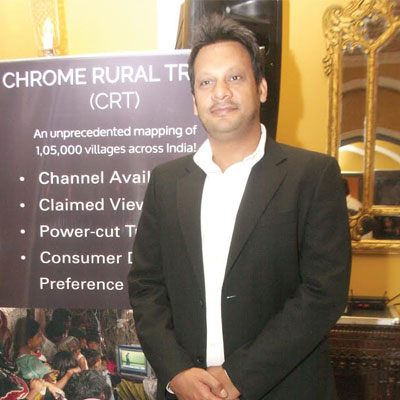
    Chrome DM CEO and founder Pankaj Krishna said, “The size and social-cultural complexity of India’s rural landscape warranted the tracking at such a scale. Despite constituting 69 per cent of the population, rural India remains considerably unmapped across segments. We believe that this is a part of our endeavour to bring rural representation on to the radar. Consumption patterns, consumer preferences and purchasing power of rural areas are significantly different from that of the cities. If we further dissect the data, there are radical differences in consumer behaviour within individual villages. Chrome Rural Track is our attempt to map the diversity that exists in our vast country and provide the industry/decision makers with rural data.”

    He further added, “Along with agriculture and simplicity of life – Rural India is today unfortunately synonymous with racism, gender inequality, honour killings and the highest rates of female foeticide across the globe. There are over 1000 female abortions in day in India. Any happening that does well for a story, genuine or non-serious makes it to the headlines across multiple media; however most of these stories are skewed to happenings in and around metros and urban centres. With the launch of Chrome Rural Track, across an unprecedented 105,000 villages of India, our endeavour is to bring Rural India on to the media radar.”

    Chrome Data Analytics & Media advisory board member Monica Tata asserted, “There is a huge gap in the understanding of India’s rural consumers. Marketers need information that is dissected to a village level across India. With television being the main tool to communicate with consumers, it is critical that the brands have a refined knowledge television viewing. Through Chrome Rural Track, we aim to bridge this gap. This data spanning 105,000 villages will be indispensable for both advertisers and agencies and help them take more informed decisions.”

    Some of the interesting findings from Chrome Rural Track include vast differences in the percentage between Cable, DTH and Terrestrial modes among various states. While 99.1 per cent of Kerala villages, 85.4 per cent of Gujarat villages and 70.3 per cent of Maharashtra villages get TV through cable, 62.4 per cent of villagers in Uttar Pradesh and Bihar access TV through DTH.

    Some of the other interesting findings are mentioned in the following table:

    Source – Chrome Rural Track August 2015

    Terming rural India as virtually a black hole in terms of available information on consumption habits, Chrome Data Analytics & Media member of advisory board Bharat Ranga said, “As part of the Zee Network and responsible for its multiple launches, I have actively used Chrome Data along with the highest levels of analytics. I am sure that Chrome Rural Track will help enhance our content production with a better understanding of rural tastes and lifestyle.”

    Mentioned below is a state-wise comparison of media preferences in rural areas across seven states:

  • Bharat Ranga launches new venture RanCorp Media

    Bharat Ranga launches new venture RanCorp Media

    MUMBAI: Former Zee Entertainment Enterprises (Zeel) chief content and creative officer Bharat Ranga has launched his new venture called RanCorp Media Private Ltd.


    It may be recalled that Ranga quit Zeel in September last year after a 16-year long stint to explore newer avenues.


    When contacted by Indiantelevision.com, Ranga confirmed the development but refused to divulge further information on the same.


    RanCorp Media is a broadcast and digital media company. According to Ranga’s profile on a social media platform, the business plans for the venture is being prepared. The company will be involved in building video content brands that would participate in both traditional TV and digital sectors.


    During his career span with Zee, Ranga contributed to the overall growth of the organisation by leveraging new revenue opportunities, bringing about path-breaking content, starting new streams of content through new channel launches and transcending the business beyond geographies; to name a few.


    In Zeel, Ranga moved across functions and domains seamlessly, from sales to business head roles to being the international business head and then, the chief content and creative head for the organization. During his tenure, he was instrumental in creating value and building numerous opportunities for the organisation.


    An MBA from the University of Ajmer, he has also completed an Advanced Management Program from Wharton Business School. Before joining Zeel, Ranga had worked for companies such as Times of India and Modi Korea Telecommunication.

  • The movers and shakers of 2014

    The movers and shakers of 2014

    To achieve something, one needs to let go of something, 2014 saw many stalwarts of the media and entertainment sector taking that leap.

    From being bitten by the entrepreneur bug to grabbing on to better opportunities, the industry saw a number of movements. Some of these created a stir while others went down as “regular” developments. Nonetheless, Indiantelevision.com lists down some of the major movers and shakers of the years…


    Ajay Bhalwankar: He is a man who can be credited to providing valuable programming inputs across content on various channels. The year 2014 was like a shuffling battle for Bhalwankar. After spending almost 19 years with Zee Entertainment Group, with his last stint as programming head at Zee TV for six years, he joined Sony Entertainment Television (SET) on 7 April, 2014 as chief creative officer. Now in SET, he provides creative leadership and direction for the channel, and leads the programming and OAP (on-air-promotions) teams. Spanning various roles of creating, writing, programming, producing and directing entertainment content, he is an industry veteran with over 20 years of experience.

    Ajay Trigunayat: TTN English entertainment channels, Romedy Now and Movies Now CEO Ajay Trigunayat quit the network this year. With M K Anand taking over as TTN CEO and business functions being centralised, Trigunayat moved out. Before joining TTN, he was in the Middle East in an entrepreneurial capacity, and had been the business head of the Zee English Channels bouquet, and put in stints at Lintas, Contract and Rediffusion and at Pepsi in a sales role.

    Ajit Thakur: In a shocking development, the man credited for Life OK’s success story, Ajit Thakur decided to call it quits from the network. It was in July this year that he was given an additional charge of managing the network’s youth entertainment channel, Channel V. Currently he is serving his notice period and his last day in the organisation will be February, 2015.

    Abhijit Avasthi: An engineer by education, Abhijit Avasthi was the right-hand man of India’s ad guru Piyush Pandey. After spending more than 10 years at Ogilvy, he finally decided to hang his boots to pursue what he loves the most.

    However, according to reports, Avasthi is likely to set up his own creative agency, a move that he has been contemplating for a while.

    Alok Agarwal: Zee Media CEO Alok Agarwal ended his one and a half years stint at the network to take charge as Network18 group COO.


    Bharat Ranga: Since 1998, he had been an invaluable member of the Zee Entertainment Enterprises Ltd (Zeel) family. After a 16-year stint with the network, he bid adieu in the month of October to explore new avenues. While at Zeel, he moved across functions and domains seamlessly, from sales to business head to being the international business head and then, the chief content and creative head for the organisation, he has been instrumental in making Zee’s content an unforgettable one for the audiences. His last project – Zindagi is getting critical acclaim from the masses.

    Dilip Venkatraman and Savvy Venkatraman: ITV Network, which owns and operates news channels NewsX and India News, appointed former CNN IBN and IBN7 CEO Dilip Venkatraman as group COO of strategy and business development. Meanwhile, Savvy joined the network as group chief marketing officer.


    KV Sridhar: After 17 long years Leo Burnett India chief creative officer, Pops, moved on to join SapientNitro, an interactive marketing, creative design and technology services agency. The movement did create a stir in the industry with many questions being raised on who can fill his shoes. Rajdeepak Das joined the agency as chief creative officer, soon afterwards.

    MK Anand: The former Disney UTV Media Networks MD MK Anand took over as the new MD and CEO of Times Television Network (TTN), stepping into Sunil Lulla’s shoes.  Anand had previously worked at The Times of India group for nearly 19 years, beginning first with the print business for 14 years and later on with the television business at Zoom from 2004 to 2009. He was the managing director for Disney UTV Media Networks till December 2013. The move saw functions like HR, finance, distribution being centralised and direct reportage to Anand.   

    N P Singh: The industry was treated with a good surprise at the beginning of 2014, when in a major development Multi Screen Media (MSM) promoted its COO N P Singh as the new CEO. He replaced Man Jit Singh who was designated as non-executive chairman and moved to Los Angeles (LA).


    Namit Sharma: From a creative background to a broadcast space, it was a challenge for former Wizcraft head for television business Namit Sharma. It was in early February when the news of former programming head Ajay Bhalwankar quitting and Sharma stepping into his shoes came to light. From directing fiction shows at Cinevistaas to film production and script writing at Yash Raj and handling events and non-fiction properties at Wizcraft International Entertainment, Sharma has done it all. As the programming head of the channel, he has brought some best creative ideas to the table.

    Nagesh Chhabria: IndusInd Media Communications Limited (IMCL) CEO Nagesh Chhabria too was seen hanging his boot this year. Chhabria later bought 50 per cent stake in Mumbai-based Bhawani Rajesh Cable & Digitech Services through his company Bhima Riddhi Digital Services (BRDS). He also signed an agreement with Atlas Consolidated LLC – a joint venture between Greenwich Equity Partners and Jagran Infra-Projects led by Sanjiv Mohan Gupta – to create a national MSO with about $200 million being pumped into it.

    Prem Kamath: The industry was shaken after former Channel V head and Star Pravah general manager decided to quit from Star for better opportunities at A+E Networks as deputy managing director, Asia Pacific. Associated with Star Network since 2007, Kamath had been heading Channel V for more than four years. Seeing his capability, he was given an additional responsibility at Star Network to head Star Pravah in 2013.

    Pradeep Hejmadi: With more than 18 years of well-rounded experience in the Indian media industry spanning media sales, media planning and buying, consumer research, business planning and product development, he is the man with multi-dimensional understanding of the media business. Former TAM Media Research senior vice-president Pradeep Hejmadi quit the organisation to join Zee Entertainment Enterprises Ltd (Zeel) as business head in the month of June. At TAM, he was responsible for revenue generation, client management, new business development and new product development and changed the working dynamics of the TV industry.

    Pratap Bose: Omnicom-owned DDB Mudra witnessed a sudden churn at the top, early this year when DDB Mudra Group COO Pratap Bose resigned from the agency after a six-year stint.

    The exit, who was looking to take over the top job, came after group chief executive officer and managing director Madhukar Kamath was given a four-year extension.

    Raghav Bahl: Network18 founder and chairman Raghav Bahl, sold his baby to RIL chairman and MD Mukesh Ambani for a whopping Rs 4000 crore. What followed this was an upheaval of sorts, as one by one, the main pillars of the company began to fall. As soon as the meeting concluded between Bahl and the management of Network18, departures began which included group CEO B Sai Kumar, COO Ajay Chacko, CNN-IBN deputy editor Sagarika Ghose, IBN Network editor in chief Rajdeep Sardesai, Network18 Media CEO Sanjay Dua, Network18 digital CEO Durga Raghunath, Network 18 CFO RDS Binni Bawa and deputy foreign affairs editor Suhasini Haidar.

    Rajdeep Sardesai: It was in July this year that after nine long years, the face of IBN18 and editor-in-chief Rajdeep Sardesai decided to move on from the network. He later on joined the India Today group as consulting editor. Further, penning his expertise of writing, in November he launched his book – ‘2014: The Election That Changed India’. The book tracks the story of the 16th Lok Sabha elections with a media insider’s view. It was in the same month when deputy editor at CNN-IBN Sagarika Ghose too bid adieu to the Network18 group and joined Times of India as consulting editor. 

    Rajesh Iyer: Associated with the channel since its inception, Colors marketing head Rajesh Iyer has been one of the many behind the success of popular shows like Khatron Ke Khiladi, India’s Got Talent, Jhalak Dikhhla Jaa and Bigg Boss. Iyer quit Colors in March to join Zee Entertainment Enterprises Ltd (Zeel) as its business head, new initiatives, Hindi broadcast. With more than 13 years of experience in marketing and business segment, he aims to create some thrilling benchmarks in the industry.

    Ravi Mansukhani: The year 2014 saw the ending of the seven year innings from IndusInd Media & Communications Ltd. (IMCL) managing director Ravi Mansukhani, who decided to step down from his position. It was said that Mansukhani had expressed the desire to relinquish his services, which was accepted by the board of directors in the board meeting held on 31 January. His next move is yet unknown.

    Sameer Nair: He has donned numerous hats. From selling space in Yellow pages to being a member of a political party, Sameer Nair has had a volatile career. It was in July this year when the former Star India CEO joined Ekta Kapoor’s Balaji Telefilms as Group CEO.


    S N Sharma: In what can be described as the biggest setback was the resignation of DEN Networks CEO SN Sharma, who was one of the founding members of the multi system operator. Sharma’s vision of growth through consolidation and digitisation had laid the foundation for the company. He has also spearheaded DEN’s rapid growth with his visionary leadership and unparalleled execution abilities. He has also been the driving force behind taking the company into the digital era.

    Suhasni Haider: In a major development, CNN-IBN deputy foreign affairs editor and prime time anchor Suhasini Haidar bid adieu to the organisation in May this year. To focus on long-format journalism, she joined The Hindu as its diplomatic editor. 


    Sunil Lulla: A 30-year media and communication veteran, Sunil Lulla made headlines in July when he decided to move on from Bennett Coleman & Co. Ltd. After almost 10 years with BCCL, Lulla, joined WPP-owned Grey Group as chairman and MD for Grey Group India.
    His joining the advertising industry was homecoming as he had started his career in one.
    However, his appointment led to Grey Group India president and CEO Jishnu Sen moving on from the network.

    Tony D’silva: With Ravi Mansukhani stepping down, IMCL saw a new MD and CEO in Tony D’silva, who was earlier the president of Hinduja Ventures Limited (HVL) and was overlooking its upcoming Headend InThe Sky (HITS) project. D’silva was given additional responsibilities as Group CEO-Media of HVL, and MD and CEO of IMCL.  

    TS Panesar: Star India EVP for distribution TS Panesar, who was entrusted with the responsibility of handling distribution for national DTH and digital addressable systems (DAS) earlier in 2014 when the JV between Star and Zee- MediaPro was broken, quit.  He later joined MSO Hathway Cable & Datacom as head-video business.  

    Vikram Mehra: After spending close to 10 long years at one of the leading DTH companies in India, Vikram Mehra, the chief commercial officer of Tata Sky moved on to Saregama, this year. While at Tata Sky, he was responsible for subscription revenue management, churn management, brand marketing, new product development, consumer analytics, interactive service operations, consumer research and PR, he is handling the digital platform for Saregama.

    Vikram Sakhuja: It was in October that GroupM announced the appointment of Lindsay Pattison as global CEO of Maxus, the post held by Vikram Sakhuja. Till date his next move in the group hasn’t been decided, but he is expected to take up a global role at parent firm GroupM.


    Vivek Srivastava: It came as a surprise when the news of former Colors commercial and digital head Vivek Srivastava quitting, shot the mailers. His extensive background in research, awareness of new media and over a decade in the broadcast industry contributed to maintaining the robust presence of all Colors brands in the digital space and managing the overall costs for the brand.  He headed to Times Television Network (TTN) in the month of October as senior vice-president and head of the English Entertainment Cluster, which includes premium channels like Movies Now and Romedy Now.

    (The names are in alphabetical order)


  • ZEEL appoints Pradeep Hejmadi as Business Head of Zee TV

    ZEEL appoints Pradeep Hejmadi as Business Head of Zee TV

    MUMBAI: Zee Entertainment Enterprises Limited (ZEEL) today announced the appointment of Pradeep Hejmadi as business head – Zee TV. Pradeep will be responsible for the overall functioning of Zee TV and will report in to Bharat Ranga, chief content and creative officer (CCCO), Zee Entertainment Enterprises.


    Speaking on the appointment, Punit Goenka, MD & CEO, Zee Entertainment Enterprises said, “We would like to welcome Pradeep into the ZEE family. With multi-dimensional understanding of the Indian media industry, he has spear-headed and successfully launched, innovative and first-in-class profit-bearing initiatives in the Indian media marketplace. We are confident that his industry knowledge and consumer insight will be invaluable in driving Zee TV’s further growth and innovation.”


    Bharat Ranga, chief content and creative officer (CCCO), Zee Entertainment Enterprises Limited said, “Pradeep brings with him an immense experience that will help us drive our Vision 2020 goals. We welcome him on-board and we are confident that his presence will add value to the channel and the organisation.”


    Pradeep Hejmadi commented on his joining, saying, “ZEE’s flagship channel Zee TV has a rich and successful history behind it and I am looking forward to being a part of its future.  With the incredible talent, original content and dynamic team that the channel has at hand, I am sure that we will be able to break new barriers and conquer even greater heights.”


    Pradeep has over 18 years of experience in the Indian media industry spanning Media Sales, Media Planning and Buying, Consumer Research, Business Planning and Product Development. Prior to joining ZEE, he was the Senior Vice President – Strategy Group & Marketing at TAM Media Research Pvt. Ltd. where he was responsible for anticipating needs and focusing resources towards ensuring TAM that builds on its Intellectual Properties and drives the value upwards for consumer insights data and services. He pioneered the Radio Audience Measurement (RAM) Service in India and launched a Sports Sponsorship Evaluation & Consulting division – TAM Sports, thus consistently delivering revenue growth year-on-year, through development and delivery of new and innovative products/services.

    He formerly served as director – business and operations, Nickelodeon India at MTV Networks India and as director – research at Turner International India. He was also associated with organisations such as Discovery Communications India, J. Walter Thompson and The Times Of India. Pradeep is a Science Graduate from Mumbai University and is extremely passionate about playing Badminton and running marathons.

    Pradeep Hejmadi’s appointment is with effect from 1 July, 2014.

  • Zee to go the whole hog on Zindagi

    Zee to go the whole hog on Zindagi

    MUMBAI: There is no dearth of channels to choose from in India. Even with nearly 400 general entertainment channels (GECs) in various languages currently operating, Zee Entertainment Enterprises Ltd  (Zeel) believes that its new offering – Zindagi –that goes on air from 23 June, will be a league apart from the existing Hindi GECs including its own Zee TV.

    “People’s tastes are evolving and so we have to create a standard for our offerings. There is a need for categorisation in Hindi GECs too. Many audiences in SEC A, SEC B and metros want good shows but don’t get them. This number represents about 40 per cent of the total audience but their time spent is less than 20 per cent to 25 per cent because they don’t get such good shows back-to-back.  Zindagi seeks to create a new category here,” says Zeel chief content and creative officer Bharat Ranga.

    The channel is the brainchild of Zeel chief creative special projects Shailja Kejriwal who has spent close to two years viewing and handpicking global content that can resonate with Indian audiences. “I was bored with what I was creating myself,” she says. “This channel is a great opportunity to see another culture which isn’t much different from ours. We will begin with the best shows from Pakistan because it has the greatest language affinity and then go on to co-producing our own shows depending on viewer feedback,” she adds. The channel will soon also telecast Pakistani movies.

    Content on the new channel isn’t limited to our neighbouring country. Shows from Bangladesh, Sri Lanka, Turkey, Latin America and Iran are also in the pipeline. Unlike the now extinct channel from Sahara-Firangi  – that aired dubbed international content, Zee will be recreating international shows with Indian and Pakistani talent. The shows that have story affinity but not language will be remade and not dubbed. “So we will buy the licences for these shows and co-produce it using Indian and Pakistani producers, actors, directors, writers etc. Alongside we will also produce telefilms in a similar manner,” informs Kejriwal.

    According to Kejriwal, telefilms are a necessity whether or not they get TAM ratings. “It will give an opportunity to new talent and new stories to be shown. When serials run for more than three or four years, they don’t leave space for new talent,” says she.

    Zee also has plans for commissioned shows that will be created in both India and Pakistan. “So while we will have some Pakistani production houses making shows exclusively for Zindagi:  shot, written and directed in Pakistan, there will also be shows that will be created here in India,” adds Kejriwal.

    The channel aims at tapping those viewers who are open to variety in the content they consume. “It is not a homogenous viewing nation anymore. Many people want to see limited series and we will cater to them,” reveals Kejriwal.

    The show timings are different from the usual ones. If one sees the channel profile, while Zindagi Gulzar Hai begins at 8:00 pm, Aunn Zara will go on air at 8:55 pm and Kaash Main Teri Beti Na Hoti at 9:45 pm every day of the week. While some shows will be weekly, a few will be dailies.  The other shows in the channel programme bouquet include: Kitni Girhain Baqi Hain and Mera Naseeb.

    Kejriwal states that she purposely wanted play with the usual time slots on existing channels. “I was tired of the same 9:00 pm, 9:30 pm, 10:00 pm slots. Life isn’t clockwork, it is between all this. It isn’t that at 9:35 pm there is no life,” she says. All the shows on the channel are periodic with about 45 shows to be aired every year.

    The channel is available on all major DTH and cable TV platforms except for Sun Direct. The Rs 100 crore marketing plan entails a lot of outdoor, digital and print across the country in upscale areas with the concentration being in Uttar Pradesh, Bihar, Punjab and Haryana.

    Says Ranga, “& Pictures has taken six to seven per cent channel share within eight months post launch. We believe Zindagi will do the same especially with digitisation setting in. Rather than be a victim of fragmentation we want to lead it. Before viewers go to Star Plus, we want to capture them on Zindagi.”

    Speaking at a press conference, Pakistani TV actor Imran Abbas who will be seen as a lead in the show Mera Naseeb highlighted that Indian shows are very popular in Pakistan but awareness about Pakistani lifestyles is limited in India. “You will see something about Pakistan which you don’t see on news channels. People think that women in Pakistan only wear burqas which isn’t true. In fact even films don’t show the real side,” he says.

    During the launch phase, the channel is looking at targeting premium brands to associate as brand partners. Askme.com and Fogg have already been roped in  as sponsors.

    How do media planners view the channel? Says Maxus managing partner for north and east Navin Khemka, “Historically, Pakistani content was always popular in India and vice versa. Viewers will get to sample a fresh channel with fresh faces. It will be a breath of fresh air and if they like it they will get hooked to it. Whatever the channel does later on will depend on the mark it makes with the Pakistani shows. If the channel manages 70-80 GRPs in the beginning, that’s good news, but if it garners 100 GRPs then that’s great news!”

    With the launch of Zindagi, the network is fully focusing on its tagline ‘Vasudhaiva Kutumbakam’ meaning ‘The World is my Family.’ As Abbas puts it, “People need Visas to travel, stories don’t.”

  • Viacom18’s Rajesh Iyer joins Zee Entertainment as business head

    Viacom18’s Rajesh Iyer joins Zee Entertainment as business head

    MUMBAI: Zee Entertainment today announced the appointment of Rajesh Iyer as business head – new initiatives in Hindi Broadcast. Iyer will report to Zee Entertainment chief content and creative officer Bharat Ranga.


    Speaking on his appointment Ranga said, “Rajesh is a superior talent with marketeering approach and consumer focus. We are delighted to have him on board to create some thrilling benchmarks in our industry. Zee family welcomes Rajesh and wishes him all the success.”


    Iyer said: “I have always admired the Zee group, who have been pioneers in the Satellite and Broadcast space. To be a part of this ever-growing dynamic industry is going to be challenging and I further, look forward to developing and strengthening the brand.”


    Iyer brings with him over 13 years of experience in the areas of marketing and business. His last assignment was as vice president marketing for Colors, Viacom18 where he set up the marketing operations including teams and processes, planned and implemented the marketing strategy for the launch of the brand. Prior to joining Colors, he worked with Star India on Star Plus, interactive services and content and communication for Star Movies and Star World. He has also worked with Ambience Publicis and Ogilvy & Mather.


    Iyer’s appointment is with effect from 19 March 2014.

  • “International business is growth area for players with long-term plans”

    “International business is growth area for players with long-term plans”

    The global slowdown in 2011 has made it clear for Indian broadcasters to have a long term strategy, exploit new media, study local content consumption patterns and have a pricing that is reasonable rather than getting engaged in a race to the bottom.

    Indian broadcasters have similar growth opportunities in the international market as they have in India, though the challenges are of different nature.

    Historically, large parts of international business for Indian broadcasters are dependent on subscription revenues and long term contracts. Having secured these long term contracts, Indian broadcasters generally do little to grow their shares.

    Subscription business, unlike advertising business worldwide, is not measured on transparent measurement parameter. Hence B2B deals are conducted on the basis of gut, perception or portfolio leverages. Most of these tend to be highly uncertain and unpredictable. The lack of effective measurement also leads to gut-based theories of local programming or additional programming inputs.

    Another key element in building a sound foundation is to invest in brand building and, hence, create an emotional connect.

    The triggers and hooks for content consumption need not be same for the audience based out of India or in some remote corner of the world. Unless Indian broadcasters draw a long term plan in strategy for international business, they would never get a pulse of overseas South Asian consumers.

    Economic slowdowns in various markets make the scenario more complex for broadcasters in wooing consumers and for consumers in selecting content offerings at right price/value. It will also be important for the Indian broadcasters to use new media avenues optimally.

    Given the fact that Internet and OTT models are getting used more as tools for piracy and cheap distribution, it can pose serious threat to the distribution revenues. If used well especially in markets with higher broadband penetration, new medium can work best to get incremental subscribers and eyeballs including the younger audience and next generation Indians in those markets.

    Distributors are facing bigger challenges in mainstream content or local subscriber growth as well as local content costs. In most markets, essentially in West, there is a proliferation of South Asian content in the past four years, most of which are not growing the pie because of poor content quality and incorrect business models.

    Distributors are left with no choice but to apply their judgments on how to manage international/ethnic category of business. Distributors are desperately looking forward to good partners who can participate in the business growth in a given cluttered and economically challenged environment.

    In order to crack growth, broadcasters need to pay closer attention to the purchasing power of South Asian households being superior to local households in most international markets. However, consumers would expect right content on right platform at right price with least diversions of piracy, cheaper new media platform, FTA or compelling Asians based content on mainstream channels.

    Rationalisation of content offerings on traditional media and consolidation of content offerings are key levers to expand the market.

    Advertising business is suffering before growing, as majority of players, including big ones, do not respect the value of their inventory, and the quality of their audiences. South Asian subscribers are of various generations and have varied interests including mainstream content. However, they are loyal to home grown content for connect and nostalgia apart from entertainment in their desi style.

    There is a component of audience base which is born there and does not have emotional connect with India. The composition of these set of audiences is changing rapidly and a good judgment can help broadcasters define their content strategy appropriately.

    The scenario in local audience market offers unique challenges. There are content hungry markets which find eastern culture and values appealing, but those businesses need to be treated in the same fashion as the mainstream business in India in order to make a definitive dent in those markets rather than looking at them as incremental syndication revenues. These markets require tenacious focus, long drawn plans and tremendous hard work.

    International business is well poised for growth but only for serious and long term players who are willing to invest and reap the benefit over a long period of time than in ATM solutions.