Tag: Bharat Net

  • OTT, broadband, and ARPU chase

    OTT, broadband, and ARPU chase

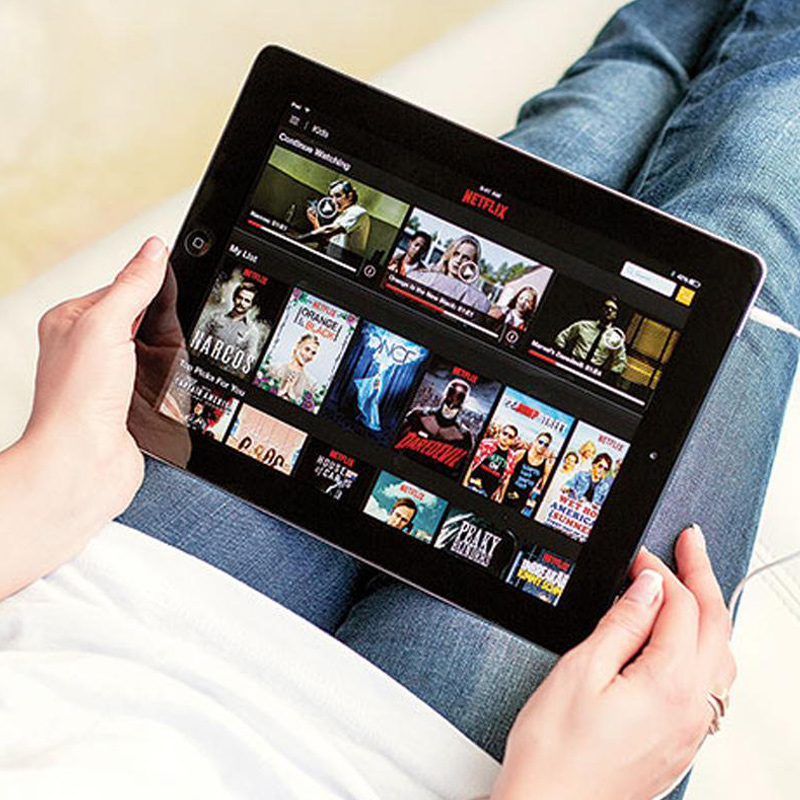
    Mumbai: The adoption of streaming in India has happened in stages driven by affordable handsets, cheap data, and most recently the pandemic. While the first two aspects set the stage for global streamers like Amazon Prime Video and Netflix to enter the country, the next few years saw both existing as well as new network and non-network players intensifying the scene.

    Despite Netflix’s admittedly ‘frustrated ambitions,’ India continues to be an attractive market for international OTT brands. NBC Universal’s hayu launched last December, AMC+ in March 2022, and the entry of HBO Max is on the cards. The ‘mainstreaming of streaming’ in India, however, depends in a big way on ‘Bharat’ which will power the next wave of OTT adoption through the ‘regional OTT-local ISP/wired broadband’ combine. And now is the time for it.

    What changed?

    The obvious increase in on-demand content consumption aside, what the pandemic changed at a more fundamental and universal level was that India seems to have reached the point of no return in the context of broadband adoption. Between 2016 and now, broadband has become a utility, and ‘2020’ is to be credited exactly for that.

    This also explains why despite the prepaid tariff hike in November 2021 that led to the gross loss in subscriptions, clean up of low paying, dormant users, and movement to postpaid resulted in higher ARPUs (average revenue per user) for telcos across. A look at the past 10 months of Telecom Regulatory Authority of India (Trai) data shows that wired broadband has grown consistently, while mobile and fixed broadband fluctuated.

    In fact, the sharp rise of 8.24 per cent last December was reminiscent of the increased demand for wired broadband fuelled by work from home, online education, e-commerce and other digital services, as well as online video during the pandemic.  The requirement for cheaper, faster and uninterrupted data, saw wired broadband subscriptions growing by 3.42 per cent post the second wave.

    Mutual advantage

    The shifting of broadband consumption from offices to homes, mobiles to CTVs and urban to rural is bound to create more regional prospects for VoD content providers, as well as smaller ISPs and MSOs that are struggling to maintain their individual existence. The OTT opportunity has contributed significantly to ensuring that players like OneOTT and ACT that thrive on a strong tier 2-3 play in addition to the metros are counted in the league of Reliance Jio, Bharti Airtel, and Vodafone Idea today.

    “We all know that wired broadband is more reliable in terms of speed and quality compared to wireless. But to wire, the whole country is Capex sensitive,” Microscan business head–ISP and director Playbox TV Samson Jesudas says. “The penetration of wired broadband is therefore just about 20 per cent in India. Hence we should appreciate big telcos who are investing huge amounts to wire up the whole country. At the same time, we should ensure the survival of other ISPs in the country.”

    Struggling on account of dropping ARPUs as a result of data prices going down, increased customer acquisition cost, high payback of over 12 months, as well as churn issues, ISPs are in greater need than ever to explore other value-added services as revenue options. In such a scenario, OTT can be the catalyst to promote wired broadband.

    “Today, all telcos and ISPs are bundling OTT content along with their broadband plans. Cable operators have upgraded themselves to ISPs or franchisees of ISPs. Logistically they are in best position to give quality and timely service to end subscribers,” observes Jesudas. “In fact, there has to be a major consolidation of these LCOs and ISPs by telcos and large ISPs,” Jesudas adds.

    In addition to tech and content, partnerships with ISPs are an integral part of ErosSTX’s OTT platform Eros Now’s B2B strategy.

    “Today, content makes up for over 82 per cent of internet consumption which also means more consumption of data and increased ARPUs for ISPs. In other words, ISPs have emerged as a medium for consumers to consume more data,” remarks Eros Now senior VP distribution and alliances Manpreet Bumrah. “We work together with ISPs on innovative modulation of engineered subscription plans with a win-all proposition for the entire ecosystem which includes OTT, ISPs and consumers.”

    Elaborating on the prospects for MSOs, Bumrah shares that there are over 750 million mobile internet consumers in the country today which establishes the fact that India is riding on the internet. However, only 25 million households have access to wired broadband. “With the cable connected to around 200 million houses, there is a huge opportunity for the entire digital media and entertainment ecosystem to grow at the household level,” he says. 

    According to Global Infocom Networks partner and director Harshal Dalal, local ISPs are moving ahead from being vanilla broadband service providers to becoming digital service providers today. “Along with OTT which is proving to be a major stepping stone, diversification is being carried out through other offerings such as insurance and travel & tourism,” he notes.

    Currently associated with over ten OTT platforms, the Global Infocom Networks has been providing quality and cost-effective solutions to ISPs. It aims to bring more awareness to them in terms of customising their offers and penetrating tier 2 and 3 cities in 2022.

    The promise of 100 million ‘TV Nevers’

    In a further boost to digital India, the recent budget promised great leaps in rural broadband connectivity through the government’s flagship programme – BharatNet. It aims to bring broadband to 361,000 villages across 16 states, including 1.37 lakh gram panchayats by 2025.  The new infra-sharing guidelines are also making it feasible for smaller MSO/ISPs to reach remote areas of the country. 

    Commenting on the possibility this creates, Bumrah says, “As internet bandwidth improves, the consumer experience will improve which will further accelerate the uptake of the internet in the country including by the 100 million ‘no TV households’.”

    According to the economic survey released on 31 January, 5.46 lakh km optical fiber cable (OFC) has been laid as of September 2021, a total of 1.73 lakh gram panchayats (GP) have been connected by OFC, and 1.59 lakh gram panchayats are service ready under BharatNet. Combined with the global push for affordable broadband led by the ITU, BharatNet has the potential to revolutionise the telecom sector much in the same way as Free Dish has transformed the broadcasting industry in recent years.

  • Gsat-11, India’s heaviest comms satellite, launched

    Gsat-11, India’s heaviest comms satellite, launched

    NEW DELHI: Indian Space Research Organisation (ISRO)’s heaviest and most-advanced high throughput communication satellite GSAT- 11 was successfully launched from the Spaceport in French Guiana during the early hours of today.

    The launch vehicle Ariane 5 VA-246 lifted off from Kourou Launch Base, French Guiana at 2.07 am (IST) carrying India’s GSAT-11 and South Korea’s GEO-KOMPSAT-2A satellites, as scheduled. Ariane 5 is one of three launch vehicles operated by Arianespace along with Soyuz and Vega.

    After a 30-min flight, GSAT-11 separated from the Ariane 5 upper stage in an elliptical geosynchronous transfer orbit. The achieved orbit was very close to the intended one.

    The 5,854-kg GSAT-11 will provide high data rate connectivity to users of Indian mainland and islands through 32 user beams in Ku-band and 8 hub beams in Ka-band.

    “GSAT-11 will boost the broadband connectivity to rural and inaccessible gram panchayats in the country coming under the Bharat Net project, which is part of Digital India programme,” ISRO chairman Dr K Sivan said.

    The Bharat Net project aims to enhance the public welfare schemes like e-banking, e-health, e-governance and entertainment services among others.

    Sivan said GSAT-11 will act as a forerunner to all future high throughput communication satellites. “Today’s successful mission has boosted the confidence of the entire team,” he added.

    This 10th mission in 2018 reflects the availability and flexibility of Arianespace, which has performed a launch every two weeks since 6 November, the European company said on its website, adding since the launch of India’s APPLE experimental satellite on Ariane Flight L03 in 1981, Arianespace has won nearly all of India’s geostationary orbit launch contracts opened to non-Indian launch vehicles, and has signed 24 launch contracts with the Indian space agency.

    GSAT-11 is the 22nd satellite from ISRO to be launched by Arianespace, and the largest and heaviest satellite ever built by India’s space agency. Arianespace has two other ISRO satellites in its order book to launch: GSAT-30 and GSAT-31. The latter, GSAT-31, will be lifted by Arianespace early next year.

    GSAT-11 was initially planned for launch on 25 May 2018 but was rescheduled with the ISRO citing the need for additional technical checks.

  • Bharat Net project to provide 1gbps broadband bandwidth in villages

    Bharat Net project to provide 1gbps broadband bandwidth in villages

    NEW DELHI/MUMBAI: The Indian government’s proposal of providing hi-speed broadband services to rural areas seems to be on track. It said that in the second phase of the ambitious Bharat Net project, covering approximately 150,000 gram panchayats, it has been proposed to provide 1gbps bandwidth in case of wired media (optical fibre cable) and minimum 100 mbps bandwidth scalable up to 1 gbps in case of wireless media (radio).

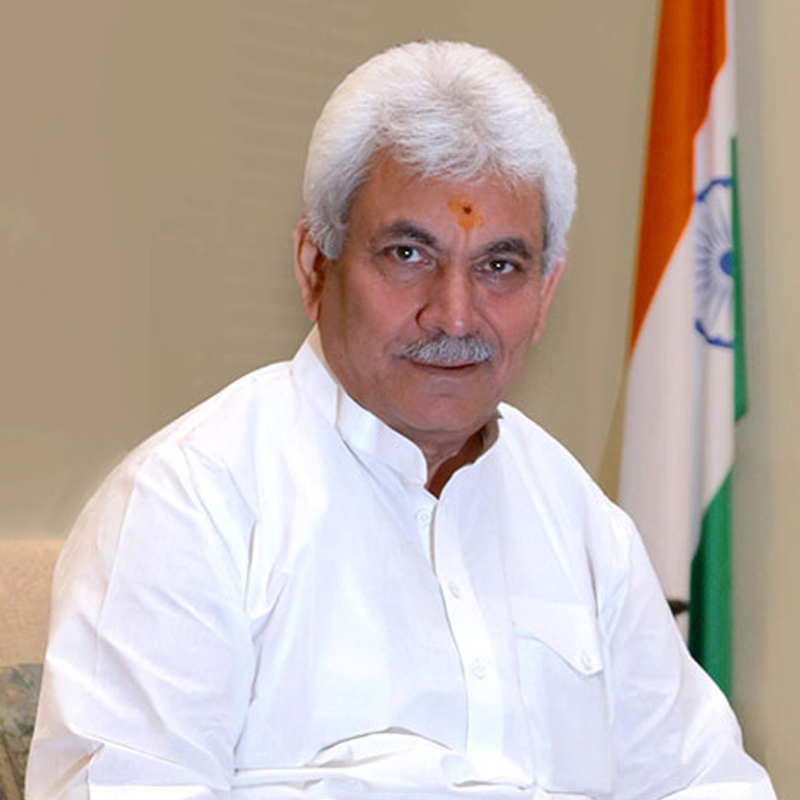
    The Bharat Net project, aimed at providing broadband and related services, including TV, is being implemented in a phased manner for providing connectivity to all the approximately 250,000 gram panchayats or village administrations in the country, Communications Minister Manoj Sinha on Friday told the Rajya Sabha or the upper house of parliament.

    In phase I of the project, 100,000 gram panchayats are envisaged to be connected on 100 mbps speed, the minister said. In a separate suggestion, telecoms and broadcast regulator TRAI has said that cable operators and satellite companies could be roped in to provide broadband services as part of the Bharat Net project.

    Sinha further stated that Rs 40,660 million has been approved for providing last mile connectivity through wi-fi or any other suitable broadband technology to the gram panchayats of the country.

    The strategy to provide last mile connectivity, the minister stated, has been approved by the Telecom Commission in September 2017 and a tender to select the implementing agency for provision of last mile connectivity has been prepared by Bharat Broadband Network Limited.

    According to the communications minister, as on 24 December 2017 optical fibre connectivity has been provided to 1,08,237 village administrations by laying 2,52,547 km optical fibre cable and 96,039 gram panchayats are service-ready.

    ALSO READ:

    Bharat Net first phase nears completion, provides b’band to village admin

    Rural India gets e-commerce & TV ready via optic fibre network

    TRAI chief pushes for b’band over cable TV, BharatNet for upping penetration

  • Govt assures ease in licensing norms to TV channels, satellite operators

    Govt assures ease in licensing norms to TV channels, satellite operators

    NEW DELHI: The Ministry of Communications (MoC) yesterday, while allaying concerns of the broadcast and satcom industries, assured that the government would further ease norms for doing business in India and that processes were underway for implementation soon to do away with multiple permissions for communications frequencies.

    While communications minister Manoj Sinha said that it was “time to take a fresh approach” to satcom policies, in conjunction with the department of space, the senior most official, secretary Aruna Sundararajan, stressed that soon the government would unveil a single window for frequency-related permissions.

    Speaking at an event organised by Broadband India Forum, called Satcom 2017 and themed ‘Accelerating Satellite Broadband for Inclusive Growth’, Sinha said that the role of satellites in “making available affordable broadband” had been witnessed in various parts of the world. He added it was time that the department of space takes a “fresh approach” to making use of technologies like satellites and cable-delivered broadband — which complement India’s multi-million rupees’ fibre optics network project or Bharat Net— to realse the dream of a digital India championed by PM Modi.

    Pointing out that India was on the threshold of becoming the “largest broadband economy in the world”, Sinha said, “Satellite communications has a special role to play.”

    Speaking earlier, Suderarajan echoed minister Sinha’s vision in making India truly digital and said that MoC was working with Ministry of Information and Broadcasting (MIB) and other related government organisations to create software, akin to a single-window, for various frequency-related approvals and permissions.

    “There are anomalies in frequency allocations (for TV channels and satellite ops),” MoC secretary said, adding that the ministry is in dialogue with other government agencies to remove such irritants so that the “extra burden of cost (on part of the industry players) could be done away with”.

    Both minister Sinha and Sunderarajan promised to take up with the the department of space, various concerns raised by TV channels and satellite operators, mostly foreign, relating to lengthy clearance processes, which were in sharp contrast to the PM Modi-led government’s claim of continuously easing norms for doing business.  

    “I understand that broadcasting has a problem as many agencies are involved. I can tell those present here that we are working with MIB to create a single software for approvals and permissions,” joint wireless advisor RB Prasad reiterated at another conference session, clarifying that an issue about ownership and management of the said portal is being presently discussed to close the matter.

    While stressing that proliferation of affordable broadband will empower Indians in general, which was the government’s target, the top MoC official informed that by the end of the year 100,000 gram panchayats or local village administrations will be broadband-enabled under the Bharat Net project. For the remaining of the targeted 650,000 villages, Sunderarajan said, “Satellite component will be important.”

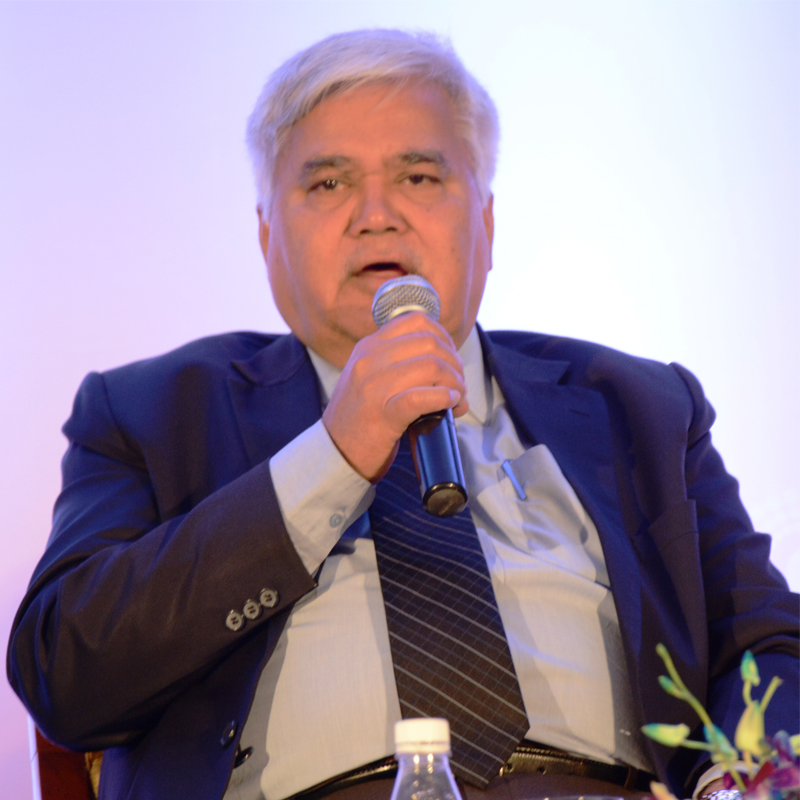
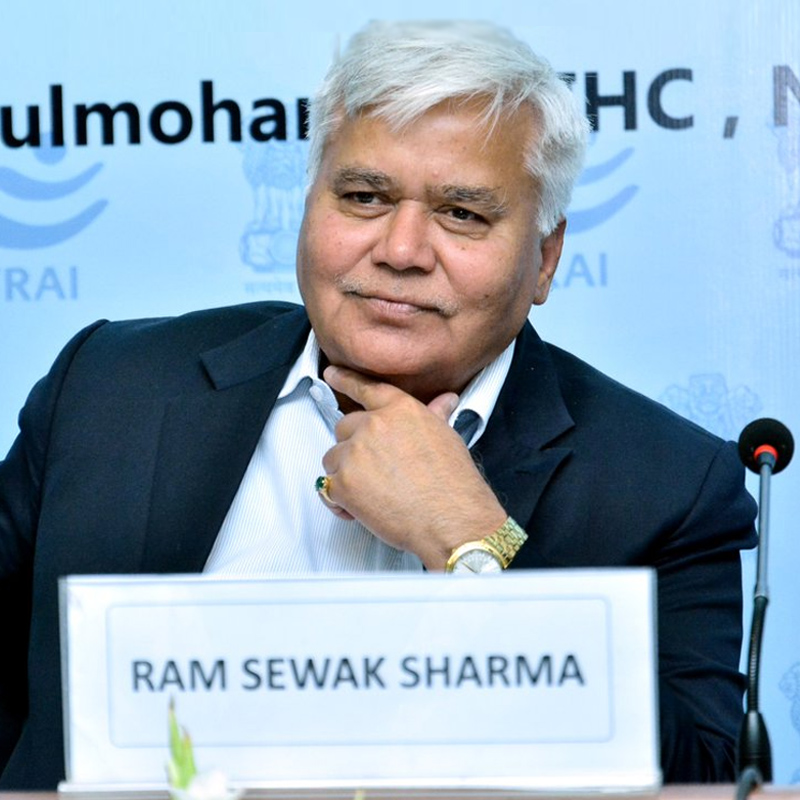
    Meanwhile, TRAI chairman RS Sharma, speaking to reporters on the sidelines of the Satcom 2107 conference, said that while the open sky policy mandated that the service provider or anyone that wants to provide broadband will be able to contact satellite operators, there were still some “deficiencies” in the system. “That, we will need to work out,” he was quoted by PTI as saying. He, however, ruled out a separate consultation paper on the same. The new telecom policy, scheduled to be unveiled in the first quarter of 2018, will exemplify all those issues, Sharma noted.

    Also Read:

    MIB, TRAI allay industry fears on sat capacity leasing & content regulations

    TRAI sees merit in using satcom for broadband delivery

  • Spectrum payment limit eased, NTP to facilitate data and security

    Spectrum payment limit eased, NTP to facilitate data and security

    MUMBAI: The Telecom Commission has approved the extension of time period for the payment of spectrum bought in auctions by telcos to 16 years from the existing 10 years. This may ease out stress from the industry laden with around Rs 4500 billion debt.

    The Telecom Commission also cleared path for formulating a draft of new National Telecom Policy (NTP) by according its approval. The NTP will focus on affordable and good quality of service, consumer protection, data and cyber security etc, a government source told PTI.

    The draft of the policy may be sent to the union cabinet by January, and its approval could come by March, the source added. NTP’s guiding principal will be a vision as per the ‘Digital India’ programme, and telecom will act as the enabler.

    The commission also approved recommendation of the inter-ministerial group (IMG) — responsible for finding a solution to the financial difficulties of the telecom sector — to lower interest rate charged over penalties imposed on service providers with slight modification, the source said.

    The IMG has given approval to grant Rs 12.3 billion to the Telangana government for rolling out the second phase of Bharat Net (along with its Mission Bhagiratha).

    The IMG also okayed TRAI’s recommendation to mandate that every building plan should have duct for telecom cable and the completion certificate be given only if it has been incorporated.

  • Bharat Net first phase nears completion, provides b’band to village admin

    NEW DELHI: E-commerce services, including e governance, education and even reaching television services to far flung areas will get a fillip with the completion of the first phase of Bharat Net and BSNL’s target of providing 100,000 gram panchayats with broadband connectivity by laying underground optic fibre cable (OFC) lines by the end of this month.

    Bharat Net is supposed to provide broadband in urban areas but has extended its work to reach out to rural India as well. The project is a Centre-State collaborative project, with the States contributing free rights of way for establishing the OFC.

    Congratulating the Communications Minister Manoj Sinha, Vihaan Networks Limited (VNL) founder and chairman Rajiv Mehrotra said: “As creators of digital villages, we assure the government that we stand by the government’s vision of Digital India and are committed to helping connectivity reach rural and remote locations through initiatives such as BharatNet through indigenously developed and manufactured, sustainable wireless access technology.”

    BharatNet is a project to establish a highly scalable network infrastructure accessible on a non-discriminatory basis to provide on demand affordable broadband connectivity of 2 Mbps to 20 Mbps for all households and on demand capacity to all institutions, in partnership with States and the private sector.

    The entire project is being funded by Universal Sservice Obligation Fund (USOF), which was set up for improving telecom services in rural and remote areas of the country. The objective is to facilitate the delivery of e-governance, e-health, e-education, e-banking, Internet and other services to the rural India.

    The second phase will provide connectivity to all 2,50,500 grampanchayats in the country using an optimal mix of underground fibre, fibre over power lines, radio and satellite media. It is to be completed by December 2018. For success in phase-2, which will also involve laying of OFC over electricity poles, the participation of States will be important. This is a new element of the BharatNet strategy as the mode of connectivity by aerial OFC has several advantages, including lower cost, speedier implementation, easy maintenance and utilization of existing power line infrastructure. The last mile connectivity to citizens was proposed to be provided creating Wi-Fi hotspots in grampanchayats or village administration.

    In the third phase from 2018 to 2023, state-of-the-art, future-proof network, including fibre between districts and blocks, with ring topology to provide redundancy would be created.

    Earlier in September last year, the government completed roll out of a telecom network in areas worst affected by left-wing extremism across 10 States in record time as part of a major initiative to boost development in areas dominated by Left-wing extremists.

    Working with the Bharat Sanchar Nigam Limited (BSNL) , Vihaan Networks Limited (VNL) set up the lion’s share of the world’s largest solar-powered green mobile network in Left-wing extremist affected regions using indigenously designed and manufactured technology in a record time of less than 18 months and is now operating and managing it for a period of five years.

    Around 100 districts across 10 states—Bihar, Jharkhand, Andhra Pradesh, Maharashtra, Telangana, West Bengal, Madhya Pradesh, Odisha, Uttar Pradesh and Chhattisgarh—are considered to be Left-wing extremists-infested areas where school buildings, roads, railways, bridges, health infrastructure and communication facilities in these areas are disrupted or sought to be disrupted.

  • “There would be  a lot on TRAI’s plate in 2017” – RS Sharma

    “There would be a lot on TRAI’s plate in 2017” – RS Sharma

    RS Sharma, chief regulator of India’s telecoms and broadcast carriage services, is a plain-speaking person who doesn’t mince words. He is forthright inhis thoughts on the Telecom Regulatory Authority of India (TRAI)’s role, which, according to several reiterations, is work towards creating a regulatory environment to remove ambiguities and litigations. While doing so, if the regulator has over-reached, Sharma says, he and his colleagues are willing to correct themselves if stakeholders convince them of their viewpoints as part of a healthy and democratic process of debateand discussions.

    A senior-level bureaucrat, whose last assignment in the government was Secretary, Department of Electronics and Information Technology, Sharma as the Chairman of TRAI is convinced that pressures notwithstanding, it’s the job of a regulator to be not only technology agnostic, but also stakeholder-neutral in its efforts to create a level-playing field for all for the growth of telecoms and broadcast sectors. Being tech-savvy (he is one of those in the government who was active on Twitter much before it became a buzzword as a communication tool within government setups) helps in a highly technological world.

    Indiantelevision.com’s Consulting Editor Anjan Mitra engages Sharma on various issues and Sharma, true to his self, doesn’t flinch away from answering the queries, even those critical of TRAI’s role.

    Edited excerpts from the interview:

    As the chief regulator what would be your overview of the telecom and the broadcast sectors?

    Both the sectors are very vibrant in our country.  In the telecoms sector, we have almost a billion plus people connected through mobile phones and other devices. However, we need to essentially now focus on the issue of data speed and availability. In this regard we have already given various recommendations to the government, both in the wireless as also in the fixed line segments.

    The focus is on implementation of Bharat Net (taking broadband to all parts of India, including rural areas, via fibre optics), promotion of digital cable TV for supply of broadband, facilitating an environment for creating Wi-Fi hotspots and liberalizing the satellite bandwidthregime so satellites can also be used to provide broadband services, which also means an Open Sky policy. All these initiatives,if implemented, are expected to increase availability and improvement of internet infrastructure for the people of this country, which is the first most important prerequisite of Digital India — broadband as a utility to the citizens. We see telecom space developin that direction.

    The broadcasting sector too is vibrant where we now have about 900 plus TV channels, which have a wide range of programming catering to a wide section of the people through various delivery platforms. Fortunately, by the end of this calendar year, the fourth phase of digitization (of TV services) could be completedwhere all stakeholders have contributed and participated equally. We should also not forget the Indian TV network is one of the largest networks in the world and when it gets fully digitized, it would be a real achievement.

    So, to facilitate further smoothening of the digitization path, we would be bringing out three important guidelines on issues relating to tariff, interconnection and quality of service. After having worked almost through the year (2016) and examining the broadcast and cable sector comprehensively, the final guidelines on the three issues would be issued that will herald a new, but common framework for all platforms.

    When are these final guidelines likely to be issued by TRAI now that legal hurdles to implementation of digitization or DAS have been cleared by courts?

    The final recommendations will be issued at the end of this month, which will also coincide with end of this year and the guidelines, hopefully, will bring about more harmony in the TV sector and various delivery platforms prevalent in the country.

    At TRAI, we can only create an environment for TV (carriage) services, while it’s the Ministry of Information and Broadcasting (MIB)’s role to actually push networks and stakeholders to adhere to the digital deadlines and enforce the schedule. But we are ready to provide any assistance to MIB if asked for.

    (This interview was taken earlier in December after the Delhi High Court had dismissed all cases relating to extension of  deadline of Phase III of digitization. Subsequently on December 23, 2016, MIB extended the deadline for Phase IV of DASto 31 March, 2017 owing to uncertainties in the market.  The last and fourth phase was to have been completed on 31 December, 2016. Same day, Madras High Court passed an interim order, valid till next hearing mid-January 2017, directing TRAI to maintain status quo and refrain from issuing any further guidelines relating to the broadcast sector, especially if those guidelineshad any bearing on copyright issues raised by petitioner Star India and Vijay TV, amongst other things.)

    A regulator’s job is to be a facilitator and help create a business environment that’s win-win for all stakeholders. But why is it that many directives and guidelinesare legally challenged by the industry?

    Everybody in this country has a right to take recourse to legal help and I would not like to comment at all on the issue as to why our directives are challenged by the industry. However, all that I would say is that there is a due process of law and which takes care of many such issues. While many of our directives are upheld by the courts and TDSAT(the Telecoms Disputes Settlement & Appellate Tribunal), some of them are struck down too. It’s a process available to Indians under the Constitution.

    What were the underlying objectives of TRAI when it started drafting a new set of guidelines for the broadcast and cable sector?

    Our main objective — and purpose for all guidelines for both the broadcast and telecoms sectors — is to reduce ambiguity in regulations. The broadcast segment is no exception.The aim is to create a kind of regulatory environment where there is less ambiguity and lesser scope for litigations. Litigations take place because of ambiguity (in rules and regulations).Especially in the broadcasting sector there are no or few contracts (amongst stakeholders), which result in people going to courts of law. So, TRAI is trying to streamlinethe sector. It is not only the TRAI regulations that are (legally) challenged, but stakeholdersalso litigate amongst themselves. We want to create a much more rational level playing field for all stakeholders, including the consumer.

    However critics, including domestic and foreign industry bodies, say TRAI ends up over regulating. What do you have to say about this criticism?

    In sectors where there are multiple stakeholders litigating amongst themselves, somebody will have to establish basic rules. If stakeholders interact among themselves without any rules, that is fine with us. However, we also have to understand that the most important stakeholder in all this is the consumer and it should not happen that the consumer ultimately is the sufferer. Though TRAI doesn’t believe in unnecessary regulations, at the same time some regulation defining the playing area isnecessary for an orderly growth of the industry.

    When industry bodies do benchmarking of Indian regulations versus FCC or Ofcom or some other Asian markets, India and China emerge as highly regulated markets. Comment.

    I don’t want to comment on those benchmarks as I am not really aware of them or the methodology used. But I certainly don’t agree that we are regulating when regulation is not necessary. We also believe in minimal regulation. Because of high level of litigation-related activities happening in the Indian broadcast sector, we feel there is a need to clarify issues. It is better to have some basic rules of the game rather than having ambiguous situations, which results into too many litigations and waste of time.

    So, you feel the draft broadcast regulations are aimed at streamlining the sector and bring about more transparency?

    Certainly yes and that’s what we hope will be achieved ultimately. Recent courtjudgments have also clearly held that the processes in this kind of interconnection environment should be transparent. So, less ambiguity and more transparency are two guiding principles that have helped us in draftingthose regulations, though we are still open to amendments.

    Why is the Indian Broadcasting Foundation (IBF)critical of many TRAI stands if the regulatory bodyis working towards transparency?

    We have had very intense and vibrant engagement with the industry on all the consultation papers.Stakeholders’ comments have been very precise and in a way it has been an enriching experience for TRAI. So, as and when we do come out with final recommendations, we hope to have plugged any loopholes in the drafts.Every stakeholder has a right to be critical and IBF too is expressing its views. I think it is all part of a healthy democratic and transparent process of interaction.

    What is TRAI’s stand on new technologies being introduced in the telecom and broadcast sectors?

    Our view on technology is that we must promote innovation and technology in these sectors. We should not try to throttle them (new techs) just because there are legacy business models. Business models must adapt to technology, rather than technology being stifled in order to protect business models. That essentially has been our approach to technology.

    There’s lot of fusion taking place in the technological world and India must not shy away from embracing them. For example, in certain countries 4G is passé and they are talking about 5G, which too would ultimately arrive in India. As both our telecom and broadcast and cable networks would be one of the largest in the world soon, if infrastructure development is robust, why should India or its consumers be five years behind in technology and be deprived of latest marvels of technology? As a developing country we need technology more. Reason is simple: a better technology is not only cost-effective, but also helps in more productive use of resources. Technology will help the country in more efficient use of bandwidth, for example, which is not a commodity that’s in unlimited supply.

    Why then a new content delivery tech like OTT, for example,is being attempted to be regulated with a legacy mindset?

    TRAI is not looking at any extra regulation as we feel regulations, in general, should be technology agnostic. However, if there are any barriers to adoption of a technology, TRAI would try to either remove those or work towards relaxing those barriers. For example, there is a consultation paper on sharing of infrastructure in the broadcasting sector. At present,sharing of infrastructure is not permitted essentially because of certain licence conditions. On this issue,we feel — though final recommendations are awaited— a broadcast carriage company need not necessarily share infrastructure even after TRAI comes out with guidelines.But if there is a condition in thelicence that prohibits sharing, we may, probably, have to relax those conditions. Our broader approach is if some licence conditions stop a business from optimal utilization of resources, we should try to remove such regulatory barriers.

    We should facilitate adoption of new technologies, not really regulate or mandate them. If there are regulatory barriers, then appropriate action for introduction of newer technologies should be taken.

    Though TRAI has dealt with it in a piecemeal fashion earlier, what is the regulator’s overall stand on the contentious issue of Net Neutrality?

    We have already dealt with the issue of Net Neutrality from the zero tariff perspective sometime in February. Now the government has asked us to provide it with comprehensive recommendations on the issue. We are in the process of further studying the feedback from people and stakeholders on the issue after which some additional consolations would take place. As the drafting of our final position may take a couple of months more, I am unable to spell out TRAI’s stand on Net Neutrality at this point of time. But I hope it should suffice when I say TRAI is not against any new technology whether it is OTT or 5G or anything else.

    Q: Earlier, you referred to an issue relating to Open Sky policy aimed at making leasing of capacity on Indian and foreign satellites liberal. That matter is not moving within the government. Any comment?

    I don’t want to comment on that as ultimately it is for the government to act on TRAI’s recommendations. We have recommended a number of times (in favour of a more liberalized satellite policy).On such policy matters, it’s the government’s prerogative to take some action. However, TRAI will keep tracking the issue. But there’s no denying for the success of Digital India, providing broadband via satellites in difficult geographical terrains like India’s North-Eastern states is a crucial aspect. But on such matters the government’s decision is final.

    Don’t you think that the time has come for India to have a comprehensive convergence law and a fully converged regulator?

    I certainly agree we need to, probably, have alaw on convergence. But I am not the competent authority to comment on such a regulatory regime’s structure and mandate as it is the government’s job and prerogative to do so. However, I do feel because of technological developments, a lot of convergence is happening in various sectors, including telecom and broadcast segments. Probably, we need to revisit our regulatory structures. But, as I said earlier, it is the government’s prerogative.

    As the chief regulator you must be coming in for pressure from many sides, including political. How do you keep yourself neutral?

    For the last 15-16 months that I have been at TRAI, I have not been subject to any pressure. I am very happy that we at TRAI are doingour job of being a facilitator and see that both the segments grow in an unhindered fashion.

    What would are the achievements of TRAI in 2016 and what is the agenda for 2017?

    As we are not an operation agency, we don’t have quantifiable targets,unlike the Aadhaar (unique identity for Indians) project, of which I was a crucial part, where we had a measurable target of for a particular period of time.TRAI primarily has three functions. Function No. 1 is to advise government on issues referred to us. Function No. 2 is that TRAI can also take up issues suo moto and advise the government accordingly. Function No. 3 is to issue regulations related to tariff. I think, we have discharged our duty in a satisfactory manner during 2016.

    What we plan to do in 2017 is something interesting. While there will be always issues that willneed TRAI’s urgent attention — for example, the government may ask foradvice on spectrum prices — we are trying to create a calendar for the next year. So we hope by the end of this year we will come up with calendar highlighting the works that need to be taken up in 2017 and which will act as a roadmap.

    What are the issues likely to figure in that roadmap?

    There are many issues. For example, various issues relating to data and bandwidth are important and TRAI would like to examine those, including data and  consumer protection. Then there are matters like Internet of Things (IoT) and other new areas where our approach will always remain to regulate minimally. I would also like TRAI to take up the implementation of the framework that we are putting in place for the broadcast sector. Then there are issues like audience measurement and digital terrestrial broadcasting. There would be lots on the plate in 2017 for TRAI.

  • “There would be  a lot on TRAI’s plate in 2017” – RS Sharma

    “There would be a lot on TRAI’s plate in 2017” – RS Sharma

    RS Sharma, chief regulator of India’s telecoms and broadcast carriage services, is a plain-speaking person who doesn’t mince words. He is forthright inhis thoughts on the Telecom Regulatory Authority of India (TRAI)’s role, which, according to several reiterations, is work towards creating a regulatory environment to remove ambiguities and litigations. While doing so, if the regulator has over-reached, Sharma says, he and his colleagues are willing to correct themselves if stakeholders convince them of their viewpoints as part of a healthy and democratic process of debateand discussions.

    A senior-level bureaucrat, whose last assignment in the government was Secretary, Department of Electronics and Information Technology, Sharma as the Chairman of TRAI is convinced that pressures notwithstanding, it’s the job of a regulator to be not only technology agnostic, but also stakeholder-neutral in its efforts to create a level-playing field for all for the growth of telecoms and broadcast sectors. Being tech-savvy (he is one of those in the government who was active on Twitter much before it became a buzzword as a communication tool within government setups) helps in a highly technological world.

    Indiantelevision.com’s Consulting Editor Anjan Mitra engages Sharma on various issues and Sharma, true to his self, doesn’t flinch away from answering the queries, even those critical of TRAI’s role.

    Edited excerpts from the interview:

    As the chief regulator what would be your overview of the telecom and the broadcast sectors?

    Both the sectors are very vibrant in our country.  In the telecoms sector, we have almost a billion plus people connected through mobile phones and other devices. However, we need to essentially now focus on the issue of data speed and availability. In this regard we have already given various recommendations to the government, both in the wireless as also in the fixed line segments.

    The focus is on implementation of Bharat Net (taking broadband to all parts of India, including rural areas, via fibre optics), promotion of digital cable TV for supply of broadband, facilitating an environment for creating Wi-Fi hotspots and liberalizing the satellite bandwidthregime so satellites can also be used to provide broadband services, which also means an Open Sky policy. All these initiatives,if implemented, are expected to increase availability and improvement of internet infrastructure for the people of this country, which is the first most important prerequisite of Digital India — broadband as a utility to the citizens. We see telecom space developin that direction.

    The broadcasting sector too is vibrant where we now have about 900 plus TV channels, which have a wide range of programming catering to a wide section of the people through various delivery platforms. Fortunately, by the end of this calendar year, the fourth phase of digitization (of TV services) could be completedwhere all stakeholders have contributed and participated equally. We should also not forget the Indian TV network is one of the largest networks in the world and when it gets fully digitized, it would be a real achievement.

    So, to facilitate further smoothening of the digitization path, we would be bringing out three important guidelines on issues relating to tariff, interconnection and quality of service. After having worked almost through the year (2016) and examining the broadcast and cable sector comprehensively, the final guidelines on the three issues would be issued that will herald a new, but common framework for all platforms.

    When are these final guidelines likely to be issued by TRAI now that legal hurdles to implementation of digitization or DAS have been cleared by courts?

    The final recommendations will be issued at the end of this month, which will also coincide with end of this year and the guidelines, hopefully, will bring about more harmony in the TV sector and various delivery platforms prevalent in the country.

    At TRAI, we can only create an environment for TV (carriage) services, while it’s the Ministry of Information and Broadcasting (MIB)’s role to actually push networks and stakeholders to adhere to the digital deadlines and enforce the schedule. But we are ready to provide any assistance to MIB if asked for.

    (This interview was taken earlier in December after the Delhi High Court had dismissed all cases relating to extension of  deadline of Phase III of digitization. Subsequently on December 23, 2016, MIB extended the deadline for Phase IV of DASto 31 March, 2017 owing to uncertainties in the market.  The last and fourth phase was to have been completed on 31 December, 2016. Same day, Madras High Court passed an interim order, valid till next hearing mid-January 2017, directing TRAI to maintain status quo and refrain from issuing any further guidelines relating to the broadcast sector, especially if those guidelineshad any bearing on copyright issues raised by petitioner Star India and Vijay TV, amongst other things.)

    A regulator’s job is to be a facilitator and help create a business environment that’s win-win for all stakeholders. But why is it that many directives and guidelinesare legally challenged by the industry?

    Everybody in this country has a right to take recourse to legal help and I would not like to comment at all on the issue as to why our directives are challenged by the industry. However, all that I would say is that there is a due process of law and which takes care of many such issues. While many of our directives are upheld by the courts and TDSAT(the Telecoms Disputes Settlement & Appellate Tribunal), some of them are struck down too. It’s a process available to Indians under the Constitution.

    What were the underlying objectives of TRAI when it started drafting a new set of guidelines for the broadcast and cable sector?

    Our main objective — and purpose for all guidelines for both the broadcast and telecoms sectors — is to reduce ambiguity in regulations. The broadcast segment is no exception.The aim is to create a kind of regulatory environment where there is less ambiguity and lesser scope for litigations. Litigations take place because of ambiguity (in rules and regulations).Especially in the broadcasting sector there are no or few contracts (amongst stakeholders), which result in people going to courts of law. So, TRAI is trying to streamlinethe sector. It is not only the TRAI regulations that are (legally) challenged, but stakeholdersalso litigate amongst themselves. We want to create a much more rational level playing field for all stakeholders, including the consumer.

    However critics, including domestic and foreign industry bodies, say TRAI ends up over regulating. What do you have to say about this criticism?

    In sectors where there are multiple stakeholders litigating amongst themselves, somebody will have to establish basic rules. If stakeholders interact among themselves without any rules, that is fine with us. However, we also have to understand that the most important stakeholder in all this is the consumer and it should not happen that the consumer ultimately is the sufferer. Though TRAI doesn’t believe in unnecessary regulations, at the same time some regulation defining the playing area isnecessary for an orderly growth of the industry.

    When industry bodies do benchmarking of Indian regulations versus FCC or Ofcom or some other Asian markets, India and China emerge as highly regulated markets. Comment.

    I don’t want to comment on those benchmarks as I am not really aware of them or the methodology used. But I certainly don’t agree that we are regulating when regulation is not necessary. We also believe in minimal regulation. Because of high level of litigation-related activities happening in the Indian broadcast sector, we feel there is a need to clarify issues. It is better to have some basic rules of the game rather than having ambiguous situations, which results into too many litigations and waste of time.

    So, you feel the draft broadcast regulations are aimed at streamlining the sector and bring about more transparency?

    Certainly yes and that’s what we hope will be achieved ultimately. Recent courtjudgments have also clearly held that the processes in this kind of interconnection environment should be transparent. So, less ambiguity and more transparency are two guiding principles that have helped us in draftingthose regulations, though we are still open to amendments.

    Why is the Indian Broadcasting Foundation (IBF)critical of many TRAI stands if the regulatory bodyis working towards transparency?

    We have had very intense and vibrant engagement with the industry on all the consultation papers.Stakeholders’ comments have been very precise and in a way it has been an enriching experience for TRAI. So, as and when we do come out with final recommendations, we hope to have plugged any loopholes in the drafts.Every stakeholder has a right to be critical and IBF too is expressing its views. I think it is all part of a healthy democratic and transparent process of interaction.

    What is TRAI’s stand on new technologies being introduced in the telecom and broadcast sectors?

    Our view on technology is that we must promote innovation and technology in these sectors. We should not try to throttle them (new techs) just because there are legacy business models. Business models must adapt to technology, rather than technology being stifled in order to protect business models. That essentially has been our approach to technology.

    There’s lot of fusion taking place in the technological world and India must not shy away from embracing them. For example, in certain countries 4G is passé and they are talking about 5G, which too would ultimately arrive in India. As both our telecom and broadcast and cable networks would be one of the largest in the world soon, if infrastructure development is robust, why should India or its consumers be five years behind in technology and be deprived of latest marvels of technology? As a developing country we need technology more. Reason is simple: a better technology is not only cost-effective, but also helps in more productive use of resources. Technology will help the country in more efficient use of bandwidth, for example, which is not a commodity that’s in unlimited supply.

    Why then a new content delivery tech like OTT, for example,is being attempted to be regulated with a legacy mindset?

    TRAI is not looking at any extra regulation as we feel regulations, in general, should be technology agnostic. However, if there are any barriers to adoption of a technology, TRAI would try to either remove those or work towards relaxing those barriers. For example, there is a consultation paper on sharing of infrastructure in the broadcasting sector. At present,sharing of infrastructure is not permitted essentially because of certain licence conditions. On this issue,we feel — though final recommendations are awaited— a broadcast carriage company need not necessarily share infrastructure even after TRAI comes out with guidelines.But if there is a condition in thelicence that prohibits sharing, we may, probably, have to relax those conditions. Our broader approach is if some licence conditions stop a business from optimal utilization of resources, we should try to remove such regulatory barriers.

    We should facilitate adoption of new technologies, not really regulate or mandate them. If there are regulatory barriers, then appropriate action for introduction of newer technologies should be taken.

    Though TRAI has dealt with it in a piecemeal fashion earlier, what is the regulator’s overall stand on the contentious issue of Net Neutrality?

    We have already dealt with the issue of Net Neutrality from the zero tariff perspective sometime in February. Now the government has asked us to provide it with comprehensive recommendations on the issue. We are in the process of further studying the feedback from people and stakeholders on the issue after which some additional consolations would take place. As the drafting of our final position may take a couple of months more, I am unable to spell out TRAI’s stand on Net Neutrality at this point of time. But I hope it should suffice when I say TRAI is not against any new technology whether it is OTT or 5G or anything else.

    Q: Earlier, you referred to an issue relating to Open Sky policy aimed at making leasing of capacity on Indian and foreign satellites liberal. That matter is not moving within the government. Any comment?

    I don’t want to comment on that as ultimately it is for the government to act on TRAI’s recommendations. We have recommended a number of times (in favour of a more liberalized satellite policy).On such policy matters, it’s the government’s prerogative to take some action. However, TRAI will keep tracking the issue. But there’s no denying for the success of Digital India, providing broadband via satellites in difficult geographical terrains like India’s North-Eastern states is a crucial aspect. But on such matters the government’s decision is final.

    Don’t you think that the time has come for India to have a comprehensive convergence law and a fully converged regulator?

    I certainly agree we need to, probably, have alaw on convergence. But I am not the competent authority to comment on such a regulatory regime’s structure and mandate as it is the government’s job and prerogative to do so. However, I do feel because of technological developments, a lot of convergence is happening in various sectors, including telecom and broadcast segments. Probably, we need to revisit our regulatory structures. But, as I said earlier, it is the government’s prerogative.

    As the chief regulator you must be coming in for pressure from many sides, including political. How do you keep yourself neutral?

    For the last 15-16 months that I have been at TRAI, I have not been subject to any pressure. I am very happy that we at TRAI are doingour job of being a facilitator and see that both the segments grow in an unhindered fashion.

    What would are the achievements of TRAI in 2016 and what is the agenda for 2017?

    As we are not an operation agency, we don’t have quantifiable targets,unlike the Aadhaar (unique identity for Indians) project, of which I was a crucial part, where we had a measurable target of for a particular period of time.TRAI primarily has three functions. Function No. 1 is to advise government on issues referred to us. Function No. 2 is that TRAI can also take up issues suo moto and advise the government accordingly. Function No. 3 is to issue regulations related to tariff. I think, we have discharged our duty in a satisfactory manner during 2016.

    What we plan to do in 2017 is something interesting. While there will be always issues that willneed TRAI’s urgent attention — for example, the government may ask foradvice on spectrum prices — we are trying to create a calendar for the next year. So we hope by the end of this year we will come up with calendar highlighting the works that need to be taken up in 2017 and which will act as a roadmap.

    What are the issues likely to figure in that roadmap?

    There are many issues. For example, various issues relating to data and bandwidth are important and TRAI would like to examine those, including data and  consumer protection. Then there are matters like Internet of Things (IoT) and other new areas where our approach will always remain to regulate minimally. I would also like TRAI to take up the implementation of the framework that we are putting in place for the broadcast sector. Then there are issues like audience measurement and digital terrestrial broadcasting. There would be lots on the plate in 2017 for TRAI.

  • Government to link rural areas by optic fibre network for broadband growth

    Government to link rural areas by optic fibre network for broadband growth

    NEW DELHI: In a bid to promote broadband growth in the country, the government is planning to link all the gram panchayats and rural areas through optical fibre cable network.


    Addressing the 11th National Summit e-governance and Digital India inclusive growth through digital empowerment by ASSOCHAM, Bharat Net chairman & MD Aruna Sundarajan said that the country was entering into a new era of digital empowerment. “Our digital project is a giant leap to bridge the digital divide between urban and the rural India by linking all the gram panchayats in the country through the common platform of optical fibre cable. Our vision is to transform our country into a knowledge economy.”


    She said optical fibre is the most economical means of communication as it can carry higher bandwidth applications. “We will ensure high-speed broadband connectivity to all the gram panchayats. This is to be achieved by utilising the existing optical fibre network of public sector companies and extending it to village panchayats,” she added.


    The vision of Digital India aims to transform the country into a digitally empowered society and knowledge economy. The programme is implemented in phases from the current year till 2018. Digital India is transformational in nature and would ensure that Government services are available to citizens electronically. It would also bring in public accountability through mandated delivery of government’s services electronically, a Unique ID and e-Pramaan based on authentic and standard based interoperable and integrated government applications and data basis.


    Telecom Regulatory Authority of India (TRAI) chairman RS Sharma a second warning will be issued to telecom operators about call drops next month. He added opposition to setting up telecom towers in residential areas was based on apprehensions that were baseless. He said the TRAI, telecom operators and government together should promote an awareness campaign on this if service quality has to improve.


    Pointing out that quality was a two-way street, Bharti Enterprises vice chairman Akhil Gupta said that Telecom Minister Ravi Shankar Prasad had written to state chief ministers to provide sites for setting up telecom infrastructure. However, he wanted the State Electricity Boards to take up the electricity supply to telecom towers on a priority basis.


    Deloitte India senior director Santosh Anoo said, “Focused execution using innovative partnership models will expedite the realisation of the Digital India vision. The best of breed localised solutions with focus on total cost of ownership will build on the great start and deliver viable business models.”