Tag: Bhaichung Bhutia

  • Be patient with RoIs; may own & transfer players: Bhaichung Bhutia advises corporates

    Be patient with RoIs; may own & transfer players: Bhaichung Bhutia advises corporates

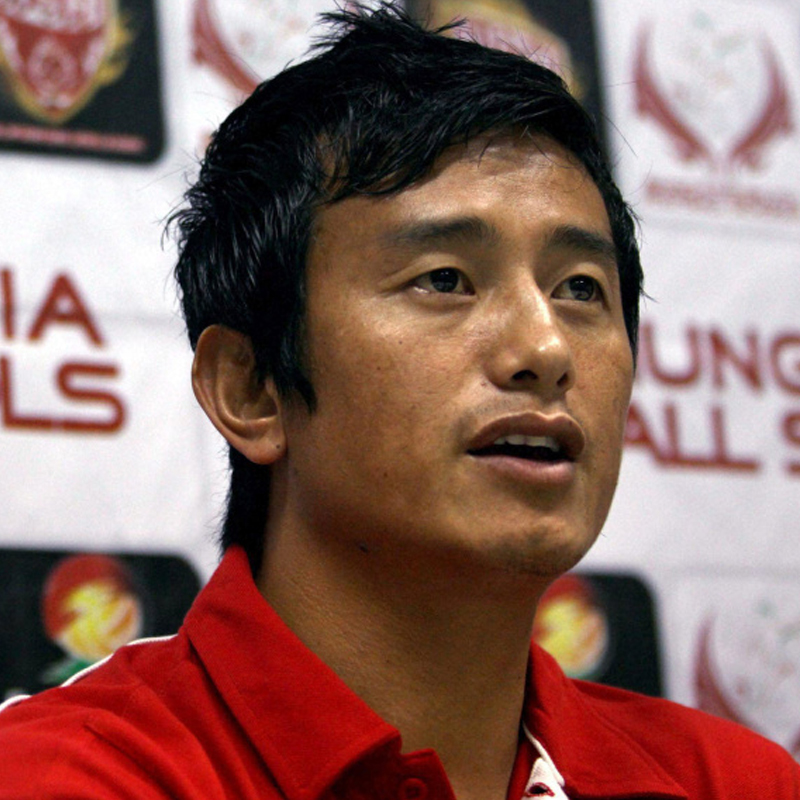
    MUMBAI: No footballer in India has had fanfare similar to Bhaichung Bhutia. The Sikkimese Sniper, as he’s known to the football world, changed the dynamics of the Indian game, went on to play for Bury FC, and has been one of the leading lights of Indian football.

    In a free-wheeling chat with indiantelevision.com, the former Mohun Bagan and East Bengal striker said that the corporate sector needs to join hands for development at the grassroots level. He added that the companies must be little more patient for their returns on investment.

    The former national captain also said the corporate sector could own players’ rights and had a transfer system similar to Europe, investing more into the game and earning more benefits. The founder of Bhaichung Bhutia Football School also added that sponsors were difficult to find in the Indian market and, thus, scouting for talent becomes tough. Excerpts:

    ISL Season III has disappointed you in terms of less goals and defensive coaching techniques. Where do you think we’re lacking and why do you think such tactics are being supported even by the foreign coaches?

    Because it’s a format in which coaches do not get much time to understand the players in the current format and give equal chances to them.

    Coming on board of an expert or famous coach cannot automatically guarantee a victory because he’s not dealing with the players for a reasonable period of time.

    Coaches such as Zico have also struggled and I think that’s why they have been on the defensive and tried to play safe. The number of goals (scored) came down and the number of Indian scorers came down (in the current season). The last season was very different from this season; there were a number of Indian stars, but, in this season, we’ve had only Vineeth in the second part and Kean Lewis ….to a certain extent.

    Bhaichung Bhutia has grown from being the Sikkimese Sniper to one of the most commendable brands in the Indian sporting market. You have been the ambassador of Nike, Adidas and various brands. How do you look to take the game forward with your credible image?

    I think the biggest thing that I’m doing is working at the grassroots level. It’s very challenging because you’ve to work and do everything on your own. Finding grounds for the kids to practice is in itself a big challenge. Sponsors are difficult to find and then scouting for talent becomes tough.

    Even after facing such challenges, I think the journey has been good and we’ve been able to produce capable players in different age-groups and we’re the biggest grassroots-level programme in India today. We’ve over 2000 kids and about 70-80 per cent licenced coaches associated with our programmes.

    With around 60,000 spectators turning up for the finals, the support this season has been overwhelming, and witnessed good numbers throughout the ISL matches. How do you think I- league can have similar numbers?

    Kerala has always been a football hub. A few years ago during the Nehru Cup that I played, we had over a million supporters throughout the tournament. It is great for Kerala and they’ve very passionate fans. I-League fans would have to connect with the fans and the audience and, without that, it would be very difficult to happen.

    Where do you think the corporate sector needs to chip in to help Indian football grow and what can they learn from Bhaichung, the footballer?

    I think the corporate sector just needs to come and support the game from the grassroots level. They look into the Return of Investment which I’m sure is very important. So, I think, they should start investing from the grassroots to the higher leagues, and wait a bit for returns to start coming in.

    Indian players, more often than not, have played fringe roles in the ISL. Do you see any change in this attitude of the coaches? What can be the important modifications to get the best out of the home-grown players?

    I think the duration of league has to be longer. If it keeps happening just for three months, everybody is going to struggle to get into the rhythm. The smaller league would be great viewership-wise, but the quality of the sport and the players might not be so great.

    What do you think about a successful merger between ISL and I-League and what can be a good business model for Indian football?

    I don’t know how they’re going to merge it but all I can say is that the league should be longer. Even if the ISL and I-League go on parallel, they have to be on for a longer period of time to ensure more Indian players can participate and concentrate on the respective tournaments. Right now, there’s also a huge unemployment crisis amongst Indian footballers and that’s very harmful for Indian football. This needs to change for us to have a realistic chance to improve.

    Ashique Kuruniyan’s stint with Villareal FC is a story which is few and far-between. How do you think Indian football can replicate this trend?

    I think India must do well in international tournaments to turn this trend into a winning spree. The countries and foreign clubs would then start taking you seriously. If the national team doesn’t do well, the changes of Indian players going out can be very challenging and look bleak. The ultimate goal should be strengthening the national team, and once that happens, the eyeballs of the clubs are sure to fall on India. It will not be just for marketing but also for getting the right kind of footballing talent.

    ATK has joined hands with Atletico Madrid and Delhi Dynamos have a tie-up with West Bromwich Albion. Why don’t these ISL clubs send their junior players to the foreign clubs for better training. And why is Bhaichung Bhutia Football Schools (BBFS) not tying up with any such club?

    The fee for such tie-ups is astronomical. We have tried to get such deals done, but with no major sponsorship, it gets difficult. Atletico de Kolkata has given 25 per cent of its shares to Atletico Madrid which could be around Rs 50-60 crore deal. It depends on the deal, and if they send their junior players to train, that’s certainly the best thing that can happen to Indian football.

    How are your football schools running? What’s the business model? When do we see the next Bhaichung shoot on the international scenario?

    It’s doing well. We’re one of the best grassroots programme despite a lot of challenges. Its all through the fees the kids pay and some of the money is generated from the foundation. We make very little profits and whatever profit is made, we pay it back through scholarships to kids who’re highly talented and then we’ve a team which plays in U-15 I-League and takes part in other tournaments too.

    Your wishes and suggestions to the Indian U-17 team?

    The players should enjoy and give their best. It is going to be a very difficult tournament for them, but a great learning curve. The quality is there, and they’re a talented side, so I think they should just enjoy and not take any undue pressure on their shoulders. (Winning) is asking a lot from them.

  • Be patient with RoIs; may own & transfer players: Bhaichung Bhutia advises corporates

    Be patient with RoIs; may own & transfer players: Bhaichung Bhutia advises corporates

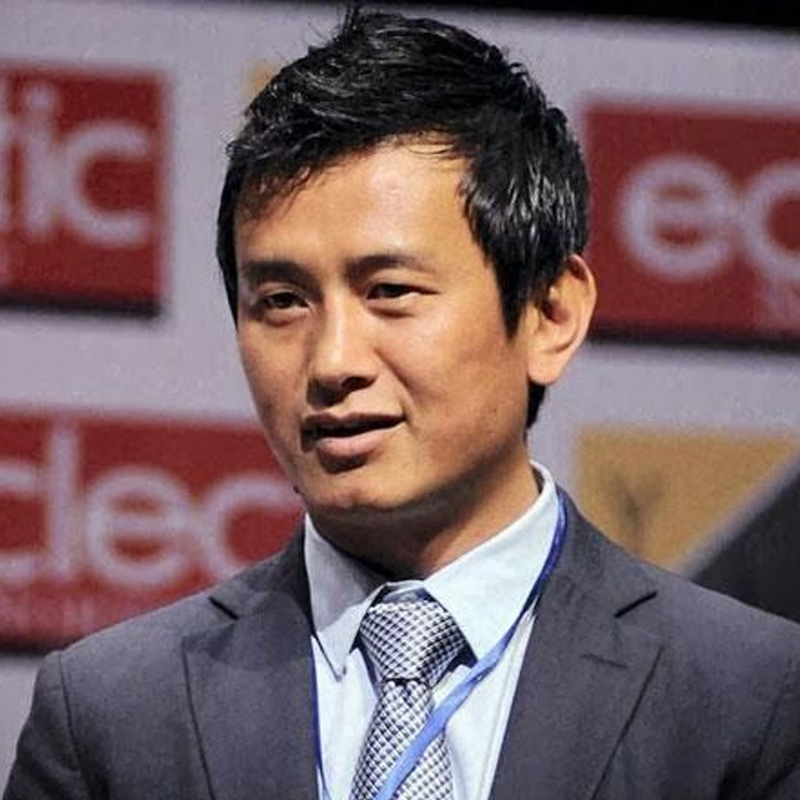
    MUMBAI: No footballer in India has had fanfare similar to Bhaichung Bhutia. The Sikkimese Sniper, as he’s known to the football world, changed the dynamics of the Indian game, went on to play for Bury FC, and has been one of the leading lights of Indian football.

    In a free-wheeling chat with indiantelevision.com, the former Mohun Bagan and East Bengal striker said that the corporate sector needs to join hands for development at the grassroots level. He added that the companies must be little more patient for their returns on investment.

    The former national captain also said the corporate sector could own players’ rights and had a transfer system similar to Europe, investing more into the game and earning more benefits. The founder of Bhaichung Bhutia Football School also added that sponsors were difficult to find in the Indian market and, thus, scouting for talent becomes tough. Excerpts:

    ISL Season III has disappointed you in terms of less goals and defensive coaching techniques. Where do you think we’re lacking and why do you think such tactics are being supported even by the foreign coaches?

    Because it’s a format in which coaches do not get much time to understand the players in the current format and give equal chances to them.

    Coming on board of an expert or famous coach cannot automatically guarantee a victory because he’s not dealing with the players for a reasonable period of time.

    Coaches such as Zico have also struggled and I think that’s why they have been on the defensive and tried to play safe. The number of goals (scored) came down and the number of Indian scorers came down (in the current season). The last season was very different from this season; there were a number of Indian stars, but, in this season, we’ve had only Vineeth in the second part and Kean Lewis ….to a certain extent.

    Bhaichung Bhutia has grown from being the Sikkimese Sniper to one of the most commendable brands in the Indian sporting market. You have been the ambassador of Nike, Adidas and various brands. How do you look to take the game forward with your credible image?

    I think the biggest thing that I’m doing is working at the grassroots level. It’s very challenging because you’ve to work and do everything on your own. Finding grounds for the kids to practice is in itself a big challenge. Sponsors are difficult to find and then scouting for talent becomes tough.

    Even after facing such challenges, I think the journey has been good and we’ve been able to produce capable players in different age-groups and we’re the biggest grassroots-level programme in India today. We’ve over 2000 kids and about 70-80 per cent licenced coaches associated with our programmes.

    With around 60,000 spectators turning up for the finals, the support this season has been overwhelming, and witnessed good numbers throughout the ISL matches. How do you think I- league can have similar numbers?

    Kerala has always been a football hub. A few years ago during the Nehru Cup that I played, we had over a million supporters throughout the tournament. It is great for Kerala and they’ve very passionate fans. I-League fans would have to connect with the fans and the audience and, without that, it would be very difficult to happen.

    Where do you think the corporate sector needs to chip in to help Indian football grow and what can they learn from Bhaichung, the footballer?

    I think the corporate sector just needs to come and support the game from the grassroots level. They look into the Return of Investment which I’m sure is very important. So, I think, they should start investing from the grassroots to the higher leagues, and wait a bit for returns to start coming in.

    Indian players, more often than not, have played fringe roles in the ISL. Do you see any change in this attitude of the coaches? What can be the important modifications to get the best out of the home-grown players?

    I think the duration of league has to be longer. If it keeps happening just for three months, everybody is going to struggle to get into the rhythm. The smaller league would be great viewership-wise, but the quality of the sport and the players might not be so great.

    What do you think about a successful merger between ISL and I-League and what can be a good business model for Indian football?

    I don’t know how they’re going to merge it but all I can say is that the league should be longer. Even if the ISL and I-League go on parallel, they have to be on for a longer period of time to ensure more Indian players can participate and concentrate on the respective tournaments. Right now, there’s also a huge unemployment crisis amongst Indian footballers and that’s very harmful for Indian football. This needs to change for us to have a realistic chance to improve.

    Ashique Kuruniyan’s stint with Villareal FC is a story which is few and far-between. How do you think Indian football can replicate this trend?

    I think India must do well in international tournaments to turn this trend into a winning spree. The countries and foreign clubs would then start taking you seriously. If the national team doesn’t do well, the changes of Indian players going out can be very challenging and look bleak. The ultimate goal should be strengthening the national team, and once that happens, the eyeballs of the clubs are sure to fall on India. It will not be just for marketing but also for getting the right kind of footballing talent.

    ATK has joined hands with Atletico Madrid and Delhi Dynamos have a tie-up with West Bromwich Albion. Why don’t these ISL clubs send their junior players to the foreign clubs for better training. And why is Bhaichung Bhutia Football Schools (BBFS) not tying up with any such club?

    The fee for such tie-ups is astronomical. We have tried to get such deals done, but with no major sponsorship, it gets difficult. Atletico de Kolkata has given 25 per cent of its shares to Atletico Madrid which could be around Rs 50-60 crore deal. It depends on the deal, and if they send their junior players to train, that’s certainly the best thing that can happen to Indian football.

    How are your football schools running? What’s the business model? When do we see the next Bhaichung shoot on the international scenario?

    It’s doing well. We’re one of the best grassroots programme despite a lot of challenges. Its all through the fees the kids pay and some of the money is generated from the foundation. We make very little profits and whatever profit is made, we pay it back through scholarships to kids who’re highly talented and then we’ve a team which plays in U-15 I-League and takes part in other tournaments too.

    Your wishes and suggestions to the Indian U-17 team?

    The players should enjoy and give their best. It is going to be a very difficult tournament for them, but a great learning curve. The quality is there, and they’re a talented side, so I think they should just enjoy and not take any undue pressure on their shoulders. (Winning) is asking a lot from them.

  • Jabong and Nike create football frenzy with ‘Day of Play’

    Jabong and Nike create football frenzy with ‘Day of Play’

    MUMBAI: Jabong.com and Nike hosted ‘Day of Play’ a football tournament for young footballers in Mumbai. Kids in the age group of 13-20 years faced-off a two day football camp going through rigorous trials and a selection match assessed by AIFF licensed coaches.  Twenty four of the most promising players were chosen and mentored by the former Indian captain, Bhaichung Bhutia and current India team goalkeeper, Subrata Pal. These young players were divided into teams and the finals were played between the top two teams.


    The best player of the tournament and the winning team were awarded the trophies along with personalized Nike football boots in the presence of  Bhaichung Bhutia, Subrata Pal, Arun Chandra Mohan (Founder & CEO, Jabong.com) and Avinash Pant (Marketing Director, Nike India).


    Recently, Jabong has introduced Shoe personalization in collaboration with Nike which has happened for the first time ever in India. Reaching out to the increasing football fans in India, Nike boots can now have their name written or they can choose the flag of their favorite football FIFA ’14 team printed on various locations on the boot. Jabong as a brand has always encouraged various sports in the country, evident so from its past alliances like FIFA merchandise – NIKE soccer shoes, exclusive NBA retailer in India and much more. With an effort to further popularize sport in India, Jabong and Nike are providing this unique offering to help football enthusiast’s show off the support for their favorite teams and players. Additionally employees of Nike and Jabong played a friendly match, post which Bhaichung Bhutia and Subrata Pal got their own Nike personalized boots by Jabong.


    “We are at a very interesting chapter in Indian football, the sport is finally beginning to get its due and this will only increase over the next few years. I am really delighted to be here at Nike’s Day of Play with Jabong. The passion of these young footballers will help elevate the sport. I would like to congratulate the winners and all the footballers who were part of this tournament” said Nike athlete Bhaichung Bhutia.


    On the occasion, Mr. Arun Chandra Mohan, Founder & CEO, Jabong.com said, “We are delighted to partner with Nike to offer our customers the exclusive Nike football boot personalization feature on our website for all footballers. #Nameurshoe is a strong fashion trend amongst sports enthusiasts and personalized boot is something that we believe ardent football fans would love to own.  Personalizing their football boots with either their name, the name of their idol or their favourite football team is a cool feature that makes it unique and speaks to their individual style”.


    Mr. Avinash Pant, Marketing Director, Nike India said “At Nike, it is our mission to bring inspiration and innovation to every athlete in the World. The chance to play alongside two of India’s greatest footballers is not only a unique experience but is also inspiring. Personalization on football boots is a global phenomenon and we are delighted to be partnering with Jabong to provide this feature for footballers in India”.

  • Bollywood actors take on cricketers in football for charity

    Bollywood actors take on cricketers in football for charity

    NEW DELHI: Demonstrating their care for fellow Indians, film personalities led by Abhishek Bachchan took on a team of cricketers led by Virat Kohli in a charity football match at the Jawaharlal Nehru Stadium in a charity football match at New Delhi over the weekend.

    The All Heart Team of cricketers emerged victorious by 4-3 on Saturday night against the All Star team.

    The funds raised from the match went to the Magic Bus foundation, which works for underprivileged children. Virat Kohli launched the team for his foundation ‘All Heart Football Club‘ against the All Stars Football Club.

    The All Stars team was coached by former footballer Bhaichung Bhutia and Sunil Chettri trained the All Heart Team.

    Manoj Tiwari who scored two very important goals for his team was awarded man of the match.

    "Indian cricketers are in a habit of winning matches with a scoreline of 4-0. We were scared we would get the same treatment, but all credit to our team especially Ranbir Kapoor for having fought so brilliantly against the cricketers," said Bachchan at the press conference after the match.

    Talking about the team composition, vice-captain Ranbir Kapoor who was disappointed at having missed the penalty said they had been practising for over six months for the match.

    "Everyone who was regularly practising with us today was given a chance to play. There is nothing to be ashamed of in losing 4-3 and it was an honour to step up and compete against the mighty cricketers," he said.

    Talking about the prospect of arranging a revenge match, Abhishek said a few games were in the pipeline with talks doing the rounds that the two teams will square up again in Sikkim for Bhaichung Bhutia‘s foundation.

  • Total Sports Asia sets up shop in Dubai

    Total Sports Asia sets up shop in Dubai

    MUMBAI: Sports marketing firm Total Sports Asia (TSA) is expanding its presence. It has set up an office in Dubai. The company is looking to organise two to three major events each year the scale of which will be bigger than the events it holds in India.

    Speaking to Indiantelevision.com on the same TSA MD India and Middle East Navneet Sharma says, “I have shifted base to the Middle East. Our office is at Dubai Media City. We will focus on large scale events, sports events and entertainment stuff. We will scale up operation as we go by.”

    Stating that Dubai is a market where if you get one or two projects, the scale could be big, Sharma says, “There will be more million dollar events there compared to India as small things do not work there. In India, we do eight to 10 properties. In Dubai, we will do two to three events each year which will be worth at least a couple of million dollars each.

    “TSA will look at family oriented properties in terms of ticketed items. It is also looking at holding large entertainment exhibitions. Music and mechanics will be part of events. We are looking at events which could be held as part of the Dubai Shopping Festival and also looking to have a World Wrestling Entertainment (WWE) tour in the Middle East.

    “On the sports side, TSA is looking at triathlons and other running sports. It is also examining the possibility of taking Indian club football to the Middle East. After all 40 per cent of the population in Dubai is Indian. One possibility is taking Bhaichung Bhutia to Dubai and other Middle East countries for clinics.”

    As far as working with broadcasters is concerned, Sharma notes that TSA already has a strong relationship with Ten Sports which too has its head office in Dubai Media City. “We are looking to cement that relationship. Hopefully we can spread our expertise among the regional broadcaster as well. We are looking to push the International Badminton Federation in the Middle East.”

    Closer home in India, TSA is looking to work with news channels. For instance, during the soccer World Cup, it brokered a deal for Bhutia with CNN IBN. “We are suggesting to news channels on the utility of sports channels and how we can help them create programming that fits in well with the current environment. We had done a Bhutia deal with WorldSpace. They use him in short spurts and ask him soccer related questions. We also did a deal with DNA where his articles appeared.

    “When the Champions trophy happens, every news chanel will do content around it. So we are coming up with ideas that can boost their profile. We are working on tailor made ideas for news channels. We are also in touch with NDTV. It could be archived programming or something that supports live chats.”

    As far as events are concerned, Sharma is confident about the adventure sports arena growing. “Earlier this year, it had organised the Mountain Dew Himalayan Challenge which saw people take part in adventure sports. Next year, the channel is looking to add skiing to the line up and the event will happen in January-February 2007.

    “There were 90 entries. Three people were in each team during the Mountain Dew Challenge. Ten Sports aired the event in five episodes. Over the next two to three years, we are looking to get top level anchors who are knowlegeable about the adventure sports arena. We have also got a lot of corporate interest from companies.

    “A four million dollar event, the channel is planning another adventure reality show for next year. This will have elements of strength and power in it and will be held in three cities. It is also looking to bring in squash in sometime in the future.”

    He adds that Total Sports Asia had helped Adidas with the organisation of the Adidas+ Challenge. “The logistics involved were humongous. We did the event in seven cities back to back.”

    This year, the Hungamathon will done again in association with Hungama TV. TSA is also looking to organise expositions on the retail side of sports and events like Futsal will return again.

    A new area that TSA is looking at is organising concerts where it will organise concerts with major pop stars like Beyonce.

    “As we have an Asian network, we can schedule the artistes tour across Asia. Pop music is a strong area to start with as we are confident of a healthy return and we are in talks with the agents of some major pop stars. The time slot being looked at is between December to February 2007. I don’t think that getting down equipment for rock bands like U2 is a challenge. The challenge is that stars have fees and the profitability can be a risky proposition at times.”

    In terms of new properties for television distribution, he notes that rights for football properties like English Premier League will come up. “We are also looking at licensing opportunities for different platforms like mobile. Our sister concern, Max Entertainment handles all entertainment properties for licensing, mobile and television.”