Tag: Bhaag Milkha Bhaag

  • Biopics & sports-based films help popularise sporting culture in India

    Biopics & sports-based films help popularise sporting culture in India

    MUMBAI: “Sattar minute, sattar minute hai tumhare paas … shayad tumhari zindagi ke sabse khaas sattar minute … (Seventy minutes, seventy minutes is what you have … may be the most important seventy minutes of your life..)”.

    These famous lines spoken in true Shah Rukh Khan style and many other such nuggets woven into a drama with various twists and turns, and ups and downs went on to make the 2007 Hindi film Chak De India — loosely based on real life incidents highlighting the Indian women’s hockey team’s journey from outcasts to gold and glory having being coached by a disgraced goalkeeper — one of the biggest hits of that decade. It also gave India an iconic phrase: ‘chak de India’, denoting winning against odds.

    Though India is primarily a cricket-crazy nation and success of sports theme based films like Chak De and later Pan Singh Tomar (a national athlete’s life story from the sports tracks to that of an outlaw ultimately shot down by police) notwithstanding, the local film industry put more faith in action and romantic flicks. Unlike Hollywood that always turned to the sports field to get inspiration for gut-wrenching and raw drama. Remember Raging Bull, the Rocky series or flicks based on boxing legend Muhammad Ali’s life and footballer Pele? Or, for that matter, Escape to Victory?

    However, India has witnessed a trend of late: movies being made on both popular and not-so-popular sports and sports personalities. The rationale being viewers convert into fans boosting the popularity of non-cricket sports desperately needed in India. 

    Bollywood suddenly discovered that biopics of sports personalities do get the cash registers ringing in theatres and, later, when the rights were sold to TV channels. Stars who won medals to empty stands or forgotten are now getting the glory they deserve.

    If Chak De India pitchforked the much-neglected-in-need-of-a-boost hockey into limelight and also conceiving of fast-paced hockey leagues with foreign and domestic players, films like MS Dhoni, Sachin: A Billion Dreams,Azhar and Jannat capitalised on popular cricketers and the darker side of betting and match-fixing, respectively. Dangal and Sultan (wrestling), Mary Kom (boxing), Bhaag Milkha Bhaag (athletics) not only turned out to be box-office hits, but also did a lot of good to lesser followed sports, creating newer fan bases.

    “Sports biopics have played an important role in inspiring generations of youth not just in India, but globally. They help in channelising youth’s energies positively and in a way that contributes towards society building. It also drives home a deeper message on life and showcases the pain and toil that go behind the achievement of fame, popularity and, above all, respect,” says Sportscomm Co-Founder Abhoy Chattopadhyay.

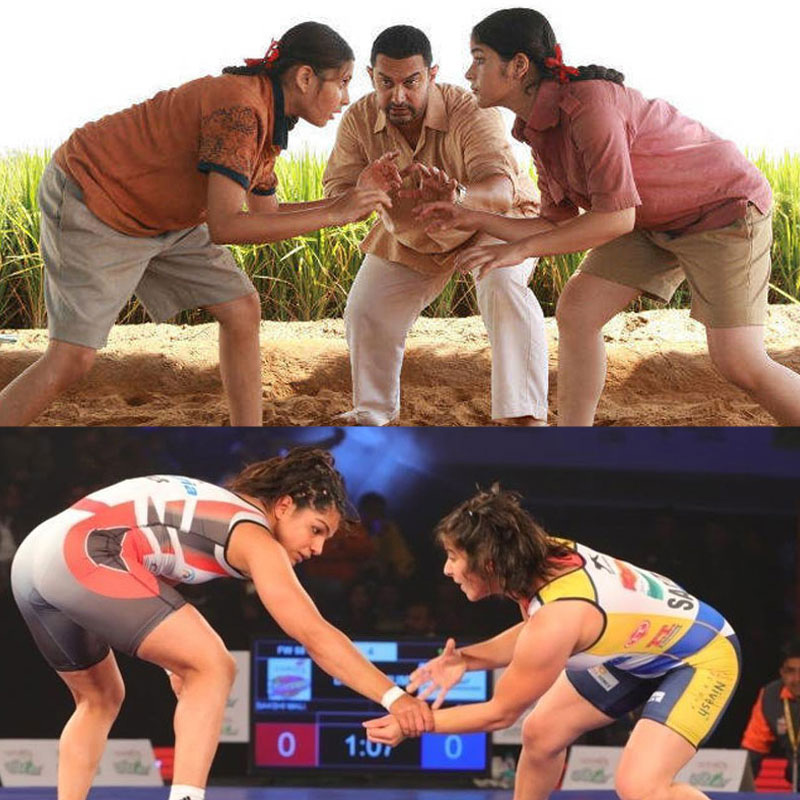
    In recent years Dangal, undoubtedly, is the most popular sports films, highlighting the travails and glory of Haryana’s Phogat sisters, trained by their former national champ wrestler-father for the big stage and medals. Launched in December 2017 with a budget of Rs 70 crore, the box office collection went to clock Rs 2,122 crore worldwide, out of which more than Rs 1,300 crore was made only from the Chinese market where most viewers saw sub-titled versions to experience the true flavour and energy of the local language. The film has also been watched over 345 million times on Chinese streaming platforms.

    The Broadcast Audience Research Council viewership of some of the top sports biopics premiered on TV includes Dangal (16.2 million impressions) followed by MS Dhoni (8 million impressions).

    The movie Mary Kom helped boxing increase its reach and popularity in India as people started watching and following the game more fervently as they connected with players like Mary Kom and now-turned pro boxer Vijender Singh.

    According to Chattopadhyay, by reproducing the life journey of a successful athlete on the silver screen, the target audience is “taught to appreciate the years of dedication and hard-work behind all that glitz and glamour” and the fact that there are no short-cuts to success – and in life.

    Said a sports executive: “In a country bereft of a sports culture, sports biopics help in creating an ecosystem for the future where parents encourage children to take up a particular sport as a career option — a support system so vital to producing sporting champions — simply because movies play a huge influencing role in society.”

    Chak De, for example, gave women’s hockey a new lease of life as well as contributed towards the growth of women sports in the country. Dangal too played a very critical role in helping wrestling reach out to various corners of the country and encourage many more girls to take up the sport in what is still a patriarchal society. Movies like MSD may not have boosted the popularity of cricket, already a craze, but, according to the sports executive, it helped many youngsters from smaller towns gather the courage to take up sports as a career option, including cricket that was earlier looked upon as an urban game with most cricketers coming from big cities and metros.

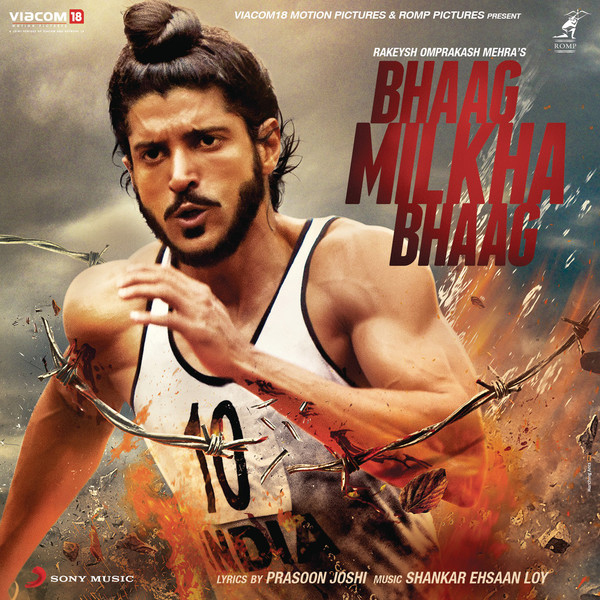
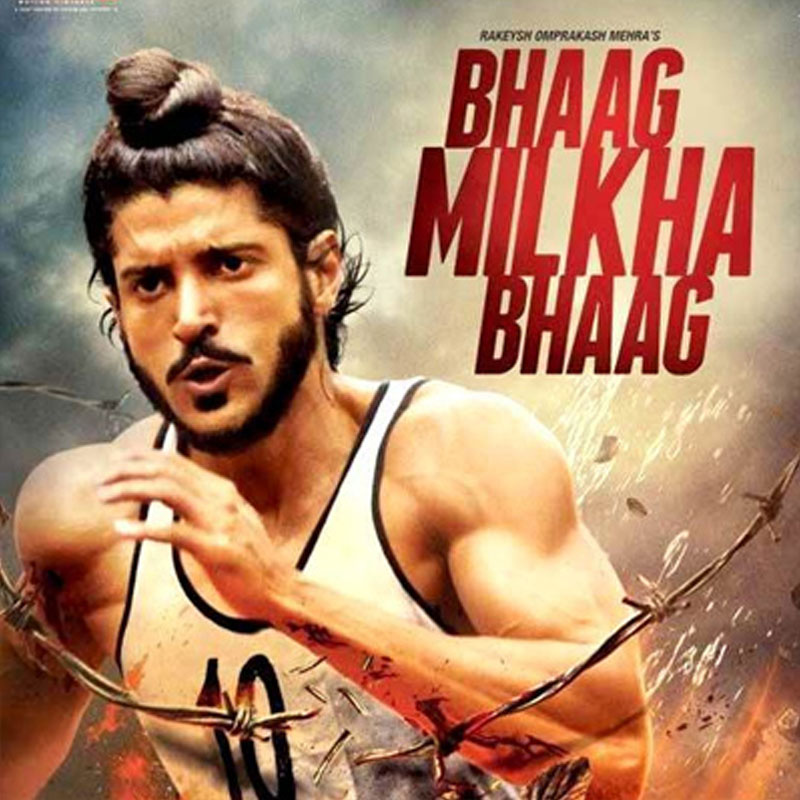
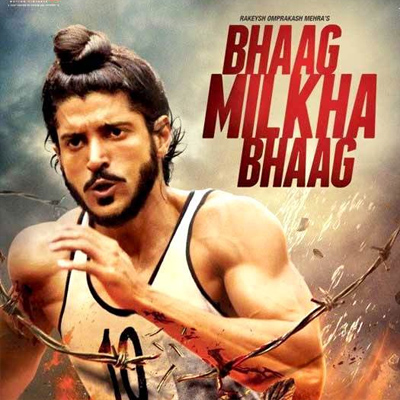
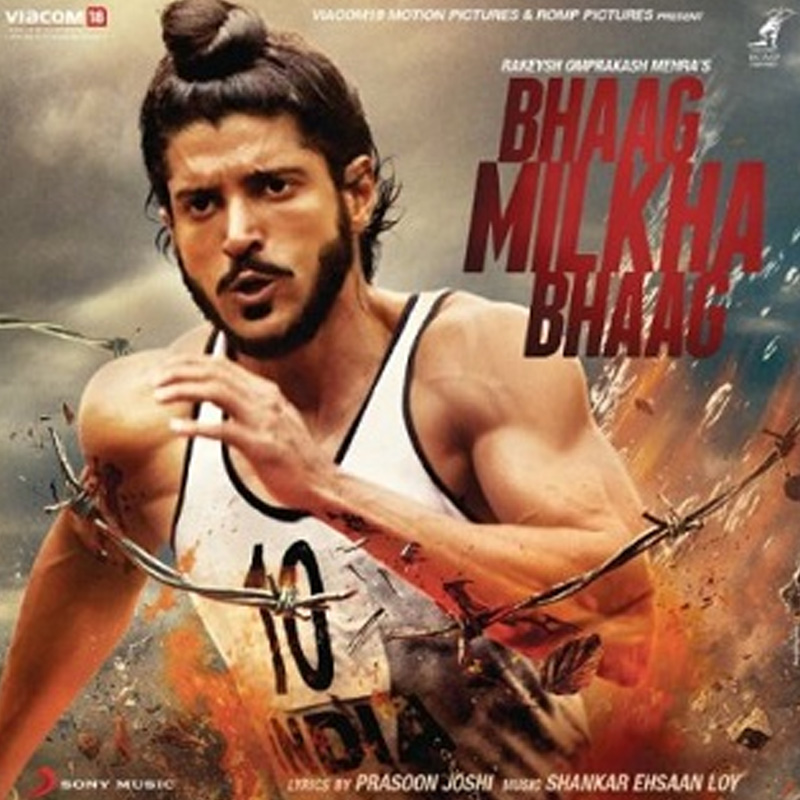
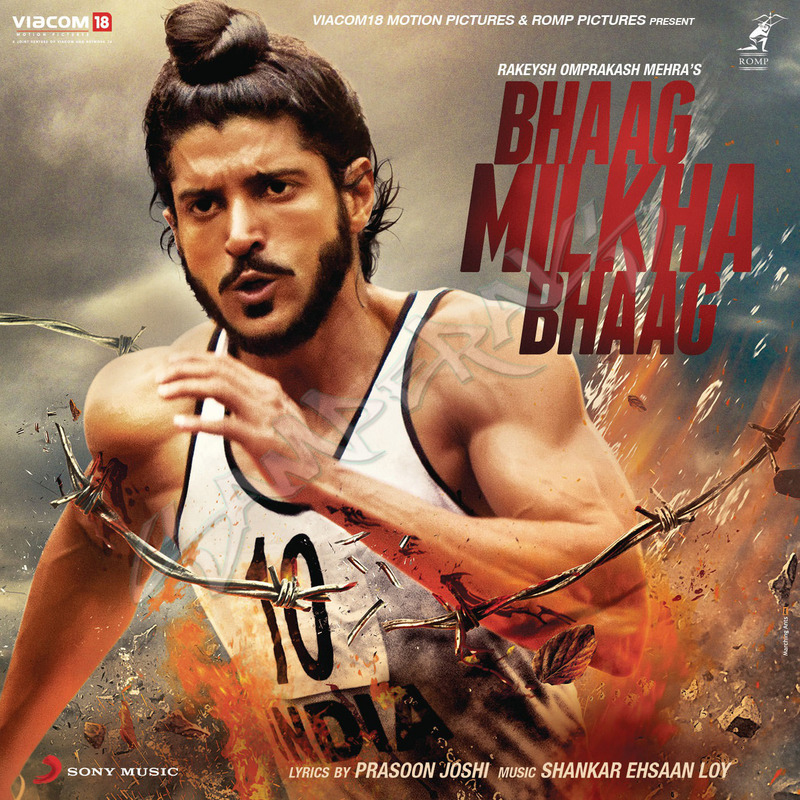
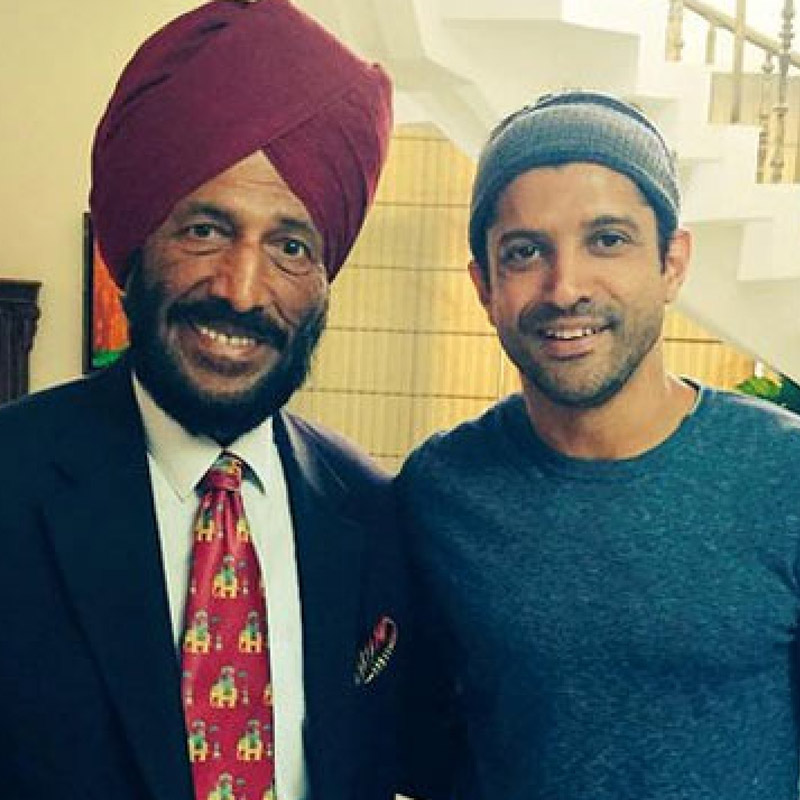
    Speaking to Hindustan Times newspaper in September last, the 43-year-old actor Farhan Akhtar, who essayed the role of the Flying Sikh Milkha Singh in  Bhaag Milkha Bhaag admitted that the film was a “turning point” for him with the rigorous training and strict diet for the shoot having positive side effects. “I have not been able to go back to the way I used to eat or drink before I started training for the film,” Akhtar explained, adding, “Working on the movie made me realise the true meaning of fitness and the value of getting enough rest.”

    More biopics and sports-based films in the pipeline include Gold and Soorma on some now-forgotten Indian hockey stars, flicks based on the life and times of Indian badminton stars Saina Nehwal and PV Sindhu, and the country’s lone individual Olympics gold-finger shooter Abhinav Bindra.

    A three-language biopic is also being readied on former badminton champ P Gopichand, the mentor of quite a few current sensations like Sindhu, Nehwal and K. Srikanth, in Telugu, Hindi and English. Another movie is dedicated to the great all-rounder and India’s first cricket World Cup lifting captain Kapil Dev.

    Viacom18 Motion Pictures last year announced that it had acquired the rights of a film on the life and times of Indian woman cricket team captain and legend Mithila Raj, who also happens to be the highest run-getter in the world. It was under her captaincy that India went to reach the final in the women’s cricket World Cup 2017.

    While Viacom18 Motion Pictures COO Ajit Andhare said the studio had always showcased content with strong women characters and was proud to be collaborating with the “young and inspirational” Raj, Varun Chopra, Director, Medallin Sports, who facilitated the Raj-Viacom association, went a step further to opine the proposed film would inspire and motivate future generations [of young girls]. 

    Sports biopics nudge people’s interest in newer sports in a cricket-crazy nation. However, the sport on which no biopic has been made yet, but the game itself is a hit on TV (Pro Kabbadi League on Star Sports) is kabbadi. We hope that too will happen soon.

    Also Read :

    The year of big switch in sports broadcasting

    PKL season 6 and 7 dates announced

    Star ushers in IPL’s new era with a bang

    Launch of 1st indian sports radio channel – sports flashes 

  • Awarded adman Prasoon Joshi is new CBFC chief, Pahlaj Nihalani exits

    NEW DELHI: Renowned lyricist and senior adman Prasoon Joshi has been appointed chairman of the Central Board of Film Certification with immediate effect.

    An official order said Joshi was being appointed chairperson of the CBFC in an honorary capacity from 11 August 2017 for a period of three years or until further orders, whichever is earlier in exercise of the powers conferred by sub-section (1) of section 3 of the Cinematograph Act 1952 read with rule 3 of the Cinematograph (Certification) Rules 1983.

    This marks the exit of filmmaker Pahlaj Nihalani who was embroiled in several controversies during his tenure.

    Joshi is the CEO of McCann World group India and Chairman (Asia Pacific), a subsidiary of global marketing firm McCann Erickson.

    Prasoon has received the Filmfare Best Lyricist Award three times, in 2007 and 2008 and again in 2014 for the Hindi movie Bhaag Milkha Bhaag. He has also received the National Film Award for Best Lyrics twice, for his work in Taare Zameen Par (2007), and Chittagong (2013).He was awarded Padma Shri by the Government in 2015 for his contributions towards the field of Arts, Literature and Advertising.

    Born on 16 September 1971, he started his career with Ogilvy & Mather in Delhi. He worked there for 10 years and eventually became the executive creative director of the Mumbai office. In early 2002, he joined McCann-Erickson as executive vice-president and national creative director. By 2006, he was regional creative director for South and South East Asia. In December 2006 he was promoted to executive chairman for McCann Worldgroup India and regional creative director for Asia Pacific

    Joshi created advertising campaigns for NDTV India (Sach dikhate hain hum), Saffola (Abhi to main Bhaag Milkha Bhaag.jawan hoon) LG, Marico, Perfetti (Alpenliebe, Chlormint), and the Cannes-winning Thanda matlab Coca-Cola campaign with Aamir Khan. His Happydent television commercial was listed by Bob Garfield of AdvertisingAge as one of his personal choices for the Cannes Gold in 2007, and it was chosen by a Gunn Report poll as one of the 20 best ads of the 21st century.

    He also wrote the lyrics for CNN IBN’s advertising jingle “India Rising’ and Coke’s Ummeed wali dhoop.

    In cinema, he made his debut as film lyricist with Rajkumar Santoshi’s Lajja, a critical and commercial success, and this soon led to Yash Chopra’s Hum Tum and a string of highly successful Bollywood films like Fanaa, Rang De Basanti, Taare Zameen Par, Black and Delhi 6. With Rang De Basanti (2006), he also became a dialogue writer.

    He won the Filmfare Best Lyricist Award for “Chand Sifarish” from the film Fanaa in 2007 and for “Maa” from Taare Zameen Par in 2008. He has won the prestigious National Award twice. The first for his work in Taare Zameen Par and the second one in 2013 for Chittagong.

    He had also written the script for the award-winning 2014 film Bhaag Milkha Bhaag.

    He started writing early in life and published his first book at age 17, Main Aur Woh, a ‘conversation with himself’, inspired by Frederich Nietzsche’s Thus Spake Zarathustra. Two more books followed, establishing him as an author.

    His latest book, Sunshine Lanes, a collection of his songs, was launched at the Jaipur Literature Festival in January 2013.

  • Viacom18 Motion Pictures ‘unconventional Indian cinema’ journey

    Viacom18 Motion Pictures ‘unconventional Indian cinema’ journey

    MUMBAI: Just five years old in the Indian film industry and Viacom 18 Motion Pictures has successfully changed the dimensions of tried and tested formulas. It has challenged the conventional norms of film making and produced a variety of movies for Indian audiences. Viacom18 Motion Pictures was started in 2010 with an aim to disrupt the tried and tested formulas, to challenge the norms and to ensure that content stood out to be the true winner. With movies like Tanu Weds Manu, Kahaani, Gangs of Wasseypur, OMG:Oh My God, Bhaag Milkha Bhaag, Queen, Mary Kom, Gabbar is Back and Margarita with a Straw, Viacom MP has proved that it has the ability to choose the right kind of script based on insights combined with instincts.

    This multi-faceted studio backs rare concept based cinema that appeals to the masses, distributes and markets larger-than-life English films that become mega blockbusters in India and has even ventured into regional markets like Marathi, Bengali and South Indian languages. Viacom 18 Motion Pictures has over 100 awards in its kitty.

    On completing five successful years of storytelling across 80 films, Viacom18 Media group CEO Sudhanshu Vats said, “Viacom18 Motion Pictures is an integral part of the value proposition of Viacom18 as a media network. Over the last 5 years we have built a distinctive identity for our movie studio that is built around our strong focus on stories. This ‘content-first’ approach is in synergy with our broadcast and digital business lines and together films, broadcast and digital complete the ecosystem of entertainment that Viacom18 offers its consumers.”

    Elaborating further Vats revealed, “Today we have a library of films and lines of businesses that I feel proud of. With each new project we are increasingly integrating a scientific approach based on data mining and analysis, enabling us to incrementally maximize business value for the studio as a whole. We have some interesting projects lined up for the years ahead and I look forward to an exciting future.”

    Viacom18 Motion Pictures COO Ajit Andhare said,“Viacom18 Motion Pictures has stood for a distinctive kind of cinema and consistent delivery best reflected not in one film or another but in the collective body of work built over these 5years. A conscious and calibrated business approach of focusing on innovation in films and rooting them in strong viable economics has been our hallmark.”

    “At the core of Viacom 18, the approach to film making is —  what can we do differently?  What can we do that is not conventional? That approach has been at the heart of a whole lot of things we do. The kind of film universe we have created, the kind of grammar we have created for film making and the kind of films we have stood for have started to occupy the centre stage in the Indian movie industry,” added Andhare.

    Further, sharing insights on how Viacom monetizes and markets films, Andhare said, “As a studio we are not just a film making outfit, we are part of a larger media network. Besides box office, the second largest revenue comes from satellite and now the new emerging market is digital. There will be a natural synergy in the group that will make a lot sense. In the broadcasting revenue model where a lot of output will be captive consumed by both of our platforms, some of those things clearly help in monetization.”  

    On marketing of the unconventional films, Andhare explained, “Traditional films are led by stars and it is the stars that are marketed, but if you take an unconventional film like Maajhi, it was marketed as an inspirational story. It is difficult to give a specific answer as to how we market films as it all depends on the kind of film we are working on and the content. For each film we have a different marketing strategy.”

    “Viacom18 Motion Pictures has consistently stood out for its distinctive kind of cinema delivery, best reflected not in one film or another but in the collective body of work built over these 5 years. A conscious and calibrated business approach of focusing on innovation in films and rooting them in strong viable economics has been our hallmark,” Andhare added.

    Before giving a green light to a story there are a few points that the studio keeps in mind in the initial stages he revealed.

    “We look at two to three aspects. Firstly, it’s the script. We also have an advisory council which does not work for Viacom, but are independent directors, films enthusiasts, film journalists who share their views on the script and we get the sense from that. Besides that, we also have someone who technically looks after the script. The script is just one layer, apart from that there are performances and there are many parameters that are involved in the judgment,”   said Andhare.

    Viacom18 Motion Pictures will relive its blockbusters through a weeklong festival between 11 June and 17 June 2016 that will showcase some of the most successful and loved films from its library. Launched in collaboration with Cinepolis, this festival will be a multi-city treat for movie lovers across Mumbai, Delhi, Pune and Bangalore showcasing hits like Kahaani, Manjhi – The Mountain Man, Pyaar Ka Punchnama 2, Bhaag Milkha Bhaag, Queen and Gangs of Wasseypur I & II.

    “We will continue to be unconventional in our films and conventional in our business approach that focuses on return on capital. As we complete five years we feel inspired from what we have achieved and are spurred on to play a central role in shaping Indian cinema in our journey ahead,” asserted Andhare in conclusion. 
     

  • Viacom18 Motion Pictures ‘unconventional Indian cinema’ journey

    Viacom18 Motion Pictures ‘unconventional Indian cinema’ journey

    MUMBAI: Just five years old in the Indian film industry and Viacom 18 Motion Pictures has successfully changed the dimensions of tried and tested formulas. It has challenged the conventional norms of film making and produced a variety of movies for Indian audiences. Viacom18 Motion Pictures was started in 2010 with an aim to disrupt the tried and tested formulas, to challenge the norms and to ensure that content stood out to be the true winner. With movies like Tanu Weds Manu, Kahaani, Gangs of Wasseypur, OMG:Oh My God, Bhaag Milkha Bhaag, Queen, Mary Kom, Gabbar is Back and Margarita with a Straw, Viacom MP has proved that it has the ability to choose the right kind of script based on insights combined with instincts.

    This multi-faceted studio backs rare concept based cinema that appeals to the masses, distributes and markets larger-than-life English films that become mega blockbusters in India and has even ventured into regional markets like Marathi, Bengali and South Indian languages. Viacom 18 Motion Pictures has over 100 awards in its kitty.

    On completing five successful years of storytelling across 80 films, Viacom18 Media group CEO Sudhanshu Vats said, “Viacom18 Motion Pictures is an integral part of the value proposition of Viacom18 as a media network. Over the last 5 years we have built a distinctive identity for our movie studio that is built around our strong focus on stories. This ‘content-first’ approach is in synergy with our broadcast and digital business lines and together films, broadcast and digital complete the ecosystem of entertainment that Viacom18 offers its consumers.”

    Elaborating further Vats revealed, “Today we have a library of films and lines of businesses that I feel proud of. With each new project we are increasingly integrating a scientific approach based on data mining and analysis, enabling us to incrementally maximize business value for the studio as a whole. We have some interesting projects lined up for the years ahead and I look forward to an exciting future.”

    Viacom18 Motion Pictures COO Ajit Andhare said,“Viacom18 Motion Pictures has stood for a distinctive kind of cinema and consistent delivery best reflected not in one film or another but in the collective body of work built over these 5years. A conscious and calibrated business approach of focusing on innovation in films and rooting them in strong viable economics has been our hallmark.”

    “At the core of Viacom 18, the approach to film making is —  what can we do differently?  What can we do that is not conventional? That approach has been at the heart of a whole lot of things we do. The kind of film universe we have created, the kind of grammar we have created for film making and the kind of films we have stood for have started to occupy the centre stage in the Indian movie industry,” added Andhare.

    Further, sharing insights on how Viacom monetizes and markets films, Andhare said, “As a studio we are not just a film making outfit, we are part of a larger media network. Besides box office, the second largest revenue comes from satellite and now the new emerging market is digital. There will be a natural synergy in the group that will make a lot sense. In the broadcasting revenue model where a lot of output will be captive consumed by both of our platforms, some of those things clearly help in monetization.”  

    On marketing of the unconventional films, Andhare explained, “Traditional films are led by stars and it is the stars that are marketed, but if you take an unconventional film like Maajhi, it was marketed as an inspirational story. It is difficult to give a specific answer as to how we market films as it all depends on the kind of film we are working on and the content. For each film we have a different marketing strategy.”

    “Viacom18 Motion Pictures has consistently stood out for its distinctive kind of cinema delivery, best reflected not in one film or another but in the collective body of work built over these 5 years. A conscious and calibrated business approach of focusing on innovation in films and rooting them in strong viable economics has been our hallmark,” Andhare added.

    Before giving a green light to a story there are a few points that the studio keeps in mind in the initial stages he revealed.

    “We look at two to three aspects. Firstly, it’s the script. We also have an advisory council which does not work for Viacom, but are independent directors, films enthusiasts, film journalists who share their views on the script and we get the sense from that. Besides that, we also have someone who technically looks after the script. The script is just one layer, apart from that there are performances and there are many parameters that are involved in the judgment,”   said Andhare.

    Viacom18 Motion Pictures will relive its blockbusters through a weeklong festival between 11 June and 17 June 2016 that will showcase some of the most successful and loved films from its library. Launched in collaboration with Cinepolis, this festival will be a multi-city treat for movie lovers across Mumbai, Delhi, Pune and Bangalore showcasing hits like Kahaani, Manjhi – The Mountain Man, Pyaar Ka Punchnama 2, Bhaag Milkha Bhaag, Queen and Gangs of Wasseypur I & II.

    “We will continue to be unconventional in our films and conventional in our business approach that focuses on return on capital. As we complete five years we feel inspired from what we have achieved and are spurred on to play a central role in shaping Indian cinema in our journey ahead,” asserted Andhare in conclusion. 
     

  • ‘Airlift:’ A dose of patriotism

    ‘Airlift:’ A dose of patriotism

    Stories are at a premium for film scripts, so are the imaginative script writers and, if there are a few around, the makers are not willing to indulge them at premium. No wonder that more often than not, even our superstars fail to carry a film through.

    In quest of new themes, some makers tried with scripts our people dream about; like bringing Dawood back (D-Day) or like assassinating a Pakistani terror outfit chief (Baby). However, these films did not really convince the film buffs; they were daydreams, after all.

    Airlift, hence, is about a real life massive venture of safeguarding 1.7 lakh Indian expatriates in Kuwait when Iran invaded the country in 1990. Makers in search of real life stories have made films like Who Killed Jessica, Talvar, Manjhi, Pan Singh Tomar, Bhaag Milkha Bhaag etc may confuse the event with the last year’s airlifting/shipping Indians out of Middle East.

    While all above named films have been dramatised for film adaptations, Airlift has taken such a liberty by combining the actions of four protagonists of this 1990 Kuwait operation into one hero in Akshay Kumar.

    Akshay is a successful businessman in Kuwait living with his wife, Nimrat Kaur, and a daughter. He has taken to Kuwait and feels very much at home there; India no more means much to him. That is when his world turns topsy-turvy. The long running feud between Iraq and Kuwait climaxes into Iraq’s invasion of Kuwait. Initially, Akshay as well as other expats think it is another usual threat till they see Iraqi troops demolishing Kuwait and killing the locals at random.

    Fortunately for Akshay and others, India is considered a friendly nation by Iraq and the troops have instructions not to harm Indians. Akshay senses the seriousness of the situation and decides to send away Nimrat and his daughter to England till things settle down. But, while driving through the city, he is captured by soldiers. His driver is shot dead. He is presented in front of the Iraqi army general. Again fortunately for Akshay, the general knows him from one of his trips to Iraq when he was in charge of Akshay’s security. He promises help for a consideration.

    As Akshay visits his office, his staff members look at him expectantly and it soon dawns on him that only he and his family can’t run away leaving his people behind. He settles all his staffers and their families in the office premises and, to his surprise, soon discovers that those who have taken refuge in and around his office don’t all belong to his company.

    The situation around makes him a changed man. From a hardcore, self-centred businessman, he has softened up into a caring person; he takes charge of the Indians who have taken shelter with him and plans on getting them out of Kuwait. His contacts are no use in such a situation, only dollar talk is understood.

    Akshay’s efforts to involve the Indian embassies in Kuwait as well as Iraq fail. So do his attempts to involve the Indian government. The lethargic babus don’t want to take the responsibility while the ministers concerned are not even willing to face the one babu who shows concern and appeals on behalf of the 1.7 lakh Indians. But, it is because of that one babu’s persistence that the minister finally approves action.

    Airlift may come as a new story to the audience who generally is exposed to little besides cross border terrorism. For them, the film is informative with the plus being this is a true account. But, that being the case, the film also has a documentary kind of effect, especially through its first part. Post interval, the film picks up pace as the evacuation drama unfolds and comes up with moments, which stir up patriotism in the viewer. Considering the dry subject, efforts are made to keep the script and narrative as tight and short as possible.

    Direction is generally good sticking to ambience of the region. However, the Iraqi shoulders look shabby and un-Iraqi like. The film has a pleasant musical score and, considering the theme, all songs play in the background. Camera work is apt. Dialogue is sharp. Casting is perfect with Akshay being just the star to invoke patriotism. Nimrat does very well as do others.

    Airlift caters mainly to the elite audience. Its opening is fair. The film, however, should pick up over the weekend with 26 January – Republic Day fervour adding to the patriotic quotient.

    Producers: Bhushan Kumar, Krishan Kumar, Nikhil Advani

    Director: Raja Krishna Menon

    Cast: Akshay Kumar, Nimrat Kaur, Purab Kohli, Prakash Belawadi, Kumud Mishra, Avtar Gill

    ‘Kyaa Kool Hain Hum 3:’ About being fools!

    Kyaa Kool Hain Hum 3 is the third instalment of the Kyaa Kool… series from Balaji Motion Pictures, a sex comedy that has proved lucrative for the makers. The idea is titillation bordering on vulgarity.

    Aftab Shivdasani and Tusshar Kapoor are best friends who are doing things together. Tusshar has a problem with colours, which affects his eyes. The pair usually goofs up and is rendered penniless as well as homeless.

    A friend, Krishna Abhishek, throws them a lifeline and invites them to visit him in Bangkok where he makes porn films. His aides and stars are Claudia Ciesla, Gizele Thakral, Andy Kumar and Danny Sura. Tusshar and Aftab are offered to do porn films, which they are reluctant to do at first. But, they need money badly and that makes them change their minds.

    There has to be something in the name of story to go on so, Tusshar falls in love with Mandana Karimi. Mandana’s father, Darshan Jariwala, however, wants to meet his daughter’s choice along with his family. Where would Tusshar get a family from? Easy! His porn star team comes to his aid. They all have to present themselves as a traditional sanskari family to Jariwala. This is where the film is expected to generate comic situations with its acting challenged cast, some of which has been imported from Bigg Boss show.

    Hindi comedy is usually about gags stolen from here and there and slaps and lewd expressions aided by double meaning dialogue. This film tries to include all of that.

    Uday Ghadge has directed a Marathi film earlier and assisted David Dhawan on a few films. Dhawan’s flair for comedy does not seem to have influenced him. The film is average in all aspects with even songs being of no help.

    Kyaa Kool Hain Hum 3 will find some audience in youth and single screens.

    Producers: Shobha Kapoor, Ekta Kapoor

    Director: Uday Ghadge

    Cast: Tusshar Kapoor, Aftab Shivdasani, Krishna Abhishek, Mandana Karimi, Darshan Jariwala, Gizele Thakral, Claudia Ciesla, Shakti Kapoor

  • ‘Airlift:’ A dose of patriotism

    ‘Airlift:’ A dose of patriotism

    Stories are at a premium for film scripts, so are the imaginative script writers and, if there are a few around, the makers are not willing to indulge them at premium. No wonder that more often than not, even our superstars fail to carry a film through.

    In quest of new themes, some makers tried with scripts our people dream about; like bringing Dawood back (D-Day) or like assassinating a Pakistani terror outfit chief (Baby). However, these films did not really convince the film buffs; they were daydreams, after all.

    Airlift, hence, is about a real life massive venture of safeguarding 1.7 lakh Indian expatriates in Kuwait when Iran invaded the country in 1990. Makers in search of real life stories have made films like Who Killed Jessica, Talvar, Manjhi, Pan Singh Tomar, Bhaag Milkha Bhaag etc may confuse the event with the last year’s airlifting/shipping Indians out of Middle East.

    While all above named films have been dramatised for film adaptations, Airlift has taken such a liberty by combining the actions of four protagonists of this 1990 Kuwait operation into one hero in Akshay Kumar.

    Akshay is a successful businessman in Kuwait living with his wife, Nimrat Kaur, and a daughter. He has taken to Kuwait and feels very much at home there; India no more means much to him. That is when his world turns topsy-turvy. The long running feud between Iraq and Kuwait climaxes into Iraq’s invasion of Kuwait. Initially, Akshay as well as other expats think it is another usual threat till they see Iraqi troops demolishing Kuwait and killing the locals at random.

    Fortunately for Akshay and others, India is considered a friendly nation by Iraq and the troops have instructions not to harm Indians. Akshay senses the seriousness of the situation and decides to send away Nimrat and his daughter to England till things settle down. But, while driving through the city, he is captured by soldiers. His driver is shot dead. He is presented in front of the Iraqi army general. Again fortunately for Akshay, the general knows him from one of his trips to Iraq when he was in charge of Akshay’s security. He promises help for a consideration.

    As Akshay visits his office, his staff members look at him expectantly and it soon dawns on him that only he and his family can’t run away leaving his people behind. He settles all his staffers and their families in the office premises and, to his surprise, soon discovers that those who have taken refuge in and around his office don’t all belong to his company.

    The situation around makes him a changed man. From a hardcore, self-centred businessman, he has softened up into a caring person; he takes charge of the Indians who have taken shelter with him and plans on getting them out of Kuwait. His contacts are no use in such a situation, only dollar talk is understood.

    Akshay’s efforts to involve the Indian embassies in Kuwait as well as Iraq fail. So do his attempts to involve the Indian government. The lethargic babus don’t want to take the responsibility while the ministers concerned are not even willing to face the one babu who shows concern and appeals on behalf of the 1.7 lakh Indians. But, it is because of that one babu’s persistence that the minister finally approves action.

    Airlift may come as a new story to the audience who generally is exposed to little besides cross border terrorism. For them, the film is informative with the plus being this is a true account. But, that being the case, the film also has a documentary kind of effect, especially through its first part. Post interval, the film picks up pace as the evacuation drama unfolds and comes up with moments, which stir up patriotism in the viewer. Considering the dry subject, efforts are made to keep the script and narrative as tight and short as possible.

    Direction is generally good sticking to ambience of the region. However, the Iraqi shoulders look shabby and un-Iraqi like. The film has a pleasant musical score and, considering the theme, all songs play in the background. Camera work is apt. Dialogue is sharp. Casting is perfect with Akshay being just the star to invoke patriotism. Nimrat does very well as do others.

    Airlift caters mainly to the elite audience. Its opening is fair. The film, however, should pick up over the weekend with 26 January – Republic Day fervour adding to the patriotic quotient.

    Producers: Bhushan Kumar, Krishan Kumar, Nikhil Advani

    Director: Raja Krishna Menon

    Cast: Akshay Kumar, Nimrat Kaur, Purab Kohli, Prakash Belawadi, Kumud Mishra, Avtar Gill

    ‘Kyaa Kool Hain Hum 3:’ About being fools!

    Kyaa Kool Hain Hum 3 is the third instalment of the Kyaa Kool… series from Balaji Motion Pictures, a sex comedy that has proved lucrative for the makers. The idea is titillation bordering on vulgarity.

    Aftab Shivdasani and Tusshar Kapoor are best friends who are doing things together. Tusshar has a problem with colours, which affects his eyes. The pair usually goofs up and is rendered penniless as well as homeless.

    A friend, Krishna Abhishek, throws them a lifeline and invites them to visit him in Bangkok where he makes porn films. His aides and stars are Claudia Ciesla, Gizele Thakral, Andy Kumar and Danny Sura. Tusshar and Aftab are offered to do porn films, which they are reluctant to do at first. But, they need money badly and that makes them change their minds.

    There has to be something in the name of story to go on so, Tusshar falls in love with Mandana Karimi. Mandana’s father, Darshan Jariwala, however, wants to meet his daughter’s choice along with his family. Where would Tusshar get a family from? Easy! His porn star team comes to his aid. They all have to present themselves as a traditional sanskari family to Jariwala. This is where the film is expected to generate comic situations with its acting challenged cast, some of which has been imported from Bigg Boss show.

    Hindi comedy is usually about gags stolen from here and there and slaps and lewd expressions aided by double meaning dialogue. This film tries to include all of that.

    Uday Ghadge has directed a Marathi film earlier and assisted David Dhawan on a few films. Dhawan’s flair for comedy does not seem to have influenced him. The film is average in all aspects with even songs being of no help.

    Kyaa Kool Hain Hum 3 will find some audience in youth and single screens.

    Producers: Shobha Kapoor, Ekta Kapoor

    Director: Uday Ghadge

    Cast: Tusshar Kapoor, Aftab Shivdasani, Krishna Abhishek, Mandana Karimi, Darshan Jariwala, Gizele Thakral, Claudia Ciesla, Shakti Kapoor

  • Shemaroo IPO opens on 16 September

    Shemaroo IPO opens on 16 September

    BENGALURU: India integrated media content house Shemaroo Entertainment Limited’s 100 per cent Book Built Initial Public Offer (IPO) opens tomorrow. The company has activities across content acquisition, value addition to content and content distribution. The issue sized Rs 120 crore closes on 18 September 2014. The promoters of the Company are Raman Maroo and Atul Maru.

    The face value of each share is Rs 10 in the price band of between Rs 155 to Rs 170. A 10 per cent discount is offered to retail investors. The minimum number of shares per lot is 85 and in multiples of 85 thereafter. The maximum bid for retail customers is Rs 2 lakh. The equity shares will be listed on the National Stock Exchange (NSE) and the Bombay Stock Exchange (BSE).

    Note : 100,00,000 = 100 lakh = 10 million = 1 crore.

    The total size of the issue is between 71 and 77 lakh shares. The break up is: Qualified Institutional Bidders (QIB) including Anchor Investors who may be allocated 60 per cent of the QIB portion is 50 per cent of the issue, non-institutional investors 15 per cent and retail investors 35 per cent of the issue size.  The objects of the Offer are to fund, working capital requirements and expenditure for general corporate purposes and achieve the benefits of listing the Equity Shares on the BSE and the NSE and to carry out the sale of 22,555,124 Equity Shares by the Selling Shareholders. 

    Data by Karvy Stockbrokers of the company over a five year period in an IPO note says that the company’s Earnings per share (EPS) has gone up by 20.4 times from Rs.0.69 (PAT Rs 1.26 crore) in FY-2010 to Rs 14.08 (PAT Rs 27.95 crore) in FY-2014. Shemaroo’s revenue has gone up 2.6 times from Rs 103.57 crore in FY-2010 to Rs 264.68 crore in FY-2014. Its net worth has gone up 2.2 times from Rs 79.27 crore in FY-2010 to Rs 177.45 crore in FY-2014. The figures released by Karvy Stockbroking indicate a PE ratio of between 11 (Price Rs 155 per share) and 12 (Price Rs 170) based on an EPS of Rs 14.08 in FY-2014.

    A Shemaroo press release says:

    Shemaroo’s Content Library consists of more than 2,900 titles spanning new Hindi films like Queen, Bhaag Milkha Bhaag, Dedh Ishqiya, The Dirty Picture, Kahaani, OMG: Oh My God!, Black, Ishqiya, Ajab Prem Ki Ghazab Kahani, Omkara, Dil Toh Baccha Hai, Bheja Fry 2, amongst others. Hindi films classics like Zanjeer, Beta, Dil, Disco Dancer, Mughal-e-Azam, Amar Akbar Anthony, Namak Halaal, Kaalia, Madhumati etc., titles in various other regional languages like Marathi, Gujarati, Punjabi, Bengali among others as well as non-film content.

    Shemaroo is one of the largest independent content aggregators in Bollywood. Currently, the Company distributes content over which it has either complete ownership rights or limited ownership rights.

    The Company distributes its content through various mediums such as (i) television such as satellite,

    terrestrial and cable television; (ii)New Media platforms consisting of mobile, internet, direct to home (“DTH”) and other applications; (iii) home entertainment; and (iv) other media.

    Shemaroo’s recent initiatives include tying up as an official channel partner for Google Inc.’s You Tube where it is managing 32channels. It is also moving beyond providing just content, to providing content management solutions to partners including Reliance Communications Re 1 WAP store and Airtel digital television in connection with an interactive devotional service, namely “iDarshan”.

    Shemaroo’s key strengths include an established brand name; vast, diverse and growing Content Library; diversified distribution platforms; de-risked business model; experienced directors and management team; and strong relationships in the industry. Shemaroo’s overall strategy is structured around its Content Library and its successful exploitation to ensure that it can be monetized through diversified platforms on a worldwide basis and designed to address predictability, scalability and sustainability, ultimately resulting in profitability.”


  • After Priyanka, Sonam roped in for a biopic

    After Priyanka, Sonam roped in for a biopic

    MUMBAI: After the success of Farhan Akhtar’s Bhaag Milkha Bhaag and Priyanka Chopra’s Mary Kom, and Irrfan Khan’s Paan Singh Tomar, Sonam Kapoor seems to be the next in line.


    As biopics seem to be trending in bollywood, buzz is that the fiery actress is going to play the legendry Indian painter Amrita Sher-Gil on big screen. The film would revolve around Amrita’s life, love, friends and mentors.


    Born in 1913 to a Punjabi-Sikh father and a Hungarian-Jewish mother, Amrita Sher-Gil was a pre-independence painter and one of the most prolific female painters of the pre-Independence era. Referred to as the ‘Frida Kahlo of India’, the legendary painter lived in France and India and died in 1941. The actress is in talk with the painter’s family for the same.


    Sonam Kapoor is currently busy promoting her latest project Khoobsurat with co-star Fawad Khan. The movie also stars veteran actresses Ratna Pathak Shah and Kirron Kher in lead.


    Set in Rajasthan, Khoobsurat is the story of Dr. Mili Chakravarty (Sonam Kapoor)- a middle class physiotherapist from Delhi. Mili is sent to Rajasthan to treat the paraplegic Shekhar Rathore, Raja of Sambalgarh. Over the course of her stay in the mahal, Mili charms the Rathore family, especially young Vikram Singh Rathore- with her free spirit and funny antics.


    The film, which is a remake of Hrishikesh Mukerjee’s 1980 hit film of similar name starring Rekha is directed by Shashanka Ghosh and is slated to hit the silver screens on 19 September.

  • Milestone Brandcom Takes GoaFest by Storm as it Picks up 9 Awards!

    Milestone Brandcom Takes GoaFest by Storm as it Picks up 9 Awards!

    It is myth that in GoaFest it is only the glamorous agencies which participate. Over the last two years, it can be noted that many new specialised agencies have taken home Abbys for impressive pieces of advertising. Milestone is among this set of newbie winners.

    Milestone kept up with its winning streak and has swept up 9 major awards against a staggering 17 nominations at the prestigiousGoaFest ’14 Abby’s& took home3 Gold, 2 Silver and 4 Bronze awards for its landmark campaigns for ABP News, McDonalds and Viacom 18. Continuing to defy the status quo in industry with their inventive and challenging media campaigns, Milestone placed 3rd overall at the GoaFest which saw over 3000 entries from industry stalwarts.  

    Within 4 years of existence, Milestone Brandcom has creatively altered the conventional face of the OOH Industry whilst challenging the largest of advertising networks with their creativity and delivery. For the second year in a row, Milestone Brandcom created a benchmark in the industry by showcasing some of its finest snippets of authentic work, built purely to benefit the brands.

    The AapkoRakheAage campaign for ABP News won a Silver in Best use of Special Events & Stunts/Live Advertising, two Bronze awards for Best use of Ambient Media – including in theatre {Cinema} and Special Build – Bronze, Media & Publications categories. Bhaag Milkha Bhaag campaign for Viacom 18 picked up a Gold for Experimental Advertising and Bronze for Use of promotional stunts. Milestone Brandcom’s much appreciated McDonalds Double Burger campaign won two Golds for Best Use of Outdoor and Best Use of Ambient Media – including in theatre {Cinema}  and Silver for Best use of Special Events & Stunts/Live Advertising

    Nabendu Bhatacharyya, Founder & MD Milestone Brandcom said on the awards, “This is our second year at the GoaFest and we are happy that our efforts have been recognised in 9 major categories and we had a total shortlist of 17 entries. It is a huge moment for us and we hope to keep up the winning streak. We would like to thank our colleagues, clients, media partners, stake holders & well-wishers for all their support! In less than 4 years, we have gone from strength to strength and there is no stopping us now. When we started out, we aspired to raise industry standards with creative output and maximise industry possibilities irrespective of bottom line restraints. I am proud to say that we at Milestone Brandcom have lived upto that and our achievements are testament to it. We are thirsty for more and hope to raise industry standards further!”

    At a time when the Outdoor Advertising industry is growing at rate of 7% and its size being pegged at 1900 cr, Milestone Brandcom’s success is a noteworthy one where a single entity has managed to prove that strategic and innovative outdoor advertising can deliver much more than conventional streams.
     

    Click here for full report

  • “Running behind 100-crore revenue for every film is not very healthy”

    “Running behind 100-crore revenue for every film is not very healthy”

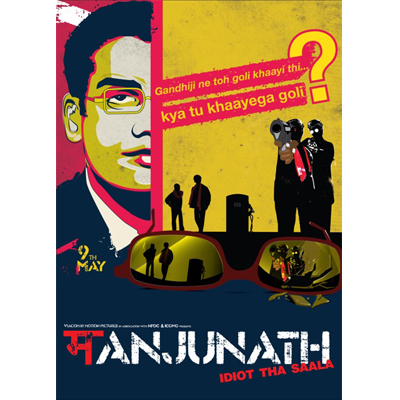
    MUMBAI: “Every film is not meant for everyone. There is a specific audience for each film and as marketers, our job is to identify and make the film reach its target audience. That is the process we follow for every film of ours,” says Viacom18 Motion Pictures VP marketing Rudrarup Dutta. Going by the success of Viacom18 Motion Pictures’ last venture, Queen, the production house certainly seems to have hit the right note as far as marketing strategy goes. And, it is readying to promote its next film, Manjunath, along similar lines.

    Dutta agrees that even good content does not work if it isn’t marketed effectively. “I would agree that competition has grown since previous years. Also, the importance of marketing has grown phenomenally in the past three to four years, where, good content, does not really stand a chance if it is not marketed effectively,” he says. 

    So what’s Viacom18 Motion Pictures’ formula? “Firstly, we understand the essence of the content and secondly, we identify the right audience for that content and then target this audience with correct positioning and communication,” answers Dutta. That’s what was done for Queen where the digital audience was targeted first with a video communication of Kangana Ranaut as Rani in ‘Rani ka Pehla Honeymoon’. “It was an interactive element we started off which immediately established the concept of the film with the audience. And, we got a good response and then went on to launch the trailer and subsequently, the rest of the campaign.”

    The Queen campaign had a distinct pre- and post- phase, so, even after the film’s release, Queen’s Day was celebrated to coincide with Women’s Day, where chocolates and flowers were distributed to women who went to theatres to see the film. There was also a pub crawl where Kangana aka Rani paid a surprise visit to various pubs and danced to the wacky remix, ‘Hungama ho gaya’. According to Dutta, smaller elements focused on building connect with the character and the concept of the film drove communication around Queen.  

    Coming to Manjunath – a biopic of IIM grad Manjunath Shanmugham who took on the fuel mafia in 2005 – Viacom18 has launched the microsite www.whoismanjunath.com in a bid to garner support for whistleblowers like Manjunath. The site  encourages the youth to stand up for what is right and “speak up” while their identities are kept a secret to protect them from persecution.

    Viacom decided to take a minimalistic approach but with high impact as Manjunath is a non-profit venture for the production house. “It is a non-profit venture for us. We are not putting it across as a film. For us, it is about taking the message of Manjunath to as many people as possible. If at all we do make profits, the same will be shared with the Manjunath trust and his family. After all, Manjunath was one of us, who, instead of linking stuff on facebook or discussing things at coffee shops, went ahead and actually did something against corruption. This is what actually inspired us,” says Dutta. Of course, getting Parikrama on-board was one of the ways to connect with the youth. “We are doing multiple city concerts in Mumbai, Delhi, Pune and Bengaluru, among others. We are getting them on a platform to promote the whole concept and create awareness with a huge digital push,” he adds.  

    A frugal approach however did not rule out buying TV spots and putting up hoardings. “This is something we want people to assimilate and put it up, because they feel for the cause and understand the reason behind it rather than just take it as a pure source of entertainment,” Dutta reasons.

    Is there such a thing as a good time to market a film? “It all depends from film to film. There is no one-glove-fits-all formula. For films like Bhaag Milkha Bhaag, we started marketing it eight to nine months before its release because there was a purpose to this build-up. We wanted to create awareness among Gen Now about the legend. Also, we wanted to project it as a larger-than-life film,” explains Dutta. Depending on the film, the period of promotion varies from four to 10 weeks and in some cases, as many as nine months. “There are other films which can be promoted in a five-week window. So, it all depends on the film, the audience that you want to reach, and the communication plan around it.”

    So, what kind of budgets are allocated to these films? “It differs from film to film. It can be as low as Rs 2.5 crore in some movies that have a limited target audience, while it can be as high as Rs 16 crore for films that want to reach a wider audience and need an extensive promotional campaign. We have operated on every budget. As I said, there is no formula in this. Every film has its own concept, own audience, and own positioning. It is about deploying available resources extensively to reach out to the target audience,” says Dutta. “It is not about the amount of money which you spend but how you use the money that determines the success of the marketing plan.”

    Bhaag Milkha Bhaag entered the elite Rs 100 crore club and so did Queen, almost. “The more money that good movies make, the more it encourages other people to make those movies. Even for us, let’s be real, it is a commercial venture and we are in the movie business so that we can make more movies and make profitable movies for everybody in the line,” says Dutta. It’s like walking the tightrope between the film cost and its potential revenue. “Running behind Rs 100-crore revenue for every film is not very healthy. If there is a film which is of a size that can deliver Rs 100 crore, then it is worth putting additional money and making and building it on that scale,” he signs off.