Tag: BFSI

  • Concept Public Relations bags the PR mandate of Epigamia

    Concept Public Relations bags the PR mandate of Epigamia

    Mumbai: Concept Public Relations India (part of the Concept Communications Group), has recently bagged the communications mandate for Epigamia after a competitive, multi-agency pitch contested by the top public relations agencies in India. The brand will be managed from the Mumbai (Head Office) of the agency. Concept will be responsible for handling media relations, strategic communications and brand advisory services for the brand.

    Commenting on the partnership, Siddarth Menon, Chief Marketing Officer, Drums Food International Pvt. Ltd. (Epigamia) said, “We are super kicked to have Concept PR partner us in our PR and Communication mandates. We look forward to leaning on their experience as we continue to increase our brand and geographic footprint”

    On winning the mandate, Ashish Jalan, Director & CEO, Concept Public Relations added, “Epigamia is India’s leading branded fresh FMCG brand and we are truly honored to have been awarded this immense responsibility. Our primary objective will be to develop a compelling communications narrative and advise the brand in navigating this new age of exponential change, new age consumers and increase its brand resonance through the various communications channels available. Concept has always been at the forefront of ideation and we are happy that Epigamia has seen this in our thinking.”

    The new client will help Concept Public Relations further augment its diverse client portfolio which spans across sectors such as Healthcare, BFSI, Auto, Lifestyle, Technology, Real Estate, Entertainment and Government. With experience in various verticals, enhanced emphasis on quality deliverables through innovative planning and execution successful campaigns, the agency envisions being one of the most reputed agencies in India in the coming years. 

  • Great opportunities for BFSI, hygiene brands in rural India: Report

    Great opportunities for BFSI, hygiene brands in rural India: Report

    NEW DELHI: Consumers in rural India are increasingly concerned about health, safety, and future well-being, especially of the chief earners in their families, shifting their focus to better financial planning, revealed the recent Rural Covid Barometer Report, released by Kantar in partnership with GroupM’s experiential marketing unit- Dialogue Factory. The report stated that the rural Indian is balancing the budget by cutting on “indulgence” categories like cold drinks, ready to eat snacks like chips etc and diverting the savings towards hygiene products. They are also looking to buy health and insurance products, opening up a large market for the BFSI segment.

    The report aims to provide a unique, fact-based perspective on consumer sentiments, their consumption choices and the behavioural changes brought about by the pandemic. This survey was conducted in 17 Indian states and deep dives into the lives of rural consumers and their adaptations post-Covid2019, providing valuable inputs for any brand’s rural strategy.

    With one in three rural adults being impacted by Covid2019, the rural economy is likely to take a hit, stated the report. However, with fewer job losses and consequent reduction in the incomes of the affluent households, the overall impact on rural consumption pattern is likely to be muted in the future. This presents an opportunity for businesses to sharply target their products towards the upper end of the rural consumer spectrum.

    However, brands will have to focus on their distribution and last-mile connectivity, since product availability in the local village stores will significantly impact brand choices of the rural shopper.

    It also highlighted that like their urban counterparts, rural Indians are increasingly relying on digital services for their day to day activities. With the pandemic accelerating digital adoption, there is a huge potential for businesses and brands to leverage mobile as a medium to reach rural consumers.

    Dialogue Factory head of experiential marketing – APAC Dalveer Singh said, “Rural India has always had a higher degree of resilience which makes it more confident for a rapid recovery than the urban areas during these unprecedented times. This report, which is one of the biggest assessment of the impact of the pandemic on rural areas, speaks volumes on the new, defining values that are shaping rural India – resilience, planning for future, protection from falling sick and growing reliance on digital.”

    Kantar senior executive director – insights division – Puneet Avasthi added, “For businesses, we would recommend a regional prioritisation. We believe that western India is likely to bounce back earliest. On the other hand, indications seem to suggest that rural South might take longer to recover as the impact of Covid2019 on employment has been more severe, which in turn has depressed the economic outlook of consumers there. We see this as an opportunity for brands to deploy their resources across zones in a graded and phased manner.”

    The report also assessed the impact of reverse migration. The study suggests that nearly 53 million migrant workers in India have returned to their villages. 80 per cent of migrants who have returned due to Covid2019 come from five states.

    Avasthi noted, “With one out of three rural migrants not planning to go back to urban India, we are likely to see a huge shift in rural consumption choices. This will also affect the availability of labour in urban India”

    The report also highlights a deep sense of optimism regarding India’s economic future; stemming from healthy growth in the agricultural sector and near-universal reach of targeted government programs (75 per cent of all consumers claimed to have received at least one of the major government schemes for rural India; 66 per cent claimed to have received free rations under PM Garib Kalyan Yojana).

  • Guest Column: Impact of artificial intelligence on programmatic advertising

    Guest Column: Impact of artificial intelligence on programmatic advertising

    Programmatic advertising is a method of utilising software to buy digital ads. It is easier for media buyers to go through an auction-based process instead of manual negotiations for displaying their ads on digital platforms. It is one of the most innovative methods of advertising which facilitates the buying and selling of digital ad space.

    On the other hand, artificial intelligence (AI) is the concept of replicating human intelligence in machines the potential of which, in turn, is unlocked by human intelligence. AI undoubtedly adds immense value to marketers.

    Machine learning has revolutionised media trading & programmatic algorithms based on volumes of data. AI incorporation enhances the targeting capabilities as individuals can be targeted based on behaviour & preferences and other programmatic interactions. Ads can be personalised based on location, demographics, interactions etc. Precision targeting is required for global reach of programmatic advertising. AI is allowing advertisers to dramatically boost the efficiency of their campaigns. Programmatic uses AI technologies to make better budget decisions for advertisers. When AI is applied to programmatic advertising, it can navigate on its own, as well as provide minute insights thereby enhancing the effectiveness of the campaign exponentially.

    The basis of both programmatic advertising & AI is data analytics. With the effective amalgamation of AI in programmatic advertising one can dynamically score user, accurately differentiate, bid on valuable customers & drive efficient conversions. The brands need to embrace the power & opportunities that AI bots & digital assistants provide. The search has improved drastically with the inception of AI algorithms. As per a report, the AI market is predicted to grow more than 47 billion dollars by 2020 which is a massive rise. It can also enhance the look and feel of ad creatives which can be designed to catch the attention of the viewer.

    Real-time bidding can be facilitated with AI in programmatic advertising. Automation brings advertisers closer to the goals that are set by the brand. As per statistics by Zenith marketing forecasts, by 2019, 67 per cent of display advertising will be traded programmatically. Before the onset of programmatic, the process of digital ad-buying was slow & monotonous. The marketers had to negotiate for ad placement wherein they had to compromise upon cost, space or results. The need to sort this recurring issue paved way for programmatic advertising & to automate the process further, AI was incorporated with it. Thus, ad buying has now become more effective, efficient, cheaper & result-oriented. AI enables the option of whom to show the ad, when & where instead of simply negotiating the ad space. Many brands are banking upon programmatic advertising for lead generation across the globe. Right from FMCG to BFSI to real estate& tourism & hospitality, it has become a favourite of the brands.

    The future also looks promising for AI enabled programmatic advertising as in times to come, through the process of machine learning audience profiling will be finalised on its own. There would be no need to use programmatic tools for filtering audience, in fact, it will evaluate customers’ behaviour and display ads accordingly.

    (The author is CEO and founder, iCubesWire. The opinions expressed here are his own and Indiantelevision.com)

  • Guest Column: The changing landscape of ‘Festive Marketing’

    Guest Column: The changing landscape of ‘Festive Marketing’

    Festive season is a time when marketing spends by brands shoot through the roof – and for good reason. This is the time when most high-ticket purchases are made, or if not, influenced. Because of these, most products have huge discounts going on their platforms or brands. While classically, this translates to a month of festivities, but eventually encapsulates the last quarter of October, November, and December.

    As a result, most of the brands spend most of their marketing budgets in the last quarter of the year, typically October – December period which starts from Onam, Ganpati and gains pace with Dussehra- Diwali. Last quarter spend accounts nearly 30 per cent of the annual advertising spends. With the digital sector booming, brands use digital platforms to advertise and leverage them to the utmost in the festive season.

    In 2016, we witnessed a short festive period with Dussehra. This was primarily because of Diwali falling in the same month of October. Then there was demonetization and GST. In 2017, the annual ad spends was a little better with 18-20 per cent growth over last year, however the demand was still below par. What we witnessed was not a very “Happy Diwali” in last two years.

    Marketers predicted that in 2018, the festive season would bounce back with both on-demand higher share of ad spends as compared to 2017. However, the third quarter of 2018, we witnessed one of the biggest calamities when floods hit God’s own country- Kerala, devastating the entire southern region of India. Marketers lost hundreds of crores of media revenues as they could not gauge the Onam spirit as everyone was occupied in restoring the region. The entire marketing community was toned down to pay their respects and take cognizance of what had happened. 

    Which brings us to the next question – what would be the sentiment of market in the last quarter (October- December period)? Will brands take a cautious approach in ad spends, worried about the lost opportunities in the previous quarter? Or the brands would go full boom in ad spends & make up with the lost opportunities in the previous quarter. Time will tell. 

    My guess is that to make up for the lost time & opportunities, basis the previous quarter, it would make complete sense for the brands to go full throttle. We have already seen how three prominent e-tailers – Amazon, Flipkart & Snapdeal have started screaming discounts on everything in national newspapers, indicating the trend for next three months. 

    Prominent roadblock properties like the Big Billion Day sales are planned around the festive season for the same reason. While these were initially believed to be rub-offs of international trends done by international giants like Alibaba, they have managed to gather a life of their own. And as a result, one cannot see this fading out of consumer behaviour anytime soon.  

    As a prediction, it is safe to say that we are definitely in a better position than the last two previous years. This is primarily due to the fact that the festivals themselves have spread out across the calendar, thus giving the marketer more time and bandwidth to plan their campaigns and spends. Secondly, the consumer is keen to cash in on the festive season this year because the previous ones have been damp. But the informed marketer will only take a cautious approach – not going too wild with ad spends, while ensuring that the right sentiments and passion points of the targeted consumer are hit upon.

    One can expect the digital spends to be primarily fuelled by e-commerce players, mobile manufacturers, automotive sector and BFSI. One can already see full spreads in print with the launch of latest gadgets, massive discounts on consumer goods and more. As the Diwali festival approaches, one can only expect the movement to gather more steam. What’s more, the consumer is always in the green. Even if they miss out on one ecommerce player, they have a lot more to fall back upon. And this number is only increasing. Even e-wallets like a Paytm have their own sale happening this year. It only goes to show that there are enough and more choices for the end consumer to park their monies in new products. 

    All in all, one can only hope that we have a truly Happy Diwali this time!

    The author is VP & Head- Business Development, Grapes Digital. The opinions expressed here are his own and Indiantelevision.com may not subscribe to them.

  • YES Bank opts for iCubesWire’s AI solution

    YES Bank opts for iCubesWire’s AI solution

    MUMBAI: In an industry first in the BFSI sector, YES Bank has opted for iCubesWire’s AI enabled solution, Instatalk, which provides an accurate platform for the customers to interact instantly with the brand and seamlessly suits their requirements.

    YES Bank country head Rajat Mehta said, “As a new-age, technology-enabled bank, we are always exploring new opportunities to innovate and tie-up with partners that can help to increase our brand presence digitally. We are happy to explore the possibilities with iCubesWire and incorporate their AI solution Instatalk, a new-gen product which is the quintessential bridge between the user and the brand. The bot engagement integrated with the campaign strategies will elevates the rate of user engagement for our display campaigns”.

    iCubesWire founder and CEO Sahil Chopra added, “YES Bank is a pioneer in the BFSI sector to create a customisable savings account and we are more than excited to have tied-up with them for an AI enabled campaign. It is a great opportunity for us to bank upon and we are certain the integration will prove fruitful for the brand as well as the users thereby strengthening their loyalty towards the bank. We are keen to explore the digital domain with YES Bank.”

    With the rising neck to neck competition in the BFSI sector, it is paramount to keep up with the pace and innovate better means to impart customer experience. This is when Instatalk becomes the ideal fit in the swift digital world. 

    Through this campaign, YES Bank aims to enhance the user engagement and curtails the long process for queries revolving around savings accounts.

  • BFSI’s changing communication in the digital era

    BFSI’s changing communication in the digital era

    MUMBAI: BFSI equals boring. That is usually what people think about anything to do with banking, financial services and insurance (BFSI). You may have witnessed how their ads tend to be dull and monotonous. But, lately, the BFSI companies have been the forerunners in the digital revolution and the drab tones have given way to smarter messaging.

    The sector comprises of commercial banks, insurance companies, non-banking financial companies, cooperatives, pensions funds, mutual funds and other smaller financial entities. This industry’s clear shift toward digitisation and virtualisation of communication, despite the highly regulated market, is transforming the banking experience for consumers and representatives. BFSI sector was one of the earliest entrants to leverage digital medium to connect with consumers by proving online banking and insurance facilities.

    IDBI BANK true friendship ad:

    The BFSI sector has seen a shift in behaviour and communication plays a part in both capturing and supporting the change. Over the years, as digital caught pace, BFSI companies have tried to leverage it differently from offline. At the forefront was building communication and conversations that speak to the attitudes and trends of online consumers. Moreover, digital also allows the sector to have direct contact with the consumer in a controlled and transparent way, which the traditional model limits.

    BankBazaar #GoPaperless ad:

    Lately, the sector has experimented with creative and innovative ads through good storytelling rather than just promoting the product, which was the case earlier. Businesses are opening their eyes to the value of using video for their marketing and communications. This involves breaking down information into easily digestible sound-bites and not having customers pour over hundreds of words to understand the technical aspects of the products/services they are purchasing. Kotak Mahindra Bank even came up with India’s first downloadable bank account – 811, which has made opening a fully functional bank account a matter of 5 minutes or less.

    The tough task for BFSI is to make a low-involvement area a very attractive one for customers. Kotak Mahindra Bank executive vice president Elizabeth Venkatraman points out, “The effectiveness of the communication depends on the apt choice of media. Marketers have been closely observing the changing customer segments and their behaviour, and have been trying to create distinctive ideas, each time.

    #LaterMaybeLate – Kotak Life Insurance ad:

    With fin-tech startups like BankBazaar.com and paisabazaar.com trying to change the market, customers can get instant loan or policy online without having to step out of the house.

    Today, banks and insurance companies are ardent social media users to communicate to customers about their offerings like credit card offers, life insurance policies or home loans. While Aegon Life Insurance spends more than 90 per cent of its brand money on digital media, Kotak Mahindra and IDBI Federal Life Insurance shell out 40-50 per cent of their advertising budget on digital platforms.

    BFSI ads work best when the communication is two-way, which is restricted on TV. Unlike FMCG, where a brand can mass-target, BFSI needs to focus on individual needs. In-cinema advertising, a favourite spot to pick customers, may soon wither as the spends in this area are already being reallocated to other mediums.

    Aegon Life Insurance chief digital officer Martijn De Jong says, “We tried using in-cinema couple of years back and the medium is not very cost effective compared to other forms. The only advantage is its localised reach.”

    On a similar note, IDBI Federal Life Insurance CMO head product & strategy Karthik Raman believes that in-cinema advertising is not as effective as it was earlier because the cost of advertising has risen but the effect has reduced. Venkatraman points out that though the medium gives quick impact and is less cluttered, the effectiveness still depends on perception as there is no industry metric for measurement.

    Print, a medium that has been around for centuries is starting to lose its sheen among the BFSI sector as the cost per ad is very high, forcing the industry to shift to cost-effective mediums such as OOH (Out Of Home), digital and BTL (Below The Line).

    It is left to see whether BFSI can make it to the top of the memory rank of customers when recollecting their most memorable ads.

  • AdLift wins two awards at CDO Converge

    AdLift wins two awards at CDO Converge

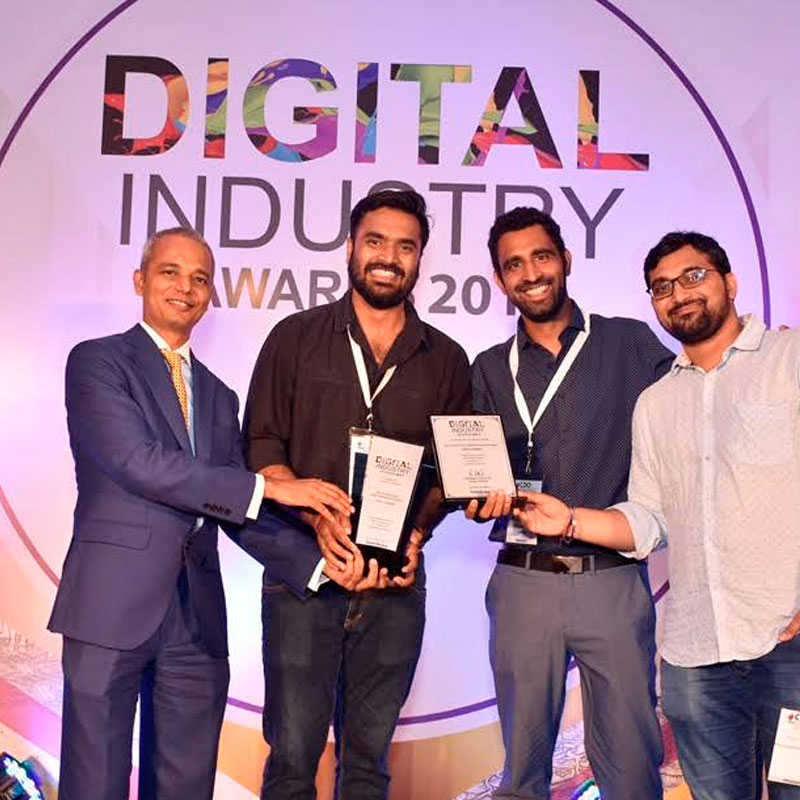
    MUMBAI: AdLift, a digital marketing agency with offices in the US and India, has been awarded for its digital excellence at the CDO Converge Conference and Awards held in Mumbai.

    AdLift and Aakash Institute won the Digital Excellence Award in education. AdLift and ICICI Lombard won the best Content Driven Digital Marketing Campaign.

    AdLift CEO Prashant Puri: “The award acknowledges our breadth of experience within the education space with search marketing. We work closely with the BFSI segment. I’m excited that our work within the content marketing realm for ICICI Lombard has been endorsed.”

    The announcement follows AdLift’s recent success at Masters of Modern Marketing Awards.

  • Digital is way forward but auxiliary for top brands: Reports (updated)

    MUMBAI / BENGALURU: Two separate studies by unrelated parties have been used in this report. Mobile internet has excellent future prospects in South East Asia, and more so in India says the Indian Digital Advertising Report 2017 (DA Report) by Cheetah Global Lab.

    India has, as a country, skipped right over PC and entered the mobile internet age. Although India’s mobile internet penetration remains low, the accelerated development of its infrastructure and support from local carriers have made India one of the fastest growing internet populations in the world. 4G coverage in India continues to rise, and the rural market there has considerable potential.

    India differs from markets with more mature digital ecosystems, in that traditional media, especially newspapers, have not yet been seriously challenged by digital content channels. Traditional media would continue to enjoy high popularity and profit margins. Indian newspapers; revenues have continued to grow, and newspaper is still the most effective way for advertisers to reach a great number of users.

    However the DA Report says that India’s digital ad market development has been hindered by insufficient infrastructure and limited internet speed, but these factors aside, digital ads are not the main advertising channel for top-tier brands. From the data it has obtained, Cheetah Lab says that it is clear that even if brands had bigger advertising budgets, Indian advertisers would retain a preference for traditional media and the non-mobile internet. According to Cheetah Global Lab, one of the main reasons for this is that at present, the Indian ad market lacks industry standard, widely accepted performance evaluation standards. Compared to digital ads, print media and television ads can provide clearer statistics for reaches and digital ad performance is harder to determine.

    In terms of the distribution of spending on digital advertising across all vertical industries, e-commerce, accounting for 19 per cent of all digital ad spending, leads the pack. FMCG comes in second with a 14 per cent share, while banking, financial services and insurance (BFSI) follow closely behind. Consumer durables, automotive, and media & entertainment are not separated by wide margins.

    When comparing vertical industries in terms of the percentage of marketing budget spent on digital advertising, e-commerce companies spend the highest percentage at 25 per cent, less than the percentage of advertising budget allocated for television advertisements (38 per cent) and print ads (28 per cent). Number two telecommunications companies allocate 22 per cent of their marketing budgets for digital advertising, followed by BFSI and media & entertainment, in which about one-fifth of advertising budgets are allocated for digital advertising. In the durable consumer goods industry, 17 per cent of advertising budgets go to digital advertising.

    The major developments and conclusions of the DA Report are: In the digital age, traditional media continue to thrive in the Indian ad market; Spending on digital advertising in India will be increased in social and video; Standards for measuring ad performance, data, independent third-party verification, and visibility rates: spending on digital ads in the Indian market revolves around these keywords.

    A separate report unrelated to the DA Report of Cheetah Global Labs, Indiantelevision.com found, confirms the analyses of India Mobile Video Report (a joint study by Kantar IMRB & Culture Machine) June 2017 that mobile equipment manufacturers, mobile advertisers and OTT players will be investing in mobile technologies to expand their business, explore new avenues in terms of monetisation, especially broadcasters, production units to create new content on OTT, advertisers who are ready to spend on mobile ad placements as they are exploring new opportunities in mobile marketing, where there is a surge in data traffic and addition to mobile video consumers which will open up to new avenues for digital companies.

    The Mobile Video Report says further that mobile is the future as most of the data is processed through the small handheld device. Video has adopted a dual role, becoming a means of consumption and expression. There has been a rapid evolution in the way the consumer is expressing her/ his opinion. Hence the brand marketers and digital advertisers are facing distraction as there is an oversupply in data which is confusing them and depriving them from making new opportunities.

    But video is future of the content marketing. The Mobile Video Report says that, mobile screen will be attracting more engagement than any other media, likely to be 37 percent higher than TV. Not only are more people turning to the mobile for entertainment, they are also watching and engaging more deeply online.

    The report unfolds that daily engagement time on mobile hovers around the four-hour mark, as per the report, it has estimated that the average time of the consumer spent on entertainment is 23 per cent in the last 9 months. And it will register a hike in data traffic from 1.4 GB in 2015 to 7 GB in 2021, which is measured in data traffic per active Smartphone.

    The market will grow from Rs 1,700 million in 2016 to Rs 12,300 million in 2020. The digital video subscription market is estimated to cross 12,000 million by 2020. The OTT (over the top content) is growing rapidly; already 3 out of 10 users are across on OTT video platform.

    The Mobile Video Report also suggests that 65 per cent of the video surfers on the mobile belong to non-metro towns. And while most of the users are likely to be women accounting for 30 per cent to be avid consumers of mobile video.

    While the report also indicates that most of the users spend 3 hours/ week on consuming mobile video, while 90 per cent of this is spent on. It means that the 2 platforms are popular with the consumers that are YouTube and Facebook.

    The other indications are, that the medium is popular across the age groups, not just the young, and over half the viewers are above the age group of 25 years. In fact India has more than 20 million avid video consumers who spend more than 22 hours a month consuming video. Mobile video consumption is not just for affluent homes, more than 40 per cent of viewers belongs to SEC C/D/E homes.

  • Yes Bank adopts Cloudera to enhance digital strategy

    MUMBAI: Cloudera, Inc., a provider of the modern platform for machine learning and advanced analytics, announced that Yes Bank, a private sector bank, has adopted Cloudera Enterprise Data Hub to develop customized campaigns for consumers throughout their customer journeys. Cloudera Enterprise empowers Yes Bank to transform their growing volumes of transactional and customer data from their digital services into clear and actionable insights by using real-time analytics and machine learning.

    Banking, Financial Service and Insurance (BFSIs) across the region are struggling to keep pace with the vast amount of customer data that they collect in today’s consumer-centric mobile economy. With Cloudera Enterprise, BFSIs like Yes Bank can now mine large volumes of data from financial transactions and create machine learning algorithms to support information-driven business decisions and revenue growth.

    Commenting on the development, Anup Purohit, Chief Information Officer at Yes Bank , said, “Cloudera Enterprise is now the bedrock of our company’s digital strategy. With its successful track record of working with several other leading BFSIs across the globe, Yes Bank decided to deploy a modern platform to provide a differentiated digital experience for our customers through intelligent, real time analytics.”

    Today, Yes Bank is using big data and analytics to cross-sell and up-sell opportunities for the business, while providing a customized experience for consumers across the bank’s digital channels and identifying and rectifying any inconveniences during the customer journey.

    With the growing risk of cyberattacks, BFSIs also recognize the importance of a safe and secure data management platform that is compliant with the latest industry regulations. Cloudera Enterprise enables Yes Bank to reduce the cost of compliance in today’s digital age and transform existing processes through machine learning and predictive modelling, eliminating risk and detecting fraud faster and smarter by utilizing massive amounts of data to effectively train their systems.

    “BFSIs today are competing to create enhanced products in a world where consumers are demanding the most convenient and customized journeys. As such, business leaders are pressured to keep up with the latest technology solutions to deliver unparalleled experiences for their customers,” said Cloudera VP – Asia Pacific and Japan Mark Micallef. “Cloudera empowers BFSIs like Yes Bank with a scalable and secure data analytics and machine learning platform to use data in ways not possible before and enables organizations to derive business insights for revenue growth, all while maintaining a high standard of security and ensuring compliance to industry regulations.”

  • Magma offers scholarships to 100 under-grads

    MUMBAI: Magma Fincorp, a BFSI entity, in an effort to reach out to more meritorious students from the lower income families, has decided to to offer 100 scholarships across the country in FY18.

    Every year many meritorious students hailing from poor families are forced to discontinue their higher education due to lack of funds. Keeping alive their motto of ‘investing in the smallest dreams’, Magma offers financial assistance in the form of scholarships to such students every year under their scheme “M-Scholar”. Students will be selected on the basis of their academic performance and socio-economic background of their families who are unable to support their children to continue studies.

    Magma VP – CSR, corporate communications and admin Kaushik Sinha said, “The three year scholarship will be renewable every year on confirmation of grades in annual exams.”

    Magma believes that the scholarship will meet a part of the student’s education and related expenses while pursuing higher studies.