Tag: Beyond Dreams

  • Inside India’s dubbing and subtitling industry

    Inside India’s dubbing and subtitling industry

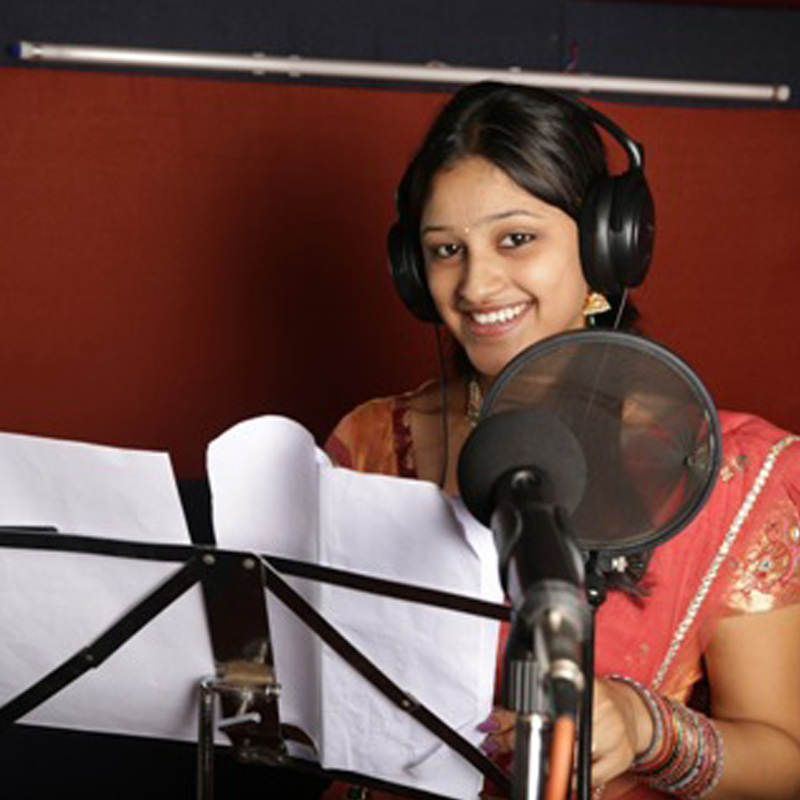
    MUMBAI: The dubbing and subtitling industry in India was founded due to the television business’ need to leverage a variety of content from within different markets in the country. Indian viewers first tasted dubbed content thanks to Discovery World. In the early 90’s, dubbing was predominantly restricted to kids’ animation content by Disney. This was then picked up by private broadcasters as a fixed slot for kids that later evolved into a dedicated kids channel available in multiple languages. The first dub theatrical hit was Jurassic Park, which opened the Pandora’s box for cult South Indian films like Roja. Thus, a degree of variety and freshness was injected into Indian programming.

    Demand for localised content has grown

    Today, dubbing and subtitling is a flourishing business in India with Hollywood films, animation films and regional content at the heart of it. This wasn’t the case few years ago when only international content was dubbed for the Indian market. In India dubbing mostly happens in three Indian languages- Hindi, Tamil and Telugu. Spider-Man 3 was dubbed in Bhojpuri in addition to Hindi, Tamil and Telugu. A Good Day to Die Hard, the most recent instalment in the Die Hard franchise, was the first ever Hollywood film to receive a Punjabi language dub as well.

    In 1983, PA Krishnan founded the Dubbing Artistes Union of South India, an association for dubbing artistes. The union, which is now called South Indian Cine and Television Artistes and Dubbing Artistes Union, has over 2,000 artistes and more than 30 voice co-ordinators or dubbing agents (people who choose dubbing artistes) as its members. It is also affiliated to the Film Employees Federation of South India (FEFSI). 

    The surge and infusion of international content entering India and demand to watch it in native language has witnessed a steady rise. Serials and small-format shows from Tamil and Bengali are now being dubbed and subtitled in many Indian and foreign languages.

    Major dubbing companies have now given way to smaller players like BOL Media, Native Ninja, VSI Group, etc. UTV shut down five years back, while Crest Animation pulled the plug on its operations almost 10 years ago. In terms of corporate players only Prime Focus still exists. 

    Amazon Prime and Netflix are spending big on content localisation. They are also producing original Indian content that is being dubbed for international markets. Among the global OTT players, a major growth driver is Netflix, which launched its global video on demand (SVOD) service in January 2016. It has now 104 million paid subscribers in 190 countries and the service supports 24 languages.

    “ZEEL has a Bollywood movie pay television channel in Spanish language called ZEE Mundo. So, a lot of Indian content is travelling overseas now. Recently Aamir Khan’s movie also got dubbed in China and people over there loved it,” says BOL Media Founder and CEO Rahul Bhatia highlighting the evolution of India’s dubbing and subtitling industry.

    Economics of dubbing and subtitling industry

    The dubbing industry in India is valued anywhere between Rs 100-120 crore. Interestingly, the bigger companies are now giving way to smaller ones. The key reason behind this development has been the exodus of influential executives from major players setting up their own dubbing businesses.

    The mushrooming of smaller companies has greatly benefited broadcasters and production houses that now have access to more technical resources at pocket-friendly prices. For instance, it now costs Rs 15,000 to dub a television episode as compared to Rs 80,000 in the past. Today, a three-hour movie costs Rs. three lakh when dubbed for a television audience and around Rs. 15 lakh for the theatres.

    In the general entertainment space, dubbing and executing one episode takes four days while subtitling of one hour content takes two days. However, a movie for the television audience is dubbed in approximately 15 day while that for a theatre could need up to 30. While dubbing has become cheaper, content translation charges have witnessed a spike.

    Translators charge Rs. 1 per word for an Indian movie and Rs. 10 for a foreign film, while dubbing costs vary between Rs. 80 to Rs. 130 per minute for one movie.

    “There are very few corporate structures having an entire team of dubbing directors, sound engineers, quality controllers in house with defined SLA and workflows. Rest of the dubbing companies are owned and operated by studio owners, voice actors or dubbing producers with a niche clientele. Majority of the companies assemble the team and work on a project-to-project basis,” says Native Ninja founder Sanjeev Das.

    The road ahead

    Dubbing companies acquire customers organically. The major chunk of the business is comes from the television industry. But going forward, OTT platform could be the biggest source of business. Around 60 percent of the business comes from the television industry, 30 per cent from movies and remaining 10 per cent from OTT. In the future, OTT is likely to contribute 60 percent of the dubbing business.

    The business will be on a steady growth path due to the increased volume of content being created with a focus on localisation. Dubbing, subtitling, and closed captioning for English and major international languages could be taken over by technology such as artificial Intelligence, machine learning, automated captioning and auto-translation. However, precise and accurate translation, adaptation, interpretation and translation will always require a human touch. That’s where localisation companies need to be at the top of their game. With such advancements, the industry is bound to witness a shake up in the next five years, with only those prepared to adapt to the challenges likely to survive and thrive.
     

  • Hindi GECs set sights on ad revenues

    Hindi GECs set sights on ad revenues

    MUMBAI: Change is the only constant is an oft-repeated cliché. And we have seen Hindi general entertainment channels brining in their changing streaks of programming every year. Known for setting trends and bold moves, Star India’s Hindi GEC Star Plus was the first broadcaster to open a new slot by extending its early fringe primetime from 5.30 pm onwards on 15 June, 2015 with Mere Angne Mein (MAM). The show failed to generate positive ratings, and hence later the channel changed the time slot and made it a half hour show and started airing it at 6pm.

    On May 9 Star Plus had reopened the slot with Beyond Dreams’ Jana Na Dil Se Door but later it changed the show’s timings and started airing it at the 10.30 pm time band. On the other hand, Zee TV extended its early primetime to the 6.30 slot with Vishkanya. Colors’ early primetime starts at the 6 pm time band whereas Sony Entertainment channel’s primetime starts from 8pm. Zee Network’s new entrant &TV has recently forayed into 7pm time band with its new show Waaris.

    The channels are not only experimenting with the content but also experimenting by expanding their primetime slot to increase ad revenue. Speaking about the extended primetime to Indiantelevision.com, Sunshine Productions founder Sudhir Sharma said, “It’s a good thing for producers and for the viewers as well. Instead of producing four hours of content they are now going to produce five to six hours of it. That also means that the business and the industry is improving and advertising revenue is coming up that is the reason why I think all the broadcasters have started increasing their primetime. There is the availability of clients/advertisers hence they are increasing their primetime slots.”

    Early time slots budgets are different and advertising fee for the ten second slot is different as compared to regular primetime. “This is a business decision that they are doing shows at 6pm or 630 pm. Now on every channel you will see there are the shows on early primetime. It will always be a fight to get ratings on early the primetime slot but that is what the challenge is about. There is a requirement and there are advertisers available. They will not pay the broadcaster as much as the 9 – 10 pm time slot, but that is business strategy,” Sharma further added.

    BBC Worldwide India SVP and GM Myleeta Aga added, “Extending primetime is a welcome thing. Different day parts will have different kinds of audiences. Of course the early fringe and primetime part will be more family co-viewing and maybe during the late part one can try some edgier content, but it’s not a huge change. It’s been there, everybody is trying things one project at a time to see what works.”

    It’s clear that the broadcasters’ decision to extend their primetime slot is not to garner more eyeballs but to attract additional advertising revenue. “Channels claim that 7 pm -12pm is their primetime while earlier it was 7pm – 11pm and even before that it was 8-10pm. It has changed with time and it has changed because of revenue pressure and not because of garnering more eyeballs. The audiences have not particularly increased during those time slots. If you look at the consumer class, it is larger in the metros. They have more money to spend in the larger towns than the smaller towns,” explained a media planner.

    On an average, the 10 second slot ad rate could be between Rs 7000 to Rs 10,000 for 5pm-6pm time band and Rs 15000 Rs 17000 for 6pm and 6.30 pm time slot. But the media planning fraternity believes that the placement of a show majorly depends on its content. “Star Plus has done a lot as a first mover and if the show is good you will find the audience. There is a sizable audience at 500 or 5.30pm, though it’s not as big as the primetime audience, but I think the slot offers a lot more potential. If the show is good then I am sure it will find the audience as well,” the media planner added.

    Undoubtedly, content is the king. The whole money game largely depends on what kind of content the channel is feeding to its consumer. Sharma further explained, “The latest release on Star Plus or Colors, Life OK, Zee or &TV for that matter — Humari Bahu Rajnikant or may be Ishqbaaz, which is launching today, there is a definite change in terms of storytelling, they are not only about a small town girl, how she survives or how she is in Sasural. Various topics are being taped which is a fantastic sign. There is a definite demand and need for different kind of programming.”

    “The main current trend in the industry that we are seeing about the kind of content is supernatural. That is certainly one trend. I think there continue to be attempts to have slightly different ways of storytelling. For example a new show on Life OK has a male lead as also on Star Plus’s Ishqbaaz. There is an appetite to try different things, but it’s not a huge change, it’s very small and subtle moves that broadcasters are making. The more bolder stuff is not necessaril resonating with the audience,” Aga opined.

    Weekend programming is another new trend that is affecting the Hindi GEC waves. Sunshine Productions is among the few production houses which tried to experiment with Gulmohar Grand.

    Sharma said, “We are one of the few production companies that have done many weekend shows. In India we haven’t tried fully and effectively weekend programming. Either the shows have not been marketed properly or they are too expensive to begin with. It’s a question of the viability for the producers and broadcasters versus popularity, there is no perfect match is what we have found.”

    “Weekend programming is still not a part of our viewing habits and it will take some time. We need some more consistent programming on weekends. We do it for a while and change and come back to nonfiction and back again to the daily shows on Saturday and Sunday. Unless you are doing it long enough for habits to form, it will be difficult to get good audiences on weekends for the episodic dramas,” Aga explained.

    Will this new trend of coining new slots as primetime work for the broadcasters? Is it sustainable? Will it work this time around? And though Content is King, the Advertiser is Emperor for the broadcaster and the Viewer is God for all these players. So will the King maker be able to convince the emperor and god/s on a sustainable repeatable basis? Only God can tell, or maybe even she/he/it can’t? Only time will, that is for sure! In the meantime hats off to the industry for making story telling so innovative, older stories more interesting, from another perspective, looking at a Ramayana from Sita’s angle or a Mahabharata from Karna’s point of view are cases in point, for creating additional jobs, for helping in the circulation of money, for …. The benefits go a long way across the value chain.

    Also read

    http://www.indiantelevision.com/television/tv-channels/gecs/star-plus-reopens-530pm-primetime-band-with-jana-na-dil-se-door-160509

    http://www.indiantelevision.com/television/tv-shows/fiction/zee-tv-joins-weekend-ratings-battle-with-amma-at-1030pm-time-slot-160616

  • Hindi GECs set sights on ad revenues

    Hindi GECs set sights on ad revenues

    MUMBAI: Change is the only constant is an oft-repeated cliché. And we have seen Hindi general entertainment channels brining in their changing streaks of programming every year. Known for setting trends and bold moves, Star India’s Hindi GEC Star Plus was the first broadcaster to open a new slot by extending its early fringe primetime from 5.30 pm onwards on 15 June, 2015 with Mere Angne Mein (MAM). The show failed to generate positive ratings, and hence later the channel changed the time slot and made it a half hour show and started airing it at 6pm.

    On May 9 Star Plus had reopened the slot with Beyond Dreams’ Jana Na Dil Se Door but later it changed the show’s timings and started airing it at the 10.30 pm time band. On the other hand, Zee TV extended its early primetime to the 6.30 slot with Vishkanya. Colors’ early primetime starts at the 6 pm time band whereas Sony Entertainment channel’s primetime starts from 8pm. Zee Network’s new entrant &TV has recently forayed into 7pm time band with its new show Waaris.

    The channels are not only experimenting with the content but also experimenting by expanding their primetime slot to increase ad revenue. Speaking about the extended primetime to Indiantelevision.com, Sunshine Productions founder Sudhir Sharma said, “It’s a good thing for producers and for the viewers as well. Instead of producing four hours of content they are now going to produce five to six hours of it. That also means that the business and the industry is improving and advertising revenue is coming up that is the reason why I think all the broadcasters have started increasing their primetime. There is the availability of clients/advertisers hence they are increasing their primetime slots.”

    Early time slots budgets are different and advertising fee for the ten second slot is different as compared to regular primetime. “This is a business decision that they are doing shows at 6pm or 630 pm. Now on every channel you will see there are the shows on early primetime. It will always be a fight to get ratings on early the primetime slot but that is what the challenge is about. There is a requirement and there are advertisers available. They will not pay the broadcaster as much as the 9 – 10 pm time slot, but that is business strategy,” Sharma further added.

    BBC Worldwide India SVP and GM Myleeta Aga added, “Extending primetime is a welcome thing. Different day parts will have different kinds of audiences. Of course the early fringe and primetime part will be more family co-viewing and maybe during the late part one can try some edgier content, but it’s not a huge change. It’s been there, everybody is trying things one project at a time to see what works.”

    It’s clear that the broadcasters’ decision to extend their primetime slot is not to garner more eyeballs but to attract additional advertising revenue. “Channels claim that 7 pm -12pm is their primetime while earlier it was 7pm – 11pm and even before that it was 8-10pm. It has changed with time and it has changed because of revenue pressure and not because of garnering more eyeballs. The audiences have not particularly increased during those time slots. If you look at the consumer class, it is larger in the metros. They have more money to spend in the larger towns than the smaller towns,” explained a media planner.

    On an average, the 10 second slot ad rate could be between Rs 7000 to Rs 10,000 for 5pm-6pm time band and Rs 15000 Rs 17000 for 6pm and 6.30 pm time slot. But the media planning fraternity believes that the placement of a show majorly depends on its content. “Star Plus has done a lot as a first mover and if the show is good you will find the audience. There is a sizable audience at 500 or 5.30pm, though it’s not as big as the primetime audience, but I think the slot offers a lot more potential. If the show is good then I am sure it will find the audience as well,” the media planner added.

    Undoubtedly, content is the king. The whole money game largely depends on what kind of content the channel is feeding to its consumer. Sharma further explained, “The latest release on Star Plus or Colors, Life OK, Zee or &TV for that matter — Humari Bahu Rajnikant or may be Ishqbaaz, which is launching today, there is a definite change in terms of storytelling, they are not only about a small town girl, how she survives or how she is in Sasural. Various topics are being taped which is a fantastic sign. There is a definite demand and need for different kind of programming.”

    “The main current trend in the industry that we are seeing about the kind of content is supernatural. That is certainly one trend. I think there continue to be attempts to have slightly different ways of storytelling. For example a new show on Life OK has a male lead as also on Star Plus’s Ishqbaaz. There is an appetite to try different things, but it’s not a huge change, it’s very small and subtle moves that broadcasters are making. The more bolder stuff is not necessaril resonating with the audience,” Aga opined.

    Weekend programming is another new trend that is affecting the Hindi GEC waves. Sunshine Productions is among the few production houses which tried to experiment with Gulmohar Grand.

    Sharma said, “We are one of the few production companies that have done many weekend shows. In India we haven’t tried fully and effectively weekend programming. Either the shows have not been marketed properly or they are too expensive to begin with. It’s a question of the viability for the producers and broadcasters versus popularity, there is no perfect match is what we have found.”

    “Weekend programming is still not a part of our viewing habits and it will take some time. We need some more consistent programming on weekends. We do it for a while and change and come back to nonfiction and back again to the daily shows on Saturday and Sunday. Unless you are doing it long enough for habits to form, it will be difficult to get good audiences on weekends for the episodic dramas,” Aga explained.

    Will this new trend of coining new slots as primetime work for the broadcasters? Is it sustainable? Will it work this time around? And though Content is King, the Advertiser is Emperor for the broadcaster and the Viewer is God for all these players. So will the King maker be able to convince the emperor and god/s on a sustainable repeatable basis? Only God can tell, or maybe even she/he/it can’t? Only time will, that is for sure! In the meantime hats off to the industry for making story telling so innovative, older stories more interesting, from another perspective, looking at a Ramayana from Sita’s angle or a Mahabharata from Karna’s point of view are cases in point, for creating additional jobs, for helping in the circulation of money, for …. The benefits go a long way across the value chain.

    Also read

    http://www.indiantelevision.com/television/tv-channels/gecs/star-plus-reopens-530pm-primetime-band-with-jana-na-dil-se-door-160509

    http://www.indiantelevision.com/television/tv-shows/fiction/zee-tv-joins-weekend-ratings-battle-with-amma-at-1030pm-time-slot-160616