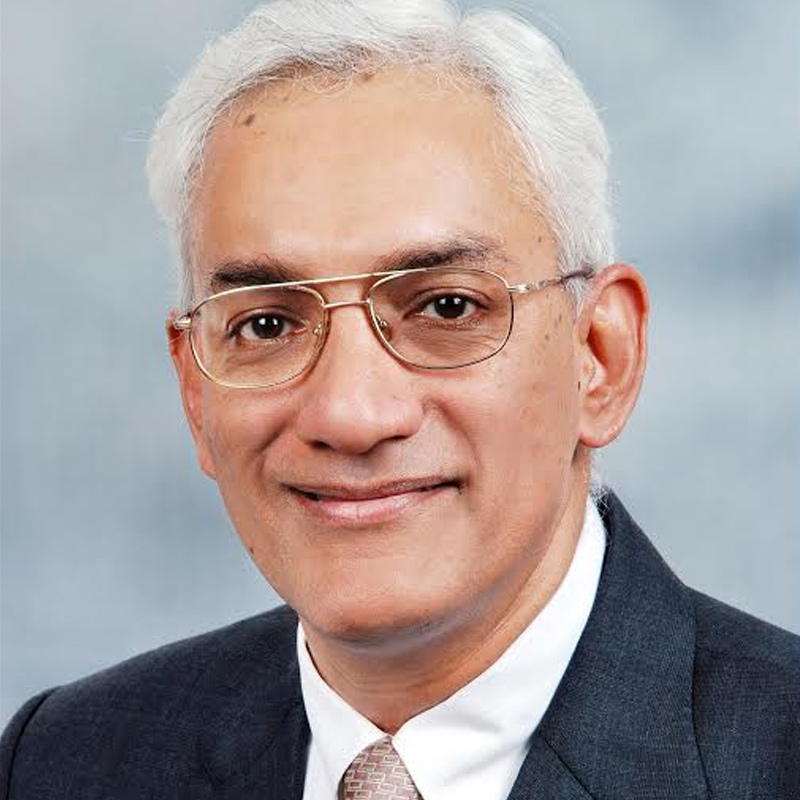
Tag: Benoy Roychowdhury

  • Srinivasan K Swamy is new ASCI chairman

    Srinivasan K Swamy is new ASCI chairman

    MUMBAI: Advertising Standards Council of India (ASCI) has appointed the industry stalwart Srinivasan K Swamy as the chairman, as the incumbent head Benoy Roychowdhury’s term comes to a close. R K Swamy Hansa BBDO chairman Sundar Swamy, as he is popularly addressed, was serving as the vice-chairman of the board of ASCI during the HT Media executive director Roychowdhury’s term.

    About his primary focus as the chairman, Swamy said, “My focus will be to inform the world about ASCI’s Consumer Complaints Council (CCC) and its members, who preview every objectionable advertisement independent of the ASCI board of governors. These members hail from the civil society consisting of consumer activists, educationists and lawyers, etc. Basically, the decision taken by them reflects a consumer’s decision.”

    His appointment as the chairman doesn’t come as a surprise given his contribution to the advertising community in India as the head of R K Swamy Hansa BBDO.

    Apart from this, Swamy has played important roles in several industry bodies : International Advertising Association (IAA), Asian Federation of Advertising Associations (AFAA), Confederation of Asian Advertising Agency Associations, ll India Management Association (AIMA), The Madras Chamber of Commerce & Industry, and the list goes on.

    Recently, Swamy was conferred with this year’s AAAI Lifetime Achievement Award by the Advertising Agencies Association of India (AAAI).

  • Srinivasan K Swamy is new ASCI chairman

    Srinivasan K Swamy is new ASCI chairman

    MUMBAI: Advertising Standards Council of India (ASCI) has appointed the industry stalwart Srinivasan K Swamy as the chairman, as the incumbent head Benoy Roychowdhury’s term comes to a close. R K Swamy Hansa BBDO chairman Sundar Swamy, as he is popularly addressed, was serving as the vice-chairman of the board of ASCI during the HT Media executive director Roychowdhury’s term.

    About his primary focus as the chairman, Swamy said, “My focus will be to inform the world about ASCI’s Consumer Complaints Council (CCC) and its members, who preview every objectionable advertisement independent of the ASCI board of governors. These members hail from the civil society consisting of consumer activists, educationists and lawyers, etc. Basically, the decision taken by them reflects a consumer’s decision.”

    His appointment as the chairman doesn’t come as a surprise given his contribution to the advertising community in India as the head of R K Swamy Hansa BBDO.

    Apart from this, Swamy has played important roles in several industry bodies : International Advertising Association (IAA), Asian Federation of Advertising Associations (AFAA), Confederation of Asian Advertising Agency Associations, ll India Management Association (AIMA), The Madras Chamber of Commerce & Industry, and the list goes on.

    Recently, Swamy was conferred with this year’s AAAI Lifetime Achievement Award by the Advertising Agencies Association of India (AAAI).

  • ASCI got 1000+ complaints against misleading advertising  for Department of Consumer Affairs

    ASCI got 1000+ complaints against misleading advertising for Department of Consumer Affairs

    MUMBAI: Last year, the Department of Consumer Affairs (DoCA) had appointed the Advertising Standards Council of India (ASCI) to monitor web portal www.gama.gov.in – GAMA being an acronym for “Grievances Against Misleading Advertisements”. 

    GAMA was launched on 18 March 2015 and has received over 1000 complaints till date. ASCI claims that all GAMA complaints have been diligently processed it in a media release. A majority of these complaints came from individual consumers as well as few consumer organizations like the Consumer Education and Research Centre (CERC). The portal received complaints against advertisements of products and services from almost all sectors (telecom, banking, consumer durables, etc. and emerging sectors like e-Commerce) across a range of advertising media (TV, print, web-sites, other digital mediums, etc.). Some of the well-known brands’ advertisements which were complained against were processed by ASCI via GAMA portal and the complaints were upheld by the Consumer Complaints Council (CCC). In all those cases the advertisers either withdrew the advertisements or modified them as appropriate within the stipulated period and compliance to the CCC decisions was assured.

    Commenting on the success of GAMA portal, Department of Consumer Affairs secretary C.Viswanath said, “The problem of misleading advertisements is extensive and needs immediate attention. Launch of the GAMA portal is helping us to accomplish the vision we have towards protecting consumers’ interest. The need for the government and a self-regulatory body like ASCI to work together to provide effective and timely grievance redressal to consumers is key to tackle the issue. This model successfully demonstrates “More governance and less government.”

    Speaking on behalf of ASCI, its chairman Benoy Roychowdhury added, “ASCI was entrusted with the responsibility of GAMA complaints processing. I am very happy that ASCI has been able to speedily address all 1000 plus complaints received till date. This co-regulation initiative between the government and ASCI, has further enhanced effectiveness of protecting consumers from advertisements which could be making misleading, false or unsubstantiated claims. We wish GAMA, entering its second year, greater success.”

    The complaints of misleading advertisements received on GAMA portal, are handled in a three tier system. First complaints are processed by ASCI, the second level of escalation in case of non-compliance to a sub-committee headed by the joint secretary DoCA, under Inter Ministerial Monitoring Committee (IMMC) and in the end, the concerned regulator empowered by law to take action in case of persistent offenders.

  • ASCI got 1000+ complaints against misleading advertising  for Department of Consumer Affairs

    ASCI got 1000+ complaints against misleading advertising for Department of Consumer Affairs

    MUMBAI: Last year, the Department of Consumer Affairs (DoCA) had appointed the Advertising Standards Council of India (ASCI) to monitor web portal www.gama.gov.in – GAMA being an acronym for “Grievances Against Misleading Advertisements”. 

    GAMA was launched on 18 March 2015 and has received over 1000 complaints till date. ASCI claims that all GAMA complaints have been diligently processed it in a media release. A majority of these complaints came from individual consumers as well as few consumer organizations like the Consumer Education and Research Centre (CERC). The portal received complaints against advertisements of products and services from almost all sectors (telecom, banking, consumer durables, etc. and emerging sectors like e-Commerce) across a range of advertising media (TV, print, web-sites, other digital mediums, etc.). Some of the well-known brands’ advertisements which were complained against were processed by ASCI via GAMA portal and the complaints were upheld by the Consumer Complaints Council (CCC). In all those cases the advertisers either withdrew the advertisements or modified them as appropriate within the stipulated period and compliance to the CCC decisions was assured.

    Commenting on the success of GAMA portal, Department of Consumer Affairs secretary C.Viswanath said, “The problem of misleading advertisements is extensive and needs immediate attention. Launch of the GAMA portal is helping us to accomplish the vision we have towards protecting consumers’ interest. The need for the government and a self-regulatory body like ASCI to work together to provide effective and timely grievance redressal to consumers is key to tackle the issue. This model successfully demonstrates “More governance and less government.”

    Speaking on behalf of ASCI, its chairman Benoy Roychowdhury added, “ASCI was entrusted with the responsibility of GAMA complaints processing. I am very happy that ASCI has been able to speedily address all 1000 plus complaints received till date. This co-regulation initiative between the government and ASCI, has further enhanced effectiveness of protecting consumers from advertisements which could be making misleading, false or unsubstantiated claims. We wish GAMA, entering its second year, greater success.”

    The complaints of misleading advertisements received on GAMA portal, are handled in a three tier system. First complaints are processed by ASCI, the second level of escalation in case of non-compliance to a sub-committee headed by the joint secretary DoCA, under Inter Ministerial Monitoring Committee (IMMC) and in the end, the concerned regulator empowered by law to take action in case of persistent offenders.

  • “Reaching out to the mass is our biggest challenge”: ASCI’s Benoy Roychowdhury

    “Reaching out to the mass is our biggest challenge”: ASCI’s Benoy Roychowdhury

    MUMBAI:  Step outside your home and there is hardly a place where you can’t spot an advertisement — bus stops, public transports, and of course, the hoardings.  At home it reaches us through the glaring television screen or through melodious jingles via radio waves, in the newspapers and newspaper inserts, in magazines and leaflets. Many advertisers know us on a first name basis and communicate with us through SMS and WhatsApp forwards. Given their all-encompassing nature, there is no shortage of ads that claim everything and anything under the sun and  prey on gullible consumers.


    In spite of disagreements and disapprovals on certain advertisements, people hardly raise their voice against such ads assuming it is beyond their power – a fact that poses a challenge to the Advertising Standards Council of India (ASCI)


    Need to be better known:


    While ASCI commands considerable credibility amongst the industry operators, there is a growing need for it to be better known as an organisation. “Today pretty much all of the industry knows us. The large advertisers, the big companies who deal with us know how we function. The issue lies with the lay consumers who are directly affected by rogue and misleading advertisements,”says  HT Media executive director and recently appointed ASCI chairman Benoy Roychowdhury.


    “Often people come across something offensive or false, but aren’t informed enough to take action against it. When they see something offensive, they question themselves ‘what to do about it? Most of them are unaware of a body that protects their interests against advertisers, without drawing them into court litigations, etc.  I think informing them about ASCI and encouraging them to actively use our help to address misleading advertisements is our biggest challenge at hand,” Roychowdhury admits.


    ASCI is already taking action to redress the situation by reaching out to the consumer digitally.


    Roadmap for maximum reach:


    Considering the fact that gaining popularity is ASCI’s biggest challenge, Roychowdhury shares the regulatory body’s plans to launch a campaign to spread awareness of ASCI and its functions. “We are working on an advertising campaign, which we plan to put in place in the next few months. The purpose is to reach out to consumers and tell them what to do when they see some offensive advertising and familiarising them with how ASCI functions,” shares Roychowdhury.


    He also adds that the agencies on board with ASCI will contribute to the concept and execution of the ad campaign ASCI is about to launch.  With 2015 being the thirtieth year of ASCI’s operation, the organisation wants to send out a message through the campaign about how it has been working to protect consumers and what it has to offer.  “In fact, five or six years ago, we did a similar campaign with a popular television actress with the tagline, ‘Jhoot bole kauwa kaate’”, Roychowdhury recollects.


    “The second step in ASCI’s roadmap is to make it easier for consumers to reach out to ASCI and lodge their complaints. A vital step in this process was to put out an ASCI app that enables consumers to immediately share their grievances with us. Today, we have also started receiving a bulk of our complaints through emails as well, and we are also looking at other modes of communication with consumers like Whatsapp etc.,” shares Roychowdhury. His contention is that if the process to lodge a complaint becomes complicated, consumers are likely not to reach out to ASCI.


    While conventional media like print and broadcast are going steadily, it is the digital media that is growing rapidly. “Hence we need to focus on ad campaigns on the digital platform as well,” he asserts. Following this directive, the organisation has upped its ante in the social media sphere in the last one and half years. “We are taking part in more online discussions and expanding our engagement with people through various social networking sites like Facebook, Twitter, LinkedIn etc. as well,” he adds.


    Digital India- an edged sword: Native advertising


    While technology and digitisation has brought ASCI closer to the consumer, it has also the paved way for new marketing initiatives by advertisers using different mediums and tools that makes it harder for the self-regulatory body to implement its guidelines.


    “Digital is great for ASCI as 15 percent of our complaints are digitally sent to us now. Our app allows you to take a photograph of the advertisement you want to complain about and send us through the app.  10 percent of our digital presence is through this app. To that extent digital is something great,” Roychowdhury reveals.


    ASCI does not find any major problem in dealing with digital advertisers since the body believes in accepting and evolving with the society. “The real issue is that digital advertising is giving way to these so called native advertising, most of which is content driven. They fall into this grey area between content and advertising. We need to develop norms for them as we as a body do not pass any comment on content, unless it is offensive and obscene to the public,” he says.


    While consumers have predominantly complained about TV Commercials, ASCI has also seen an increase in the complaints against digital advertisements rising from 5 percent  in 2013-14 to 11 percent in 2014-15. The challenge is also to identify an advertisement from user uploaded content, and differentiate between advertorial and editorial.


    Reassuring consumers, Roychowdhury further adds, “Thankfully there are people ahead of us in the curve in other countries like Advertising Standards Authority (ASA) in UK. We are examining their rules and bylaws to figure how to incorporate them in India. Also the sheer size of the digital space is so vast that it becomes difficult to monitor each sphere of it.”


    Censorship of advertisement:


    Apart from mitigating issues about misleading advertisements, ASCI also has the additional responsibility to look out for advertisements that hurts people’s sentiments. Several consumers complain about vulgar and obscene advertisement to ASCI. But unlike film and television content, advertisements don’t go through a censorship screening.


    Explaining the knowhow behind the process, Roychowdhury says, “We don’t pre-screen advertisement in India. Every channel has its own set of rules and regulations that the advertiser has to adhere to. Moreover, ASCI being a self-regulatory body can only provide an advertising advice when a certain advertiser approaches them with questionable content, which is not binding on them. Having said that, most of the suggestions given by us have been upheld by advertisers and have worked to their advantage.”


    The parameters of judging whether an ad is offensive and vulgar are changing with times as society moves ahead and becomes more progressive. “There was a time when airing lingerie ads was unthinkable and now we don’t even flinch at them,” Roychowdhury compares. “Therefore the question of offensive content is a subjective matter and the norms keep evolving.”


    “When a council member looks into such ads they take into consideration if it can cause grave or widespread offence. An ad can cause grave offense to an individual, while others will be fine with it. Secondly, we judge an advertisement based on the product it is selling. If it is for lingerie or a condom, then the advertisement’s content needs to be taken in that light. On the other hand, we will raise an eyebrow to a car advertisement having unnecessary skin show,” he explains.


    Industry support:


    Being a self-regulatory body comprising of all four sectors connected with Advertising — advertisers, agencies, media including broadcasters and the press and others like PR agencies, market research companies, the organisation enjoys support and reverence from its stakeholders.


    “The specific reason behind why you have a self-regulatory body is because before moving the court, here is an option to settle the issues as per industry guidelines. It is challenging at times to keep our stakeholders on the same page, but if they are reminded of the option they have apart from ASCI – moving the court or going to the government, they clearly prefer us. Going to the government is a terrible option as it takes time due to bureaucratic involvement and secondly it comes at a hefty price. Whereas, ASCI addresses the issues without having to employ fancy lawyers or going through a tedious process,” explains Roychowdhury.


    While Chowdhury doesn’t cringe at the idea of going to the court if any party has been given a court notice, as ASCI isn’t above the court, going by industry behaviour, advertisers tend to settle intra-industry disputes through ASCI.


    “Most advertisers see us a far better option than going for either litigation or moving any other government body.” But the picture is completely different when it comes to the masses, the consumers who are directly affected by misleading advertisements.


    Industry dispute:


    “Lately we have observed a number of broadcasters using ASCI mails to settle their own personal score with rivals”. Roychowdhury makes it very clear that ASCI is strongly against such usage of their notices and mailers that are not included in their press releases meant for the public.


    “It’s not like we are carrying out any business behind closed doors. All the decisions we make are available through our press releases on our website and people are free to go over it. But picking specific details to carry out their rivalry is uncalled for,” he says.


    Out of the 1877 advertisements complained against during the year, 71 were received from industry regarding misleading advertising or unfair competitive advertising. Of these, 58 were upheld, as per ASCI’s CCC analysis report.


    “We are here to promote self-regulation among advertisers, so intra-industry disputes are more than welcome at ASCI. Because the resolution takes less time thanks to our fast track mechanism for intra member complaints, we are a more preferred mode to address their grievances. What we do discourage is going to the media with individual decisions to settle personal or industry rivalry. In the long run it doesn’t benefit the industry. In fact we don’t entertain queries on such issues,” he shares.


    While health and teleshopping remain an issue for ASCI to tackle, Roychowdhury informs that education has emerged as a sector that gives way to rogue advertisement.


    Biggest offenders:


    A majority of the advertisements against which complaints were upheld fall under the educational sector (439), followed by the healthcare sector (297) and medical services clinics (271).


    “This year we also see emergence of complaints against advertisements in the automotive (69) as well as the telecom sector (58). There have been other complaints against leadership claims of media (Channels/Publications), teleshopping advertisements promising magical results and real estate advertisements as well,” Roychowdhury informs.


    Surprisingly, he doesn’t find any issues with Ayurvedic and herbal product advertisers. “Ayurvedic remedies form a very respectable section of Indian traditions. ASCI doesn’t discourage advertisement of such products, as long as they don’t make unnatural claims like pills that reduce weight in a  jiffy and Ayurvedic products that cure cancer, AIDS  etc,” he says.


    Overall, ASCI has been able to achieve close to 90 per cent compliance, which is a good figure considering ASCI is a self-regulatory body. With the backing of regulatory agencies such as the MIB as well as the DCA, Roychowdhury hopes that this number will go up in the coming year.

  • ASCI appoints Benoy Roychowdhury as new chairman

    ASCI appoints Benoy Roychowdhury as new chairman

    MUMBAI: The Advertising Standards Council of India (ASCI) has appointed HT Media executive director Benoy Roychowdhury as its new chairman. As a member of the Board of Governors for four years, he has represented print media and provided active support to self-regulation.


    R.K. Swamy BBDO chairman and MD Srinivasan K. Swamy was elected as vice chairman and Media Brands CEO Shashidhar Sinha, was re-appointed the honorary treasurer.


    ASCI outgoing chairman Narendra Ambwani said, “It has been quite an eventful year for ASCI. We had set four key priorities for the year i.e. Collaboration with the regulators, easier consumer access to ASCI services, inculcate self-discipline among creators of advertising and be seen as fair adjudicator by all stakeholders. Not only were we able to deliver on all four priorities; but we also received recognition for all the good work ASCI has been doing. The Department of Consumer Affair (DCA) engaged ASCI as their “Executive Arm” to curb misleading advertisements and has entrusted ASCI to process complaints received on DCA’s portal “Grievances Against Misleading Advertisements (gama.gov.in).”


    Roychowdhury added, “There has been a remarkable transition in the last couple of years of how newer sectors like e-commerce and media such as digital advertising have changed the game. Over 90 per cent of consumers send in their complaints to ASCI online or via e: mail versus letters or phone calls. ASCI has also evolved to match the pace by significantly improving the efficiency and speed in ASCI’s consumer redressal process. These continuous efforts are now being backed by regulatory agencies such as the Ministry of Information and Broadcasting as well as the DCA, and more and more Government organizations are approaching ASCI to seek help in adjudicating on various complaints related to advertisements. Responsibility for the success of self-regulation rests with every player – Advertisers should advertise with a conscience, media which carry the ads should be more responsible and regulators should back self-regulation by lending their support.”


    Speaking exclusively to Indiantelevision.com the new chairman said, “I would like to strengthen the four pillars that we stand tall on. Educate through our E-Learning initiative, enhance consumer interaction and our app will play a pivotal role in it. I am also looking at more collaborations.  We had great success as Ministry of Consumer Affairs recognised us last year and lastly we need to advertise our presence so that more people are aware about ASCI.”


    ASCI promotes self regulation philosophy and Roychowdhury thinks it’s healthy for the fraternity as the alternatives can be difficult. “The alternative to self regulation is government regulation which I think is not what the industry is looking towards. Responsible advertising is much better than courts and judicial processes,” he added. 


    Other members of the Board of Governors are CIABC vice president Abanti Sankanarayan, Procter & Gamble Hygiene and Healthcare managing director and chief executive Al Rajwani, Bennett Coleman and Co Ltd president Arunab Das Sharma, Pepsico India chairman & CEO D. Shivakumar, Eanadu director I Venkat, Agrotech Foods Ltd director Narendra Ambwani, Provacateur director Paritosh Joshi, Genesis Burson-Marsteller Asia Pacific & principal/founder, Burson-Marsteller vice chair Prema Sagar, Google India managing director Rajan Anandan, Hindustan Unilever executive director personal care Sameer Singh, S.P. Jain Institute management educationist SK Palekar, BBH Comms India managing partner Subhash Kamath and Grey Group chairman and managing director Sunil Lulla.