Tag: Bengaluru

  • ABAI: KAVGC Summit kicks off in Bengaluru

    ABAI: KAVGC Summit kicks off in Bengaluru

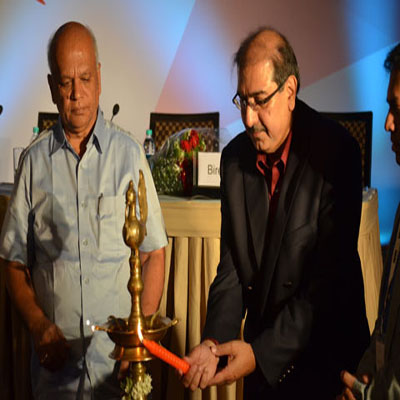
    BENGALURU: The Karnataka Animation, Visual Effects, Gaming and Comics (KAVGC) Summit organised by the Association of Bangalore Animation Industry (ABAI, in collaboration with the government of Karnataka kicked off in Bengaluru last evening. Indian as well as international stakeholders from the animation, visual effects, gaming and comics (AVGC) industry saw Karnataka’s minister for IT, BT and S&T S R Patil inaugurate the two day event at the Hotel Chancery Pavilion.


    Amongst those present during the inaugural ceremony was the Karnataka government’s principal secretary, IT, BT and S&T I S N Prasad.


    During his inaugural speech, Patil said that Karnataka state government’s thrust was on capacity building for the KAVGC industry and wanted to make Karnataka and Bangalore the preferred KAVGC destination.  He informed that this year, globally the estimated $153 billion KAVGC had a CAGR of 10 per cent, while in India it was growing much faster at about 22 per cent CAGR and was expected to reach five billion dollars this year. He said that a state funded post production and processing facility similar to the ones in Mumbai and Chennai would soon be inaugurated in Karnataka.


    He further said the state government was willing to work with bodies such as Ficci that had made some progress in setting up the curriculum for education courses.


    While echoing Patil, Prasad said that the state government was willing to listen to the KAVGC industry and act accordingly. “Karnataka will continue to lead the AVGC growth in India. We have partnered with a cross section of the digital content industries through ABAI,” said Prasad.


    Earlier, during his introductory remarks, ABAI president Biren Ghose set the tone for the summit when he said that the government and the ministry had been extremely strategic and extremely proactive in taking up a call from the industry.


    Speaking about the 2013 edition of KAVGC Summit, Ghose said, “The summit is meant to provide new direction to professionals and companies, highlighting growth and opportunity areas. It showcases our engagement with the academia, the government and industry and highlight the policy execution we have enabled as the roadmap for the next year.”


    The second ‘ABAI Leadership Excellence Award’ was conferred to Rajiv Chikalapudi, the creative and business force behind India’s animated phenomenon ‘Chhota Bheem’.


    Chikalapudi, during his keynote address detailed the long journey by his company Green Gold Animation to create and sustain a genuine IP success story including successes in merchandising and licensing. Chikalapudi said that a number of companies had great IP ready, but were afraid to pitching them. He exhorted these companies to go out and showcase their products, citing his own example – Chotta Bheem had been rejected twice before it was accepted by Pogo channel.


    The second keynote speaker Dreamwroks Country head Damian Froberville described the progress of the Indian Unit of Dreamworks and also gave some insights into the Asian scenario for global services. Froberville also said that the convergence between films and gaming was very much on the cards, but had not yet reached there. He said that this mattered to the players in the industry because of increased reliance on service providers with more content and shorter timelines of a product; and a lot more flexibility with VFX players doing a larger portion of game work.


    Among the other notable speakers and panelists included Greg Childs editorial director, The Children’s Media Conference; Jai Natarajan, Ceo, Xentrix Studios;  Owen Hurley, Creative head, Technicolor; Charles Gauthier Vice -consul and senior trade commissioner for India, Quebec office in Mumbai; Vsihal Dhupar, MD South Asia, NVDIA; Akhauri Sinha, MD, MPC, Bengaluru; Wil Braithwaite, Senior Applied Engineer-Digital Film, NVDIA; Ankur Bhasin; Ceo Bhasinsoft India Ltd; Vamsi Ayyagari, Management media professiona; AshishKulkarni, Ceo Reliance Animation.


    Notable additions to this year’s edition of KAVGC are the four Specialised Clinics – the IP Clinic; Technology Clinic; Co-production and Outsourcing Clinic; and the Pitching Clinic.


    The KAVGC Summit held annually for the last three years with the support of the government of Karnataka, continues to increase its focus on the business and industry of AVGC, aiming to provide a forum for knowledge sharing and improved connectivity among decision makers and stakeholders in the sector.
     

  • BARC begins nationwide roadshow with Bengaluru

    BARC begins nationwide roadshow with Bengaluru

    BENGALURU: In what was the first of four to five open houses that BARC intends to hold in India, the apex body shared details about the way forward at Bengaluru last week. Principal Provocateur/Advisor Paritosh Joshi, who represents the broadcasters interests in the 12 member technical committee on BARC spoke at length about the council’s plans on the new audience measurement system. In attendance were about 100 professionals from the broadcast and ad ecosystem, and BARC CEO Partho Dasgupta and VP Mubin Khan.


    Some of the points that were clarified at the Bengaluru Open House include:


    For what is said to be the largest tender ever floated for audience measurement anywhere in the world, BARC has received expressions of interest from significantly big technology companies that wish to be a part of the tender. The tender terms state that each vendor would have to work with whomsoever BARC wants it to work with. “Since multiple vendors are likely to be involved, system integration was crucial and there was a possibility of a blame game when something didn’t work out,” Joshi said, explaining why BARC will play a pivotal role.


    Of the 32 expressions of interest, 27 companies from across the world had been asked to submit proposals. Because of the huge diversity of devices on which television style content could be consumed, TV content was now more and more agnostic to screen as well as time. Consumption of TV and television type content was not only being space-shifted, but also time-shifted. BARC has made it clear in its RFPs’ that it wanted a screen and technology agnostic measurement.


    BARC expects to complete the awarding of contracts by end September or early October and the new ratings system could be out by the summer of 2014.


    Value added reselling of data is another possibility for the future. As much of the process that can be automated will be automated – simply because BARC wants to minimise human intervention.


    The ratings body has not yet fixed periodicity of dispensing data because it would vary within the structure of the sample. Joshi explained, “Based on the current situation and sample size, probably getting weekly data is all that could be possible initially. This is not an emotive issue of weekly, fortnightly or quarterly reporting, BARC would look at the data and decide. It must be remembered that the higher the frequency that one seeks, the larger the sample size must become to be able to find statistically significant sized audiences. BARC recognises that there are some channels that we cannot report on a weekly basis, and so these channels could be reported quarterly, BARC will give unduplicated quarterly reach since there is no other number available for these channels.”


    Explaining how BARC picked up the establishment study size, Joshi said, “The most critical element of an audience measurement system is defining the establishment and the way people and the type of people (the consumer classification) who consume television. The establishment study which is already in the field will help BARC to prioritise and enable it to determine the segments of the population that are important and cannot be missed. To pick up a sampling size of 2.4 lakh for the establishment study, BARC used the census of India and electoral rolls, since there was no other database available, maybe in the future Aadhar could be used to provide a sampling frame. The establishment study will essentially run continuously, BARC will be able to re-estimate the underlying universe with far higher frequency than has probably been done until now.”


    “One of the big things that BARC is working with the RFPs is that it is defining what the relative error is, what the confidence is. Today the stakeholders are not aware about what the relative errors or the confidence of the numbers are. They are working with the numbers as if they were the absolute truth, which they aren’t. BARC will define the statistical boundaries within which the numbers are to be interpreted. Numbers that don’t fall within those bounds will not be reported,” said Joshi.


    Clarifying the role of the technical committee, Joshi said, “Besides evaluation of the proposals for the new audience measurement system, the BARC technical committee will carry out due-diligence exercises on a regular basis once data starts flowing. Since audience measurement research is not stationary, it is evolving continuously, the technical committee will drive the evolution.”


    “The technical committee is autonomous of the BARC board. The BARC board cannot decide what the technical committee does. The technical committee decides what the research needs. For the board to override a decision that the TechCom has made requires it to have a 75 per cent majority. 60 per cent of the voting share at BARC is with the broadcasters and 20 per cent each with the advertisers and the agencies,” explained Joshi further.


    Throwing light on what the BARC was not, Joshi said, “People somehow feel that BARC will replace TAM. That now you have TAM and later you’ll have BARC. TAM Media is a for-profits research venture. In the current scheme of things it is a vendor owned vendor managed system. We don’t know much about establishment study that they do, they do issue a summary every year, but they don’t tell you the details of the study. BARC is not a research company and it will never be a research company. It is a joint industry body that will be designing, commissioning, supervising and owning India’s broadcast audience research. That does not mean that it will be conducting that research itself. BARC commissions research which means that somebody else will actually conduct it. Therefore BARC is not a replacement of TAM. TAM could be potentially a vendor to BARC as could be a whole series of other kinds of companies and various other sorts of entities.”


    Sharing details about the new systems that were in place globally, Joshi said, “In the UK and some European countries, Canada and US, in Japan inventory is being sold on the basis of VOSDAL+7 (Viewed on Same Day as Live) – seven days of audience data are cumulated to actually determine the ratings for a show and this will grow as currency in other parts of the world. So you’re not only measuring the primary TV consumption, but also in all other forms. BARC may not be able to measure it at the start, but it should be able to do so in a year and a half from now.”

  • BARC begins nationwide roadshow with Bengaluru

    BARC begins nationwide roadshow with Bengaluru

    BENGALURU: In what was the first of four to five open houses that BARC intends to hold in India, the apex body shared details about the way forward at Bengaluru last week. Principal Provocateur/Advisor Paritosh Joshi, who represents the broadcasters interests in the 12 member technical committee on BARC spoke at length about the council’s plans on the new audience measurement system. In attendance were about 100 professionals from the broadcast and ad ecosystem, and BARC CEO Partho Dasgupta and VP Mubin Khan.


    Some of the points that were clarified at the Bengaluru Open House include:


    For what is said to be the largest tender ever floated for audience measurement anywhere in the world, BARC has received expressions of interest from significantly big technology companies that wish to be a part of the tender. The tender terms state that each vendor would have to work with whomsoever BARC wants it to work with. “Since multiple vendors are likely to be involved, system integration was crucial and there was a possibility of a blame game when something didn’t work out,” Joshi said, explaining why BARC will play a pivotal role.


    Of the 32 expressions of interest, 27 companies from across the world had been asked to submit proposals. Because of the huge diversity of devices on which television style content could be consumed, TV content was now more and more agnostic to screen as well as time. Consumption of TV and television type content was not only being space-shifted, but also time-shifted. BARC has made it clear in its RFPs’ that it wanted a screen and technology agnostic measurement.


    BARC expects to complete the awarding of contracts by end September or early October and the new ratings system could be out by the summer of 2014.


    Value added reselling of data is another possibility for the future. As much of the process that can be automated will be automated – simply because BARC wants to minimise human intervention.


    The ratings body has not yet fixed periodicity of dispensing data because it would vary within the structure of the sample. Joshi explained, “Based on the current situation and sample size, probably getting weekly data is all that could be possible initially. This is not an emotive issue of weekly, fortnightly or quarterly reporting, BARC would look at the data and decide. It must be remembered that the higher the frequency that one seeks, the larger the sample size must become to be able to find statistically significant sized audiences. BARC recognises that there are some channels that we cannot report on a weekly basis, and so these channels could be reported quarterly, BARC will give unduplicated quarterly reach since there is no other number available for these channels.”


    Explaining how BARC picked up the establishment study size, Joshi said, “The most critical element of an audience measurement system is defining the establishment and the way people and the type of people (the consumer classification) who consume television. The establishment study which is already in the field will help BARC to prioritise and enable it to determine the segments of the population that are important and cannot be missed. To pick up a sampling size of 2.4 lakh for the establishment study, BARC used the census of India and electoral rolls, since there was no other database available, maybe in the future Aadhar could be used to provide a sampling frame. The establishment study will essentially run continuously, BARC will be able to re-estimate the underlying universe with far higher frequency than has probably been done until now.”


    “One of the big things that BARC is working with the RFPs is that it is defining what the relative error is, what the confidence is. Today the stakeholders are not aware about what the relative errors or the confidence of the numbers are. They are working with the numbers as if they were the absolute truth, which they aren’t. BARC will define the statistical boundaries within which the numbers are to be interpreted. Numbers that don’t fall within those bounds will not be reported,” said Joshi.


    Clarifying the role of the technical committee, Joshi said, “Besides evaluation of the proposals for the new audience measurement system, the BARC technical committee will carry out due-diligence exercises on a regular basis once data starts flowing. Since audience measurement research is not stationary, it is evolving continuously, the technical committee will drive the evolution.”


    “The technical committee is autonomous of the BARC board. The BARC board cannot decide what the technical committee does. The technical committee decides what the research needs. For the board to override a decision that the TechCom has made requires it to have a 75 per cent majority. 60 per cent of the voting share at BARC is with the broadcasters and 20 per cent each with the advertisers and the agencies,” explained Joshi further.


    Throwing light on what the BARC was not, Joshi said, “People somehow feel that BARC will replace TAM. That now you have TAM and later you’ll have BARC. TAM Media is a for-profits research venture. In the current scheme of things it is a vendor owned vendor managed system. We don’t know much about establishment study that they do, they do issue a summary every year, but they don’t tell you the details of the study. BARC is not a research company and it will never be a research company. It is a joint industry body that will be designing, commissioning, supervising and owning India’s broadcast audience research. That does not mean that it will be conducting that research itself. BARC commissions research which means that somebody else will actually conduct it. Therefore BARC is not a replacement of TAM. TAM could be potentially a vendor to BARC as could be a whole series of other kinds of companies and various other sorts of entities.”


    Sharing details about the new systems that were in place globally, Joshi said, “In the UK and some European countries, Canada and US, in Japan inventory is being sold on the basis of VOSDAL+7 (Viewed on Same Day as Live) – seven days of audience data are cumulated to actually determine the ratings for a show and this will grow as currency in other parts of the world. So you’re not only measuring the primary TV consumption, but also in all other forms. BARC may not be able to measure it at the start, but it should be able to do so in a year and a half from now.”

  • 92.7 Big FM announces sixth edition of big green Ganesha campaign across eight Indian cities

    92.7 Big FM announces sixth edition of big green Ganesha campaign across eight Indian cities

    Mumbai, 29 July 2013: 92.7 BIG FM, India’s No. 1 radio network, today announced the launch of the 6th edition of BIG Green Ganesha, its hugely popular and immensely successful campaign launched in 2008 as part of a vision for a better tomorrow. The initiative aims at instilling a sense of responsibility amongst citizens towards creating a better environment by celebrating Ganesh Chaturthi, one of India’s most widely followed festivals, in an eco-friendly way. This year’s campaign will be initiated in eight different cities that will involve Mumbai, Bengaluru, Hyderabad, Mysore, Tirupati, Sholapur, Vizag and Mangalore.

    The 2013 campaign is being launched by way of the brand new concept of ‘Ashta-Vinayak’, where eight unique eco-friendly paper mâché Ganesha idols will be installed at the eight locations in which the campaign will be run. In addition, the campaign will also attempt to set a record by collecting the maximum number of old newspapers from a single location and enter the prestigious ‘Limca Book of Records’. With the installation of 30 Ganesha Pandals, the campaign will be spread across 8 cities with the setting up of 48 paper mâché idols.

    Drawing attention to the massive use of toxins and non-biodegradable elements for the construction of Ganesha idols, the BIG Green Ganesha Campaign comes as a fresh reminder of change for all. A massive on-ground newspaper collection drive in residential areas, offices, shops and commercial establishments will mark the beginning of the campaign. The collected newspapers will be supplied to renowned sculptors and be used to create beautiful eco-friendly paper mâché Ganesha idols. The donation drive is a significant move since it educates the community and draws their support in order to create a better environment.

    The campaign will be promoted through high-decibel strategies and promotions involving an amalgamation of media networks that will include radio, print, outdoor, on-ground and digital. Apart from connecting with 1.5 crore people each year, more than 200 celebrities and 350 civic authorities will support the campaign.

    Commenting on BIG Green Ganesha Campaign 2013, Ashwin Padmanabhan, Business Head, 92.7 BIG FM said, “We are delighted to launch the 6th successive edition of the Big Green Ganesha Campaign, which is a fundamental part of our vision and responsibility to care for the environment. We believe that respecting the earth is the need of the hour. Whilst we spend time in prayer and celebration, we also do our bit towards creating a greener tomorrow by installing biodegradable and eco-friendly idols. We extend a warm welcome to all our partners in this sustainable celebration and would like to thank the community for the support that has helped make this campaign bigger each year.”

    Powered by the strong message it carries, the BIG Green Ganesha Campaign has witnessed unparalleled success and popularity, inspiring over a million people in multiple cities across India. The movement has cornered glory at prestigious global platforms including the Silver Radio Award at the New York Festivals and nine awards at the India Radio Forum 2013, proving that 92.7 BIG FM is not just about great music but passionate about creating a better world.

  • TaxiForSure.com launches iOS & Android apps in Bengaluru

    TaxiForSure.com launches iOS & Android apps in Bengaluru

    MUMBAI: TaxiForSure.com, the Uber and Hailo equivalent of India has announced the launch of its mobile application on iOS & Android platforms. With the mobile app, TaxiForSure lets consumers book taxis in just 15 seconds and customers can just place a request for a taxi. The new mobile apps are now available for download on itunes & Google play stores.

    With this launch, TaxiForSure.com ensures that consumers get ready access to a large network of taxis in the city. With just two taps, customers can place a request with all free taxis in their immediate vicinity. Interested drivers accept the request and customers can track the assigned taxi right to their doorstep. The app also closes the trip with the exact fare information to be paid and a copy of the bill is automatically emailed to the customer.

    Commenting on the launch, Co-Founder and Director Raghunandan G added, “We use technology to efficiently map a customer to the nearest possible driver and vice versa. With the mobile app, we aim to revolutionise commute in India. We plan to equip every city and every person in India with the ability to get an economical taxi ride at their fingertips.”

    The application is currently available in Bangalore and will be launched in Delhi and NCR region soon.

    TaxiForSure.com was founded by IIM Ahmedabad graduates Raghunandan G and Aprameya Radhakrishna in June 2011 in Bangalore. Within a time span of two years the company launched its services in Delhi and NCR region and is looking at presence in 15 cities by the year 2015.

  • TRAI to hold open house in Bengaluru on monopoly/market dominance in cable TV services

    TRAI to hold open house in Bengaluru on monopoly/market dominance in cable TV services

    NEW DELHI: Stakeholders in the cable TV services have a platform to voice their opinion. The Telecom Regulatory Authority of India (TRAI) has announced an open house to be held in Bengaluru on issues relating to monopoly and market dominance in cable TV services. 

    TRAI sources told indiantelevision.com that only one open house is planned on the subject, based on the responses received. 

    Earlier, stakeholders had been given a final opportunity to give their comments by 1 July to its consultation paper on the subject issued on 3 June, and counter-comments by 8 July. The open house will be on 16 July.

    The paper was aimed at wanting to know if stakeholders agreed that the state should be the relevant market for measuring market power in the cable TV sector or suggest alternatives. 

    In the first place, TRAI which said it had issued the paper at the instance of the Information and Broadcasting Ministry, wanted to know if stakeholders agreed that there is a need to address the issue of monopoly or market dominance in cable TV distribution and how its ill effects can be addressed.

    The paper contained a series of fifteen questions touching various aspects. TRAI has sought to know whether curbing market dominance and monopolistic trends as well as restrictions in the relevant cable TV market should be based on area of operation or based on market share.

    Those who support the area of operation option need to specify how the area of relevant market ought to be divided amongst MSOs for providing cable TV service. While those who feel that the monopolistic trends should be based on market share, should specify the threshold value of market share beyond which an MSO cannot be allowed to build market share on its own. The open house will also concentrate on devising ways of achieving this in a market where a MSO already possess market share beyond the threshold value. Furthermore, TRAI also wants comments on the suitability of the rules defined in the paper in this connection. 

    Stakeholders had to give their views about the threshold value increase indicated by the regulator, or suggest defining restrictions.

    TRAI also wanted to know if ‘control‘ of an entity over other MSOs/LCOs be decided according to the conditions mentioned in the paper or suggestion on alternatives. Stakeholders wanting different restrictions to curb market dominance have been asked to suggest these. 

    TRAI has apart from this, sought to know whether the parameters listed by it in the paper are adequate with respect to mandatory disclosures for effective monitoring and compliance of restrictions on market dominance in Cable TV sector, and the periodicity of such disclosures. 

    The regulator wanted to know of any amendments to be made in the statutory rules/ executive orders for implementing the restrictions.

  • Karnataka HC dismisses KSCOA petition, paves way for analogue cable switch-off

    Karnataka HC dismisses KSCOA petition, paves way for analogue cable switch-off

    BENGALURU: Analogue signals in Bengaluru and Mysore are set to be switched off as the Karnataka High Court today dismissed a petition filed by Karnataka State Cable TV Operators Association (KSCOA) seeking extension of deadline for implementing Digital Addressable System (DAS).

    The KSCOA petition was dismissed as the HC found no merits in the case. The cable operators association had contended that a large number of cable TV homes in Bengaluru and Mysore would go dark if DAS is implemented since there isn‘t enough supply of Set Top Boxes (STBs).

    Bengaluru and Mysore are part of 38 cities that were slated to go digital in Phase II of DAS. The deadline for switching off analogue signals was 1 April, however, an interim order passed by Karnataka HC saw the deadline getting dragged by a good two weeks.

  • IBF joins MSOs to oppose DAS extension in Bengaluru and Mysore

    IBF joins MSOs to oppose DAS extension in Bengaluru and Mysore

    NEW DELHI: The   Foundation (IBF) has got itself involved in the on-going legal battle between MSOs and LCOs over extension of digitisation deadline in Bengaluru and Mysore.

    The apex body of television broadcasters has impleaded itself in the case contending that there are no grounds for extending the government mandated cable TV digitisation in these two cities.

    IBF president Man Jit Singh confirmed that the IBF has impleaded itself in the case without getting into the specifics of the case.

    MSOs including Hathway Cable & Datacom, InCable, Den Networks, Siti Cable and Atria Convergence Technologies, who have been made party to the case, are opposed to extension of deadline in both the cities.

    The Karnataka High Court (HC) has posted the matter again for hearing on Tuesday which means that the interim order granted earlier restraining MSOs from disconnecting analog signals continues for another day in both the cities.

    The Karnataka Cable TV Operators Association (KCTVOA) and Mysore Cable TV Operators Association (MCTVOA) had filed separate petitions seeking extension of digitisation in Bengaluru and Mysore respectively due to unavailability of set-top boxes (STBs).

    However, the Karnataka HC is hearing both the petitions together.

    The sunset date for phase II of digitisation covering 38 cities including Bengaluru and Mysore was 31 March However the Information & Broadcasting ministry on 2 April allowed a 15 day grace period to the industry to allow smooth transition from analogue to digital cable.

  • Stage set for a court battle on DAS in Bengaluru

    Stage set for a court battle on DAS in Bengaluru

    MUMBAI: A battle royale is set to take place in the Karnataka High Court tomorrow. On the one hand are national and Karnataka‘s multi system operators (MSOs). And on the other side is the Karnataka Cable TV Operators Association (KCTVOA). The former are are all set to challenge the petition filed by the latter seeking extension of DAS (digital addressable system) in Bengaluru.

    Putting up a united front, the MSOs led by Hathway Cable & Datacom, InCable, Den Networks, Siti Cable and Atria Convergence Technologies will request the High Court to dismiss the writ petition filed by the KCTVOA.

    The MSOs have been made respondents to the petition filed by KCTVOA president V S Patrick Raju. The MSOs are expected to file their responses when the case comes up for hearing before the court tomorrow.

    Hathway Cable & Datacom MD and CEO Jagdish Kumar asserted that the MSOs will request the HC to strike down the KCTVOA‘s writ petition seeking extension of digitisation deadline.

    Kumar feels that there is no need for a stay on DAS in Bangalore as almost 75 per cent of the television households have already been seeded with STBs. The MSOs, he said, are equipped to seed STBs in the remaining 25 per cent homes.

    The Karnataka HC had had on 31 March extended DAS in Bengaluru till 5 April on a petition filed by Raju. The KCTVOA had requested the HC to postpone digitisation in Karnataka‘s capital city as there was no clarity on the set top boxes (STBs).

    Raju says that he had filed a RTI request with the nodal officer in Bengaluru 10 days ago, seeking information on the extent of set top box seeding in the city, but he had not got a response as yet. He says that the entire digitisation process will result in cable TV operators becoming a bill collector and the revenue share of 65:35 in favour of the MSO is not acceptable at all. “We have invested so much in our cable TV networks and by collecting Rs 1,400 for a set top box, the MSO will get our subscriber who is asking us for bills for the set top box, for warranty for mobility to other areas of the city,” he says. “Also the MSOs have not given us a rate card for the channels that they want us to carry.”

    The sunset date for phase II of digitisation covering 38 cities was 31 March however the Information & Broadcasting ministry on 2 April allowed a 15 day grace period to the industry to allow smooth transition from analogue to digital cable.

    The HC is also expected to hear tomorrow a petition filed by Mysore Cable TV Operators Association seeking extension in Mysore due to shortage of STBs.

  • DAS Phase II: Karnataka HC extends hearing to 5 April, stay to continue in Bengaluru

    DAS Phase II: Karnataka HC extends hearing to 5 April, stay to continue in Bengaluru

    BENGALURU: Bengaluru will have to wait for DAS (Digital Addressable System) for another four days in the least, with the Karnataka High Court extending the interim stay till 5 April.

    Hearing a petition by Karnataka Cable TV Operators Association President V S Patrick Raju seeking postponement of the analogue switch off date for the garden city beyond 31 March as there was no clarity about set top boxes was put off by Justice Nazeer as another petition by a multi-system operator was filed today.

    The newly licensed MSO stated that he had not been given enough time to acquire STBs and install them in subscriber homes.

    Additionally, a DTH operator representative present at the hearing also stated that his company would not be able to meet the demand for STBs.

    Meanwhile, the Court also decided to hear on 5 April a case by Mysore Cable TV Operators Association which has wanted extension on digitisation deadline due to shortage of STBs.