Tag: Bengali

  • Sony Aath to broadcast Pepsi IPL 2015 in Bengali

    Sony Aath to broadcast Pepsi IPL 2015 in Bengali

    MUMBAI: After tasting success with airing FIFA World Cup 2014 in Bengali, Multi Screen Media’s (MSM) Bengali entertainment channel Sony Aath will offer Bengali language feed for the upcoming Indian Premier League (IPL).


    This will be the first ever broadcast of the Pepsi IPL on the channel and will also be the first such exercise by MSM to launch a Bengali feed of the tournament. Sony Aath will cover the opening ceremony and all 60 matches of the eight edition of Pepsi IPL.


    MSM senior vice president Tushar Shah, who also manages the operations of Sony Aath, said, “With an aim to provide the most premium content to our viewers in West Bengal, we are back yet again to enthrall them by offering a whole new experience of consuming the largest cricketing extravaganza in their favourite language. We believe this initiative will not only help further expand the popularity of the nation’s most beloved cricketing tournament but also augment a larger fan base for the channel.”


    MSM CEO N P Singh added, “West Bengal has always been one of the key markets for Pepsi IPL. We believe that by offering the world’s largest cricketing spectacle in one of the most popular and widely spoken languages in the country will help enthrall the viewers. It will create a holistic viewing experience unlike anything else seen before on the channel. Given the tournament’s aggressive growth and ability to connect with millions on a national scale, this year we are positioning the event as ‘India Ka Tyohaar,’ which establishes the event as an annual sporting and entertainment festival.”


    As a prelude to the event the channel will run the ‘India Ka Tyohaar’ marketing campaign till the tournament kick-starts on 8 April 2015.


    The tournament will feature a total of 60 matches, including the live telecast of the opening ceremony on 7 April, the home and away matches between the franchises, the qualifying playoffs and the finals. The knockout stage will be from 19 – 22 May and conclude with the final match on 24 May, 2015.

  • Tata Sky completes half of its MPEG-4 STB rollout

    Tata Sky completes half of its MPEG-4 STB rollout

    MUMBAI: It was a year ago that Tata Sky decided it would stop depending on the government for giving its additional transponder space and switched to the alternative method of compression that others in the industry had already begun.


    A huge order for six million MPEG-4 boxes were given to Broadcom that would mean Tata Sky spending close to Rs 1,000 crore to replace all the initial MPEG-2 boxes that it had seeded at peoples’ home with MPEG-4. A year later, the DTH operator has converted nearly half of its MPEG-2 subscriber base to MPEG-4.


    Speaking to indiantelevision.com Tata Sky MD and CEO Harit Nagpal says, “We have replaced close to three million boxes. Tamil, Telugu, Malayalam, Kannada, Bengali, Odia, English, Gujarati and Marathi language channels have already been compressed and boxes have been deployed in the respective areas.” Now, the large Hindi base of north India is left which it says it will soon complete.


    With this compression technique, the DTH operator has managed to fit three channels in the space of two in its existing transponder space. Nagpal adds that in the last one year, Tata Sky has added nearly 50 channels.


    The cost of this entire exercise is being borne by the operator. Tata Sky’s signals are being beamed off Insat 4A; but it had signed a contract to lease 12 transponders on ISRO’s GSAT-10 satellite around six years ago which have not been delivered to Tata Sky yet, even after the satellite launched in to space in September 2012.


    Emergency teams were also brought to seed the large amount of boxes. Tata Sky is continuing to add more channels to its regional packs, despite the fact that it hasn’t got any additional transponder capacity. However, a source from the company says that it has given up hope of having more space. 


  • ETV Bangla inducts Zee Bangla’s Sujay Kutty as business head

    ETV Bangla inducts Zee Bangla’s Sujay Kutty as business head

    KOLKATA: ETV Bangla, a regional general entertainment channels (GEC), under the belt of Network18 has appointed Sujay Kutty as its business head.


    Kutty who was earlier with Zee Bangla as the executive vice president, business head, is likely to take up the new role with ETV Bangla from 22 April.


    Also, the GEC came up with a dedicated afternoon time band called ‘Duronto Dupur’last week with an aim to target huge viewership by creating original content.


    When ETV Bangla programming head Ritika Roy was contacted she confirmed the appointment of Kutty.


    “With the channel spending a lot on the original content and looking at huge revenues, Kutty is likely to play a crucial role,” ETV Bangla official added.


    “Money brings more money. The investment by TV18 is big and it expects a bigger return too. Sujay is joining ETV that is certain. Business revenue will be one of his KRAs. I hope ETV can bring in a dose of fresh entertainment programs in the already saturated market,” feels a city-based media expert Swaraj Mukherjee.


    Being a GEC , ETV Bangla provides a variety of programs- including cultural events, family dramas, movies, debates, children’s programs and tourism, among other shows.


    Some of the original programmes telecasted are ‘Prathamar Rannaghar’, ‘Jhalak Dikhlaja Bangla’, ‘Ranga Mathaye Chiruni’, ‘Bigg Boss Bangla’ and ‘Sadhok Bamakhyapa’.


    ETV Bangla, which aired three news bulletins till March, has stopped telecasting news after floating the news channel, ETV News Bangla, last month.

  • Website, reference handbook launched on general elections 2014

    Website, reference handbook launched on general elections 2014

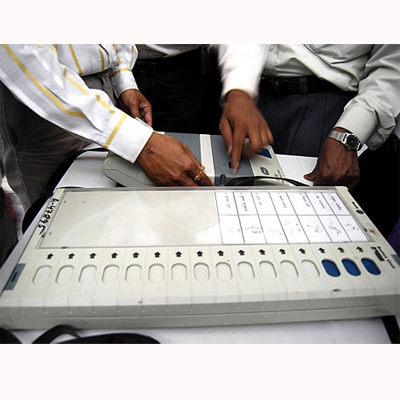
    NEW DELHI: ‘General Elections 2014: Reference Handbook’ , a compendium on past elections and the latest provisions relating to the general elections, was released on 3 April to  disseminate information about the mammoth exercise to elect the sixteenth Lok Sabha. 
     

    The Press Information Bureau has made the book made available in English, Hindi and 11 regional languages, namely, Assamese, Bengali, Gujarati, Kannada, Malayalam, Marathi, Oriya, Punjabi, Tamil, Telugu and Urdu. 


    The Bureau has also launched a web-portal, dedicated for the general elections 2014:  pib.nic.in/elections2014This will be used for dissemination of important instructions, orders and press notes of the ECI. The Reference Handbook also will be made available on this portal. On Counting-Day, i.e. 16 May, this portal shall also be used to disseminate official trends and results, based on real-time data made available by the Election Commission of India. These trends and results will also be shared on social media, and through SMS. 
     

    A number of factsheets, backgrounders and features have already been issued on various aspects of the general elections. The backgrounders cover detailed and in-depth analysis of various aspects of past elections, with special focus on the fifteenth Lok Sabha elections (2009 general elections). State-wise fact-sheets impart information on various states pertaining to electorate, Parliamentary Constituencies, past elections etc. 

    Many of the features have been contributed by senior officers of the Election Commission of India. The features range from the topics like ‘Evolution of Election System in India’, ‘Electoral Laws in India’, ‘Salient Features of Representation of the People Act 1952’, ‘SVEEP- Tool for Voters Awareness’. New developments like NOTA and VVPAT also figure in the topic-list and Guidelines for media, Paid News, Opinion Polls & Exit Polls have also been covered under features. 

    Once the results have been declared, this office will analyse the data of the sixteenth general elections in detail, and a compiled version thereof will be released. 


  • Bengali daily ‘Ekdin’ downs shutters, 120 out of jobs

    Bengali daily ‘Ekdin’ downs shutters, 120 out of jobs

    KOLKATA: Eastern India has seen many a print publication being put to sleep over the past two years, courtesy the growing influence of the internet, and the concurrent, economic slump. Now, the Siliguri-based Darpan Press has joined the ranks of those who have cut the lifeline to a newspaper. It bought Bengali daily ‘Ekdin’ from the Chakra Group late last year, and around three months later it has chosen to wind up the broadsheet, leaving close to 120 employees including journalists and technical staff jobless.


    “On January 14, at around 3.05 pm, we heard that the RNI registration had been transferred in the name of Darpan Press from the Chakra Group. And at 5.05 pm, the owner called a meeting and said he had decided to close down the daily newspaper,” recalls a senior journalist from Ekdin. “We are shocked. How can a newspaper close in a day’s notice? Again on Wednesday, that is, January 15, there was a meeting between the employees and the management, and the latter confirmed its decision of not continuing with the newspaper,” he adds.


    Founded by veteran journalist Suman Chattopadhyay, who was also the first editor of Ekdin, the newspaper was sold off to the Chakra Group after Chattopadhyay joined Eyi Shomoy, The Times Group’s Bengali daily. The Chakra Group later sold Ekdin to Darpan, which has owned the daily since 1 October, 2013.


    That Darpan had promised that Ekdin would never shut shop and its more than 100 employees would never lose their jobs at the time of taking over the newspaper, indiantelevision.com had reported earlier.


    Another journalist from Ekdin recounts that while there were salary payment issues under the Chakra Group, he was sure they wouldn’t have closed down the daily in such an unprofessional manner. “There is a story behind the closure of the newspaper, and it needs to be explored further,” he says, pointing out that though Darpan is supposed to pay Ekdin employees till March 2014, the staff has been paid only for the period up to14 February 2014. Many are keeping their fingers crossed that their cheques will get cleared.


    On his part, Darpan Press chief executive officer and director Sandip Choudhary says: “We have closed the paper temporarily and plan to come back in a big way in the next three to four months or so at the earliest. The earlier management did not do much to run the newspaper smoothly. We are trying to address such issues.”


    However, the senior journalist from Ekdin recalls that within minutes of the closure announcement, he started getting phone calls from fellow journalists and so did his colleagues. However, the management requested them all not to reveal any of this to outsiders or simply say the closure was temporary. “Why should I lie and become the cause for my own doom,” he rues. “If the closure is a temporary phase, why did the management pay us for one and a half month and hint that we look for other options?” he questions.


    According to the distribution department of Ekdin, which was published from Siliguri, Durgapur and Kolkata, while the newspaper’s circulation was around one lakh, the last few months had seen a dip in this figure to just 40,000.


    Readers of the Bengali daily feel that while the content was first-rate and encompassed all areas, sometimes, the paper covered too much of state political news for the administration to be comfortable about it.


    A media analyst reasons that Darpan Press, with its two newspapers – Bharat Darpan (Hindi daily) and Himalayan Darpan – has expertise mainly in printing and machines. So much so, when the group launched the Kolkata edition of Bharat Darpan, it had to close it down within three months as it could not make a mark. “Again after acquiring Ekdin, it closed down after three months. Only the coming days will tell if there is a story behind the closure of Ekdin as the employees are claiming, or the management is truly planning to revive it in a big way,” he says.


    Another media analyst has a different take on the matter. He feels it is unwise to close down the newspaper before the Lok Sabha elections as most newspapers, however small, will be flooded with advertisements of different political campaigns.


    A third media analyst reasons it was no longer financially viable for Darpan to carry on with Ekdin which is why shutters were downed. While we can only speculate as to why Ekdin shut shop, there’s a piece of news that might point in the right direction. At the time of the acquisition of Ekdin by Darpan, Chakra had filed an FIR against the former for not receiving the promised payment….

  • Uday Shankar receives award for contribution to Bengali Television

    Uday Shankar receives award for contribution to Bengali Television

    MUMBAI: Star India has received the 2014 West Bengal Tele Academy Award that celebrates the group’s significant contribution to Bengali television, making it the first broadcaster to win the coveted recognition. 


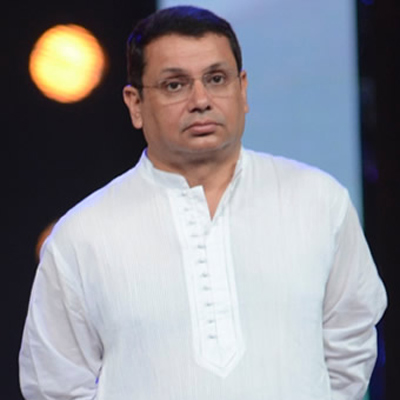
    The network’s CEO Uday Shankar was conferred the award by West Bengal Chief Minister Mamata Banerjee. The award recognises Star’s special contribution to Bengali television through two successful TV channels – Star Jalsha and Star Ananda (currently known as ABP Ananda).

    “As a group, we are delighted to receive the West Bengal Tele Academy Award, as it clearly shows the society has embraced our focus on quality content,” Shankar said.  “I really believe socially sensitive content is the way forward for the future of a healthy society. The plaudits go to the entire team.”


    Star Jalsha, the entertainment channel, has set new benchmarks in regional programming through innovative content and compelling storytelling. It enjoys an undisputed leadership position in the Bengali general entertainment space in terms of viewership, surpassing immediate competition by over 200 GRPs, according to recent TAM data.


    Star Ananda (now known as ABP Ananda) is a Bengali TV news channel that was launched under the stewardship of Shankar when he was the CEO of MCCS India. The channel was an erstwhile joint venture between STAR and ABP TV.


    The West Bengal Tele Academy Awards 2014 covers the entire gamut of film and TV, rewarding excellence in production, programming, photography and technology, among others. Headed by the Ministry of Information & Broadcasting, with Aroop Biswas as the chairman, the awards have been constituted as a token of respect and gratitude to the entire industry in West Bengal.

  • RIP Manna Dey

    RIP Manna Dey

    MUMBAI: Manna Dey is no more.

    The legendary singer, whose golden voice mesmerised audiences for decades, breathed his last early this morning at a Bengaluru hospital, where he had been admitted for respiratory problems for the past few months. He was 94 years old.

    Having started his career as a playback singer in the 1943 film Tamanna, Dey has nearly 3,500 songs in languages including Hindi, Marathi, Gujarati, Bengali, Malayali, Kannada and Assamese to his credit. The more memorable among these being Pucho Na Kaise, Pyaar Hua Ikraar Hua, Ae Maalik Tere Bande Hum, Kasme Vaade Pyaar Wafa, Ae Meri Johra Jabi, Laaga Chunari Mein Daag and Yaari Hai Imaan to name a few.

    For Kailash Kher, Dey was nothing less than an institution, whose inimitable style of singing influenced many like him to do better in their career


    The distinctive timbre and classical bent of Dey’s voice made him a hot favourite among the heroes of the time, not to mention generations of music composers. Not surprisingly, he went on to receive the country’s highest honours – the Padma Shree and Padma Bhushan, among a slew of awards and accolades.


    As news spread of his sad demise, the entire film industry was plunged into a state of shock and grief.


    One of the first ones to tweet was Amitabh Bachchan, who wrote: “Manna Dey, stalwart of the music world, passes away. Flooded with memories and his songs. In particular his rendition of Madhushala.”


    Shabana Azmi too tweeted: “Manna Dey had a unique voice. He will live on through his songs Ai Meri Zohra Jabeen/ dil ka haal suney dilwala/ poocho na kaise maine RIP.”


    Not just the industry veterans, even younger artistes and composers fondly remembered the iconic singer.


    Speaking to indiantelevision.com, National Award-winning singer Rekha Bharadwaj said Dey had been an inspiration for almost all those interested in music.


    “He had a completely distinctive style. No one can match that. Whether it was Ae Mere Pyaare Watan…, Koi Sagar Dil Ko Behlata Hai…, or Ek Chaturnaar…, he made each of these songs unique in itself with a certain pathos and melody,” said Bharadwaj, who remains a fan of all the songs from the film Anand, still humming them whenever she is in a mood.


    “Ae Mere Pyaare Watan has been a favourite among almost everybody across all generations,” she said, regretting the fact that she never got a chance to meet Dey in person. “But people like Kavita Krishnamoorthy and Suresh Wadekar kept me abreast about him and also shared many anecdotes. It’s nice to know all that,” she said.


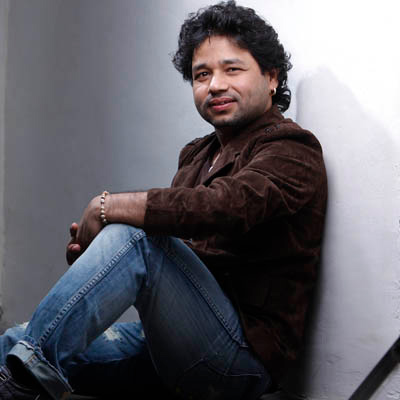
    For Kailash Kher, Dey was nothing less than an ‘institution’, whose inimitable style of singing influenced many like him to do better in their career.


    “He is an inspiration. He has left so much behind him for generations to come,” Kher said, recalling how as a teenager, he never knew who had sung his favourite song, Zindagi Kaisi Hai Paheli…, till he discovered through a magazine interview that it was none other than Dey, and became an ardent fan since.


    “I had read this interview sometime in the 90s and was in awe of the singer after reading everything about him. He sung a comic song or a peppy number with as much ease as he sung an emotional song,” said Kher, also referring to the fact that Dey lent his voice not only to the Hindi film industry but also to many other languages and genres.


    Shibani Kashyap thinks Dey had the ‘most unusual voice’. “I cry when I listen to the songs from Anand. Very few singers have the power to move you to tears. He is iconic. And though he is not around us any more, his songs will always keep him alive. The songs that he has sung are out of the world and they will continue to enthuse younger generations of aspiring singers and musicians,” said Kashyap, ruing the fact that he wasn’t celebrated as much as he should have been. “He hasn’t got the due that he should have. We let him leave the industry too soon. I just wish his songs stay with us forever,” she concluded.

  • Amish’s SHIVA TRILOGY crosses 2 million copies in print and gross retail sales of Rs. 50 crores

    Amish’s SHIVA TRILOGY crosses 2 million copies in print and gross retail sales of Rs. 50 crores

    MUMBAI:  The Shiva Trilogy, written by Amish, is a compelling, fictional tale of a Tibetan tribal called Shiva, whose adventures nearly 4000 years ago, morphed into the mythical legends of the Hindu God Shiva. The Shiva Trilogy (The Immortals of Meluha, The Secret of the Nagas & The Oath of the Vayuputras) has more than 2 million copies in print with gross retail sales of over Rs 50 crores, making it the fastest selling book series in the history of Indian publishing.


    Over the last few months, The Oath of the Vayuputras, The Immortals of Meluha and The Secret of the Nagas have remained at the top in the A C Nielsen bestseller list in India, one of the rare occasions where one author’s books dominate the national bestseller lists so completely!


    Published by Westland Ltd, the books have been released across the Indian subcontinent in various languages, including English, Hindi, Marathi, Gujarati, Telugu, Bengali, Assamese. It has also been released in the Indonesian language, Bahasa Indonesia. They will also be released very soon in other languages like Tamil.


    Additionally, Jo Fletcher Books (an imprint of Quercus Books) have bought the English language rights outside of the Indian sub-continent and has published the first book, The Immortals of Meluha, in the UK in January 2013. The book will be released in the US in Summer 2014. The book is also due for release in Vietnam soon.


    The Shiva Trilogy has attracted a wide and devoted audience since its publication, with publishing gurus calling it a genre-creating book series. It has also received positive reviews from various eminent personalities. Spiritual guru, Deepak Chopra, complimented the books saying, ‘Amish’s mythical imagination mines the past and taps into the possibilities of the future. His book series, archetypal and stirring, unfold the deepest recesses of the soul as well as our collective consciousness.’ Renowned Film Director, Shekhar Kapur, called Amish ‘India’s first literary popstar’, while celebrated author Anil Dharker called him ‘a literary phenomenon’.


    Many marketing innovations have also been attempted for the Shiva Trilogy. For the 1st book, The Immortals of Meluha, the first chapter had been printed and distributed, free of cost, as a sampler. A trailer film had also been made and uploaded on YouTube, probably for the first time in the history of Indian publishing. For the 2nd book, The Secret of the Nagas, a professional film-quality trailer film had been made and showcased in cinemas, once again for the first time in Indian publishing history. The string of innovations has continued in the marketing of the 3rd book of the trilogy, The Oath of the Vayuputras. For the first time in Indian publishing, an original soundtrack album has been created for a book series called ‘Vayuputras: the soundtrack of the Shiva Trilogy books’. For the festive season a box set of the Shiva Trilogy books is being released as a special hardbound edition for gifting.


    Giving the life of music to the soul of the words, all the 10 songs in the album have been originally created out of various sections of the 3 books of the Shiva Trilogy. Top-notch musical artistes like Taufiq Qureshi, Sonu Nigam, Palash Sen & Bickram Ghosh have contributed their talent to this album. A professional, world-class music video has also been produced which is being telecast in various music channels.

  • North East Live in talks with DTH players

    North East Live in talks with DTH players

    Kolkata: ‘North East Live’, the first 24×7 satellite news channel launched in Arunachal Pradesh at the beginning of this month, is in talks with DTH (direct-to-home) players like Tata Sky, Dish TV, Airtel, etc to get itself integrated in the list of channels offered to subscribers by them. For this, the channel has earmarked an annual budget of Rs 12 crore-Rs 13 crore.

    In Arunachal Pradesh, the DTH players charge around Rs 4.5 crore every year as carriage fees.

    The news channel also plans to start a beauty pageant very soon. It has tied up with Femina Miss India in order to make participating in the contest easier for the girls from north east India. The girls can directly get in touch with the channel.

    ‘North East Live’ is a sister channel of Guwahati-based Pride East Entertainment Private Limited running three other channels-namely ‘Newslive’, a news channel; while ‘Rang’ and ‘Ramdhenu’ are general entertainment channels (GEC) channels.

    “This is the fourth venture of Pride East Entertainment. The news would be telecast in Hindi, English, Assamese and Bengali. We would focus on the political beat more as north eastern states are likely to see many developments,” said Caushiq Bezboruah, chief executive officer, Pride East Entertainments.

    Pride East Entertainments has around 350 employs working for them. For the ‘North East Live’, there is a team of 50 people. “We have set up a studio at Arunachal Pradesh and for the Guwahati reporting, the infrastructure and manpower of ‘Newslive’ are used,” said Bezboruah.

    Talking about their plan to get them included on the DTH platform, Bezboruah says that the DTH players have strong foothold as compared to local cable operators in the state. “The players would take a view of the percentage of our acceptance among viewers. They will do a survey probably,” he said.

    While talking about the tie up with Femina Miss India, he said that many aspiring women miss the opportunity because of the difficulty of travelling to Kolkata. “But this would make it easier for them,” he said.

    He even thinks that with this new works out, the people across the country and abroad will be able to know more about north east India via their channels. “The information about north east India missed by the mainstream channels will reach the rest of the country and the world from now on through this satellite channel,” he said.

    On being asked about the media scenario in the north eastern region of the country, Bezboruah said it is very similar to the other parts of the country and revenue generation is challenging.

  • Will Kolkata go the Mumbai way?

    Will Kolkata go the Mumbai way?

    KOLKATA: Digital marketing may have caught on in a big way in metros like Mumbai and Delhi but in Kolkata, it is struggling to play catch-up, largely due to skepticism around its success as a promotional strategy.

    This, despite the recent example of Bengali film Aborto garnering over 30,000 Facebook likes, not to mention huge pre-release awareness simply by paying Facebook Rs 832 per day for a period of 25 days before the movie hit theatres.

    Let’s Assist Digital Services CEO Prasit Bhattacharya opined that digital marketing is being adopted by both small and medium sized businesses

    City-based digital advertising agencies are positive that all businesses stand to benefit by deploying new methods of advertising, moreso those related to travel, real estate and e-commerce.

    In fact, with the number of internet users having multiplied, most businesses that have been following traditional advertising methods (TV, radio and newspaper ads) are expected to divert some portion of their ad budget to digital platforms.

    And yet, there’s agreement on the fact that it would take some more convincing before the City of Joy gets into serious digital space.

    In a bid to understand the situation at ground zero, this correspondent spoke to a cross-section of industry.

    Inter Action owner Prantar Chaudhuri said: “Apart from Facebook and Twitter, the next most used digital platforms are Instagram and LinkedIn. But FB and Twitter are priority.” However, he did say they had done a short-term Facebook plan for a client called Call Buddy, which is into customised gifts and novelties.

    While Let’s Assist Digital Services CEO Prasit Bhattacharya opined that digital marketing is being adopted by both small and medium sized businesses. “The growth rate of digital advertising is almost 50 per cent and it will keep growing as the number of internet users increases. While social media marketing (SMM) finds a niche market here, we are seeing more activity in this space than before,” he said.

    Bhattacharya said that with people searching for more and more information online, sites such as Tumblr and SlideShare were now featuring in people’s priority lists and companies were targeting applications advertising to reach out to more clients on their phones and tablets. “We are also developing a website with iOS and Android Apps, where people can create landing pages and websites by themselves, do A/B spilt testing and get detailed analytics reports on their digital marketing efforts in real time,” he added.

    However, The Webspidy MD Avishek Tarafdar said that around 80 per cent of the people in Kolkata use facebook and the remaining 20 per cent use Google ppc. Going by 2013-14 social media trends, mobile/video ads on YouTube/Vimeo were the main platforms. The size of the advertising industry is $7.3 billion in India, of which, digital ad spend is only around six per cent, Tarafdar pointed out.

    The Webspidy MD Avishek Tarafdar said that around 80 per cent of the people in Kolkata use facebook and the remaining 20 per cent use Google ppc

    Even Bhattacharya was quick to point out the challenges associated with digital advertising. “Making clients understand the lifespan and reach of each campaign and ad can be challenging. While newspaper ads have a lifespan of one day, online ads can be strictly ROI focused if measured properly,” he said.

    A media planner said: “Clients only want to spend on print media now. They like TT (The Telegraph) for space in Sunday magazine and pay for three months. But they are not sure what they want to put in that space.”

    Another player said on condition of anonymity: “In Kolkata, mid-segment clients do not differentiate between advertising, brand building and propaganda. What most clients do is propaganda and not brand building.”

    A third player rued: “To the Kolkata client, it will start only when some Mumbai agency comes and tells them.” A Delhi-based agency felt most Kolkata brands go digital because everyone else is going that way. Yet another source opined that Kolkata clients do not want to take a risk with new methodology until and unless they’re sure about its acceptability even among competitors.

    The source added: “Moreover, ad budgets in east Indian cities like Kolkata are less than in Mumbai or Delhi. Besides, Kolkata-based clients are not very clear about SMM marketing. They think they can simply open a FB page and voila… they are doing SMM.”

    Worth mentioning here is the initiative by Advertising Standards Council of India (ASCI) chairman Partha Rakshit, who is working to liaison with Google and Twitter for a tighter monitoring of digital ads. Ads that are in serious breach of the ASCI’s code, and that includes digital ads, will be withdrawn immediately.

    So, given this scenario, will digital advertising take flight in Kolkata? It’s something only time will tell…