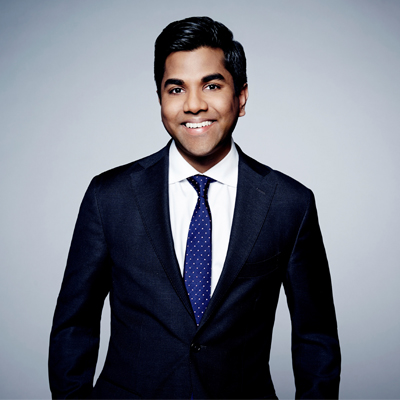
It has been just six months since he’s taken charge of CNN International operations from south Asia. As bureau chief from New Delhi, Ravi Agrawal has been associated with the media conglomerate since he stepped into the media fraternity eight years ago.
First in London and then in New York, Agrawal has been producer for several shows including ‘Fareed Zakaria GPS’. Now in Delhi, he will be looking at increasing the coverage from the country with a new government at the helm. As the world’s focus shifts towards South Asia, Agrawal will lead the CNN team from India to deliver key stories for the global English audience.
In conversation with indiantelevision.com’s Vishaka Chakrapani, he shares a few insights on the focus of CNN International in the country and what Indian stories mean to the world.
Excerpts…
How important is India in terms of world stories for CNN International?
India is a great fascinating story now. It’s 1/6th of humanity. It has become an increasingly important force economically speaking and is demographically vibrant. In all our stories we emphasise that the median age of Indians is 27 which means half of all Indians are under 27 years of age which when compared to other countries shows India as a very young and vibrant country. It has immense potential to be a huge player. The spurt in growth of smartphones which will grow from 130 million users today to 250 million in the next five years will impact stories and the economy. This in turn will also impact how we as journalists cover stories. India is an incredibly important market for us and there is no dearth of stories to tell us.
What are the changes you’ve brought in the reporting teams?
Historically, we have had a very strong presence in India and are looking at maintaining that with two correspondents in Mumbai and Delhi for politics and business. With producers and cameramen and now we are well positioned to attack not just breaking news but also trend stories.
What stories from India interest your audience?
Certainly demographics interest us as well as the growth of digital in the country. The reason why Flipkart raised $1 billion was because there was a feeling that with the growth of the smartphone industry, Indians are going to spend a lot of money online. Immediately after, Amazon announced its investment of $2 billion here. We are fascinated with this because it changes not just retail but also the media, banking and daily life of people.
Politics is also of interest to us, especially with the arrival of a new government which has got a mandate after 30 years with absolute majority. A lot of businessmen we spoke to are optimistic about the opportunity India has in store. Our challenge is how will we cover the larger India narrative that is on the cusp of doing what China might have done 20 years ago which is high speed growth, big transformative change across country and as journalists we need to analyse whether this change will actually happen.
We do have a commitment to doing strong people stories. For all of India’s economic advances, there are a number of social ills too. We have a show called Freedom Project where we tackle world issues but they have mostly led us back to south Asia.
Have there been any changes in the reporting style?
That’s a constantly evolving process. We use Live-U for reporting, which enables us to go anywhere and broadcast with just two people. In India, with widespread technology and 3G coverage, we get amazing signals and so we can be more mobile and live.
We invest a lot of money and resources in our photographers. We shoot state of the art 16:9 HD and we broadcast in HD in the US and you can see that difference the way our shots are framed, the way we get to places that few others get to. Some examples are our coverage in Gaza, Africa for Ebola and the Ukraine crisis. We invest a lot in just reaching these places and reporting from there. It costs a lot to get there first, to ensure security and to be with experienced teams.
Does CNN have any plan to produce shows from India anytime soon?
We have a bureau where we have a number of places where we can go live from, but we don’t have a studio yet. However, we are committed to telling the India story. One of our shows, Connect the World has now shifted from London to Abu Dhabi that puts focus on the Middle East and South Asia. That’s a global story, watched in Latin America but it still nods to the fact that its 8:30pm in India when its telecast.
During elections, Becky Anderson came to India and hosted her entire show from here. We are well equipped to broadcast live from India by getting anchors here for breaking news. Indian elections were covered in both our International feed and the US feed. Americans love elections and so a number of shows did live and guest segments with Becky.
Any plans for a regional focus in India?
We are essentially an English channel catering to an English speaking audience that is the upper niche, outward looking, global traveller with business interests. The global viewer is English and India will soon be the biggest English speaking audience.
How do you operate on digital? Is digital a precursor to TV for breaking news now?
We’ve stopped distinguishing between TV and digital. We don’t think of a story as ‘this is a web story’ or ‘this is a TV story’. The basic research needed for both is the same. CNN is truly one of those places where we think multi-platform for every story. When we take a picture we think of it in terms of the best TV imagery and also if it can be used online. The aim is to show it visually for TV and in a simple way for digital. We ensure that we aren’t just tweeting our stories but also engaging people and collecting news. When there is breaking news, we first verify and then put it out on multi platforms simultaneously.