Tag: Becil

  • TRAI  gives smaller cable operators a break on mandatory audits

    TRAI gives smaller cable operators a break on mandatory audits

    NEW DELHI: India’s telecom regulator has proposed easing compliance burdens on smaller cable television operators whilst tightening audit procedures for the rest of the industry under draft amendments released on 22  September. 

    The Telecom Regulatory Authority of India (TRAI) plans to make annual system audits optional for distribution platform operators (DPOs) serving fewer than 30,000 active subscribers. The move follows complaints from smaller operators about the disproportionate cost of mandatory audits, which can consume a significant share of their revenues.

    The proposed draft Telecommunications  (Broadcasting And Cable) Services Interconnection  (Addressable Systems) (Seventh Amendment ) Regulations, 2025 state  that larger operators would still face stricter requirements. They must complete audits for the preceding financial year and share reports with broadcasters by 30 September each year, replacing the current calendar year framework.

    The draft also introduces new provisions for infrastructure sharing between operators. Where multiple DPOs share encoding equipment, the infrastructure provider would insert watermark logos at the encoder level whilst individual operators add their logos through set-top boxes. However, TRAI proposes limiting screen clutter by allowing only two logos—the broadcaster’s and the last-mile distributor’s—to appear simultaneously.

    The regulator has addressed longstanding industry disputes over audit challenges. Under new procedures, broadcasters questioning audit reports must cite specific discrepancies with evidence within 30 days. If unsatisfied with auditor responses, they can request special audits but must bear the costs.

    “The audit of systems is necessary to ensure that the systems deployed by a DPO are addressable as per regulatory requirements,” TRAI stated in its explanatory memorandum. “Proper and accurate subscription reports are very important as the settlement of charges between service providers is based on such reports.”
    The draft regulations also mandate that auditors provide independence certificates confirming they have no conflicts of interest with the entities being audited.

    Industry stakeholders have until 6 October to submit comments on the proposals. The amendments are scheduled to take effect from 1st April 2026.

    The move reflects TRAI’s broader effort to reduce regulatory burden on smaller operators whilst maintaining oversight of the Rs 70,000 crore broadcasting and cable services sector. The authority previously made certain compliance requirements optional for operators with fewer than 30,000 subscribers in quality-of-service regulations issued in July 2024.

    However, some industry players have criticised the proposals. Broadcaster associations argue that exempting smaller operators from mandatory audits could increase under-reporting of subscriber numbers, whilst some cable operators contend that even the revised procedures remain too burdensome.

    The draft comes as India’s television distribution industry grapples with declining subscriber bases and increased competition from digital platforms. Many smaller operators have struggled with compliance costs, particularly annual audit fees that can range from Rs 50,000 to several lakhs depending on system complexity.
    TRAI’s proposals also address technical requirements for infrastructure sharing arrangements, mandating separate data instances for each operator using shared subscriber management and conditional access systems to prevent cross-contamination of subscriber data.

    The regulator emphasised that the 30,000-subscriber threshold for audit exemptions would be reviewed periodically based on market conditions.

  • Cable industry veteran Lt Col VC Khare passes away

    Cable industry veteran Lt Col VC Khare passes away

    KOLKATA: Cable TV expert, retired Lt.Col VC Khare has passed away. He contributed to the cable TV industry in India at different roles for nearly three decades.

    He was a member of the Bureau of Indian Standards (BIS) where he played a significant role in formulating 8 BIS Specification for cable TV hardware. He published over 30 papers on cable television.

    The cable industry veteran was also a part of Broadcast Engineering Consultants India Ltd. (BECIL). During his stint at BECIL, he established the Wireline Broadcasting Division and set up training in collaboration with SCTE UK in India.

    He also worked with renowned brands like Videocon, Reliance Communications. At Videocon, he guided the setting up of d2h earth station for its DTH platform. At Reliance Communications, he set up Reliance Digital DTH platform from concept to service on screen.

    Khare was very vocal about industry issues like DAS implementation, new tariff order roll out. He spoke at different forums to share his expertise with the operators.

    At the early part of his career, he was associated with the Indian army for 24 years. He got his education on telecommunications engineering in the field of military communications from the Military College of Electronics and Mechanical Engineering Secunderabad.

  • TRAI releases telecommunication services DAS audit manual

    TRAI releases telecommunication services DAS audit manual

    MUMBAI: The Telecom Regulatory Authority of India (TRAI) has issued the Telecommunication (Broadcasting and Cable) Services Digital Addressable Systems Audit Manual. The new regulatory framework endeavours to provide a level playing field to all the service providers, effective choice to consumers, and orderly growth of the sector. It envisages a must-carry and must-provide regime where interconnection agreements are based on transparent Reference Interconnect Offer.

    “This manual is the result of the synthesis of all comments, suggestions of BECIL and final analysis by Telecom Regulatory Authority of India. The audit manual will be a guidance document for the audit process as it specifies step-by-step process in simple language. The manual does not supersede any provision of the extant regulations,” said TRAI in its release.

    In order to ensure that the benefits of digitisation are effectively utilised, TRAI, after due consultation process, brought out a common regulatory framework for digital addressable systems. The 'new regulatory framework' comprises Interconnection Regulations, 2017, Quality of Service Regulations, 2017 and Tariff Order, 2017.

    The full benefits of digitisation can accrue to various stakeholders in the value chain only when the business transactions are transparent and based on objective, measurable and computable parameters.

    Effective and factual audit of the systems of DPO will ensure that the equipment and the software (including configuration of systems) comply with the extant regulatory framework.

    “The new framework envisages that the DPO gets its systems audited every year so as to assure the broadcasters that true subscription numbers are being reported. In cases where a broadcaster is not satisfied with the outcomes of audit undertaken by the DPO, a countervailing provision empowers the broadcaster to initiate an audit. Considering the importance of audit to establish the trust-based regime, industry stakeholders suggested to provide an audit manual,” said TRAI.

    Accordingly, the authority constituted a committee comprising of industry stakeholders to prepare and submit draft audit manual to the authority. Consultation Paper on the Telecommunication (Broadcasting and Cable) Services Digital Addressable Systems Audit Manual was issued on 29 March 2019. After receiving the comments, an Open House Discussion (OHD) was held on 20 June 2019 in Delhi to discuss the draft audit manual.

  • MIB proposes to strengthen govt-citizen interface

    MIB proposes to strengthen govt-citizen interface

    MUMBAI: Months after a country-wide uproar and nudges from the judiciary forced the Indian government to shutter a Big Brother-type initiative involving tracking of Indians’ digital footprints, Ministry of Information and Broadcasting is taking another shot to “understand citizen views expressed publicly in print, television, online and social media platforms”.

    The primary stated aim of this new proposal is to help India’s federal government identify areas and issues that concern citizens and also help it in improving the communication system with regard to addressing citizens’ concerns, while creating awareness about various government initiatives, schemes and other important campaigns.

    “Understanding of trends, topics, hashtags relevant to the government related activities; analysis of social media campaigns run by the government; understanding of social media sentiments, with indicators (topic) wise conversations and other references on the worldwide web” were some of the listed deliverables of the project.

    At this juncture it’s not clear whether the new proposal is a watered-down version of the aborted social media hub of the MIB or purely a government-citizen interface to propagate government schemes.

    According to a tender floated on 7 December 2018 by Broadcast Engineering Consultants India Ltd (BECIL), proposals were invited for strengthening of the New Media Wing (NMW) of the MIB by providing solutions, software and services for an “integrated communication solution to include all digital public platforms (social media and online media) making use of existing infrastructure and resources” of the ministry wherever possible.

    BECIL is an organisation under MIB that was set up in the 1990s and provides project consultancy services and turnkey solutions encompassing the entire gamut of radio and television broadcast engineering like content production facilities, terrestrial transmission facilities, satellite and cable broadcasting facilities in India and abroad. It also provides other allied services.

    The tender document, available on BECIL’s website, further states that the successful bidder would be required to “possess capabilities to study multiple public platforms in order to facilitate creating a comprehensive view of various focus areas of the government”.

    Apart from this, the vendor should have relevant expertise and capability to provide communication insights to the MIB on how to improve the government’s communication and to create citizen-engaging content for various media and social media campaigns.

    “Also, it should provide feedback on various government schemes and suggest steps for its improvement…[and] such a system should provide for a comprehensive feedback reporting system to understand various aspects of traditional and social media communication and help formulate strategies for betterment of the integrated communication of the NMW.

    “The setup should be real time and have multi language capabilities,” the tender document states.

    The deadline for finding a vendor is listed as year-end with other pre-bid meetings to be held before that.

    On the issue of the hyped up Social Media Hub, MIB Minister Rajyavardhan Rathore earlier in the year had tried to allay fears on surveillance and privacy violations by the government. Subsequently, a case was filed in the Supreme Court by a politician from West Bengal alleging that the government was set to unleash an intrusive surveillance era. With the apex court questioning the motives, MIB had announced in August it was closing down the proposal.

  • MIB mulls national b’cast policy to ease stakeholders’ woes

    MIB mulls national b’cast policy to ease stakeholders’ woes

    NEW DELHI: India’s Ministry of Information and Broadcasting is exploring formulating a national broadcast policy or NBP with an aim to ease lengthy and time consuming government processes that media and entertainment industry players have to go through while conducting their businesses.

    According to MIB secretary Amit Khare, his ministry is also formulating the internal FDI policy to align the overall framework with that of the Commerce Ministry. The government had liberalised investment norms for many sectors, including media and entertainment, in 2016, and later dismantled Foreign Investment Promotion Board too making sectoral nodal ministries responsible for greenlighting FDI proposals.   

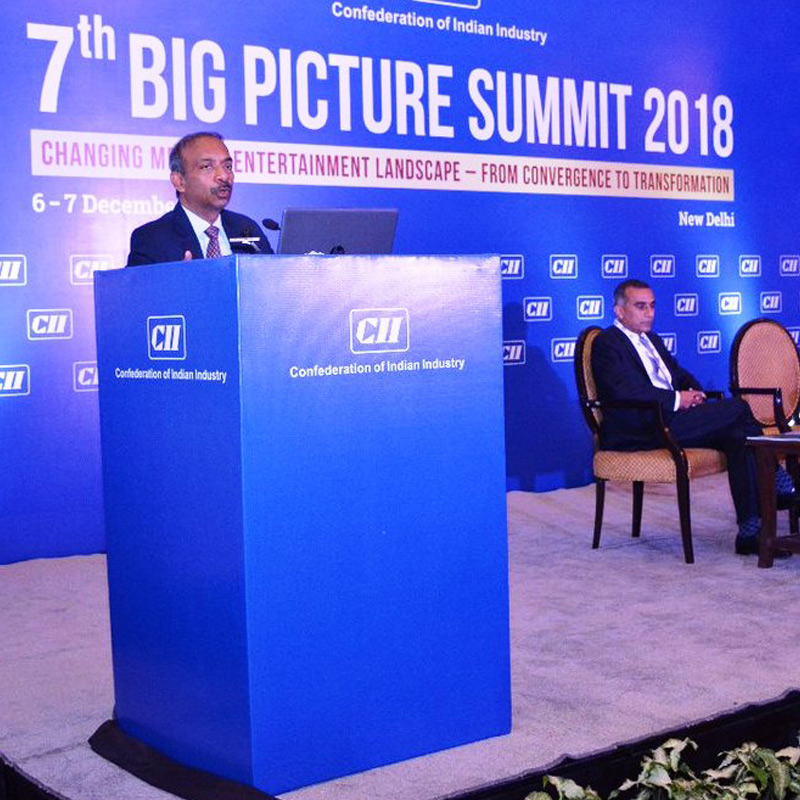
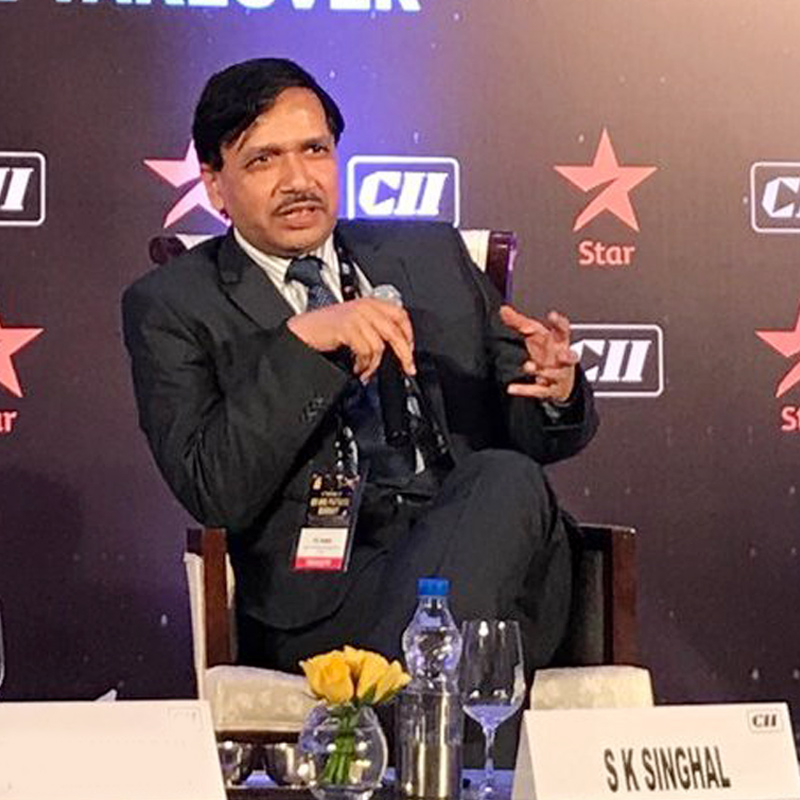
    “The media and entertainment sector should grow in a way that has less hurdle and more motivation,” Khare said here yesterday while addressing the concluding day audience at the CII Big Picture Summit 2018.

    Expanding on the NBP, Khare said government was exploring ways to ease processes, including a rethink on existing regulations for India’s M&E sector, which, not only has clocked impressive growth, but is also a big generator of employment for people. A new DTH policy, which is in the offing, is an indicator of the government's thought process.

    Admitting that regulation has failed to keep pace with changing technologies, the senior government official said, “Regulating everything is not desirable and even if desirable, it may not always be feasible.”

    However, he did not elaborate on the government’s thought process on content regulation for the digital space that’s fast becoming home to bold themes and bolder content if compared to traditional media of print and television.

    Pointing out that the government faced challenges while formulating policies or reviewing existing ones, Khare gave the example of expanding outlets for distribution of content that now, according to him, can be created practically by anyone with newer digital platforms offering creators enough number of outlets to showcase such creations.

    “In such a scenario, policy reforms [become] a little difficult,” Khare said, adding that the present government, however, was keen to review irksome government processes and clearances without being the “monitor” to mind a “grown-up” industry like media.

    Dwelling further on technology and the transformation it was bringing about in society, in general, Khare said MIB was in talks with regulator TRAI and BECIL to hold workshops to explore actively how broadband services could be delivered via existing cable TV networks to approximately 40 million households that presently don’t have internet facilities.

    Broadcast Engineering Consultants India Limited or BECIL, a government organisation under the ambit of MIB, provides project consultancy services and turnkey solutions encompassing the entire gamut of radio and television broadcast engineering.

    Later speaking to the media on the sidelines of the event, Khare said consultations will start with industry stakeholders on the formulation of NBP, but refused to give a time frame of it being legislated into some form of a policy document or guidelines.

    Info Tech Minister advocates robust digital measurement norms

    Facebook, Twitter, YouTube and WhatsApp have changed the manner in which users consume content and communicate with each other, but the social media platforms need to be mindful of "certain dos and don'ts" and guard against any misuse of their platforms, Information and Technology Minister Ravi Shankar Prasad said on Friday.

    Speaking at the CII Big Picture Summit, Prasad said that social media platforms' large focus on India underscored the sheer size and opportunities presented by the market here.

    "Facebook, Twitter, LinkedIn and WhatsApp are coming to India not only because they are giving some service. India offers a robust market, by its sheer size. I always say, come do business, but remember certain dos and don'ts…you must follow," Prasad said.

    The minister said that social media firms should also guard against any potential misuse of their platforms. In particular, these "public platforms" must not be misused by those with wrong intentions for the purpose of exploitation and denigration of others, he said.

    Outlining India's rising digital clout on the back of its large smartphone user base, strong IT outsourcing industry, electronic manufacturing capabilities and biometric programme Aadhaar, the minister asserted that the country will never barter its digital sovereignty and is, in fact, bringing a strong data protection law to safeguard its digital information.

    The right of accessing the internet is "not negotiable" and if the internet is designed for common good, it should be safe and secure, he added.

    He also called for a robust mechanism for measuring the ratings of digital platforms.

  • DoT & TRAI officials feel satcom policy needs ‘fundamental rethink’

    DoT & TRAI officials feel satcom policy needs ‘fundamental rethink’

    NEW DELHI: Two top Indian government officials from Telecom Ministry and TRAI feel the country must have a "fundamental rethink" on satellite communication policy to meet rising connectivity needs that are being fuelled by mobile data growth, digital aspirations, demand from the country’s broadcasting sector and advent of new-age technologies.

    Telecom secretary Aruna Sundararajan on Wednesday outlined the massive growth in mobile data consumption, driven by first-time users, and India's increasing digital clout, and said there is "no looking back" for the country when it comes to strengthening its communications infrastructure.

    She said that in an era of 5G and Internet of Things (IoT), the demand for communication infrastructure "far from slowing down, will increase exponentially".

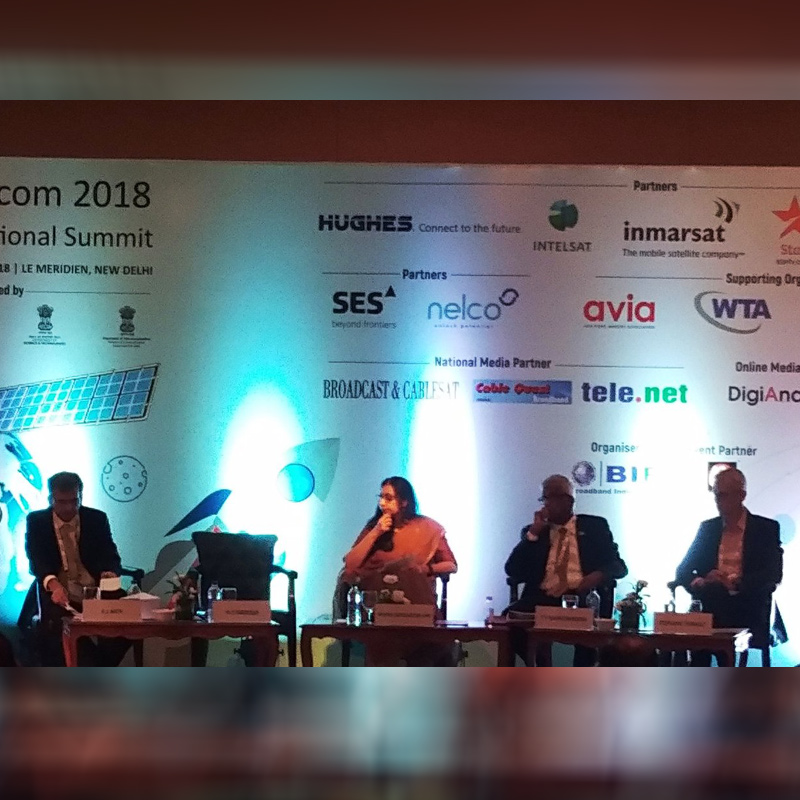
    "We must have digital communications infrastructure that facilitates all this…We really must have a fundamental rethink on India's satcom policy in light of what are the emerging requirements and India's aspirations," Sundararajan said addressing the annual satcom summit 'India SatCom-2018' organised by Broadband India Forum (BIF), a PTI report stated.

    She further said that the demand for communication network is also being propelled by financial service industry, digital payment companies, smartphone usage and social media.

    Sundararajan noted that the draft national digital communications policy aims to provide universal broadband connectivity at 50Mbps to every citizen by 2022, create four million additional jobs, and also talks of enhancing the contribution of digital communications sector to eight per cent of India’s GDP from approximately 6 per cent now.

    "If we are to achieve robust modern digital communications infrastructure that the country needs…it has estimated the need for investment at USD 100 billion. Often, we in government are asked if that is a high figure, but I don't think so…I think this is realistic investment number in sync with our infrastructure requirements," PTI quoted her as saying.

    Stating that the country must embark on comprehensive review of its satellite communications policy, she stressed on the need to strike a balance between autonomy, security and the country's communications demand. "…it is possible to find a sweet spot between these three aspects. Other countries have done so, and I don't think it is impossible for India to strike a calibrated position keeping these three imperatives in mind…Keeping our strategic capabilities and requirements in mind, we need to look at how we can bridge the deficit in term of communication requirements," she pointed out.

    The summit also delved on various aspects of communications, including broadband connectivity to the remote parts of the country, satellite mobility, inflight connectivity, new technologies and innovations.

    Echoing sentiments similar to Sudararajan, telecom and broadcast regulator TRAI secretary SK Gupta, while addressing the valedictory session of the event, opined that “mainstreaming of satcom” issues was heartening.

    Pointing out that satellite transponder allocation process in India “needs a review” and the mechanism an “overhaul”, Gupta said that no regulatory hurdle should be created against use of any technology as satellite communication is very important for various applications and services.

    The one and half day satcom conference saw the convergence of not only ideas and trends, but also of representatives from the industry and government, including those from India’s space agency ISRO, Ministry of Information and Broadcasting and BECIL.

  • MIB Minister tries to allay fears on online surveillance & privacy violations

    MIB Minister tries to allay fears on online surveillance & privacy violations

    NEW DELHI: The Indian government has denied that its proposed Social Media Communications Hub, under the jurisdiction of Ministry of Information and Broadcasting (MIB), will violate a citizen’s privacy through monitoring of social media footprints as the plan was more directed towards propagating the government’s policy initiatives.

    The government has also clarified that there was no proposal under consideration to get installed tracking chips in set-top- boxes through which various TV and broadband services are delivered to a large number of the 190 million-plus TV households in India.

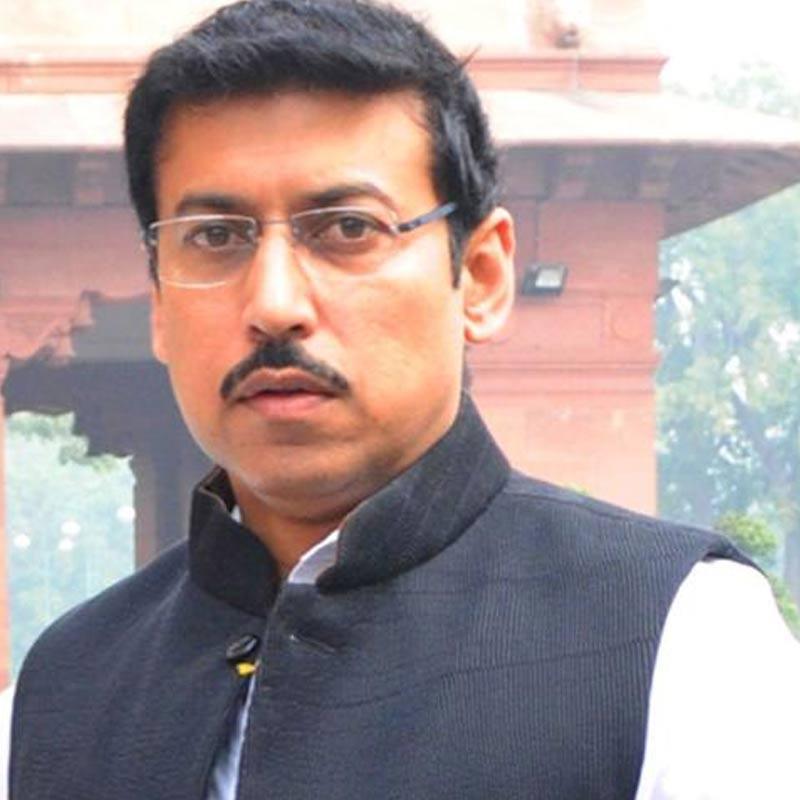
    “The government proposes to set up a Social Media Hub to facilitate information flow regarding its policies and programmes through social media platforms, that is Facebook, Twitter, Instagram, YouTube, etc.,” MIB Minister Rajyavardhan Rathore told the Indian Parliament’s Lower House yesterday while answering queries raised by fellow parliamentarians whether such a monitoring facility is aimed at collecting and analysing data across all major social media platforms that would ultimately be a surveillance tool for the government.

    The Minister also clarified that there was no proposal to “invade an

    individual’s right to privacy, and the right to freedom of speech” through the proposed social media hub.

    In the past two years, MIB has been a facilitator in providing publicity to the flagship schemes of the government on major social media platforms and had organized various online promotional activities in this regard, Rathore explained.

    What Rathore didn’t clarify or add — as he was not asked specifically so — as to why a tender for setting up of the Social Media Communications Hub was floated in the first place and why the document’s objectives were so detailed that it alarmed civil society on its citizen surveillance aspects. The full details of the tender document can be still found online.

    Incidentally, the deadline for a tender floated to locate vendor(s) to set up the proposed social media hub — termed by critics as a surveillance tool to monitor Indian citizens’ activities and thoughts in real time — has been extended several times since April 2018 with the new deadline now being 20 August 2018 before which the Supreme Court is scheduled to hear a case against its setting first week of August.

    The apex court’s initial observations sounded critical as it said if such a monitoring hub came up it could turn India into a “surveillance state”.

    Broadcast Engineering Consultants India Limited (BECIL), an organization under the umbrella of MIB, had floated a tender to supply a software for the project. When the idea was first mooted Smriti Irani was the MIB Minister.

    “A technology platform is needed to collect digital media chatter from all core social media platforms as well as digital platforms such as news, blogs… In a single system providing real-time insights, metrics and other valuable data,” the tender document stated.

    Under the project, media persons would be employed on contractual basis in each district to be the “eyes and ears” of the government and provide real-time updates from the ground — one of the reason for extending the deadline was this condition, missing in the original tender document, got added later.

    According to critics of the project, undertaken under a seemingly harmless name of Social Media Communications Hub, however, it aimed to monitor in real times not only the social media and online activities of Indian citizens, but also seeks to deploy technology to predict behavior and possible future actions of people. This, at a time when India doesn’t have strong data protection laws.

    Amongst the many listed objectives of the media hub is this: “What would be the headlines and breaking news of various channels and newspapers across the globe— could be done with knowledge about their leanings, business deals, investors, their country policies, sentiment of their population, past trends etc. NYT, Economist, Time etc. are good examples, what would be the global public perception due to such headlines and breaking news, how could the public perception be moulded in positive manner for the country, how could nationalistic feelings be inculcated in the masses, how can the perception management of India be improved at the world for a how could the media blitzkrieg of India’s adversaries be predicted and replied/neutralized, how could the social media and internet news/discussions be given a positive slant for India.”

    One of the many critics of this project is the Internet Freedom Foundation (IFF), which has also sent a notice to the MIB to stop the project, failing which the organization would take legal action. Its concerns? “Social Media Communication Hub will also have the ability to broadcast content without any legal authority or guidance through 20 central and 716 district level social media executives. In sum, this is a system of control through surveillance and a capacity to spread propaganda,” the Foundation had said in an online campaign last month.

  • Supreme Court questions MIB’s digital chatter monitoring proposal

    Supreme Court questions MIB’s digital chatter monitoring proposal

    NEW DELHI: The government proposes, Supreme Court disposes. Well, almost. Not fully yet. Though, the apex court has questioned a Ministry of Information and Broadcasting proposal to monitor digital chatter and online footprint, observing today that if done it would be “like creating a surveillance state”.

    The top court said the government wants to tap citizens’ WhatsApp messages and sought its response within two weeks, according to a report filed by Press Trust of India.

    A bench of Chief Justice Dipak Misra and Justices A M Khanwilkar and D Y Chandrachud issued notice to the federal government on a plea by Trinamool Congress (TMC) legislator Mahua Moitra and sought Attorney General K K Venugopal’s assistance in the matter.

    “The government wants to tap citizens’ WhatsApp messages. It will be like creating a surveillance state,” the bench was quoted by PTI as having said earlier in the day.

    The bench then said it was listing the matter on 3 August 2018, before the opening of the tender on 20 August 2018 for the proposed monitoring cell. The attorney-general or any law officer for the government will assist the court in the matter. As reported by Indiantelevision.com earlier, the project’s deadline has already been extended several times.

     The project being undertaken under a seemingly harmless name of Social Media Communications Hub, however, has aims to monitor in real times not only the social media and online activities of Indian citizens, but also seeks to deploy technology to predict behavior and possible future actions of people. This, at a time when India doesn’t have strong data protection laws.

    Amongst the many listed objectives of the media hub is this: “What would be the headlines and breaking news of various channels and newspapers across the globe— could be done with knowledge about their leanings, business deals, investors, their country policies, sentiment of their population, past trends etc. NYT, Economist, Time etc. are good examples, what would be the global public perception due to such headlines and breaking news, how could the public perception be moulded in positive manner for the country, how could nationalistic feelings be inculcated in the masses, how can the perception management of India be improved at the world for a how could the media blitzkrieg of India’s adversaries be predicted and replied/neutralized, how could the social media and internet news/discussions be given a positive slant for India.”

    One of the many critics of this project is the Internet Freedom Foundation (IFF), which has also sent a notice to the MIB to stop the project, failing which the organization would take legal action. Its concerns? “Social Media Communication Hub will also have the ability to broadcast content without any legal authority or guidance through 20 central and 716 district level social media executives. In sum, this is a system of control through surveillance and a capacity to spread propaganda,” the Foundation had said in an online campaign last month.

    Meanwhile returning to the Supreme Court, earlier on 18 June 2018 the court had refused to accord urgent hearing on the TMC member’s plea seeking to stay a central government move to set up a ‘Social Media Communication Hub’ that would collect and analyse digital and social media content.

    The counsel for Moitra had said that the government is trying to monitor social media content of individuals by tracking their social media accounts such as those on Twitter, Facebook and Instagram, and their e-mails.

    Broadcast Engineering Consultants India Limited (BECIL), an organization under the umbrella of MIB had floated a tender to supply a software for the project. When the idea was first mooted Smriti Irani was the MIB Minister.

    “A technology platform is needed to collect digital media chatter from all core social media platforms as well as digital platforms such as news, blogs… In a single system providing real-time insights, metrics and other valuable data,” the tender document elaborated.

    Under the project, media persons would be employed on contractual basis in each district to be the “eyes and ears” of the government and provide real-time updates from the ground — one of the reason for extending the deadline as this condition, missing in the original tender document, got added later.

  • MIB social media monitoring cell tender deadline extended

    MIB social media monitoring cell tender deadline extended

    NEW DELHI: The Big Brother has arrived? Well the Indian government, being accused of proposing to unleash a surveillance of citizens, has gone in for another extension of the deadline seeking vendors for technical and logistics help to set up such a center.

    The new date for submitting proposals for Ministry of Information and Broadcasting (MIB)’s Social Media Communications Hub is now 18 June 2018, which is the third revision of the deadline since tender was floated earlier this year inviting proposals, enumerating wide-ranging deliverables.

    Under criticism from a section of the civil society and online journalists and activists for this proposed over Rs. 400 million surveillance project, both MIB and BECIL (a unit under the ministry) have maintained a stoic silence.

    The project, first reported by Indiantelevision.com in January 2018 and being undertaken under a seemingly harmless name of Social Media Communications Hub, however, has aims to monitor in real times not only the social media and online activities of Indian citizens, but also seeks to deploy technology to predict behavior and possible future actions of people. This, at a time when India doesn’t have strong data protection laws.

    Amongst the many listed objectives of the media hub is this: “What would be the headlines and breaking news of various channels and newspapers across the globe— could be done with knowledge about their leanings, business deals, investors, their country policies, sentiment of their population, past trends etc. NYT, Economist, Time etc. are good examples, what would be the global public perception due to such headlines and breaking news, how could the public perception be moulded in positive manner for the country, how could nationalistic feelings be inculcated in the masses, how can the perception management of India be improved at the world for a how could the media blitzkrieg of India’s adversaries be predicted and replied/neutralized, how could the social media and internet news/discussions be given a positive slant for India.”

    One of the many critics of this project is the Internet Freedom Foundation (IFF), which has sent a notice to the MIB to stop the project, failing which the organization would take legal action. Its concerns? “Social Media Communication Hub will also have the ability to broadcast content without any legal authority or guidance through 20 central and 716 district level social media executives. In sum, this is a system of control through surveillance and a capacity to spread propaganda,” the Foundation said in an online campaign.

    The Foundation’s letter to MIB minister Rajyavardhan Rathore, sent last week, criticizes the government move on the ground that“the wider project to surveil social media is illegal and unconstitutional, being contrary to the right to privacy and freedom of speech and expression”.

    Urging the ministry to withdraw the requests for proposal invited by BECIL, the IFF said, “The RFP document clearly indicates that the proposed Social Media Communication Hub seeks to create a technology architecture that merges mass surveillance with a capacity for disinformation. It is a perilous expense on the exchequer, given that an exorbitant amount of [Rs] 42.4833 crores (approximately Rs. 42 million) is being earmarked for a project that will undermine our fundamental rights.”

    Meanwhile, MIB is also seized of the fate of a committee set up by former minister Smriti Irani to propose regulations for online media. Though Rathore in recent times has spoken of self-regulation of media, in general, he hasn’t yet articulated the government view on the committee, which critics say was beyond the remit of the MIB.

    Indiantelevision.com learns from government sources that the online regulation committee has already held few informal meetings, though non-governmental organisations, seeking to be part of it, were not invited.

    While some media industry organisations were named by the government to be part of this online regulation committee, many others like the internet and mobile association of India, Broadband Forum India and Asian media body CASBAA have, reportedly, sent in formal requests to be made part of this government committee, which, interestingly, doesn’t include a single online venture or body.

    Also Read :

     MIB to collect data on satellite capacity needs, digital chatter

  • Time to have rules ensuring no one player dominates media: Smriti Irani

    Time to have rules ensuring no one player dominates media: Smriti Irani

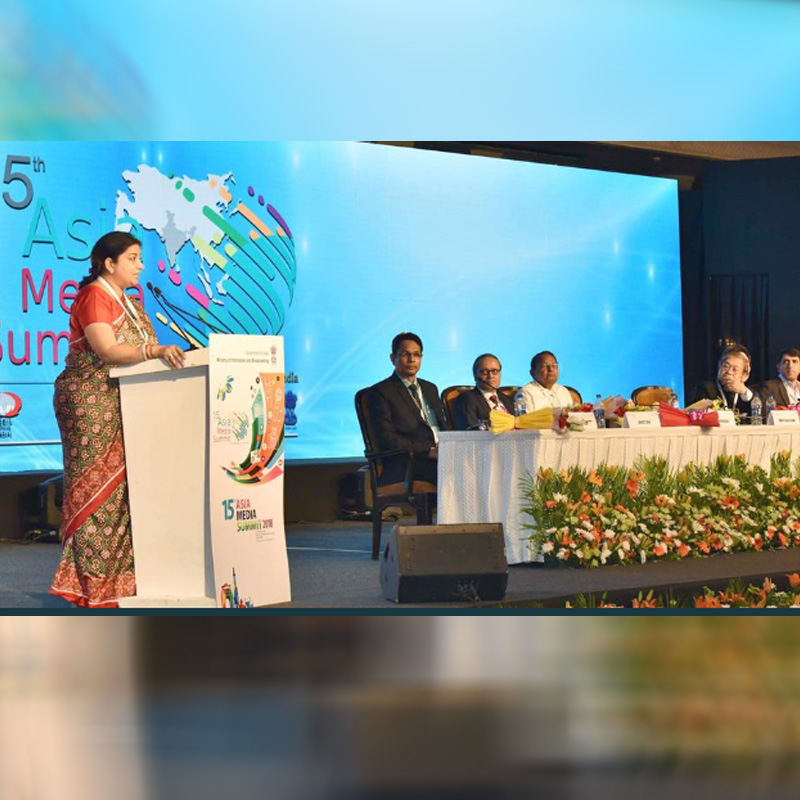
    NEW DELHI: Minister for Information & Broadcasting Smriti Zubin Irani yesterday said that the time has come to put laws, ethics and rules into place that will help in balancing the media industry so that no one dominant player can rule the roost. She, however, did not elaborate what those parameters should or could be.

    Speaking at the 15th Asia Media Summit (AMS) 2018 yesterday, she, however, hinted at her version of what good content could be, throwing oblique references to the growing digital-spurred edgy content in Indian media, including television.

    Pointing out that India will have around 969 million internet users by 2021 and that the media industry looks upon the digital world “not only as a challenge but also as an opportunity”, Irani asked, “How do we attract, retain and develop talent, which frees good content from the trappings of revenue needs and brings about a balance in media institutions?” 

    She hoped that the media event would deliberate on ways to “delve and deliberate on Asia values”, and the need for good stories to be told.

    Dwelling on the need for regulations to ensure level playing field for all, the minister referred to an address made by media baron Vineet Jain, group MD of Times Group, before her at the media conference to drive home a point that present laws may be inadequate to deal with the changing landscape of the Indian media.

    Jain, during his address to the delegates at AMS 2018, had said, “But for Indian media to realise its full potential, regulatory reforms are needed across the board – to make it easier to do business, remove anomalies in the system, and above all, ensure a fair marketplace that benefits the consumer.”

    Carrying forward, Irani said the India media is getting more consumer-centric because of the opportunities (and challenges) that the digital ecosystem is offering stakeholders, apart from the overall evolution of the industry.

    Giving a perspective of the expanding Indian media industry, Irani said India was one of the fastest growing advertising market that is expected to touch $10.59 billion by the end of 2018, while the mobile spend was estimated to grow to $1.55 billion in the current year. “We have a vibrant media industry, which has a direct established impact of Rs 1.35 lakh crore and indirect and induced benefits of Rs 4.5 lakh crore, with close to 4 million people associated with it,” she added.

    The three-day 15th Asia Media Summit is being hosted by the Ministry of Information and Broadcasting jointly with the Indian Institute of Mass Communication (IIMC), and Broadcast Engineering Consultants India Limited (BECIL) in New Delhi. The theme of this year’s summit is ‘Telling Our Stories – Asia and More’, which would encourage regional and bilateral dialogue and cooperation to respond to challenges to the broadcasting sector in the region.

    The minster expressed hope that the event will throw up new ideas so that pathways to strengthen media institutions for a better mankind could be explored.

    Addressing the inaugural session, Minister of Information from Bangladesh Hasanul Haq Inu outlined six complex challenges the world faces today: poverty, gender disparity, terrorism, ICT revolution, climate change and uneven globalisation. Expressing concern at cybercrimes, he stressed upon the need to fight a war against cyber-criminals to keep the media safe and expanding.

    This is the first time that the Asia Media Summit is being held in India. Over 220 foreign delegates representing 39 countries (SAARC, ASEAN, East Asia, Africa, Oceania, Europe, Syria, Uzbekistan, USA, China) and senior officials of the government and members of Indian media industry are participating in the event.

    Also Read:

    MIB moves to regulate online media: various organisations join issue   

    Online media professionals write to Smriti Irani expressing regulation concerns

    TRAI seeks to regulate online streaming platforms