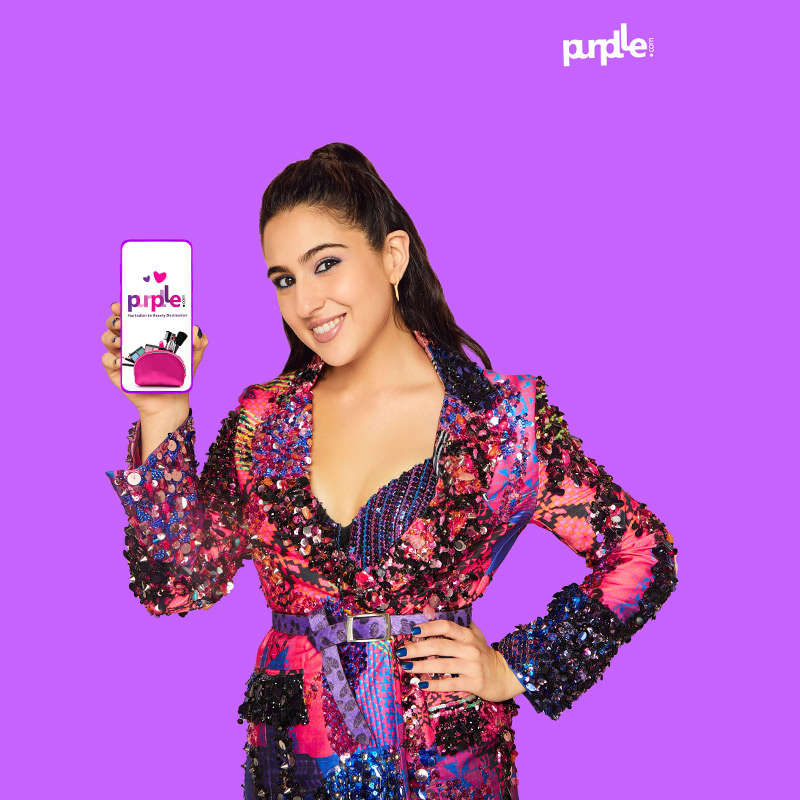
The leading beauty e-commerce platform Purplle.com has launched its latest brand campaign featuring bollywood actress Sara Ali Khan. With this campaign the brand aims to position itself as “Har Indian Ka Beauty Destination”. With this it Purplle repositions itself from mass, premium, to super-premium beauty solution for every Indian skin tone and skin type!
The new campaign brings alive this proposition by showcasing a diverse group of friends, from across the country, who find their perfect match on the beauty e-commerce platform. Brand ambassador Sara Ali Khan, dressed in a Manish Malhotra outfit, encourages girls to fearlessly explore their beauty needs and embrace their diversity.
The campaign went live across Sara Ali Khan’s social platforms and will be further amplified across languages and distributed via digital and social channels.
With over sixty thousands products from over thousand brands, catering to the diverse needs of every Indian, the brand encourages women to indulge and add to their cart, everything they heart.
It also allows consumers to avail personalised recommendations while shopping on Purplle.com. If needed, they can opt to return products through a unique two-day return policy.
Today, women across the markets seek personalized beauty solutions that appeal to different skin tones and types.
Purplle’s propriety Beauty Intelligence Suite uses artificial intelligence and machine learning to decipher thousands of keywords, which include brands, ingredients, skin types, benefits, categories, and special attributes. With this, Purplle has made trending beauty products accessible and affordable.
At Purplle, there is a beauty product for every Indian, from mass, premium, to super-premium. Bringing this to life through the campaign, Purplle.com chief business officer Nippun Aneja said, “Beauty is very personal and exploratory. Different skin types, skin tones, weather conditions, and textures can influence a consumer’s journey. Today, with digital breaking access barriers, the beauty experience is full of personalized solutions.”
“Powered by a strong technology backbone, Purplle caters to the many requirements of consumers with a plethora of offerings and trending products. Our strong positioning encourages women to explore the pleasures of beauty, with a wide range of genuine certified products delivered across eighteen hundered pin codes. With this, we truly are Har Indian ka Beauty Destination,” he added.
Speaking at the launch of the campaign, brand ambassador Sara Ali Khan said, “The Purplle world is all about having fun with beauty, experimenting, and finding your perfect match. From luxury products to daily basics, I have always turned to Purplle for my beauty needs, and I am proud to say that Purplle sirf Sara ka hi nahi, Har Indian ka Beauty Destination hai! I hope many young girls can resonate with our campaign and, whatever their definition of beauty, they can truly indulge in all that they hear on Purplle. For the campaign, we brought alive the brand’s personality of being trendy, yet super fun and relatable”
Mumbai: Ensuing a multi-agency pitch, NewU, the beauty retail business from the house of Dabur has partnered with Gurugram-based digital marketing agency Lyxel&Flamingo to handle an all-encompassing integrated digital marketing mandate.
NewU is the retail chain for beauty and personal care essentials. Operated by H&B Stores, a 100 per cent subsidiary of Dabur India, the brand operates 100+ stores across leading cities in the country, said the company.
“The awareness levels among consumers in India for Indian and global beauty products and trends, both current and emerging, continues to rise,” remarked NewU (H&B Stores) business head Manish Asthana. “We are delighted to associate with Lyxel&Flamingo to further elevate our brand’s digital presence and forge a deeper connection with discerning consumers. The agency’s creative thought process resonates with our brand’s ideology and together we are confident of scaling up our brand’s media footprint using a clutter-breaking strategy in this competitive industry.”
Lyxel&Flamingo will be managing the brand’s digital marketing duties, comprising social media marketing, website management and automation, SEO, influencer management and digital media buying. “The agency is tasked with leveraging its collective creative, strategic, and social media skills to enhance brand recall, boost brand loyalty, and drive digital footfall and engagement,” said the statement.
“Our team of young and exuberant professionals believes that a well-rounded digital strategy can exceptionally increase the conversion rate of consumers,” stated Lyxel&Flamingo chief operating officer Shreyansh Bhandari. “The beauty retail sector in our country is highly dynamic and against that background, we intend to bring in the ideal balance between creative digital communication and engagement to reach out to NewU’s audience at a wider scale.”
KOLKATA: Beauty and fashion e-commerce platform Nykaa has recently launched The Global Store (TGS), which aims to bring international beauty brands to Indian consumers through a cross-border e-commerce platform. TGS can be easily and exclusively accessed through the Nykaa mobile application.
The brands endeavour to be fully compliant with all Indian e-commerce regulations on imports and will display one all-inclusive price, that is inclusive of all customs, duties, and taxes. Customers will be required to provide KYC details as per the applicable government regulations. Orders will be shipped and delivered within seven to 20 days from the offshore fulfillment centre, directly to the customers’ doorstep
Through TGS, Nykaa brings a strong network of authorized retailers of international brands to India. In order to deliver its promise of authenticity, Nykaa will accredit only a single vendor to each brand.
The platform offers labels from countries across the world including the US, South Korea, Finland, Australia, and Dubai, among others. These brands have been carefully selected and chosen based on global trends. The focus has been on specific skincare concerns, artisanal beauty, mineral-based makeup, plant-powered haircare, and science-based clean beauty.
Some of the prominent brands on TGS include the recently launched brand Dr Barbara Sturm (luxury skincare that combines the power of ingredient science and potent plant extracts for a #SturmGlow), Pur Cosmetics (mineral-based makeup and skincare solutions- Cosmetify’s Hottest Brands of 2020), Butter London (multiple award-winning nail products that are formulated with clean ingredients), Cosmedix Skincare (luxe clean skincare line with celebrity followers like Kim Kardashian, Hailey Beiber, Victoria Beckham, Demi Moore), Erno Laszlo Skincare (clean science luxury skincare, considered to be Marilyn Monroe & Audrey Hepburn’s secret beauty weapon), Rahua (high-quality haircare products inspired by the Amazonian rainforest), and Rodial (global luxury skincare that offers targeted treatments) among others.
Shedding more light on the newly launched platform, Nykaa spokesperson said, “We are thrilled to launch The Global Store on Nykaa. While we have witnessed the demand for a diverse range of international brands from consumers over time, these brands have faced multiple challenges in the past to enter the Indian market. This platform aims to effectively bridge the gap between global brands trying to tap the Indian market and customers who desire to shop for the best of the brands. Through The Global Store, Nykaa continues to empower its customers by democratizing the access to a host of international brands by giving choice, authenticity, and convenience.”
Mumbai: Amid increasing urgency to combat climate change, brands around the world have begun reevaluating their production practices. Now, beauty brand L’Oréal Paris has announced its sustainability program, ‘L’Oréal for the Future, because our Planet is Worth it’, on the occasion of World Earth Day.
The brand has pledged to embrace the ambitious mission of reducing its carbon footprint by 50 per cent on every finished product. It has also announced its decision to contribute €10 million to environmental projects whose beneficiaries are communities of women around the world.
“Now is the time to accelerate sustainable innovation, to make the shift to a circular economy and to reduce the impact of our products,” said L’Oréal Paris global brand president Delphine Viguier-Hovasse, adding that between 2005 and 2020, the brand’s factories and distribution centres had already reduced CO2 emissions by 82 per cent, water consumption by 44 per cent, and waste generation by 35 per cent.
“There is still much work to be done but we will remain strong in our resolve to make a difference and play our part in this race against climate change. We have a duty to change the codes of beauty to adopt a more sustainable approach and to empower our consumers to achieve responsible consumption,” she added.
Among the key pledges made by the brand include its aim to use 100 per cent recycled plastic, 100 per cent sustainable cardboard and operate100 per cent carbon neutral factories by 2030. Along with financial support, it will also develop specific programs that empower women in leadership positions.
MUMBAI: How many people know that the now cult-favourite beauty brand of Gen Z and millennials, SUGAR was once on the verge of shutting shop due to lack of funding?
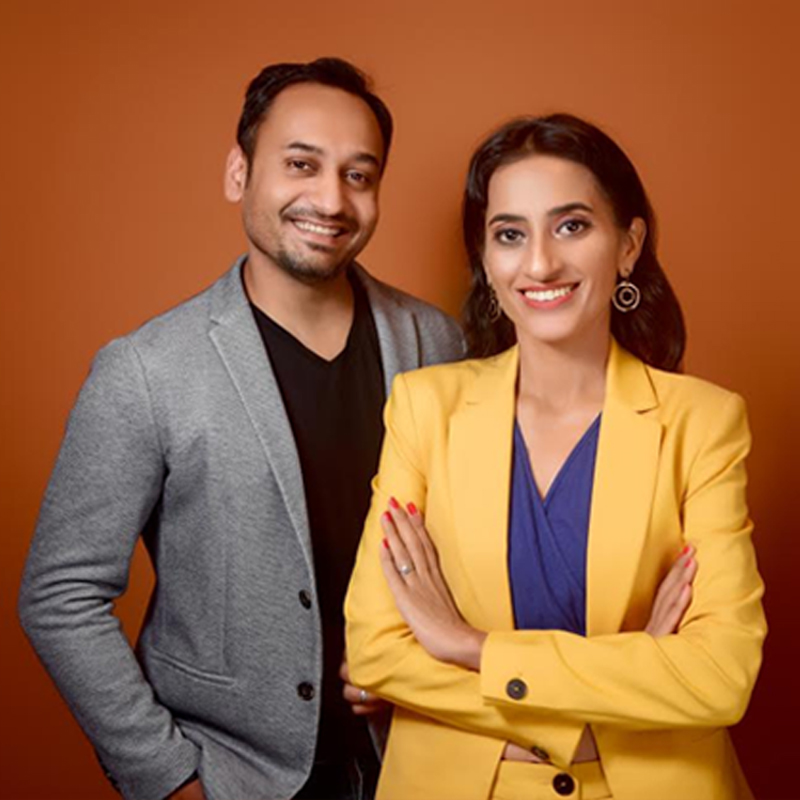
The direct-to-consumer SUGAR Cosmetics founded in 2015 by IIM Ahmedabad alumni Vineeta Singh and Kaushik Mukherjee is one of the fastest-growing premium beauty brands in India today. However, things were far from rosy for the Mumbai-based start-up back in 2016 when it did not even have enough money to import its first batch of lipsticks manufactured in Germany.
Pulling back the curtain on an untold story of a contrarian bet for the brand in 2015, Co-founder & CEO Vineeta Singh says, “SUGAR Cosmetics started as a direct-to-consumer cosmetics brand in 2015 with products that were specifically created for young Indian women. Very few people know that it was also at this time when the company was pivoting from the beauty subscription service to a cosmetics brand, it came very close to shutting down.”
Had it not been for a leap of faith from its earliest backer, India Quotient, dipping into their ‘reserve for AMC fees’ funds for a sizeable sum of Rs 1 crore, the founder admits the picture would have been starkly different today.
“In 2016, having already infused capital from their first fund, the partners at India Quotient, Madhukar Sinha and Anand Lunia, were clear that their fiduciary duty towards their limited partners ruled out any possibility of any further investment from their successor fund without an external investor leading the round. However, for reasons best known to them, they took an extremely risky call of lending the company Rs 1 crore from the funds ‘reserve for AMC fees’ amount that VCs earn for managing the fund,” says Singh.
Without India quotient’s cash infusion, Apart from being unable to pay their German manufacturers to release the products that were ready for delivery, the company would never have reached the 2017 Series A which eventually set the brand up on a different trajectory altogether, she details. “It gives us immense joy to be able to return 49X of their investment to them and thank them for the pivotal role they’ve had and continue to have as SUGAR scales,” she gushes.
The cruelty-free brand has quickly made its way into most makeup aficionado’s hearts and vanity bags. The year 2021 was off to a strong start for the digital-first beauty player as it announced a $21 Million (Rs 153 crore) Series C funding round in early February. As part of this, India Quotient marginally trimmed its holding to clock a 49X return on its investment at an IRR of 61 per cent.
Till date, the company has raised a total of $33 Million funds. India Quotient has consistently backed the founding team through all four rounds of funding, including the recently concluded Series C where it co-invested with Elevation Capital and A91 Partners. As a result, India Quotient is currently the second largest institutional investor of the company with a stake worth more than its first two funds put together.
The early-stage investor firm first invested in the vision back in 2013 when the parent company Vellvette Lifestyle was pursuing a beauty subscription service business model. In 2015, SUGAR Cosmetics was launched under the same company with a limited range of Crayon Lipsticks, Vivid Lipsticks, Matte Eyeliner and Kajal that disrupted the online cosmetics market and went viral through rave reviews on Instagram and YouTube. Starting with net revenue of Rs 3 crore in 2016-2017 the brand successfully clocked in Rs 105+ crores in its fourth fiscal year, reaching an 85 per cent year-on-year growth rate. This, while notching up 1.5+ million followers across social media platforms on the side.
India Quotient founding partner Madhukar Sinha said, “Ever since the launch of our operations in 2012, we have invested in over 70 start-ups. While we first backed the founders in 2013, we did infuse some amount in SUGAR Cosmetics in 2016 from the first fund’s reserve for AMC fees amount – we just knew that this association was to go a long way. The projections of the online beauty industry and the all-in approach of the team just had to be seen through to the Series A fundraise in June 2017.”
Besides investments in keeping the brand’s fast-moving product range ahead of the curve, SUGAR plans on using their latest funds in building both digital and retail distribution to further their reach in existing and new geographies, particularly in tier-2 and tier-3 towns of India. The brand’s Android and iOS apps have seen a million downloads with a 4.6-star rating, indicating a strong community of beauty enthusiasts that the brand speaks to. The retail footprint is also expected to grow from the current 10,000+ retail outlets to 40,000+ in the current year.
Sinha affirms, “Seeing the brand grow to become a cult-favourite among millennial women was a proud moment for us as well because we knew that the gut feel was validated. Watching how quickly SUGAR was carving their mark in the beauty industry, we returned to invest in the brand in their Series B & Series C rounds as well. For a brand that is merely 5 years old, SUGAR has taken the industry by storm and we are happy to be a part of their success journey.” Indeed.
NEW DELHI: Beauty brand Lotus Herbals is encouraging women to reclaim the narrative by defying stereotypical beauty standards and wear the colours that define them.
The campaign, #WearYourColor, is a new manoeuvre for women to make their own rules of beauty. Designed by HerHQ Media in partnership with Stylecraze and Lotus Herbals, the initiative playfully dwells upon the premise that a woman can conquer the world with the right shade of lipstick. Whether they choose to ramp it up with red lips, be bodacious with burgundy, or keep it nonchalant with nudes, the campaign emboldens women to express themselves through colours.
Lotus Herbals head of digital Vishal Singh says, "Women have always been the driving force behind change and revolution. Reclaiming fashion as their own is one of them. For today’s woman, fashion is the freedom to wear what she wants, when she wants, and how she wants. Through #WearYourColor, we want to acknowledge all these women who are undeterred, confident, and do not fear the judgments that follow. Your unfettered freedom is an inspiration for many."
IncNut VP – business development & strategic partnership Natasha Garyali says, "Lipstick has always been seen as a powerful statement in a patriarchal society that has constricted the choices a woman can make by forcing norms and regulating their freedom. Leveraging Stylecraze, we power up the bold and powerful #WearYourColor message by bringing the lipstick back to the forefront as a language of protest, rebellion, self-assertion, confidence, and liberation for women. Nothing can be more liberating than the power to choose what you want and the confidence to be you at all times."
MUMBAI: It is not easy to define beauty for anyone as each person has its own definition. Beauty does not depend on the colour of the skin, physical abilities, or height or weight, but is a function of one’s inner radiance.
However, if we look around, the idea of beauty in the larger sense, across society, is subjected to rules and regulations. A large part of society defines beauty is defined in a certain manner and urges others to follow specific norms. The idea of beauty varies from culture to culture.
Several brands across the categories have found solace in this idea and tried to make a difference by sharing researches, creating campaigns and awareness in society.
In the latest attempt, Shoppers Stop is trying to break this stereotype and use makeup as a form of expression and creativity. Through the videos, the influencers and role models breakthrough this clutter and stand out for who they are with beautiful representations from different walks of life.
Shoppers Stop, India’s beauty and fashion destination enthralled their audience with a series of videos attempting at breaking stereotypical beauty standards and perceptions.
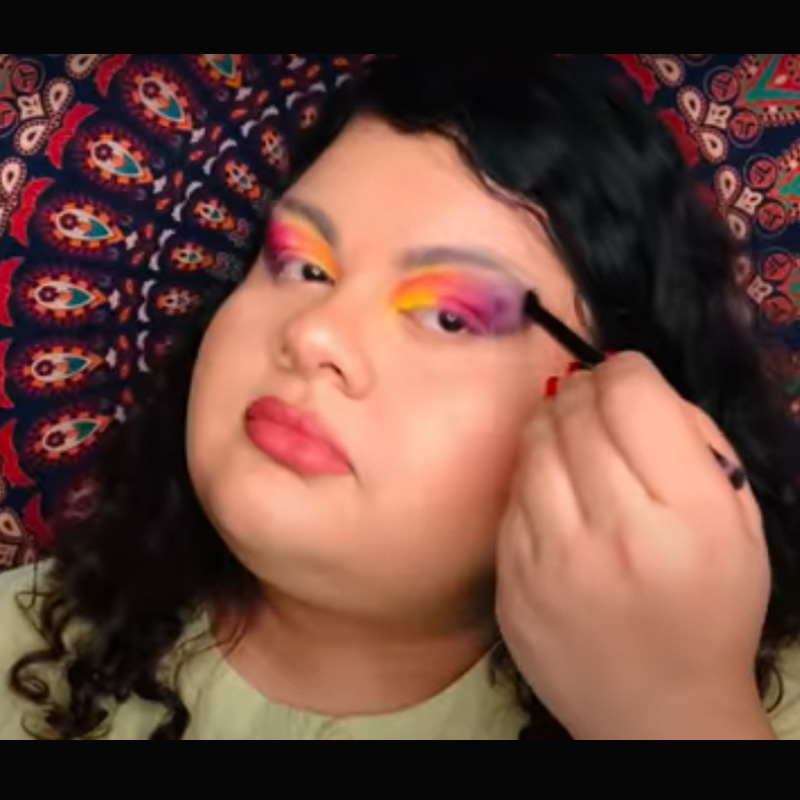
Video from #StopTheBias series titled Being Me Is Delightful shows, stand-up comic and advocate of body positivity, Supriya Joshi talks about the world’s perception of beauty and its unrealistic expectations. In her video, she projects the boldest eye shadows and the most flawless makeup telling people that she is not interested in hiding behind the shadows, she is right here in the limelight. Joshi further goes on to say that she is most comfortable in her own skin and it does not matter what naysayers have to say about that.
Joshi says, “Growing up, I was an introvert with social anxiety. It took a lot for me to accept myself as who I am. Self-love is the most important thing which is why #StopTheBias was perfect for me. I have learned to love myself and grow into a more confident human being.”
Another video from #StopTheBias series titled Right To Look Fabulous features influencer and acid attack survivor, Anmol Rodriguez. The video showcases her as the strong independent woman she has become. How she chose to be a survivor, not a victim and not let the world tell her what she can or cannot do. She used her battle scars as her strength and became a positive social media influencer with her confidence and style.
Anmol Rodriguez says, “When life throws you down, all that you can do is pick up the pieces and keep fighting. I have been fighting for most of my life. It took a lot of failure, despair, and self-esteem boosting for me to be where I am today. In Shoppers Stop’s #StopTheBias video, I am who I am. I am not afraid of showing myself to the world because I know that I am one of a kind.”
Shoppers Stop chief marketing and customer officer Uma Talreja says, “The beauty industry has seen a shift during the pandemic. Lipsticks have dominated the segment but with the wearing of masks, the focus has shifted. Indian culture has been deep-rooted in the use of eye makeup and eye art, and there is plenty of cultural contexts that have been amplified in Bollywood and many other occasions. During the pandemic, we believe that eye makeup can open the doors to artistry and creativity in makeup and give women a feel-good factor while they wear a mask.”
Earlier, Shoppers Stop has launched similar kinds of women-centric campaigns. In 2019, the brand released a campaign on National Lipstick Day, focusing on the role of women and their place in the world as a mother. The campaign took a unique approach to celebrate Lipstick Day and beauty by breaking stereotypes around makeup and touches an emotional chord around beauty through the eyes of everyday interactions and relationships. It sent out a strong message.
1702 Digital associate creative director Pranay Bhan mentions that all three ads of Shoppers Stop have a powerful insight backing them up, so #StopTheBias does strike the right chord with the digital-savvy audiences. “Leveraging the topics of acid attack survivor glorification, embracing body positivity, and gender-neutral love for makeup and styling are all great talking points. However, the varying production quality for each film does raise the question of why each influencer or theme leveraged should not be given equal validation,” adds Bhan.
He further mentions, “When it comes to beauty standards in a country like India, breaking stereotypes is a tall order, and the current approach brings their existence to light. To break stereotypes, a brand must normalise what the masses would consider outrageous. The campaign’s positive messaging should work as a stepping stone towards a more consistent release of content that puts such influencers side by side with the typical choice of models. Just adopting the unexpected choice of the cast too may not be enough, and Shoppers Stop must continue with their efforts to form a more inclusive and progressive image in the market. If they stick to being an inclusive brand with hoardings and other retail assets also following suit in appropriate sales regions, the brand’s perception should change for the better with time.”
A couple of years ago, Make Love Not Scars, an NGO released a campaign in association with an agency that used models who had acid attack burns. They went on to share beauty tips with the people. The campaign was a huge hit because it focused on the inner beauty, strength and courage of the acid attack survivors.
Monk Media Network creative director Adrine D'mello says, “I have actually seen stuff from the #StopTheBias series by Shoppers Stop before in their lockdown shoot films. This one to hits the mark with breaking stereotypes about beauty. While being a film for the eye stopper property, they have not strayed away from their key communication which is good. You hear all the chatter about ‘Millennial behaviour’ and one of it taking a stand for something you believe in, these films bring out the inclusive side of the brand which in turn will pull the audience towards them.”
Infectious business head digital Upasana Naithani shares that there have been other fashion brands who have made such statements in the past and have reaped benefits. “#StopTheBias is a bold and very timely attempt by Shoppers Stop to join the diversity bandwagon. The brand is seen as inclusive and progressive and hence wins audiences across the diversity spectrum. Audiences today are not very forgiving of the brands who choose to remain silent or not make their stand clear. This campaign is in the same league as Levi’s I Shape my World taking the brand many notches higher in recall and sensitivity index,” shares Naithani.
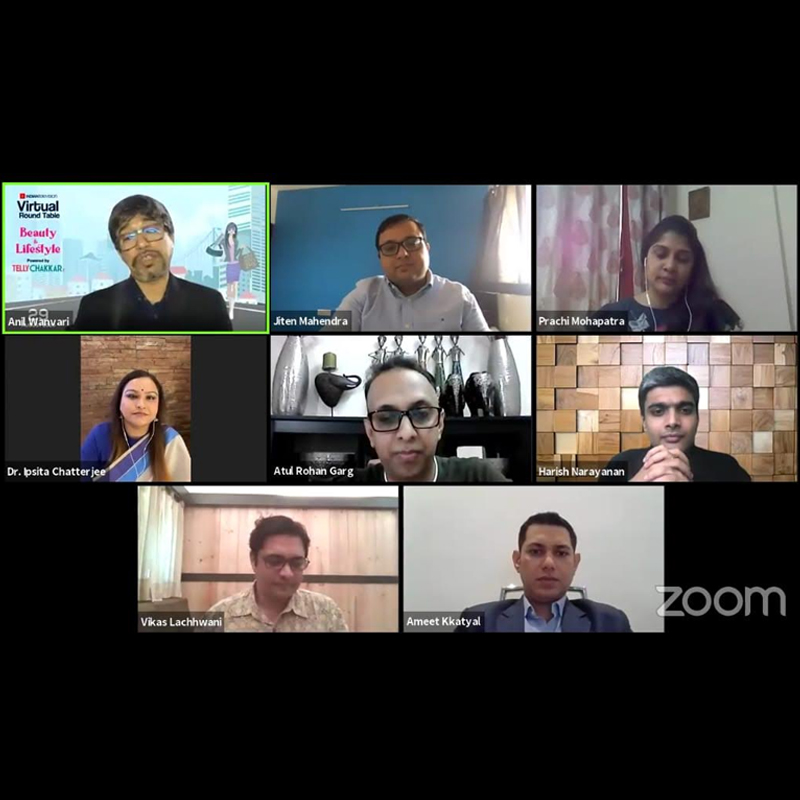
NEW DELHI: While the onset of the great Indian festive season with Onam might not have been the exact point of revival for the beauty and lifestyle industry, as many of the players were expecting it to be, it surely has set the ball rolling into a more positive direction, concluded the eminent panelists on Indiantelevision.com’s Beauty and Lifestyle Virtual Roundtable, hosted and moderated by our founder CEO & editor-in-chief Anil Wanvari.
Present on the panel were VLCC Health Care Ltd chief business officer Ameet Kkatyal, Baggit head of marketing Atul Rohan Garg, Lotus Herbals Pvt Ltd head of innovation, development, and brand strategy Ispita Chatterjee, Myntra head of marketing Harish Narayanan, Max Fashion India SVP marketing Jiten Mahendra, Future Group India CMO-FBB Prachi Mohapatra, and mCaffeine director and co-founder Vikas Lachhwani.
Mohapatra noted that though the numbers are not completely black or white, meaning the spending was neither great nor completely muted. “It wasn’t a complete washout for us. In fact, 2018-19 were bigger washouts than this year, because of the floods. In 2020, I was looking at a far more muted response, sentiment-wise as well as number-wise, but the response has surprised us. We hadn’t set our numbers at a very optimistic level but the growth has been far more than what we had expected.”
The panel is now looking at the response as a better prelude for the months to come, expecting that the industry will start picking up from the second week of September and will continue to do so throughout the festive season. They all looked very positive about the fact that they are well prepared for it.
Lachhwani shared that luckily they were on the right side of the business during the pandemic and did not face as much loss as compared to other contemporaries. He added, “We spent these 4-5 months to think ahead and spend a lot of time on R&D. We are not itching to come out stronger than ever with new launches.”
Narayanan agrees with Lachhwani. He said that Myntra team too has spent a great deal of time on research and development and also launched interesting innovations via properties like Myntra Studio where they are trying to catch the customers. Going ahead, his focus will be to keep strengthening the company’s goodwill with not just the consumers but also brand partners and is looking at constant innovation to support that.
Mahendra elaborated that this time has helped them greatly in identifying their loyal consumers and create segmentations accordingly. “About 80-90 per cent of our revenues are coming from our loyalty base and we are doing a lot of work on segmentation.”
He added that the focus is on finding out which alternate channels that got relevant during these months will stay relevant post-Covid2019 and is working towards building their strengths on them. “Be it WhatsApp, vernacular content, or video calls, we are looking at all the possible channels that will help us. There is a lot of pent-up demand, I am sure and we will have to build our brand behaviour around customer surroundings.”
Chatterjee noted that being a resilient brand, they innovated a lot during the pandemic. “The first challenge that we faced was that our UG is very aspirational and with the whole sentiment being very negative, it was important for us to reach out to them. So, we invested a lot in influencer activities, especially micro and nano influencers. We also resorted to cold calling, which worked really well for us.”
She added that their tech and innovations team is working really hard to introduce concepts of AI, VR, etc. to make the space more inclusive and positive towards catering to the post-pandemic fears of the people.
Kkatyal insisted that the industry collectively should be working towards educating the consumers and make them believe that it is safe to go out and shop. “Consumer is scared to step out and needs a lot of hand-holding. We have to prove to them that our outlets are as safe as their homes. We have to break the ice.”
He suggested that it is imperative that the industry collectively runs positive campaigns and inspire customers.
Further, Wanvari raised an interesting question pertaining to the rise of many new local and small-scale brands during the lockdown and if the established players are seeing them as a threat.
To this, Kkatyal replied that out of a hundred brands that rose during the pandemic, only 10 per cent would have made a mark and only one per cent of them would stay. So, he is not threatened by the competition.
He also hinted that the industry might see a lot of brands evaporating or shrinking, or even looking for consolidations in the post-pandemic era and that can be a big opportunity for some of the established companies.
Narayanan noted that it is the best time for Indian consumers as more competition will translate into more innovation.
The panel looked quite hopeful about the future but maintained the coming two-three years are going to be the true litmus test for them. However, they are well-prepared to surf the tough tide.
MUMBAI: Condé Nast International today announced the launch of Vogue Business, a new business media title offering a truly global perspective on the fashion, beauty and luxury industries.
Headquartered in London, Vogue Business draws on insights from 29 markets, from China, India to the United States, and taps into Condé Nast International's unrivalled global network ofbrands – Vogue, GQ, Glamour and Wired – fashion and luxury experts, industry leaders and business partners.
While sharing the Vogue name, Vogue Business is operated as a wholly separate entity with an independent editorial team, developed with its own distinctive voice.
Vogue Business, rooted in facts and data, fills the gap in the market for industry decision-makers, from startups to CEOs. The editorial team covers the critical intersection between fashion and adjacent industries — most notably technology, the driving force of change in the fashion business.
“In a consolidating media landscape, the launch of a new global title is a rare thing”, said Wolfgang Blau, President of Condé Nast International. “No one else in the world employs more fashion journalists in more places than we do. Our global network of journalists, digital editors and researchers are immersed in the relevant fashion trends on all inhabited continents, giving the team of Vogue Business access to an unparalleled depth of knowledge, from local design trends to changes in manufacturing, training, technology and distribution.”
Commenting on the Vogue Business Launch Alex Kuruvilla, Managing Director, Conde Nast India said,“Vogue Business will provide a much-needed window to the world of fashion and luxury – the Indian fashion and luxury industry will have an opportunity to tap into the unique insights provided by Vogue’s global network of journalists and editors. This truly global platform will provide a detailed insight into trends and technologies that will impact the industry, news updates in the fashion business and in-depth analysis across the fashion world.”
Vogue Business is edited by Lauren Indvik, a seasoned fashion and business journalist and former Editor-in-Chief of Fashionista.com. For the past two years, she has led the Vogue International news and features team in London, collaborating with Vogue teams globally.
“We take a new global, visual and data-driven approach to journalism," says Lauren Indvik, Chief Editor of Vogue Business. "Our journalism is designed for maximum impact and accessibility, making it easy to understand key ideas at a glance, and to enable fashion leaders to make the decisions that will grow and future-proof their businesses and careers.”
In today's digital-first media environment, new publications often begin with a website. When Condé Nast International decided to launch Vogue Business it began instead with a newsletter, prioritising high engagement with a select audience over total reach.
Vogue Business represents a new way of launching products for Condé Nast. Designed as a global title from its inception, it has been created by applying an incubator model of agile development and constant experimentation together with our beta users in 29 markets.
“Our development methodology has ensured we understand our audience intimately, thanks to in-depth user research and constant reader feedback,” says Ciara Byrne, Director of Business Development at Condé Nast International.
Key areas of editorial focus are:
* An analysis of trends across the fashion industry, from design and manufacturing to marketing, distribution, show production and talent search
* The impact of broader global market dynamics, from climate change to geopolitics
* Cultural patterns and shifts that will impact retail and vice versa
* How technological and scientific advancements will shape the ways products are produced, marketed and sold
MUMBAI: Working at a renowned financial company like Ernst & Young may be what most youngsters dream about. But not Ishween Anand, who left her cushy finance job in New York to pursue her passion for fragrances in India. 10 years down the line, she does not regret her decision one bit.
Anand was always inclined towards soap-making, the process and various fragrances. And once she came back to India, she decided to pursue her dream and combine all things she loved by launching Nyassa in 2007. The word has its origin in Sanskrit that means healing through touch by chanting tantras and mantras.
At that time, there were barely any exclusive natural soap brands in the country, and she sensed a huge opportunity. But the Indian consumer was alien to buying bath soaps worth Rs 100 when a standard soap bar was available at the cost of just Rs 20.
Knowing the challenges she might have to face, Anand went ahead with her initial investment of Rs 15 lakh into the business. She didn’t have to spend a lot of resources on machinery and setting up a plant as natural soaps are made by hand. But it isn’t all that easy to launch your own company and manufacture products and Anand had her own hurdles in getting the FDA (Food and Drugs Administration) licence from the government.
She recalls an incident when she reached out to the FDA seeking necessary documentation to launch bath bombs, a concept which was pretty foreign to India at the time. “The executives were baffled on which category do we put bath bombs under as it was something they hadn’t heard about before,” she says.
She began her entrepreneurial journey by selling only soaps and body lotions at the food court of Atria Mall in Mumbai. This proved to be a masterstroke for her, as within three months of launch, she had already partnered with 15 stores who were willing to sell the products.
Anand’s company broke even in just about a year. The soap-maker tasted success without actually investing in conventional ATL (above the line) advertising. With a y-o-y growth of 30 per cent for the last three years, Nyassa does not believe in advertising on traditional media. “If we ever do anything on advertisement, it will be on digital,” says Anand. Another natural brand, Soulflower, went ahead of its time to advertise on social media when the medium was just catching up and Anand now realises that it’s time to buck up.
Today, the company advertises on social media platforms Instagram and Facebook with its own in-house marketing team due to budget constraints. But Anand now realises the importance of having a full-fledged agency on board. “We haven’t really gone out and marketed ourselves but I think we will have to do it now as the competition today is cutthroat and it’s important to distinguish your brand from the rest.”
The appetite for beauty segment is huge is India and Nykaa’s Rs 600 crore revenue just by selling bath and beauty products goes to show how cluttered and interesting the segment is.
The bath and body brand sells 80 per cent of its products through offline channels and a mere 20 per cent through third party e-commerce websites Amazon, Flipkart and Nykaa. However, 30 per cent of the company’s revenue comes from online sales and a staggering 70 per cent still comes from people who visit the stores to buy products. Even though Nyassa has its own website, a major chunk of the sale comes from Amazon, Nykaa and Flipkart and that’s where the company wants to focus.
With a strong presence in Mumbai and airports across India, Anand now wants to expand the company to other locations in India, next up being Delhi.
What e-commerce has enabled the company to do, is reach out to consumers in smaller towns and cities with orders pouring in from Kochi, Patna, and the eastern and southern belts as well. On this, the entrepreneur says, “I think our consumers are everywhere. But with the limited resources that we have, we have to prioritise whether we want to open a shop in a tier II town or Delhi. We will eventually open shops everywhere.”
The beauty and bath segment has begun seeing an uptick only recently but the international market is extremely cluttered as every local city has soap makers along with high-end premium soap manufacturers. The consumers there also have an appetite for fancy products and money to spare. It will be interesting to see an Indian manufacturer tap that market with Indian fragrances and products. Anand admits that she would love to enter the international market eventually, but does not have an immediate plan for the same.
It is pretty fair to assume that any consumer today is willing to explore his options when it comes to soap bars as we have over 500 different brands opening in the segment. The recent trend being of buying herbal and natural soaps after yoga guru Baba Ramdev popularised Patanjali by selling its soaps for only Rs 10. Anand does not believe in positioning the company as either ayurvedic or natural and rather opines that the positioning is about offering fragrant products which are chemical free.
However, Anand does not see competition from brands like Patanjali or Himalaya. “Brands like Himalaya and Patanjali are not our competition because a person that uses these products is not our consumer. We don’t get deterred by a brand like Patanjali. But if we were a Hindustan Unilever, we would definitely be worried,” she adds.
Going forward, Nyassa is all set to launch customised perfume bars where consumers can walk into the store and create their own perfumes with the fragrances they like.