Tag: BBDO

  • R K Swamy, BBDO to end long-term partnership

    R K Swamy, BBDO to end long-term partnership

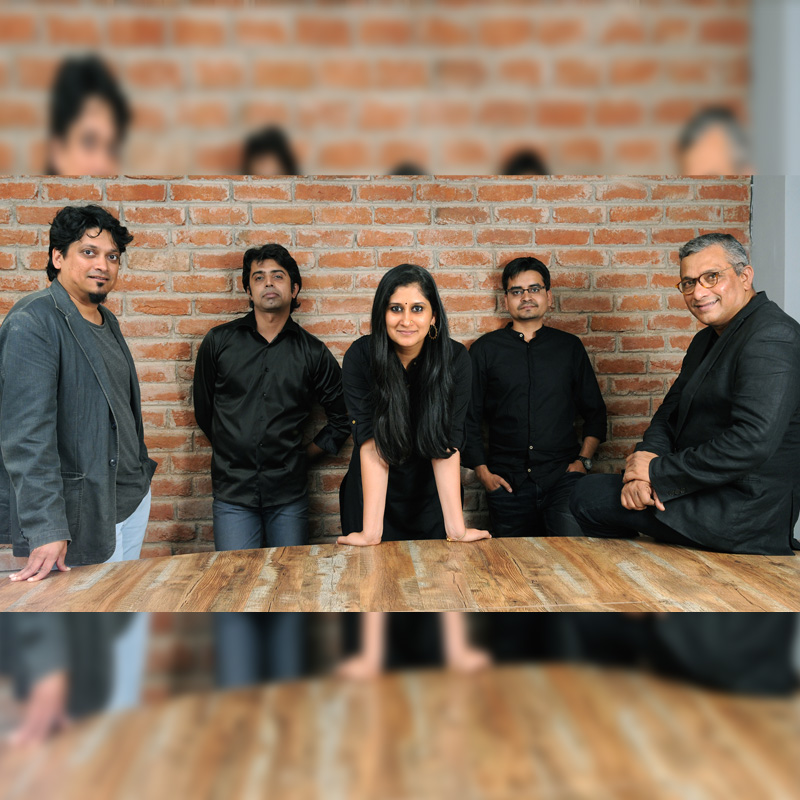
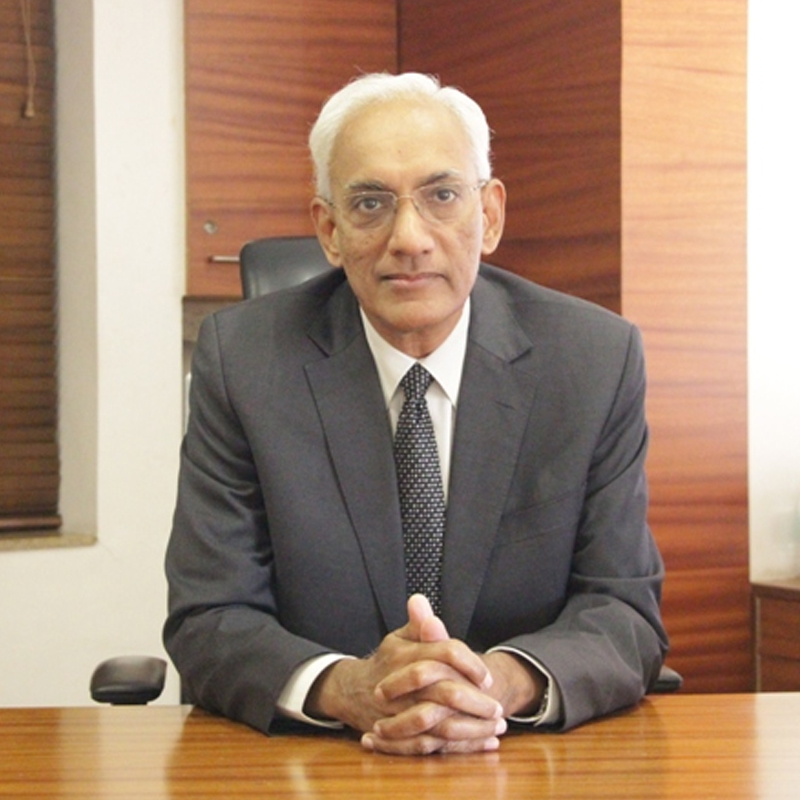
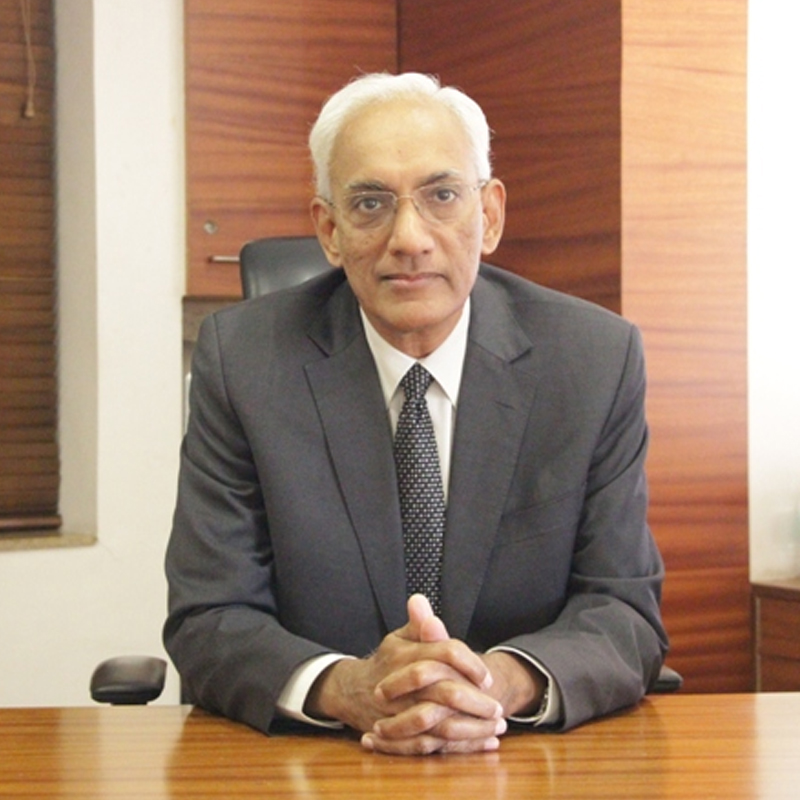
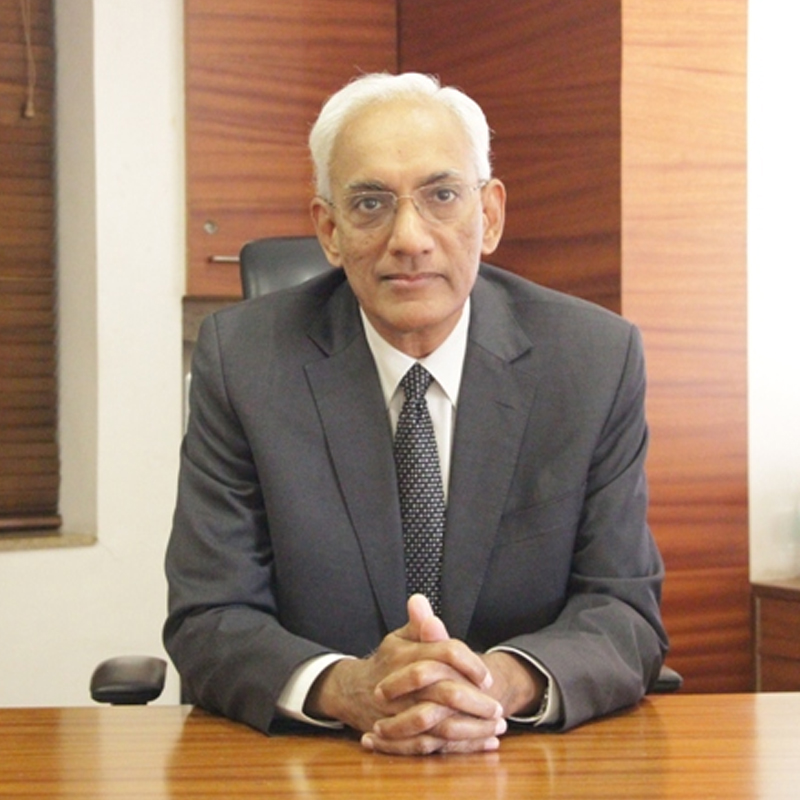
    Mumbai: Leading advertising agencies R K Swamy and BBDO have ended their 37-year partnership with each other. The announcement was made through an internal memo.

    As per the agreement, R K Swamy will buy out BBDO’s stake in R K Swamy BBDO, and BBDO will buy out R K Swamy’s stake in BBDO India.

    The partnership, which started merely after a handshake between RK Swamy and the then global CEO of BBDO Allen Rosenshine in 1985, has ended for strategic reasons.

    According to an official statement, R K Swamy Hansa Group is planning to bring its various businesses under one umbrella. The group presently has over one thousand employees working on four different ventures and the split plans to bring them all under one roof.

    R K Swamy Hansa Group group CEO Shekar Swamy said, “We started the relationship when R K Swamy and I shook hands with the then CEO of BBDO Allen Rosenshine, in New York in 1985. We worked for four years together on a simple understanding without a formal contract. BBDO invested in us up to a majority, which we then bought back in 2009. They have held a significant minority since then. At that point, BBDO India was created and we took a similar minority stake in it. BBDO is a great company and it has been a fantastic journey. The phrase ‘all good things come to an end’ is so true in this case.” 

    Adding to it, BBDO Worldwide CEO Andrew Robertson said, “R K Swamy has been a great partner. We extend to them our very best wishes and cheers as they move forward with plans for their Group. I have always admired their conviction in, and commitment to the future of India and the part they can play in it. I am sure it will be great. We have a strong agency in BBDO India. We remain committed to great work, and this will be the same in India as elsewhere.”    

    R K Swamy Hansa Group chairperson Srinivasan K Swamy remarked, “R K Swamy BBDO is primarily in marketing communications. However our extended activities go beyond marketing communications to span interactive and digital, media planning and buying, media and market research, CRM, data analytics and martech, healthcare communication, and continuing medical education, events, and outdoor. We are bringing these together under one structure for greater synergy. The future is very exciting as we consolidate.”

  • The modest kirana and its pandemic-induced evolution

    The modest kirana and its pandemic-induced evolution

    NEW DELHI: Sixty-nine-year-old Tejinder Singh, the owner of a kirana store in Ghaziabad, opens his shop at the crack of dawn every morning without fail for the last 21 years.  Not much has changed for him apart from the fact that Singh, and his store, faced a little cash crunch during the initial days of the lockdown in March.

    While e-commerce was battling red-tapes during lockdown, the local kirana stores were serving their consumers with doorstep deliveries. Within three months of lockdown, consumer spends in kirana stores increased by over 40 per cent.

    Singh sits at the counter with a mask covering half his face, disposable gloves and hand sanitiser next to him. Every customer who walks in has to first sanitise their hands before touching anything in the store. Singh has two staff and his two sons who assist customers with their purchases. He ensures that no one is without masks and gloves.

    “Lockdown came as a shock for every business. But we also saw this as an opportunity to help our customers with essentials. We provided door to door deliveries by following hygiene measures. We made several trips to godowns in private vehicles to bring goods to stores, personally because there was lesser manpower.  We start at 6 am in the morning every day and informed the customers about the goods when it became available again. We see new and younger customers coming to our stores or calling us to order. We are following the protocols and not letting sales staff into the store. We sanitise each and every product before handing it out to a customer,” Singh says.

    According to Pontem Integrated co-founder and BBDO Advertising former president Rajesh Sikroria even before Covid2019 outbreak, almost 90 per cent of India was still buying groceries and daily need items from kirana stores. As the pandemic struck and the country went into lockdown, even people who preferred organised mega retail stores or e-commerce for their daily grocery needs were left with no options. It took some time for organised retail and e-commerce to get their machinery going but the good old kirana was still there.

    “I believe there are a few things that have always worked in favour of kiranas; the Covid2019 crisis has just reinforced them. There is a greater trust and dependability on kirana stores because these people are a part of the community, so in case of a crisis, familiarity helps build that trust. A huge factor that works in favour of kirana is credit, which large stores and e-commerce companies cannot match. And lastly, very personalised service and the neighbourhood kirana always remains a faster option to get anything. Most of the mass FMCG brands have always had the largest share of their distribution pie residing with the kirana stores. But the last few years have also seen newer and some smaller brands focusing on only modern trade and eComm channels. A lot of such brands would have struggled and may continue to struggle for some time because of their absence from the biggest retail network,” Sikroria shares.

    Bizom recently released a report on India kiranas wherein it states that India’s retail ecosystem is unique from most parts of the world. Indians buy over 85 per cent of consumer products from small kirana stores, making its markets driven by general trade. 

    The report also mentions howSarsCov2 impacted the revenues of kiranas in March 2020. It says that kiranas saw a drop of 15 per cent in the number of transactions but picked up soon after as people started stocking essentials which saw a hike in the number of transacting and it somewhat lessened the impact of non-transacting outlets.

    In the initial phase of lockdown, many shopkeepers were struggling to replenish stocks. The kirana stores used to seek replenishment every two to three days. Items such as packaged flour, biscuits, soaps and instant noodles were no longer available and many had to wait for further supplies stating transportation being an issue. Fintech companies including Paytm, Google Pay, PhonePe are also bridging the gap between the store and the customers by making payments hassle-free experience. 

    FLC Marketing & Events business head India operations Rohit Shah says, “Panic-stricken and safety-conscious shoppers are visiting the traditional retail shops kirana stores to buy essential food items. The shoppers now avoid hypermarkets like Big Bazaar and Spencer’s to avoid huge public gathering and safety issues. Also, the new category of ‘work for and from home’ shoppers in the metros want to make short trips to neighbourhood stores due to time constraints. They also want to socialise for some time in kirana stores by maintaining social distancing parameters. Seeing and touching the product physically before buying also make people visit kirana stores. People are now experimenting in the kitchen. They demand kirana stores to stock items required to prepare new and age-old recipes and are ready to wait for long durations for unavailable products. People are even ready to buy local brands if they meet the requirement in the recipe.”

    The digital transformation of the kirana business that has been underway for the past few years was accelerated in the past three months, bringing more kiranas online, making buying and selling more efficient, digitalising bookkeeping and inventory management. Players like ShoppyFier, an online to offline hyperlocal deal discovery platform, sent out push notifications through which users can see all the offers/discounts running nearby and merchants can promote their long-term and short-term offers.

    As of February, India had 6.65 million kirana stores in the country, according to Nielsen. Unlike in the west, general trade stores in India form nearly 90 per cent of the country’s total trade. The overall contribution of supermarkets and organised grocery stores remains at 10 per cent. 

    Reportedly, the government is planning to set up a chain of 20 lakh retail shops called ‘Suraksha Stores’ across India which will provide daily essentials to citizens while maintaining stringent safety norms. The Suraksha Stores initiative will convert the neighbourhood kirana stores into sanitised retail outlets selling daily essentials while adhering to safety norms such as social distancing and sanitisation to control the spread of Covid2019.

    “It seems that big brands are now thinking of helping out the modest kirana stores to navigate the new normal. A consortium of brands is trying to partner with government and help convert the local kirana stores into sanitised, professional retail operations. This will see traditional kirana stores turning into registered ‘suraksha’ stores. They will be listed on the GoI’s Aarogya Setu App for following proper sanitation practices, using masks and gloves and implementing social distancing at their outlets,” Sikroria adds.

    Pulp Strategy founder and MD Ambika Sharma says that buying local and relying on your neighbourhood store has captured the consumer imagination but re-evolution of kirana stores will not impact sales of big brands.

    “For brands, this will not impact sales however it does call for the necessity of improving the supply and delivery channel to kirana stores. For gourmet brands, this shift may result in a dwindling uptake, with the advantage of impulse buying no longer available. Gourmet brands also do not have a strong supply channel with kirana stores and this would be an area of improvement as the trend becomes stronger,” she says.

    “All the brands that have effectively communicated about taking all the safety and precautionary measures, showed how they are taking care of the consumer and also set up ease of shopping have managed to stay afloat. Innovation has been the key to all brands to stay alive during this pandemic,” said Spicetree Design Agency founder Shiraz Khan.

    For Option Designs co-founder Rahul Gandhi, the kirana stores were able to sail through the storm of difficulties because of their alacrity to adaptability and agility. Where on the one hand they intensified their delivery services, on the other hand, they took to transformation by going digital which brought them overwhelming results.

    “In a similar way, brands must also adapt themselves to the changing situations. By understanding the changing consumer behaviour they must come up with some real brand strategies that are in sync with the needs or demands of the consumers. Brands must constantly upgrade themselves by innovating and that will help in reaching out to a wider consumer base,” he says.

  • The sound of silence in TV ads

    The sound of silence in TV ads

    NEW DELHI: Procter & Gamble’s detergent brand Ariel has continuously sparked conversation around household chores in the past. Now, the brand has come up with a new season of its ‘share the load’ campaign. The advertisement is conceptualised by advertising agency BBDO. This time the brand has urged all family members to contribute and share the load in household chores. However, what distinguishes it from the earlier campaigns is, there is no exchange of dialogue between family members. The brand has followed the route of silence to depict the message powerfully with visual elements.

    The film has already crossed 10 million views so far. P&G India and head CMO Sharat Verma says, “We believe there is something beautiful when a son, father or husband comes forward to #ShareTheLoad. Which is why Ariel has continued to raise pertinent conversations to encourage more and more men to participate in household chores.”

    The brand started bringing up these torchbearer conversations from 2015. The first ad which gained a lot of traction was, “Is laundry only a woman’s job”, while in 2016 it touched an important issue of doing household work from one generation to another with ‘Dads Share The Load’ movement. Last year, too, the brand focussed on an essential issue, “Are we teaching our sons what we are teaching our daughters” with Sons #ShareTheLoad. In the new campaign, ShareThe Load for Equal Sleep, it highlighted the impact of the unequal division of chores on housewives.

    The concept of silent advertising is not new. The craze for such ads began in the 1990s but disappeared later in the 2000s as brands started getting more vocal. Nevertheless, with time we are seeing brands following the nuances of silent ads once again. Fevicol ads barely came with dialogues and it has always connected with consumers because of its simplicity and humorous execution. Right from Camlin permanent markers to Pidilite M-seal or the recent Haier TVC silent performers’ ad highlighting Haier’s long-standing relationship with the Indian consumers, brands have started experimenting with their advertising communication.

    We have seen silent advertising being used globally as well. Last year, UK broadcaster ITV released a campaign on the rising issue of anxiety and depression in children. The ad ends with a message to “tune back in” to their family’s story. European footwear brand Bianco came up with an interesting silent love story in the form of a short film The Lift, urging everyone to start a conversation.

    India too has seen a resurgence of silent ads. One reason could be its differentiating factor that helps brands rise above the noise, increasing attention and recall.

    Makani Creatives, co-founder and MD Sameer Makani believes, “For an ad to be effective it needs to grab the user’s attention in two to three seconds and audio is a crucial part of the experience.”

    However, consumption patterns have evolved and social media has become a key platform for communication and content viewing. Most of these platforms have muted audio as default for any ad until the user chooses to turn it on.

    “Keeping this aspect in mind, brands are experimenting with no-audio crisp ads. The concept is different from a usual ad and one cannot draw parallels between the two. It’s a double-edged sword when a brand experiments with such content. The screenplay and plot need to be extremely strong to create impact. Otherwise, it may miss yielding any results for the brand,” Makhani explains.

    FCB Ulka group creative director Anusheela Saha says, “Silence, when applied judiciously and appropriately, can be a strong persuasive thought communication, and in Ariel’s case, it works really well. They have made a montage of their previous ads and have thoughtfully edited and crafted the message to make it relevant for today. In today’s time, when women are the silent bearers of additional home duties, a silent ode to them only resonates more beautifully.”

    However, Taproot Dentsu executive creative director Pallavi Chakravarti raises a pertinent point. Is there evidence that silent ad will work better than one with spoken words? Says she: “I don’t think one can make a blanket statement about how silent ads work versus regular ads. Every ad works or doesn’t on its own merits. There’s no guarantee that just because you have dialogues in your ad, you’ll make an instant connection with your audience. By that logic, every commercial should be a runaway hit. Equally, there’s no proof that a silent ad will work better – it could just pass like a ship in the night.”

    “Ariel’s ad works, to my mind, because it is consistent with the messaging that the brand has put out for many years now. The team has successfully built the share the load property from the day it was first launched, so we don’t need dialogues to understand the message, in this case,” she elaborates.

    Scarecrow M&C Saatchi founder Raghu Bhatt points out that if silent films can tell a story, silent ads can too. “In India, we have seen many successful zero-dialogue films for brands like Allout and Cherry Blossom. Coming to this ad, it’s like a reminder film. There is no story but a collage of couples sharing the washing chores. Simple storyboards that don’t require the expert supervision of an ace director- seem to be the norm, due to shooting restrictions.”

    That may be the case this time with the new Ariel TVC, however, silent ads can work well to make your brand be heard.

  • Ariel releases #ShareTheLoad video on International ASMR Day

    Ariel releases #ShareTheLoad video on International ASMR Day

    MUMBAI:  On this International ASMR Day, Ariel India is giving men yet another reason to #ShareTheLoad of domestic tasks, and giving women a way to relax, stay calm and sleep better! 

    The unequal division of domestic chores has been a reality for generations. Even today, 71 per cent women sleep less than their husbands due to this inequality. 

    Ariel’s latest ShareTheLoad movement- #ShareTheLoad for Equal Sleep is all about impact and action. Uneven division of household chores like laundry is coming in the way of women getting enough sleep and rest. Taking the conversation further and in context of the current times, today on International ASMR Day, Ariel collaborated with American ASMR youtuber and artist GIBI ASMR to curate a #ShareTheLoad ASMR. This ASMR video is a depiction of a husband doing the laundry, the sound of which is calming for the women! Nothing is more blissful for women than the sound of some household chores being done by men and being done well!  When women are assured that the household chores are being taken care of, they can relax and sleep better.

    The video is of six minutes and teaches men to take up task like laundry as it is the easiest task to get started with. The Ariel #ShareTheLoad ASMR video teaches men the simple step of laundry. It serves two purposes- Men learning how to do laundry and the therapeutic and soothing sound of the chore when partners take up laundry that can help women relax or sleep better.

    ASMR stands for "Autonomous Sensory Meridian Response”. It is the term for the strange, tingly sensation people get when they watch stimulating videos that could help them relax and can even cause them to fall asleep. Such videos are very popular globally and are deemed very helpful in calming down anxiety. Gibi, who has around 2.53 million subscribers on YouTube, is globally renowned for her variety of ASMR videos. 

    Ariel’s ASMR video in partnership with Gibi is calming and relaxing. Working from Home is enabling families to bond better and spend quality time together. Ariel’s ShareTheLoad campaign has an uncanny resemblance to the current scenario and harps on the need for equal household for happier homes.

    Elated with the first of its kind laundry ASMR, P&G India and head fabric care Indian subcontinent CMO Sharat Verma said, “Ariel’s ShareTheLoad movement, which started five years back, has been sparking conversations to promote gender equality in the household by propagating the equal distribution of household chores. The message is more relevant now than ever …when the home is also an office, school and playground. Research tells us that households where partners share the load, make happier homes. It’s important that women get equal rest and sleep. Gibi’s ASMR video aims to help more and more women unwind using relaxing sounds and sights while inspiring more men to #ShareTheLoad.”

    About the Ariel #ShareTheLoad ASMR, GIBI said, “Sleep can continuously be pushed down the list of people's priorities, even when it's so important to let your body rest and recover. When we compromise sleep, rest, and relaxation because of such a societal pressure to get everything done on our own, it can wear down on us not only physically, but mentally as well. I was touched by the Ariel #ShareTheLoad campaign because it's a message that I believe doesn't get looked at enough. I know how important it is in my own household that my partner and I share the load for our own mental health, and I hope this message reaches families and partnerships in India and beyond! There truly is nothing more relaxing than knowing that your partner or your family has your back — that even though there's work to be done, you can get it done together; it doesn't always have to be just you. So, my beautiful ladies in India, this one's for you! Let's sit back, relax, and let your partners take up the laundry for a change while you enjoy this ASMR video!"

    Link to the video- https://youtu.be/J01nO_rYpMw

  • Ford India launches new campaign ‘feels like family’

    Ford India launches new campaign ‘feels like family’

    MUMBAI: Encouraging owners to make time for their loved ones, Ford India’s latest campaign showcases the company’s several innovations that can help enable such precious moments while strengthening the brand promise of ‘Feels Like Family’.

    The series comprising three poignant stories, borrows from real-lives of today’s consumers who, caught up in their busy day-to-day lives, often find it difficult to spend time with their family and friends.

    Throughout its emotional storytelling, the campaign showcases how transparent and reliable Ford service innovations play a significant role in helping customers spend priceless moments with their loved ones.

    In all situations across the campaign, the protagonists make time for their loved ones on days reserved for getting their cars serviced. In each story, the self-assured Ford owners make time for their family members, while the Ford family takes care of servicing their car.

    “In line with our Feels Like Family Promise, we want our customers to spend quality time with their loved ones & let the ecosystem of trustworthy and transparent service innovations take care of their favourite Ford,” said Ford India vice president marketing Rahul Gautam.

    “Through our research, we observed most of our owners block days for the servicing of their car. With our pick and drop facility, real-time SMS service updates and transparent online calculator aka service price promise, we want to make sure that servicing the car never prevents our owners from spending priceless moments with their loved ones,” he adds.

    The first-film, going live on 20 March, features a father who is playing carrom by himself, taking turns from each side to make the game interesting. The sudden arrival of his son and a conversation that ensues between the two adds an emotional dimension to the film. 

    The TVCs for the recent campaign comes from BBDO India under the creative supervision of Josy Paul, Akashneel Dasgupta and Shinjini Banerjee.

  • Ariel’s #ShareTheLoad campaign focuses on women’s sleep deprivation issues due to household work

    Ariel’s #ShareTheLoad campaign focuses on women’s sleep deprivation issues due to household work

    MUMBAI: While most ads propagated the notion that women bear all the brunt of housework, Ariel India was the first to break that stereotype a few years ago. The successful #ShareTheLoad campaign revolved around the unequal division of domestic chores, urging men to take up more responsibility. Continuing its mission, the fourth edition of the campaign, #EqualSleep, addresses the issue of sleep deprivation due to excessive household work which affects 71 per cent of women.

    Let’s rewind. In 2015, Ariel India raised a triggering question ‘Is laundry only a woman’s job?’ followed by ‘Dads Share the Load’ in 2016. This helped locate the root cause and the stigma of prejudice passed down from one generation to the next. In 2019, it started to drive action with sons urging parents to raise them like they have been raising their daughters, so that the future generation is more equal.

    P&G India CMO and fabric care head for the Indian subcontinent Sharat Verma says that the aim of #EqualSleep is to highlight how women compromise their sleep, downtime, rest and personal time to provide her very best to the family and her career.

    “Even within progressive households, where men have started to increase their involvement in domestic chores, the woman still takes the onus of getting everything done; the mental load is still only hers. When men don’t share the load, what ends up getting impacted is something as basic as sleep. Lack of sleep is, thus, almost an indicator of the inequality within the household. Hence, with this chapter, Ariel seeks to drive action, urging men to take the first step to #ShareTheLaundry and eventually, #ShareTheLoad for #EqualSleep,” he says.

    An Ariel India survey found that from 79 per cent men in 2014 who thought laundry was only a woman’s job, the number has steadily declined to 41 per cent in 2019. However, even today, only 35 per cent of men contribute daily to household chores. In a survey, most men agree that washing clothes in a machine are the easiest chore for them to start taking over. 

    Verma went on to add that the campaign shifted from showing that men weren’t sharing the load to showing how this decision impacts women. Uneven division of household chores like laundry is coming in the way of women getting enough sleep and rest with at least one hour of sleep that these women give up every day, over seven days that accounts to almost an entire night’s sleep that is lost every week, due to the uneven distribution of domestic responsibility 

    The film, conceptualised by BBDO, is depicted from the eyes of a little girl devoid of any conditioning; she notices her mom is missing at night while she is asleep and continues to notice her running around doing multiple things, tired and sleepy. The father’s moment of realisation is also in a way driven by the daughter missing her mom at night.

    BBDO India chairman Josy Paul said, “We started with ‘the condition' in 2015 – Is laundry only a woman’s job? In 2019 we focused on the younger generation, who if raised in a balanced manner, will grow up to be a generation of equals. This year, we make men realise the severe impact on their partners/ wives when they don’t share the load at home i.e., unequal sleep.”

    With every passing year, both BBDO and Airel have the challenge of coming up with the next round of an impactful #ShareTheLoad campaign. How do they manage it? “When thinking of the next leg, we realign ourselves with the evolved cultural context of current times. Society today is not the same as it was two years ago. Similarly, family and couple dynamics are not the same. So, we have to root ourselves in the reality of today. As a creative team, when we observe society, we see laundry as one of those daily chores where the distribution of load is uneven.  Laundry, here, is the face of the movement,” Paul concludes.

  • Ariel’s #ShareTheLoad campaign turning purpose into desirability and sales

    Ariel’s #ShareTheLoad campaign turning purpose into desirability and sales

    MUMBAI: Brands today aren’t just selling products, but are providing unique experiences that merge with their identity and consumers’ lives. Technically called purpose-driven marketing, the campaigns tend to touch the right chords.

    A number of national and international brands are currently using this mode of marketing to place their products not only on the shelves but also in the conscience of the consumers and laundry detergent brand from the vast portfolio of Procter and Gamble (P&G), Ariel has been one of the forerunners to use this power of brand image and loyalty into communicating something larger to the society.

    #ShareTheLoad campaign, which launched its first edition in 2015, is one of the most beautiful campaigns driving the message of ending gender-parity at home. The brand released its third edition (http://www.indiantelevision.com/mam/media-and-advertising/ad-campaigns/ariel-reignites-conversations-on-household-inequality-with-a-new-campaign-sons-sharetheload-190124) recently, and within a few days, its digital campaign has garnered 15 million views and a lot of praise online, including one from Facebook COO Sheryl Sandberg. Indiantelevision.com interacted with P&G India, and fabric care marketing director Sonali Dhawan, and BBDO  chairman and chief creative officer Josy Paul regarding what makes this campaign different from other purpose-driven ads in the market and what all went behind in creating its immense success.

    Dhawan shared that for her this is not ‘purpose-driven marketing’ but something greater than that. She noted, “Yes, there is a purpose to the marketing but that doesn’t mean any brand can make ads on any particular purpose. There are two very important things, which, if in place, can take the campaign indefinitely. First, is that your product should play a role in the social change you want to affect and second is that your brand should be in a position to influence. For us, the starting point of #ShareTheLoad campaign was the fact that Ariel makes it so easy to do the laundry that anyone can take it up. Ariel thus has a very important role in the conversation and that role can be expanded for a lot of causes.”

    Paul also reflected the same sentiments as he reflected, “There are a lot of people jumping in with cause and purpose but ‘without purpose’. What I believe is that the brand has to have not only the authority [to promote an idea] but it [the idea] has to be linked with what the brand can offer. When we say ‘share the load’, it actually resides in the basic truth about the product and the brand. We say it can wash the toughest stains and anyone can do it. That ‘…and anyone can do it’ is what Ariel reflects. It is linked to the brand promise and therefore we earn the license to say this.”

    The campaign has not only initiated a change in the core of the society at a very important juncture in time when women equality is actually a massive global phenomenon but has also helped the brand in increasing its sales. That makes it the perfect campaign to support the idea of equality while it also pushes the brand to perform.

    According to Dhawan, the reason behind this has been the authenticity with which the brand creates its campaigns. “If the brand is not authentic in its approach towards the campaign, the audience can read through it. P&G has always been authentic in its conversations. Be it Whisper talking about period taboos because it is a brand associated with periods, or be it Pampers talking about it takes two to parenting approach because it is a brand for babies. It is not about any brand picking any topic and saying I want to talk about it because I have the eyeballs there. Then the campaign will not make any impact,” she said.

    And how did they realise that its approach has to be towards targeting gender-parity? To this Dhawan replied that the idea came from the core thought of how their brand is affecting consumers’ lives. During a consumer interaction they heard women saying that it is so easy to do laundry with Ariel that they can now share the load with their kids, or their husbands. “At the same time, we did a Nielsen survey because we wanted to understand the state of the society in terms of equality at home. That survey showed us that 79 per cent of the men thought that household chores were only a woman’s job. We saw that there was huge inequality between the genders at homes. This was the second realisation, the first being that my product is great and it can help in many ways.”

    That’s when BBDO came in with the pitch of #ShareTheLoad campaign that talks about addressing the core of the problem—that is the conditioning people are given since childhood. The campaign started with a simple question “Is laundry only a woman’s job?”

    Paul shared, “When you start you do not plan that it will go into phase two or phase three. It starts with just an idea. But when we saw the response to our first campaign we realised that it was not just another campaign but a movement.”

    He further added, “The thing about a movement is that it is very dynamic. It’s not like a campaign where you plan something and now you push it out in the media and get it to distributing. Here you are constantly watching how the audience is reacting to it. So lot of social listening and observations happened and we realised that the campaign or the movement is working. People want to get involved, partners want to get involved, and then the client [Ariel] came to us that they want to go ahead with phase two of it.”

    Paul also shared how such campaigns serve a dual purpose of encouraging a change and also help the brand to grow. He said, “The beauty of this is not that it is just about social change. It is purpose-driven but it’s also something that talks about the brand. It allows the brand to be more loved. So, it’s quite interesting how purpose turns into love, love turns into desirability, and desirability turns into sales through such initiatives.”

  • BBDO India elevates Hemant Shringy to CCO

    BBDO India elevates Hemant Shringy to CCO

    MUMBAI: BBDO India has promoted Hemant Shringy to the chief creative officer of its Mumbai office. Prior to the promotion, he was executive creative director. Shringy will report to BBDO India chairman and chief creative officer Josy Paul.

    Shringy has been working with BBD for the past seven years. He had joined the agency in 2012 as creative director and later rose up the ranks becoming the executive creative director in 2015. He has worked on some of the most powerful and effective campaigns launched over the last few years, including Touch the Pickle for P&G’s Whisper brand, eBay’s Things Don’t Judge, the Kindness is Cashless work for Visa and IDEA’s Meri Real Life, and Ariel’s Share the Load.

    Shringy has also received several accolades for his work. In 2017, he was named Creative Person of the Year for South Asia in Campaign Asia’s annual Agency of the Year awards. And just this year, he was named runner-up for Asia’s Emerging Creative Leader of the Year by Campaign Brief Asia. His work has been recognised at almost all international awards shows, winning Grand Prix’s and Golds at the very best creative events including Cannes Lions, AdFest, Spikes Asia, New York Festival, the Andy’s, APAC Effies and WARC. In addition, he was a crucial member of the team that received India’s very first White Pencil at the D&AD Impact Awards.

  • Ariel reignites conversations on household inequality with a new campaign – Sons #ShareTheLoad

    Ariel reignites conversations on household inequality with a new campaign – Sons #ShareTheLoad

    MUMBAI: Ariel has been unearthing the reality of inequality within households since 2015 with their award-winning movement #ShareTheLoad. The movement was started in India to address this equality, aspiring for happier households where men and women share the load equally.  Towards this, Ariel has continued to raise pertinent questions that make the audience think, introspect and act. And over the years, this has had a significant impact. More men today are sharing the load than ever before. In 2015, 79%* men thought household chores are a women’s job. In 2016, 63%* men thought household chores are a woman’s / daughter’s job and ‘outside’ work is man’s / son’s job. In 2018, this number has reduced to 52%*. Despite progress, more work is still to be done. Ariel continues to address the issue of Gender Inequality within households and has thus launched their third season of #ShareTheLoad because, with Ariel, anyone can get impeccable cleaning no matter who does the laundry!

    In this newly-released edition of #ShareTheLoad, Ariel raises yet another relevant question- Are we teaching our sons what we are teaching our daughters? Urging mothers to be the changemakers of the society and hence relook at the way they raise their sons. While the weight of external jobs is often split between the couple, women continue to single-handedly take responsibility of the household chores. When husbands are not equipped to share the load with tasks at home, the entire weight of those falls on the women’s shoulders which in-turn impacts their career aspirations and performance at work. A survey by an independent 3rd party in 2018, also revealed that Seven out of Ten women* in India reconsider additional responsibilities at work in order to balance the responsibilities at home.  With the belief that mothers have a strong empathetic point of view, Ariel urges this generation of mothers to raise their children as a generation of equals.

    Through this new film conceptualized by BBDO, Ariel wants to go deeper into the reasons for this disparity and talk about the upbringing of children. Even within the same progressive households, there is often a difference in the way our sons and daughters are being raised. Of late, daughters are being raised to be strong, independent and confident to excel in all fields.  But, they continue to be the primary caretakers of households once they get married. This places unbalanced expectations and burdens on them, which can get in the way of their professional growth. While the society is changing, there is not always enough attention given to raising sons differently. For example, teaching them some new life skills like laundry or cooking, to help better manage their future and make them advocates of household equality. If not taught to #ShareTheLoad, the sons of today become the husbands of tomorrow, who may not be prepared enough to be equal partners.

    Ariel believes in a progressive future and happier households, where both men and women share the load.  In 2015, Ariel raised a very relevant question – ‘Is laundry only a woman’s job?’ to draw attention to the uneven distribution of domestic chores. With the 2016 ‘Dads Share The Load’ movement, the conversation was aimed at unearthing the reason for the disparity, which is the cycle of prejudice passed down from one generation to the next.

    Commenting on the Movement, Sonali Dhawan, Marketing Director, P&G India, and Fabric Care said, “This year, we reignite conversations to go deeper into the cause of this disparity. In the context of right upbringing, we urge this generation of mothers to be the changemakers for the future, and raise yet another pertinent question – Are we teaching our sons what we have been teaching our daughters? If sharing the load is taught at an impressionable age, it becomes a part of their value system. As a mother of a boy and a girl, I truly believe this is possible. I also believe that with Ariel it is possible to simplify the lives of consumers and a happier household is one where both men and women share the load. Ariel encourages men to do their bit and take up tasks like laundry because anyone can get impeccable cleaning with Ariel, no matter who does the laundry.”

    Josy Paul, Creative Director, BBDO adds, “Ariel’s #ShareTheLoad has grown into an active movement for gender equality at home. It has generated greater emotional equity for the brand and has triggered a positive change in society. It is one of India’s most recognized and awarded advertising ideas.  WARC ranked it the world’s most effective campaign for 2017 and 2018. We are excited to launch the next phase of the movement. The new campaign is based on an uncomfortable truth that’s so true for today. In the film, the mother’s realization of an unspoken social conditioning and her determined resolution is thoughtful, sensitive and a big leap for society. Her simple action gives men one more reason to share the load at home.”

    A survey by an independent 3rd party in 2018, also reveals some differences in the male and female approaches. 72% of women believe that weekends are for grocery shopping, laundry and getting homework done while 68% of Indian men believe that weekends are for relaxation. Coming to daily household tasks like laundry, many women continue to single-handedly take responsibility of all the chores. 68% of women come back from work and do laundry regularly, while for men, this number is only 35%. In fact, 40% of Indian men don’t know how to operate a washing machine. Further, more than half of the men agreed that they don’t do laundry as they never saw their fathers do it.

    With laundry at its center, Ariel’s new communication shows a mother teaching her son to do laundry. Ariel believes in not just raising the issue, but also providing a solution so we can move the society to a more equal tomorrow.  Making laundry the face of the movement against this inequality that exists in Indian households, Ariel India with its latest campaign wants mothers to raise a whole new generation of sons who know how to #ShareTheLoad. Because when the sons of today become husbands of tomorrow, they should be equipped to share the load.