Tag: BBC

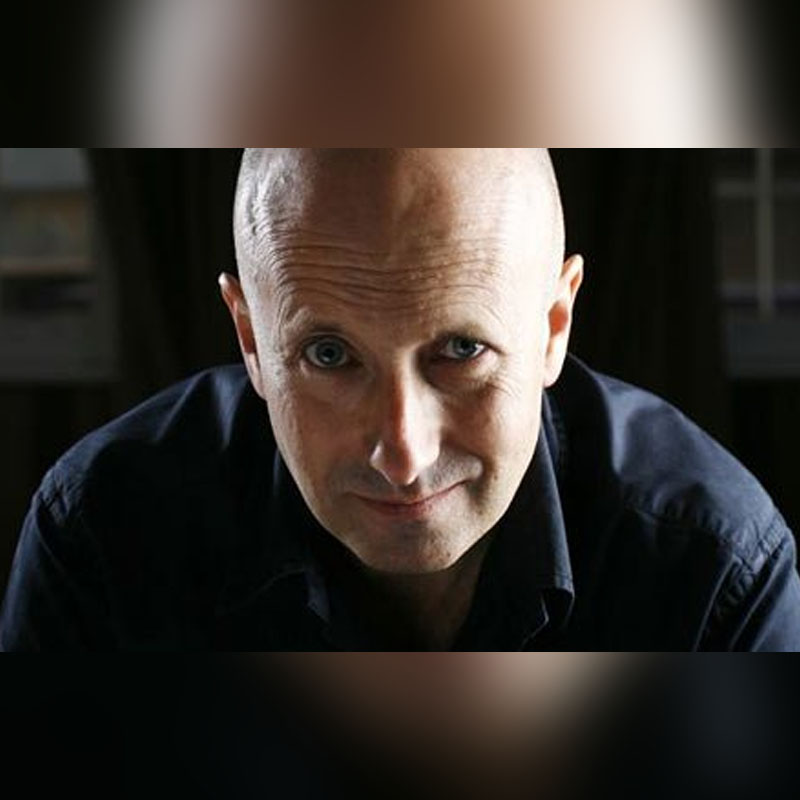
  • Alan Johnston to host BBC’s ‘From Our Own Correspondent’

    Alan Johnston to host BBC’s ‘From Our Own Correspondent’

    MUMBAI: Alan Johnston, the BBC reporter who was kidnapped in Gaza last year, is the new presenter of From Our Own Correspondent (FOOC) for BBC World Service.

    During his career, Alan has written a series of dispatches for the long-running BBC Radio programme from the Middle East as well as Central Asia and Afghanistan.

    In one of the pieces that he wrote in Gaza before he was kidnapped, he admitted that the possibility of being taken hostage terrified him.

    During the 114 days he was kept prisoner by the Army of Islam, he spent hours working out how, once free, he would tell his story on FOOC. In October last year, an entire edition of the programme, some 27 minutes, was given over to Alan’s story.

    Commenting on his new job, he said, “I hope that the show might benefit from having a regular presenter, and one who has both contributed to it and been a fan for many years. The structure of the programme will stay the same however – the extraordinarily successful FOOC formula would be very hard to improve.”

    In a world where the correspondents’ stories must often be condensed into a minute or less, or perhaps confined to a single answer to a programme presenter’s question, FOOC gives them an opportunity to say a little more – to provide some of the context to the stories they are covering, to describe some of the characters involved and some of the sights they see as they watch events unfold.

    The show’s producer Tony Grant said, “I am delighted to be working more closely with Alan. In the past, most of our conversations were down crackly phone lines. He may have done loads of pieces for our programme, but I never got to meet him until after his kidnap ordeal. It will be great now to work side by side with him; he’ll make a really terrific presenter.”

  • BBC’s new comedy makes viewers ‘Feel The Force’

    BBC’s new comedy makes viewers ‘Feel The Force’

    MUMBAI: UK pubcaster The BBC has announced that it will air a six part comedy series on the police force called Feel The Force from next month. This will air on BBC Two.

    Sally Bobbins (Michelle Gomez) and Sally Frank (Rosie Cavaliero) are two policewomen. They are the Cagney & Lacey for the 21st century, but with worse hairstyles. They are Dalziel and Pascoe, but with sillier surnames. Their boss is Sergeant Beasley (Leigh Zimmerman), a tall and terrifying woman who finds Frank and Bobbins a constant source of irritation.

    Their intentions may be good, but they are too easily distracted, as well as being accident-prone. Add to this Frank’s unrequited love for fellow officer PC MacBean and MacBean’s secret passion for his partner PC MacGregor, and it’s not difficult to see why our heroes have so little time for stamping out crime

  • Queen to visit BBC on 80th anniversary of Royal Charter

    Queen to visit BBC on 80th anniversary of Royal Charter

    MUMBAI: Britain’s Queen Elizabeth II will visit BBC Broadcasting House on 20 April to mark the 80th anniversary of the granting of the Corporation’s Royal Charter.

    The Queen will officially re-open the original Broadcasting House in Portland Place, London, which has recently been refurbished as a part of the redevelopment of the site.

    The Queen will be shown a model outlining building project plans for Broadcasting House by Sir Richard MacCormac, architect, and the BBC’s chief operating officer, John Smith, and will view a display of digital radio technology and Broadcasting House artefacts.

    The digital radio technology consists of :-

    >A DAB digital radio featuring an electronic programme guide (EPG)

    >A wi-fi radio, which can pick up, via wireless broadband, internet radio stations around the world including all the BBC’s national stations

    >A plasma TV screen with a Freeview box, displaying the BBC’s 24/7 radio service via digital TV

    >A laptop computer demonstrating listening to radio via the internet on the BBC Radio Player

    >Mobile devices capable of receiving radio services -i.e.- The iPod featuring a selection of the BBC’s podcasts and a new mobile telephone with DAB radio access

    The Broadcasting House artefacts consist of: a ‘royal’ microphone used by King George V for Christmas broadcasts in the 1930s. The ‘King’s Radio’, a specially created version of a high quality radio set made by Murphy, the electronics manufacturer, and presented to King George V. The model was subsequently known to the public as the ‘King’s Radio.’ Also, a cigar box in the form of Broadcasting House presented to Lord Reith on his 10th anniversary as manager/director-general of the British Broadcasting Company/Corporation.

    The Queen will then watch a production for BBC 7’s The Big Toe Radio Show and will meet presenters Kirsten O’Brien and Kevin Duala and young competition winners in the Drama studio.

    The Queen will also view a recording for Radio 4’s Woman’s Hour and meet presenter Jenni Murray, programme engineers and interviewees Dr Sarah Childs from Bristol University and Dr Rosie Campbell from Birkbeck College, London.

  • ‘The Office’ creator Gervais hits out at the quality of British television

    ‘The Office’ creator Gervais hits out at the quality of British television

    MUMBAI: The creator of BBC’s sitcom The Office Ricky Gervais has come down heavily on the state of entertainment on British television.

    He says that most shows are lacklustre and tired.

    Media reports indicate that Gervais considers US television programming to be of a far greater standard. He says that American writers and programmers show an appetite that is not present in Britain. He praised American writers for being good, funny and ambitious.

    He cites shows like 24, CSI as being examples of creativity. Britain, he laments, does not have comparable shows. The reason he says for this is the fact that American television does not tolerate hack writers. If they are no good they are out of the picture.

  • BBC introduces documentary shows for UK kids

    BBC introduces documentary shows for UK kids

    MUMBAI: UK pubcaster the BBC has announced that its children’s programme Newsround, which it says is still the only dedicated daily news service for children in the UK, is to screen Newsround Investigates.

    This is a half-hour documentarie series and takes an in-depth look at issues affecting children’s lives. It kicks off next month.

    Newsround Investigates is a half-hour documentary format for children on BBC One and, for the first time in its 34-year history, the award-winning programme has been extended to 30 minutes.

    In the first programme, Lizo Mzimba and leading criminologist David Wilson take a look at the alarming scale of arson attacks committed by schoolchildren.

    This documentary talks to some of the youngsters who commit arson, looks at some of the reasons why they do it and examines the consequences of their actions.

    Every year, around 90,000 children in England and Wales are affected by arson. Every week, there are around 20 fires in schools and most of them are started by children with some connection to the school.

    School fires traditionally happen when schools are empty, particularly in the summer holidays. But increasing numbers of these fires are now occurring in school hours.

    Newsround Investigates speaks to children whose schools have been burnt down, children who have been injured in fires and children who have deliberately started fires.

    It also visits various anti-arson schemes across the country, such as the first-ever fire fighter embedded in a school.

    The show also questions why less than 200 schools in England and Wales have sprinkler systems when the problem of fires in schools is so great.

  • Mary Hockaday is BBC Radio News deputy head

    Mary Hockaday is BBC Radio News deputy head

    MUMBAI: Mary Hockaday has been announced as the BBC’s Deputy Head of Radio News, a new post working across the whole department in the UK. At present she is BBC Radio’s Editor of World Service News and Current Affairs.

    The move follows the appointment of Ceri Thomas as Editor of Radio 4’s Today programme. Ceri and Mary both deputised for Radio News head Stephen Mitchell, will be covering domestic and world affairs respectively.

    Mitchell said, “Mary has significant editorial experience both in the field and on programmes on World Service and Radio 4. I am very confident that she will now help us to transform the way we deliver our journalism across the board in the light of the major changes that are affecting our audiences and the wider BBC. Mary has been an outstanding part of the radio news family for several years and I am delighted to be able to appoint her to this important new post.”

    Part of Mary’s new role will be to further enhance coverage of foreign affairs across the department. She said, “I am really looking forward to working with colleagues right across BBC Radio News, to help deliver traditional and modern news services to big and varied audiences and to help bring closer together the editorial strength and creativity of staff from across domestic and World Service news departments.”

    Hockaday begins her new role at the end of the month. BBC Radio News will now seek to appoint a new editor of World Service News and Current Affairs, as well as a Radio newsgathering editor, to replace Ceri Thomas.

  • Hasbro wins game & toy rights to BBC & Ragdoll series ‘In the Night Garden’

    Hasbro wins game & toy rights to BBC & Ragdoll series ‘In the Night Garden’

    MUMBAI: Hasbro has been awarded the master toy and game license to BBC Worldwide and Ragdoll Ltd’s new upcoming preschool television series In the Night Garden.

    The series is due to launch on the BBC next year. Under a multi-year, global deal, Hasbro has been given rights for a wide range of toy categories, including preschool, infant and toddler toys, games, jigsaw puzzles, creative play products, proprietary interactive formats and ride-ons. Hasbro’s product line, to be marketed under its Playskool banner, is expected to debut in the U.K. in fall 2007, with rollout to other markets, including the U.S., expected to begin in 2008.

    The 100×30-minute show for kids aged 1 to 3 was devised by Anne Wood and Andrew Davenport, the creative partnership responsible for Teletubbies.

    Hasbro VP of marketing for licensed products Leigh Anne Cappello said, “In the Night Garden is a truly enchanting property with characters that will translate beautifully to a fun and engaging product line. The unique and wholesome message that In the Night Garden delivers to both parents and kids fits in perfectly with our mission for Playskool.”

    It will spotlight “a host of wonderfully silly characters living together within a happy and caring community,” according to BBC Worldwide. The series, filmed in a forest, will blend live costumed characters with computer generated animation.

  • BBC’s broadband learning service for children begins a storytelling trial

    BBC’s broadband learning service for children begins a storytelling trial

    MUMBAI: BBC jam (bbc.co.uk/jam) the UK pubcaster’s new broadband learning service for 5 to 16 year olds, has begun a three-month Augmented Reality (AR) storytelling trial.

    AR is a concept which allows users to interact with virtual 3D objects in real time, by using their own hands, rather than a mouse or a keyboard.

    The trial will enable users to see themselves on a computer screen, holding and moving the 3D characters as they explore the specially-created story (bbc.co.uk/jam/trial/ar).

    AR works by mixing the live video from a digital camera with animated 3D models, which are made to appear in the hands of the user.

    This is achieved by special software which tracks patterns, printed on paper, in each video image. AR technology allows learners to literally pick objects off the page and explore them in a highly rewarding way.

    The animated characters are able to interact with other objects and each other; they are even able to walk off the page.

    Building on technology developments that have led to BBC using AR in the broadcast of BBC News and BBC Sport, the BBC is now able to bring the same technologies to the homes and classrooms of the public.

    To be involved in the first trial all users will need is a standard PC, a webcam and a broadband internet connection. Free software access will be provided and users will be asked to fill in two short feedback forms during the three-month pilot.

    This first trial uses a brand-new story by the award-winning children’s author, Rob Lewis. Written especially for five to seven year olds, it supports shared reading, at home or at school.

    During the trials there will be user guides, teacher notes, tutorials and technical support available and a space to share personal experiences with other participants.

    The BBC has been working with the collaboration of an open source community called AR Toolkit, to explore the use of the technology in broadcasting. They would now like to see it used in classroom and homes.

    The team has recently carried out two projects with teachers and pupils in the BBC’s 21st Century Classroom (21CC) – a digital learning centre in central London, dedicated to exploring creative and cutting-edge uses of technology in teaching and learning; they are now looking to gauge the general public’s reaction.

    If the trial is successful then the BBC hopes to launch further subjects for different ages to explore, learn and create. The pubcaster believes that AR has the potential beyond purely learning as a fun and initiative way of interacting with digital content in collaborative ways for both children and adults.

  • TV over the net could change the face of broadcasting: BBC

    TV over the net could change the face of broadcasting: BBC

    MUMBAI: UK pubcaster The BBC says that the consumer trial of the BBC’s Integrated Media Player (iMP) in the UK reveals that television over the internet could revolutionise broadcasting.

    Research indicates that it increased the viewing of BBC programmes, extended peak-time and built loyalty. BBC director of new media and technology Ashley Highfield revealed key findings from the consumer trial research of iMP in a keynote speech at Milia, the audiovisual and digital content market.

    During the trial, iMP offered downloadable BBC television and radio programmes on a catch-up basis via the PC to a closed panel of 5,000 people for four months between November 2005 and February 2006. Highfield says: “This research gives us the first glimpse into viewing behaviour in the on-demand future. It provides the first significant clues as to how TV programmes over the internet could revolutionise broadcasting, and prompt a wider, cultural shift in television consumption.”

    The panel consistently watched on an average two programmes a week via iMP during the period of the trial, the equivalent of an hour’s viewing per week, despite a limited range of content. “This is equivalent to six per cent of a typical household’s BBC viewing in a week. Consumption was consistent over the period of the trial, and the iMP appealed equally to men and women.”

    While the main reason for usage was to catch up on favourite programmes, iMP also introduced users to new titles and, in doing so, unlocked the ‘long-tail effect.’ “Niche programmes that would have struggled in a mainstream linear schedule performed consistently well throughout the period of the trial.

    “While the top five programmes accounted for a quarter of all the viewing, some niche programming performed disproportionately well. The Amazon ‘long-tail effect’ – seen in the publishing and music industries – indicates that there is significant value in a broadcaster’s archive” he adds.

    Research showed that most viewing took place between 10.00 and 11.00pm, thus potentially extending peak time usage for an hour after the traditional linear peak time of 7.00 to 10.00pm. “This apparent shift in television consumption is consistent with the results of early video-on-demand trials with NTL and Telewest,” added Highfield.

    The results of the research into iMP will underpin the development of the proposed MyBBCPlayer, which “aims to put the audience in the driving seat” by offering users live streamed television and radio as well as a downloadable seven-day catch-up service of TVand radio programmes.

    The launch of MyBBCPlayer will be subject to the necessary public value test and approvals as outlined in the Government’s White Paper on the BBC Charter.

    The BBC says that iMP received a good positive response. 74 per cent of respondents said that they would recommend it to a friend. The key benefits were that it offered genuine flexibility (to watch and to listen to programmes when they wanted), greater control and genuine, added value

    iMP was perceived primarily as a TV service: 92% claimed that they used it most to watch television programmes rather than to listen to radio. This is explained by the established success of Radio Player which leads the charge in the BBC’s on demand offerings, recording over 10 million requests for radio programmes on demand per month (11 million in January) The total number of TV downloads during the trial was 150,000, and the total number of viewings and listenings was 70,000

    The most popular reason for using the iMP was when a favourite programme had been missed and to watch a programme at a more convenient time. 77 per cent of the respondents used it to watch a favourite programme that they had missed, while 64% used it to watch or listen to a programme at a more convenient time; and 32% used it to watch a programme they had never heard of .

    Throughout the trial there was continuous interest in all programmes: more than 85% of titles available were downloaded, with comedy, drama and documentaries being the most popular genres. Programmes from the BBC’s digital channels performed well during the trial – BBC THREE programmes were nearly as popular as those on BBC TWO and BBC 7 programmes performed as well as those on BBC Radio 1 and BBC Radio 2

    The top five TV titles watched by the 5,000 triallists represented a quarter of all iMP TV viewing. The most popular TV programmes (with the total number of viewings) were EastEnders, Little Britain, Two Pints Of Lager And A Packet Of Crisps, Bleak House and Top Gear.

    The average number of TV downloads per active user per month was 13, and the average number of requests-to-view per active user per month was eight. The average number of radio downloads per active user per month was six, and the average number of requests-to-listen per active user per month was three.

    The majority of iMP usage (66 per cent) was for an hour or less at a time; usage mainly took place in the study and living room. 70 per cent of the respondents claimed that one of the reasons for their failure to watch was tied to the seven-day viewing limit. 27% said that the download speed could be improved; 78 per cent of panellists, however, said that they would not compromise on screen size or picture quality for quicker downloads.

    76 per cent said that it was important to be able to view iMP via the television screen, and roughly 30 per cent of panellists said that portability was important (particularly for radio). 94 per cent said that increasing the number of programme titles would improve the iMP.

    The BBC says that the original challenge was to produce a robust media-on-demand internet-based application which offered an entire television and radio schedule on a catch-up, rolling basis. The technical trial of iMP won the RTS Technical Innovation Award and was nominated for an Interactive Bafta.

    iMP was created and developed by the BBC’s New Media & Technology Division in partnership with Siemens, Red Bee Media, Kontiki and Miscrosoft, and Internet Service Providers AOL, Wanadoo, NTL, Tiscali, Telewest and Bulldog.

    Siemens, as lead consultant on the project, were service architects responsible for the delivery of the whole service and for delivery of the Digital Rights Management download system. Siemens managed sub-contractors Red Bee Media and Kontiki; Red Bee Media were responsible for ingesting, encoding and playing out BBC TV content in the Broadcast Centre (and, through their partnership with Autonomy, they were able to provide a search and recommendation facility).

    Red Bee also provided the metadata that drove the Electronic Programme Guide, enabling the user to search content and book downloads. Kontiki developed the peer-to-peer technology and back-end infrastructure.

    The iMP trial panel of 5,000 people represented the full range of all demographics within the UK. Research data was weighted towards the broadband universe, taking into account age, gender and availability of multi-channel TV.

  • BBC increases its presence on FM in Sri Lanka

    BBC increases its presence on FM in Sri Lanka

    MUMBAI: Sri Lankans can now enjoy ten hours of BBC World Service programming, thanks to a new agreement with the Sri Lanka Broadcasting Corporation (SLBC). BBC output in English has increased by five hours on all SLBC national FM networks across the country in addition to programmes in Sinhala and Tamil.

    BBC business development manager, Asia and Pacific region Michel Lobelle said, “I am delighted that listeners in Sri Lanka are now able to enjoy the full range of BBC programming in perfect sound quality on FM across the country. Sri Lanka is a key market for the BBC World Service and this new agreement consolidates our excellent relationship with SLBC.”

    SLBC chairman Sunil Sarath Perera said, “SLBC is proud to be associated with the world’s leading international radio broadcaster and we look forward to building more bridges in the future.”

    Audiences listening in English can enjoy a broad mix of BBC programming ranging from news and current affairs to science and technology. Highlights include Newshour, which is 60 minutes of news and analysis of the day’s top stories, and the interactive global news programme World Have Your Say, giving listeners an opportunity to share their views and questions on topical issues.

    For sports fans, the BBC has daily hourly updates in news bulletins and Sports Round Up. Cricket enthusiasts can stay across the latest in World Cricket while football supporters tune into World Football. BBC programmes in English also tap into the world’s cultural scene. The Beat is a guide to popular global music while On Screen brings the latest stories from the world of film, TV and video games.

    Culture Shock looks at trends in cultural expression and Close Up gives listeners new insights into well established artistic movements.