Tag: BBC

  • Radio One tickles the funny bone this World Cup

    Radio One tickles the funny bone this World Cup


    MUMBAI: As the World Cup draws closer, FM stations have gone ahead full throttle to grab a slice of the cricket pie with innovative non music programming and on gound activities.

    Radio One 94.3 and BBC also promise contests and laugh-a- minute segments and loads of entertainment in the run up to World Cup. The FM has produced a soundtrack for the Cricket World Cup called ”Dhoom Machale Cup Uthale’ composed by DJ Suketu with vocals rendered by Shaan.

    The FM which is a joint venture between Mid Day Multimedia and BBC World will also feature BBC updates on the match with expert analysis from former cricketer Mohinder Amarnath. Another feature BBC World Cup Golden Moments will air commentary from the past World Cup matches including the World Cup 1983 matches.

    Radio One’s World Cup coverage leans heavily towards spoof with Paaji on the Beach, Hey Azzar Bhai , Chalo West Indies and Tommy Singh.

    .As part of its on ground activity the FM will have a branded float taking the message of World Cup fever to the streets that will move around colleges, malls and other youth hangouts.

    An on air contest has the listeners predict who will win the toss and the lucky winner will win a gold coin daily.

  • CNN International MD Cramer honoured by NABA

    NEW DELHI: CNN International’s managing director Chris Cramer will be honoured by the North American Broadcasters Association (NABA) in recognition of his outstanding leadership in the broadcasting industry.

    In conjunction with NABA’s Annual General Meeting and Conference, to be held on March 6 and 7, in Mexico City,. Cramer will be presented with the Association’s International Achievement Award at the Closing Dinner on March 7.

    Cramer is recognised for his commitment to the safety and welfare of journalists around the world.

    His achievements with BBC and CNN International over the past 40 years have inspired broadcasters worldwide, a CNN press note today said.

    In 2007, the United Nations’ Security Council has made a resolution demanding that world leaders recognise the importance in ensuring journalistic rights and safety are respected, a resolution that NABA and the World Broadcasting Unions strongly supported.

    “We honour the work Mr. Cramer has done and hope that the legacy he has put in place will continue to inspire greater protection for our news personnel overseas and at home,” CNN says.

    In the early 1990s, as the Persian Gulf War and conflicts in the former Yugoslavia started to exact its toll on the physical and mental welfare of journalists, Cramer became the industries’ advocate for both Post Traumatic Stress Disorder counseling and safety training for journalists working in hostile environments.

    His advocacy of these causes has seen an industry once based on macho risk-taking and skepticism take a long hard look at itself.

    Cramer was instrumental in the creation of INSI, the International News and Safety Institute, which promotes safety training, materials and assistance to journalists and media staff.

    Cramer pioneered research into Post Traumatic Stress Disorder for media workers and was honored by the Dart Foundation, which funds the Dart Center for Journalism & Trauma. He is also honorary president of INSI and co-author of Dying to Tell the Story, a tribute to journalists who died during the Iraq War of 2003.

    Cramer is retiring as the executive vice president and managing director of CNN International where he has overseen all of CNN’s international broadcasting and newsgathering.

    “He has enabled CNN to lead the television industry in the development and use of Digital Newsgathering (DNG) and championed other new technologies for newsgathering,” the statement eulogised.

    “In his quest for efficiency and flexibility of journalists in the field, Mr. Cramer pioneered the use of the revolutionary Toko box for live reports from Kandahar airport on the release of hostages on Millennium eve,” CNN further says.

    Cramer made the 7E Talking Head and Inmarsat M4 satellite phone available for live coverage. What followed was the launch of BGAN service.

    This lightweight, highly portable equipment gave CNN unparalleled coverage options during the Lebanon conflict.

    These new technologies have not just released journalists from being tethered to the satellite truck but has allowed them to take back the art of reporting by being “on the spot” and sending back stories while still on the scene. This new technology has also made it safer for journalists to travel.

    CNN Feels that Cramer’s influence has done much to change the mentality of news organizations to embrace safety and care off staff. His dedication to international journalism, his commitment to the safety of journalists and his support of the use of the latest technology has left its mark on the industry around the world.

    The NABA International Achievement Award is presented annually and recognizes individuals who have demonstrated extraordinary leadership in broadcasting and commitment to NABA’s goals and principles.

    NABA is a non-profit union of the most influential broadcasting organizations throughout North America committed to advancing the interests of broadcasters at home and internationally.

  • RATINGS: Narrowing divide in the English news space

    RATINGS: Narrowing divide in the English news space

    MUMBAI: If the last six months’ TAM ratings in the English news space could tell a story this is what they would reveal:

    What started as a one horse market with NDTV 24×7 garnering the lion’s share of the pie saw two new entrants with CNN IBN and Times Now. Headlines Today, the English news channel from the TV Today Network continued to be in the shadows of Aaj Tak.

    But has the market dynamics changed with Cas in place? Certainly a better picture so far as the niche channels are concerned has appeared post Cas. NDTV 24×7, CNN IBN and Headlines Today have gone pay while Times Now has chosen to stay free-to-air (FTA) at least for the time being.

    CNN IBN, which started on a high note and even managed to equal market share with NDTV 24×7 (See table 15 Nov- 15 Dec) has stabilized at the end of one year and occupies the third position with a 20 per cent relative channel share (TG:CS AB 15+ years- 1 January to 13 January/ Market :HSM ). CNN IBN director marketing Dilip Venkatraman would only say that as far as CNN IBN was concerned, despite the numbers, he was confident that the “content quotient” of their channel was bound to bring in viewership. Also the “stickiness of viewership with the channel” is higher, he asserts.

    GENRE / CHANNEL 15 JULY – 15 AUG 15 AUG – 15 SEP 15 SEP – 15 OCT 15OCT-15NOV 15NOV-15DEC 15DEC-30DEC 01JAN – 13JAN 07
    ENG NEWS – TG: CS AB 15 Years + Market: HSM  
    BBC World 0 0 0 0 0 9 5
    CNN 8 0 0 0 0 0 5
    CNN IBN 23 30 30 27 33 18 20
    Headlines Today 15 10 10 9 11 9 15
    NDTV 24×7 38 40 40 36 33 36 30
    Times Now 15 20 20 27 22 27 25

    (Courtesy: TAM Peoplemeter System)

    Mindshare managing director Gautaman Raghotama believes that the increase in news channel shares is not so much a reflection of eating into each other’s share but eating into the channel shares of GEC. Mindshare is also the media agency for CNN IBN.

    Says Raghotama, “There is a definite movement of viewership from general entertainment channels to niche channels and especially news channels. The news genre is increasingly becoming a space for ‘infotainemt’. Look at how the Shilpa Shetty controversy was played out across news channels. It was as good as watching Celebrity Big Brother on a news channel.”

    “Another problem with the English news space is that at present there are no clear differentiatiors. So while the audience is slowly building a loyalty to certain news channels, the tendency is also to watch news on one channel and then breeze through the others for a different point of view.”

    “With Times Now and Headlines Today there is a connectivity concern.”

    Despite that concern, it is these two channels that one must watch out for in 2007. Times Now weathered a stormy year, to stabilize at the number two spot with a channel share of 25 per cent (See Table 01 January-13 January 2007). The channel achieved better clarity on its personality as a general news channel by slimming down the business band segment and focusing on what it called the ‘Big Story’ in the day, mentioned Times Now CEO Sunil Lulla in an interview to Indiantelevision earlier in the week. Times Now also led the pack in the TAM Elite Panel ratings.

    It is the minnow of the pack Headlines Today, however, that has switched gears into the fast mode with some good programming. TV Today CEO G Krishnan says, “Unlike General Entertainment Channels that get viewership spikes on tent pole programming – News Channels get a spike during big stories. Headlines Today has been able to effectively look at innovative wrap around content around big stories whether it is cricket, the Shilpa Shetty controversy or Abhishek-Aishwarya wedding to engage the viewers. In addition, shows like Entertainment Quarter, Sports Quarter are doing well for us. This week the time spent and the reach of the channel has increased by 50 per cent. We are definitely on the growth path and it’s heartening to note that more viewers are consuming our content for a longer duration.”

    Assuming that there is a potential clutter in this space would it be easier for network channels to woo the advertiser? Says Krishnan, “Headlines Today as a product caters to the metro-urbanite. Thus an advertiser is able to reach out to the younger metro audiences. From a sales strategy – we are able to optimize revenues by looking at a network approach. Now with the increase in viewership – we are also working on a stand alone strategy to maximize on the revenue opportunity.”

    What is noteworthy is that the market share for these channels is now more evenly divided. But does a 4-player market spell a cannibalization of the market share?

    “I don’t think there is a clutter in the news space with four channels in the fray. But is there space for a fifth channel? I would assume not. I don’t know if they will be able to garner channel share but what is certain is that the existing players will definitely find it tough,” says Gautaman.

    Madison Media Group CEO Punita Arumugam looks at the scenario optimistically as far as the ad pie is concerned?

    “Yes, the ER and growth rate will get affected but the genre itself will grow. Take a look at what’s happened in the kid’s channels market or the Hindi movies market. The market also grew as the players increased.”

    It’s anybody’s story so far as English news goes and each one of them must be looking at increasing channel share. But isn’t the English news channel market a niche within a niche segment.

    Counters Arumugam, “As far as the viewers are concerned what would happen is that as more and more choices are available within a particular genre, fragmentation is inevitable. But personally I don’t think this will affect any of the channels adversely.”

    “If you consider the profile of new advertisers that is already happening as the market sees an explosion. The FMCG sector is looking at this genre more aggressively. Also a healthy competition between the four channels would see advertising rates become more competitive.”

    Gautaman agrees that FMCG players are moving out of the GEC bracket and looking at niche channels.”The English news channels targeted at the affluent, metro consumers will certainly benefit from this shift. Local operators and retail clients will also look at this genre closely. Besides much of this money will have to come from GEC’s and other media options. There will be a rearrangement of revenue to various genres,” he says.

    Krishnan surely speaks for all channels when he says, “The operating principle for all advertisers is – “Have viewership – Will advertise”. He further adds, “With Headlines Today being on a growth path in terms of viewership, advertisers wanting to reach out out to the younger affluent metro audiences will look at Headlines Today as an ideal platform.”

     

  • BBC iPlayer gets a cautious go-ahead from Ofcom

    BBC iPlayer gets a cautious go-ahead from Ofcom

    MUMBAI: BBC Trust has given the green signal to BBC management to provide broadband audio and video services-iPlayer. They have, however, incorporated changes made by the BBC Trust on the recommendations made by the communications regulator Ofcom following a market impact assessment.

    The proposed BBC iPlayer would provide a seven-day catch-up service featuring a large proportion of programming available for download over broadband. It will also include simulcasting services over the internet and making selected radio programmes available as downloads without digital rights management restrictions.

    The BBC iPlayer had a public value test, following a three-month period of industry consultation. Some of the recommendations by Ofcom included reducting the storage duration of downloaded programmes for up to 7 days from the original 13 weeks that BBC had asked for.

    Ofcom observes that the demand for services delivered over broadband is developing rapidly. It suggests that over the next five years linear television viewing may fall by 20-30%, to be replaced largely by the increased use of on-demand services. A similar pattern is anticipated for audio programming.

    However, it adds that it would not be in the wider public interest for the BBC’s involvement to restrict competition, innovation or choice. It notes that “unchecked, the BBC’s power in nascent markets could harm the stimulus of competition necessary to ensure quality content for the long-term”.

    The BBC Trust said in a statement that the Ofcom market impact analysis forms only part of its public value test process, adding that “in reaching our eventual decision, we must also consider the potential public value created by the on-demand proposals”.

  • Clare Pizey to lead the creative direction for BBC’s formats

    Clare Pizey to lead the creative direction for BBC’s formats

    MUMBAI: Clare Pizey has been appointed Creative Director of the Features and Formats Studio.
    She will work in the newly created position as a senior member of the Features and Formats team. She will be tasked with taking the team in new directions and winning new business.
    She has spent the past seven years at Granada, first as Executive Producer at Granada Entertainment and then, from 2005, as Controller of Factual North.
    She worked at the BBC seven years ago in the Factual department for Anne Morrison, working on programmes including Mysteries With Carol Vorderman and 999.
    The Features and Formats Studio based in London, produces shows like Top Gear which airs in India on BBC World. The studio also develops new formats, particularly for BBC Three, such as Last Man Standing which will take six westerners to compete in sporting festivals in some of the remotest parts of the world.

  • BBC launches a kids magic reality hunt in the UK

    BBC launches a kids magic reality hunt in the UK

    MUMBAI: UK pubcaster the BBC’s kids chanel CBBC is launching a reality hunt to find The Sorcerer’s Apprentice.

    A boarding school set deep in the heart of the English countryside will become the home of magical adventure.

    14 scholars will be picked from auditions taking place across the UK. The successful applicants are then whisked away to magic school where they will have 18 days of intense training by top professional magicians.

    While the apprentices make the transformation from novice to magician, the children watching will also get to brush up on their own sorcery skills. In an accompanying series the magic mentors will give away some of their hottest secrets in step-by-step guides so children can learn how to perform magic tricks to amaze their family and friends at home.

    The apprentices will be schooled in the history of magic and folklore, the latin for casting spells, chemistry, card tricks and also look after resident magic animals. As their knowledge and skills progress they will be taught the art of illusion.

    At the end of each week, the children will compete, performing their magic in front of a live audience and the Sorcerer himself. The Sorcerer’s Apprentice, being made for CBBC by independent production company Twenty Twenty, will be shown later this year.

    CBBC creative director Anne Gilchrist said, “The Sorcerer’s Apprentice is going to be a great event for CBBC. Children of all ages are fascinated by magic and this show will inspire and amaze in equal measures.”

  • Ofcom launches PSP consultation

    Ofcom launches PSP consultation

    MUMBAI: UK media watchdog Ofcom has launched its planned consultation to consider the option of an online public service publisher (PSP).

    If given the go ahead, the service would compete with the online operations of Channel 4 and the BBC. The idea was muted by the regulator back in 2004.

    Ofcom notes that although public service content will be provided by the market, it may well not be enough either in terms of quantity or diversity – a market shortfall is likely to arise. This may have adverse implications for the level of UK-originated production, and for plurality in the public service system – the BBC is likely to play a material role in the digital media world of the future, but for a public service culture to flourish, effective competition for quality is needed.

    Ofcom states, ” We are open-minded about the best solution for the future of public service content – we will not report again on the how to maintain and strengthen the quality of Public Sservice Broadcasting (PSB) until the next PSB Review, which must be completed no later than 2009/10.

    “The primary purpose of this paper is to take the debate forward within the UK’s creative industries and policy environment. We continue to believe that there is a real opportunity for a new PSP to make a significant contribution to the public service system, and to create a lasting legacy for the future.

    ” We welcome the Culture, Media and Sport Select Committee’s interest in the PSP concept in its inquiry into public service media content.”

    Ofcom has given 23 March 2007 as the last date for obtaining feedback. It is actively seeking responses on:

    – The appropriate nature of intervention in the digital media age, and the balance between TV and non-TV forms of public service content distribution

    – The potential role of the PSP and its creative remit

    – The operating model – in particular, the approach to rights management

    – The scale of funding required. Ofcom notes that the future of PSB in UK television is central to its remit. Its first statutory review of PSB was completed in 2005 and set out recommendations for maintaining and strengthening the quality of PSB against a backdrop of rapid change in broadcasting. The television market has continued to evolve at speed since the review, as a result of which it published Digital PSB in July 2006.

    Digital PSB highlighted a number of market developments affecting the future of public service broadcasting. One of these is that the rapid take-up of digital television is reducing the viewing share of the traditional public service broadcasters, and hence the value of the analogue spectrum

    Viewers – especially younger audiences – are increasingly watching content on internet and mobile platforms, and are starting to move away from traditional TV. Changes in spectrum policy will affect the way in which public service aims need to be financed in the future.

    In Ofcom’s view, these changes mean that the delivery of PSB in a fully digital television world needs to be rethought. While the core public purposes endure, the means of delivery and institutional framework may have to change. As a result, the challenge is to define the appropriate model for PSB for the future, not for the world as it is today – or as it has been in the past. The challenge is as much an opportunity for public service broadcasting as it is a threat to it.

  • Princess Diana TV interview voted number one in UK poll

    Princess Diana TV interview voted number one in UK poll

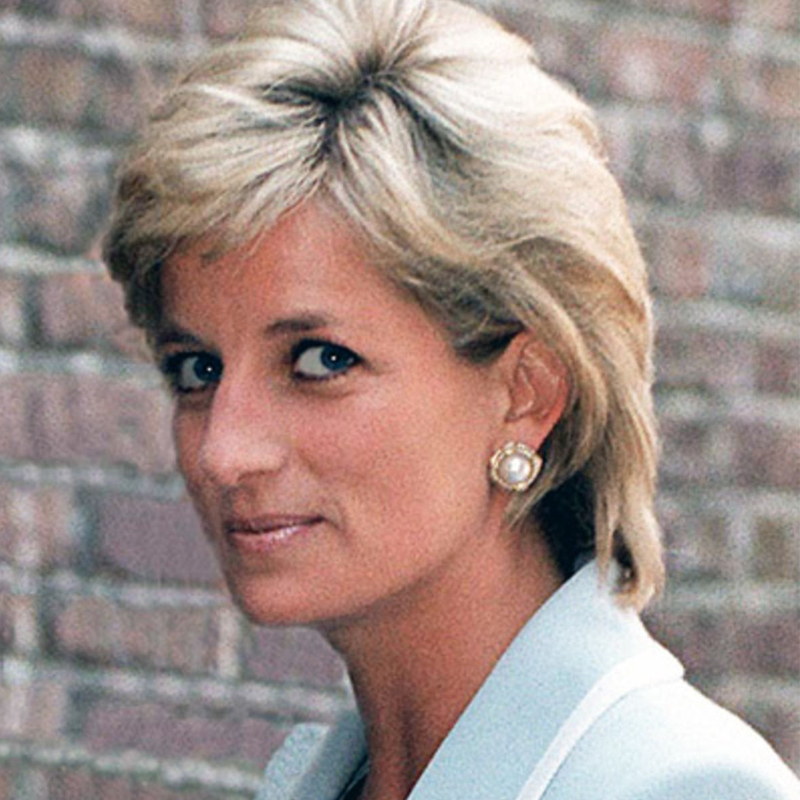
    MUMBAI: In a recent poll of about 3,000 television viewers in Britain conducted for UKTV Gold, Martin Bashir’s television interview of the late Princess Diana in 1995 was voted as the most memorable.

    Sir David Frost’s 1977 interview with post-Watergate Richard Nixon, in which the former American president admitted letting his country down, came second.

    The interview with Princess Diana was watched by an estimated 15 million people – a record for Panorama and one of the BBC’s highest-ever audience figures.

    She spoke frankly about her depression and bulimia, her children, the media and the future of the monarchy.

    She admitted to having an affair with her riding instructor, James Hewitt, and spoke of the hurt caused by Prince Charles’ relationship with Camilla Parker-Bowles.

    Actor Hugh Grant’s appearance on The Tonight Show with Jay Leno in 1995 also made the top 10.
     

  • Ofcom faults BBC’s download plans

    Ofcom faults BBC’s download plans

    MUMBAI: UK pubcaster The BBC’s plans to offer all its TV and radio shows on-demand via the internet and cable TV have been criticised by the media watchdog Ofcom. Ofcom said that certain aspects of the BBC’s on-demand service, which is due to start later this year, could have a negative effect on commercial rivals.

    The BBC’s proposed on-demand services consist of:

    – catch-up TV – offering viewers the chance to watch any BBC programme from the last seven days over NTL:Telewest, Homechoice and the internet at a time of their choosing. This would also allow series stacking – the ability to store and view an entire series of programmes;

    – simulcast TV – BBC channels that are broadcast on television would be made available at the same time over the internet; and

    – audio downloads – BBC radio programmes (excluding full-track commercial music) would be available to download from the internet.

    Ofcom conclusions are that the new services could account for almost four billion viewer and listener hours by 2011. A proportion of these hours – over half in the case of simulcast and audio download services – could represent additional viewer and listener activity over and above current levels.

    The proposed services are therefore likely to stimulate considerable interest in other new media services to the benefit of all UK consumers and businesses. They offer significant potential value to licence fee payers.

    However concerns have been expressed:

    Series stacking could discourage investment in commercial on-demand services and is likely to have an adverse effect on related markets such as DVD rentals and sales. Ofcom believes the scale of series stacking should therefore be substantially reduced or excluded altogether.

    In the case of catch-up TV on the internet, the ability to store programmes for up to 13 weeks could have negative effects on competition and therefore investment in consumer choice. Ofcom believes that this storage window should be reduced or removed. In the event of removal, viewers would still have up to 14 days to download and view the content.

    The ability to download free BBC audio content might have a serious adverse impact on specific markets; notably commercial classical music recordings and audio books. Ofcom believes the latter should be excluded from the proposed services and the availability of classical music recordings should either be constrained or removed; and the cost of providing extra broadband capacity to deliver the BBC’s proposed services to consumers is likely to be high, though any additional capacity would also be available for use by a wide range of other services including commercial on-demand services.

  • BBC licence fee to rise by 3%

    BBC licence fee to rise by 3%

    MUMBAI: UK Culture Secretary Tessa Jowell has announced that the BBC licence fee will rise by three per cent over each of the next two years. The deal will see the current fee of ?131.50 rise to a maximum ?151 by 2012.
    Borrowing limits will also be tighter than requested. The BBC had wanted an above-inflation hike in the licence to boost programmes and digital services.
    Not surprisingly BBC DG Mark Thompson expressed “real disappointment” at the Government’s final licence fee level settlement but said it was a privilege to receive and gave certainty in planning to create the best possible content and services for all audiences.
    Thompson said that no commercial rival enjoyed that certainty of funding. While the BBC could argue that the benefits that extra funding would bring to the wider creative industries as well as audiences, he said that it was ultimately for the Government to decide the level in the broader context of inflation and the wider public sector.
    He also welcomed the longer settlement at six years enabling efficient planning for digital switchover, rapidly changing audience expectations and new creative initiatives.
    “Our vision for the future, broadly endorsed by a Government White Paper, as well as their own requirements and ambitions, especially around digital switchover, plus not wanting existing, valued BBC services to be squeezed as we invest for the future, led us to bid for a settlement that would increase in real terms.
    “The settlement announced means the BBC still receives substantial, guaranteed income of more than ?20billion over the next six years, which is financial security denied to any other media player. But it leaves a gap of around ?2 billion over the next six years between what we believed we needed to deliver our vision and what will actually be available. That’s not a gap many organisations can swallow comfortably.”
    Thompson said there were three ways the organisation could now move to reduce the gap:
    1 – Simply not make some new investments, do them later or do them more modestly;
    2 – Increase self help targets. This would mean: increasing licence fee efficiencies in collection and evasion; maximising commercial revenues and continuing reform, modernisation and productivity;
    3 – Move resources inside the BBC from existing content and services to new ideas.
    The BBC’s executive board and senior managers across the organisation will now review investment plans in the light of the settlement and explore the options.
    The executive will then make initial recommendations to the BBC Trust who will take decisions later in the year in the best interests of licence fee payers, drawing on the framework of the BBC’s public purposes and public value.
    Thompson adds, “The BBC faces challenges to find enough money to create the fantastic content our audiences want. After seven years of funding that has grown in real terms, we now face not just a tight settlement but daunting investment challenges in distribution, infrastructure and technology that risk diverting money away from content creation. These challenges call for some new thinking about how we produce content and how we create value.”
    Thompson said that the BBC’s vision for content in the digital world, Creative Future, was never fundamentally about spending new money:
    “It is about flexing, adapting, liberating all content, but above all, content we already make. It’s about unlocking the full value of existing investment.”