Tag: BBC

  • Sahara India Media CEO and Editor-in-Chief Sanjeev Srivastava quits

    Sahara India Media CEO and Editor-in-Chief Sanjeev Srivastava quits

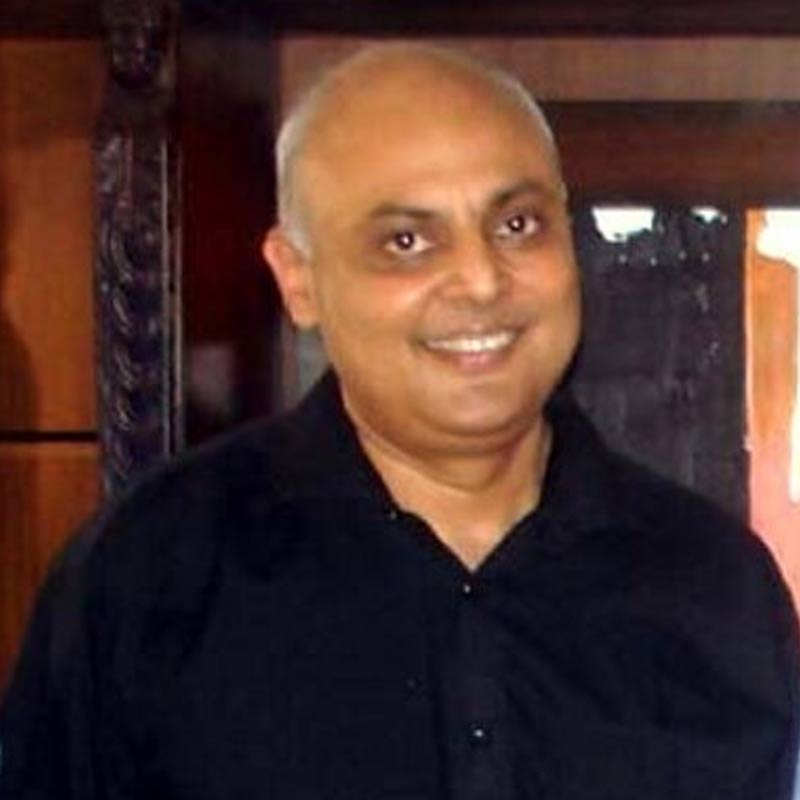
    MUMBAI: Barely after a four-month stint at Sahara India Media, Sanjeev Srivastava has quit as CEO and Editor-in-Chief.

    Srivastava had joined Sahara Group in January this year, and was heading all media-related activities of the Group.

    Confirming to Indiantelevision.com, Srivastava said, “Yes I have quit today. I have a few options but have not decided as of now.”

    Prior to Sahara, Srivastava was India editor at BBC. He comes with over 25 years of experience in journalism with various media organisations including the Times of India and Indian Express. Working for 16 years with the BBC, he most recently led the entire BBC Hindi output generated from India across all platforms of delivery, including FM, short wave and online.

  • BBC Trust reviews its services for younger audiences

    BBC Trust reviews its services for younger audiences

    MUMBAI: The BBC Trust has launched its review of BBC services for younger audiences. The Royal Charter requires the Trust to undertake a comprehensive review of every BBC service at least once during a five-year cycle.

    This will include full reviews of the three BBC services aimed at young people – BBC Three, Radio 1 and 1Xtra, together with other BBC output aimed at the young, such as formal learning websites and BBC Switch.

    BBC Trustee Alison Hastings who is leading the review for the Trust said, “The BBC must offer something of value to people of all ages in order to deliver its public purposes, and young people are no exception. We will consider how young people are watching and using BBC programmes and services on television, radio and online, and the value they derive from them. Changes in technology are having a particular impact on young people’s media behaviour so it is important that we examine both what the BBC is currently doing and consider what it might need to do in the future.

    “We will be looking at everything the BBC offers young people, and as part of this we want to hear from all young people, whether or not they use these services.”

    The review will look into areas like how effectively the BBC is delivering the six public purposes to young people and whether the BBC is reaching young people through the various media outlets, at the times and in places that best suit them. It will also look into how well are the three services – BBC Three, Radio 1 and 1Xtra – performing against the terms and conditions of their service licences.

    As part of the review, the Trust will open an online public consultation today. The consultation will run until 16 December 2008 and be promoted on the BBC’s services and elsewhere.

    The Trust will commission audience research, speak directly to young people at outreach events organised by the Audience Councils and others, and consult with representative bodies and other interested parties who work closely with young people.

    Within the broadcasting and media sector, broadcasters, producers and industry bodies will be invited to submit their views, along with BBC managers and staff. The Trust will analyse all the evidence it collects and expects to publish its review in spring 2009.

  • BBC Trust to review licence fee structure

    BBC Trust to review licence fee structure

    MUMBAI: The BBC Trust has launched a public consultation as part of a wide-ranging review into how the licence fee is collected for the UK pubcaster.

    The Trust is responsible for overseeing the licence fee collection arrangements, put in place by BBC management, and ensuring they are “efficient, appropriate and proportionate”. This is a new responsibility for the BBC’s governing body which is stated in the Royal Charter for the first time.

    BBC Truist chairman Sir Michael Lyons said, “It is use of a television, or other television receiving equipment, which dictates the need for a television licence, but the purpose of the licence fee is to pay for all BBC domestic services – on television, radio and online. For the BBC to meet its remit, and deliver the quality programmes and services the public rightly expects, it is essential it collects the funding needed.

    ” The BBC has a duty to be efficient in collecting the licence fee and to keep evasion rates as low as possible so that those people who pay are not disadvantaged by those who do not. This is an issue which arouses strong emotions, because the right balance needs to be struck between ensuring compliance with the law and avoiding any disproportionate heavy-handedness. On behalf of licence fee payers, the Trust will consider whether that balance is being struck through the processes used to collect the licence and, if there is room for improvements, we will ensure they are made.”

    The Trusts review will consider areas such as:

    – The range of payment methods available to licence fee payers and whether it is clear to people when a TV licence is needed 
    – The tone of the marketing and advertising about the TV licence 
    – The enforcement methods used by TV Licensing, including letters, visits and detection 
    – Through consultation and formal research, the Trust is seeking the public’s opinion on these issues, as well as their view on how far the BBC should pursue those who should but don’t pay the licence fee.

    The public consultation closes on 28 November 2008. The Trust will also be talking to audience groups and other interested parties and distributing information via libraries and other public places. It will be visiting TV Licensing sites to gain first-hand experience of collection and enforcement of the licence fee.

    The Trust will analyse all the evidence it collects and expects to publish its report next spring, once it reaches its final conclusions. The review will not consider settled public policy issues, such as the cost of the licence fee or whether there should be a licence fee at all.

  • Tina Stowell is BBC head of corporate affairs

    Tina Stowell is BBC head of corporate affairs

    MUMBAI: BBC has appointed Tina Stowell, currently Head of Communications for the BBC Trust, as head of its corporate affairs.

    In her new role, Stowell will be responsible for the implementation of an integrated corporate affairs, events and publishing strategy for the BBC.

    She will work closely with the executive team and report directly to Ed Williams, Director of Communications.

    She will take up the post in the New Year. Williams said: “Tina’s experience both at the BBC Trust and in Government makes her the ideal person to develop and lead our corporate communications strategy. She will bring a huge range of knowledge and experience to the role and I look forward to working closely with her. Tina takes over from Janie Ironside-Wood and I’m deeply grateful to Janie for stepping forward to cover this role, and for all she’s done in the last few months in corporate affairs.”

    Stowell said, “It has been a great privilege to work directly for three successive BBC Chairmen and to be part of the team which has established the BBC Trust and the new governance arrangements which are strengthening the BBC’s accountability. I am very excited to be joining the corporate communications team and I look forward to building strong links with a wide range of people and organisations to listen, learn and promote awareness and understanding of the positive changes being made at the BBC.”

  • ‘We are not a business model-oriented channel’ : Suneet Tandon – Lok Sabha TV CEO

    ‘We are not a business model-oriented channel’ : Suneet Tandon – Lok Sabha TV CEO

     ‘The no-confidence motion against the UPA government last month gave Lok Sabha TV’s ratings the much required boost as well as an opportunity to rake in money by sharing its feed with privately run satellite news channels.


    Indiantelevision.com’s Anushree Bhattacharyya caught up with Lok Sabha TV CEO Suneet Tandon to find out more on his plans for the channel. Interestingly, Tandon was elevated as CEO less than a week before the crucial vote. He was earlier the channel’s executive director-marketing.


    Excerpts:

    How has the channel fared in the two years of its existence? What are major changes that have taken place?
    The first year was devoted at consolidating the position of the channel. And in its second year, we established the channel’s presence. People now know who we are.


    There are channels that spend large amounts on advertising and marketing. We have not gone that route, yet we have carved out our very own position. All this has happened primarily due to the coverage of Lok Sabha sessions as well as other programmes like debates, discussion and documentaries.

    What is the composition of Lok Sabha TV? Apart from Somnath Chatterjee (whose brainchild the channel is), who are members of its governing body?
    The channel owes everything to the Speaker. But the channel is institutionalised under the overall power of the Lok Sabha. Under the Speaker, we are headed by the secretary general. In addition, there is also an advisory council to guide the functioning of the channel and is chaired by the Speaker. The vice chairman of the council is the deputy speaker of Lok Sabha. The council also consists of leaders from all the major parties in Parliament. So there is also that structure which has been set up to help offer the balance.

    How much investment has been made into Lok Sabha TV?
    Well, at this point of time, it is difficult to speak about the figures as I don’t have them with me right now.

    The channel has to depend on the audio-visual unit of the Lok Sabha secretariat for its expenses and infrastructure. Do you face any constraints in funding since you do not have a business model as such?
    We are not a business model-oriented channel. We are a public service channel for which funds are made available by the Parliament from Parliament’s own funds. Though there have been no constraints on our funds, it is our desire that we don’t want to become a burden on anyone. We need to do it in an economical and careful manner and are very conscious of that. We do not try to spend liberally just for the sake of spending.

    How many hours of feed were sold by Lok Sabha TV for the two days (during the Trust Vote)? How was the business on these two days for the channel?
    We did not sell any number of hours of feed as such. News channels picked up largely the important segments. We had earlier informed all the news channels about the rates. We had adopted Doordarshan’s practice of sharing feeds for important events in Parliament.


    We are using the same rates used by DD. Apart from charging Rs 1 mn beyond every five minutes of feed, there is also a provision for a one-time payment. For the one-time payment, a news channel has to pay Rs 3 mn in advance and can use the feed for any three important events, which makes it Rs 1 mn for every event.

    We also try to spread cultural awareness not in terms of entertainment but by spreading awareness for our classical heritage and folk heritage. We also air awardwinning films on our channel

    Since it’s all about garnering TRPs, how does a channel like Lok Sabha TV manage to catch the attention of viewers?
    By being a credible, sensible and balanced channel. We are not trying to attract the attention of viewers and TRPs by showing any sensational news. We like to deal with our viewers intelligently and try to reflect their concerns because this channel is meant for the thinking citizens of this country. We are very conscious that Lok Sabha TV has to reflect and balance all shades of political opinion. And I must say that there is a lot of feedback that we have got saying that people like watching our channel because we don’t sensationalise anything.

    Do you keep an eye on the ratings of Lok Sabha TV? Are the ratings satisfying enough?
    Yes, we do. We have subscribed to Tam (television audience measurement) every week. Considering the niche nature of the channel, it is very satisfying. Lok Sabha TV is neither a news channel and nor is it a GEC, yet our ratings have been consistently more than CNN and BBC. Also in metros like Delhi and Mumbai, our ratings have been better than many of the established news channels. It’s actually a good reason to be happy for a young channel which does not offer any traditional sensation to its viewers.

    The channel’s viewership soared on 21 and 22 July. Do you feel that Lok Sabha would have been able to garner more ratings if you had not shared the feeds?
    Of course. Those two days were extremely important for Indian democracy. And had we not shared the feed, we would have got as much viewership as that of all the channels put together… all those who took our feed and our viewership.

    Apart from covering the Lok Sabha, what else does the channel concentrate on?
    People have begun to look at us as in terms of quality discussions, debates and documentaries on socio-economic, constitutional and government issues. Moreover, we also try to spread cultural awareness not in terms of entertainment but by spreading awareness for our classical heritage and folk heritage. We also air awardwinning films on our channel.

    At any point of time, have any member of the Advisory Council or the Speaker shown an apprehension on maintaining balance while covering any session?
    No within the Parliament the balance is maintained by the Speaker himself or whosoever is in the chair at that time. And our duty is simply to cover what has happened. And as far as rest of the programmes are concerned, we have not yet faced any significant criticism. But if there are any observations, we take corrective actions.

    In terms of programming, what are the changes that you would like to bring about?
    Every television channel has constantly tweak its programming and look for new ideas to develop interesting programmes. I think we need to give a little more emphasis on fresh programming. And I would also like to see if we could have some more involvement from other states and cities. We also have phone-in programmes where we have toll-free numbers and people can call from anywhere in the country.

    Though there is a website dedicated to Lok Sabha, there is no online property for the channel. Any plans to develop a dedicated web portal for Lok Sabha TV?
    Well, that is something that we can certainly consider taking up. During the time of the debate, many people who had logged on to watch a simultaneous webcast had found that our server had reached its maximum capacity as people from all over the world had logged on it. The servers for loksabha.nic.in got jammed. So, yes, may be there is a need to set up a separate website and increase the bandwith.

    What lies ahead for Lok Sabha TV?
    Technically, we are already at power with any other channel. Our visual quality is as good as any other channel. Yes, we would definitely like to have more interesting programmes and would also like to increase our scope of operation.
  • Al Jazeera English expects to launch in India by 2009

    Al Jazeera English expects to launch in India by 2009

    NEW DELHI: Al Jazeera is awaiting downlink clearance from the government and expects to enter the Indian market by early 2009.

    “We had a meeting yesterday with the information and broadcasting ministry and cleared out certain apprehensions they had about the association of Al Jazeera Arabic with the English Channel. We had applied for clearance some time back and are now hopeful that we would be able to start operations in India by early 2009,” says Al Jazeera English managing director Tony Burman.

    The Middle East-based news channel has a picture sharing arrangement with India TV news, adds Burman.

    After getting the clearance, Al Jazeera will consider partnering with an Indian broadcaster. “Since India is a huge country and we have just one member team here, we may partner with a few local broadcasters or even the public broadcaster,” says Burman.

    The channel gained popularity when it aired popular terrorist Osama Bin Laden’s tapes.

    Clearing the air, Burman explains: “It would be unfair to say that Al Jazeera is the easily accessible channel for terrorist groups. Osama Bin Laden’s tapes were aired by CBC, BBC and CNN as well. The fact is that in Middle East Al Jazzera has earned a reputation and Laden wanted to reach out to people through our popular medium. So the tapes were sent to us. In fact, there are many tapes that we have not aired. However, at the same time Al Jazeera English is not responsible for Al Jazeera Arabic’s content. We have a separate team and operate on our own.”

  • BBC Trust finds merit in commissioning decisions

    BBC Trust finds merit in commissioning decisions

    MUMBAI: The BBC Trust has completed its first biennial review into the operation of UK pubcaster the BBC’s “Window of Creative Competition” (WOCC).

    The review found that the WOCC is working well and commissioning decisions are being made on merit with no obvious bias towards in-house teams or independent producers. The review was led by BBC Trustee Rotha Johnston.

    Johnston said, “The public judge the BBC on the quality of its programmes. For the BBC to produce a wide range of high quality and distinctive programmes, the commissioning process needs to work effectively. Our review has shown that in its first year, the WOCC has worked well.”

    Elaborating upon the review, Johnston stated, “The review found that commissioning decisions are being made on merit, with independent producers doing well in the WOCC’s first year. Meanwhile the BBC’s in-house teams are responding positively to the challenge of increased competition. Everyone wants the best programmes to be commissioned and there is evidence that the WOCC is playing a part in achieving this.”

    Some of the findings of the review are:

    – The WOCC is working well and commissioning decisions are being made on merit with no obvious bias towards in-house teams or independent producers. 

    – Commissioners are seen as being open to good ideas regardless of where they come from. 

    – Independent producers welcome the WOCC but needed more information about its operation. 

    – There is a reasonable spread of opportunities across genres and by audience, cost, and geographic area. 

    – Independent producers have won three quarters of the opportunities under the WOCC, performing particularly strongly in children’s, knowledge, entertainment and comedy. 

    The Trust has made a number of recommendations to improve the operation of the WOCC. These recommendations are designed to make the WOCC more open, transparent and accessible, as well as ensuring the commissioning process is operating as efficiently as possible.

    These recommendations are:

    There should be clearer information and guidance about the WOCC’s operation, the scope of opportunities available and role of the e-commissioning system.

    The BBC should consider how the principles of the WOCC can be better applied to sport. There should be more sharing of best practice across genres.

    The BBC should consider adopting better labelling of programmes, to make clear which programmes have come from different commissioning routes in order to better assess the operation of the WOCC in the future.

    The BBC should consider how it can offer independent producers a better understanding of audience data. 

    The BBC should review its handling arrangements for complaints about the process.

    The Trust has asked the BBC Executive for an initial report on these recommendations by November 2008.

  • Broadcasting is going through a period of change: BBC Trust chairman Lyons

    Broadcasting is going through a period of change: BBC Trust chairman Lyons

    MUMBAI: The media industries in general, and broadcasting in particular, are going through an extraordinary period of change where the EU regulatory framework has served audiences well. But this is a timely moment to ask whether it remains appropriate for the new world of digital convergence and on-demand services, into which everyone is moving at an extreme speed.

    This point was rasied by BBC Trust chairman Sir Michael Lyons at the EU conference in Strasbourg. He emphasized upon the fact that the BBC is more than simply a broadcaster.

    “It is expected to fulfil public purposes that go well beyond the provision of high quality television and radio programmes and online content,” Lyons said.

    “These public purposes are set out in some detail in the new BBC Charter, in effect its constitution, which was put in place 18 months ago. The public purposes range from sustaining citizenship and civil society, through promoting education and learning and stimulating creativity and cultural excellence, to representing the UK, its nations, regions and communities, and bringing the UK to the world and the world to the UK. The BBC is also tasked with delivering to audiences the benefits of emerging communications, technologies and services,” he added.

    Lyons explained that the BBC can only deliver these high public purposes if it remains independent.

    “The public purpose of ‘sustaining citizenship’, for example, implies the provision of high quality impartial coverage of news and current affairs. This is the essential fuel of an informed democracy; and impartiality in news provision cannot be sustained without full editorial independence. The independence of the BBC is guaranteed by the Charter and this includes independence from government. Of course government has a role, but that role is closely defined. It is to set the Charter (there is a new Charter every 10 years or so) and to set the formula that defines the licence fee for the Charter period,” elaborated Lyons.

    However, Lyons believes that oversight of the BBC is carried out not by government, or by Parliament, but by the BBC Trust and hence one of the key roles of the Trust would be to defend the independence of the BBC from undue pressure from any quarter.

    In terms of the things that the BBC Trust has been doing, he said that it had challenged the BBC executive to do much more to ensure that BBC responds appropriately to the needs of all audiences in the UK. “We have supported plans to move very significant amounts of production and control of airtime out of London. Our aim is that by the end of the Charter period in 2016 around 50 per cent of BBC production should take place outside London.”

    “We have also prompted the Executive to make significant changes in BBC journalism to ensure that our news gives a truer and more accurate picture of life throughout the UK, and fully reflects the fact that powers have been devolved from Westminster to new legislative bodies in Scotland, Wales and Northern Ireland. Taken together, these changes are taking the BBC in a new direction – a direction set by its audiences, and mediated by the Trust as the representative of those audiences,” Lyon stated.

    He added that a similar journey had begun in regard to the relationship between the BBC and other organisations active in the UK media market. He also conceded that this relationship would never be a completely easy one.

    This is because there will always be areas of direct competition between what the BBC provides and what the market supplies. Convergence and market changes are bringing new areas of competition as both public and private providers seek to make the most of the opportunities created by the digital revolution.

    “On this general issue, our fundamental position as trustees, representing the interest of audiences, is this: audiences clearly like wide choice in their media diet and deserve to get the benefits of competition and innovation, so the BBC must not use its market power in a way that restricts audience choice; and we have the power to ensure this happens… the power to approve new BBC services used to lie with government. But under the new charter, it rests with us. This is a significant strengthening of the independence of the BBC.”

  • BBC secures exclusive MotoGP coverage till 2013

    BBC secures exclusive MotoGP coverage till 2013

    MUMBAI: BBC has announced that BBC Sport and Dorna Sports, commercial and TV rights holders of the MotoGP World Championship, have signed an extension to the existing agreement for coverage of MotoGP from 2009 to 2013. BBC Sport will now have exclusive UK rights to broadcast the world’s premier motorcycle championship for the next five years.

    The deal includes the rights to show all the races – 125cc, 250cc and MotoGP, plus qualifying sessions. All MotoGP races will be shown live on BBC Television with the 125 and 250 races and qualifying sessions shown live on interactive TV via the red button and online.

    As well as the expanded coverage on interactive TV (which 86% of individuals in the UK have), the MotoGP races will also be available as a catch-up service on BBC iPlayer.

    The new agreement represents increased commitment and coverage of MotoGP for BBC, and makes the broadcaster the UK leader in motor sport with the world’s premier bike and car events in MotoGP and Formula One.

    BBC Sport’s director of sport rights Dominic Coles said, “We are delighted to have secured, for the first time, fully exclusive rights to the world’s premier and most watched motorbike competition. Alongside our recent acquisition of Formula One, BBC Sport has become the home of motorsport in the UK; a one-stop shop for fans of the very best two-wheel and four-wheel, adrenalin-fuelled sport action across TV, radio and online services.

    “With James Toseland making a very promising start to his MotoGP career, Bradley Smith shining in the 125s, and Scott Redding making history in that series recently at Donington Park, the future for British riders in MotoGP looks good, and the BBC will be there all the way to tell their stories.”

    Dorna MD Manel Arroyo said, “Dorna is delighted to extend its collaboration with the BBC, and thanks to their prestige and their dedication to MotoGP, we are sure that the championship will continue to grow in the UK. We are also happy that fans will not miss out and can continue to enjoy all races and qualifying sessions in the future.”

  • BBC strengthens drama production team

    BBC strengthens drama production team

    MUMBAI: BBC has announced that BBC Drama Production has made changes to build on the success of an increasing number of new commissions, re-commissions, the opening of a new hub in Manchester led by Phil Collinson, and a major expansion for the Writers Academy programme.

    BBC Drama Production has seen a boom in work over the past 12 months, with series such as Five Days and The Curse Of Comedy, Cranford and The Passion, Oliver Twist and Lark Rise alongside its regular returning slate including EastEnders, Waking The Dead.

    Its next major series House Of Saddam is due for transmission on 30 July on BBC Two. Drama Production currently operates from major bases in London and Elstree, Birmingham and Bristol and has recently added Manchester.

    Vision Productions head Peter Salmon said, “The brilliant recent performance of BBC Drama Production is one of the big success stories of in-house programme-making.

    “To cope with the pressures of their growing business, I have asked Nicolas Brown to lead the senior team as Director, Drama Production, and set out their strategy for the next few years, including growing the slate of titles, driving production modernisation and building commercial revenue.

    “He will sit on the board of Vision Productions to make sure drama gets the credit and profile it needs to continue to deliver strongly. He leads an outstanding top team.”

    As part of the changes, John Yorke becomes controller, Drama Production and New Talent. While remaining editorially responsible for the Continuing Drama Series, all currently enjoying ratings and award success, he will also spearhead a four-fold expansion in activity for writer, producer, director and script editor training.

    John will oversee an expansion of Writers Academy to the Nations and Regions and by drawing in the BBC Writersroom, lead a much more co-ordinated approach to training.

    Kate Rowlands (Creative Director, New Writing) will work alongside John to ensure that writers’ training is linked up across the whole of the UK.

    Kate Harwood, who has been behind such successes as Cranford, Oliver Twist and The Passion, will take on responsibility for the department’s single films, and becomes Controller, Series and Serials, BBC Drama Production.

    She is editorially responsible for series, serials and singles across the whole of Drama Production. Kate’s team are currently working on some of the highlights of the BBC One Autumn schedule, including new productions of Survivors, Little Dorrit and Tess of the D’Urbevilles, as well as the return of Silent Witness and Lark Rise To Candleford which returns in Winter 2009.

    Kate, John and Phil Collinson, who have just started work leading the Manchester hub of Drama Production, will now report managerially to Nicolas Brown in his role as Director, Drama Production – who has responsibility for the delivery of the creative, production and financial strategy across the whole department – and sit on the Drama Production Board.

    Salmon said,”These changes have become urgent at a time when the ambitions of in-house drama have resulted in its most successful period for years.

    “Editorially, the department is at the top of its game, enjoying a growing slate of ambitious productions, BBC One’s Criminal Justice being just the latest. All this increases our need to plan long term and develop and manage more strategically.

    “The expansion of the hugely influential Writers Academy spearheaded by John and the creation of a new production centre in Manchester led by Phil, will help ensure that we build on our recent creative successes and get the best value for money from all in-house drama production.”