Tag: BBC World Service

  • Gwyneth Williams is BBC World Service director of English networks, news

    MUMBAI: Gwyneth Williams has been appointed director of BBC World Service’s English networks and news.

    She will be responsible for all the BBC’s international radio programmes in English and for the nine streams that deliver that output to its 42 million listeners around the globe.

    She is currently head of Radio Current Affairs and editor of the BBC Reith Lectures.

    She has worked closely with Reith Lecturers such as Daniel Barenboim last year and the well-known development economist, Jeff Sachs, whose series, Bursting At The Seams, is currently being broadcast.

    Her department produces BBC Radio programmes such as File On 4, Analysis, From Our Own Correspondent and In Business.

    Gwyneth herself edits a number of special programmes and series for BBC Radio 4 and BBC World Service.

    She will join in June, taking over from Phil Harding who is retiring from the BBC after 38 years with the corporation.

    BBC World Service director Nigel Chapman said: “Gwyneth brings a wealth of experience in radio journalism to this very important global role. She has the energy and credibility to head up our English language proposition, ensuring it makes maximum possible impact across all available platforms with original, creative programmes and news services always underpinned by the BBC’s core values of independence, trust and creativity.”

  • BBC World Service campaign in India connects with 73,000 people

    BBC World Service campaign in India connects with 73,000 people

    MUMBAI: BBC World Service has announced that BBC Hindi’s six-week Your World, Your Voice campaign in northern India, during November to December last year, connected with over 73,000 people.

    Your World, Your Voice toured 14 towns across the states of Bihar, Jharkhand and Uttar Pradesh, debating issues of importance to the local residents – from jobs, education, pollution and crime to water supply, land reform and naxalism.

    At least 45,000 people engaged with the BBC via audience-participation events including debates, quizzes and street theatre. The BBC also reached around 28,000 people with promotional activities in the states of Madhya Pradesh, Rajasthan and Uttaranchal.

    The entire agenda for Your World, Your Voice was shaped up by a special BBC-commissioned research project which identified the main concerns of listeners in northern India. This was supplemented with questionnaires on the ground distributed during the events.

    BBC Hindi head Achala Sharma said, “Wherever we went, we were humbled by the level of engagement people showed us. While thousands came to each debate, nearly 11,000 local residents had their say via the questionnaires and around 13,500 people subscribed to our newsletter, BBC Hindi Samvad.

    “BBC Hindi is the most popular international broadcaster among our core audiences in India’s heartland, but the feedback Your World, Your Voice received shows we are much more than that. Those who came to meet with us appreciated the BBC’s engagement with the issues that affect their everyday lives.

    “They said that they felt ‘the BBC is not only concerned with news, it is also concerned about the people, that the BBC belongs to the people…’ or, as someone put it, ‘commoners became VIPs at the BBC events’. This is what BBC Hindi means to millions of our listeners – and we will keep it front of mind as we plan our future programming.”

    Through the questionnaires, the local residents expressed demand for increased air-time of BBC Hindi’s Hum Se Poochiye (Ask Us) and Career Kya Karoon (Career Advice). They also want more content on health, science and arts as well as entertainment.

    BBC Hindi programmes are produced from studios in London and New Delhi and are set in a rolling format, with news, current affairs and features. The interactive morning and evening programmes, Aaj Ke Din and Aaj Kal, bring the BBC Hindi listeners news, analysis and interviews on a range of issues, from current affairs and careers to showbiz and sports.

    BBC Hindi is available on short wave and medium wave radio and via cable television. Hindi-speakers across the world can access BBC Hindi programmes in text and in audio at the site bbchindi.com.

  • BBC World presents ‘India Rising’ in February

    MUMBAI: BBC World Service, the radio arm of BBC Worldwide kicks of its integrated India Rising season of special programming from 3 to 11 February. Starting with a four part documentary series ‘India Rising’ by George Arney, the season aims to get to the heart of contemporary India with key programmes broadcast from the country’s political, cultural, economic, religious, cultural and scientific heartland.

    The coverage will be informed by the findings of a special GlobeScan Survey about political power, corruption, the caste system, gender roles, religion and society.

    Highlights of the season include:

    Monday 5 February

    India Rising (9.05-9.30am)
    Running throughout the week, documentary series India Rising explores the stereotypes about burgeoning India, addressing issues of caste, religion and the role of women. George Arney talks to consumer and retail expert Preeti Reddy about the people and places benefiting from the country’s rise as a global economic power.

    Culture Shock (9.30-10.00am)
    The weekly magazine programme that explores new trends looks at the “Bollywoodisation” of Indian media. It examines the way stars can become newscasters on TV news channels purely to promote their films.

    Outlook (Monday-Friday, 10.00-11.00am)
    Daily human interest magazine programme Outlook gives voice to a wide range of Indian citizens. It will feature the climax of the Young Indian Entrepreneur Of The Year, a high profile event involving more than 1,000 aspiring entrepreneurs. BBC World Service has been tracking the contest from the start.

    Health Check (12.30-1.00pm)
    Health Check visits India’s premier health institute, the All India Institute Of Medical Sciences, to report on the state of Indian healthcare.


    Tuesday 6 February

    India Rising (9.05-9.30am)
    In Bihar the pace of growth has been slow and parts of the state have been untouched by development. But, even here, there are signs of hope. George Arney talks to Alka Chaudhary of the Confederation Of Indian Industry who is in charge of the Bihar Development Initiative.

    The Word (9.30-10.00am)
    The weekly programme that explores books and writing visits the Calcutta Book Fair, one of the world’s biggest book events.

    Digital Planet (12.30-1.00pm)
    This weekly technology programme comes from Calcutta. The city is home to an increasing number of software companies, which operate within an intriguing employment climate in the Communist-run state of West Bengal.

    Wednesday 7 February

    India Rising (9.05-9.30am)
    In India, more people have access to a TV than a flush toilet. In the last 15 years there’s been a huge expansion in the number of TV channels and internet use is soaring. George Arney looks at the impact on Indian identity and culture.

    Discovery (12.30-1.00pm)
    In the first of a four-part series on the role of science and technology in Indian society, Geoff Watts talks to leading scientists, including the President of India, about science education and what India needs to do to make the biggest possible global impact.

    On Screen (9.30-10.00am)
    This weekly film magazine programme comes from three different centres of the Indian film industry: Mumbai, home of Bollywood movies; Chennai, base of the massive Tamil film industry; and Kerala, a city with a rich film tradition.

    Thursday 8 February

    India Rising (9.05-9.30am)
    George Arney asks if upheaval and tension is inevitable as India embarks on a path of rapid industrialisation. He talks to Amitabh Behar, Executive Director of the National Centre for Advocacy Studies.

    The Beat (9.30-10.00am)
    The weekly programme exploring global popular music reflects India’s contemporary music scene which goes beyond Bollywood and Yogic classical music to embrace rock and pop.

    Friday 9 February

    Close Up (9.30-10.00am)
    Lucy Duran travels across India and discovers the country’s rich variety of music. She is joined on her journey by Indian sitar player Viram Jasani, who played the tabla drums on Led Zeppelin’s first album. He is now a director of Asian Music Circuit, the leading promoter of Indian music in the UK.

    Science In Action (12.30-1.00pm)
    Science In Action comes from The Indian Science Institute in India’s science capital Bangalore.

    Saturday 10 February

    Feluda: The Golden Fortress (8.00-9.00pm)
    BBC World Drama brings Bollywood stars Rahul Bose and Anupam Kher to the airwaves in Satyajit Ray’s detective play. Ten-year-old Mukul has started having vivid dreams of what he presumes to be a past life. Here, within sight of a golden fortress, he lived in a house with gold and jewels buried under the floor. A para psychologist takes the boy off to Rajasthan, hoping to retrieve his memories and the hidden treasure. But nefarious scoundrels are also on the boy’s trail and it’s a race to see if Feluda and co will get to the boy in time.

    The Ticket (7.05-8.00pm)
    The weekly arts and culture magazine looks at what’s hot and happening in India, from theatre and cinema to the revival of Indian classical music.

    Sunday 11 February

    India – Brother Or Bully? (1.00-2.00pm)
    This debate will link commentators in India, Pakistan, Sri Lanka, Bangladesh and Nepal. To most of the world India is an emerging power, a secular democracy, a nation of one-billion aspirants. But what do its neighbours think?

    A dedicated India Rising website, bbcnews.com/india goes live on Monday 22 January 2007.

  • BBC to teach English by radio in Saudi Arabia

    BBC to teach English by radio in Saudi Arabia

    MUMBAI: BBC Learning English, a division of the international radio and online broadcaster BBC World Service, has signed a deal with Radio Riyadh to provide tailored bi-lingual programmes for learners of English across the Kingdom of Saudi Arabia.

    Saudi Minister of Information, Iyad al Madani, played a role in the advisory stages of the deal. The teaching programmes are now broadcast for the first time on FM on the European Service of Radio Riyadh in Arabic and English and can be heard in key cities across the country.

    The programmes are designed specifically for young people and feature bi-lingual presenters. The lessons teach listening and comprehension and explain points of the English language through topical and human interest stories. UK lifestyle and culture is also included.

    BBC Learning English head Andrew Thompson said, “We are very excited by this opportunity to reach audiences on FM for the first time in Saudi Arabia. I am also confident that this new partnership with Radio Riyadh is just the beginning of future collaborations.”

  • Vineeta Dwivedi is BBC World Service India business development manager

    Vineeta Dwivedi is BBC World Service India business development manager

    MUMBAI: BBC World Service has appointed Vineeta Dwivedi as the business development manager for India.

    Based in Delhi, she will be in charge of the broadcaster’s multi-media distribution and business development activities in India. Vineeta will be responsible for developing the distribution of BBC World Service output in India across a range of platforms including FM, broadband, DTH channel distribution system, mobile phones, satellite radio and TV.

    She will also manage FM partnerships following the recent BBC partnership with the Mid-Day Group and the Radio One network. Vineeta joined BBC World Service in 2001 and worked in a range of editorial and production roles before getting involved with the growing business development team in 2005.

    Prior to joining the BBC, she worked for the Press Trust of India. BBC World Service head of business development for the Asia/Pacific Region Michel Lobelle said: “The BBC intends to be at the heart of the current radio renaissance in India. It’s a very exciting time indeed, and we aim to further expand our presence across key platforms in India. Vineeta will play a crucial role in this expansion.”

  • BBC World Service to launch a television channel for Iran

    BBC World Service to launch a television channel for Iran

    MUMBAI: BBC World Service will launch a television news and information service in the Farsi (Persian) language for Iran, it was announced today. The service will complement the BBC’s existing Persian radio and online services for Iran. The service is expected to launch early in 2008 and will be based in London.

    It will initially broadcast for eight hours a day, seven days a week. It will be freely available to anyone with a satellite dish or cable connection in the region. This follows BBC proposals for the service drawn up by senior BBC management.

    These were approved by the BBC Governors and submitted to the Foreign and Commonwealth Office (FCO) for their consent as the BBC is obliged to do under the agreement with the FCO.

    The operating cost of £15m a year will be funded by the UK Government. This funding will be in addition to BBC World Service’s existing grant-in-aid funding from the UK Government and will have no impact on the current BBC World Service portfolio of services.

    BBC World Service director Nigel Chapman said: “The BBC’s Persian radio and online services are well-respected by Iranians, especially by opinion formers. In Iran we are regarded as the most trusted and objective of all international broadcasters for the way we provide impartial news and information about the wider world and the crucial part Iran is playing on the regional and global stage.

    “But television is increasingly dominating the way that millions of Iranian people receive their news. Therefore the BBC proposed to the Foreign Office that we launch a television service in Farsi to complement our existing independent news and information services for Iran on radio and online. Like all BBC services, the new television service will be editorially independent of the UK Government. I am delighted the BBC Farsi television service proposal has been given the go-ahead.

    The BBC’s Farsi television service will draw upon the BBC’s un-matched newsgathering resources. Broadcast at primetime in Iran, it will showcase accurate, impartial, balanced news and analysis from a global perspective.

    It will also show investigative current affairs programmes, alongside quality BBC factual, cultural and educational documentaries. The channel will cover international and major regional issues.

    It will also carry multi-media discussion programmes and debates in conjunction with the BBC’s well-established and trusted Farsi radio and online services.

    The new BBC Farsi television service will:

    Be completely editorially independent in line with BBC’s long-held reputation for impartial, trustworthy news reporting and analysis

    Meet the strong demand for a BBC Farsi television service expressed in recent surveys where 73% of Iranians with satellite access say they will definitely or are fairly likely to watch a BBC Farsi television service

    Make the BBC the only tri-media international news provider offering Farsi language news and current affairs on television, radio and online

    Draw on 66 years of BBC experience covering the region in Farsi – supported by the world’s most extensive newsgathering operation: 250 news correspondents reporting from 50 bureaux allowing a global rather than purely regional perspective.

  • Uduak Amimo is BBC World Service senior editorial adviser

    Uduak Amimo is BBC World Service senior editorial adviser

    MUMBAI: BBC World Service has appointed Uduak Amimo as its senior editorial adviser, supporting the Director of the BBC World Service, Nigel Chapman. Uduak advises on the editorial leadership and management of the world’s leading international radio broadcaster and its New Media operations. Her role also includes facilitating editorial collaborations between the World Service and the BBC’s international news services.

    Chapman said, “I am very pleased that Uduak is taking on this new role. The World Service has 163m weekly global listeners, of which a huge proportion is from Africa. Uduak’s knowledge of Africa will ensure we keep a close focus on the continent and her production experience will help us raise standards across the board.”

    Uduak first joined the BBC in 2002, as a producer and presenter with the English-language BBC African news and current affairs programmes, Network Africa and Focus on Africa.

    She says: “I am delighted to be given an opportunity to help shape the BBC’s global agenda. I will also bring my strong links with Africa and my special interest in the region to this role but I am also looking forward to developing my experiences beyond the continent.”

  • ‘Key to successful radio programming is to know what territory you can own & defend against predators’ : Steve Martin – BBC World Service on-air editor

    ‘Key to successful radio programming is to know what territory you can own & defend against predators’ : Steve Martin – BBC World Service on-air editor

    BBC World Service on-air editor Steve Martin has been responsible for the present on-air image that BBC’s English Radio Network holds, be it the sound identity of the network or its on-air promotions. Radio, to Martin, is something that establishes a certain personal connection through what it offers.

    According to Martin, content should be strong enough to trigger emotional reactions among consumers. He emphasizes that the players should better know their audience, the better knowledge they have, more acceptable forms of presentation will be created.

    Martin has his own theory on the sales & promotion aspect, which goes beyond the commercial break. He says the content should be creating and raising awareness of the product or the service.

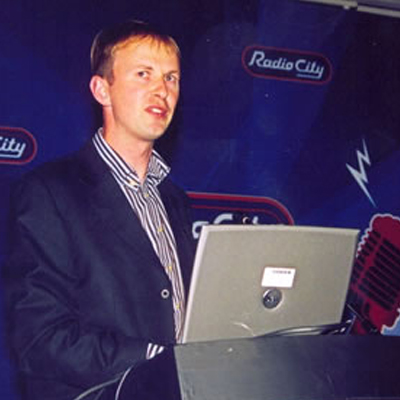
    On his way to London, BBC World Service on-air editor Martin spent two days in Mumbai, attending a seminar organized by FM channel Radio City.

    Indiantelevision.com’s Manisha Bhattacharjee caught up with Martin during his brief stay in the city, to get a perspective on the evolving business.

    Excerpts:

    Could you provide a brief of overview of the current radio status in UK?
    Today, it is an extremely mature and diverse radio market. BBC now operates 10 national networks some of which are only available on the digital platform, the rest of them on FM and AM in the traditional way. And we also operate a network of 38 local radio stations which is centered in all different cities and towns in England. We run two radio stations in Wales, two in Scotland, and two in Northern Ireland. So in any one place in Great Britain you are guaranteed to get at least five to six BBC radio stations. Plus you will get a similar number of commercial services in some places and in some places there are more. It’s a very developed market now.

    Now that is really diverse. Was there any kind of regulatory push, which also enhanced the market?
    In Britain, it is permissible for a radio group to own several radio stations in one market. This isn’t the case in India.

    When this happens you don’t find much similarities between two radio stations, because if you are going to own two radio stations in the same market, the last thing you want to be doing is exactly the same thing and cannibalizing the same audience. So you ensure that the two radio stations are broadly complementary. That makes good business sense and you ensure that on each radio station in a particular territory, which is not only hugely successful but it is also defensible against any other outside broadcaster. The key to successful radio programming is to know what territory you can own and defend against predators.

    That works for the public service as well. In BBC we are publicly funded and do not have a commercial imperative. We are all there to maximize revenues. However, because we are publicly funded, we have a duty to serve absolutely everybody of the UK population. So we have an obligation to ensure that our services are broadly complementary.

    For example: We run a national new music service, which specializes in breaking new music. It is a patronage in the arts in terms of supporting new talents in new music and it plays hits also of the popular culture.

    Please comment on BBC service radio networks’ programming strategy. How different is it from that of commercial radio stations?
    BBC service radio networks are distinctive from the commercial radio stations. It would be wrong to say that we solely do things that the market can’t support. Because we have an obligation to provide something to everybody, the services have to be popular. But these are absolutely distinctive.

    We would take creative risks with our programming such as of BBC Radio 2 – we will do a speech based consumer phone-in and discussion stations are doing that. On Radio 1 we will break great new music and we will take risks with that. We invest in social action programming, investigating issues that young people are facing in Britain today. And on BBC Radio 3 we support orchestras. So our patronage of the hour is not just something having on the plaque on the wall, it is actually real money going into supporting musicians creating music and support the cultural life of Britain today. So that some of the stuff that we do in music, commercial service radio stations don’t indulge in.

    In speech radio, we are the single biggest broadcast news gathering operation anywhere in the world. And in UK specifically, we run an intelligent speech radio station which is not just news and current affairs but includes drama, documentary and cultural programmes.

    Please comment on the competition between BBC and the commercial radio stations. How does it affect the market?
    Commercial radio is first and foremost a business and these radio stations will try to know the most profitable territories in programming terms. I think it is fair to say that because of the pressure of BBC, which is innovating in programming, the commercial radio stations have raised their game and are not going in for cutting the investment in programming and creating the cheapest programming possible.

    Because of the competition from BBC, we have got a healthy creative section within the commercial radio stations in the UK. Commercial radio stations invest heavily in research and keep us on our toes.

    Also, the regulatory framework ensures through the system of licensing that the stations are held to a particular format and have to comply with the terms of format licensing issues by the regulator. This ensures that there is a spread of different formats in any one market. But the commercial stations would want that in any case because they wouldn’t want two stations duplicating the same output.

    In the present scenario, how different is the US radio market from that of the UK radio market?
    They have a public radio network but that is quite different from what BBC is doing and it appeals to a particular niche audience. In recent years, the arrival of satellite radio through XM Satellite and Sirius Satellite Radio, which has made a huge number of formats available from coast to coast, which is great if you are driving. It allows one to listen to the same station through the journey.

    Last year, 25 % of UK radio revenues came from S&P activity

    The evolution of the radio industry, in particular it’s rapidly growing digital uptake, does that signify a threat posed by digital radio to terrestrial radio?
    More radio is good for the industry; it is good for the consumers, because, it gives more choice. You are more likely to hear what you want when you want it. That’s a positive force. BBC has been a pioneer in digital radio in UK, we have strongly welcomed it. It has enabled us to provide new services and are able to reach sections of the community which were otherwise being undeserved.

    It does mean that more communication radio stations will compete against us but that said that adds to the totality of choice available to UK radio listeners and that’s got to be healthy.

    I think where the challenge comes for the commercial stations is to manage the investment. You’ve got to invest in the new technology of rolling out the transmitter networks providing new radio services before getting enough listeners to turn a profit from those. So there is the issue of funding. That’s where the challenges lie from the business point of view.

    BBC has been leading the roll-out of digital radio infrastructure. So we have been an enabler for the commercial. Because every time you buy a digital radio set, not only do you have new BBC radio station but you have access to the new commercial stations as well.

    Radio is probably looking at greater fragmentation of its audience (like any other media). Is this an encouraging sign for the marketers or advertisers?
    If I was an advertiser and I knew there was a radio stations that supports on a functional and emotional level, with a clear voice to my target listeners. I know I will be able to buy just that station and eliminate waste on my ad spend. It is going to be good for advertisers as there is more choice on where to put spends.

    It may mean that in order to reach the audience you need more than one radio station but you can be selective in the stations you buy and eliminate waste.

    If you have only one station in the market, or all the stations sound the same, then you are guaranteeing to be wasting some of your advertisers’ spend. Because you will be talking to people who are not within your target audience or your advertising campaign. So, the more the fragmentation the easier it is to target the specific audience segment you are interested in.

    More relevant, from an advertisers’ point of view, is maximizing reach – the number of different people who listen in a week. But consumers generally hate advertisements as it is an interruption?
    Well, listeners don’t hate radio advertising. They primarily hate bad radio advertising. Secondly, the scene is changing, first there were advertising spots, and then came sponsorship. But now there’s S&P (sales and promotion) and its growing fast. Last year, 25 per cent of UK radio revenues came from S&P activity. It takes the client beyond the commercial break by creating and raising awareness of the product or the service.

    It can exploit the closeness and personal nature of radio for brands. It can also give brand endorsement from popular and trusted RJs and can create great radio entertainment for listeners. It can bring in new listeners for the radio station.

    Today, the Indian radio market is perceived as an industry which is booming. What’s your perception?
    At the moment of course, we have a situation where a lot of radio stations are broadcasting music, of course with a very similar play list. It is yet to be seen, if anybody has the guts or intelligent research in order to tone down or target their music specifically. That’s an inevitability. Whoever does that will be hugely successful in the market.

    Knowing that the radio FM market is at its nascent stage; doesn’t that give even more opportunities for the players to take risks as they are still craving a place for themselves?
    You have to be extremely brave indeed to say good-bye to a certain section of one audience. The industry is booming at the moment people are running successful businesses with this model. I believe the only question is as the radio market matures, how long the situation can continue before the audience will expect a degree of choice? But I think at the same time it would be wrong to suggest that there isn’t some choice there already.

    Though music is largely played, the individual stations have invested in individual personalities who will become listeners’ friends over time and they will be characterizing differently, between station A and station B. So it just doesn’t have to be just about music. It could be emotional qualities, personalities, attitude of the presenters or RJ’s on the air. There are a number of ways you can introduce to a radio station format something that is particular to your radio stations that is owned by you and over time you become famous for and that is about segmentation and building brands.

    Are players reluctant to experiment primarily due to lack of news and current affairs?
    In any market you have to accept the regulatory framework which is in place. And in India, that’s the regulation.

    In markets where it is allowed to broadcast different types of news on radio channels, it is a popular form of radio programming. And you will also find the people will have different news needs as the day continues.

    At breakfast time for example, people tend to want information, the kind of information they need to get into the day and through the day. Then, later in the day, people may want to think a little more about the issues and not just get information but come to their own conclusion about what it means for them. So, we talk about this journey through the day from information in the morning to an understanding in the evening and people have a need for or devote a lot of time to knowing in the morning and thinking in the evening.

    In the markets where we are producing speech programming through the day we produce a range of news programmes. We run a programme called World Today which is a fast moving double headed presentation programme by two presenters. Very high story counts and have live reports from correspondents from across the globe. It is fairly light in tone. Later in the day, News Hour is a longer broadcast with one or two big stories from the day so far with a range of perspectives from the other BBC correspondents and other figures who are involved in the news story.

    We produce news programmes in such a way that they are available to listeners at a time when they better satisfy their news needs.

    What is the strategy to have a successful station format and positioning of the radio channel?
    A key thing about radio is that it is an emotional medium. Radio is company, a complement for life, and so the key thing to be successful in radio, firstly you research in an audience. Know exactly whom you are talking too. What makes them tick. What their interests are. What kind of tone of voice you need to adapt and from there devising a radio format and delivering consistently. So that your audience knows exactly where to find the things that you are offering and you are rendering the whole thing up in a consistent tone of voice which becomes part of your brand identity.

    People around the world say what they love most about their favourite radio stations are personalities, the music, and the local information that helps get them through the day.

  • BBC World Service Trust releases music album on AIDS awareness

    BBC World Service Trust releases music album on AIDS awareness

    MUMBAI: BBC World Service Trust, National AIDS Control Organisation (Naco) and national network Doordarshan have joined hands to spread awareness about AIDS through a music album Haath Se Haath Milaa (HSHM) or let’s join hands.

    The music video and album, released yesterday, is also being supported by multiplex major PVR Cinemas, which will screen it in all its 68 screens across India.

    Though the association of PVR Cinemas with BBC World Service Trust is only for three months, the multiplex company CEO (digital) Sunil Patil is optimistic to maintain the relationship for a longer period of time.
    According to the director of the video Anu Malhotra, “All the stars have generously contributed to the cause by filming for this video completely pro bono.”

    The album, produced by Music Today and consisting of eight soundtracks, will be available in music stores and sold commercially across the country.

    In an official statement, all profits from sales will be donated to non-governmental organization Salaam Baalak Trust and Committed Communities Development Trust (CCDT).

    BBC World Service Trust director general Andrew Whitehead said, “The selections of songs were done from the Music Today catalogue.”

    The launch ceremony was graced by Bollywood actress Shilpa Shetty who said that the video would appeal to all and help combating AIDS and the stigma attached to it.

    BBC World Service Trust supports a reality television series on DD, titled Jasoos Vijay where the central theme revolves around spreading awareness about AIDS.

    The third series of Jasoos Vijay will finish its run by end September and HSHM will end by February 2007.

  • Al Jazeera International ropes in veteran scribe Ibrahim Helal

    Al Jazeera International ropes in veteran scribe Ibrahim Helal

    MUMBAI: Veteran journalist Ibrahim Helal has been appointed deputy managing director news and programmes of the soon to be launched news and current affairs channel Al Jazeera International.

    Helal is a former editor-in-chief at Al Jazeera’s Arabic language channel and most recently served as a project director on the Middle East North Africa dialogue programme for the BBC World Service Trust.

    Prior to his joining Al Jazeera International, he worked in London for the BBC’s Arabic service.

    “Having Ibrahim join us at the English-language channel not only further professionalises our staff with a top-flight newsman, it also solidifies us as a family built around the core spirit of Al Jazeera,” said Al Jazeera managing director Nigel Parsons.

    Helal will oversee the Middle East desk and ensure close working relations with the Arabic news channel. “Ibrahim will have a quality-control responsibility to assure that news content across the channels is consistent—and consistently good,” said Parsons.

    Al Jazeera’s English-channel promises agenda-free news from every corner of the globe carried across fibre-optic HDTV technology. The channel plans to launch later this year.